
Long Strap Fern (Campyloneurum phyllitidis)
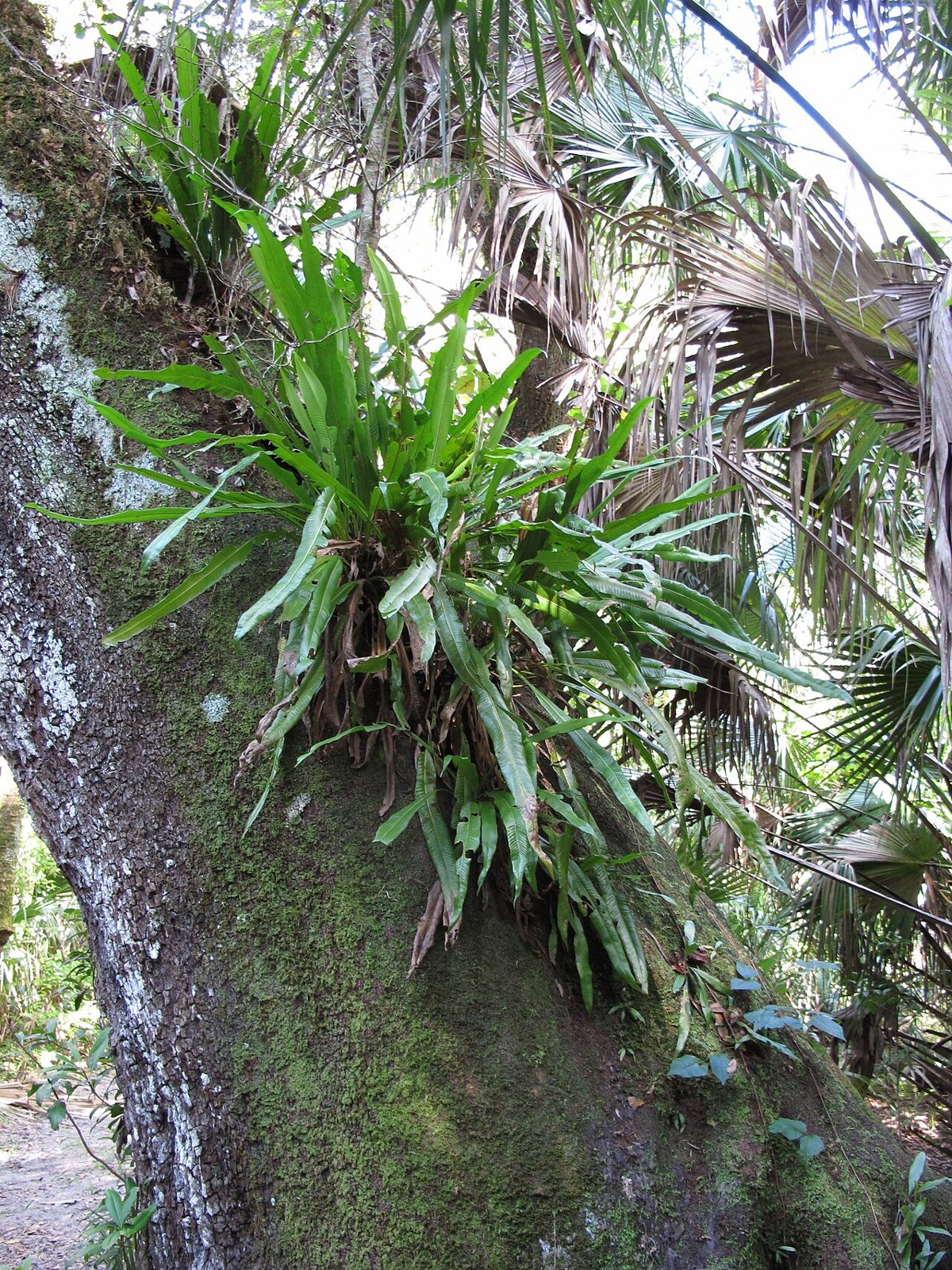
Campyloneurum phyllitidis, known as Long Strap Fern or simply strap fern, is a bold tropical fern of Florida’s moist hammocks and swamps. Unlike most ferns, it has undivided fronds: long, glossy, bright green straps with wavy edges that can reach 2 to 3 feet long and several inches wide. The fronds arch outward from a short, creeping rhizome to form a large rosette, which is often perched on a tree trunk, a fallen log or a limestone boulder. It belongs to the polypody family (Polypodiaceae), together with resurrection fern and golden polypody.
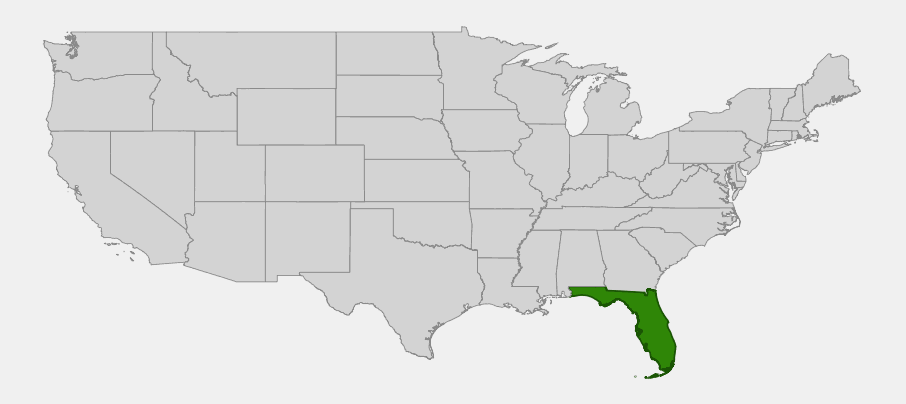
Long strap fern is widespread in the American tropics, from Florida and the Caribbean through Mexico and Central America to Brazil, Bolivia and Paraguay. In the United States it is native to central and southern Florida, Puerto Rico and the U.S. Virgin Islands. It was formerly named Polypodium phyllitidis, and that name still appears in older fern books.
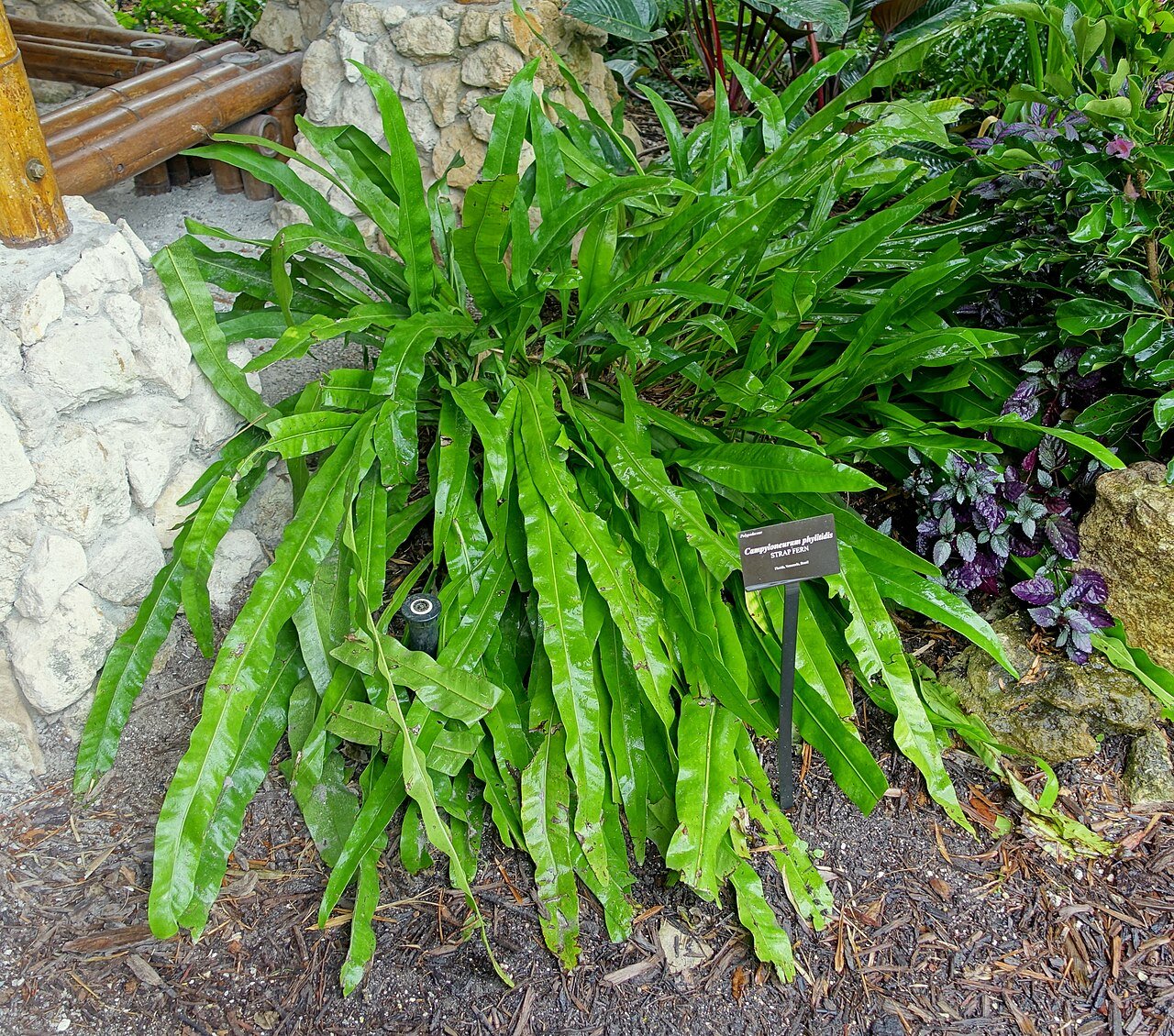
For Florida gardeners, long strap fern is one of the most striking native ferns for shaded, humid spots. It can be grown on the ground, in containers, on stumps and rocks, or mounted on trees, giving a lush tropical look without introducing exotic species.
Identification
Long strap fern is easy to recognize because few other native ferns have long, simple, undivided fronds. It is most likely to be confused with its smaller relatives and with the bird’s-nest ferns grown as houseplants.
Rhizome & Roots
The fern grows from a short, thick, creeping rhizome covered in small brown scales. A dense mat of fine roots clings to bark, logs, rock or organic soil and traps leaf litter, gradually building up a pocket of humus around the plant.
Fronds
The fronds are simple and undivided, strap-shaped to narrowly lance-shaped, typically 1½ to 3 feet long and 2 to 4 inches wide, tapering at both ends and arising in a dense cluster. They are leathery, smooth, glossy and bright to yellowish green, with a prominent midrib and wavy margins. Pairs of nearly parallel side veins run from the midrib toward the edge, connected by smaller cross veins into a regular pattern of boxes. The fronds are evergreen in frost-free areas but can be damaged by freezing weather.
Sori & Spores
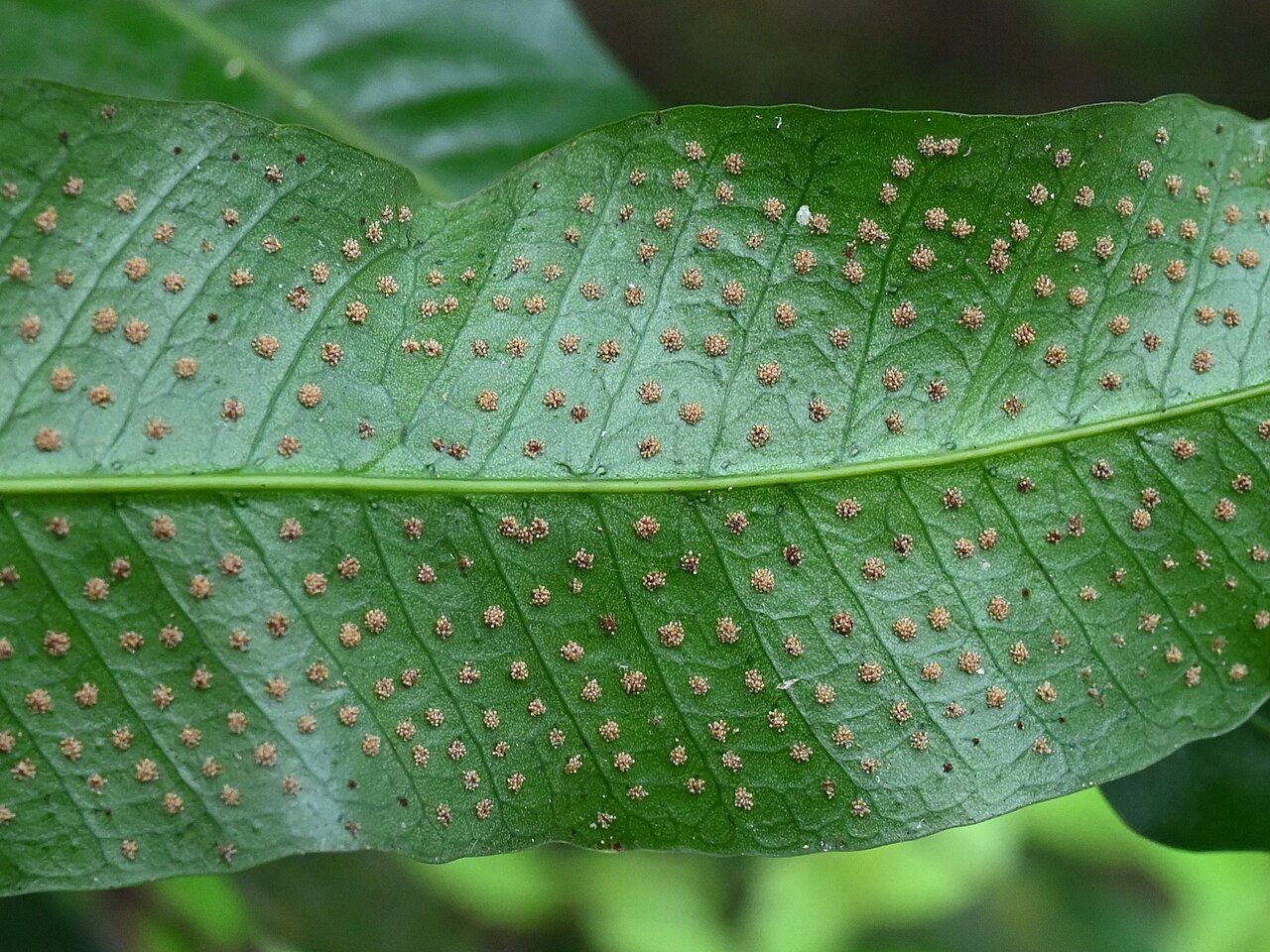
On the underside of fertile fronds, small, round, rusty orange to brown sori (spore clusters) are arranged in neat rows between each pair of side veins, often in two or more rows per vein pair. They have no protective covering (indusium). The spores are released mostly in summer and fall.
Similar Species
Narrow strap fern (Campyloneurum angustifolium) of South Florida has much narrower fronds, under 1 inch wide. Tailed strap fern (C. costatum) is smaller and rare. The bird’s-nest ferns (Asplenium nidus and relatives), exotic houseplants with similar undivided fronds, have their sori in long lines along the veins rather than in round dots.
Quick Facts
| Scientific Name | Campyloneurum phyllitidis (syn. Polypodium phyllitidis) |
| Family | Polypodiaceae (polypody family) |
| Plant Type | Evergreen epiphytic or terrestrial fern |
| Mature Height | 1½–3 ft (frond length) |
| Mature Spread | 2–4 ft rosette |
| Growth Rate | Moderate |
| Sun Exposure | Partial shade to full shade |
| Water Needs | Moderate to high; needs constant humidity |
| Soil Type | Rich organic matter, rotting wood, limestone rock or tree bark |
| Soil pH | Neutral to alkaline; tolerates calcareous rock |
| Bloom Time | Does not flower; spores mainly in summer and fall |
| Flower Color | None (fern) |
| Fall Color | None; evergreen |
| Fruit | None; reproduces by spores |
| Deer Resistant | Generally; rarely browsed |
| USDA Hardiness Zones | 9A–11 |
Native Range
Long strap fern is a widespread tropical American species. USDA PLANTS lists it as native in the lower 48 states (Florida), Puerto Rico and the U.S. Virgin Islands, and introduced in Hawaii. Beyond the United States it grows in the Bahamas, Cuba and the rest of the West Indies, and from southern Mexico through Central America to Venezuela, Peru, Bolivia, Brazil and Paraguay.
In Florida it is native to the central and southern peninsula. It is most common in South Florida and reaches north into the central peninsula, where it grows in sheltered hammocks such as those at Highlands Hammock State Park. Cold winters limit its northward spread, and severe freezes can kill back plants near its northern limit.
Its habitats are humid, shaded forests: tropical and subtropical hardwood hammocks, cypress and mixed swamps, strands and sloughs. It grows as an epiphyte on the trunks and branches of live oaks, cypress, cabbage palms and other trees, and also on fallen logs, stumps, limestone outcrops and the rich organic soil of hammock floors.
📋 Regional plant lists featuring Long Strap Fern: North & South Florida
Growing & Care Guide
Long strap fern is easy to grow in warm, humid, shady gardens and makes an eye-catching specimen. It is offered by specialty native nurseries and fern growers. The keys to success are shade, humidity and fast drainage around the rhizome. Buy nursery-grown plants rather than removing them from trees or logs in the wild.
Light
Partial to full shade. A spot under a high tree canopy or on the north side of a building is ideal. Direct midday sun scorches and yellows the fronds.
Soil & Water
Grow it in a loose, well-drained mix rich in organic matter, such as leaf mold, bark and coarse sand, or mount it on a log, stump, rock or tree trunk with a little sphagnum or leaf litter around the roots. It tolerates limestone and alkaline conditions well. Keep it evenly moist and humid, but don’t let the rhizome sit in soggy soil. During dry spells, water mounted plants frequently. It has no tolerance for salt spray or brackish water.
Planting Tips
Plant with the rhizome at or just above the soil surface; burying it deeply invites rot. To mount a plant, tie it to a tree trunk, palm boot or log with natural twine or wire until new roots attach. In zones 9A and 9B, choose a sheltered spot under trees where frost is less likely, and cover plants on freezing nights.
Pruning & Maintenance
Remove old, yellowed or cold-damaged fronds at the base. Mulch ground-grown plants lightly with leaf litter. Watch for snails and slugs, which can chew holes in the fronds, especially on plants grown in containers. A light feeding with a dilute balanced fertilizer in spring can help container plants but is unnecessary in the ground.
Propagation
The easiest method is division: cut the rhizome into sections, each with several fronds and roots, and replant them. It can also be grown from spores sown on sterile, moist peat or soil under humid conditions, but this is slow.
Landscape Uses
- Shade gardens: a bold, tropical-looking accent among smaller ferns and groundcovers
- Mounted on trees, logs and rocks: recreates its natural epiphytic habit
- Containers and hanging baskets: for shaded patios and porches
- Hammock restoration: in moist hardwood hammock plantings within its native range
- Indoor or greenhouse plant: where winters are too cold for outdoor growing
Wildlife & Ecological Value
As a fern, long strap fern has no flowers or fruit, but its lush rosettes are part of the rich layer of epiphytes in Florida’s humid forests.
For Pollinators
Ferns reproduce by spores and do not need pollinators. Long strap fern offers no nectar or pollen.
For Birds
Birds use the dense rosettes as foraging sites for insects and spiders, and the debris trapped around the roots holds invertebrates that wrens and other insect-eaters seek out.
For Mammals
It is of little direct importance to mammals, though its leaf litter and humus pockets shelter small creatures.
Ecosystem Role
Epiphytic ferns like long strap fern trap falling leaves and debris, building small pockets of humus on tree trunks and branches. These pockets hold moisture and nutrients and provide homes for insects, spiders, snails and tree frogs, adding to the biodiversity of hammocks and swamps.
Cultural & Historical Uses
Linnaeus described this fern in 1753 as Polypodium phyllitidis, comparing its simple fronds to the hart’s-tongue fern, then called Phyllitis. The Czech botanist Carl Bořivoj Presl later placed it in the genus Campyloneurum, a name meaning “curved nerve”, for the arching veins of the fronds.
Tropical ferns with bold, simple fronds were grown in greenhouses and conservatories in Europe and North America from the nineteenth century onward, and long strap fern is still among the most widely cultivated species of its genus. In its tropical range it grows on trees, rocks and even old walls, wherever shade and humidity allow.
In Florida today it is appreciated as a native alternative to exotic tropical foliage plants. It is used in shade gardens, on palm trunks and in naturalistic plantings that recreate the lush interiors of South Florida hammocks.
Frequently Asked Questions
Is long strap fern native to Florida?
Yes. It is native to central and southern Florida, where it grows in humid hammocks and swamps. In the United States it is also native to Puerto Rico and the U.S. Virgin Islands.
Can long strap fern grow in the ground?
Yes. Although it often grows on trees in the wild, it does well in loose, organic, well-drained soil in shade. It also grows on rocks, logs and stumps, and in containers.
How cold can long strap fern tolerate?
It is a tropical fern and is damaged by frost. It grows reliably outdoors in zones 10 and 11, and in sheltered spots in zone 9 with protection on freezing nights.
Why does my strap fern have brown dots under its fronds?
The round orange to brown dots are sori, clusters of spore cases. They are a normal part of fern reproduction, not a pest or disease.
How is long strap fern different from bird’s-nest fern?
Bird’s-nest ferns are exotic species from the Old World tropics. Their sori form long lines along the veins, while long strap fern has round dots in rows. Long strap fern is native to Florida and the American tropics.

Looking for a nursery that carries Long Strap Fern?
Browse our native plant nursery directory: Florida