
Golden Polypody (Phlebodium aureum)
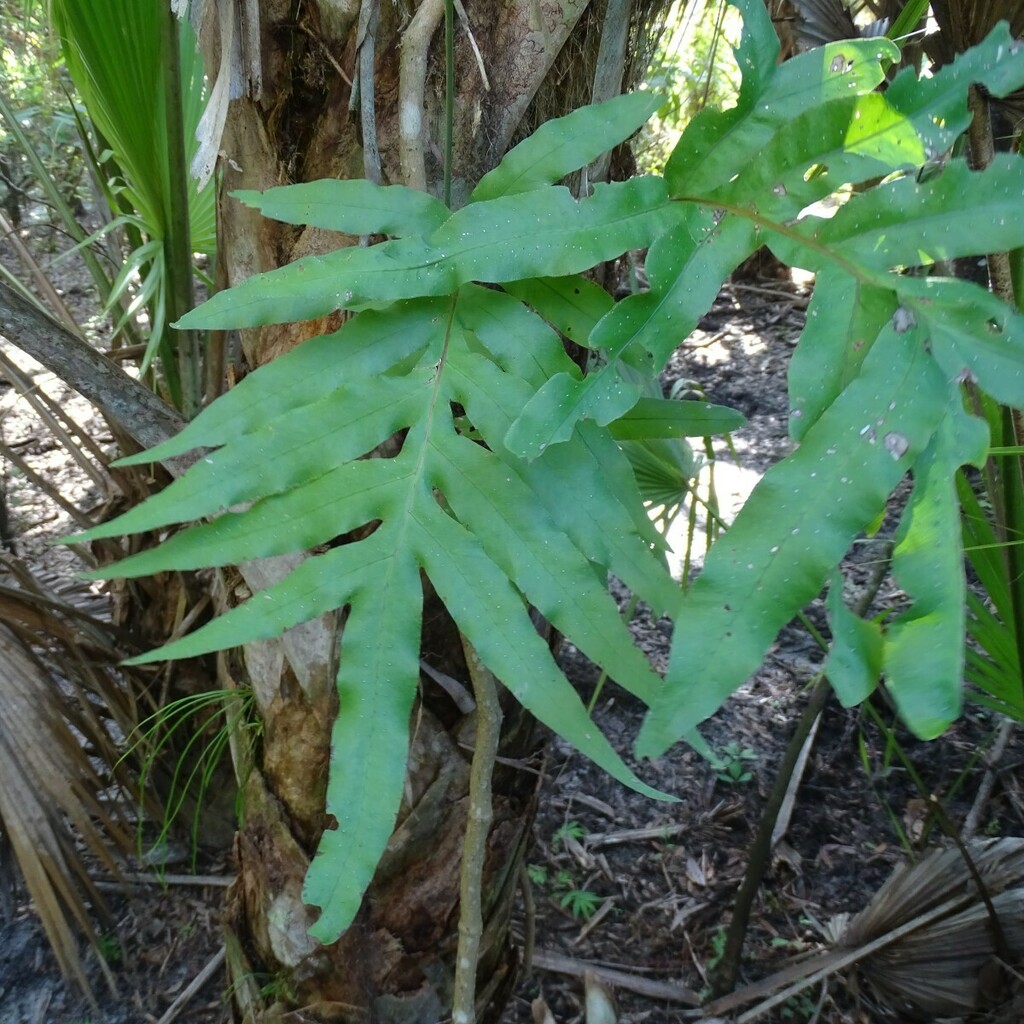
Phlebodium aureum, known as Golden Polypody, cabbage palm fern or golden serpent fern, is a large, bold fern that most Floridians know as the fern growing out of cabbage palm trunks. It is usually an epiphyte, rooting in the old leaf bases (“boots”) of cabbage palms, in the crotches of live oaks, or on rotting logs, and it sends out arching, deeply lobed fronds 1 to 4 feet long. Its thick, creeping rhizome is covered in shaggy, golden-orange scales, which give the plant its names, and the undersides of fertile fronds carry neat rows of round, bright orange spore clusters.
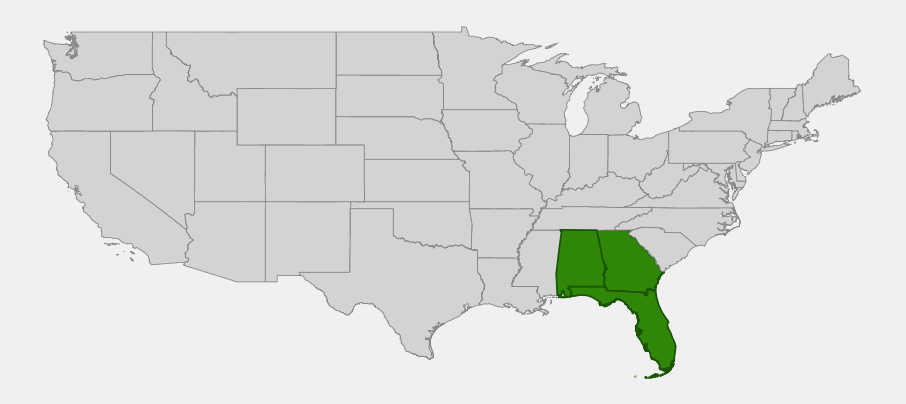
Golden polypody belongs to the polypody family (Polypodiaceae), the same family as the little resurrection fern that grows on oak limbs. It is a tropical American species that reaches its northern limit in the southeastern United States. USDA PLANTS lists it as native in Florida, Georgia and Alabama, and in Puerto Rico and the U.S. Virgin Islands. It is also widely grown as a houseplant and garden fern, and USDA records it as introduced, not native, in Hawaii.
For Florida gardeners it is one of the easiest native ferns to enjoy, because it often arrives on its own on cabbage palms in the yard. It can also be grown on palm trunks, in hanging baskets, on mounted bark, or as a groundcover in loose, well-drained, organic soil. This guide covers how to identify it, where it grows, how to grow it, and its place in Florida’s hammocks and palm woodlands.
Identification
Golden polypody is easy to recognize: no other native fern in the Southeast combines such large, deeply lobed, bluish-green fronds with a fuzzy, golden rhizome and big round orange sori.
Rhizome
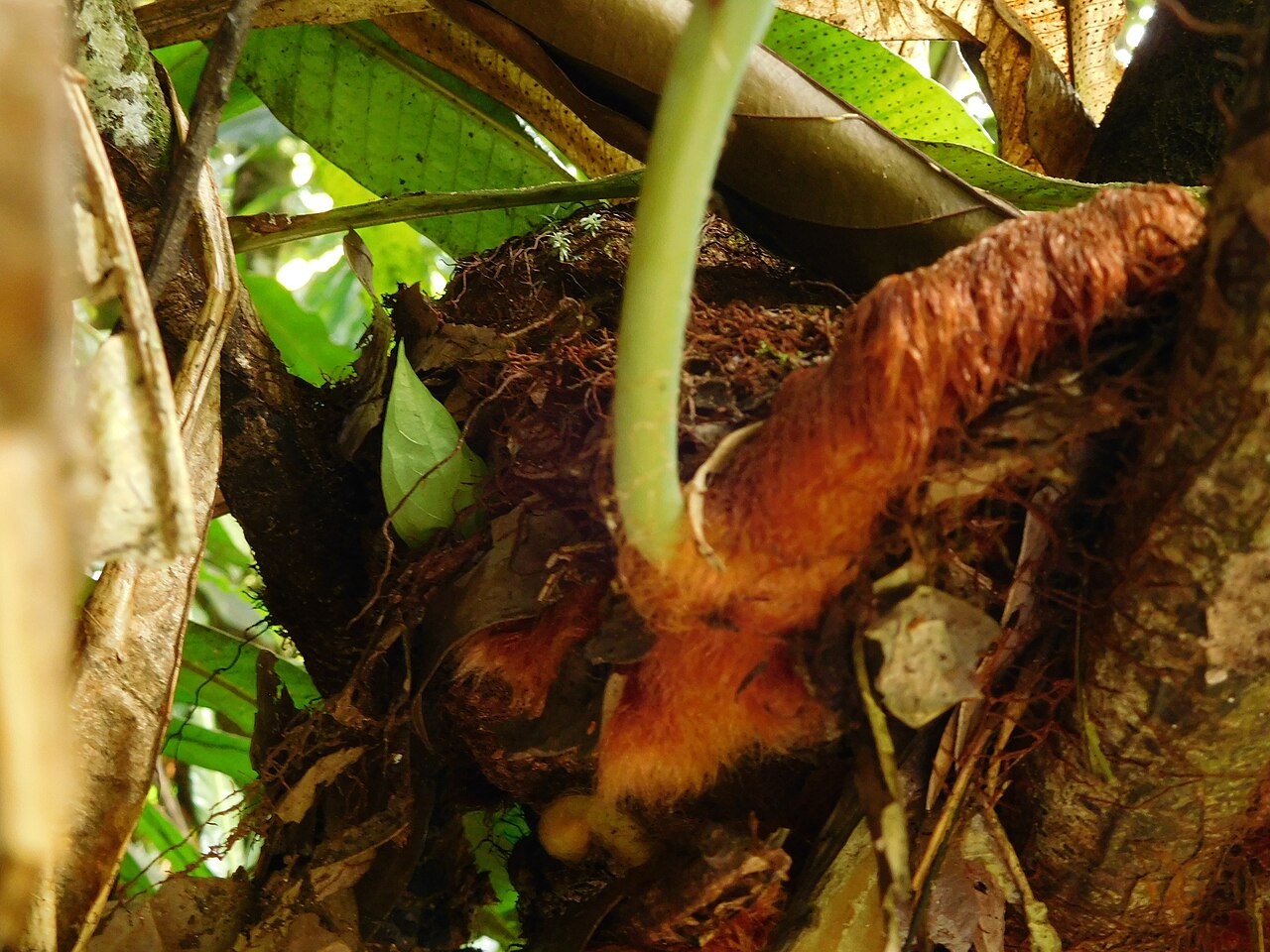
The rhizome is thick (about half an inch to an inch across), creeping and branching, and it often wraps around palm trunks or across logs. It is densely covered in long, narrow, golden-orange to reddish-brown scales, giving it a furry look like a rabbit’s foot or a hairy caterpillar. The fronds arise one at a time along the rhizome rather than in a central crown.
Fronds
The fronds are usually 1 to 3 feet long, occasionally up to about 4 feet, on long, smooth stalks. The blade is deeply cut (pinnatifid) into broad, strap-shaped segments with smooth or slightly wavy edges, joined along the midrib, with a larger segment at the tip. Fronds range from medium green to a striking blue-green or gray-green, often with a waxy bloom. They are somewhat leathery and stay green through mild winters, but may yellow and drop during severe drought or after frost.
Spores
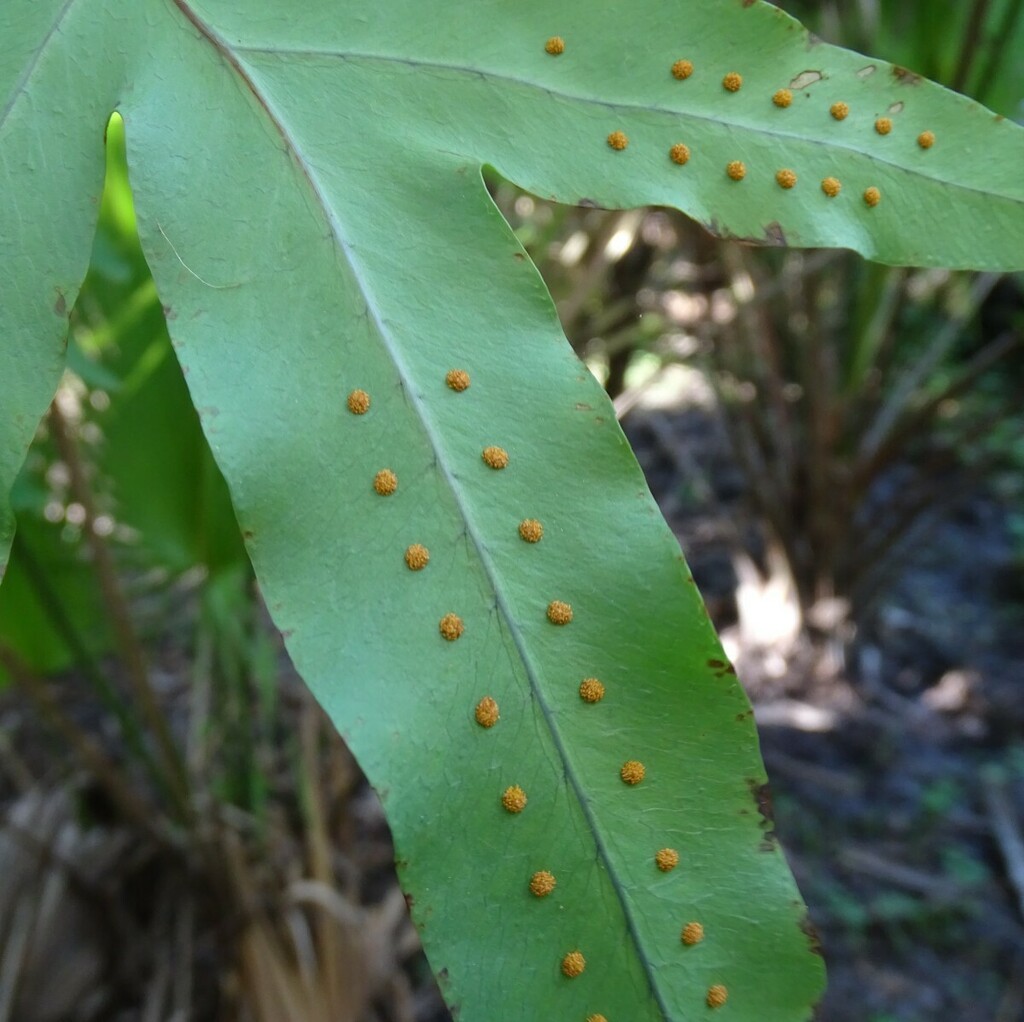
The sori are large, round and bright orange to golden yellow, without a covering (indusium). They sit in a row, sometimes two, on each side of the midrib of each segment, at the ends of small veins. From the upper side of the frond their positions often show as slightly raised dots. Spores are released mostly in summer and fall.
Similar Species
Resurrection fern (Pleopeltis michauxiana), which shares the same trees, is much smaller, with narrow, once-divided fronds that curl up and turn brown in dry weather. The widespread ornamental known as “blue star fern” is a selection of Phlebodium with especially blue, wavy fronds. Other ferns called “rabbit’s-foot fern,” such as Davallia species, are unrelated Old World houseplants with lacy, finely divided fronds.
Quick Facts
| Scientific Name | Phlebodium aureum (syn. Polypodium aureum) |
| Family | Polypodiaceae (polypody family) |
| Plant Type | Epiphytic or terrestrial evergreen fern |
| Mature Height | 1–3 ft (fronds occasionally to 4 ft) |
| Mature Spread | 2–4 ft; spreads slowly by creeping rhizomes |
| Growth Rate | Moderate |
| Sun Exposure | Part shade to shade; tolerates morning sun |
| Water Needs | Moderate; tolerates short dry spells |
| Soil Type | Palm boots, bark, rotting wood, or loose, well-drained organic mix |
| Soil pH | About 5.5–7.0 |
| Bloom Time | None (spores mainly summer–fall) |
| Flower Color | None; sori bright orange-gold |
| Fall Color | None; evergreen in mild winters |
| Fruit | None; reproduces by spores |
| Deer Resistant | Yes; rarely browsed |
| USDA Hardiness Zones | 9–11 (8b with protection) |
Native Range
Golden polypody is a tropical American fern whose native range extends from the southeastern United States through the West Indies, Mexico and Central America to South America. USDA PLANTS records it as native in Florida, Georgia and Alabama, as well as in Puerto Rico and the U.S. Virgin Islands. It is listed as introduced in Hawaii, where it has escaped from cultivation.
In Florida it is common throughout most of the peninsula and less common in the Panhandle, wherever cabbage palms, live oaks and moist hammocks provide suitable growing sites. In Georgia and Alabama it is limited to the warm, humid lower Coastal Plain near the coast, where it is near the northern limit of its range and can be damaged by hard freezes.
Its typical habitats are cabbage palm hammocks and palm-studded pastures, hardwood hammocks, swamp edges, shell middens and moist woods. It grows on cabbage palm trunks more than anywhere else, because the old leaf bases collect organic debris and moisture, but it also grows on live oaks, on logs and stumps, on limestone and occasionally in moist soil. It is fairly tolerant of disturbance and often turns up on palms in yards, parking lots and roadsides.
📋 Regional plant lists featuring Golden Polypody: North & South Florida · Alabama, Georgia & Mississippi
Growing & Care Guide
Golden polypody is an easy, low-maintenance native fern for Florida and the Gulf Coast. Many gardeners already have it growing on their cabbage palms. Plants are also sold by native plant nurseries and garden centers. If you buy a “blue star” fern, it is a selection of this genus, but nursery plants of the wild type are the best choice for native landscapes.
Light
Give it part shade or bright, filtered light. It tolerates morning sun and grows in fairly sunny spots on cabbage palms, where the palm boots stay moist, but in full, hot sun on dry soil the fronds yellow and burn.
Soil & Water
As an epiphyte, it needs excellent drainage and air around the rhizome. On palms, it roots in the debris trapped in the old leaf bases. In the ground or in pots, use a very loose, coarse mix such as orchid bark, leaf mold and coarse sand, or plant it on a mound of mulch over sand. Keep it evenly moist while getting established. Once rooted it tolerates short dry spells, often dropping some fronds and then regrowing after rain. It does not tolerate soggy, compacted soil.
Planting Tips
To establish it on a cabbage palm, tuck a section of rhizome into the boots with a little sphagnum or leaf mold and tie it in place with natural twine until it roots. In the ground, set the rhizome on the surface and barely cover the roots, leaving the golden rhizome itself exposed. It also grows well in hanging baskets and on mounted cork or palm wood. Space ground plantings about 2 feet apart.
Pruning & Maintenance
Remove brown or frost-damaged fronds at the base. Plants damaged by freezes usually regrow from the rhizome in spring. When trimming cabbage palms, ask tree crews to leave the boots and ferns where possible, or remove only the lowest boots. Avoid heavy fertilizer; a light feeding with diluted fertilizer in summer is plenty for potted plants.
Propagation
The easiest method is to divide the rhizome: cut a section with several fronds and roots and set it in a new spot. It can also be grown from spores sown on a sterile, moist medium in a closed container, though this takes many months. Plants often spread on their own by spores onto nearby palms.
Landscape Uses
- Cabbage palm trunks: the classic place to grow it, among the palm boots
- Shade gardens: a bold, coarse-textured fern for hammock-style plantings
- Hanging baskets and mounts: on cork, palm wood or in baskets on a shaded porch
- Containers and houseplants: a durable fern for pots in bright, indirect light
- Hammock restoration: returns naturally where cabbage palms and live oaks are kept
Wildlife & Ecological Value
Golden polypody adds a distinctive layer to the “air garden” of epiphytes that grows on Florida palms and oaks.
For Pollinators
As a fern, it produces spores rather than flowers and offers no nectar or pollen. Its value to insects is mainly as shelter.
For Birds
Wrens, warblers and other small birds forage for insects and spiders among the fronds and palm boots, and some birds use the shaggy rhizome scales and dead fronds as nesting material.
For Mammals
It is not a significant food for mammals. Squirrels and other small animals may use palms thick with ferns and boots for cover.
Ecosystem Role
Together with other epiphytes, golden polypody helps turn cabbage palm trunks into miniature ecosystems. Its rhizomes and roots trap leaf litter and moisture in the palm boots, which supports insects, spiders, tree frogs, anoles and small snakes that live there. It also grows on fallen logs, where it helps hold organic matter as the wood breaks down.
Cultural & Historical Uses
Linnaeus described the fern in 1753 as Polypodium aureum, “golden polypody,” and the name is still widely used in horticulture. It was later moved to Phlebodium, a small genus of tropical American ferns. Its common names reflect its looks and habits: golden serpent fern for the golden, snaking rhizome, cabbage palm fern for its favorite host in Florida, and hare’s-foot or rabbit’s-foot fern for the furry rhizome.
In parts of Latin America, the rhizome of this fern and its close relatives, called calaguala, has a long history in folk medicine. Extracts sold today as “Polypodium leucotomos” supplements come from Phlebodium ferns, and they have been studied for possible protection of skin from sun damage. Such extracts are dietary supplements, not a replacement for sunscreen or medical advice.
Golden polypody has long been a popular greenhouse and house fern in Europe and North America, and blue-fronded selections are sold today as “blue star fern.” In Florida, its most common role is as a natural ornament of cabbage palms, and many homeowners recognize it long before they learn its name.
Frequently Asked Questions
Will golden polypody hurt my cabbage palm?
No. It is an epiphyte, not a parasite. It roots in the debris trapped in the old leaf bases and takes nothing from the palm. Leaving the ferns and boots in place does no harm to the tree.
Why does my golden polypody turn yellow?
Yellowing usually means drought, too much sun, or cold. It drops fronds in long dry spells and after frosts, then regrows from the rhizome when conditions improve.
Is golden polypody native to Florida?
Yes. USDA PLANTS lists it as native in Florida, Georgia and Alabama, and in Puerto Rico and the U.S. Virgin Islands. It is introduced in Hawaii.
Can I grow it indoors?
Yes. It is a durable houseplant in bright, indirect light. Use a very loose, fast-draining mix, water when the surface begins to dry, and keep the rhizome above the soil.
Is blue star fern the same plant?
Blue star fern is a selection of Phlebodium grown for its bluish, wavy fronds. It is closely related to, and often sold as, Phlebodium aureum. For native landscapes in Florida, the wild type is the better choice.

Looking for a nursery that carries Golden Polypody?
Browse our native plant nursery directory: Alabama · Florida & Georgia