
Pinepink (Bletia purpurea)
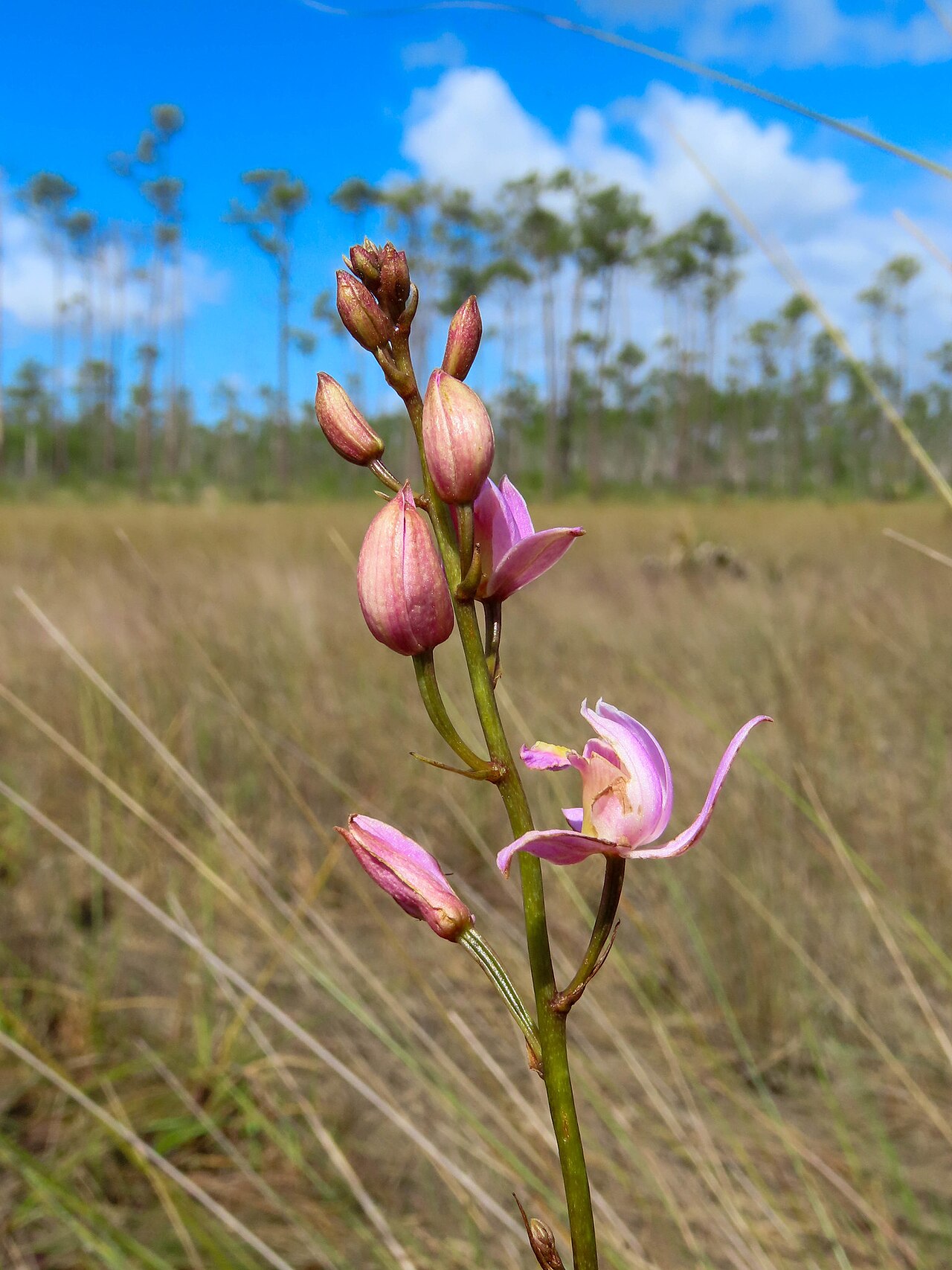
Bletia purpurea, the Pinepink (also written pine pink), is a ground orchid of south Florida pinelands, marshes and swamps. In late winter and spring it sends up a slender, branching flowering stalk, often 2 to 4 feet tall and sometimes taller, carrying a long succession of rose-pink flowers about ½ to ¾ inch across, marked with yellow on the lip. It belongs to the orchid family (Orchidaceae).
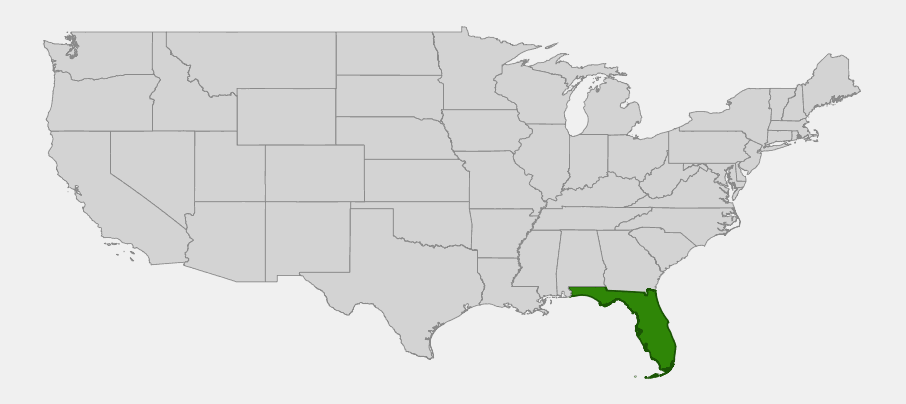
In the United States it grows only in Florida, mostly in the southern part of the state from the Florida Keys north to Palm Beach and Lee counties, with a disjunct population farther north in Polk County. It is widespread in the West Indies, Mexico, Central America and northern South America. Pinepink is listed by the State of Florida as threatened (FDACS Regulated Plant Index; also noted in the Atlas of Florida Plants).
Because wild populations are protected and declining with their habitat, anyone who wants to grow pinepink should buy only nursery-propagated plants and never dig plants or collect seed from the wild. This guide covers how to identify it, where it grows and how it can be grown responsibly in a south Florida native garden.
Identification
Pinepink is the only native Florida orchid with tall, branching spikes of rose-pink flowers rising from a cluster of narrow, pleated leaves. When not in flower, the plant looks rather like a grass or a young palm seedling.
Corm & Leaves
Each plant grows from a rounded, underground or partly exposed corm (pseudobulb), about 1 to 2 inches wide, that sits in moist soil, peat, rock pockets or decaying wood. From the corm rise one to several long, narrow leaves, typically 1 to 2 feet tall, that are pleated lengthwise like a folded fan. Some observers compare a young plant to a palm seedling. The leaves often wither around flowering time, so a plant in full bloom may have few or no leaves.
Flowering Stalk
The flowering stalk (inflorescence) arises from the side of the corm. It is slender, green to purplish and usually 2 to 4 feet tall, occasionally up to about 5 feet. It may branch, and it bears from a few to many flowers that open gradually over several weeks, so buds, open flowers and developing seed capsules are often present at the same time.
Flowers
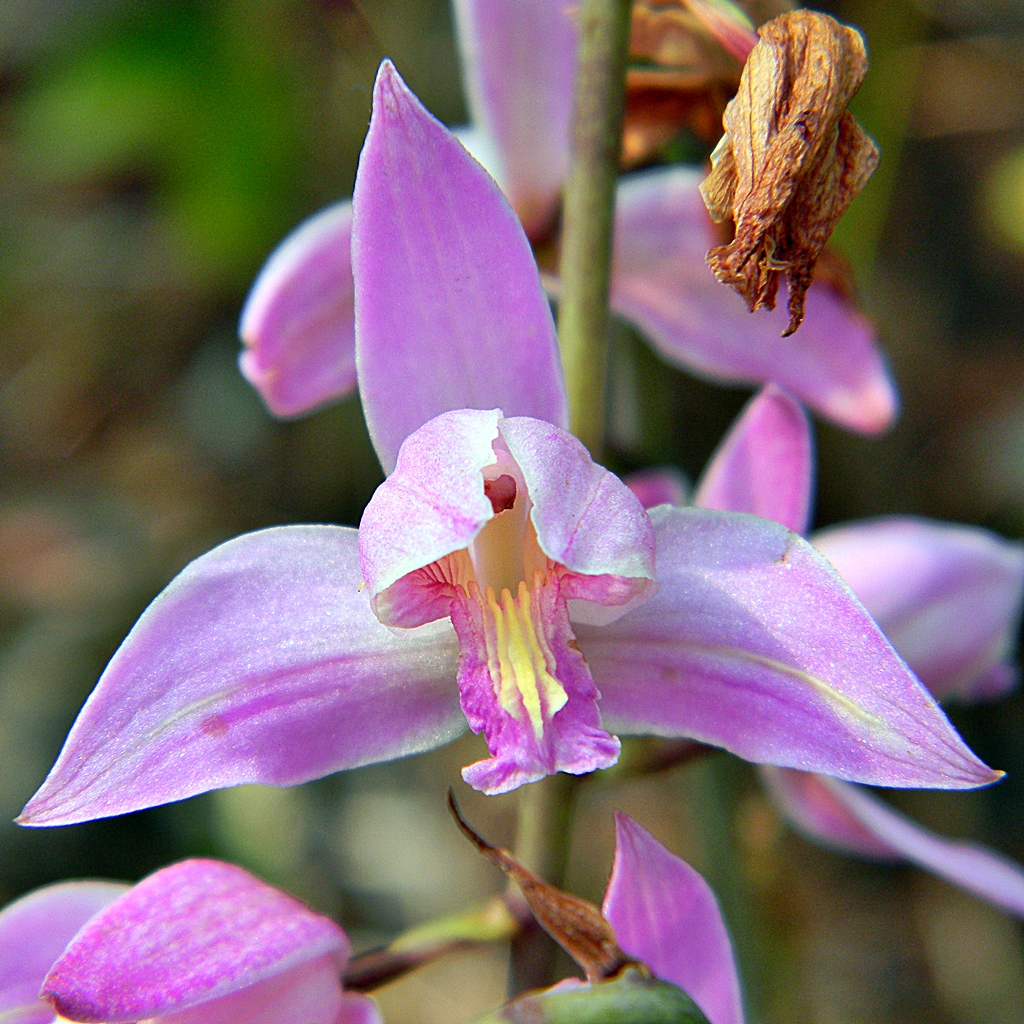
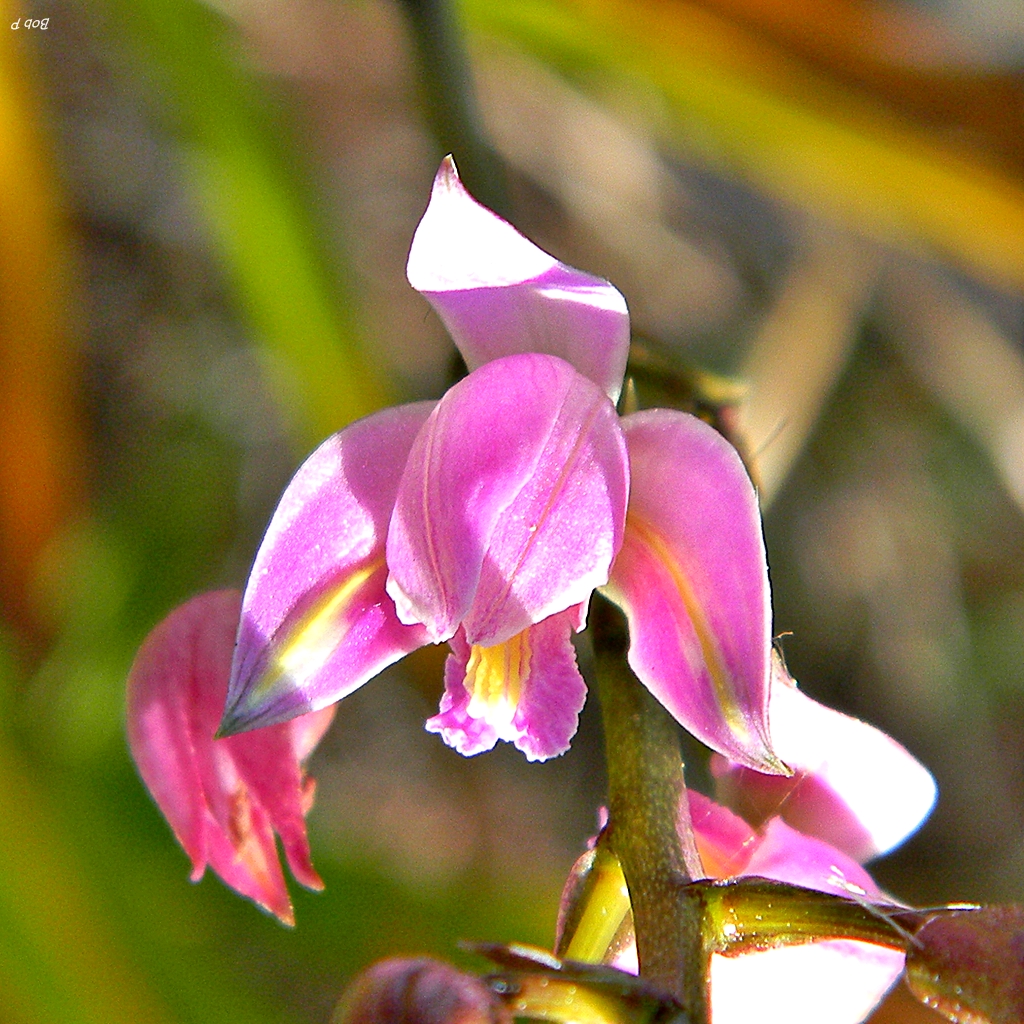
The flowers are pale pink to bright rose-pink, about ½ to ¾ inch wide, with three sepals and two petals of similar color. The lip is three-lobed, ruffled at the tip and marked with yellow ridges down the center; there is also yellow on the lateral sepals and lip. In Florida, plants flower from winter into summer, peaking in spring. Many Florida flowers open only partly, since the Florida plants are self-pollinating.
Fruit & Seeds
Each flower produces a green, ribbed, cylindrical capsule about an inch long. As it dries, it splits to release dust-fine seeds that drift on the wind. Because Florida plants pollinate themselves, nearly every flower sets fruit, and a single stalk can produce many capsules.
Quick Facts
| Scientific Name | Bletia purpurea (USDA symbol BLPU) |
| Family | Orchidaceae (orchid family) |
| Plant Type | Terrestrial orchid; herbaceous perennial from a corm |
| Mature Height | 1–2 ft in leaf; 2–4 ft (to about 5 ft) in flower |
| Mature Spread | 6–12 in |
| Growth Rate | Slow |
| Sun Exposure | Full sun to light shade |
| Water Needs | Moderate to high; moist to seasonally wet soil |
| Soil Type | Sandy, limestone or organic soils; also rotting stumps and logs |
| Soil pH | About 5.5–8.0 |
| Bloom Time | Winter to early summer; peak in spring |
| Flower Color | Pale pink to rose-pink with yellow on the lip |
| Fall Color | None; leaves wither seasonally |
| Fruit | Ribbed capsule with dust-like seeds |
| Deer Resistant | No; deer may browse flowering stalks |
| USDA Hardiness Zones | 10–11 |
Native Range
In the United States pinepink is native only to Florida. USDA PLANTS lists it from Florida alone, and the Institute for Regional Conservation records it from the Monroe County Keys north to Palm Beach and Lee counties, with a disjunct population in Polk County. In the Keys it is found on Big Pine Key and nearby islands, separated from mainland populations in Miami-Dade County.
It grows in pine rocklands and pine flatwoods, wet prairies and marl marshes, and the edges of cypress domes and swamps. It is often found in moist, open spots, and it can also grow on stumps, rotting logs and floating logs in swamps, where its corm is held in decaying wood. It is occasionally abundant in small areas, especially a year or two after fire.
Beyond Florida it is widespread in tropical America: in the Bahamas and the rest of the West Indies, in Mexico and Central America and into northern South America. Its Florida threatened status reflects the loss of pinelands and wetlands in south Florida, illegal collection and the lack of fire in many remaining natural areas.
📋 Regional plant lists featuring Pinepink: North & South Florida
Growing & Care Guide
Pinepink is rarely grown by native nurseries, but it is one of the more forgiving Florida native orchids where it can be grown outdoors. Because it is a Florida threatened species, buy only nursery-propagated plants from a reputable native or orchid nursery, and never dig plants or collect seed from the wild. Collecting is harmful to wild populations and illegal on land you do not own without permission.
Light
Give it full sun to light shade. In the wild it grows in open pinelands and marsh edges, and it flowers best with several hours of direct sun.
Soil & Water
It grows in moist to seasonally wet soils: sand, limestone or organic soils, and even in decaying wood. In a garden, use a moist, well-drained mix with some organic matter, such as sand with leaf mold or composted bark. It tolerates short dry periods once established but does not tolerate salt water or brackish flooding. In containers, a mix suitable for terrestrial orchids, kept damp but not soggy, works well.
Planting Tips
Plant corms with the top at or just below the surface, in a site that stays moist in the growing season. In south Florida it can be grown in the ground in a pineland or wetland-edge garden. North of zone 10 it is best grown in a pot and protected from frost. Place it where you can see the long flowering season from close up.
Pruning & Maintenance
Remove spent flowering stalks after the seed capsules split if you want a tidier plant. Keep competing grasses and shrubs from overgrowing it. In natural areas, periodic fire benefits pinepink by clearing competing vegetation. Do not fertilize heavily; a weak orchid fertilizer during active growth is enough for potted plants.
Propagation
Established plants can be divided by separating corms when they are dormant. Seed is produced abundantly, but like all orchids it needs special conditions to germinate: sterile lab culture or a compatible soil fungus. It is best left to specialist growers. Seedlings sometimes appear on their own in moist, mossy pots or garden beds near established plants.
Landscape Uses
- Wildflower and pineland gardens: long spring display of pink flowers in south Florida
- Wetland edges and rain gardens: for moist, sunny edges within its native range
- Container orchid: a native ground orchid for pots outside its frost-free range
- Habitat restoration: in pinelands, marshes and swamps in south Florida, using propagated plants
- Rare plant conservation: growing propagated plants helps keep a Florida threatened orchid in cultivation
Wildlife & Ecological Value
Pinepink is a modest part of south Florida’s pinelands and wetlands, but it illustrates how plants adapt when their normal pollinators are missing.
For Pollinators
In the West Indies, pinepink flowers are pollinated by bees that do not occur in south Florida. According to the Institute for Regional Conservation, all Florida plants are self-pollinating: the pollen falls onto the stigma within the flower, often before or without the flower opening fully. The flowers may still be visited by insects, but they do not depend on them.
For Birds
Pinepink has no direct food value for birds, but it grows in habitats important to many birds, including pine rocklands and marl prairies that support warblers, red-shouldered hawks and wading birds.
For Mammals
Deer may browse the flowering stalks, and small mammals sometimes dig corms. It has no significant food value for mammals.
Ecosystem Role
Like all orchids, pinepink depends on soil fungi for germination. It is part of the herb layer of fire-maintained pinelands and wet prairies and often appears in greater numbers after fire, which removes competing vegetation. Its ability to grow on logs and stumps lets it use small raised spots in swamps where seedlings of other plants cannot survive flooding.
Cultural & Historical Uses
The genus Bletia was named by the Spanish botanists Hipólito Ruiz and José Pavón in honor of Luis Blet, an eighteenth-century Spanish apothecary and botanist. The species was first described by Jean-Baptiste Lamarck as Limodorum purpureum, and Augustin Pyramus de Candolle later moved it to Bletia. Its species name means “purple.”
Across the Caribbean and Central America, pinepink is a familiar roadside and pasture orchid, and it is one of the most widespread orchids in the American tropics. That wide range, and its ability to pollinate itself, help explain how it reached south Florida, where it grows at the northern edge of its range alongside other tropical species that arrived from the Caribbean.
In Florida, pinepink is a favorite of native orchid enthusiasts and wildflower photographers. It is one of the native ground orchids visitors are most likely to see in bloom in Everglades National Park and the pine rocklands of the lower Keys, and a sign of healthy, fire-maintained habitat.
Frequently Asked Questions
Is pinepink protected in Florida?
Yes. Pinepink is listed as threatened by the State of Florida (FDACS Regulated Plant Index). Do not dig plants or collect seed from the wild. Buy only nursery-propagated plants from reputable growers.
Where can I see pinepink in the wild?
It grows in pine rocklands, pine flatwoods, wet prairies and swamps in south Florida, including Everglades National Park and the lower Florida Keys. It usually blooms from late winter into spring.
Can I grow pinepink outside south Florida?
In the ground it is best suited to frost-free areas, roughly zones 10 and 11. Elsewhere it can be grown in a pot and protected from frost.
Why do some pinepink flowers never open fully?
Florida plants are self-pollinating. The flower can fertilize itself before or without fully opening, so some flowers look half-closed but still produce seed capsules.
Is pinepink related to the grass pink orchid?
Both are pink-flowered ground orchids of Florida wetlands, but they are in different genera. Grass pink (Calopogon tuberosus) has a single grass-like leaf and flowers with the lip on top, while pinepink has pleated leaves and flowers with the lip at the bottom.

Looking for a nursery that carries Pinepink?
Browse our native plant nursery directory: Florida