
Rayless Sunflower (Helianthus radula)
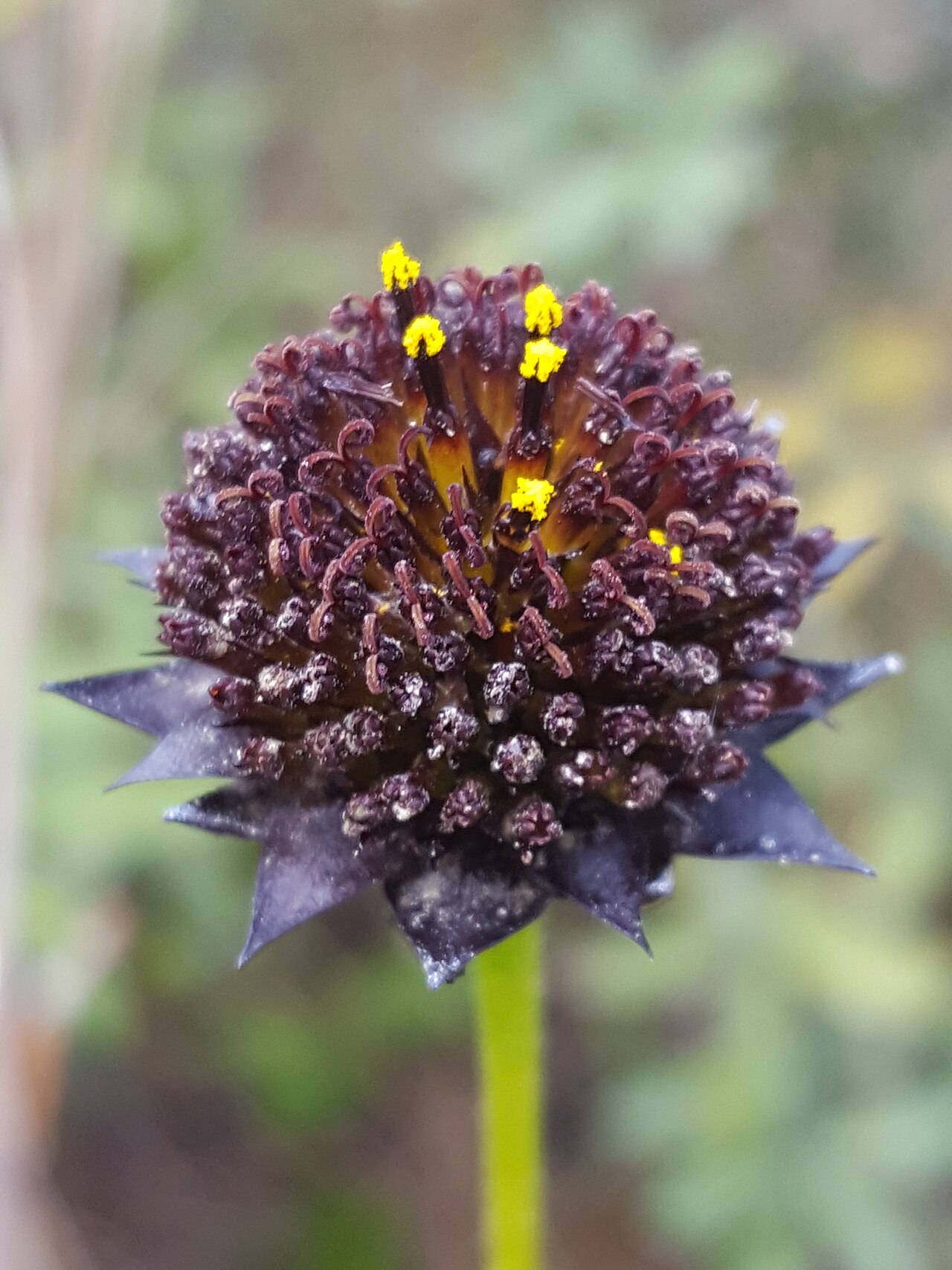
Helianthus radula, known as Rayless Sunflower or pineland sunflower, is an unusual perennial sunflower of the pine flatwoods and savannas of the Gulf and southeastern Coastal Plain. Instead of the leafy, branching stems of familiar sunflowers, it forms a flat rosette of broad, rough leaves pressed against the ground, and in fall sends up a slender, nearly leafless stalk 2 to 3 feet tall. Each stalk carries a dark purple-brown head that usually has no petals at all. It belongs to the aster family (Asteraceae).
The Atlas of Florida Plants lists it under the common name “stiff sunflower.” That name is easy to confuse with a different plant: the Stiff Sunflower of prairies, Helianthus rigidus (also called H. pauciflorus), which has large yellow-rayed heads and grows mainly in the Midwest and Great Plains. This guide uses the USDA PLANTS common name, rayless sunflower, to keep the two apart.
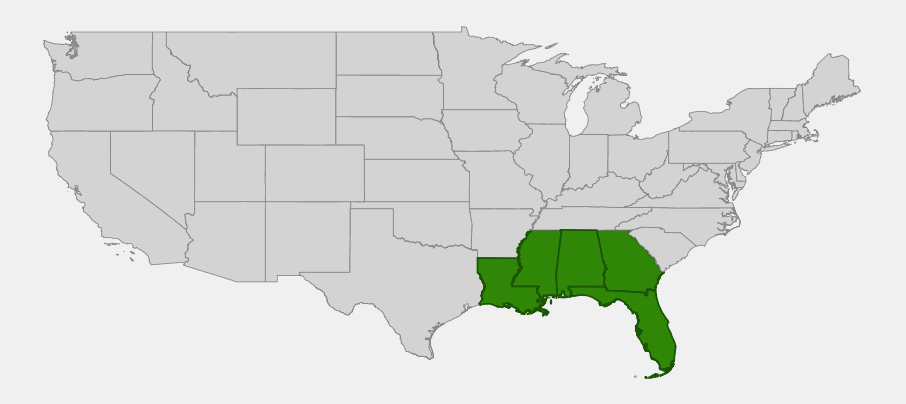
Rayless sunflower is native to Florida, Georgia, Alabama, Mississippi and Louisiana, and it is not listed as threatened in Florida. It is a plant for naturalists and for gardeners making sunny, sandy pine-savanna plantings, where its dark button heads add an odd, sculptural note among the grasses in autumn. This guide covers how to identify it, where it grows, and how to grow it.
Identification
Rayless sunflower is easy to recognize once you know it: a ground-hugging rosette of rough, rounded leaves and, in fall, one or a few tall, thin stalks each topped by a dark, button-like head.
Growth Habit
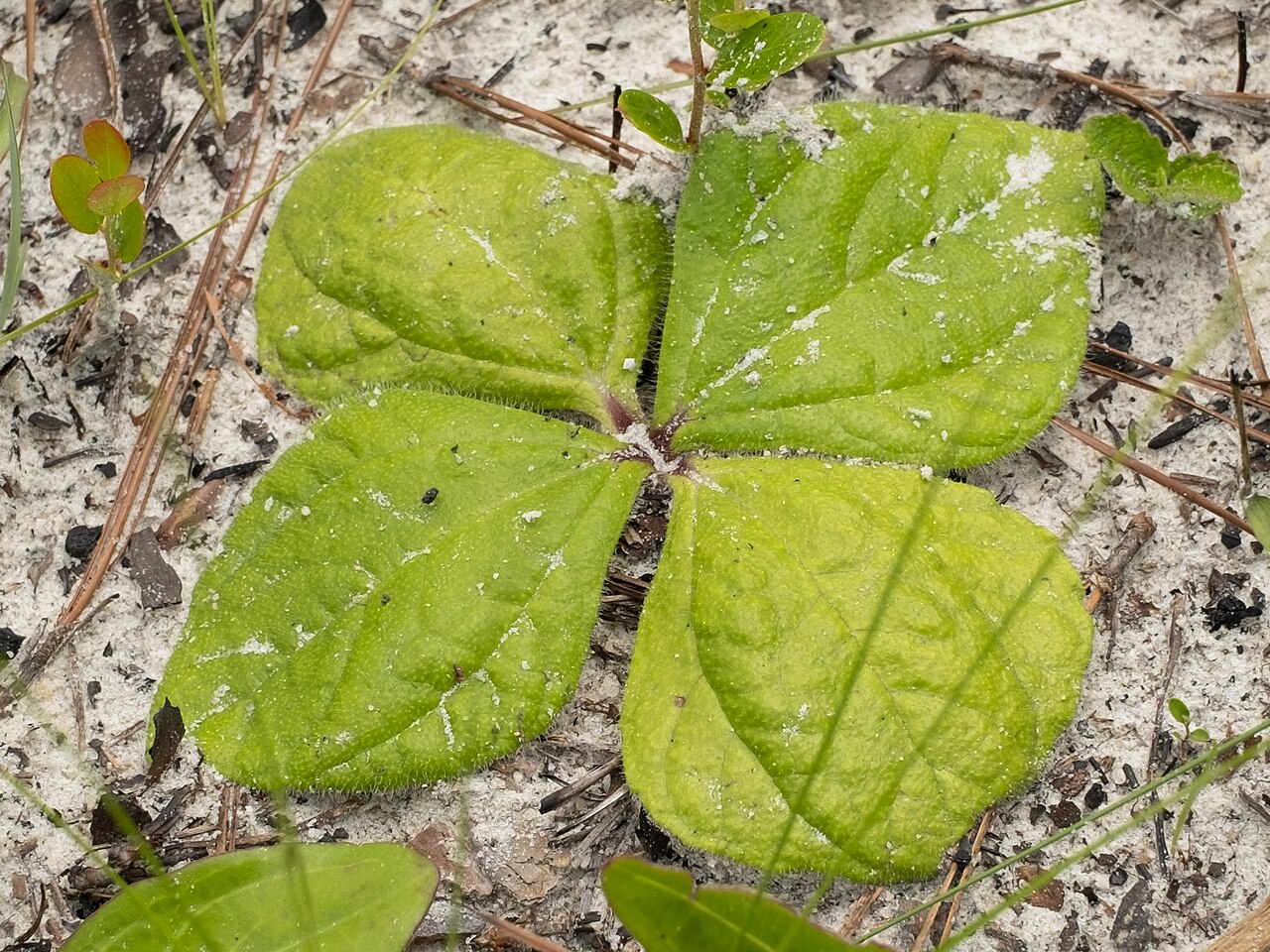
A perennial that grows from a short, thick rootstock. For most of the year it is just a low basal rosette a few inches high. From late summer it produces one or a few erect, slender, rough-hairy flowering stems, usually 2 to 3 feet tall, with only a few small, reduced leaves. Plants are often scattered rather than forming dense colonies.
Leaves
The basal leaves are broad, oval to nearly round, roughly 2 to 5 inches long, and lie flat on the ground in opposite pairs that form a cross-shaped rosette. Both surfaces are covered in stiff hairs, so they feel like sandpaper; the species name radula means a rasp or scraper. The few stem leaves are much smaller and well spaced along the stalk.
Flowers
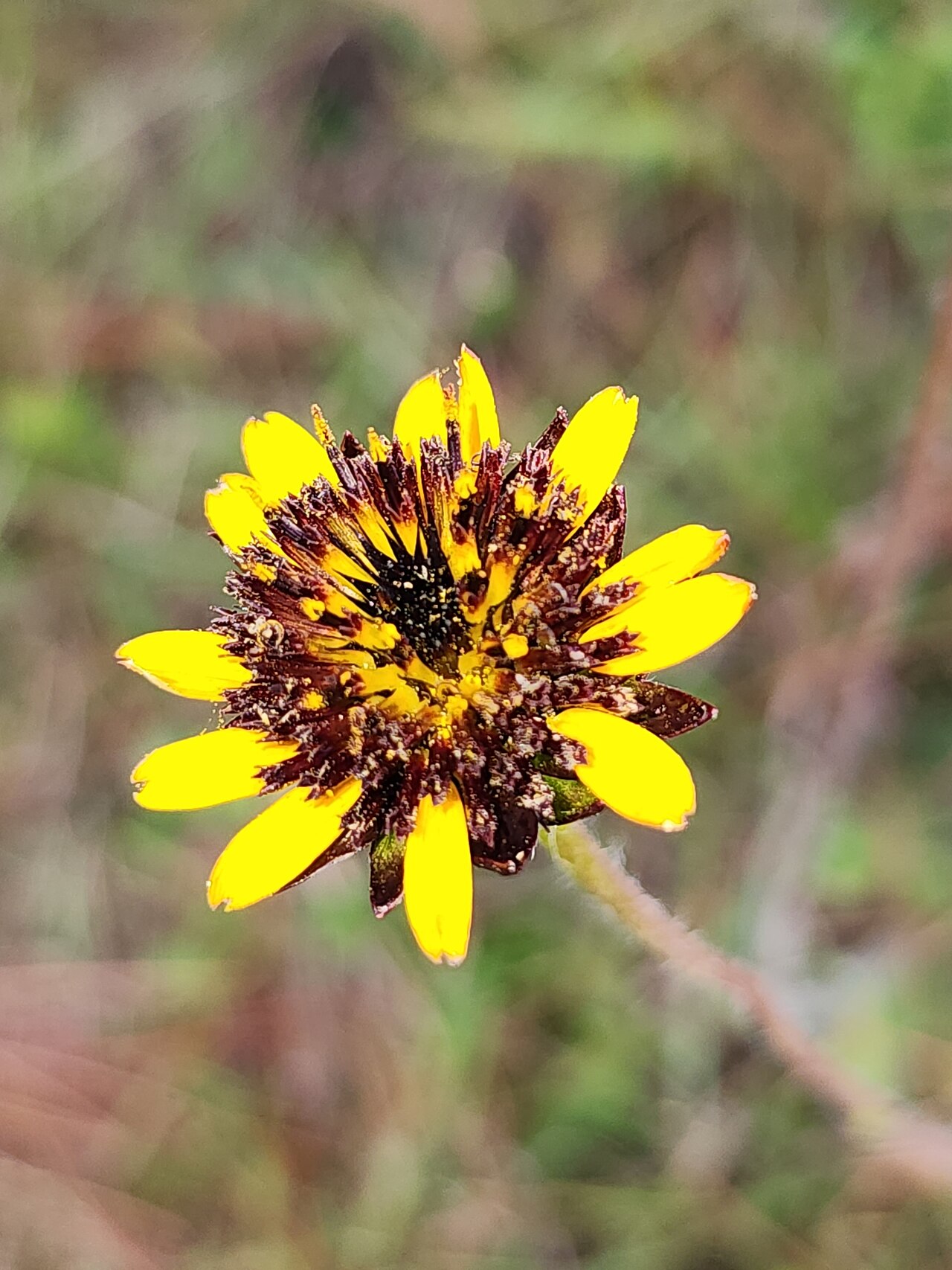
Each stalk ends in a single head, occasionally two or three, about 1 to 1.5 inches across. The disk florets are dark reddish purple to purple-brown, with yellow pollen showing when they open, and the bracts (phyllaries) beneath the head are also dark purple and pointed. Most heads have no ray florets, but some plants have a ring of short yellow rays. The Lady Bird Johnson Wildflower Center gives a bloom time of September to November.
Fruit & Seeds
The disk florets ripen into small, dark achenes (cypselae) typical of sunflowers. FNPS notes that birds and small mammals eat the seeds.
Similar Species
The dark, rayless heads look more like a blazing star or a chaffhead bud than a sunflower, but the broad, flat, sandpapery rosette is distinctive. Lakeside Sunflower (H. carnosus), a northeast Florida endemic, also has basal leaves and tall stalks, but its leaves are long, narrow and smooth and its heads have showy yellow rays. Swamp Sunflower is a tall, leafy, branched plant with many yellow-rayed heads.
Quick Facts
| Scientific Name | Helianthus radula (accepted by USDA PLANTS and the Atlas of Florida Plants) |
| Family | Asteraceae (aster family) |
| Plant Type | Herbaceous perennial wildflower with a basal rosette |
| Mature Height | 2–3 ft in flower (rosette a few inches) |
| Mature Spread | About 1 ft |
| Growth Rate | Moderate |
| Sun Exposure | Full sun |
| Water Needs | Moderate; moist to moderately dry sand |
| Soil Type | Acidic sand or sandy loam |
| Soil pH | Acidic (about 4.5–6.5) |
| Bloom Time | September–November |
| Flower Color | Dark purple-brown disk; rays usually absent, sometimes short and yellow |
| Fall Color | None; rosette persists |
| Fruit | Small dark achenes |
| Deer Resistant | Unknown; rough leaves are seldom browsed |
| USDA Hardiness Zones | 8a–9b |
Native Range
Rayless sunflower is a Coastal Plain species of the Deep South. USDA PLANTS and the Lady Bird Johnson Wildflower Center record it from Alabama, Florida, Georgia, Louisiana and Mississippi, and some references extend it to southern South Carolina. Wikipedia summarizes the range as eastern Louisiana to South Carolina. In Florida it occurs mainly in the Panhandle and the northern and central peninsula.
Its home is the open, fire-maintained longleaf pine landscape: wet to mesic pine flatwoods, grassy pine savannas, and the moister edges of sandhills. FNPS lists flatwoods and moist to dry roadsides as its habitats. In Mississippi it grows on the Mississippi Sandhill Crane National Wildlife Refuge, one of the best remaining examples of Gulf Coast wet pine savanna.
Like many flatwoods wildflowers, it depends on frequent fire or mowing to keep the ground layer open and sunny. Fire suppression, conversion of savannas to pine plantations and development have reduced its habitat, but it remains reasonably widespread in the region, and roadsides and power-line corridors with regular mowing often support plants.
📋 Regional plant lists featuring Rayless Sunflower: North & South Florida · Alabama, Georgia & Mississippi · Arkansas, Louisiana, Eastern Oklahoma & Eastern Texas
Growing & Care Guide
Rayless sunflower is best suited to naturalistic, sunny plantings that imitate a pine savanna. It is not a showy border plant, but it is long-lived, low-maintenance and interesting. FNPS lists it as available from native nurseries and as seed through the Florida Wildflower Growers Cooperative.
Light
Plant in full sun. In shade the rosette weakens and flowering stops, as it does in overgrown, fire-suppressed flatwoods.
Soil & Water
Grow it in acidic sand or sandy loam. FNPS describes its moisture range as usually moist with occasional flooding through to soils that are not wet but not extremely dry. It is not tolerant of salt water or salt spray, so keep it away from beachfront sites. Once established it needs no irrigation in most of its range.
Planting Tips
Plant small container plants or sow seed in a sunny, sparse spot where the flat rosette will not be smothered. Keep mulch off the rosette and do not crowd it with tall, aggressive perennials. It looks best in drifts with bunchgrasses such as wiregrass and with other savanna wildflowers like blazing stars and chaffheads.
Pruning & Maintenance
Leave the flower stalks standing after bloom so the seeds can feed birds, then cut them off in winter. In larger naturalistic plantings, an annual winter mowing or a prescribed burn where allowed imitates the fire that keeps its habitat open. It needs no fertilizer.
Propagation
Grow it from seed collected from nursery stock or bought from native seed producers. FNPS notes that seed is available through the Florida Wildflower Growers Cooperative. Sow in fall or winter on the surface of a sandy mix or directly into a prepared bed.
Landscape Uses
- Pine savanna and flatwoods gardens: a characteristic fall wildflower of open longleaf pine landscapes
- Habitat restoration: a ground-layer species for fire-maintained flatwoods and savanna restoration
- Pollinator plantings: late-season pollen and nectar for bees
- Naturalistic meadows: an unusual dark-flowered accent among grasses
- Educational gardens: a striking example of a sunflower without petals
Wildlife & Ecological Value
Rayless sunflower offers late-season pollen, nectar and seeds in sunny pine savannas, at a time when many other flowers have finished.
For Pollinators
FNPS notes that it attracts a variety of pollinators, including bees, and butterflies. The exposed disk florets offer easy access to pollen for native bees in fall.
For Birds
FNPS notes that birds eat the seeds. Sparrows and other small seed-eaters forage on seed heads left standing in winter.
For Mammals
Small mammals eat the fallen seeds, according to FNPS.
Ecosystem Role
It is part of the diverse ground layer of longleaf pine flatwoods and savannas, among the most species-rich plant communities in North America. Its persistence depends on regular fire, so it is a useful indicator of a well-managed, open savanna.
Cultural & Historical Uses
The species was first described by Frederick Pursh in the early nineteenth century, under a different genus, and later moved to Helianthus by John Torrey and Asa Gray. The name radula, Latin for a scraper or rasp, describes the very rough, sandpapery leaves.
Rayless sunflower is a wild relative of the cultivated sunflower, Helianthus annuus. Most of the dozens of North American sunflower species have showy yellow rays, so a dark, petal-less species stands out in the genus and surprises people who meet it in the field.
Its common names reflect what people notice first. “Rayless” describes the petal-less heads, “pineland sunflower” its habitat, and the Florida Atlas name “stiff sunflower” its upright, rigid flower stalks.
Frequently Asked Questions
Why does rayless sunflower have no petals?
Most of its heads lack ray florets, the petal-like flowers around the edge of a typical sunflower head. The dark disk florets alone make up the head. Some plants do have short yellow rays, so a few heads look more like a small, dark-centered sunflower.
Is rayless sunflower the same as stiff sunflower?
The Atlas of Florida Plants uses “stiff sunflower” for Helianthus radula, but the same name is also used for Helianthus rigidus (H. pauciflorus), a different, yellow-rayed prairie sunflower. They are separate species with different ranges.
Where does rayless sunflower grow?
In pine flatwoods, pine savannas and sandhill edges of the Coastal Plain in Florida, Georgia, Alabama, Mississippi and Louisiana, with some references extending it to South Carolina.
Can I grow rayless sunflower in my garden?
Yes, in full sun and acidic sandy soil, especially in a naturalistic savanna-style planting within its range. Keep the rosette uncrowded and unmulched, and leave the seed heads for birds.
When does rayless sunflower bloom?
Mostly in fall. The Lady Bird Johnson Wildflower Center gives September to November, and plants in the Deep South may begin in late summer.

Looking for a nursery that carries Rayless Sunflower?
Browse our native plant nursery directory: Alabama · Florida & Georgia · Louisiana & Mississippi