
Yellow Anise (Illicium parviflorum)
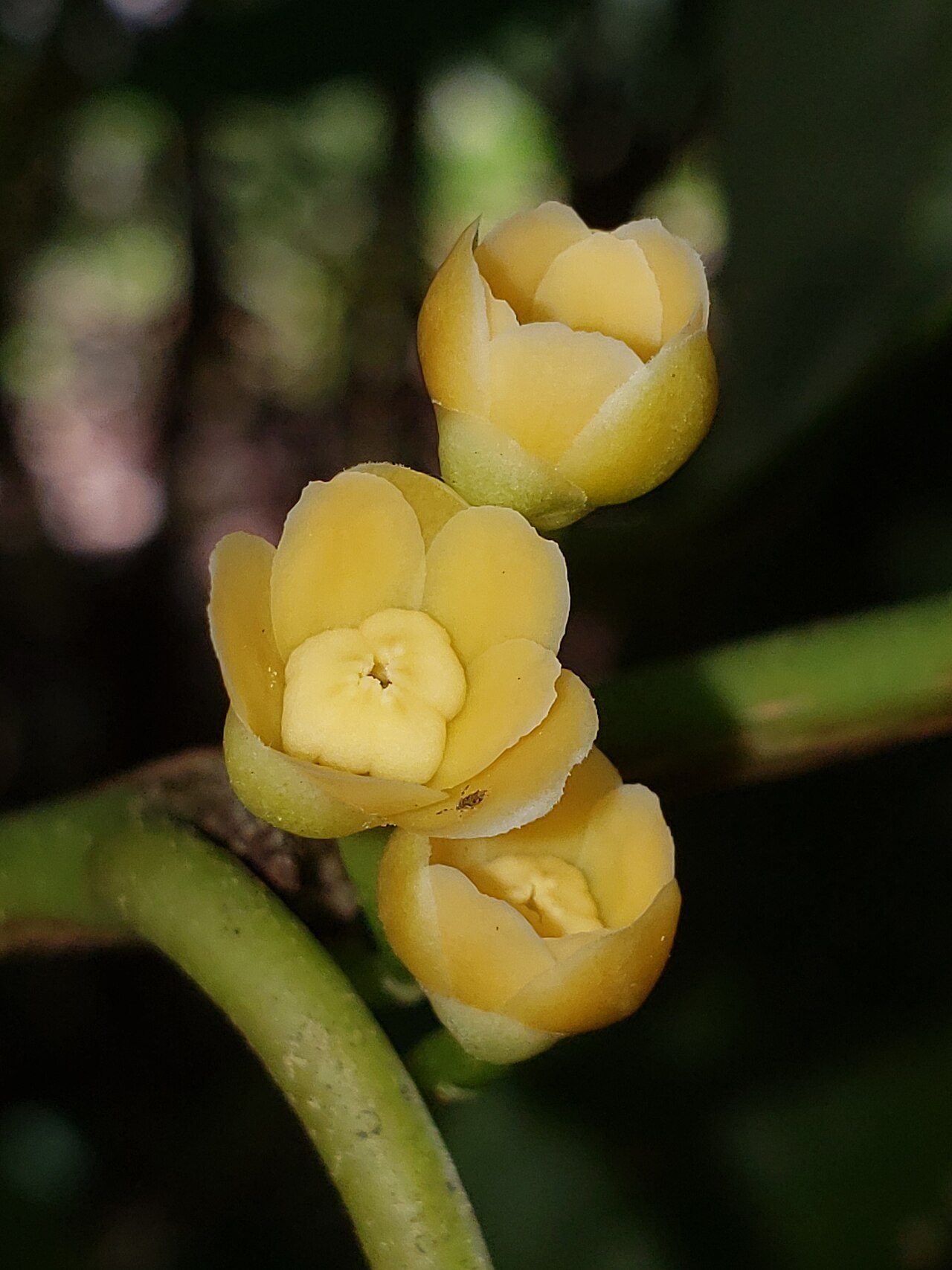
Illicium parviflorum, Yellow Anise or yellow anisetree (the USDA PLANTS name), is an evergreen shrub or small tree from the spring runs and wet hammocks of central Florida. Its olive-green leaves smell strongly of anise or licorice when crushed, and it bears small, pale yellow flowers in late spring and summer.
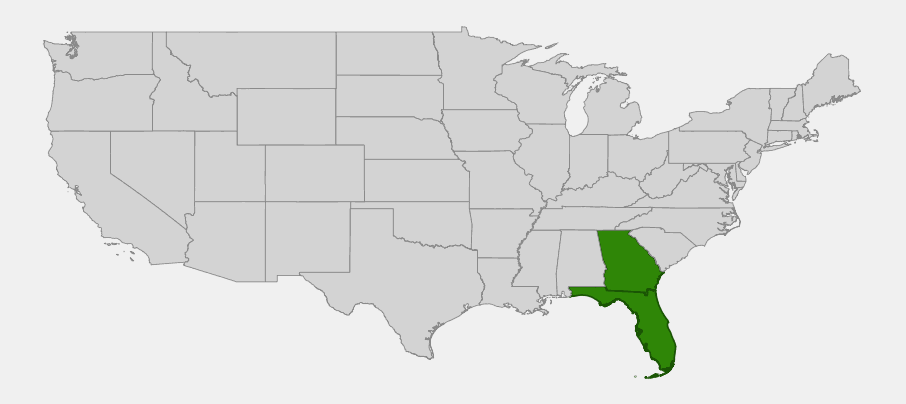
In the wild it is rare. It is listed as Endangered by the State of Florida (FDACS Regulated Plant Index), and the Atlas of Florida Plants treats it as a Florida endemic. USDA PLANTS also records it from Georgia, so we don’t call it endemic here. In the nursery trade, on the other hand, it is one of the most widely planted native shrubs in the Southeast, valued as a tough, fast-growing evergreen hedge for shade.
Garden plants are all nursery-propagated, and that is the only way to get it: buy plants from a nursery and never collect from wild populations. It belongs to the star anise family (Schisandraceae, formerly Illiciaceae). Note that its fruits are poisonous and are not the culinary star anise.
Identification
Yellow anise is easy to recognize by its aromatic leaves. Florida’s other native anise, Florida anise or star anise (Illicium floridanum), has the same scent but very different flowers.
Leaves
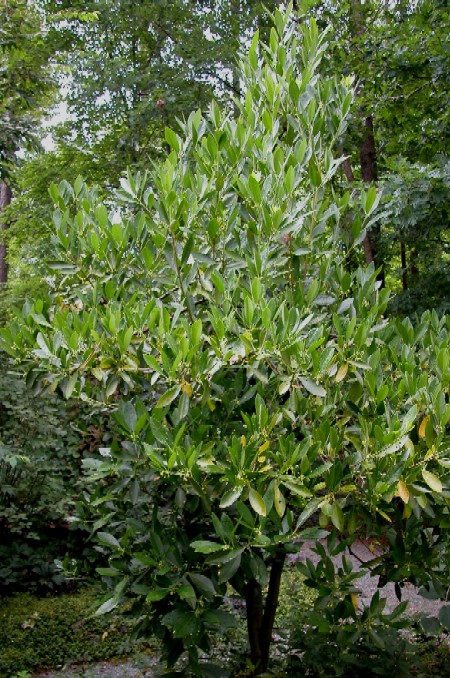
The evergreen leaves are elliptic to lance-shaped, 2 to 6 inches long, thick, smooth and olive to yellow-green, crowded toward the branch tips. Crushed leaves have a strong anise or licorice scent, the best field mark. In full sun the foliage turns more yellowish.
Habit & Bark
It grows as a dense, multi-stemmed shrub or small tree, usually 8 to 15 feet tall (occasionally to about 20 feet) and 6 to 10 feet wide, with an upright, pyramidal to rounded shape. It spreads slowly by root suckers and can form thickets. The bark is smooth and gray-brown.
Flowers
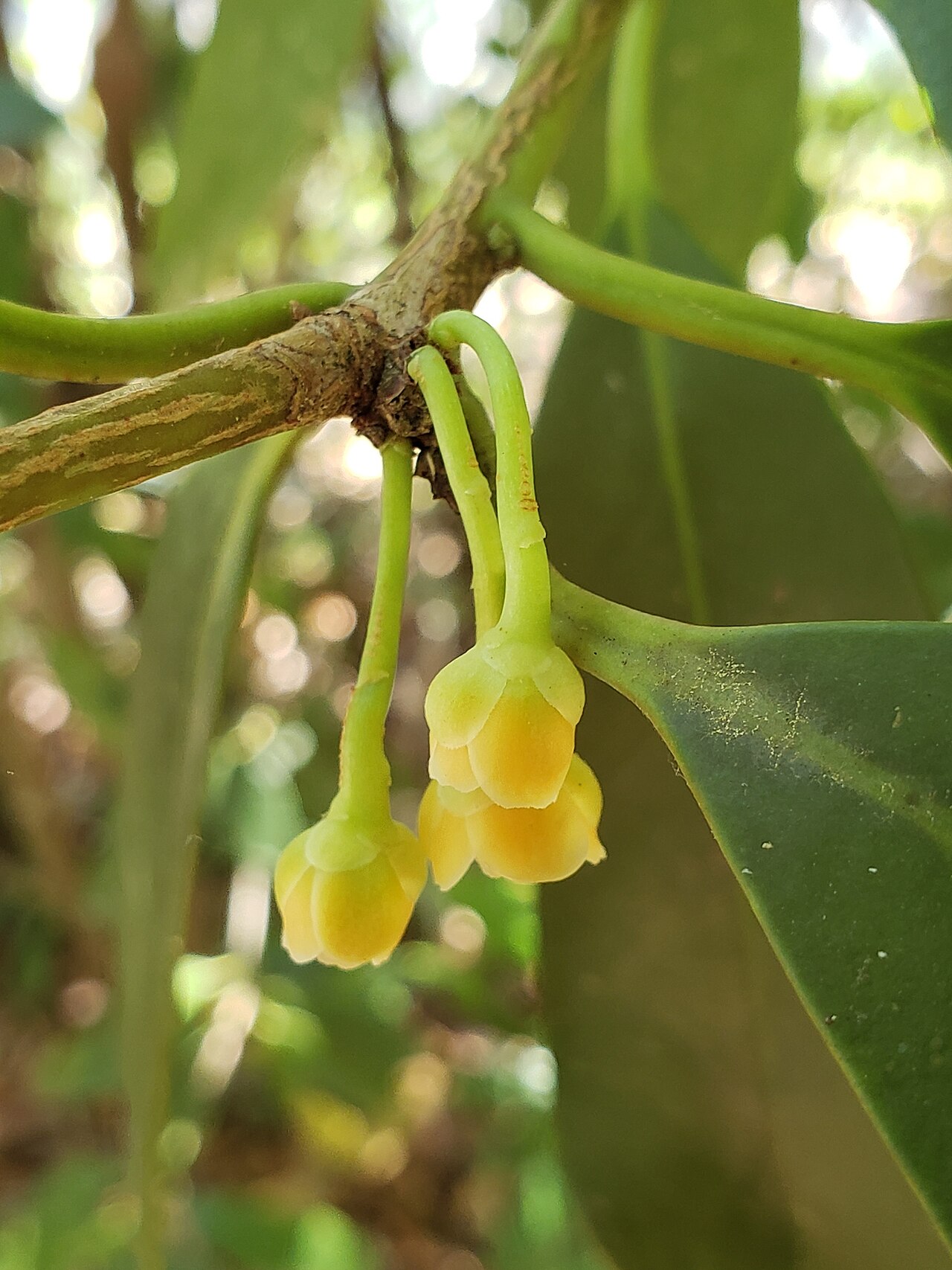
The flowers are small, about ½ inch across, with many pale yellow to cream tepals forming a little cup. They hang on slender stalks from the leaf axils from late spring into summer, mainly May to July. They are easy to overlook. Florida anise, in contrast, has larger, maroon-red, star-shaped flowers in early spring.
Fruit
The fruit is a small, star-shaped cluster of woody pods (follicles), each holding a single shiny brown seed. The pods split open in late summer and fall. All parts, especially the fruit and seeds, are poisonous.
Quick Facts
| Scientific Name | Illicium parviflorum (USDA common name: yellow anisetree) |
| Family | Schisandraceae (star anise family; formerly Illiciaceae) |
| Plant Type | Evergreen shrub or small tree |
| Mature Height | 8–15 ft (up to about 20 ft) |
| Mature Spread | 6–10 ft |
| Growth Rate | Moderate to fast |
| Sun Exposure | Part shade to full shade; full sun with moisture |
| Water Needs | Moderate to high; tolerates wet soil and some drought once established |
| Soil Type | Moist sandy, loamy or mucky soil |
| Soil pH | About 5.0–7.0 |
| Bloom Time | May–July |
| Flower Color | Pale yellow to cream |
| Fall Color | Evergreen |
| Fruit | Star-shaped cluster of woody pods; poisonous |
| Deer Resistant | Yes |
| USDA Hardiness Zones | 7–10 |
Native Range
Yellow anise has one of the smallest natural ranges of any widely planted shrub. The Atlas of Florida Plants treats it as a Florida endemic, with wild plants concentrated in a few central Florida counties, especially along spring runs and streams in the Ocala National Forest and the Wekiva River basin. USDA PLANTS also records it as native in Georgia, which is why we describe its range as Florida and Georgia rather than calling it a strict Florida endemic.
Its habitat is wet hammocks, the edges of swamps and bayheads, and the banks of spring runs and seepage streams, where the soil stays moist and the canopy is shady. It often grows in dense colonies beneath trees such as sweetbay, red maple and swamp bay.
It is listed as Endangered by the State of Florida (FDACS Regulated Plant Index) because of its very limited wild range. Its paradox is that it is both a rare plant in nature and a common landscape shrub. Wild populations remain vulnerable to changes in spring flow, development and clearing. Never collect from the wild; nursery plants are easy to find.
📋 Regional plant lists featuring Yellow Anise: North & South Florida · Alabama, Georgia & Mississippi
Growing & Care Guide
Yellow anise is one of the easiest native evergreens for shady and wet spots in the Southeast. It is sold by many native and conventional nurseries; always buy nursery-propagated plants, since wild plants are protected as a state Endangered species in Florida.
Light
It grows best in part shade to full shade, where its leaves stay a rich olive green. It also takes full sun if the soil stays moist, though the foliage turns yellowish there.
Soil & Water
It prefers moist to wet soil and tolerates periodic flooding, but it adapts to ordinary, well-drained garden soil once established and can handle moderate drought. It is not fussy about pH. Mulch and occasional deep watering in dry spells keep it looking its best.
Planting Tips
For a hedge or screen, space plants 4 to 6 feet apart. It is excellent along the north or east side of a building, under tall trees, or at the edge of a pond or rain garden. Plant only nursery-grown plants and never collect from the wild.
Pruning & Maintenance
It tolerates heavy pruning and shearing, and responds well to being cut back to rejuvenate leggy plants. Remove root suckers if you want to keep it to a single clump. It has very few pest or disease problems.
Propagation
It roots easily from semi-hardwood cuttings in summer, which is how most nursery plants are produced. It can also be grown from fresh seed or by separating rooted suckers. Cultivars such as ‘Florida Sunshine’ (bright yellow-green foliage) and ‘Forest Green’ (darker foliage) are propagated by cuttings.
Landscape Uses
- Evergreen hedges and screens: dense, fast-growing and tolerant of shearing
- Shade gardens: one of the few dense evergreens that thrive in full shade in the Deep South
- Wet areas and rain gardens: tolerates wet soil and periodic flooding
- Foundation plantings: aromatic foliage and few pests
Wildlife & Ecological Value
Yellow anise is valued more for cover than for food. Its dense, evergreen growth provides year-round shelter.
For Pollinators
The small flowers are visited by small flies, beetles and other insects. They are not an important nectar source for bees or butterflies.
For Birds
The dense, evergreen branches provide nesting sites and shelter for songbirds such as northern cardinals and Carolina wrens. Birds do not seem to eat the poisonous seeds.
For Mammals
Deer usually avoid the aromatic, toxic foliage, which makes it useful in areas with heavy deer browsing.
Ecosystem Role
In the wild it forms part of the dense, shady understory of spring-fed streams and wet hammocks in central Florida, helping to shade and stabilize stream banks. It depends on the steady flow and moist conditions those springs provide.
Cultural & Historical Uses
The genus name Illicium comes from the Latin illicio, “to entice” or “allure,” a reference to the plants’ attractive fragrance. The species name parviflorum means “small-flowered.”
Yellow anise is a relative of the Asian star anise (Illicium verum), the source of the spice. North American anise species, including yellow anise, are poisonous and must never be used as a spice or tea. Their fruits contain toxic compounds such as anisatin, and Asian star anise products contaminated with toxic Illicium species have caused poisonings.
Its story is unusual: a rare, state-endangered plant in the wild that has become a common landscape shrub through nursery propagation. Garden plantings help keep it in cultivation, but they do not replace the protection of its natural spring-run habitat.
Frequently Asked Questions
Is yellow anise endangered?
Yes, in Florida. It is listed as Endangered by the State of Florida (FDACS Regulated Plant Index) because its wild range is very small. Nursery-propagated plants are widely sold, so buy those and never collect from the wild.
Is yellow anise endemic to Florida?
The Atlas of Florida Plants treats it as a Florida endemic, with wild plants mostly in central Florida. USDA PLANTS also records it as native in Georgia, so its status outside Florida is uncertain.
Is yellow anise the same as star anise?
No. The culinary star anise is Illicium verum from Asia. Yellow anise and Florida anise (I. floridanum) are native relatives, and their fruits are poisonous. Never use them as a spice.
Is yellow anise poisonous?
Yes. The leaves, fruit and seeds contain toxic compounds and should not be eaten by people or pets.
How fast does yellow anise grow?
It grows at a moderate to fast rate, often 1 to 2 feet per year in moist soil, and makes a dense screen within a few years.

Looking for a nursery that carries Yellow Anise?
Browse our native plant nursery directory: Florida & Georgia