
Whitetop Aster (Oclemena reticulata)
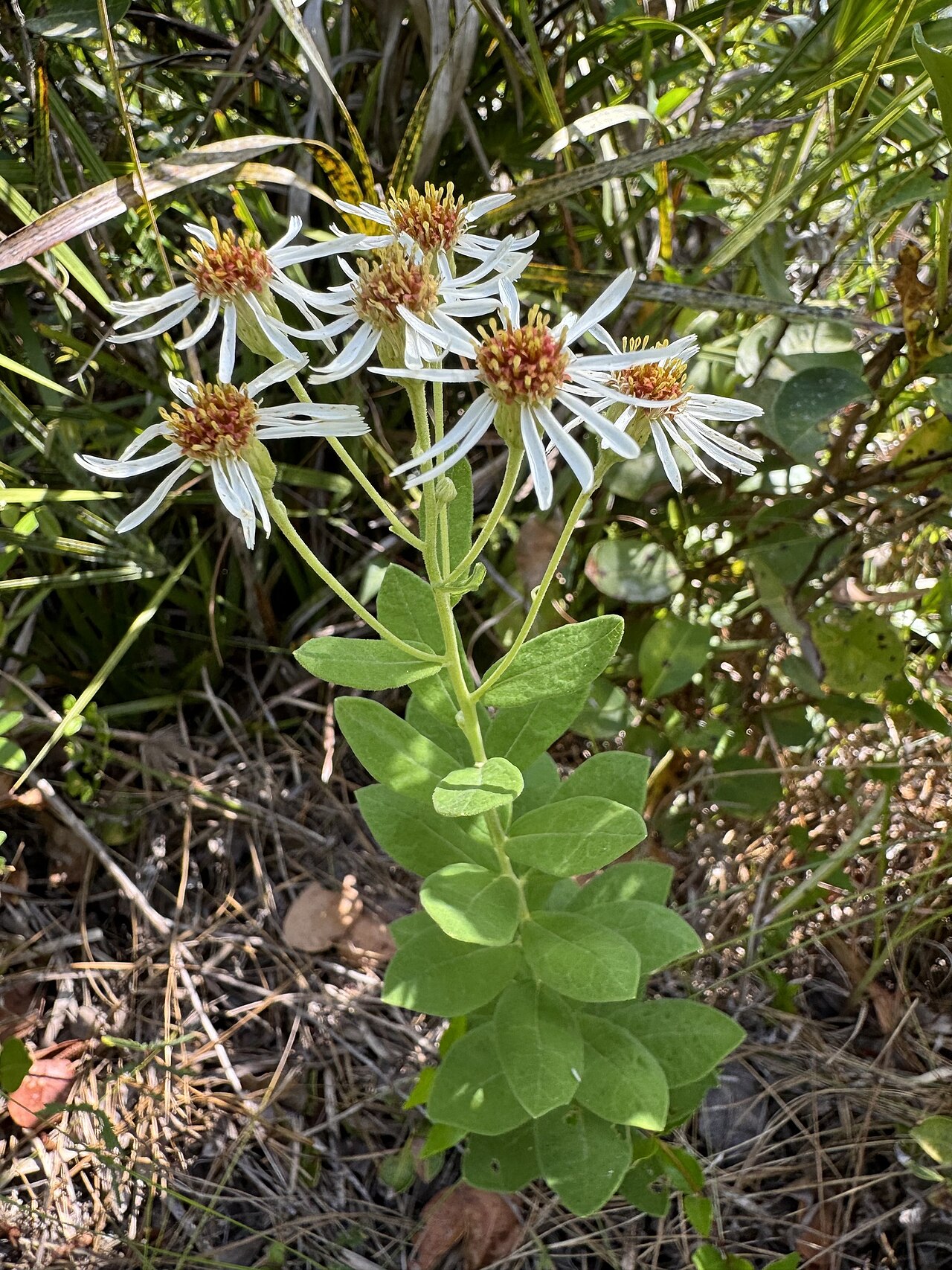
Oclemena reticulata, known as Whitetop Aster, pinebarren aster or pine barren whitetop aster, is a native perennial of the wet pinelands of the Southeastern Coastal Plain. It belongs to the aster family (Asteraceae). In spring it raises leafy stems 1 to 3 feet tall topped by a flat cluster of white, daisy-like flower heads with yellow centers. It was long known as Aster reticulatus, and that name is still used in many older books and nursery lists.
What makes whitetop aster unusual is its timing. Most of our native asters bloom in late summer and fall, but whitetop aster flowers in spring, mainly from March to May, alongside many of the early flatwoods wildflowers. The species name reticulata, “net-veined,” refers to the conspicuous network of raised veins on the undersides of its broad, softly hairy leaves.
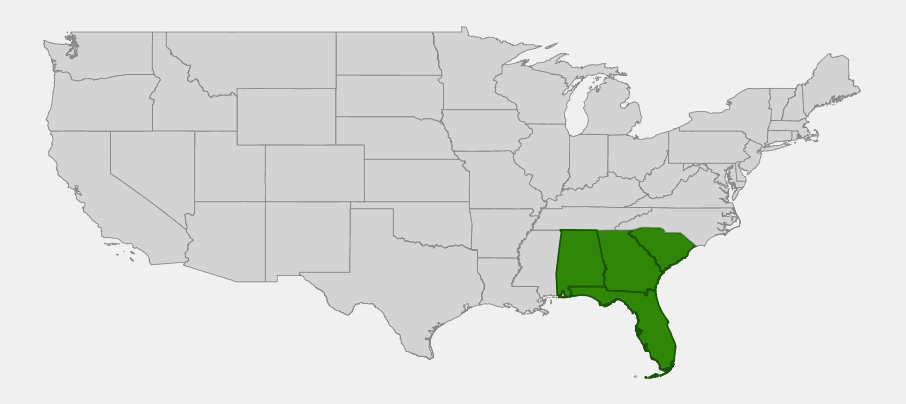
Whitetop aster grows only in Florida, Georgia, South Carolina and Alabama. It is a plant of moist to wet pine flatwoods, savannas, bog edges, seepage slopes and ditches. In gardens it suits a sunny, moist spot or a rain garden, where its spring flowers fill the gap before summer-blooming wildflowers start. This guide covers how to identify it, where it grows, how to grow it, and its value for pollinators.
Identification
Out of flower, whitetop aster looks like a leafy, hairy stem among grasses. In bloom, its spring timing, flat-topped white clusters and net-veined leaves set it apart from the white-flowered asters and fleabanes it grows with.
Stems & Habit
Plants have one or a few upright stems, usually 1 to 3 feet tall (about 30 to 90 cm), that are densely covered with soft hairs. The stems are unbranched below and branch only at the top to form the flower cluster. Plants spread slowly underground and can form small patches in good habitat.
Leaves
The 12 to 30 leaves are spread evenly along the stem rather than clustered at the base. They are elliptic to oblong, broad for an aster at about ½ to 1½ inches wide, stalkless, and soft to the touch with dense hairs, especially underneath. The margins are smooth or have a few teeth near the tip and are slightly rolled under. Underneath, a network of raised veins gives the leaf the netted look behind the species name.
Flowers
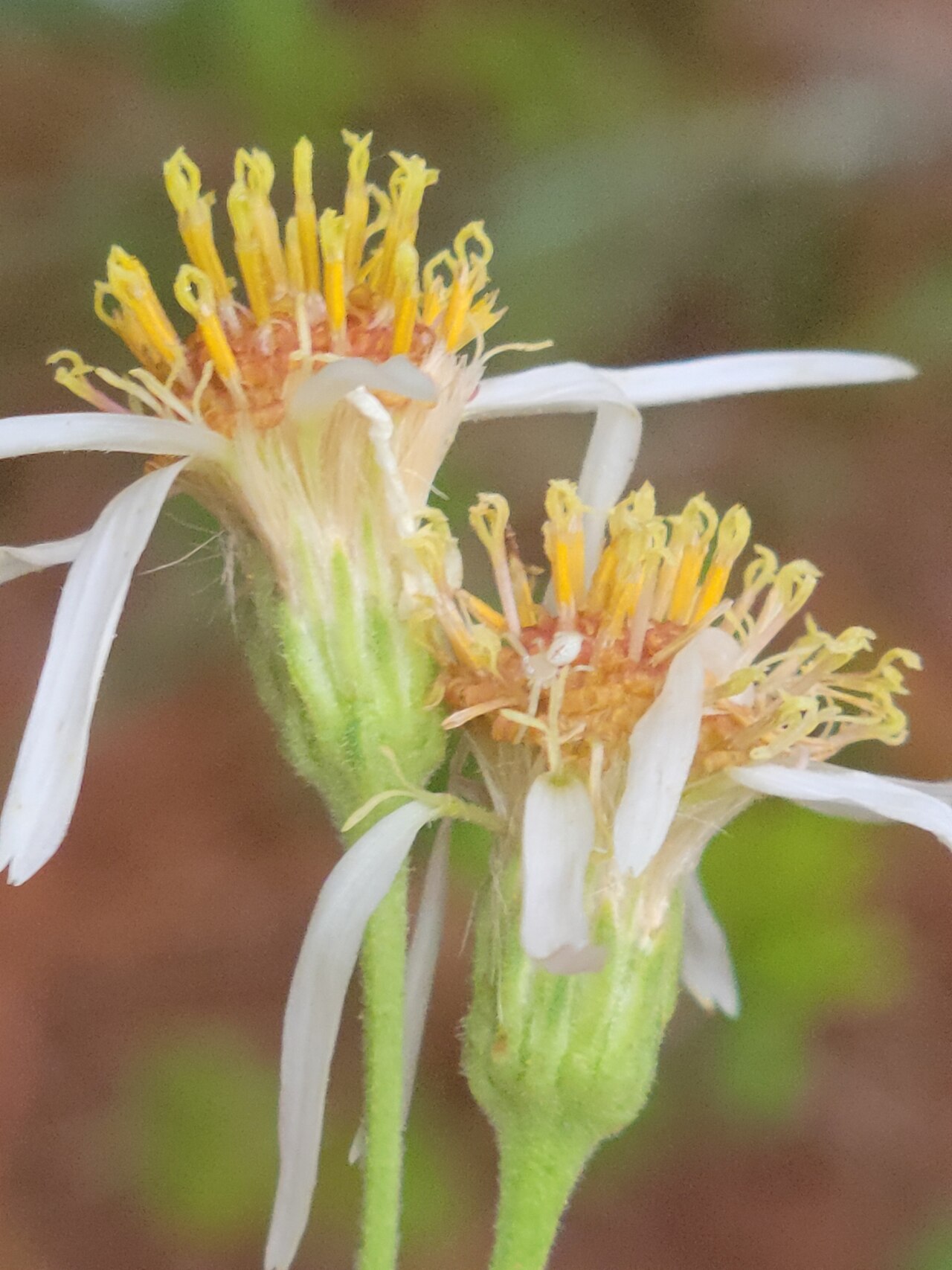
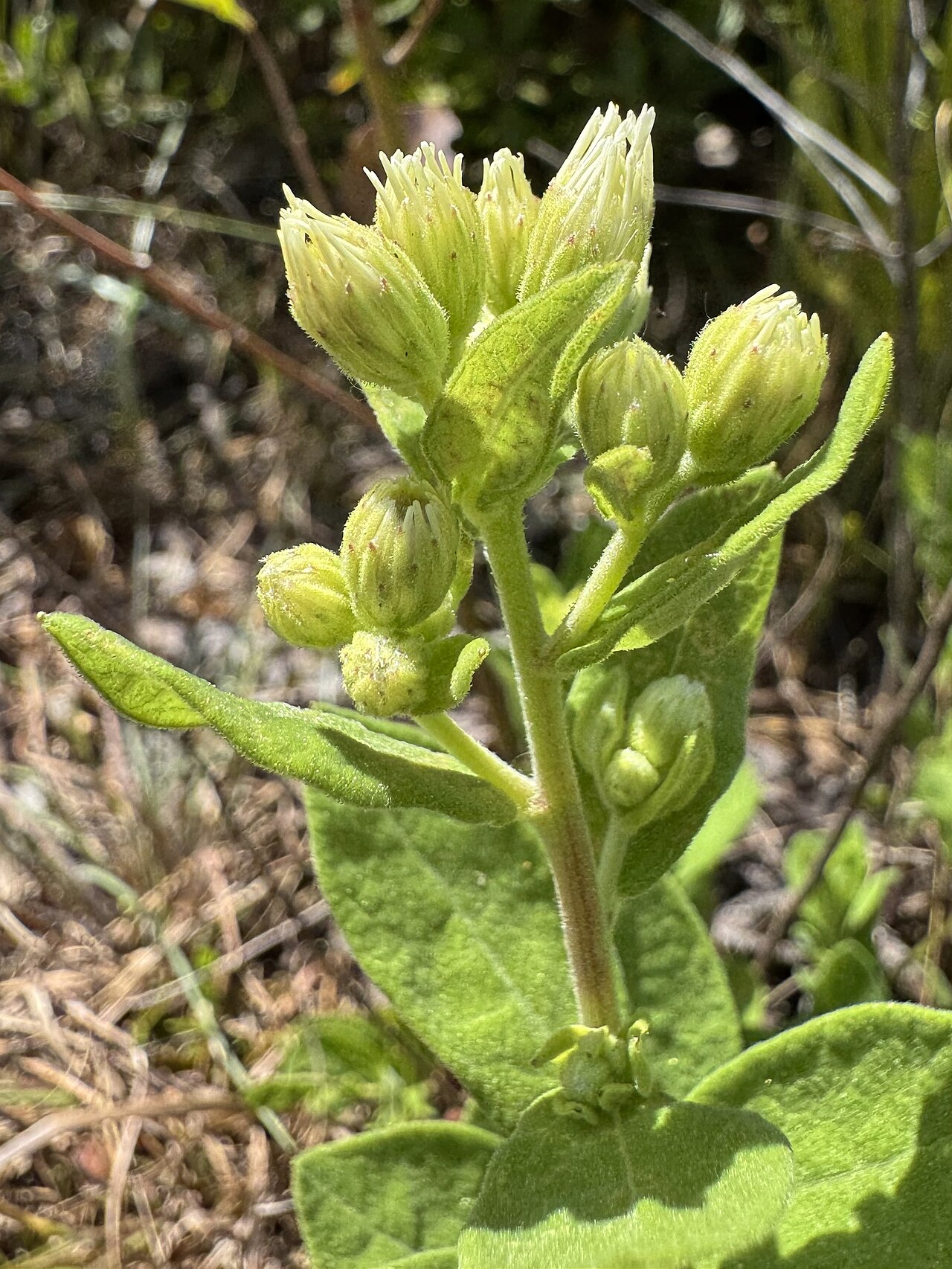
The flower heads are carried in a flat-topped or slightly rounded cluster (corymb) of about 9 to 40 heads at the top of the stem. Each head is about 1 to 1½ inches across, with 7 to 11 white (occasionally pinkish) ray flowers and 15 to 30 yellow disk florets that may turn reddish with age. The bracts under each head are narrow, overlapping, and hairy or glandular. Flowering peaks from March to May. Plants that are mowed or damaged early may flower again in summer or fall.
Fruit & Seeds
After flowering, each floret produces a small, ribbed achene topped by a whitish pappus of fine bristles. The seeds ripen in late spring and early summer and are dispersed by wind.
Quick Facts
| Scientific Name | Oclemena reticulata (Pursh) G.L. Nesom (syn. Aster reticulatus, Doellingeria reticulata) |
| Family | Asteraceae (aster family) |
| Plant Type | Herbaceous perennial wildflower |
| Mature Height | 1–3 ft |
| Mature Spread | 1–2 ft; slowly forms small patches |
| Growth Rate | Moderate |
| Sun Exposure | Full sun to partial shade |
| Water Needs | Moderate to high; moist to seasonally wet soil |
| Soil Type | Acidic sand, peaty sand or sandy loam |
| Soil pH | About 4.5–6.0 (acidic) |
| Bloom Time | March–May (occasionally later after mowing or damage) |
| Flower Color | White rays (sometimes tinged pink) with yellow disks |
| Fall Color | None of note |
| Fruit | Small achene with a white bristly pappus, wind-dispersed |
| Deer Resistant | Not reliably; deer may browse young stems |
| USDA Hardiness Zones | 8–10 |
Native Range
Whitetop aster is endemic to the Southeastern Coastal Plain. USDA PLANTS and the Lady Bird Johnson Wildflower Center record it from four states: Florida, Georgia, Alabama and South Carolina. The Atlas of Florida Plants lists it as native to Florida, where it is a familiar spring wildflower of the flatwoods. NatureServe ranks it as apparently secure globally (G4).
Its typical habitats are moist to wet pine flatwoods and savannas, the edges of bogs and cypress domes, seepage areas, and wet roadside ditches that mimic those conditions. It is classed as a facultative wetland plant, equally at home in seasonally wet and moderately moist soils. Like many flatwoods wildflowers, it flowers best where fire or mowing keeps shrubs such as gallberry and saw palmetto from closing in.
The genus Oclemena was named by Edward Lee Greene and later adopted by Guy Nesom in his revision of the North American asters. It contains only a few species. Its relatives, whorled wood aster (O. acuminata) and bog aster (O. nemoralis), grow farther north and in the Appalachians, which makes whitetop aster the Coastal Plain member of the genus.
📋 Regional plant lists featuring Whitetop Aster: North & South Florida · Alabama, Georgia & Mississippi · North & South Carolina
Growing & Care Guide
Whitetop aster is an easygoing native for moist, sunny gardens in its native range. It is offered occasionally by native plant nurseries in Florida and Georgia and can be grown from seed. Use nursery-grown plants or seed collected sparingly with permission rather than digging wild plants.
Light
Full sun gives the sturdiest plants and most flowers. It also does well in partial shade, such as the light shade of open pines, but in deeper shade the stems lean and flowering drops off.
Soil & Water
Grow it in acidic, sandy or peaty soil that stays moist, especially in winter and spring when it is growing and flowering. It tolerates short periods of standing water and is a good fit for rain gardens, swales and the moist edges of ponds. It will grow in average garden soil if watered during dry spells, but it is not a plant for dry sand. No fertilizer is needed.
Planting Tips
Plant container-grown plants in fall or winter so they settle in before spring growth, about 12 to 18 inches apart. Group several together for a show of white in spring. Good companions include spring flatwoods wildflowers and low grasses, with summer and fall bloomers like blazing stars, goldenrods and rosin weeds to carry the color through the year.
Pruning & Maintenance
Cut back faded flower stems after the seed has dispersed in early summer if they look untidy. The leafy stems persist through summer. In larger naturalized plantings, a late-winter burn or mow keeps out woody plants and encourages strong flowering, as fire does in the wild. Plants are seldom troubled by pests or diseases.
Propagation
Sow fresh seed in early summer on the surface of a moist, sandy mix and keep it damp. Established patches can also be divided in fall or winter by separating rooted pieces from the edge of the clump.
Landscape Uses
- Spring pollinator gardens: an early-season source of nectar and pollen for bees, flies and small butterflies
- Rain gardens and swales: tolerates seasonally wet soil and short flooding
- Wet flatwoods and savanna restoration: a typical spring wildflower of fire-maintained wet pinelands
- Pond and bog edges: in moist, acidic, sunny margins
- Naturalistic plantings: spring white that complements later-blooming native asters and blazing stars
Wildlife & Ecological Value
Because it blooms in spring rather than fall, whitetop aster offers aster-family nectar and pollen at a season when few other composites are in flower in the Southeastern pinelands.
For Pollinators
The open flower heads give easy access to nectar and pollen. Small native bees such as sweat bees and mining bees, honey bees, flower flies, beetles and small butterflies visit the flowers. As with other asters, the pollen is an important protein source for native bees in spring.
For Birds
Small seed-eating birds may eat the achenes in early summer. Indirectly, the insects that use whitetop aster are food for birds of the flatwoods and savannas, including songbirds that nest in spring.
For Mammals
Deer and rabbits occasionally browse the leafy stems. The plant has no other notable role for mammals.
Ecosystem Role
Whitetop aster is part of the diverse groundcover of wet pine flatwoods and savannas. It resprouts from its base after fire and depends on periodic burning or similar disturbance to stay in open, sunny conditions. Its presence in a ditch or flatwoods remnant is a sign that native groundcover still survives there.
Cultural & Historical Uses
Frederick Pursh described this plant as Aster reticulatus in 1813. Over the next two centuries it was moved through several genera, including Doellingeria, before Guy Nesom transferred it to Oclemena as part of his broad revision of the North American asters. Gardeners and many field guides still use the old name Aster reticulatus.
The genus name Oclemena was coined by the American botanist Edward Lee Greene in the early 1900s. The common names “whitetop aster” and “pinebarren aster” describe its white flower clusters and pineland home.
There is little recorded traditional use of whitetop aster. Its main value today is ecological and ornamental: it is a reliable spring wildflower for Florida and Coastal Plain gardens and restoration projects, and a cheerful sign of spring in the flatwoods.
Frequently Asked Questions
Is whitetop aster the same as Aster reticulatus?
Yes. Aster reticulatus is the older name for the same plant. Botanists now place it in the genus Oclemena as Oclemena reticulata, but many nurseries and books still use the old name.
Why does this aster bloom in spring?
Whitetop aster is simply adapted to flower in spring, mainly March to May, unlike the many fall-blooming asters. Plants that are mowed or burned early can produce a second, smaller bloom later in the year.
Does whitetop aster need wet soil?
It prefers moist to seasonally wet, acidic soil and is well suited to rain gardens and pond edges. It can grow in average garden soil with watering during dry spells, but it does poorly in dry, sandy sites.
Will whitetop aster spread?
It spreads slowly and can form small patches over time, but it is not aggressive and is easy to keep in bounds.
Can I grow whitetop aster outside the Southeast?
It is native only to Florida, Georgia, Alabama and South Carolina and is adapted to their mild winters and long growing seasons. Gardeners farther north should choose one of their own native white asters instead.

Looking for a nursery that carries Whitetop Aster?
Browse our native plant nursery directory: Alabama · Florida & Georgia · South Carolina