
Retama Prieta (Senna polyphylla)
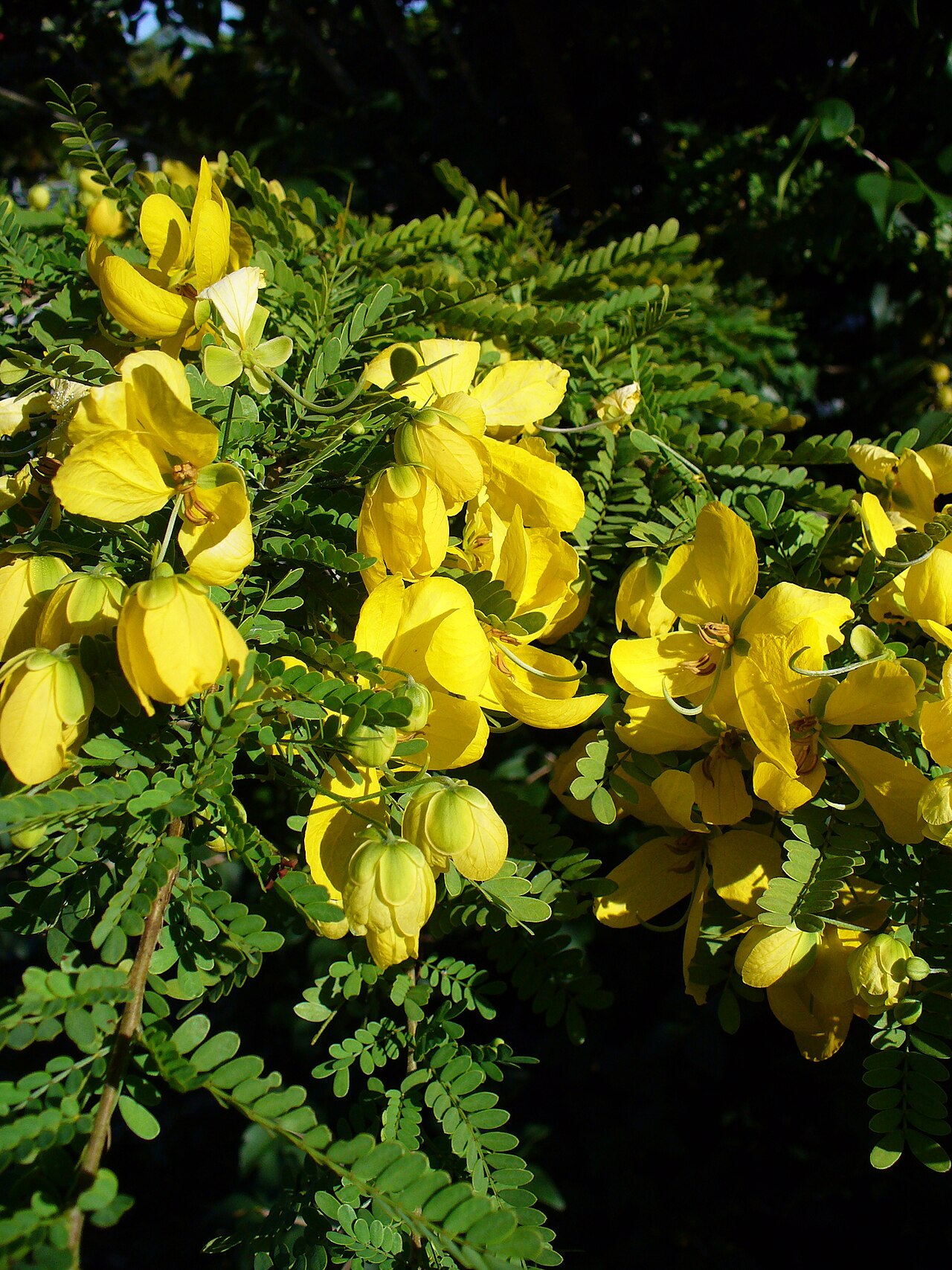
Senna polyphylla, called Retama Prieta in Puerto Rico and also known as hediondilla, is a small, slow-growing shrub of the island’s dry lowlands. It belongs to the legume family (Fabaceae) and to Senna, the genus of the cassias. Its leaves are divided into many pairs of tiny leaflets, which gives the whole plant a soft, feathery look, and for much of the year it carries cup-shaped, bright yellow flowers followed by long, slender pods. The species name polyphylla means “many leaves” and refers to those numerous leaflets.
In Puerto Rico retama prieta grows mainly below about 1,000 feet in dry and semi-dry forest and scrub. The Institute for Regional Conservation records it in the Guánica State Forest on the dry south coast and reports it from the Susúa State Forest in the southwestern foothills. It tends to grow where competition is light: on rocky, shallow, excessively drained ground, on overgrazed pasture and along disturbed edges. It also grows wild in the U.S. Virgin Islands and elsewhere in the West Indies.
For gardeners in Puerto Rico and other frost-free places, retama prieta is one of the most useful native flowering shrubs for hot, dry, sunny sites. It tolerates drought, salt spray and poor, stony soil, stays compact enough for small yards, and feeds bees with its flowers. It is grown as an ornamental in South Florida, and gardeners there sometimes call it desert cassia. This guide covers how to recognize it, where it grows, how to grow it from seed, and what it does for wildlife.
Identification
Retama prieta is easy to recognize when it is in flower. The combination of very fine, ferny foliage, clear yellow cassia flowers and long, beaded pods on a shrub only a few feet tall sets it apart from the larger, coarser-leaved sennas planted in Caribbean gardens.
Growth Form
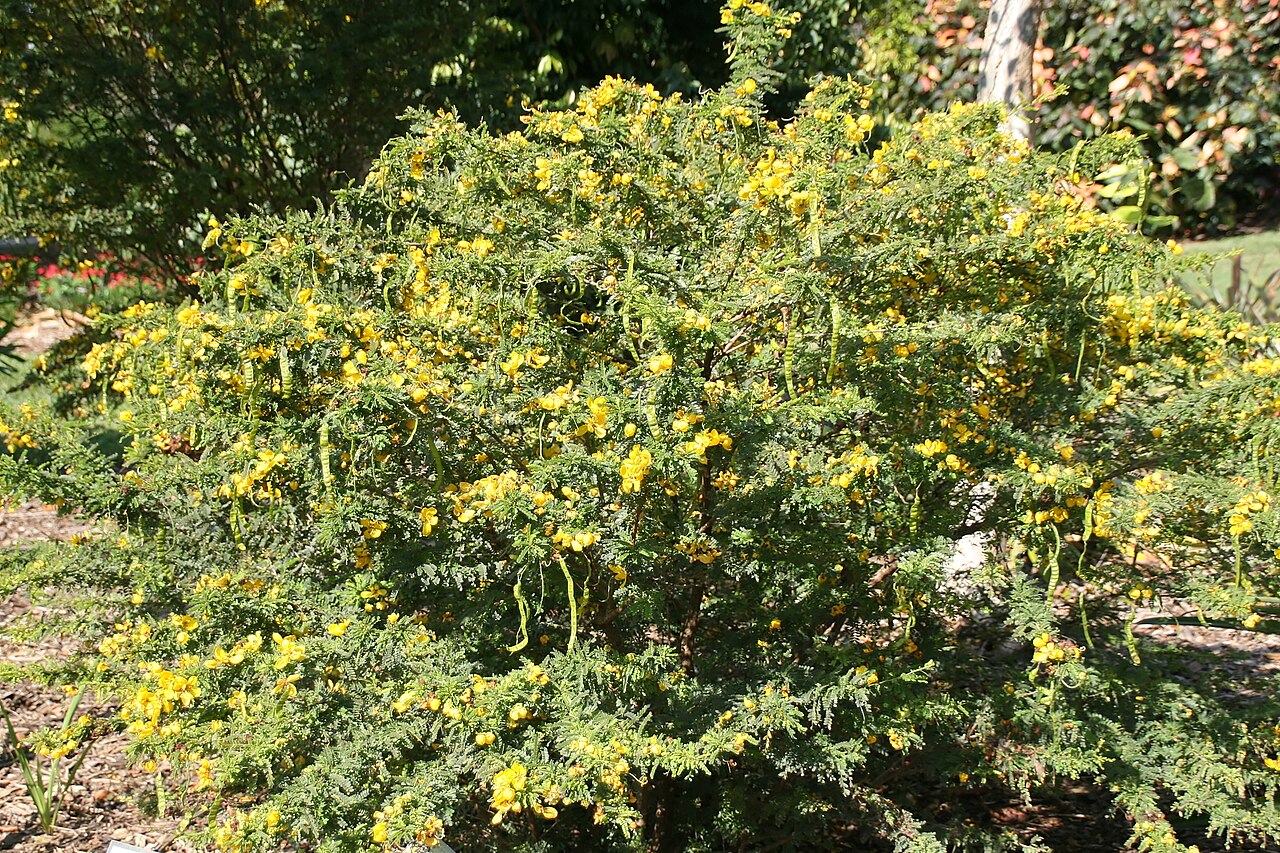
Retama prieta is usually a much-branched shrub 4 to 10 feet tall and often about as wide. It occasionally becomes a small tree up to about 16 feet, with a trunk a few inches thick. Plants often send up several stems from the root crown, even when young, and they develop a strong taproot that helps them survive long droughts. The bark is gray-brown and smooth to slightly rough, and the wood is hard and light brown.
Leaves
The leaves are alternate and evenly pinnate: there is no terminal leaflet, only pairs. Each leaf carries about 3 to 15 pairs of small, oblong, rounded leaflets, each only about 1/6 to 2/5 inch (4–10 mm) long. The effect is a fine-textured, soft green shrub that looks lighter and airier than most dry-forest plants. The leaves stay on the plant through most of the year, though they can thin out in a severe drought.
Flowers
Flowers appear singly or in small clusters along the young branches. Each one is about 1 to 1½ inches wide, with five rounded, bright yellow petals that form a shallow cup, and a group of stamens with brown-tipped anthers in the center. Like other sennas, the flowers produce no nectar; bees collect their pollen by vibrating the anthers. In Puerto Rico flowers and fruit can be found in any month, with heavier bloom in the cooler, drier part of the year.
Fruit & Seeds
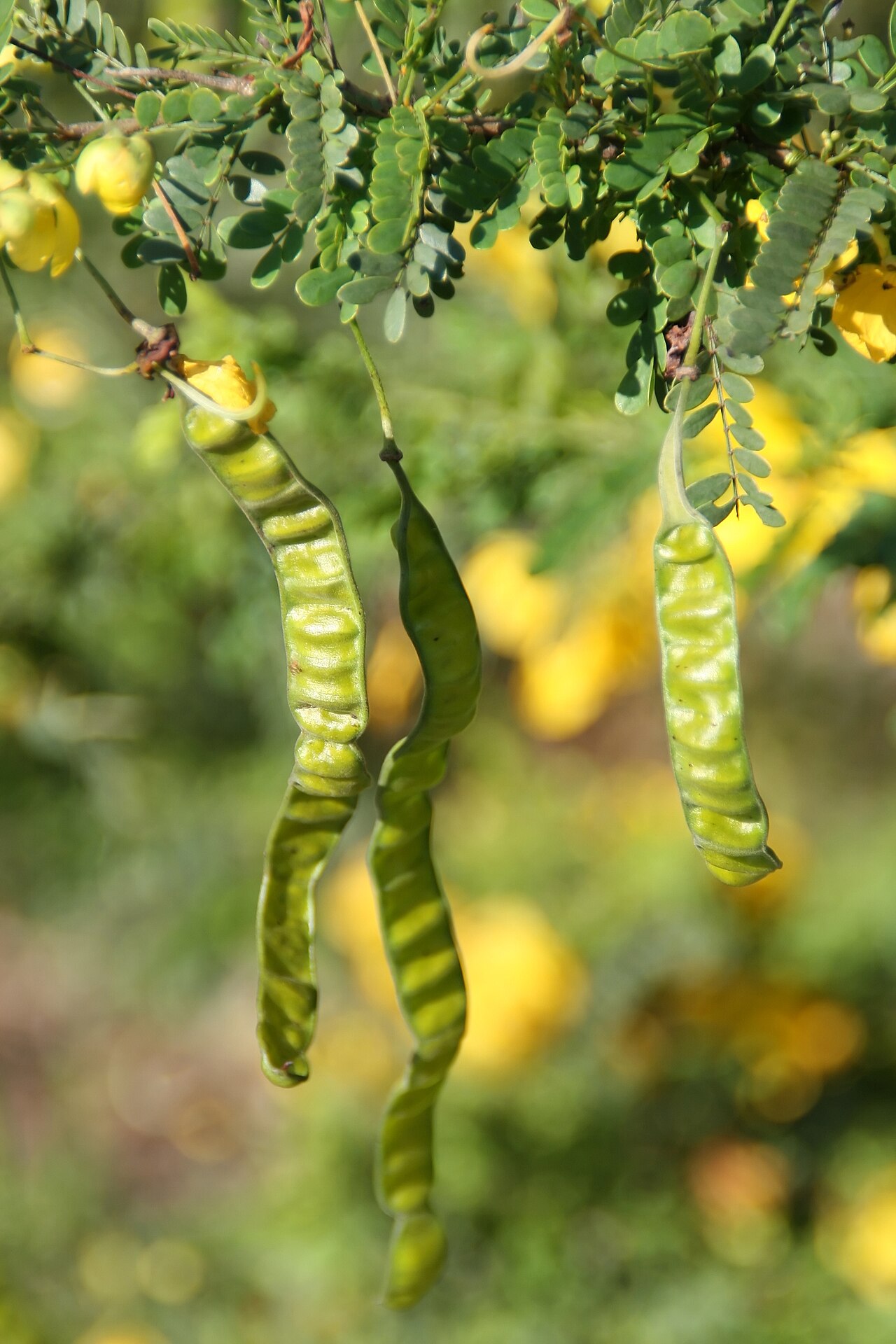
The fruit is a long, narrow legume (pod), about 3 to 6 inches long and much less than half an inch wide. It is flattened between the seeds, so it looks like a slender string of beads, and it turns from green to brown as it ripens. Each pod holds a row of small, flattened, rounded seeds. Fresh seed germinates readily, but seed that has dried out develops a hard coat.
Quick Facts
| Scientific Name | Senna polyphylla (Jacq.) Irwin & Barneby (syn. Cassia polyphylla, Peiranisia polyphylla) |
| Family | Fabaceae (legume family) |
| Plant Type | Evergreen shrub, occasionally a small tree |
| Mature Height | 4–10 ft (occasionally to about 16 ft) |
| Mature Spread | 4–8 ft |
| Growth Rate | Slow (about 1 ft per year when young) |
| Sun Exposure | Full sun |
| Water Needs | Low; very drought tolerant once established |
| Soil Type | Well-drained rocky, sandy or limestone soils; tolerates poor soil |
| Soil pH | Adaptable; grows on alkaline limestone soils |
| Bloom Time | Can bloom in any month; heaviest in the drier season |
| Flower Color | Bright yellow |
| Fall Color | None; evergreen in the tropics |
| Fruit | Long, slender, beaded pod 3–6 in |
| Deer Resistant | Not applicable in Puerto Rico; browsed by goats and cattle |
| USDA Hardiness Zones | 10–11 (9b with frost protection) |
Native Range
USDA PLANTS lists retama prieta as native to Puerto Rico and the U.S. Virgin Islands, and it is not native anywhere in the continental United States. The Smithsonian’s Flora of the West Indies records it from Puerto Rico, the Virgin Islands (including St. Croix and Anegada) and the Lesser Antilles. The typical variety, var. polyphylla, is confined to the West Indies, while other varieties of the species range from Mexico and Central America to Venezuela and eastern Brazil.
In Puerto Rico it is a plant of the dry and semi-dry lowlands, found from near sea level to roughly 1,000 feet (about 300 m), mostly where yearly rainfall is around 30 to 47 inches (750–1,200 mm). The Institute for Regional Conservation lists it as present in the Guánica State Forest, the best-preserved coastal dry forest in the Caribbean, and reported from the Susúa State Forest. It favors exposed, rocky, shallow or heavily grazed sites where taller trees cannot easily shade it out, and it can recover after occasional fires.
Because it is planted as an ornamental, retama prieta also turns up in botanical gardens and yards in South Florida, Hawaii and other tropical regions. Those plantings are outside its native range. On PlantNative it is listed for Puerto Rico only.
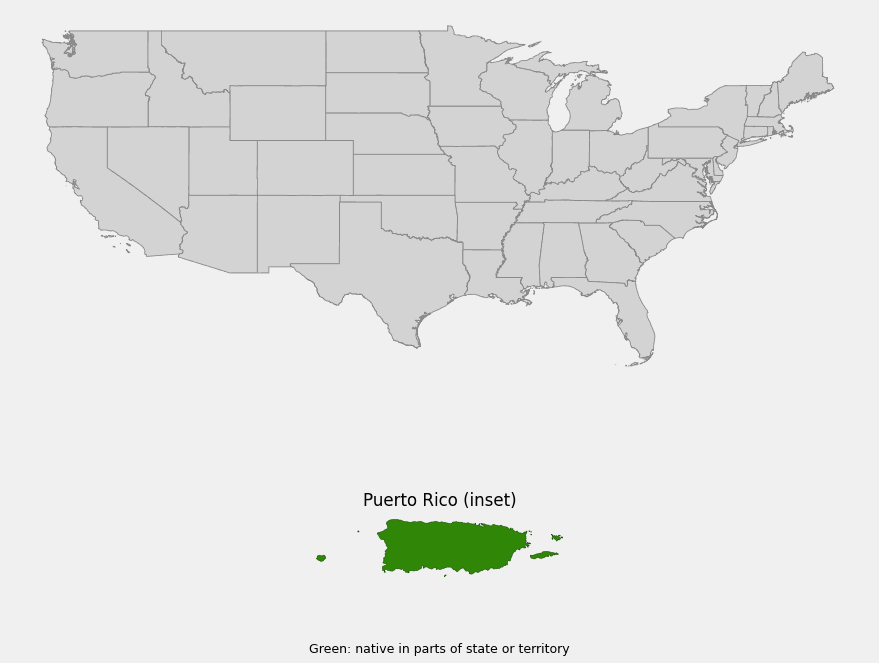
📋 Regional plant lists featuring Retama Prieta: Puerto Rico
Growing & Care Guide
Retama prieta is a low-maintenance shrub for hot, sunny gardens in Puerto Rico and other frost-free places. It asks for little beyond full sun and good drainage, and it is a good choice for coastal yards, rock gardens and dry-forest restoration plantings where thirstier ornamentals struggle.
Light
Plant it in full sun. In the wild it grows in open, exposed sites, and in shade it becomes thin and leggy and flowers poorly. It takes reflected heat from walls and pavement well.
Soil & Water
Retama prieta grows in a wide range of well-drained soils, including thin, stony limestone soils, sand and red clay as long as water does not stand around the roots. It does not need rich soil. Water regularly for the first few months after planting, then only during long dry spells. Established plants rarely need irrigation in Puerto Rico’s dry south and west. Avoid soggy, poorly drained spots, where roots can rot.
Planting Tips
Set young plants out at the start of the rainy season so they can root in before the next dry period. Because seedlings quickly form a deep taproot, move them to their final spot while they are small; large container plants that have circled in the pot transplant poorly. It is tolerant of salt spray, so it can be used behind the first line of beach vegetation on the coast. Space plants 4 to 6 feet apart for a loose, informal hedge.
Pruning & Maintenance
Little pruning is needed. Trim lightly after a heavy flush of flowers to keep the shrub compact, or remove a few of the oldest stems from the base every few years to keep a multistemmed plant open. It recovers well from hard cutting. No fertilizer is needed, and it has few serious pests in its native range, though goats and cattle browse it.
Propagation
Grow it from seed. Fresh seed taken from pods that are just turning brown germinates within days without treatment. Dry, stored seed has a hard coat and should be scarified: pour hot (not boiling) water over the seeds and let them soak overnight, or nick the seed coat before sowing. Sow in a well-drained mix and pot seedlings individually before the taproot gets long. Growth is slow at first, about a foot a year.
Landscape Uses
- Dry and coastal gardens: a flowering native shrub for full sun, poor soil and salt spray
- Pollinator gardens: pollen-rich yellow flowers for native bees through much of the year
- Informal hedges and screens: fine-textured foliage that can be trimmed or left loose
- Dry-forest restoration: a pioneer shrub for open, rocky or degraded sites in southern Puerto Rico
- Containers and small yards: slow growth and modest size suit patios and narrow beds
Wildlife & Ecological Value
Retama prieta is a modest plant in size, but in dry forest and scrub it is one of the shrubs that flowers when much of the landscape is brown, so it is a reliable resource for insects in the dry season.
For Pollinators
Like other sennas, retama prieta has no nectar. Its flowers offer pollen instead, held in anthers that open only by small pores at their tips. Larger bees such as carpenter bees grip the flower and vibrate their flight muscles (buzz pollination), which shakes the pollen out. Sennas as a group are also known larval host plants for sulphur butterflies, whose green caterpillars feed on the leaves.
For Birds
Small insect-eating birds forage for caterpillars and other insects in the dense, fine foliage, and the twiggy branches give cover and nesting sites to small birds in open dry scrub. The hard seeds are of little food value to most birds.
For Mammals
Goats and cattle browse the foliage, which is one reason the plant often persists in a low, shrubby form on grazed land. Puerto Rico has few native land mammals other than bats, and there is little information on its use by them.
Ecosystem Role
Retama prieta is an early colonist of open, rocky, burned or overgrazed land in the dry lowlands, where it provides shade and shelter for the seedlings of slower-growing dry-forest trees.
Cultural & Historical Uses
The Dutch-Austrian botanist Nikolaus von Jacquin described this shrub as Cassia polyphylla. Britton and Rose later placed it in Peiranisia, and in 1982 Howard Irwin and Rupert Barneby moved it to Senna during their revision of the cassias, which separated Senna and Chamaecrista from Cassia in the strict sense. Older Puerto Rican floras list it as Cassia polyphylla.
Its Spanish names are descriptive. Retama is the name of a broom shrub in Spain and is used across Latin America for several yellow-flowered shrubs, and prieta means dark. The other name recorded for it in Puerto Rico, hediondilla, means roughly “little stinker.” Its hard, light brown wood has been used locally for fence posts and firewood.
Today retama prieta is valued mainly as a garden plant. In Puerto Rico it suits low-water landscaping, and in South Florida and other tropical regions it is grown as an ornamental for its long flowering season and drought tolerance. Planting it in Puerto Rican gardens helps keep a dry-forest native in the landscape instead of imported ornamental sennas.
Frequently Asked Questions
Is retama prieta the same as desert cassia?
Yes, in the nursery trade “desert cassia” is sometimes used for Senna polyphylla, especially in Florida. The same name has also been used for other species, so check the scientific name. Retama prieta is a Caribbean native, not a desert plant. It is unrelated to the southwestern Desert Senna (Senna armata).
How big does retama prieta get?
Most plants reach 4 to 10 feet tall and a similar width. Very old plants in good conditions can grow into small trees about 16 feet tall, but growth is slow, so it is easy to keep at shrub size.
Does retama prieta need watering?
Only while it is getting established. After the first few months it is very drought tolerant and usually survives the dry season in southern Puerto Rico without irrigation. Overwatering in heavy soil is a bigger risk than drought.
Can I grow retama prieta near the beach?
Yes. It tolerates salt spray and sandy or rocky soil, so it works well in coastal gardens, though it does best a little back from the most exposed front dunes.
How do I grow retama prieta from seed?
Collect pods as they turn brown. Fresh seed sprouts quickly. Older, dry seed has a hard coat, so soak it overnight in water that starts out hot, or nick the coat, before sowing in a well-drained mix. Transplant seedlings while small because of their taproot.

Looking for a nursery that carries Retama Prieta?
Our nursery directory does not yet include Puerto Rico. Browse the native plant nursery directory by state: Alabama–Arkansas · California · Colorado–Hawaii · Idaho–Kansas · Kentucky–Montana · Nebraska–Oklahoma · Oregon · Pennsylvania–Virginia · Washington · West Virginia–Wyoming