
West Indian Locust (Hymenaea courbaril)
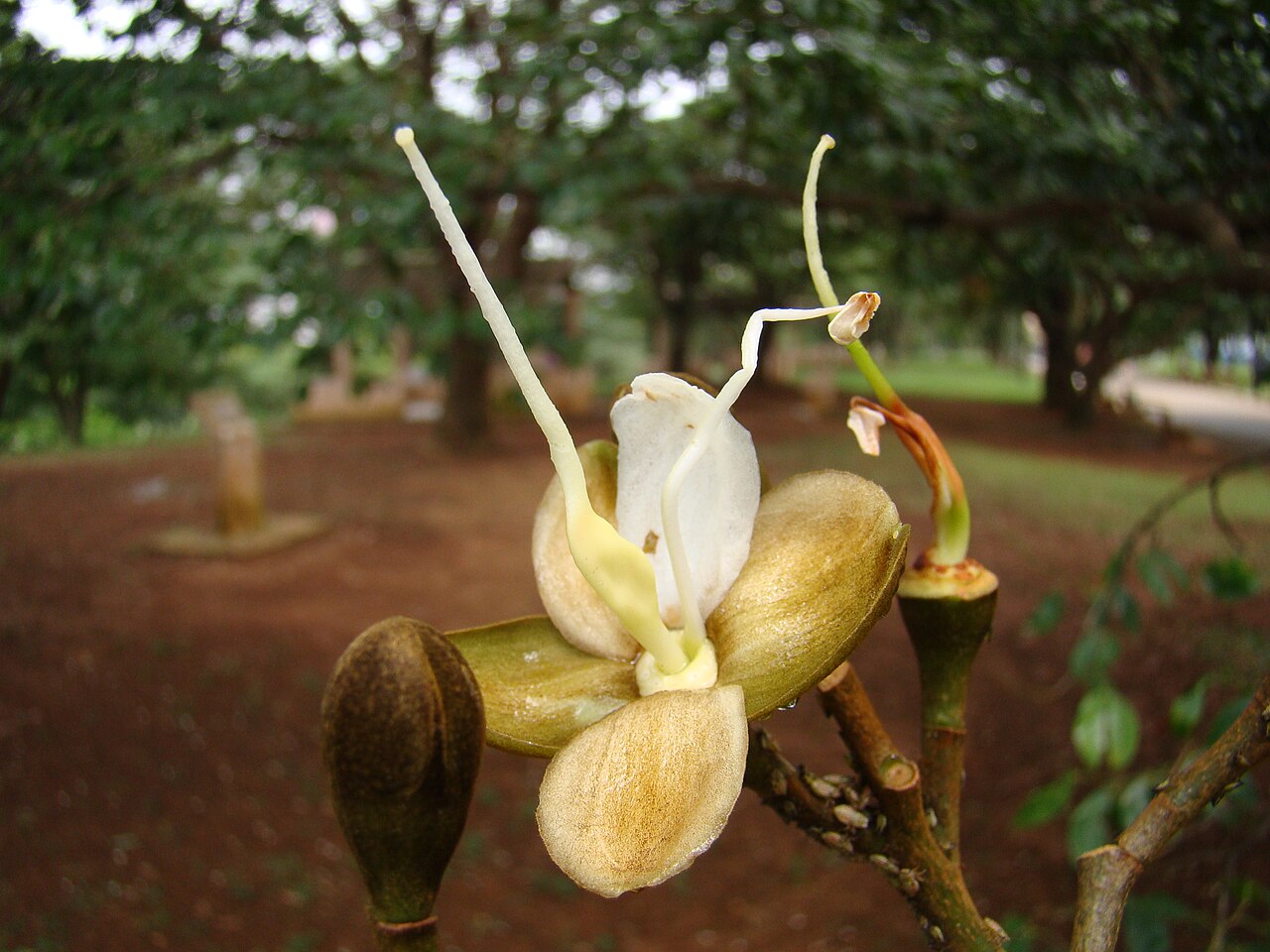
Hymenaea courbaril, the West Indian Locust, is known in Puerto Rico as algarrobo, and its pods as algarroba. USDA PLANTS lists it under the common name stinkingtoe, and in other places it is called courbaril, jatobá, or, in the lumber trade, Brazilian cherry. It is a large, long-lived evergreen tree in the legume family (Fabaceae), with leaves made of just two leaflets, big white flowers, and thick, hard pods filled with a dry, sweet, edible pulp that has a famously strong smell.
Algarrobo is one of the most widespread trees of the American tropics, native from Mexico and the Caribbean south to Bolivia and southern Brazil. In Puerto Rico it grows in the subtropical moist forest, especially in secondary forest on slopes and ridges in the northern limestone (karst) hills and the moist foothills, where it can dominate the canopy. Its heavy, reddish heartwood is one of the hardest commercial woods in the hemisphere, and its trunk and roots produce an aromatic resin (animé or South American copal) used for varnish and incense.
For gardeners in Puerto Rico, algarrobo is a handsome, long-lived shade and timber tree for parks, farms and large properties. It has few pest problems, tolerates eroded soils better than most hardwoods, and its pods have been eaten by people for centuries. Just do not plant it over parked cars: falling pods are heavy enough to crack a windshield.
Identification
Algarrobo is easy to identify by its leaves. Each one is made of a pair of thick, glossy, sickle-shaped leaflets joined at a short stalk, a pattern that gives the genus its name: Hymenaea refers to Hymen, the Greek god of marriage.
Trunk & Bark
Algarrobo is a large tree, reaching 50 to 80 feet in Puerto Rico and as much as 160 feet tall in mainland rainforests. Open-grown trees have a short trunk and a broad, spreading crown, while forest trees have long, straight trunks. The bark is smooth, light gray to reddish-brown, and fairly thick. Wounds on the trunk and roots can ooze a yellowish to orange resin that hardens into lumps.
Leaves
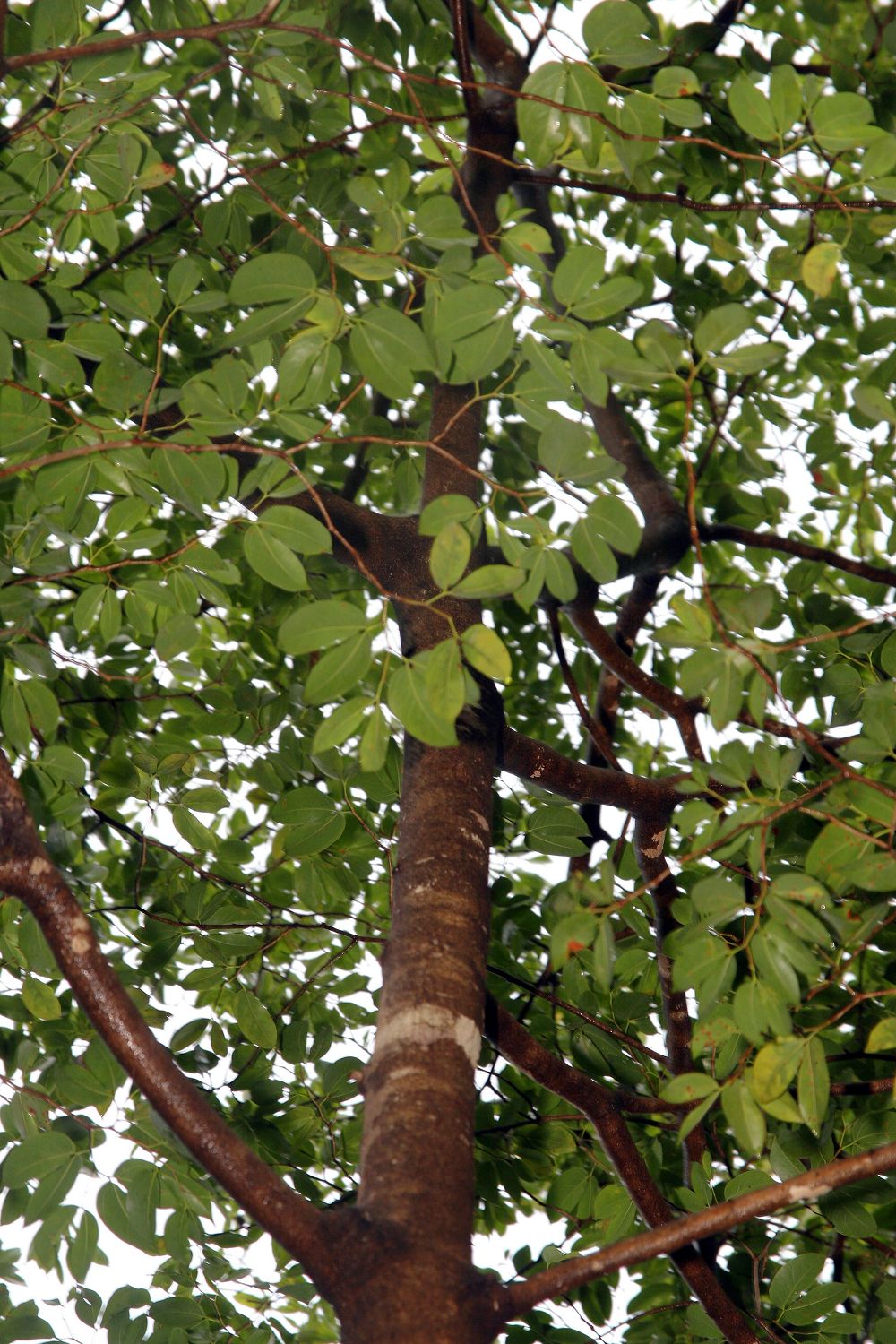
Leaves are alternate and compound, but with only two leaflets. Each leaflet is about 2 to 4 inches long, leathery, shiny dark green, and lopsided, curving like a sickle with the midrib off center. Held up to the light, the leaflets show tiny translucent dots, which are resin glands. Leaf-cutter ants cut the tender new leaves in Central America, but mature leaves are not eaten by livestock.
Flowers
Flowers are white, about 1½ inches across, with five broad, rounded petals and ten long stamens. They grow in clusters at the ends of the branches in spring and summer. Trees need to be fairly large and in full sun before they start to bloom. The flowers open at night and have a musky scent, typical of bat-pollinated flowers.
Fruit & Seeds
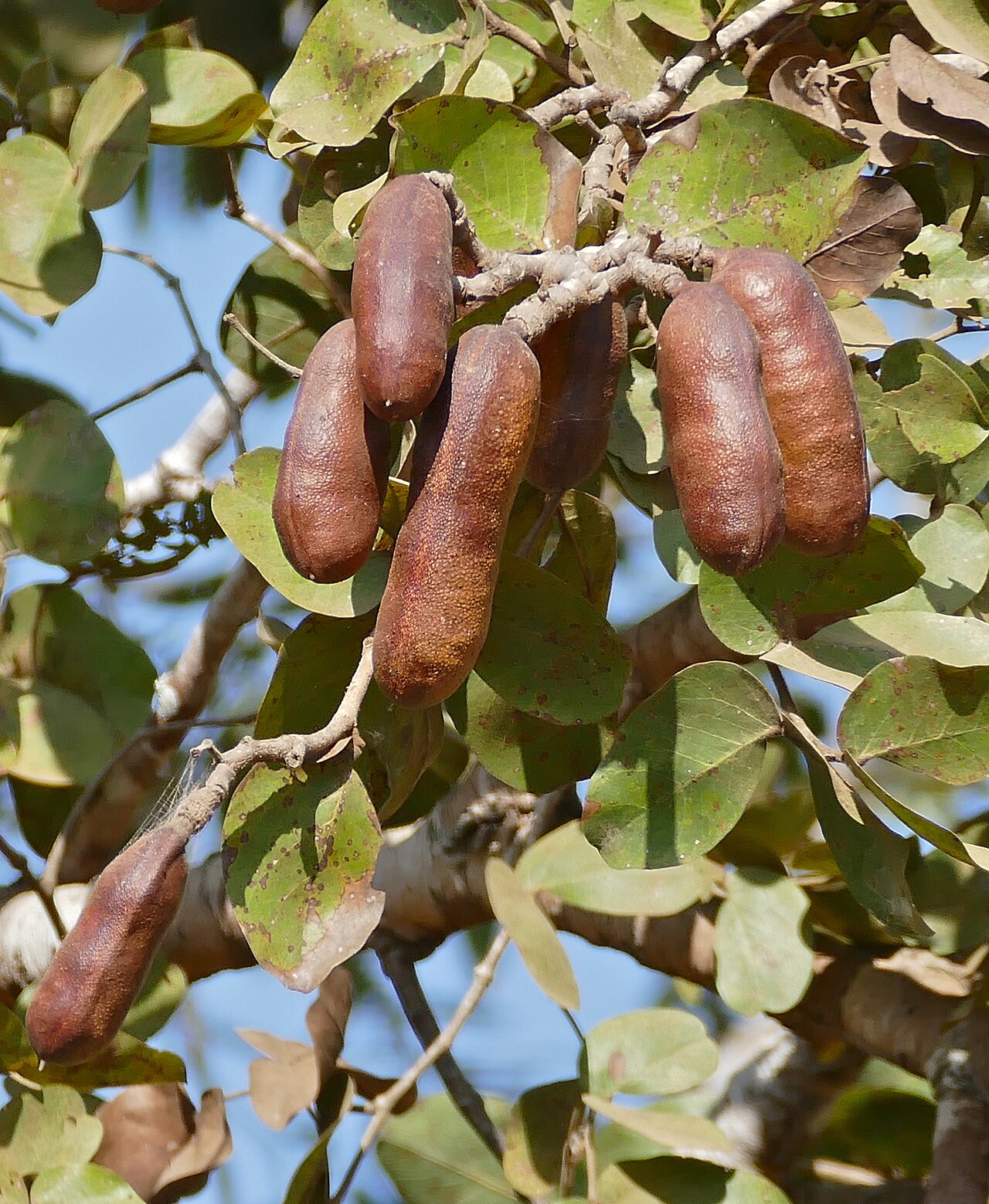
The fruit is a thick, woody, oblong pod, about 2 to 4 inches long, 1 to 1½ inches wide and an inch or more thick, reddish-brown to dark brown when ripe. Pods ripen about nine months after flowering and fall over a period of about three months. The shell does not split open on its own. Inside, a pale, powdery, sweet pulp surrounds three or four large, hard seeds. When the pod is cracked, the pulp gives off the cheesy odor behind the names stinkingtoe and old man’s toe.
Quick Facts
| Scientific Name | Hymenaea courbaril; USDA common name: stinkingtoe |
| Family | Fabaceae (legume family) |
| Plant Type | Large evergreen tree |
| Mature Height | 50–80 ft (to 160 ft in mainland rainforest) |
| Mature Spread | 40–60 ft in the open |
| Growth Rate | Moderate; about 3 ft per year at most after the first 2 years |
| Sun Exposure | Full sun; young plants tolerate light shade |
| Water Needs | Moderate; drought tolerant once established |
| Soil Type | Deep, well-drained soils from sand to clay; tolerates eroded soils; avoid poorly drained bottomland |
| Soil pH | About 4.8–6.8 in Puerto Rico |
| Bloom Time | Spring and summer |
| Flower Color | White |
| Fall Color | None; evergreen |
| Fruit | Thick, hard, reddish-brown pod with edible powdery pulp |
| Deer Resistant | Not applicable in Puerto Rico; leaves are not browsed |
| USDA Hardiness Zones | 10b–12 (frost-free) |
Native Range
West Indian locust has an enormous natural range. According to the USDA Forest Service silvics of algarrobo, it grows throughout the Greater and Lesser Antilles and on the mainland from the Pacific coast of central Mexico south through Central America and South America to Bolivia and south-central Brazil, roughly 23° N to 25° S. It grows from near sea level to about 3,000 feet in habitats ranging from tropical dry forest to wet rainforest.
In Puerto Rico algarrobo grows in the subtropical moist forest life zone, especially on ridges and slopes. The USDA Forest Service describes a Puerto Rican secondary forest stand dominated by algarrobo, with granadillo (Buchenavia capitata), laurel avispillo (Nectandra coriacea), ausubo and guamá as major associates, and it is also listed among the trees of the island’s dry evergreen forest alongside roble. It does best on deep, fertile, well-drained soils and is rarely found in poorly drained alluvial bottomland.
Algarrobo is not native to the U.S. mainland. It is grown as an ornamental in South Florida and Hawaii, the only parts of the United States outside Puerto Rico and the Virgin Islands with a suitable frost-free climate.
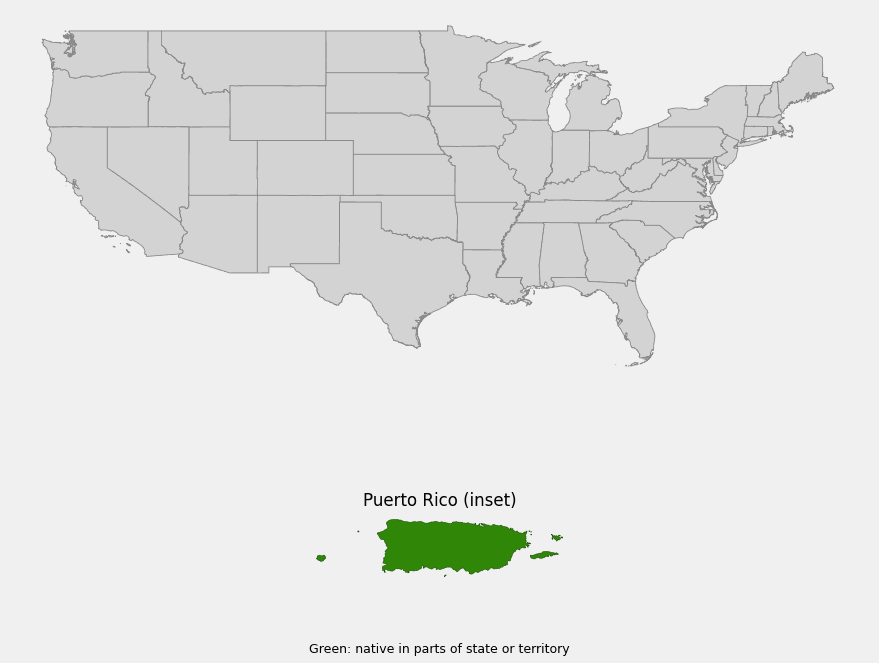
📋 Regional plant lists featuring West Indian Locust: Puerto Rico
Growing & Care Guide
Algarrobo is a sturdy, long-lived tree for large spaces in Puerto Rico: parks, farms, schoolyards, coffee farms (where it is sometimes used for shade) and reforestation plantings. It has no serious disease or insect problems. On the U.S. mainland it can only be grown outdoors in frost-free South Florida, where it is not native.
Light
Give algarrobo full sun. Seedlings can survive for several years in light shade, but they need full overhead light to grow into large trees, and trees do not flower until they reach the canopy or stand in the open. In Puerto Rico trials, nursery seedlings grew better in full sun than in shade.
Soil & Water
Plant in deep, well-drained soil. Algarrobo grows on everything from sand to clay and does better on eroded sites than most hardwoods, but it avoids poorly drained, low-lying ground. In Puerto Rico it grows on soils with pH between about 4.8 and 6.8. Water young trees during dry spells for the first year or two. Established trees develop a deep taproot and handle seasonal drought.
Planting Tips
Plant container-grown seedlings at the start of the rainy season in an open, sunny spot, and keep grass and weeds away until the tree is about 6 feet tall, since young trees are easily smothered. Seedlings often grow at an angle with a leaning leader for two or three years before straightening. Do not plant near driveways, parking areas or walkways, where heavy falling pods can damage cars and their smell can be a nuisance.
Pruning & Maintenance
Prune young trees to a single leader to develop a straight trunk; open-grown trees naturally form a short trunk and broad crown. Algarrobo does not produce epicormic sprouts, so opening up the space around it causes no problems. Young trees resprout well if cut, but stumps of large trees do not. Rake up fallen pods if their smell or the litter is a problem.
Propagation
Grow algarrobo from seed. Crack open freshly fallen pods and remove the seeds; seeds left inside unopened pods usually rot. Nick the hard seed coat with a file or knife before sowing. Seeds germinate in 20 to 30 days with 40 to 90 percent success, and container seedlings grown in full sun are ready to plant in about two months. Protect newly sown seed and young seedlings from rodents, which eat the fleshy seed leaves. Softwood cuttings can be rooted under mist with bottom heat.
Landscape Uses
- Shade tree: for parks, farms, campuses and large properties with room for a broad crown
- Reforestation: a long-lived native canopy tree that tolerates eroded soils better than most hardwoods
- Edible landscape: the sweet, powdery pulp of the pods is edible, raw or made into drinks
- Coffee shade: occasionally used to shade coffee plantations
- Wildlife plantings: its pods feed wildlife on the mainland and its flowers feed bats
Wildlife & Ecological Value
Algarrobo is a keystone tree in many tropical forests, and its flowers, pods and resin all play roles in forest ecology.
For Pollinators
The large white flowers open at night, produce abundant nectar, and are pollinated mainly by bats across much of the species’ range. Puerto Rico has several native nectar-feeding bats, which are important pollinators of the island’s night-blooming trees.
For Birds
The tall, spreading crown provides perching and nesting sites, and the insects in the canopy feed many birds. The hard pods are of little direct use to most birds.
For Mammals
On the mainland, agoutis and probably peccaries open the pods, eat the pulp and sometimes the seeds, and carry or bury seeds away from the tree. In Puerto Rico and other Caribbean islands without these large rodents, gravity is the main means of seed dispersal, and many pods simply rot beneath the parent tree unless people or animals open them.
Ecosystem Role
Algarrobo is a long-lived canopy tree that can dominate secondary forest in Puerto Rico. Its resin defends the tree against insects and fungi; resin from an extinct relative, Hymenaea protera, fossilized into the Dominican amber of Hispaniola, which preserves insects from millions of years ago. The heartwood resists drywood termites, and the tree has no serious pest or disease problems.
Cultural & Historical Uses
The pods have fed people for thousands of years. The powdery pulp, sweet despite its smell, is eaten raw, often by children, or toasted, fermented or mixed with water to make drinks; in parts of Latin America it is ground into flour. In Puerto Rico the pods are known as algarrobas, a name borrowed from the Mediterranean carob tree (algarrobo in Spain), whose pods are also sweet and edible.
Algarrobo wood, sold as jatobá or Brazilian cherry, is very hard, heavy, strong and attractive, with a salmon to reddish-brown heartwood that darkens with age. It is used for flooring, stair treads, furniture, steam-bent parts, tool handles, sporting goods, boat parts, beams and railway ties. The resin, called animé or South American copal, collects around the base and roots of the tree and has been used for varnish, incense and traditional medicine. A tea of the bark has been used as a laxative, and the pulp as a remedy for diarrhea.
The species name courbaril comes from a name used by the Indigenous peoples of the Caribbean and the Guianas and adopted by French colonists. Today algarrobo is valued in Puerto Rico as a native shade tree and as a link to the island’s forests and food traditions.
Frequently Asked Questions
Why is it called stinkingtoe?
The name refers to the strong, cheesy odor of the dry pulp inside the pods, which some people compare to smelly feet. The pod’s shape helps the comparison. Despite the smell, the pulp tastes sweet.
Is algarroba edible?
Yes. The pale, powdery pulp around the seeds is edible raw and is also used to make drinks and flour. The seeds and hard shell are not eaten.
Is West Indian locust the same as Brazilian cherry flooring?
Yes. Brazilian cherry, also called jatobá, is the trade name for Hymenaea courbaril lumber, most of which comes from South America. The wood is much harder than true cherry.
How fast does algarrobo grow?
Moderately. It may take two years to reach 3 feet, then grows up to about 3 feet a year. Puerto Rico plantations reached about 36 feet in 13 years and about 65 feet by 44 years. Trees are long-lived.
Can I grow West Indian locust in Florida?
Only in frost-free South Florida, where it is sometimes planted as an ornamental but is not native. In Puerto Rico it is a native tree suitable for large properties, parks and reforestation.

Looking for a nursery that carries West Indian Locust?
Our nursery directory does not yet include Puerto Rico. Browse the native plant nursery directory by state: Alabama–Arkansas · California · Colorado–Hawaii · Idaho–Kansas · Kentucky–Montana · Nebraska–Oklahoma · Oregon · Pennsylvania–Virginia · Washington · West Virginia–Wyoming