
Pink Trumpet Tree (Tabebuia heterophylla)
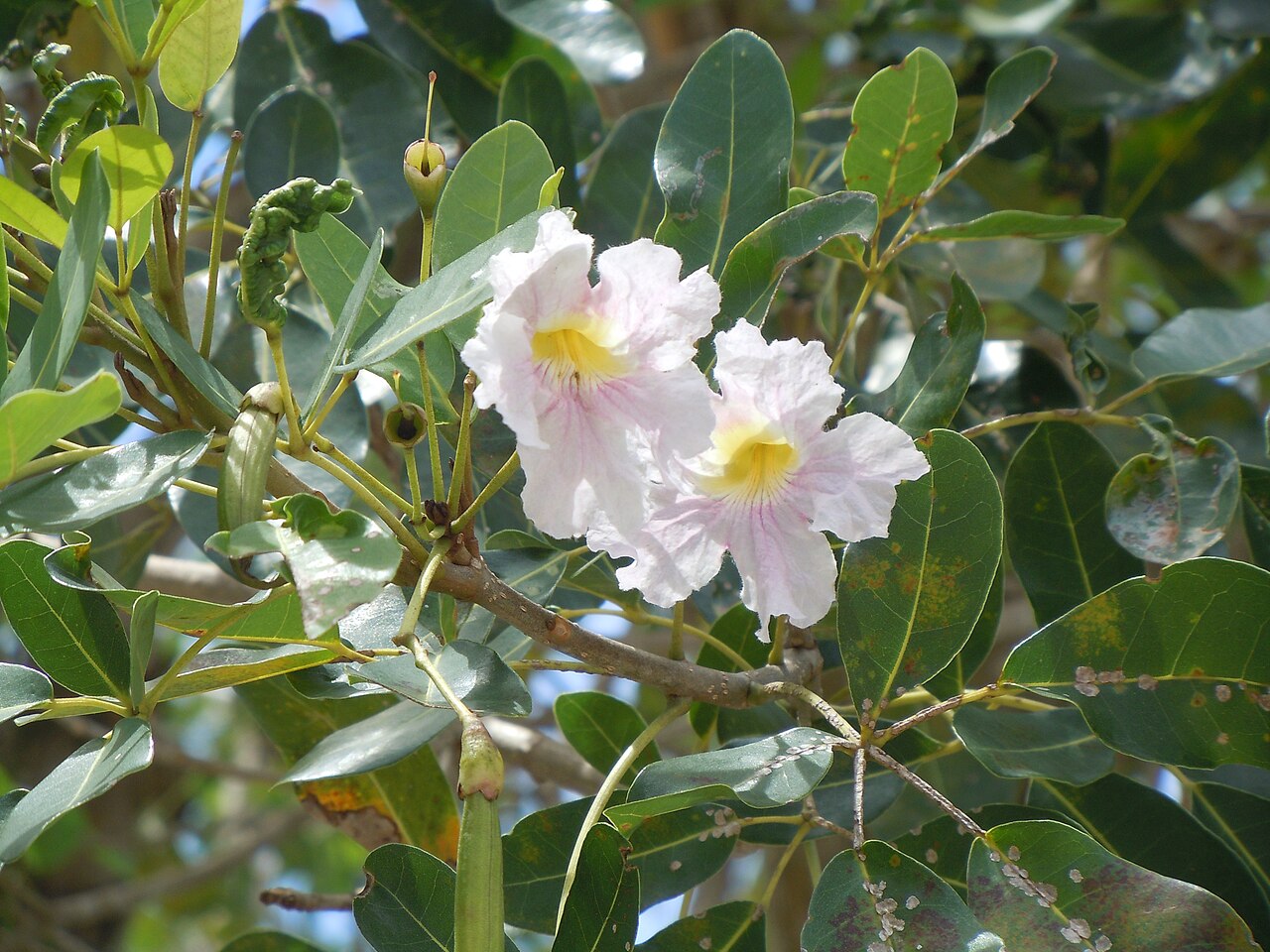
Tabebuia heterophylla, the Pink Trumpet Tree, is the tree Puerto Ricans call roble, roble blanco or roble de costa. USDA PLANTS lists it under the common name white cedar, and it is also sold as pink manjack or pink tabebuia. It is a small to medium-sized, mostly deciduous tree in the trumpet-creeper family (Bignoniaceae), and in spring it drops most of its leaves and covers itself in white, pink or pale lavender trumpet flowers with yellow throats. Few native trees in Puerto Rico are more familiar: it grows wild from the southern dry coast to the wet foothills and lines roadsides, plazas and school yards across the island.
Despite its Spanish name, roble is not an oak (the Spanish roble means oak), and despite its USDA name it is not a cedar. The names reflect the hard, strong, light-colored wood, which has long been valued for furniture, tool handles and, in the Lesser Antilles, boat building. The species name heterophylla means “variable leaves”: a single tree can carry leaves with one, three or five leaflets.
Roble is native to Puerto Rico and much of the Caribbean, from Hispaniola through the Virgin Islands and the Lesser Antilles to Grenada and Barbados. It is not native to Florida. The Atlas of Florida Plants lists it as not native there, and the Florida Invasive Species Council places it in Category II, meaning it is spreading into natural areas in South Florida. Puerto Rican gardeners can plant it with confidence; Florida gardeners should choose a Florida native instead. This guide covers how to recognize roble, where it grows in Puerto Rico, and how to grow it.
Identification
Roble is easiest to identify in its spring bloom, when the nearly leafless crown is covered in pale trumpets. The rest of the year, look for opposite, palmately compound leaves with rounded leaflets, a narrow upright crown and furrowed gray bark.
Trunk & Bark
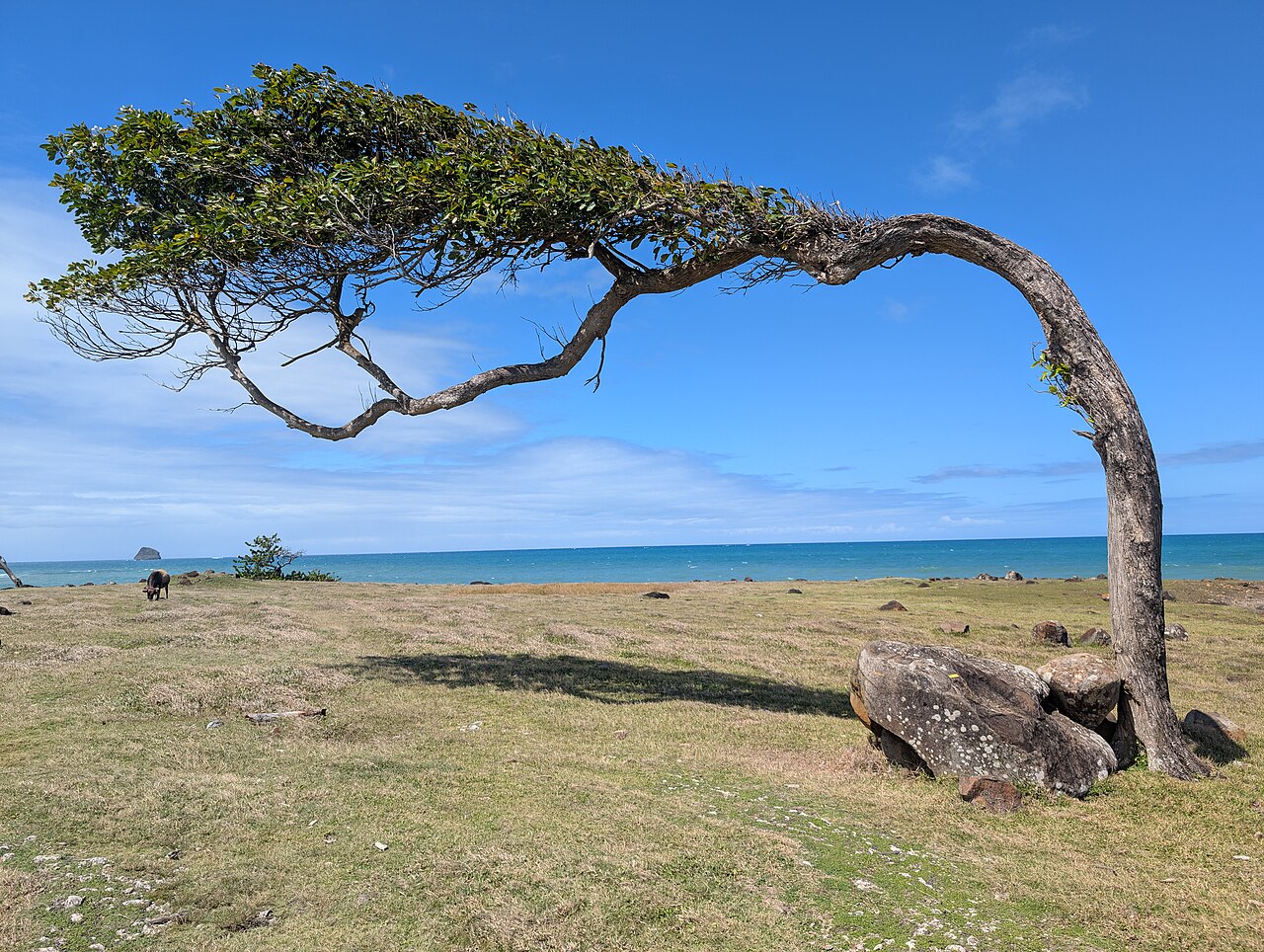
Mature trees usually reach 20 to 40 feet, with exceptional forest trees to about 60 feet tall and 2 feet in trunk diameter, according to the USDA Forest Service Silvics of North America. The trunk is straight in forest-grown trees and often leaning or wind-sculpted on exposed coasts. The bark is gray to gray-brown and becomes rough and furrowed with age. Open-grown trees form a narrow, columnar to somewhat irregular crown.
Leaves
Leaves are opposite and palmately compound, like the fingers of a hand. Most have five leaflets, but leaves with three leaflets or even a single leaflet are common, especially on young growth, which is the variation the species name describes. Leaflets are elliptic to oblong-obovate with rounded or notched tips, smooth edges, a leathery texture and a dull green color, often with tiny scales that give them a slightly grayish look. Each leaflet is about 1 to 5 inches long, and the middle leaflet is the largest.
Flowers
Flowers are 2 to 3 inches long, tubular and flaring into five crinkled lobes. Their color varies from tree to tree, from nearly white to pale pink, rose-pink or light lavender, always with a pale yellow throat. They come a few to several together at the ends of branches. In Puerto Rico the main bloom is in spring, during the dry season, when trees drop most or all of their leaves; scattered flowers appear at other times of year. A roble in full bloom is one of the signature sights of the Puerto Rican spring, and the stands at La Robleda in the Sierra de Cayey draw visitors every year.
Fruit & Seeds
The fruit is a slender, cigar-like brown pod 3 to 8 inches long and about a quarter inch thick. It ripens from late spring into summer and splits along two lines to release many papery seeds about three-quarters of an inch long with two thin white wings. The wind can carry them 100 yards or more from the parent tree. Old pods often hang on the branches for much of the year.
Quick Facts
| Scientific Name | Tabebuia heterophylla (syn. T. pentaphylla, T. lucida, T. triphylla); USDA common name: white cedar |
| Family | Bignoniaceae (trumpet-creeper family) |
| Plant Type | Small to medium-sized, mostly deciduous tree |
| Mature Height | 20–40 ft (to about 60 ft in forest) |
| Mature Spread | 15–25 ft; crown narrow and upright |
| Growth Rate | Moderate in full sun; slow in shade or on poor soil |
| Sun Exposure | Full sun |
| Water Needs | Low to moderate; drought tolerant once established |
| Soil Type | Any well-drained or heavy soil: sand, limestone, clay; tolerates poor and degraded soils |
| Soil pH | Acid to alkaline |
| Bloom Time | Mainly spring (dry season), with scattered flowers at other times |
| Flower Color | White, pale pink, rose-pink or lavender with a yellow throat |
| Fall Color | None; drops most leaves briefly at flowering in spring |
| Fruit | Slender brown pod 3–8 in long with winged, wind-dispersed seeds |
| Deer Resistant | Not applicable in Puerto Rico; foliage is rarely browsed |
| USDA Hardiness Zones | 10b–12 (frost-free only) |
Native Range
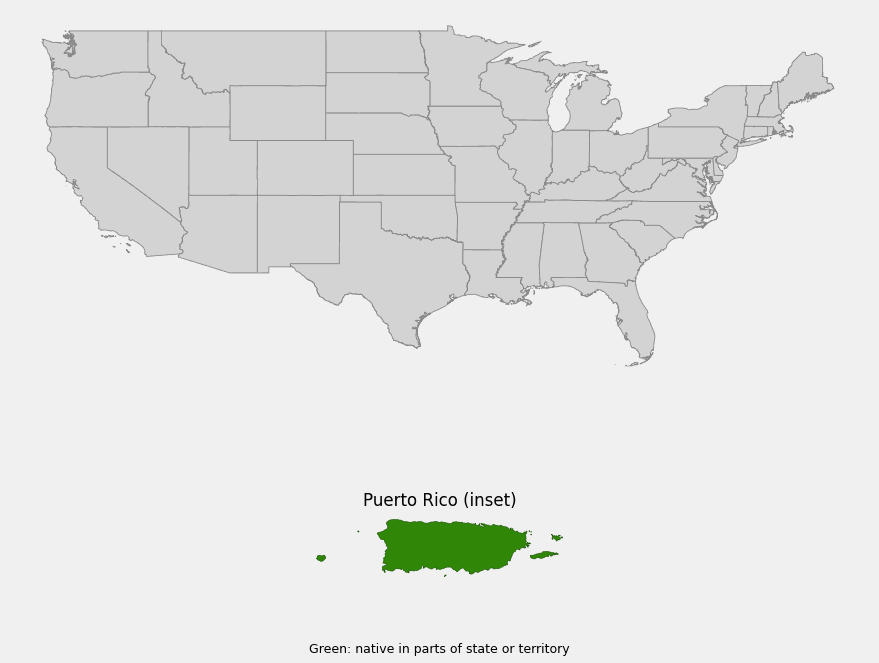
Roble is native to Puerto Rico and widely distributed through the West Indies. The Smithsonian Flora of the West Indies records it from the Greater Antilles (Puerto Rico, Hispaniola, Cuba, Jamaica and the Cayman Islands), the Virgin Islands, and nearly every island of the Lesser Antilles from Anguilla and St. Martin south to St. Vincent, Grenada and Barbados. It has naturalized in Bermuda and has been planted in Hawaii and elsewhere in the tropics.
In Puerto Rico it is one of the most widespread trees on the island. The USDA Forest Service reports it in the subtropical dry, moist and wet life zones and on every major soil type, from coastal sand and limestone to deep interior clays. It is common in the coastal dry forest of the south, in the limestone hills of the north, and in secondary forest and abandoned pastures across the interior, and it is absent only from the highest elevations of the Luquillo Mountains (El Yunque) and the Cordillera Central. On degraded slopes and ridges it often forms nearly pure stands.
On the U.S. mainland, the situation is very different. Although USDA PLANTS marks the species as native to the lower 48 states, the Atlas of Florida Plants lists it as not native in Florida, and the Florida Invasive Species Council places it on its Category II invasive list for South Florida. For that reason this page shades only Puerto Rico on the range map and does not recommend it for Florida landscapes.
📋 Regional plant lists featuring Pink Trumpet Tree: Puerto Rico
Growing & Care Guide
Roble is one of the easiest native flowering trees to grow in Puerto Rico and the U.S. Virgin Islands. It tolerates drought, wind, heavy clay, limestone and poor, eroded soil, and it flowers within a few years of planting. On the U.S. mainland it can only be grown outdoors in frost-free areas, and since that essentially means South Florida, where it is invasive, mainland gardeners should not plant it. In Hawaii it is also an introduced tree, so local natives are the better choice there too.
Light
Plant roble in full sun. Seedlings can survive for years in shade, but they barely grow, and the USDA Forest Service found that seedlings raised in the open grew far faster than shaded ones. Full sun also gives the heaviest spring bloom.
Soil & Water
Almost any soil will do, from beach sand and limestone to heavy clay, acid or alkaline. The best growth is on deep clay soils, but roble is one of the trees foresters in Puerto Rico have used to reforest eroded ridges and worn-out farmland. Water young trees regularly during their first dry season. Once established, they need no irrigation in most of Puerto Rico and tolerate the long dry season of the south coast. Roble also tolerates periodically waterlogged soil better than many trees.
Planting Tips
Plant at the start of the rainy season so roots can establish before the next dry spell. Young trees transplanted from the field often drop their leaves and sit for several months before resuming growth, so do not be alarmed by a bare stick after planting. Give the tree room for a 20- to 25-foot crown. Its narrow, upright form and modest size make it suitable for streets, plazas and medium-sized yards, but keep it a few yards from foundations and paving.
Pruning & Maintenance
Little pruning is needed. Remove crossing or damaged branches while the tree is young and, for street trees, raise the lower limbs for clearance. Expect a carpet of fallen flowers in spring and dry pods later in the year. Roble is generally sturdy, but in Puerto Rico it is subject to witches’-broom, a disease that causes dense clusters of distorted shoots. Prune out affected branches.
Propagation
Grow roble from fresh seed. The USDA Forest Service reported about 90 percent germination within two weeks when seeds were sown right after collection, but viability dropped quickly after a few weeks at room temperature. Sow seeds on the surface of a moist, well-drained mix and barely cover them. Seedlings appear readily in the open, and many volunteers come up under and around mature trees. Cuttings root poorly, although fence posts cut from roble sometimes sprout.
Landscape Uses
- Flowering shade and street tree: one of the most popular native ornamental trees in Puerto Rico for roadsides, plazas and yards
- Reforestation: planted on eroded ridges, slopes and abandoned farmland, where it tolerates poor soil
- Coastal and dry gardens: handles wind, drought and some salt exposure in coastal settings
- Pollinator gardens: its spring flowers are a nectar source, and the tree is classed as a honey plant
- Wildlife habitat plantings: a structural native tree for dry and moist forest restorations in Puerto Rico
Wildlife & Ecological Value
As a widespread native tree, roble supports a range of Caribbean wildlife, and its spring flowering comes at a time when the dry season leaves few other flowers in bloom.
For Pollinators
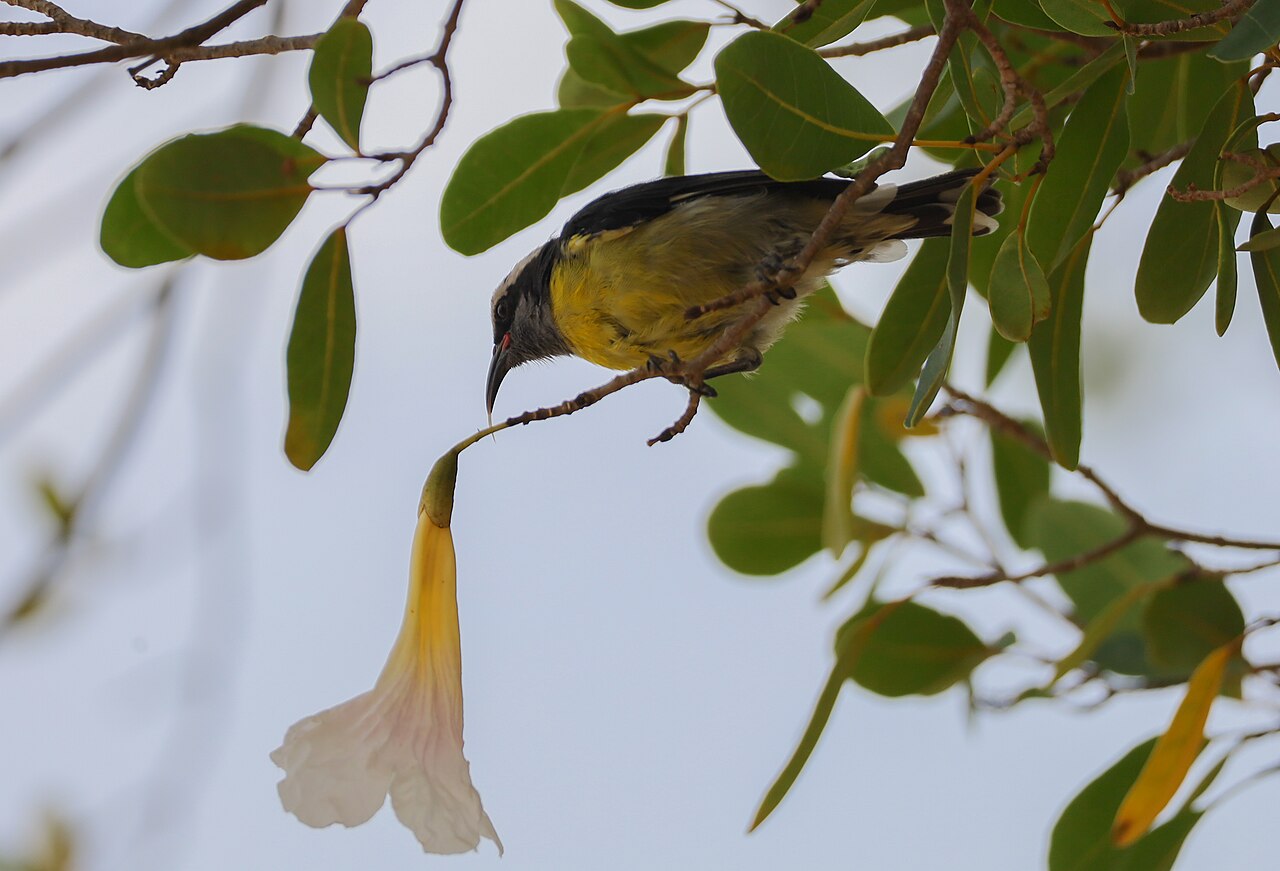
The large trumpet flowers are visited by bees, and the USDA Forest Service classes roble as a honey plant. Bananaquits and other nectar-feeding birds also visit the flowers; bananaquits often pierce the tube near the base to reach the nectar instead of entering the mouth.
For Birds
Birds use roble mainly for perching, foraging and nesting. Its crown supports insects that warblers, todies and other insect-eating birds feed on, and the narrow crowns of planted street trees give city birds shelter in San Juan and other towns.
For Mammals
Roble has little direct food value for mammals. Its winged seeds are dry and papery, and its leaves are rarely browsed.
Ecosystem Role
Roble is an aggressive pioneer. Its wind-borne seeds germinate in open, sunny ground, and it quickly colonizes abandoned pastures, eroded slopes and cut-over land, where it can form nearly pure stands. These young stands shade out grasses and begin the return of forest. Across the Lesser Antilles it is a characteristic tree of the dry coastal woodland, where it tolerates wind, salt spray and thin soils.
Cultural & Historical Uses
Roble has been one of the most useful native timbers of the eastern Caribbean. Its pale, strong, tough wood has been used for furniture, cabinetry, flooring, tool handles, ox yokes and general construction, and in the Lesser Antilles it has been favored for building boats. In Puerto Rico it was among the native trees foresters planted most often in the twentieth century to restore eroded land.
For many Puerto Ricans, roble is mainly a tree of springtime beauty. Its flowers mark the dry season, and the native stands of the Sierra de Cayey, especially the area known as La Robleda, have become a spring destination when they bloom for a few weeks each year. Its compact size and showy flowers have made it a favorite street and garden tree across the island.
The species was first described by Augustin Pyramus de Candolle and moved to the genus Tabebuia by Nathaniel Lord Britton, whose work on the botany of Puerto Rico and the Virgin Islands laid the foundation for the island’s modern flora. Older books and nursery tags may still use the synonyms Tabebuia pentaphylla or Tabebuia lucida. Some of the larger, more widely planted “pink trumpet trees” in the tropics are a different species, Tabebuia rosea, which is native to Mexico and Central America and has larger, more pointed leaflets.
Frequently Asked Questions
Is pink trumpet tree native to Florida?
No. Although USDA PLANTS lists it as native to the lower 48 states, the Atlas of Florida Plants lists it as not native in Florida, and the Florida Invasive Species Council includes it on its Category II invasive list. It is native to Puerto Rico and the rest of the Caribbean. Florida gardeners should choose a Florida native tree instead.
Is roble an oak?
No. Roble is Spanish for oak, and Spanish-speaking settlers applied the name to several strong-wooded trees. Roble belongs to the trumpet-creeper family (Bignoniaceae), the same family as the yellow trumpetbush and the African tulip tree.
When does roble bloom in Puerto Rico?
The main bloom is in spring, during the dry season, usually as the tree drops most of its leaves. Scattered flowers can appear at other times of year. Trees often flower within a few years of planting.
How big does pink trumpet tree get?
In yards and streets it usually reaches 20 to 40 feet with a narrow, upright crown about 15 to 25 feet wide. In forest it occasionally reaches about 60 feet. It grows moderately fast in full sun and slowly in shade or on poor soil.
Can I grow roble outside the tropics?
Only in frost-free climates (USDA zones 10b to 12). In the United States that limits it to Puerto Rico, the U.S. Virgin Islands, Hawaii and South Florida, and in Florida and Hawaii it is an introduced species, so it should not be planted there. Elsewhere it can be grown as a container plant brought indoors in winter, but it rarely flowers that way.

Looking for a nursery that carries Pink Trumpet Tree?
Our nursery directory does not yet include Puerto Rico. Browse the native plant nursery directory by state: Alabama–Arkansas · California · Colorado–Hawaii · Idaho–Kansas · Kentucky–Montana · Nebraska–Oklahoma · Oregon · Pennsylvania–Virginia · Washington · West Virginia–Wyoming