
Capá Prieto (Cordia alliodora)
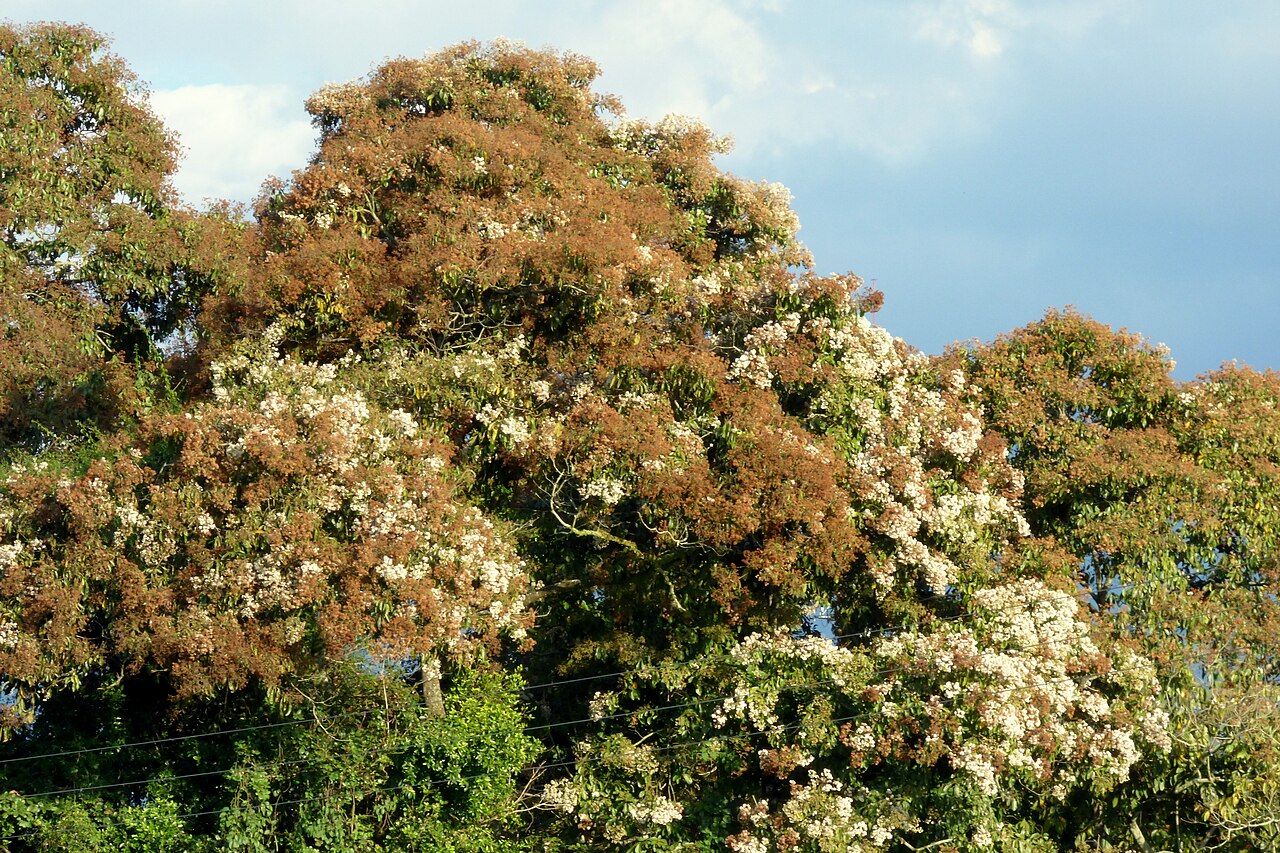
Cordia alliodora, known in Puerto Rico as Capá Prieto or simply capá, is a tall, straight-trunked native tree of the borage family (Boraginaceae). USDA PLANTS lists it under the English name Spanish elm, and across Latin America it is better known as laurel, cypre or salmwood. When it blooms it covers its crown with masses of small white flowers that can be seen from far away, and its light, easily worked wood has made it one of the most valued timber trees of the tropical Americas.
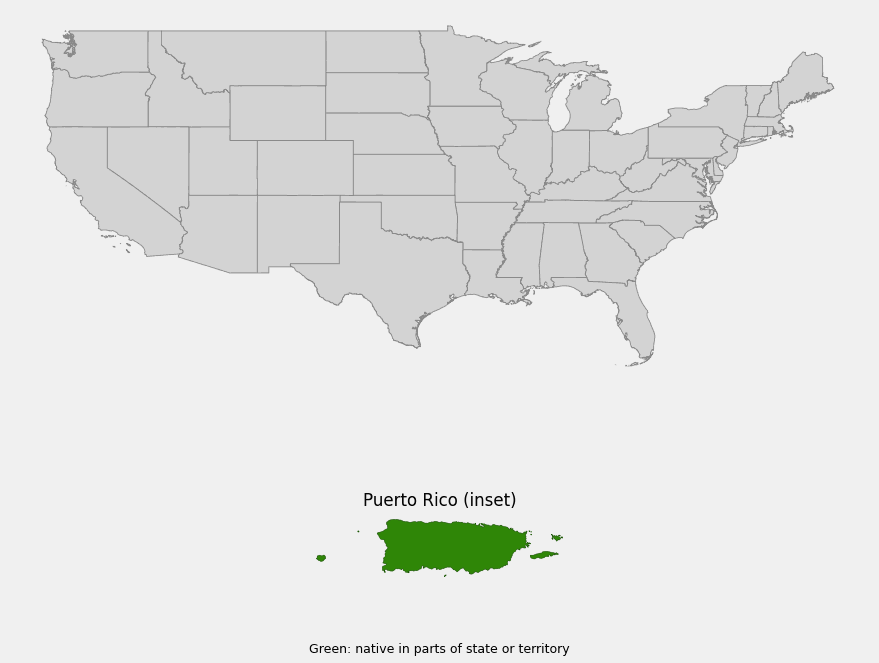
The species has the widest natural range of any Cordia, from Sinaloa in Mexico to Misiones in Argentina and through most of the West Indies. In Puerto Rico it grows in more than half of the municipalities, in most of the state forests and in the Luquillo Experimental Forest (El Yunque), according to the USDA Forest Service silvics of Puerto Rico’s trees. USDA PLANTS lists it as native in Puerto Rico, and the Smithsonian’s Flora of the West Indies records it from the main island, Vieques and the Virgin Islands.
Capá prieto is a sun-loving pioneer. It springs up in pastures, clearings and along roads, grows quickly, and has long been planted as shade for coffee and cacao. This guide covers how to recognize it, where it grows on the island, how to grow it, its value to wildlife, and its long history as a timber and farm tree.
Identification
Capá prieto is easiest to spot when in bloom, when the whole crown turns white and later brown with old flowers. At other times look for the tall, straight, cylindrical trunk with light gray bark, branches arranged in tiers, and simple, alternate leaves. The inner bark gives off a faint garlic smell, which is the origin of the scientific name alliodora (“garlic-scented”).
Form & Bark
This is a medium to large tree, usually around 65 feet (20 m) tall and up to about 100 feet (30 m) on good sites. The trunk is straight and cylindrical and prunes itself naturally, so the lower half or more is often free of branches, even on trees growing in the open. Branches grow in whorls and spread in horizontal layers. Small buttresses may form at the base. Young bark is greenish brown; mature bark is light gray or brown with shallow fissures. The inner bark is light brown and fibrous.
Leaves
The leaves are simple, alternate and elliptic to oblong, with smooth edges and a pointed tip. In Central America and northern South America the branch nodes are often swollen into hollow chambers that house ants, but the USDA Forest Service notes that these ant-inhabited nodes are almost absent in the West Indies, so Puerto Rican trees usually lack them.
Flowers
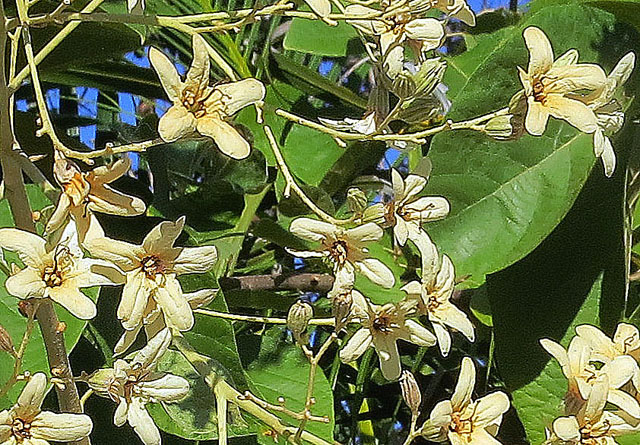
The flowers are packed into large, much-branched clusters about 4 to 12 inches (10–30 cm) across at the branch tips. Each flower has a tubular, ribbed calyx and a white corolla with five oblong lobes about ¼ inch (5–7 mm) long. Five white stamens stand well out of the flower. In Puerto Rico, where there are no sharply defined wet and dry seasons, capá prieto can flower in almost any season.
Fruit & Seeds
The fruit is a small, oblong nutlet with a single seed about ¼ inch (6 mm) long. It ripens one to two months after flowering. The dried brown corolla stays attached to the fruit and works like a parachute, carrying the seed on the wind. Seeds can hang on the tree for several weeks after ripening.
Quick Facts
| Scientific Name | Cordia alliodora (Ruiz & Pav.) Oken |
| Family | Boraginaceae (borage family) |
| Plant Type | Large deciduous to semi-evergreen tree |
| Mature Height | Usually 50–65 ft; up to about 100 ft in forest |
| Mature Spread | Open crown of tiered branches, narrower than its height |
| Growth Rate | Fast |
| Sun Exposure | Full sun |
| Water Needs | Moderate; best in moist to very wet climates with good drainage |
| Soil Type | Medium-textured, well-drained soils; clays and limestone soils; no waterlogging |
| Soil pH | Adaptable (acid volcanic clays to limestone-derived soils) |
| Bloom Time | Almost any season in Puerto Rico |
| Flower Color | White, aging brown |
| Fall Color | None |
| Fruit | Small nutlet with a papery, parachute-like persistent corolla |
| Deer Resistant | Not rated (no deer in Puerto Rico) |
| USDA Hardiness Zones | Frost-free tropics only (about zones 10b–12) |
Native Range
Capá prieto ranges from about 25° north to 25° south latitude: from Sinaloa, Mexico, through Central America and much of South America to Misiones, Argentina, and across most of the West Indies. Within PlantNative’s scope, USDA PLANTS lists it as native in Puerto Rico. The Smithsonian’s Flora of the West Indies also records it as native on Vieques and in the U.S. Virgin Islands. It has been planted as an ornamental in Florida but is not native on the mainland.
In Puerto Rico it grows mostly in the subtropical moist forests of the coastal lowlands and the subtropical wet forests of the uplands, where yearly rainfall runs from roughly 40 to 140 inches (1,000–3,500 mm). It is less common in the dry forest of the south coast, though it does occur there, including valley bottoms in the Guánica forest. It grows on shallow soils of the moist volcanic uplands, on the deep red clays of the wet volcanic hills, and on shallow soils over limestone.
As a light-demanding pioneer, capá prieto is most often found along roads and trails, in forest clearings, gaps and pastures, and in disturbed tabonuco forest (Dacryodes excelsa) in the Luquillo Mountains. In Colombia it climbs to about 6,500 feet (2,000 m), but it is most common below about 1,600 feet (500 m).
📋 Regional plant lists featuring Capá Prieto: Puerto Rico
Growing & Care Guide
Capá prieto is a fast, easy tree for large properties in Puerto Rico and other frost-free areas. Give it full sun, room to grow tall and good drainage, and it needs little care.
Light
Plant in full sun. The USDA Forest Service classes capá prieto as an intolerant pioneer that needs strong light for good growth. Trees planted in shade or crowded by taller neighbors grow slowly and thin out.
Soil & Water
Medium-textured, well-drained soil is ideal. The tree does not tolerate poor internal drainage or waterlogged ground, so avoid low, soggy spots. It is not demanding about fertility and grows well on worn-out farmland and old pastures. It grows best where rainfall is plentiful; on dry sites growth is much slower and the trunk less impressive. Water new plantings during dry spells until established.
Planting Tips
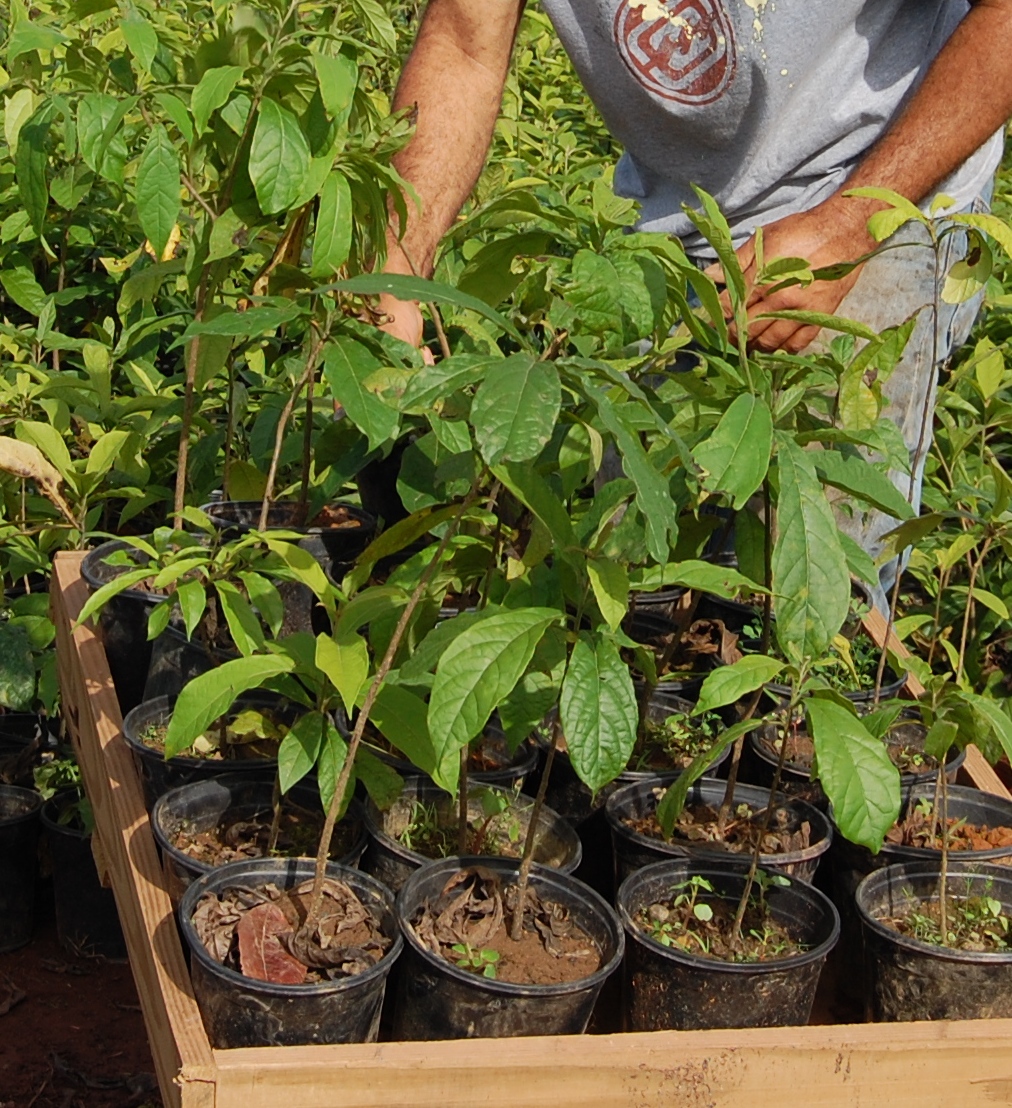
Plant nursery-grown seedlings in full sun with plenty of overhead room, since mature trees are tall. Keep grass and vines away from young trees: the growing tips of young capá prieto are easily damaged or deformed by competing weeds and vines, and field observations in Costa Rica found that trees grew better with a shrubby secondary understory than in plots dominated by grasses. In trials, fertilizer did not noticeably speed up early growth.
Pruning & Maintenance
Little pruning is needed, because the tree sheds its lower branches naturally and forms a clean trunk. Remove only dead or damaged limbs. In very wet sites, watch for cankers caused by the rust fungus Puccinia cordiae at the base of young side branches. In Puerto Rico the foliage is sometimes heavily attacked by a lace bug (Dictyla monotropidia). Trees in Puerto Rico and Fiji have withstood hurricanes with little windthrow or crown breakage.
Propagation
Grow from fresh seed. Collect fruits when they turn from green to brown, before they fall naturally, and sow promptly: seed germinates in about 5 to 20 days in moist soil. Unrefrigerated seed can lose all viability in five to six months, while seed dried to about 10 percent moisture and stored near 41°F (5°C) has kept 50 to 70 percent germination for three years. Seedlings can be grown in pots or nursery beds; foresters often plant “stumps,” lifted seedlings trimmed to short root and stem lengths. Stem and branch cuttings have also been used in tree-improvement work.
Landscape Uses
- Shade tree for coffee and cacao: its light, tiered crown has shaded plantations across its range
- Pasture and farm shade: a fast tree for open, sunny ground
- Reforestation: a pioneer for degraded land, abandoned farms and pastures
- Large yards and parks: a tall, straight tree with showy white flowers
- Bee forage: abundant flowers have been tested for honey production
Wildlife & Ecological Value
Capá prieto is one of the first trees to fill clearings and old fields in Puerto Rico’s moist and wet forests, so it plays a large part in how disturbed land returns to forest.
For Pollinators
The tree flowers heavily, and in Puerto Rico can bloom in almost any season. According to the USDA Forest Service, pollination is by wind or by moths and butterflies, and possibly bees, and the copious bloom has been tested for honey production.
For Birds
Birds and rodents eat many of the seeds that fall into forest clearings. In pastures and coffee farms, scattered capá prieto trees add tree cover and perches for birds.
For Mammals
Rodents feed on the fallen seeds. Puerto Rico has few native land mammals apart from bats, so the tree’s main mammal visitors there are rodents.
Ecosystem Role
As a fast-growing pioneer, capá prieto quickly shades out grass in old fields and helps start forest recovery on abandoned farmland. It grows with other pioneers such as the yagrumos (Cecropia and Schefflera) along roads, in forest gaps and in disturbed tabonuco forest. Its wind-carried seeds let it reach new openings quickly. Outside its native range, where it has been planted for timber, it can become invasive: a 1970s planting program in Vanuatu led to the tree spreading into native forest.
Cultural & Historical Uses
The Spanish botanists Hipólito Ruiz and José Pavón first described this tree in 1799 as Cerdana alliodora, and Lorenz Oken moved it to Cordia in 1841. Because the species varies so much across its huge range, it has picked up many other names, and Forest Service researchers note considerable confusion over its taxonomy.
Capá prieto wood is light (specific gravity about 0.44 to 0.52), dries quickly with little splitting or warping, works easily, takes a smooth finish and glues well. Its strength is similar to mahogany. The dark heartwood is a favorite of cabinetmakers for fine carpentry, and the wood has been used for furniture, boat decking and guitars. Darker heartwood resists fungi, termites and shipworms better than paler wood. In Central America, timber of this species is sold as laurel blanco, as opposed to laurel negro from denser Cordia species.
In Puerto Rico, capá prieto was successfully planted in 1945 using the taungya method, in which tree seedlings are planted between rows of food crops and left to grow when the crops are harvested. Across its range it is grown as shade in coffee and cacao plantations and in pastures, and its seeds and leaves are used in home remedies.
Frequently Asked Questions
Is capá prieto native to Puerto Rico?
Yes. USDA PLANTS lists Cordia alliodora as native in Puerto Rico, and the Smithsonian’s Flora of the West Indies records it as native there, including on Vieques, and in the Virgin Islands. It grows wild in more than half of Puerto Rico’s municipalities.
Why is it called Spanish elm or laurel?
Spanish elm is the English name used by USDA PLANTS, and laurel is a common name for the tree and its timber in Central and South America. Despite these names, it is neither an elm nor a true laurel; it belongs to the borage family. In Puerto Rico it is called capá or capá prieto.
Why does the bark smell like garlic?
The inner bark gives off a faint garlic odor, which is where the species name alliodora (“garlic-scented”) comes from.
How fast does capá prieto grow?
Fast. In plantations it has grown about 6 to 10 feet (2–3 m) per year in its early years, and some young trees in Trinidad and Costa Rica reached about 23 feet (7 m) in three years. Growth is much slower on dry sites.
What other native Cordia trees can I grow?
In Puerto Rico and South Florida, the geiger tree (Cordia sebestena) is a smaller, salt-tolerant tree with bright orange flowers. Capá prieto also grows alongside gumbo limbo (almácigo, Bursera simaruba) in Puerto Rico’s drier forests.

Looking for a nursery that carries Capá Prieto?
Our nursery directory does not yet include Puerto Rico. Browse the native plant nursery directory by state: Alabama–Arkansas · California · Colorado–Hawaii · Idaho–Kansas · Kentucky–Montana · Nebraska–Oklahoma · Oregon · Pennsylvania–Virginia · Washington · West Virginia–Wyoming