
Scalloped Anthurium (Anthurium crenatum)
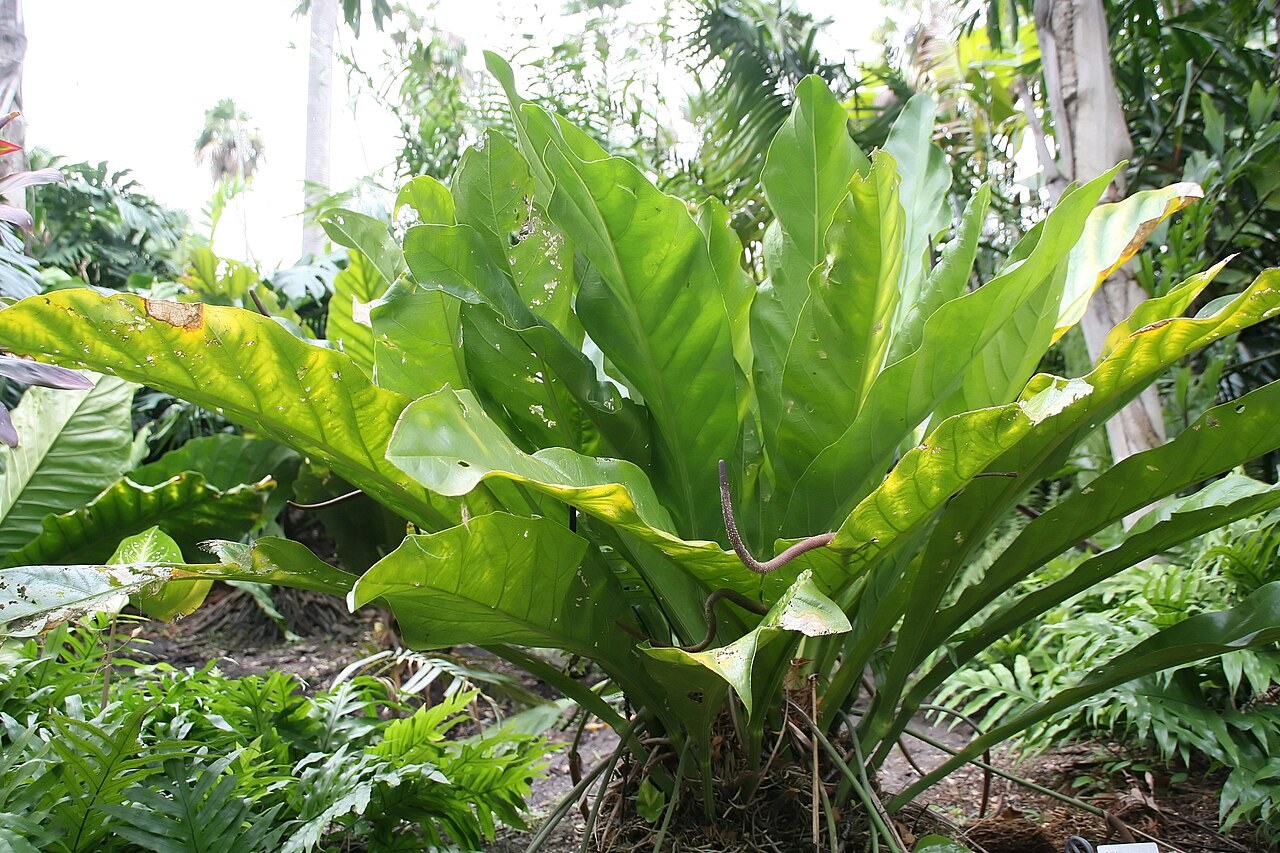
Anthurium crenatum, the Scalloped Anthurium, is a large, rosette-forming member of the arum family that is native to Puerto Rico, the Virgin Islands and Hispaniola. USDA PLANTS calls it scalloped laceleaf, after the gently scalloped (crenate) leaf edges that give the species its Latin name. In the Dominican Republic it is called lengua de vaca, “cow’s tongue,” for its long, thick leaves. Older Puerto Rican floras, including Britton and Wilson’s Botany of Porto Rico and the Virgin Islands, called it Anthurium acaule, a name that belongs to a different species.
This is not the glossy red “flamingo flower” of florist shops. Scalloped anthurium is grown for its foliage: a vase-shaped crown of stiff, leathery leaves that can reach several feet long, with a slender purplish flower spike and, later, small berries. It is tough, slow and long-lived, and it handles more sun and drought than most anthuriums.
This guide covers how to identify scalloped anthurium, where it grows in Puerto Rico and the nearby islands, how to grow it in the ground or in a container, and its value to wildlife.
Identification
Several large “bird’s-nest” anthuriums are sold in the tropical plant trade, and many are hard to tell apart. Look for the combination of a short trunk, long leathery leaves with wavy, scalloped edges, and a long purplish spadix.
Growth Form
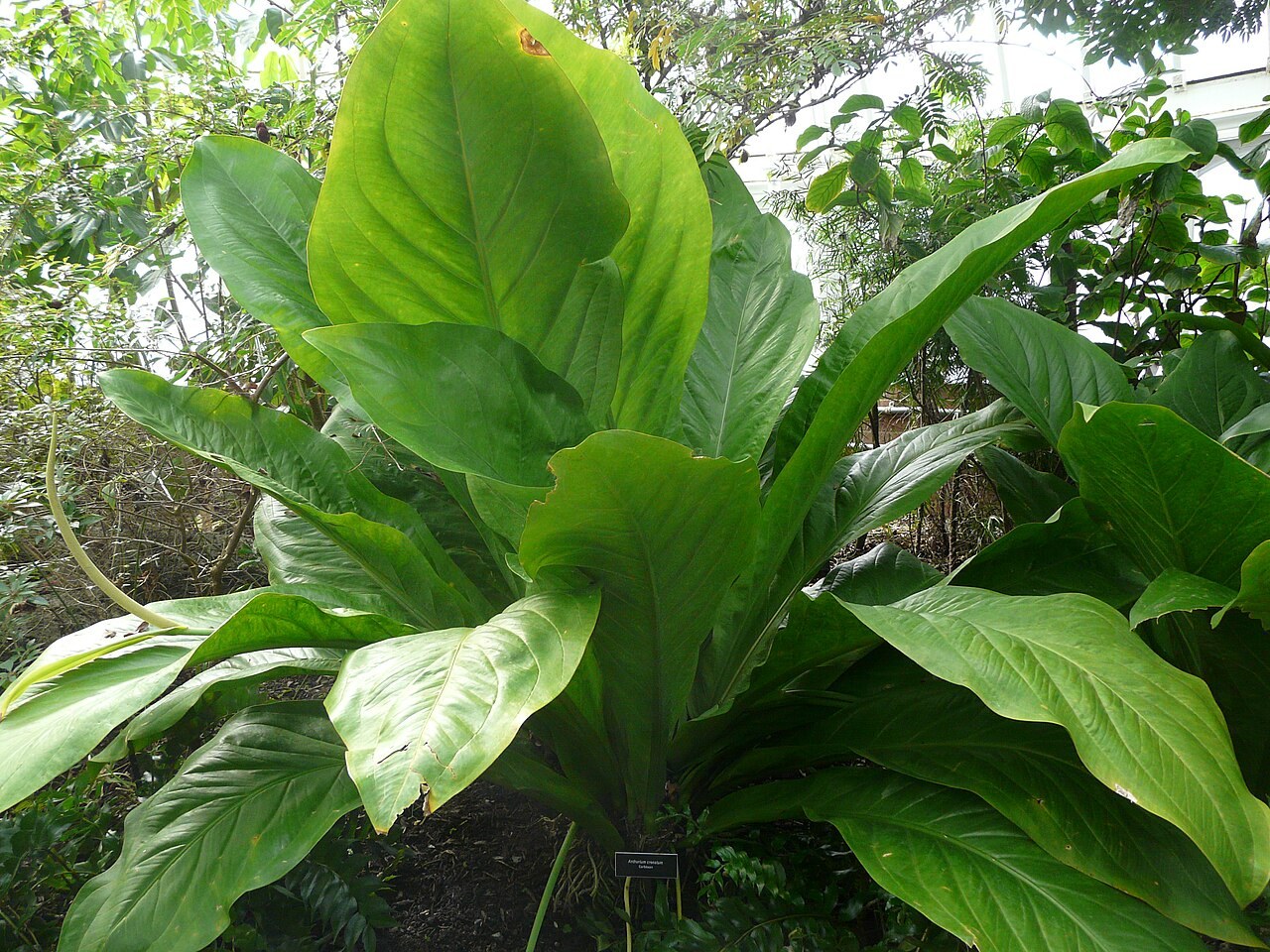
An evergreen perennial herb with a very short, thick stem, so the leaves seem to rise straight from the ground. The leaves form a dense, upright to arching rosette, shaped like a vase or bird’s nest, that catches falling leaves and debris. A mass of thick roots anchors the plant in soil or among rocks. Mature clumps are commonly about 2 to 4 feet (60 to 120 cm) tall and wide.
Leaves
The leaves are simple, long and narrow to broadly oblanceolate (widest above the middle), thick and leathery, with a prominent midrib. The edges are wavy to shallowly scalloped, which is the feature behind both the Latin name crenatum and the common name. Leaves have short stalks and are held fairly upright, so the plant looks like a giant green shuttlecock.
Flowers
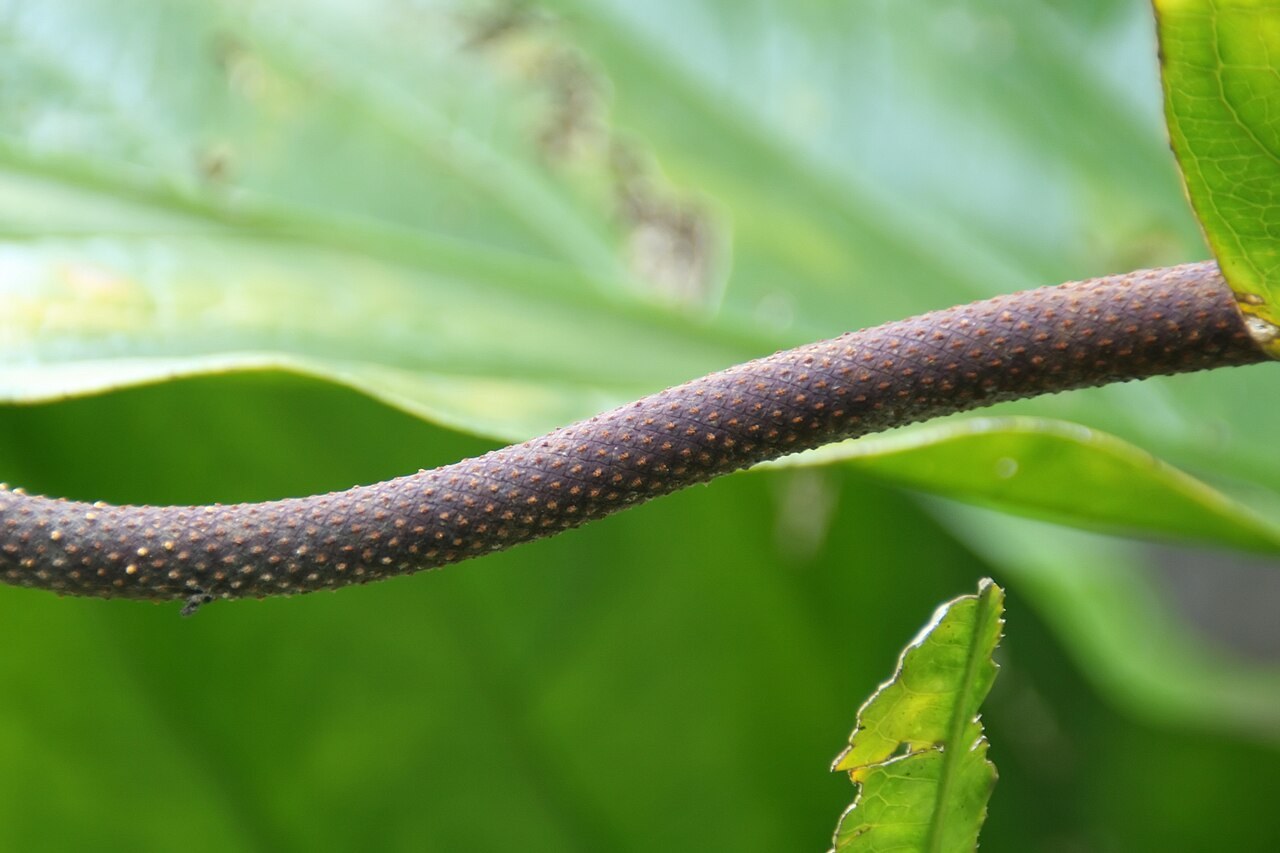
Like all aroids, it produces a spadix, a fleshy spike crowded with tiny flowers, backed by a leaf-like bract called a spathe. In scalloped anthurium the spathe is narrow and green and soon bends back, while the spadix is long, slender, tapering and purplish to dull brownish. The flower stalks rise from among the leaves and are not showy in the way florist anthuriums are.
Fruit
After flowering, the spadix ripens into a dense spike of small, juicy berries. Each berry holds one or two seeds. As in other anthuriums, the ripe berries are eaten by birds, which spread the seeds.
Quick Facts
| Scientific Name | Anthurium crenatum (L.) Kunth (syn. Pothos crenatus; Anthurium acaule auct. non (Jacq.) Schott); USDA common name: scalloped laceleaf |
| Family | Araceae (arum family) |
| Plant Type | Evergreen rosette-forming perennial herb |
| Mature Height | 2–4 ft |
| Mature Spread | 2–4 ft |
| Growth Rate | Slow |
| Sun Exposure | Partial shade to bright filtered light; tolerates some sun |
| Water Needs | Low to moderate; drought tolerant once established |
| Soil Type | Very well-drained, coarse soil, rocky ground or chunky potting mix |
| Soil pH | Slightly acidic to slightly alkaline |
| Bloom Time | Sporadically through the year |
| Flower Color | Purplish spadix with a green spathe |
| Fall Color | None; evergreen |
| Fruit | Small berries on the ripened spadix |
| Deer Resistant | Not applicable in Puerto Rico |
| USDA Hardiness Zones | 10b–12; frost tender |
Native Range
USDA PLANTS lists Anthurium crenatum as native to Puerto Rico and the U.S. Virgin Islands. The Smithsonian Flora of the West Indies (Acevedo-Rodríguez & Strong) treats it as a West Indian endemic, recorded from the Dominican Republic on Hispaniola, from Puerto Rico including the island of Culebra, and from the Virgin Islands on St. Croix, St. John, St. Thomas, Tortola and the Guana Islands. It has been introduced to the Venezuelan Antilles.
It is a lowland plant that grows on the ground or on rocks, often rooted in pockets of soil and leaf litter between boulders, where its rosette funnels rain and fallen leaves down to the roots. Its thick leaves and roots let it cope with the long dry seasons of the smaller islands such as Culebra and the Virgin Islands, as well as moister sites on the main island of Puerto Rico.
It is not listed under the U.S. Endangered Species Act. Plants sold as “bird’s-nest anthurium” are often other species or hybrids, so if you want the native plant, buy it under its scientific name from a nursery that knows its source, and never dig plants from the wild.
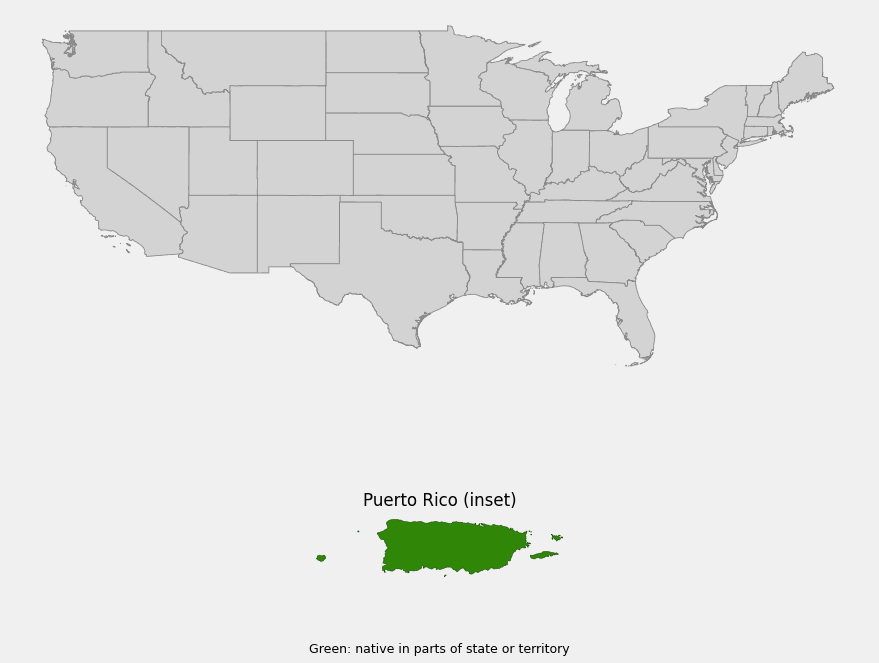
📋 Regional plant lists featuring Scalloped Anthurium: Puerto Rico
Growing & Care Guide
Scalloped anthurium is one of the easiest native foliage plants for Puerto Rican gardens. It asks for sharp drainage and some shade and little else. On the mainland it can live outdoors only in frost-free areas such as South Florida; elsewhere it is a handsome, long-lived plant for a large pot indoors or in a greenhouse.
Light
Give it partial shade or bright, filtered light, such as under high trees or on the shady side of a building. It tolerates more sun than most anthuriums, but leaves in hot, full sun may turn yellowish. In deep shade it grows more slowly and the leaves become longer and softer.
Soil & Water
Drainage matters more than anything else. Plant it in coarse, rocky or sandy soil, on a slope or raised bed, or among rocks. In containers, use a chunky aroid or orchid-style mix with bark and grit. Water regularly while plants are getting established, then let the top of the soil dry between waterings. Established plants handle dry spells well, but they rot in soggy, compacted soil.
Planting Tips
Set the plant so the base of the rosette sits at or slightly above soil level, never buried. A pocket between boulders, the base of a rock wall or a large pot on a shaded patio are all good spots. Leave room for the leaves to arch out several feet, away from paths where they could be damaged.
Pruning & Maintenance
Remove old yellow or brown leaves at the base and cut off spent flower stalks unless you want berries. The rosette collects fallen leaves, which break down and feed the plant, so there is no need to clean it out completely. Feed lightly a few times a year with a balanced fertilizer or compost; anthuriums prefer frequent, light feeding to heavy doses.
Propagation
Grow from fresh seed: squeeze the seeds from ripe berries, rinse off the pulp and press them onto the surface of moist, fine potting mix without covering them. Keep them warm and humid. Seeds do not store well, so sow them right away. Older plants sometimes produce offsets at the base that can be separated with some roots attached.
Landscape Uses
- Shade gardens: bold, architectural foliage under trees
- Rock gardens and slopes: thrives with the sharp drainage of rocky ground
- Large containers: long-lived on shaded patios and indoors
- Low-water landscapes: tough, leathery leaves cope with dry spells
- Native plant collections: an endemic aroid of Puerto Rico and the Virgin Islands
Wildlife & Ecological Value
A big anthurium rosette is a small ecosystem of its own, catching leaves and water and feeding the birds that later spread its seeds.
For Pollinators
The tiny flowers on the spadix produce pollen and scent that attract small insects, such as bees, flies and beetles. In anthuriums generally, these insects carry pollen between spadices; specific pollinators of this species have not been well documented.
For Birds
Birds eat the ripe berries and disperse the seeds, often dropping them in rock crevices and on tree bases where young plants can establish.
For Mammals
Bats are Puerto Rico’s only native land mammals, and scalloped anthurium is not an important food plant for them. The dense rosettes give cover to small reptiles, such as anoles, as well as insects and other invertebrates.
Ecosystem Role
The bird’s-nest rosette traps falling leaves and rain, building up a pocket of organic matter and moisture at its center that helps the plant through dry spells and shelters insects, spiders and other small animals. On rocky ground, the thick roots help hold soil and debris in place.
Cultural & Historical Uses
Linnaeus described this plant in 1763 as Pothos crenatus; Carl Sigismund Kunth moved it to Anthurium in 1841. The genus name comes from the Greek anthos, “flower,” and oura, “tail,” for the tail-like spadix.
For much of the 20th century, Puerto Rican floras used the name Anthurium acaule for this plant, following Britton and Wilson in 1923. That name belongs to a different species, so older books and labels may list scalloped anthurium under it.
Large bird’s-nest anthuriums are popular in tropical landscaping for their sculptural shape. Scalloped anthurium is a local, endemic choice for gardeners in Puerto Rico and the Virgin Islands who want that look with a native plant.
Frequently Asked Questions
Is scalloped anthurium the same as the florist anthurium?
No. The florist anthurium, Anthurium andraeanum, comes from Colombia and Ecuador and is grown for its glossy red spathe. Scalloped anthurium is a West Indian native grown mainly for its large rosette of leaves; its spathe is small and green.
Does it need a lot of water?
No. It needs regular water while it settles in, but established plants tolerate dry periods well. Too much water in poorly drained soil is a bigger danger than drought.
Can it grow in full sun?
It tolerates some sun, more than most anthuriums, but it looks best in partial shade or bright, filtered light. In strong sun the leaves may turn yellowish.
Is it poisonous?
Like most members of the arum family, its tissues contain calcium oxalate crystals that can irritate the mouth and throat if chewed. Keep it away from pets and small children that might eat the leaves.
Can I grow it outside the tropics?
Only in frost-free areas, such as South Florida. Elsewhere, grow it in a large pot with a coarse mix and bring it indoors or into a greenhouse before temperatures drop below about 50°F (10°C).

Looking for a nursery that carries Scalloped Anthurium?
Our nursery directory does not yet include Puerto Rico. Browse the native plant nursery directory by state: Alabama–Arkansas · California · Colorado–Hawaii · Idaho–Kansas · Kentucky–Montana · Nebraska–Oklahoma · Oregon · Pennsylvania–Virginia · Washington · West Virginia–Wyoming