
California Mugwort (Artemisia douglasiana)
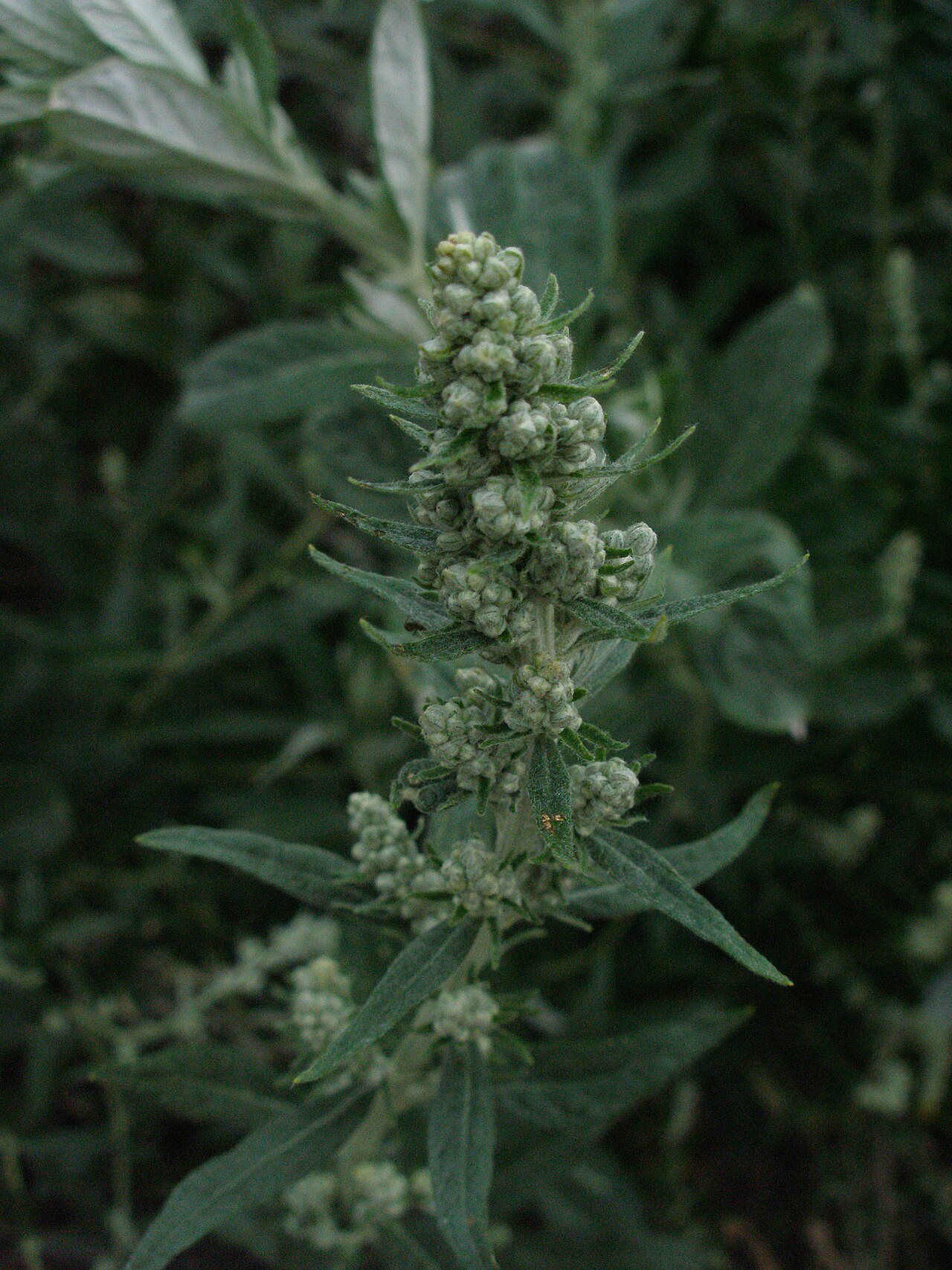
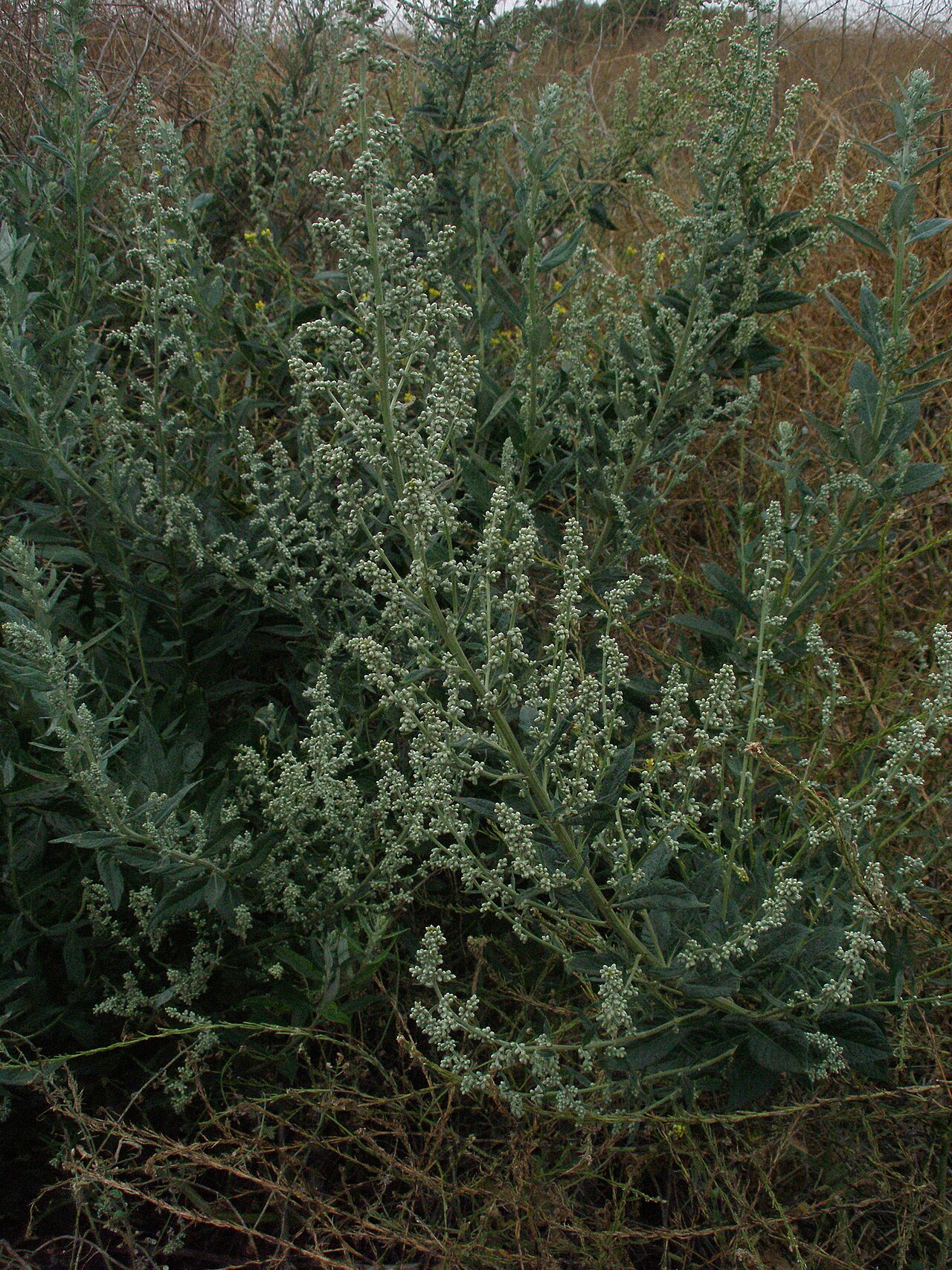
Artemisia douglasiana, known as California Mugwort, Douglas’s sagewort (the USDA PLANTS name, “Douglas’ sagewort”) or dream plant, is a tall, strongly aromatic perennial of the American West. It grows from spreading underground rhizomes into dense patches of upright stems 2 to 8 feet tall, clothed in narrow leaves that are dark gray-green above and white-woolly beneath. From late summer into fall the upper stems carry long, narrow plumes of tiny, nodding flower heads.
It belongs to the sunflower family (Asteraceae), in the same genus as big sagebrush, tarragon and the wormwoods. Crush a leaf and you get the sharp, sage-like scent typical of the genus, from aromatic oils that include cineole and thujone. The plant is wind-pollinated, so its flowers are small and green rather than showy, and like other sageworts its pollen can trigger hay fever.
California mugwort is native to California, Oregon, Washington, Idaho and western Nevada, and to northwestern Baja California in Mexico. It is a plant of stream banks, ditches, moist flats and disturbed ground, and it is one of the most culturally important medicinal plants for California’s Indigenous peoples. This guide covers identification, native range, growing it in gardens and restoration, its wildlife value, and the traditions behind its name “dream plant.”
Identification
California mugwort is easiest to recognize by its scent and its two-toned leaves. Several other sageworts grow in the same region, so look at leaf shape, the underside of the leaves and the habit of the whole plant.
Roots & Stems
The plant spreads by vigorous rhizomes and forms colonies of many stems. The stems are erect, usually unbranched below the flower plume, and grow 2 to 8 feet tall, often 3 to 5 feet in gardens. They are leafy all the way up and covered with fine gray hairs when young. In mild coastal climates the plant may keep some leaves over winter; inland, the stems die back and new shoots rise from the rhizomes in late winter or spring.
Leaves
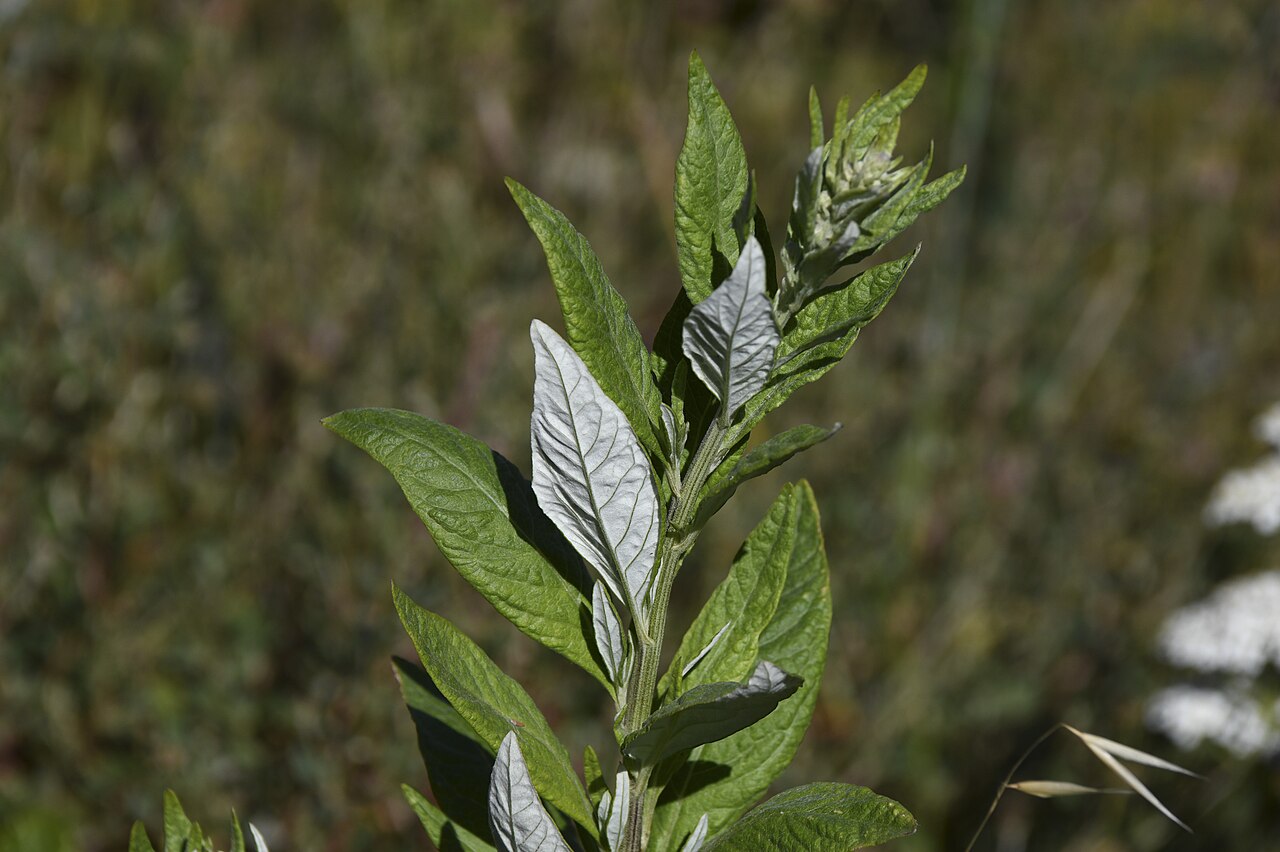
The leaves are alternate, about 2 to 6 inches long, and lance-shaped to elliptic. Many are entire, but others, especially lower on the stem, have three to five shallow lobes or coarse teeth near the tip. The upper surface is green to dark gray-green and only lightly hairy, while the underside is densely white-woolly. When the wind turns the leaves, the plant flashes silver. All parts have a strong, pleasant, sage-like smell.
Flowers
The flower heads are tiny, about an eighth of an inch across, bell-shaped and nodding, with gray-woolly bracts. Each head contains a few outer female flowers and several to many inner disk flowers, all yellowish to brownish and without petals that look like rays. They are arranged in long, narrow, leafy panicles at the tops of the stems. Bloom time runs from late spring into fall, mostly from July to October. Because the flowers are wind-pollinated, they release large amounts of fine pollen.
Fruit & Seeds
Each flower produces a tiny, dry, single-seeded fruit (an achene or cypsela) without a plume of bristles. The seeds fall close to the parent plant or are carried by water along streams. Most new plants in established patches come from rhizomes rather than seed.
Look-alikes
Louisiana Sage (Artemisia ludoviciana), also called western mugwort, is usually shorter and more silvery, with leaves that are woolly on both sides. Common mugwort (Artemisia vulgaris), a Eurasian weed, has deeply cut leaves. California Sagebrush is a woody shrub with thread-like leaves.
Quick Facts
| Scientific Name | Artemisia douglasiana (syn. A. vulgaris var. douglasiana); USDA common name Douglas’ sagewort |
| Family | Asteraceae (sunflower family) |
| Plant Type | Herbaceous perennial or subshrub, spreading by rhizomes |
| Mature Height | 2–8 ft (usually 3–5 ft) |
| Mature Spread | 3 ft or more; spreads into colonies |
| Growth Rate | Fast |
| Sun Exposure | Full sun to part shade |
| Water Needs | Moderate; best with moist soil, tolerates summer drought once established |
| Soil Type | Adaptable: sand, loam or clay; stream banks and moist flats |
| Soil pH | About 6.0–8.0 |
| Bloom Time | July–October (from May in some areas) |
| Flower Color | Yellowish to brownish green; inconspicuous |
| Fall Color | None notable; stems dry tan |
| Fruit | Tiny achene (cypsela) without bristles |
| Deer Resistant | Yes; the aromatic leaves are seldom eaten |
| USDA Hardiness Zones | 6–10 |
Native Range
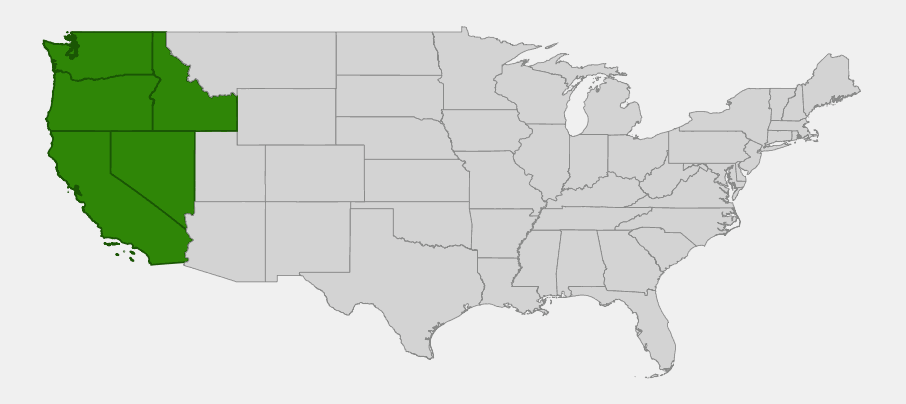
California mugwort is a Pacific Coast and Great Basin-edge species. USDA PLANTS records it as native in California, Oregon, Washington, Idaho and Nevada, and it also grows in northwestern Baja California, Mexico. The Lady Bird Johnson Wildflower Center summarizes the range as California and western Nevada north to Washington and northern Idaho.
It is most abundant in California, where it grows in almost every county outside the deserts, from coastal valleys and foothills into the lower mountains. In Oregon and Washington it is commonest west of the Cascades and along river corridors east of them, and in Idaho it reaches the northern and western parts of the state. In Nevada it is limited mostly to the western edge, near the Sierra Nevada.
Throughout its range it follows water: stream banks, gravel bars, canyon bottoms, ditches, springs and moist meadows. It also moves readily onto disturbed ground such as roadsides and old fields, wherever the soil holds some moisture into summer. It grows from sea level into the mountains, reaching roughly 6,000 feet in most areas and higher in parts of the Sierra Nevada.
📋 Regional plant lists featuring California Mugwort: Idaho, Eastern Oregon & Eastern Washington
Growing & Care Guide
California mugwort is very easy to grow, and that is both its strength and its main drawback. It thrives in almost any soil, tolerates sun or shade and takes summer drought once established, but its rhizomes can spread several feet a year in moist ground. Give it room, or plant it where its spread is an advantage, such as a stream bank or a slope that needs holding.
Light
Full sun produces the most compact, silvery growth and the heaviest bloom. It also grows well in part shade, especially inland, where afternoon shade keeps it greener through summer. In deep shade the stems become tall and floppy.
Soil & Water
It accepts sand, loam or clay, and tolerates seasonal flooding along streams. It looks best with occasional summer water. Without it, plants in hot inland gardens often go partly dormant and drop their lower leaves by late summer, then regrow with the winter rains. Avoid fertilizing: rich, watered soil only speeds up spreading.
Planting Tips
Plant in fall or winter in mild-winter regions, or in spring where winters are cold, spacing plants 3 to 4 feet apart for a mass planting. In small gardens, grow it in a large container, a bed surrounded by paving, or behind a root barrier at least 12 inches deep. On slopes and stream banks, its dense rhizomes are useful for erosion control.
Pruning & Maintenance
Cut stems to the ground in late fall or winter after the seed has dropped, or once they look shabby. Many gardeners also cut it back hard in early summer to keep it shorter and bushier. Pull or dig wandering shoots each spring to keep it in bounds. Rust and powdery mildew sometimes appear late in the season but rarely do lasting harm.
Propagation
Dividing rhizomes is the quickest method: dig a clump in late winter or early spring and replant pieces with a few buds each. Stem cuttings root easily in spring. Seed can be sown on the surface of moist soil in fall or spring and germinates without special treatment, though seed is rarely needed.
Landscape Uses
- Stream bank and riparian restoration: its rhizomes bind soil on banks, gravel bars and drainage swales
- Erosion control on slopes: fast cover for disturbed ground with some moisture
- Habitat and wildlife gardens: seeds, cover and nesting material for birds and native bees
- Ethnobotanical and herb gardens: an important medicinal and ceremonial plant for many California tribes
- Fragrance and gray foliage: a silvery, aromatic backdrop for flowering perennials
Wildlife & Ecological Value
California mugwort is not a flashy wildlife plant, but its dense stands, abundant seeds and many dependent insects make it a valuable part of riparian habitat.
For Pollinators
The flowers are wind-pollinated and offer little nectar, so they are not an important nectar source. The plant still supports insects in other ways. The Lady Bird Johnson Wildflower Center notes that it provides nesting material for native bees, and many native moth caterpillars, beetles and plant bugs feed on sageworts. It also hosts specialized gall makers, including the gall mite Aceria abalis, which raises small bumps on the leaves, and the gall midge Rhopalomyia occidentalis.
For Birds
Seed-eating birds such as sparrows, towhees, finches and juncos eat the small seeds in fall and winter, and the Lady Bird Johnson Wildflower Center notes that birds use the stands for perching and cover. Leaving the dried stems standing through winter gives birds both food and shelter.
For Mammals
The strongly aromatic leaves are rarely eaten by deer or rabbits, so the plant is useful in gardens where browsing is a problem. Thick patches provide cover for small mammals along streams.
Ecosystem Role
Along creeks and rivers, California mugwort is often one of the first plants to colonize fresh gravel bars and scoured banks after floods. Its rhizomes hold sediment and help other riparian plants establish. It is also one of many native hosts of Xylella fastidiosa, the bacterium that causes Pierce’s disease of grapes, which is spread by sharpshooter insects. Vineyard managers sometimes take this into account when managing riparian vegetation next to vineyards.
Cultural & Historical Uses
For many California Indigenous peoples, mugwort is one of the most important plants of all. Traditions vary from tribe to tribe, but the leaves have been used to ease aches and headaches, as a wash for wounds and skin problems, and especially as a remedy for poison oak rash, often with fresh leaves rubbed on the skin. It has also been widely used in women’s medicine and in ceremonies, carried or burned to purify and to ward off ghosts and illness.
The name “dream plant” comes from the practice of placing the leaves under a pillow, smoking them or drinking them as a tea to bring vivid or meaningful dreams. Contemporary herbalists still grow it for this reason. The species name honors the Scottish botanist David Douglas, who collected plants across the Pacific Northwest in the 1820s and 1830s.
Safety note: California mugwort contains thujone and other strong aromatic compounds. It has traditionally been used to bring on menstruation and has been used as an abortifacient, so it should never be taken by anyone who is pregnant. Large or prolonged internal doses can be harmful, and its wind-borne pollen can cause hay fever. Use it internally only with qualified guidance.
Frequently Asked Questions
Is California mugwort invasive?
It is native, so it is not invasive in the ecological sense, but it is aggressive in gardens. Its rhizomes can spread several feet a year in moist soil. Plant it where it has room, contain it with paving or a deep root barrier, or grow it in a large pot.
Does California mugwort really help with poison oak?
Many California tribes traditionally rubbed fresh mugwort leaves or a leaf wash on poison oak rash, and the two plants often grow side by side. This is a traditional use, not a proven medical treatment. See a doctor for severe reactions.
Is California mugwort safe to eat or drink?
Only in small amounts, if at all, and never during pregnancy. Like other Artemisias it contains thujone, which is toxic in larger doses. It is best treated as a medicinal herb to use with qualified guidance rather than as a food or casual tea.
How is California mugwort different from common mugwort?
Common mugwort (Artemisia vulgaris) is a weedy Eurasian species that has spread across much of North America. Its leaves are deeply cut into pointed lobes. California mugwort is native to the West and has mostly undivided or shallowly lobed leaves with white-woolly undersides.
Will California mugwort grow in shade?
Yes, it tolerates part shade and stays greener there in hot inland gardens, but it flowers less and can become tall and floppy in deep shade. Full sun to light shade gives the best results.

Looking for a nursery that carries California Mugwort?
Browse our native plant nursery directory: California · Idaho · Nevada · Oregon · Washington