
Yellow Passionflower (Passiflora lutea)
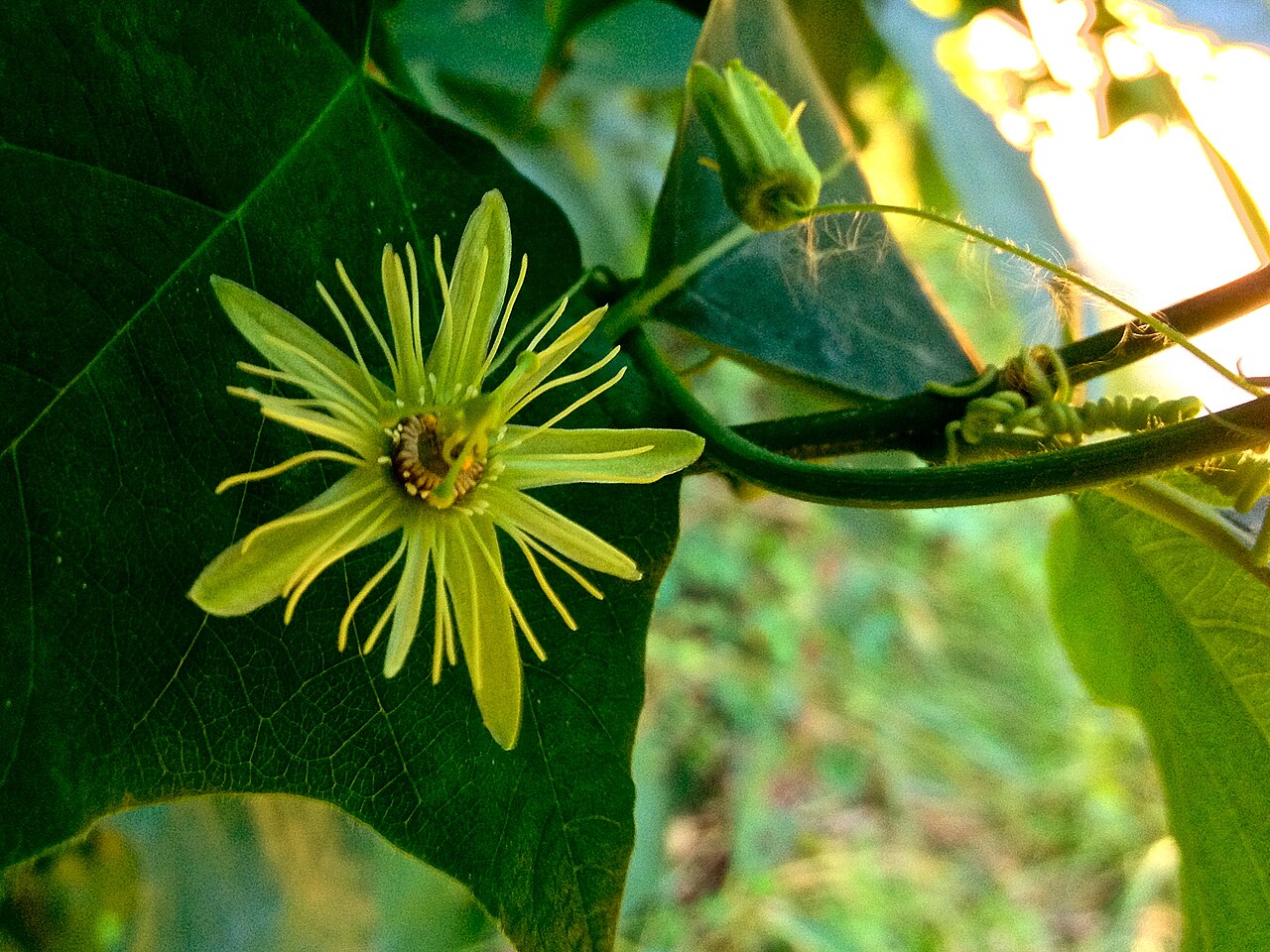
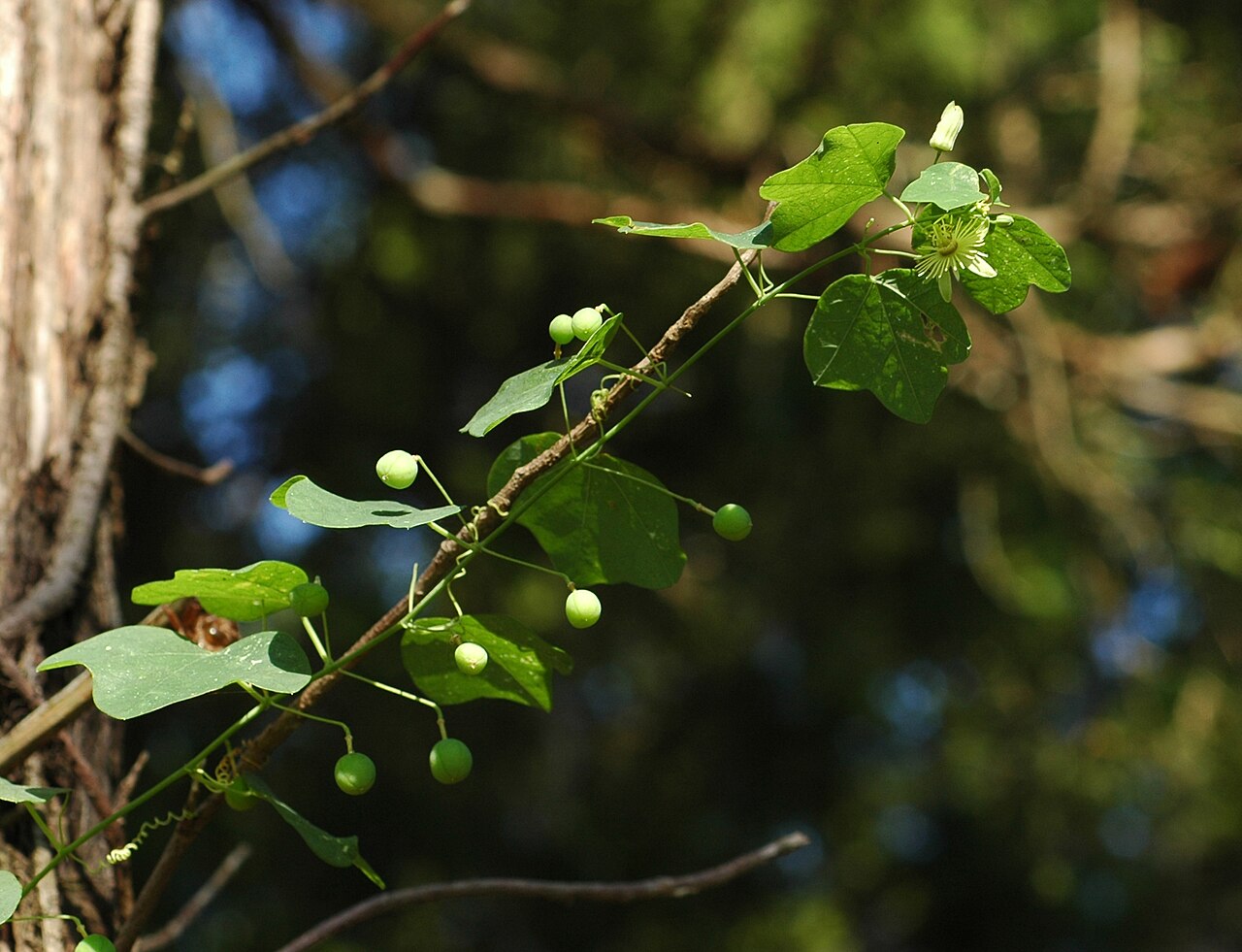
Passiflora lutea, known as Yellow Passionflower, is a slender, climbing vine of the passionflower family (Passifloraceae) and one of the most northern-ranging passionflowers in the world. It grows in moist woods, thickets, ravines and woodland edges from Pennsylvania and Kansas south to Florida and Texas, climbing by coiled tendrils over shrubs and low branches or trailing along the ground. Its broad, three-lobed leaves are wider than long and look a little like a bat in flight.
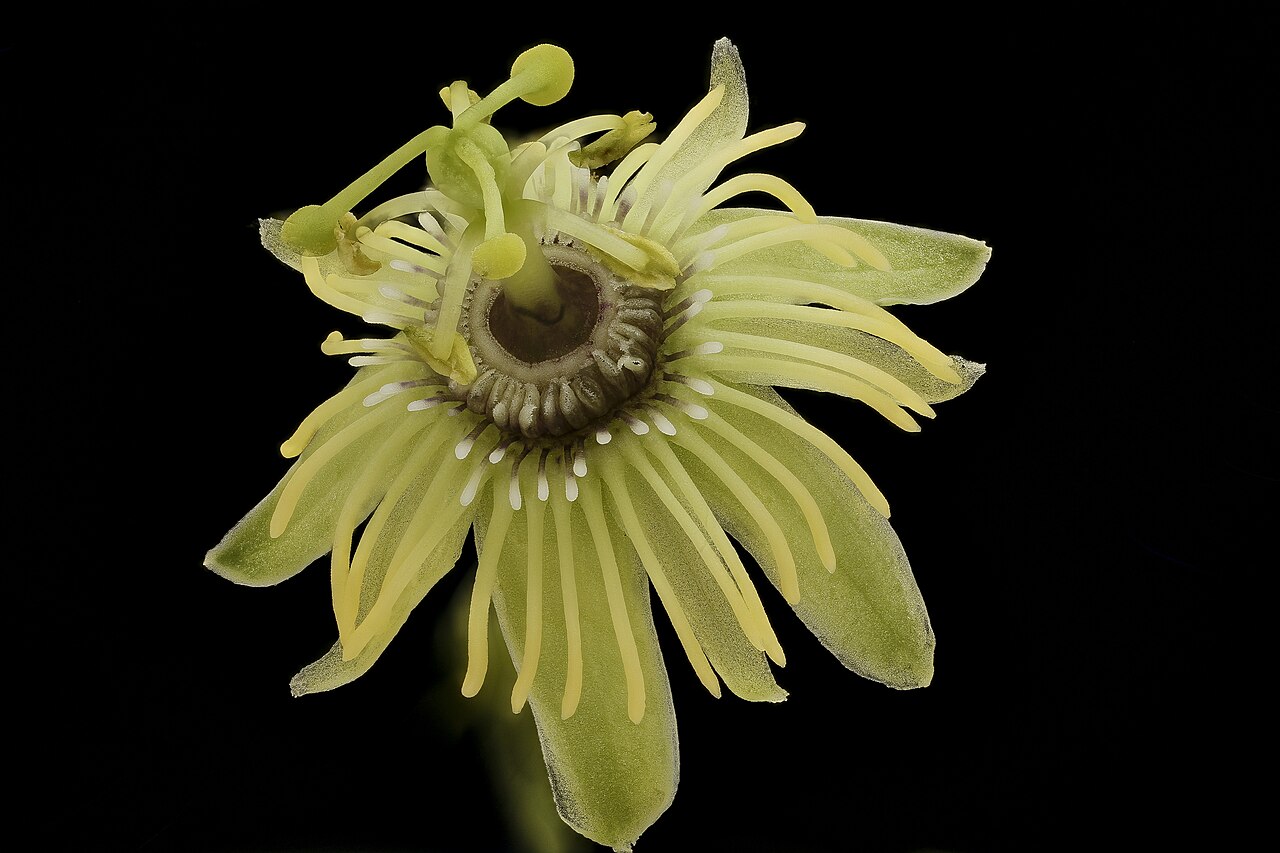
Its flowers are small, about 1/2 to 1 inch across, and pale greenish yellow, and they are easy to miss among the leaves. Up close they show the complex structure typical of passionflowers: a ring of fine, threadlike filaments (the corona) and a central column that holds the stamens and styles above the petals. The flowers are followed by small, round berries that ripen to purple-black in fall.
Yellow passionflower is far less showy than its relative, the purple passionflower or maypop, but it is one of the best native host plants for passionflower butterflies, and it supports a specialist native bee. This guide covers identification, range, how to grow it in shade gardens and on trellises, and its value for wildlife.
Identification
Yellow passionflower is easiest to recognize by its broad, shallowly three-lobed leaves and coiled tendrils. Its small yellow-green flowers and purple-black berries confirm the identification.
Stems & Growth Habit
Yellow passionflower is a herbaceous perennial vine. Each spring it sends up slender, green, smooth or slightly hairy stems from its roots, which climb by tendrils that grow from the leaf axils and coil around twigs and stems. Vines are usually 3 to 10 feet long and can reach about 15 feet. In cold winters the stems die back to the ground; in mild areas they may persist.
Leaves
The leaves are alternate, about 1 to 3 inches long and usually wider than long, with three broad, rounded, shallow lobes and smooth edges. They are thin and smooth. Some plants have silvery or pale mottling along the veins. In fall the leaves turn a clear yellow before dropping.
Flowers
Flowers appear from late spring through late summer, usually singly or in pairs on short stalks from the leaf axils. They are 1/2 to 1 inch across, with five greenish-yellow sepals and five narrower, paler petals, topped by a two-ranked corona of slender, yellowish filaments, often pinkish or purple at the base. The central column, or androgynophore, holds five stamens and three curved styles above the flower. Individual flowers open for a single day.
Fruit & Seeds
The fruit is a round berry about 1/3 to 1/2 inch across, green at first and ripening to dark purple or black in late summer and fall. Each fruit holds a few small, dark seeds embedded in a little pulp. Birds and small mammals eat the fruits and spread the seeds.
Look-alikes
Purple passionflower or maypop (Passiflora incarnata) has large, deeply three-lobed, toothed leaves and showy lavender flowers 2 to 3 inches wide, followed by large, egg-shaped fruits. Corkystem passionflower (P. suberosa) of Florida has narrow, variable leaves and corky older stems. Young yellow passionflower vines can also resemble the leaves of some grapes or moonseed, but those lack tendrils from the leaf axils and passionflower flowers.
Quick Facts
| Scientific Name | Passiflora lutea (incl. var. glabriflora) |
| Family | Passifloraceae (passionflower family) |
| Plant Type | Herbaceous perennial vine climbing by tendrils |
| Mature Height | Vines 3–10 ft (to about 15 ft) |
| Mature Spread | 3–6 ft; spreads slowly by root suckers |
| Growth Rate | Moderate |
| Sun Exposure | Part shade to full sun |
| Water Needs | Medium; moist, well-drained soil |
| Soil Type | Loam, sandy loam, rocky or limestone-based soils |
| Soil pH | About 5.5–7.5 |
| Bloom Time | May–September |
| Flower Color | Pale greenish yellow |
| Fall Color | Clear yellow |
| Fruit | Small round berry, ripening purple-black in fall |
| Deer Resistant | Moderate; occasionally browsed |
| USDA Hardiness Zones | 5–10 |
Native Range
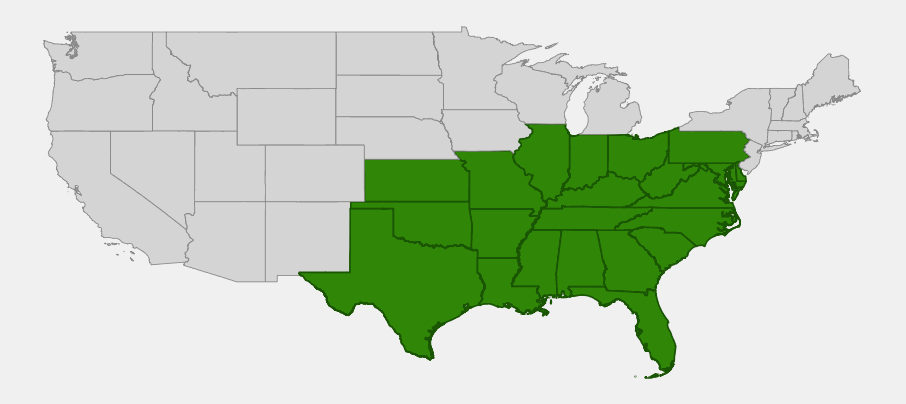
Yellow passionflower is native to the southeastern and south-central United States. The Lady Bird Johnson Wildflower Center describes its range as Pennsylvania to Ohio, southern Illinois, Missouri and eastern Kansas, south to Florida, Alabama and Texas. USDA PLANTS records it from 22 states and the District of Columbia, including Delaware, Maryland, Virginia, West Virginia, Indiana, Kentucky, Tennessee, the Carolinas, Georgia, Mississippi, Louisiana, Arkansas and Oklahoma.
It grows in moist, rich deciduous woods, rocky slopes and ravines, floodplain forests, stream banks, thickets, woodland edges and fencerows, and sometimes in partly shaded disturbed ground. It often grows on limestone or other calcium-rich soils, but it also grows in sandy and loamy soils across the Coastal Plain. It is common across much of the South and becomes local and scattered at the northern edge of its range in Pennsylvania, Ohio, Indiana and Illinois.
Most of the more than 500 passionflower species are tropical. Yellow passionflower and the maypop are the two that reach farthest north into the temperate forests of eastern North America.
📋 Regional plant lists featuring Yellow Passionflower: New York, Pennsylvania & Northern New Jersey · Ohio & Indiana · Kentucky & Tennessee · Nebraska, Kansas & Eastern Colorado · Maryland, Virginia & West Virginia · Delaware, Southern New Jersey & Long Island · Illinois, Iowa & Missouri · Alabama, Georgia & Mississippi · North & South Florida
Growing & Care Guide
Yellow passionflower is an easy, low-maintenance native vine for partly shaded gardens. It is smaller and less aggressive than purple passionflower, and it is mainly planted for butterflies. Give it a trellis, fence, shrub or tree trunk to climb, and expect the foliage to be eaten.
Light
It grows in part shade to full sun. In the wild it is mostly found in light shade at woodland edges and in open woods. In full sun it needs more consistent moisture.
Soil & Water
Plant it in moist, well-drained, reasonably rich soil. It tolerates rocky, sandy and limestone soils. Once established it is fairly drought tolerant, but it grows best with regular moisture. It does not need fertilizer.
Planting Tips
Plant in spring after frost. Set it at the base of a trellis, fence, arbor, shrub or small tree. Because it is a light vine it will not damage its supports. Plant several together near a butterfly garden so caterpillars have enough foliage to eat, and do not worry when leaves are stripped; the plant recovers.
Pruning & Maintenance
In cold areas, cut dead stems back to the ground in late winter. Little other care is needed. Plants may sucker modestly from the roots. Avoid pesticides, which kill the caterpillars the plant is meant to feed.
Propagation
Seeds germinate slowly and irregularly. Clean them from ripe fruits, soak them for a day, and sow them in fall outdoors or after a period of cold, moist stratification. Stem cuttings taken in summer and root suckers dug in spring are faster ways to propagate it.
Landscape Uses
- Butterfly gardens: a native host for Gulf fritillary, variegated fritillary and zebra longwing caterpillars
- Shade and woodland gardens: a light vine for trellises and shrubs in part shade
- Native bee habitat: supports a specialist passionflower bee
- Small-space trellises: less aggressive than purple passionflower
- Woodland edge restoration: a native component of moist forest edges and thickets within its range
Wildlife & Ecological Value
Yellow passionflower is small and modest, but it plays an outsized role for insects. Its leaves feed several butterflies, and its flowers support a specialist native bee.
For Pollinators
The flowers are visited by small bees, including a specialist, the small mining bee Pseudopanurgus passiflorae (now often placed in Protandrena), which collects its pollen from yellow passionflower. The leaves are a larval host for the Gulf fritillary, variegated fritillary and, in Florida and South Texas, the zebra longwing (Florida’s state butterfly), as well as other heliconian butterflies. Its leaves are smaller and tenderer than those of purple passionflower, which makes it a good host for young caterpillars.
For Birds
Birds eat the small purple-black fruits in fall and spread the seeds. The vines also give light cover to birds in thickets and woodland edges.
For Mammals
Small mammals such as raccoons, opossums and squirrels eat the fruits. Deer browse the vines occasionally.
Ecosystem Role
Yellow passionflower is part of the herb and vine layer of rich southeastern forests and edges, where it supports a set of specialist insects.
Cultural & Historical Uses
Linnaeus described Passiflora lutea in 1753, naming it for its yellow flowers (luteus, yellow). The genus name comes from the “Passion” of Christ: Spanish missionaries in South America saw the flower parts of tropical passionflowers as symbols of the crucifixion, including the corona as the crown of thorns and the stamens as the wounds.
Unlike its larger relative the maypop, yellow passionflower has not been widely used for food. Its small fruits contain little pulp. Native peoples of the Southeast and early settlers used various passionflowers medicinally, but most historical records refer to the maypop rather than this species.
Today yellow passionflower is grown by native plant enthusiasts and butterfly gardeners, especially in the Southeast. It is less known in the nursery trade than purple passionflower but is offered by native plant nurseries and is easy to propagate.
Frequently Asked Questions
Is yellow passionflower invasive?
No. It is native across the southeastern and south-central United States. It is a light vine that spreads slowly and is much less aggressive than purple passionflower.
Are the fruits of yellow passionflower edible?
The small purple-black berries are not considered toxic, but they have little pulp and are rarely eaten. Leave them for the birds; if you want edible passionfruit from a native vine, grow the maypop (Passiflora incarnata).
Which butterflies use yellow passionflower?
It is a larval host for the Gulf fritillary, variegated fritillary and, in Florida and South Texas, the zebra longwing and other heliconians.
Will yellow passionflower grow in shade?
Yes. It grows well in part shade at woodland edges and in open woods, and it tolerates fairly heavy shade, though flowering is lighter there.
How cold-hardy is yellow passionflower?
It is one of the most cold-hardy passionflowers, reaching Pennsylvania and Ohio. In cold winters the stems die to the ground and new growth emerges from the roots in spring.

Looking for a nursery that carries Yellow Passionflower?
Browse our native plant nursery directory: Alabama & Arkansas · Delaware, Florida & Georgia · Illinois, Indiana & Kansas · Kentucky, Louisiana, Maryland, Mississippi & Missouri · North Carolina, Ohio & Oklahoma · Pennsylvania, South Carolina, Tennessee, Texas & Virginia · West Virginia