
Caterpillar Scorpionweed (Phacelia cicutaria)
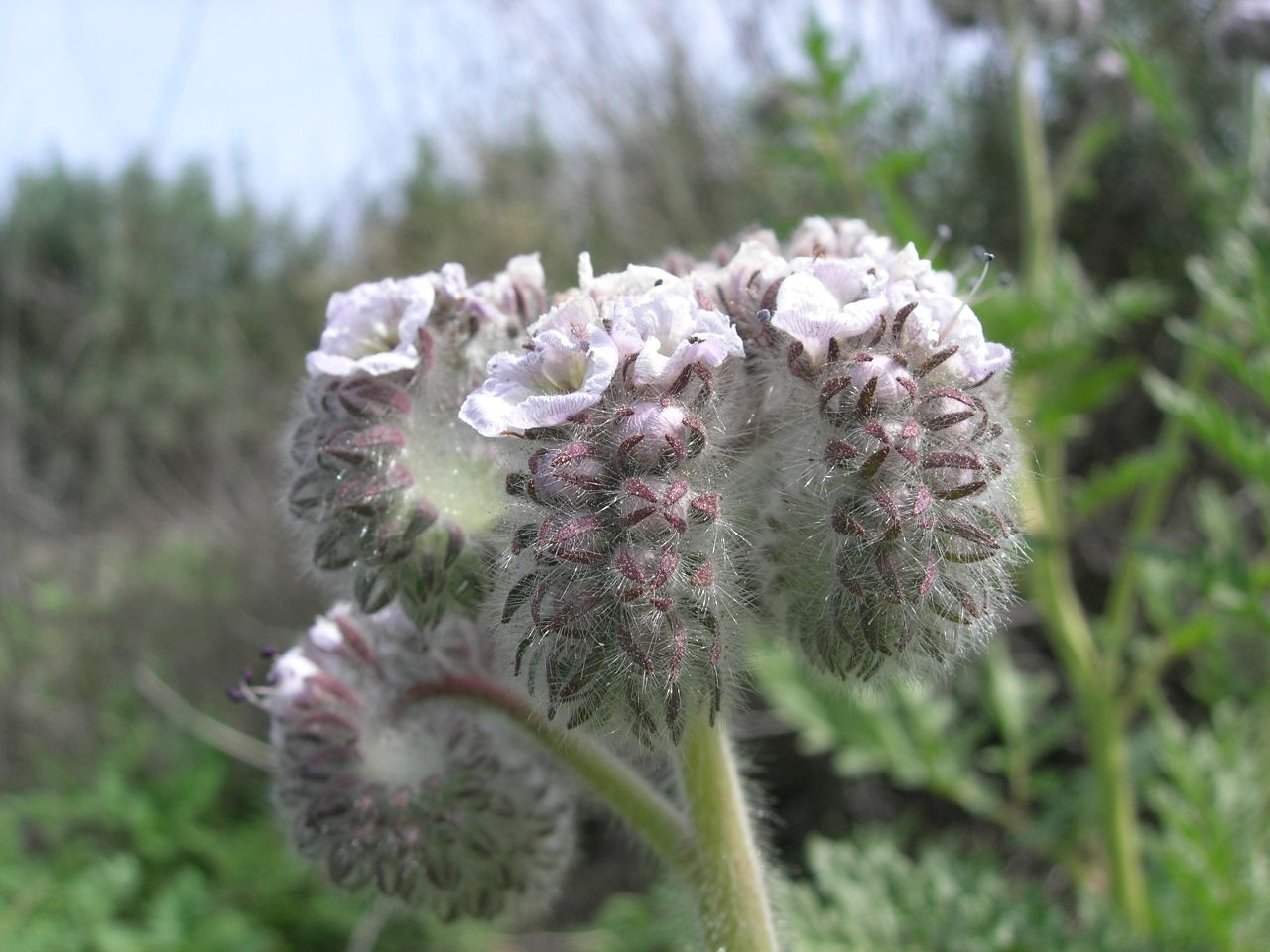
Phacelia cicutaria, known as Caterpillar Scorpionweed (USDA: caterpillar phacelia), is a spring annual wildflower of California’s foothills, chaparral and coastal sage scrub. It belongs to the borage family (Boraginaceae; formerly the waterleaf family, Hydrophyllaceae). Its name comes from its densely bristly, coiled flower clusters, which look remarkably like fuzzy caterpillars curled at the stem tips.
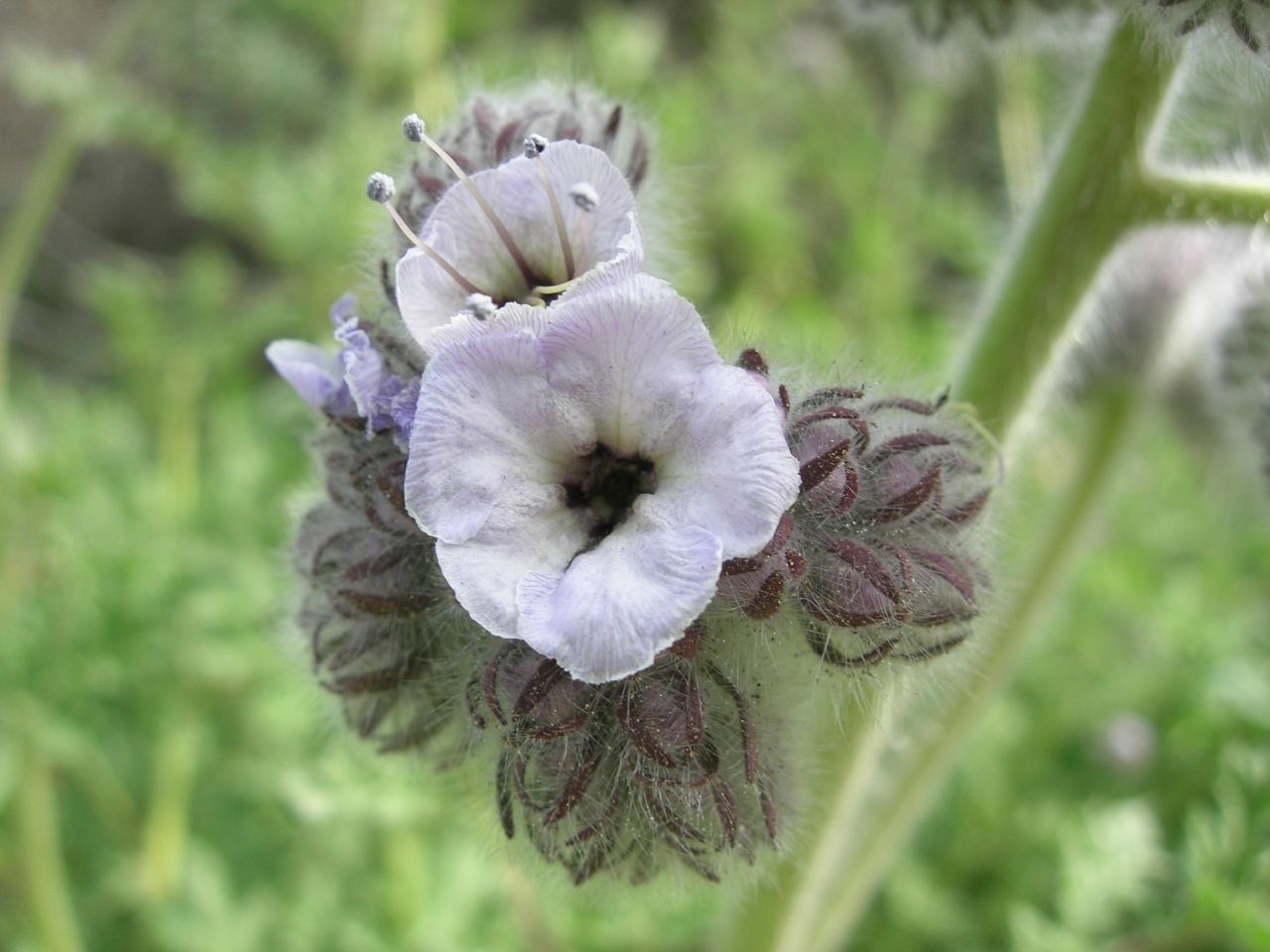
It grows 8 inches to 2 feet tall, with fern-like, deeply divided leaves and pale lavender to cream, bell-shaped flowers that open from March to May. It is especially common on rocky slopes, road cuts and recently burned chaparral, where it can bloom in great numbers in the first spring or two after a fire. Native bees visit the flowers heavily.
Safety note: the stiff, glandular hairs of caterpillar scorpionweed, like those of many phacelias, can cause an itchy contact dermatitis in sensitive people. Avoid handling it with bare skin and wash afterward if you do. It is easy to grow from seed in sunny, dry California gardens, but plant it away from paths.
Identification
Look for a bristly, gray-green annual with fern-like leaves on dry, rocky or recently burned slopes in spring, topped by several tightly coiled, hairy flower clusters that look like caterpillars and bear pale lavender to whitish bell-shaped flowers.
Stems & Habit
Caterpillar scorpionweed is an annual with one to several stems, upright to leaning, usually 8 to 24 inches (20 to 60 cm) tall. The stems are covered with stiff, spreading bristles and shorter glandular hairs, giving the whole plant a rough, gray-green look.
Leaves
The leaves are 1 1/2 to 6 inches (4 to 15 cm) long and pinnately divided into toothed or lobed segments, like those of a hemlock or carrot. This resemblance gave the plant its species name cicutaria, from Cicuta, the water hemlock. The leaves are bristly and become smaller toward the top of the stem.
Flowers
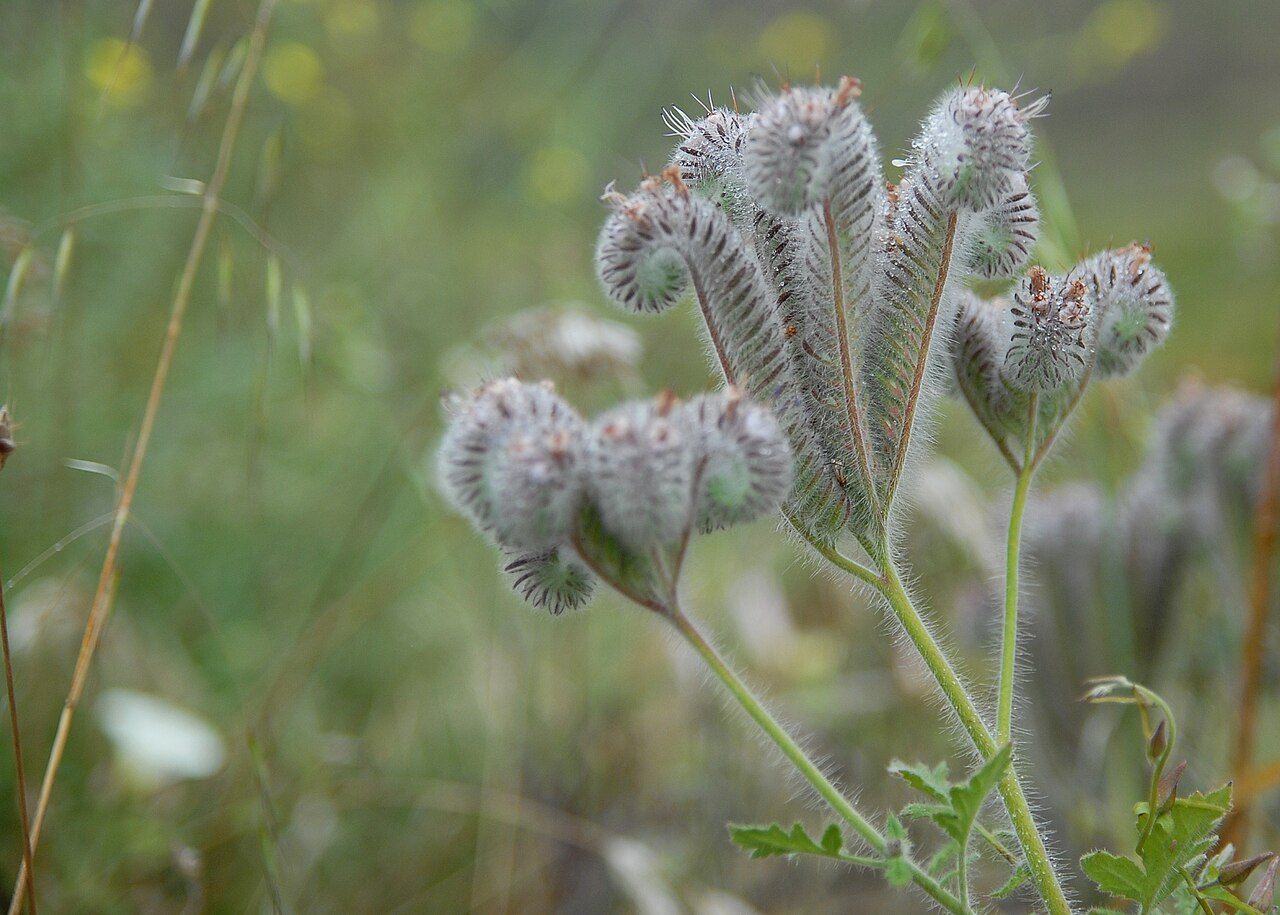
The flowers grow in dense, one-sided, coiled clusters (cymes) that are thickly covered with long, stiff, whitish to bronze bristles. The clusters uncoil as the flowers open. Each flower is broadly bell-shaped, about 1/4 to 1/2 inch (6 to 12 mm) long, whitish, cream or pale lavender, often with darker veins, with stamens that stick out slightly. Bloom time is mainly March to May.
Fruit & Seeds
Each flower produces a small, egg-shaped capsule surrounded by the persistent, bristly sepals, containing a few pitted seeds. The plant dries and dies after setting seed in late spring.
Look-alikes
Several phacelias share its coiled flower heads. Distant Phacelia (P. distans) and Lacy Phacelia (P. tanacetifolia) have similar fern-like leaves but bluer flowers and less shaggy, bristly coils. Branching phacelia (P. ramosissima) and imbricate phacelia (P. imbricata) are perennials. Caterpillar scorpionweed is recognized by its strongly bristly, caterpillar-like coils and pale flowers. Botanists recognize three varieties: var. cicutaria, var. hispida and var. hubbyi.
Safety & Conservation
The bristly and glandular hairs can cause a rash similar to poison oak in sensitive people. Wear gloves when handling it. Do not eat it. The species is widespread and common in California and is not of conservation concern.
Quick Facts
| Scientific Name | Phacelia cicutaria |
| Family | Boraginaceae (borage family); formerly Hydrophyllaceae |
| Plant Type | Spring annual wildflower |
| Mature Height | 8–24 in |
| Mature Spread | 6–18 in |
| Growth Rate | Fast |
| Sun Exposure | Full sun to light shade |
| Water Needs | Low; relies on winter rain |
| Soil Type | Rocky, gravelly or sandy well-drained soils; burns and road cuts |
| Soil pH | About 6.0–8.0 |
| Bloom Time | March–May |
| Flower Color | Whitish, cream or pale lavender |
| Fall Color | None; annual, dies after seeding |
| Fruit | Small capsule within bristly sepals |
| Deer Resistant | Yes; bristly foliage is seldom browsed |
| USDA Hardiness Zones | Annual; grows where zones 8–10 occur |
Native Range
Caterpillar scorpionweed is native to California and Nevada, according to USDA PLANTS, and also grows in northern Baja California, Mexico. Nearly all of its range lies in California, and it reaches Nevada only at the edge of its range.
In California it grows in the foothills of the Sierra Nevada, the inner and outer Coast Ranges, the Transverse and Peninsular Ranges of Southern California and the western edges of the Mojave Desert. It is common in the Santa Monica Mountains, the hills of San Diego County and the southern Sierra foothills.
It grows on dry, open, often rocky slopes and talus, in chaparral, coastal sage scrub, oak woodland and grassland, and on road cuts. Like many California annuals, it is a fire follower: seeds lying in the soil germinate after chaparral burns, and the plant can be abundant for a spring or two before shrubs regrow.
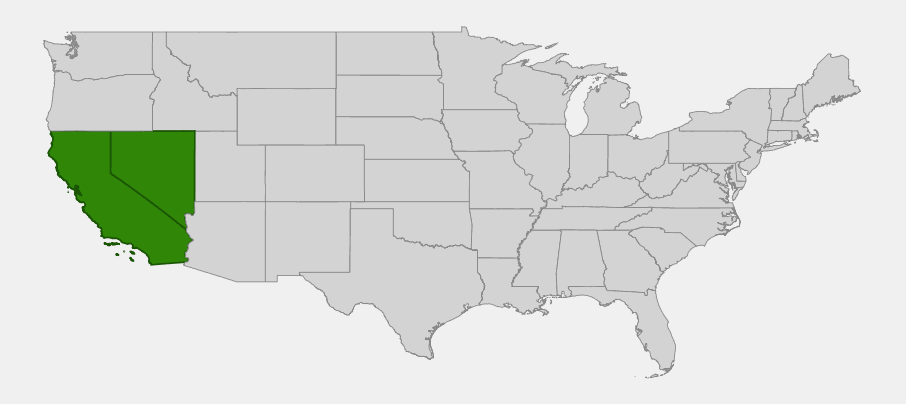
📋 Regional plant lists featuring Caterpillar Scorpionweed: California & Nevada
Growing & Care Guide
Caterpillar scorpionweed is an easy spring annual for dry, sunny California gardens and wildflower meadows. Because of its bristly hairs, grow it where people will not brush against it.
Light
Full sun to light shade. It flowers best in sun.
Soil & Water
Grow it in lean, well-drained, gravelly or sandy soil. Rely on winter rain; water only in a very dry winter. It needs no summer water and dies back naturally after seeding.
Planting Tips
Scatter seed in fall on bare, raked soil before winter rains and press it in lightly. Combine it with California poppy, chia, lupines and other native annuals for a spring display that supports native bees.
Pruning & Maintenance
No pruning is needed. Let plants set seed to reseed, then pull the dry plants with gloves in early summer.
Propagation
Seed only. Some seed has dormancy that is broken by fall sowing, winter weathering or, in nature, by smoke and heat from fire, so expect uneven germination.
Landscape Uses
- Native wildflower gardens: an easy, self-sowing spring annual
- Pollinator gardens: valuable pollen and nectar for native bees
- Post-fire and slope restoration: a fast native cover on disturbed ground
- Chaparral and sage scrub gardens: fits with native shrubs and annuals
- Wildflower viewing: a conversation piece for its caterpillar-like coils
Wildlife & Ecological Value
Caterpillar scorpionweed is one of many phacelias that feed native bees in the California spring.
For Pollinators
The Xerces Society lists it as having special value to native bees. Bumblebees, mason bees, mining bees and other solitary bees visit the flowers for pollen and nectar, along with bee flies and butterflies.
For Birds
Seed-eating birds such as finches and sparrows may forage on the small seeds, and insect-eating birds hunt the pollinators it attracts.
For Mammals
The bristly plants are rarely browsed. Small rodents may eat the seeds.
Ecosystem Role
As a fire-following annual, it quickly covers burned and disturbed slopes, holds soil and supports pollinators in the first years after fire, before the shrubs of chaparral and sage scrub regrow.
Cultural & Historical Uses
The genus name Phacelia comes from the Greek phakelos, “bundle,” for the crowded flower clusters. The species name cicutaria means “like Cicuta” (water hemlock), describing the divided leaves. The common names caterpillar phacelia and caterpillar scorpionweed both describe the furry, coiled flower clusters.
Phacelias are well known among California hikers and botanists for causing itchy rashes, and caterpillar scorpionweed is one of the species most often blamed after spring wildflower walks.
It is a familiar part of spring displays in Southern California, including the hills around Lake Elsinore’s Walker Canyon and the Santa Monica Mountains. Related species on this site include California Bluebells, Fernleaf Phacelia and Distant Phacelia.
Frequently Asked Questions
Why is it called caterpillar scorpionweed?
Its coiled flower clusters are densely covered with long, stiff bristles, so they look like furry caterpillars. “Scorpionweed” refers to the coiled shape, like a scorpion’s tail.
Can caterpillar scorpionweed cause a rash?
Yes. Its bristly and glandular hairs can cause an itchy rash in sensitive people. Wear gloves and long sleeves when handling it.
Is it an annual?
Yes. It sprouts after fall and winter rains, blooms from March to May and dies after setting seed.
Where does it grow?
Mainly in California, from the Sierra foothills and Coast Ranges to Southern California, with a few records in Nevada and Baja California. It favors dry, rocky slopes and recently burned chaparral.
Is it good for pollinators?
Yes. It is valued for native bees, which collect its pollen and nectar in spring.

Looking for a nursery that carries Caterpillar Scorpionweed?
Browse our native plant nursery directory: California · Nevada