
Fiesta Flower (Pholistoma auritum)
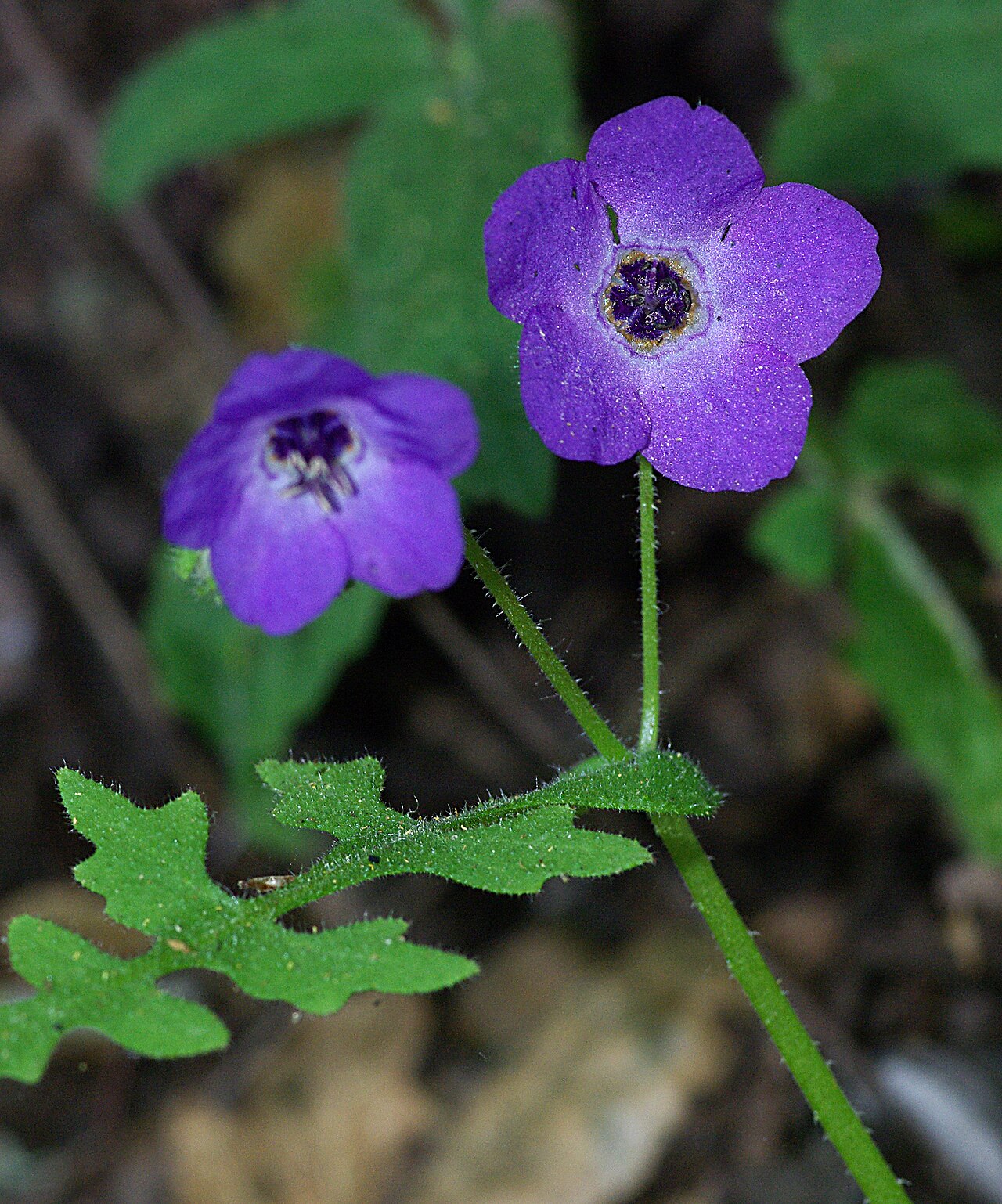
Pholistoma auritum, known as Fiesta Flower (USDA: blue fiestaflower), is a native annual wildflower of California and the desert Southwest. It belongs to the waterleaf group, traditionally the family Hydrophyllaceae and now usually placed in the borage family (Boraginaceae). It grows quickly from seed with the winter rains and scrambles over rocks and shrubs on weak, brittle stems up to about 4 feet long.
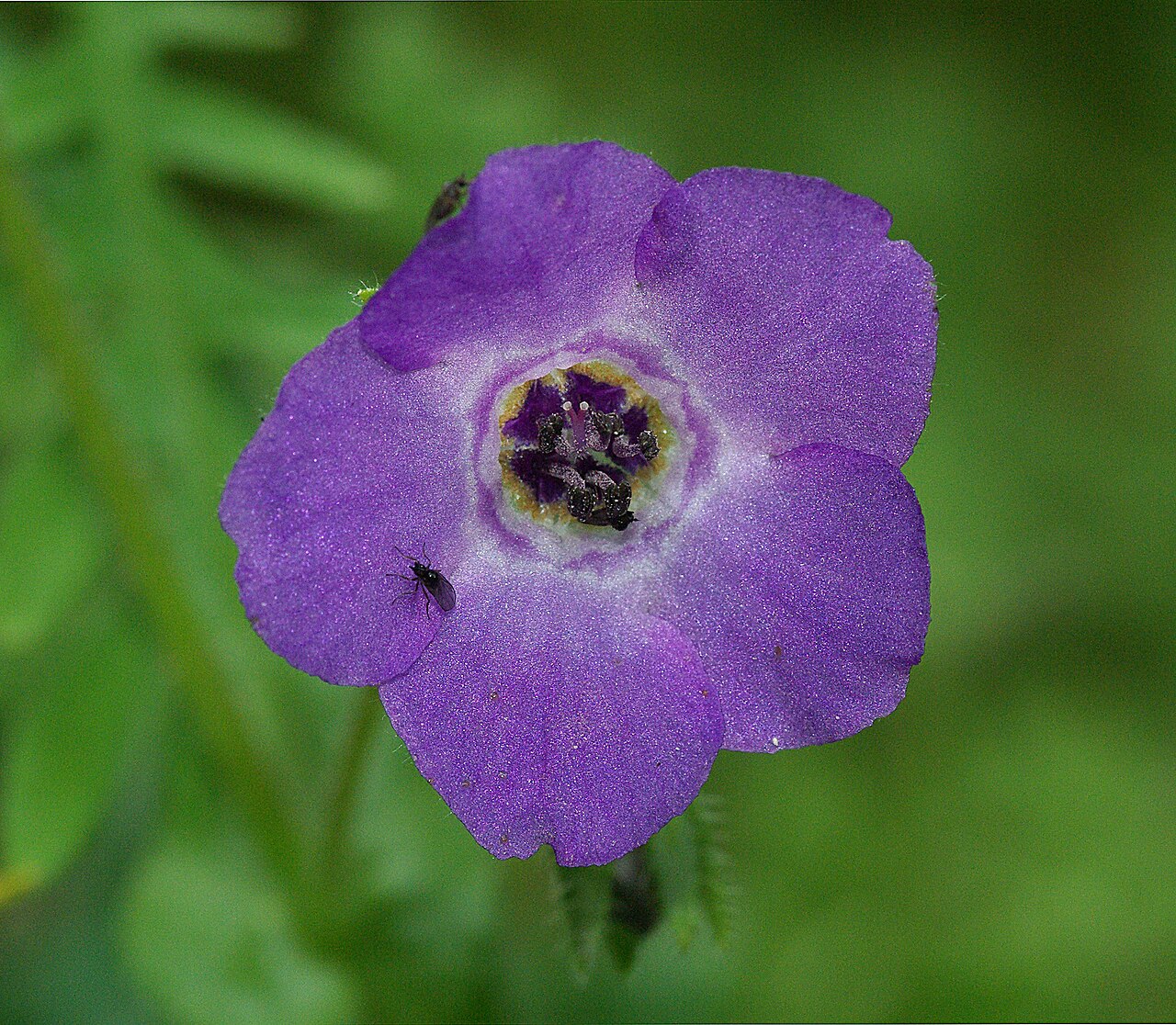
In spring it opens a cheerful show of blue-violet to lavender, bowl-shaped flowers about an inch across, each marked with a pale ring and dark purple spots and streaks in the center. The stems are angled and covered with tiny, backward-hooked prickles that hook onto neighboring plants and help the stems climb. They also catch on skin and clothing, which every hiker who has brushed against a patch quickly learns. The species name auritum (“eared”) refers to the ear-like lobes where the leaf stalks clasp the stem.
Fiesta flower grows on shady, moist slopes in oak woodland, chaparral, coastal scrub and canyon bottoms, often in the dappled shade under shrubs and trees. It is easy to grow from seed in a woodland garden, where it reseeds, fills shady gaps with spring color, and dies back in early summer. It provides nectar and pollen for spring bees.
Identification
Fiesta flower is easy to recognize in spring: look for a sprawling tangle of brittle, prickly stems with deeply lobed leaves and blue-violet bowl-shaped flowers, usually in shade.
Growth Form
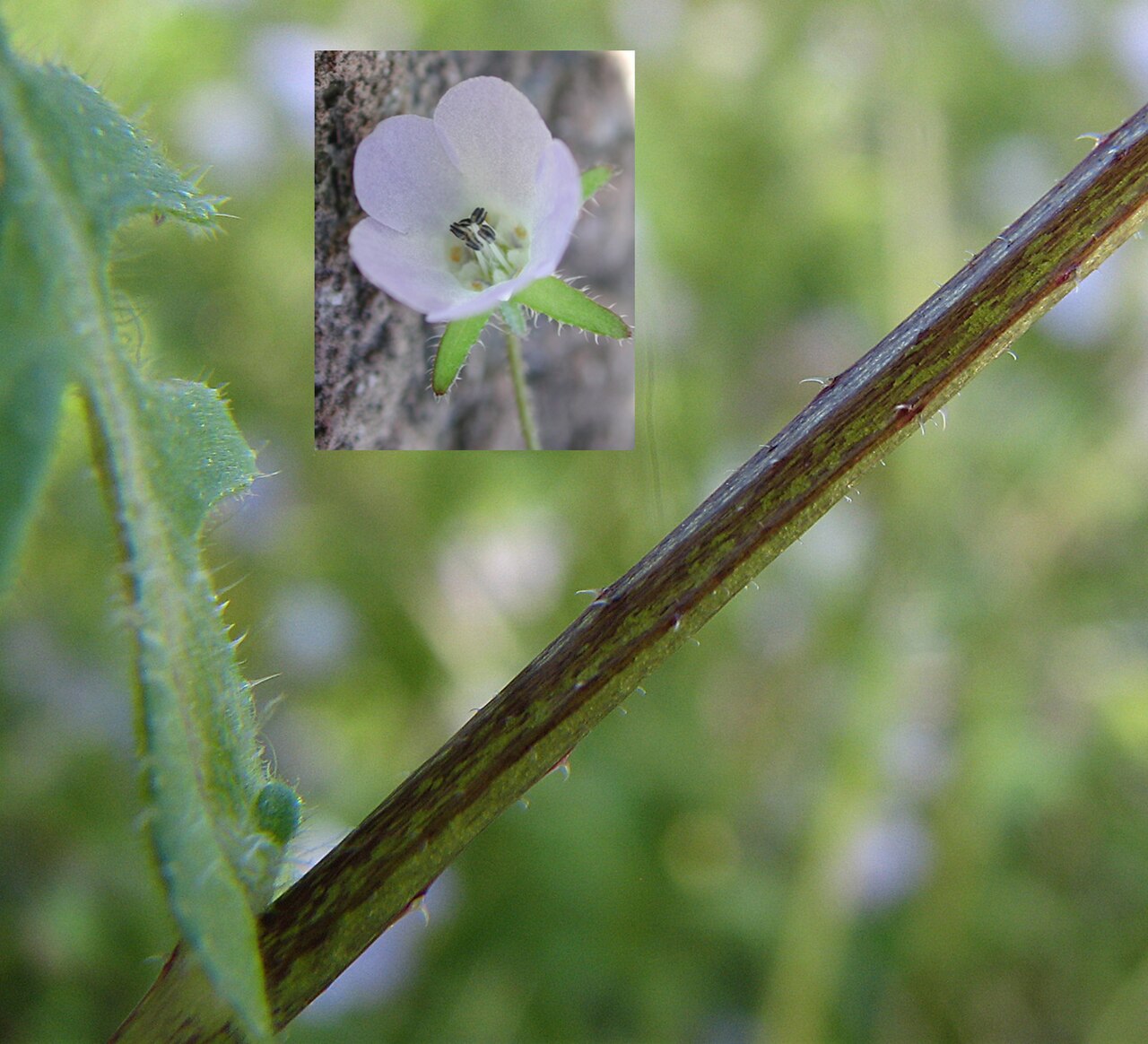
A winter annual that germinates with fall or winter rains and dies after setting seed in late spring or early summer. The stems are fleshy, brittle and four-angled, branching freely and sprawling or climbing 1 to 4 feet over other plants. They are rough with stiff hairs and lined along the angles with tiny, downward-curved prickles.
Leaves
The leaves are 2 to 6 inches long, deeply cut into several toothed lobes, and hairy. Their stalks are winged, and at the base the wings widen into ear-like lobes (auricles) that clasp the stem, the feature behind the name auritum.
Flowers
Flowers are borne singly or in small groups on stalks opposite the leaves. Each is a broad, shallow bowl about 3/4 to 1-1/4 inches across, with five rounded lobes. Color ranges from blue-violet and lavender to purple, usually with a paler ring around the center, darker veins, and dark purple spots in the throat. Small scales at the base of the petals guard the nectar. Bloom is mainly from March to May.
Fruit & Seeds
Each flower forms a small, round, bristly capsule containing a few seeds, enclosed by the enlarged, hairy calyx. Seeds fall near the parent plant and remain dormant through the dry summer until fall or winter rains.
Variety
Two varieties are recognized. Var. auritum grows through much of California’s coastal and foothill regions. Var. arizonicum, called Arizona fiesta flower, has purple flowers and occurs in the deserts of southeastern California, southern Nevada and Arizona, typically in rocky canyons and at the base of cliffs where a little extra moisture collects.
Look-alikes & Safety
Baby blue eyes (Nemophila menziesii) has similar blue bowl-shaped flowers but grows upright, without prickles. White fiesta flower (Pholistoma membranaceum) has smaller white flowers with purple spots. Fiesta flower is not known to be toxic, but the hooked prickles cling to skin and clothing; wear gloves when pulling it out.
Quick Facts
| Scientific Name | Pholistoma auritum |
| Family | Boraginaceae (borage family; formerly Hydrophyllaceae, waterleaf family) |
| Plant Type | Annual scrambling herb; climbs over other plants |
| Mature Height | 1–2 ft; stems sprawl up to 4 ft long |
| Mature Spread | 1–4 ft |
| Growth Rate | Fast |
| Sun Exposure | Part shade to full shade |
| Water Needs | Moderate in winter and spring; dry in summer after seeding |
| Soil Type | Loam, rocky or sandy soil with some organic matter |
| Soil pH | About 6.0–8.0 |
| Bloom Time | March–May (from February in warm sites) |
| Flower Color | Blue-violet to lavender or purple, darker spots in the center |
| Fall Color | None; annual dies back in early summer |
| Fruit | Small, bristly capsule with a few seeds |
| Deer Resistant | Moderately; prickly stems are not favored |
| USDA Hardiness Zones | 8–10 (grows as a cool-season annual) |
Native Range
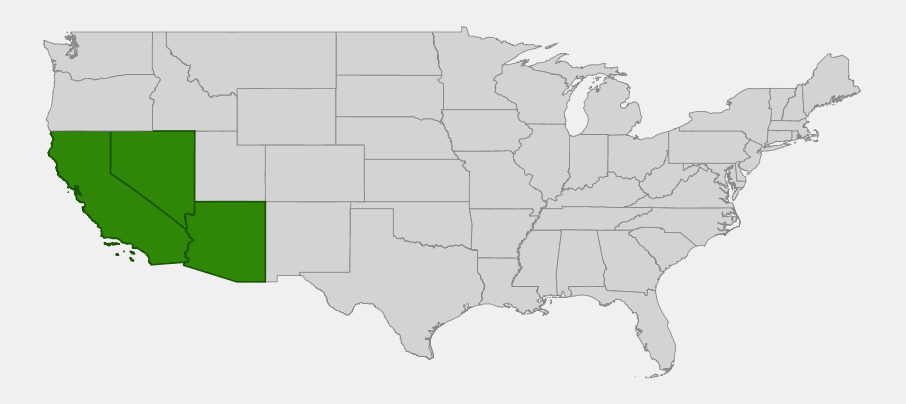
Fiesta flower is native to California, southern Nevada and Arizona, and it extends into northern Baja California. USDA PLANTS lists it as native in the lower 48 states, in Arizona, California and Nevada. Its heartland is California, where var. auritum grows in the Coast Ranges, the foothills around the Central Valley and the Sierra Nevada, the Transverse and Peninsular Ranges, and many coastal areas from around the San Francisco Bay Area south to San Diego County.
Var. arizonicum carries the species into the desert: it grows in sheltered canyons and below cliffs in the Mojave and Sonoran Deserts of southeastern California, the southern tip of Nevada, and central and western Arizona. These desert populations are scattered and occur mainly where rocks or canyon walls give shade and collect runoff.
Across its range it favors shaded, moist slopes and canyon bottoms in oak woodland, chaparral and coastal sage scrub, streambanks, rocky talus and the base of cliffs, and coastal bluffs, generally below about 5,000 feet. It is often most abundant in openings and in wet years.
📋 Regional plant lists featuring Fiesta Flower: Arizona & New Mexico · California & Nevada
Growing & Care Guide
Fiesta flower is easy to grow from seed and is one of the best native annuals for shade in California gardens. Sow it once in a woodland bed or under oaks and shrubs, and it will usually reseed itself year after year.
Light
Grow it in part shade or bright, dappled shade, such as under oaks, along the north side of shrubs, or on a shaded slope. In hot inland gardens it needs afternoon shade; near the coast it tolerates more sun.
Soil & Water
It grows in most well-drained soils, from rocky and sandy to loamy soil rich in leaf litter. Keep the soil moist during germination and growth in winter and spring; natural rainfall is usually enough in average years. After it sets seed in late spring, let the area dry out; summer water is not needed.
Planting Tips
Sow seed in fall, just before or with the first rains, by scattering it on loosened soil and lightly raking it in. Seedlings appear with the rains and grow quickly. Give the stems something to scramble over, such as a low shrub, rocks or a fallen branch, and combine it with other shade annuals and bulbs such as miner’s lettuce, baby blue eyes and bluedicks.
Pruning & Maintenance
No pruning is needed. Let plants finish blooming and drop their seed before removing the dried stems in summer. Wear gloves, since the prickly stems cling to skin and clothing. If it spreads too far, pull unwanted seedlings in winter.
Propagation
Grow it from seed. Collect the capsules when they turn tan in late spring, dry them, and sow the seed the following fall. Transplanting is rarely successful because the brittle stems break easily; direct sowing works best.
Landscape Uses
- Shade and woodland gardens: spring color under oaks and shrubs where few annuals thrive
- Native annual wildflower mixes: pairs with baby blue eyes, miner’s lettuce and bluedicks
- Pollinator gardens: early spring nectar and pollen for native bees
- Natural and habitat gardens: a self-sowing groundcover for shady slopes
- Hillside and canyon restoration: quick cover on shaded slopes in the cool season
Wildlife & Ecological Value
Fiesta flower is a modest but valuable part of the spring wildflower community in California’s shady woodlands and canyons.
For Pollinators
The open, bowl-shaped flowers give easy access to nectar and pollen. They are visited by bumble bees, small native bees, bee flies and other flies in early spring, when many native bees are emerging.
For Birds
Seed-eating birds such as towhees, sparrows and juncos forage in the leaf litter where the seeds fall, and the tangled stems add cover in the understory.
For Mammals
The prickly stems are not a favored food, though deer and rabbits may nibble young growth. Small rodents eat fallen seeds.
Ecosystem Role
As a fast-growing winter annual, it covers shaded ground in the cool season, holding soil on slopes until it dies back in summer. Its seed bank lets it respond quickly to wet years and to openings in the canopy.
Cultural & Historical Uses
The genus name Pholistoma comes from Greek words meaning “scaly mouth,” referring to the small scales at the base of the petals inside the flower. The English botanist John Lindley first described the species as Nemophila aurita, and was later placed in the small genus Pholistoma, which has only three species.
The common name “fiesta flower” reflects its festive, blue-violet blooms in the spring wildflower season. Hikers in California’s canyons and oak woodlands know it as a cheerful but clingy plant, since its hooked stems stick to socks and pant legs.
In gardens, fiesta flower is valued by native plant enthusiasts as one of the few showy annuals that bloom in shade. It is sold as seed by California native seed suppliers and is a common component of woodland and shade wildflower mixes.
Frequently Asked Questions
Why does fiesta flower stick to my clothes?
Its stems are lined with tiny, backward-hooked prickles that help it climb over other plants. They also hook onto fabric and skin. Wear gloves and long sleeves when handling it.
Is fiesta flower a perennial?
No. It is a winter annual: it sprouts with fall or winter rains, blooms in spring and dies after setting seed in late spring or early summer. It usually reseeds on its own.
Can I grow it in full sun?
It prefers part shade to full shade. Near the coast it can take more sun, but in hot inland gardens give it shade, especially in the afternoon.
Is fiesta flower native to Arizona and Nevada?
Yes. The variety arizonicum grows in sheltered desert canyons of Arizona, southern Nevada and southeastern California, but it is much more scattered there than in coastal California.
How do I start it from seed?
Scatter seed on loosened soil in fall, just before or with the first rains, and rake it in lightly. Keep the soil moist through winter if rains are sparse. Direct sowing works better than transplanting.

Looking for a nursery that carries Fiesta Flower?
Browse our native plant nursery directory: Arizona · California · Nevada