
Two-leaved Senna (Senna roemeriana)
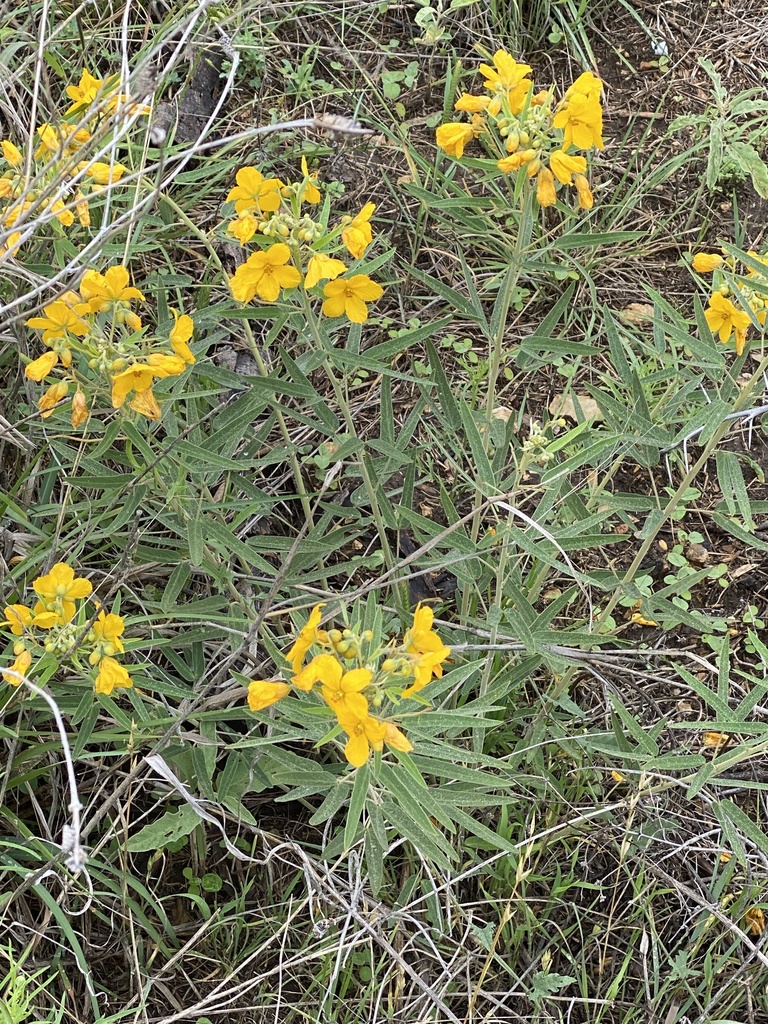
Senna roemeriana, known as Two-leaved Senna, twoleaf senna (the USDA common name) or Roemer’s senna, is a native perennial wildflower of the legume family (Fabaceae) found in Texas, Oklahoma and New Mexico. It forms a neat, rounded mound 1 to 2 feet tall and from late spring into fall carries clusters of bright yellow, five-petaled flowers above the foliage.
Its common name describes its most distinctive feature: each long-stalked leaf ends in just one pair of narrow leaflets, an unusual arrangement among sennas, most of which have several pairs. The plant is common in fields, open woods and rocky limestone hills of central and west Texas.
Two-leaved senna is tough, drought tolerant and long blooming, and it supports native bees and birds. Like many sennas it is also toxic to livestock and should never be eaten. This guide covers identification, range, growing tips, wildlife value and safety.
Identification
Two-leaved senna is easy to recognize: a low, bushy mound of stems with leaves made of a single pair of narrow, pointed leaflets, topped with loose clusters of bright yellow flowers.
Growth Form
A herbaceous perennial from a thick, woody root, with several to many upright or spreading stems forming a mound 1 to 2 feet tall and about as wide. The stems die back in winter and regrow in spring.
Leaves
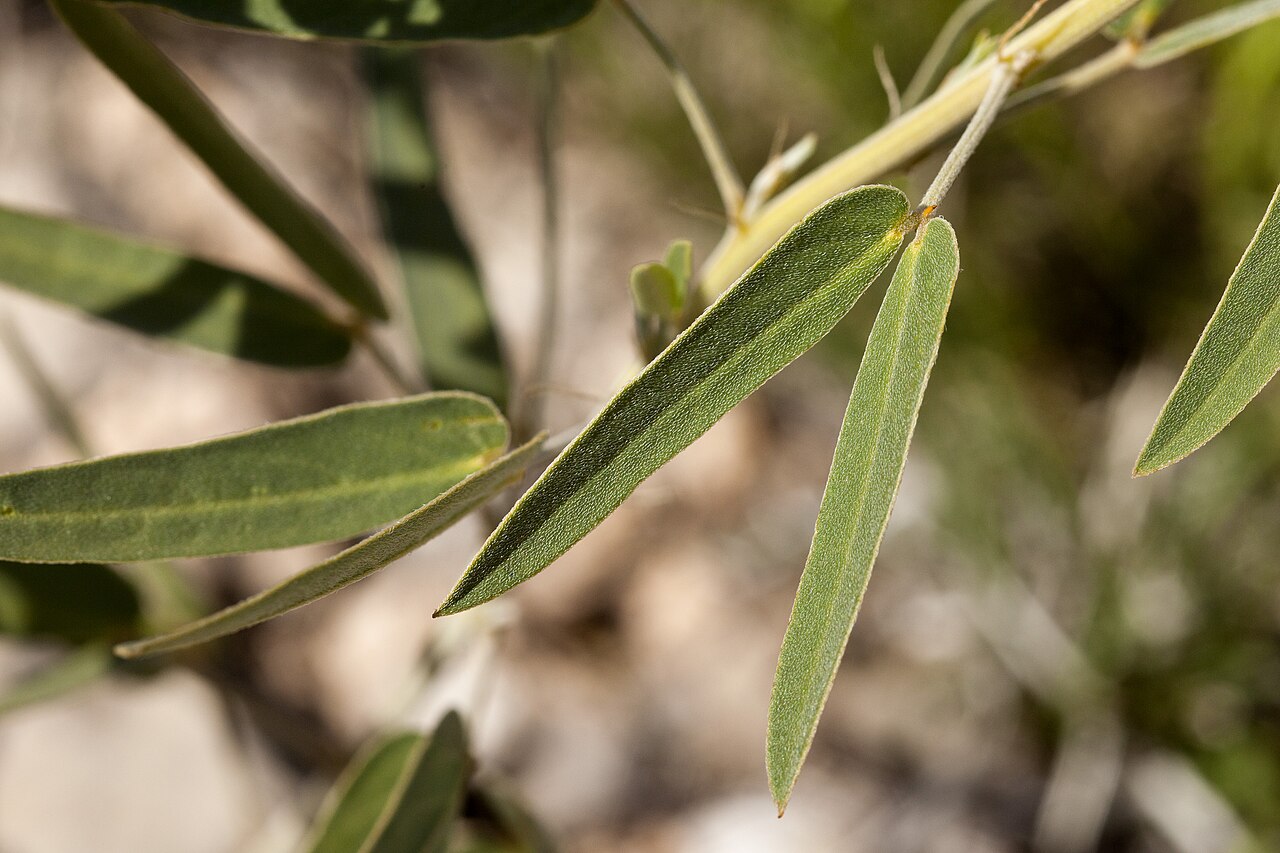
The leaves are alternate and long-stalked, each with a single pair of narrow, lance-shaped leaflets about 1 to 2½ inches long, giving a “rabbit ears” look. A small gland sits on the leaf stalk between the leaflets. The foliage is gray-green and finely hairy.
Flowers
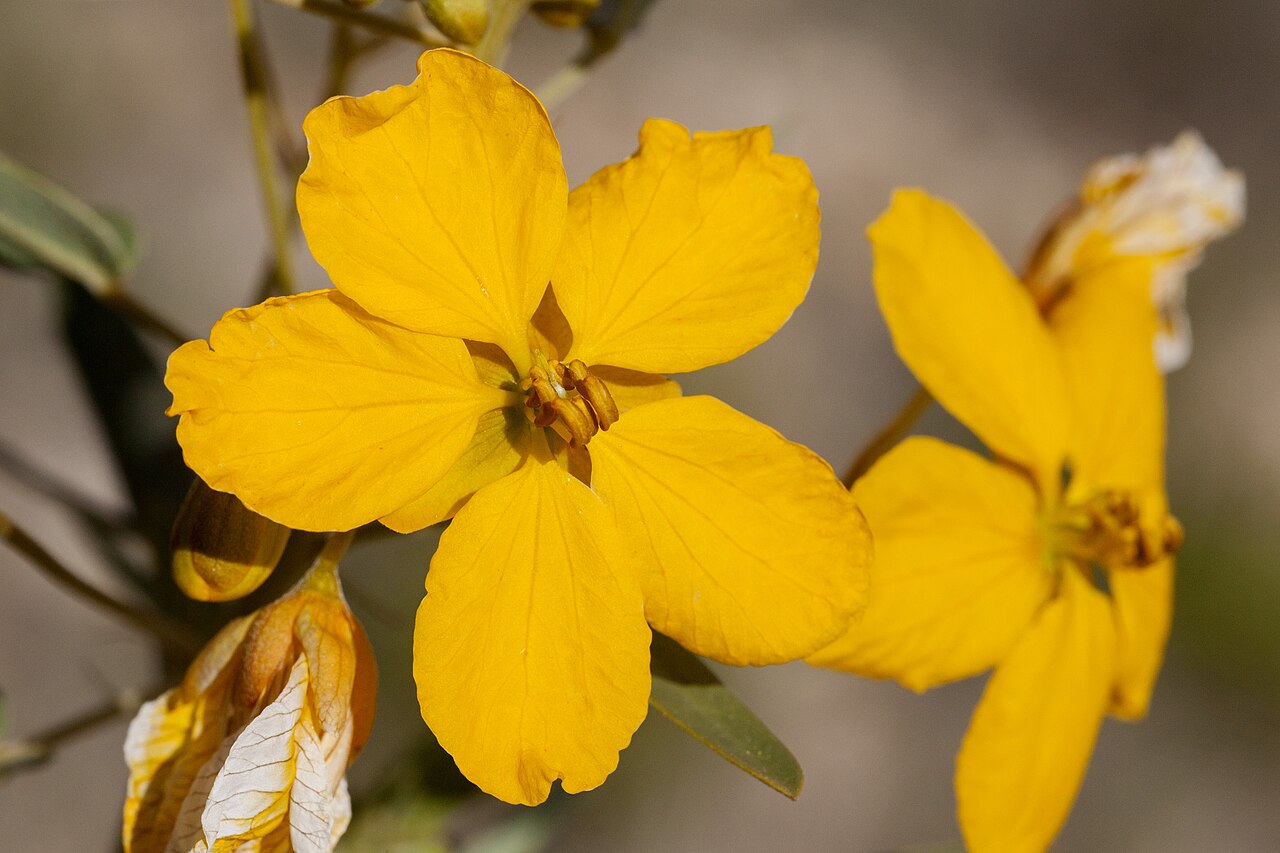
The flowers are bright yellow, about ¾ to 1 inch across, with five rounded, slightly unequal petals and prominent brown-tipped anthers. They are borne in small clusters in the upper leaf axils. Bloom begins in late spring and continues, with breaks in the hottest weather, from about May into October.
Fruit & Seeds
The fruit is a slender, flattened, slightly curved pod, typical of the legume family, that ripens brown and splits to release hard, dark seeds.
Similar Species
Lindheimer senna (Senna lindheimeriana) is taller and velvety, with leaves of four to eight pairs of leaflets. Twinleaf senna (Senna bauhinioides) of west Texas and the Southwest also has two leaflets per leaf, but it is smaller, with shorter, broader, grayer leaflets and fewer flowers per cluster.
Quick Facts
| Scientific Name | Senna roemeriana |
| Family | Fabaceae (legume family) |
| Plant Type | Herbaceous perennial wildflower |
| Mature Height | 1–2 ft |
| Mature Spread | 1–2 ft |
| Growth Rate | Moderate |
| Sun Exposure | Full sun to part shade |
| Water Needs | Low; drought tolerant |
| Soil Type | Dry, well-drained limestone, caliche or clay soils |
| Soil pH | About 7.0–8.5 (alkaline) |
| Bloom Time | May–October |
| Flower Color | Bright yellow |
| Fall Color | None |
| Fruit | Slender, flattened legume pods |
| Deer Resistant | Moderately |
| USDA Hardiness Zones | 7–9 |
Native Range
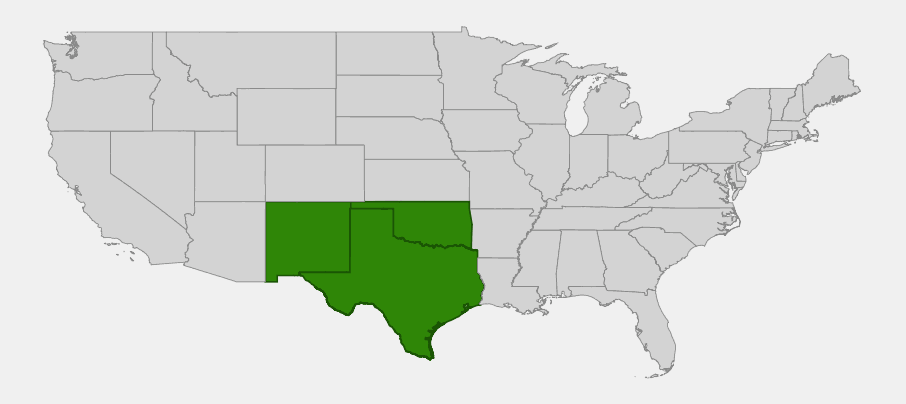
Two-leaved senna is native to Texas, Oklahoma and New Mexico, the three states where USDA PLANTS records it, and it extends into northern Mexico. In Texas it is most common in the central and western parts of the state: the Edwards Plateau, the Rolling Plains, the Trans-Pecos and south into the Rio Grande Plains. In New Mexico it grows mainly in the southeastern counties, and in Oklahoma in the southwest.
It grows in fields, prairies and open woods, on rocky limestone hills and caliche slopes, and along roadsides, usually in dry, alkaline soils. In west Texas and New Mexico it is found in desert grasslands and juniper-dotted foothills.
Its deep, woody root allows it to survive drought and to resprout after grazing or mowing, and it often flowers again after summer rains.
📋 Regional plant lists featuring Two-leaved Senna: South & West Texas
Growing & Care Guide
Two-leaved senna is a compact, low-care native for dry gardens in Texas and the southern Plains. Its tidy mound and long bloom season make it useful at the front of a border or in a rock garden, where its unusual paired leaflets can be seen up close.
Light
It grows in full sun to part shade. The Lady Bird Johnson Wildflower Center lists it for part shade, and in the hottest regions some afternoon shade keeps it looking fresh, but it blooms well in full sun.
Soil & Water
Plant it in well-drained, dry soil: limestone, caliche, rocky or clay soils are all fine as long as water does not stand. Water during the first season; afterward it needs only occasional deep watering in long droughts.
Planting Tips
Space plants about 1½ to 2 feet apart. Combine it with low, drought-tolerant natives such as blackfoot daisy, Engelmann daisy and sideoats grama. Because the plant is toxic, avoid it in pastures and where livestock graze.
Pruning & Maintenance
Cut the stems back to the ground in late winter. A light trim in midsummer can encourage a fresh flush of flowers after rain. No fertilizer is needed; as a legume relative it does well in lean soil.
Propagation
Grow it from seed. Collect pods as they turn brown. The hard seeds germinate better after scarification (nicking the seed coat or soaking in hot water) and sowing in warm soil in spring. Seedlings form a deep root quickly, so transplant them young.
Landscape Uses
- Rock gardens and borders: a tidy mound with a long yellow bloom
- Xeriscapes: thrives on rainfall once established
- Pollinator gardens: pollen for buzz-pollinating native bees
- Wildlife gardens: seeds are eaten by birds
- Naturalized meadows: blends with native grasses in dry soils
Wildlife & Ecological Value
Two-leaved senna provides a long season of flowers and seeds in dry, open habitats, and it supports a specialized group of native bees.
For Pollinators
Like other sennas, its flowers offer pollen rather than nectar. The pollen is released from small pores at the tips of the anthers when bees, such as bumble bees and carpenter bees, grip the flower and vibrate their flight muscles, a behavior called buzz pollination. Sennas are also larval host plants for sulphur butterflies, such as the sleepy orange and cloudless sulphur.
For Birds
The Lady Bird Johnson Wildflower Center notes that its seeds are an important source of food for birds, and the plants give low cover to ground-feeding birds in Texas brushlands.
For Mammals
Livestock may eat it when better forage is scarce, which can poison them. Small mammals may eat the fallen seeds.
Ecosystem Role
As a deep-rooted, drought-tolerant perennial, it adds summer flowers to grasslands and open woods of central and west Texas and helps hold thin limestone and caliche soils.
Cultural & Historical Uses
The species name honors Ferdinand Roemer, a German geologist who collected plants and fossils in Texas around New Braunfels from 1845 to 1847 and is often called the father of Texas geology. The plant was first named Cassia roemeriana by Scheele and moved to Senna by Irwin and Barneby, so older books list it under Cassia.
Safety note: Plants of the genus Senna can cause serious, even fatal, poisoning. Texas livestock references list two-leaved senna among plants that can poison grazing animals, and no part of it should be eaten by people or pets. Keep it out of pastures and away from animals that might graze it, and keep children from eating the seeds or pods.
Two-leaved senna is a familiar summer wildflower along Hill Country roadsides, valued by Texas gardeners for its neat form and long flowering season with little water.
Frequently Asked Questions
Why is it called two-leaved senna?
Each leaf is divided into just one pair of narrow leaflets, so the plant appears to have two leaves at the end of each stalk. Most other sennas have several pairs of leaflets.
Is two-leaved senna poisonous?
Yes. Plants in the genus Senna are toxic, and this species is listed as toxic to livestock. Do not eat any part of it and keep it out of grazing areas.
Does it attract butterflies?
Sennas are larval host plants for sulphur butterflies, such as the sleepy orange and cloudless sulphur. Its flowers mainly attract bees, which collect its pollen.
Does it need full sun?
It grows in full sun to part shade. In hot climates, a little afternoon shade is fine, and it still blooms well.
Where is two-leaved senna native?
It is native to Texas, Oklahoma and New Mexico and to northern Mexico, especially central and west Texas.

Looking for a nursery that carries Two-leaved Senna?
Browse our native plant nursery directory: New Mexico & Oklahoma · Texas