
Mountain Spirea (Spiraea splendens)
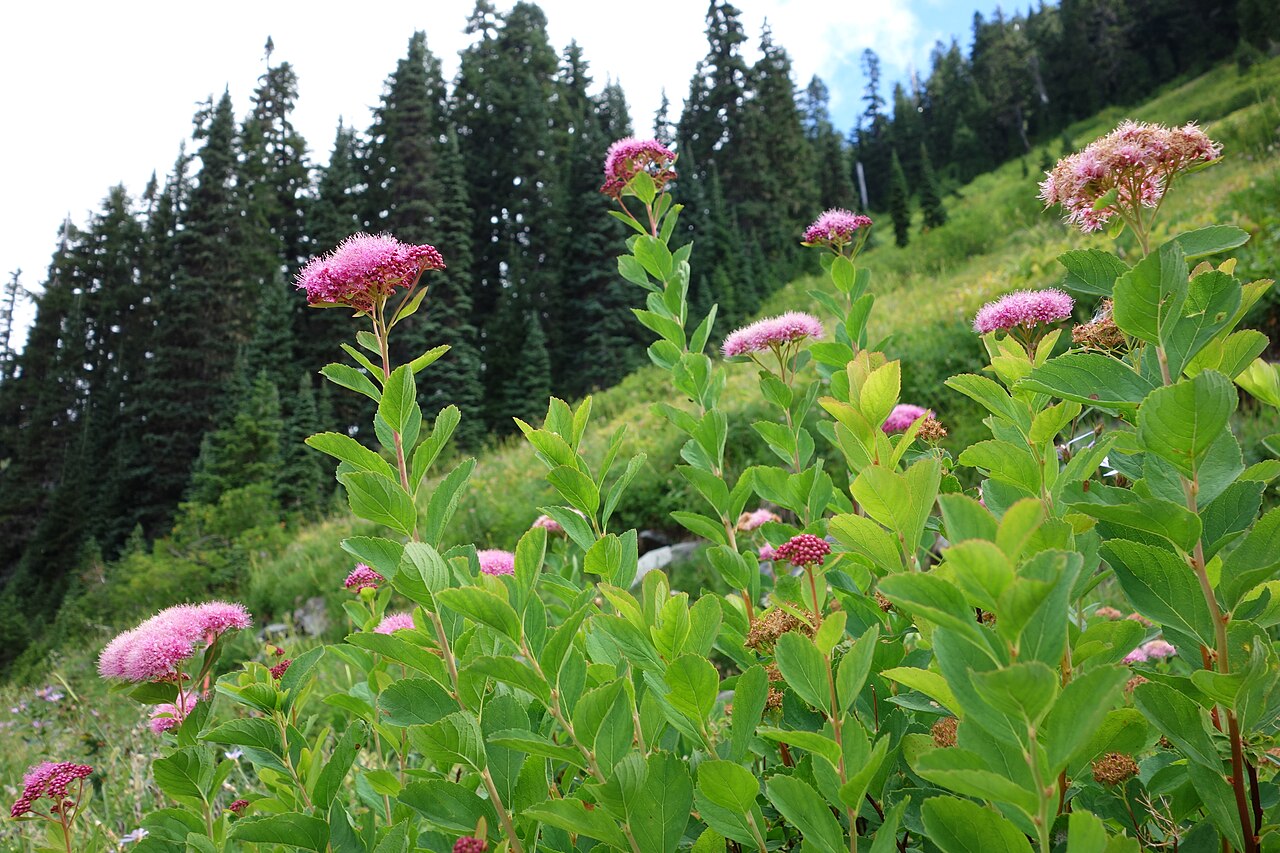
Spiraea splendens, known as Mountain Spirea (USDA: rose meadowsweet; also subalpine spirea, rosy spirea or dense-flowered spirea; synonym Spiraea densiflora), is a low, deciduous flowering shrub of the mountains of western North America. It belongs to the rose family (Rosaceae).
In mid to late summer it is covered with flat-topped, fluffy clusters of tiny rose-pink flowers held above neat, oval, bright green leaves. It usually grows 1 to 3 feet tall and spreads slowly by underground stems into small thickets along streams, meadow edges, rocky slopes and forest openings, from the foothills up to timberline. The flowers are a magnet for bees, butterflies and other pollinators.
Mountain spirea is one of the best native shrubs for cool-summer gardens in the West. It is compact, long-blooming and tolerant of cold, and it adds summer color to rock gardens, rain gardens, woodland edges and pollinator plantings. Buy nursery-propagated plants rather than digging wild ones.
Identification
Look for a low, rounded shrub with oval, bright green leaves toothed near the tip and flat-topped, fuzzy clusters of rose-pink flowers in summer, along mountain streams, meadows and rocky slopes.
Stems & Habit
Mountain spirea is a deciduous shrub usually 1 to 3 feet tall and up to 4 feet in rich, moist sites, spreading by rhizomes into loose colonies. The slender, erect stems are reddish brown to purplish when young, becoming gray and shredding with age.
Leaves
The leaves are alternate, oval to elliptic, about 3/4 to 2 inches long, with toothed edges mainly on the upper half and smooth lower edges. They are bright to dark green above and paler beneath. In fall they turn yellow to orange or reddish.
Flowers
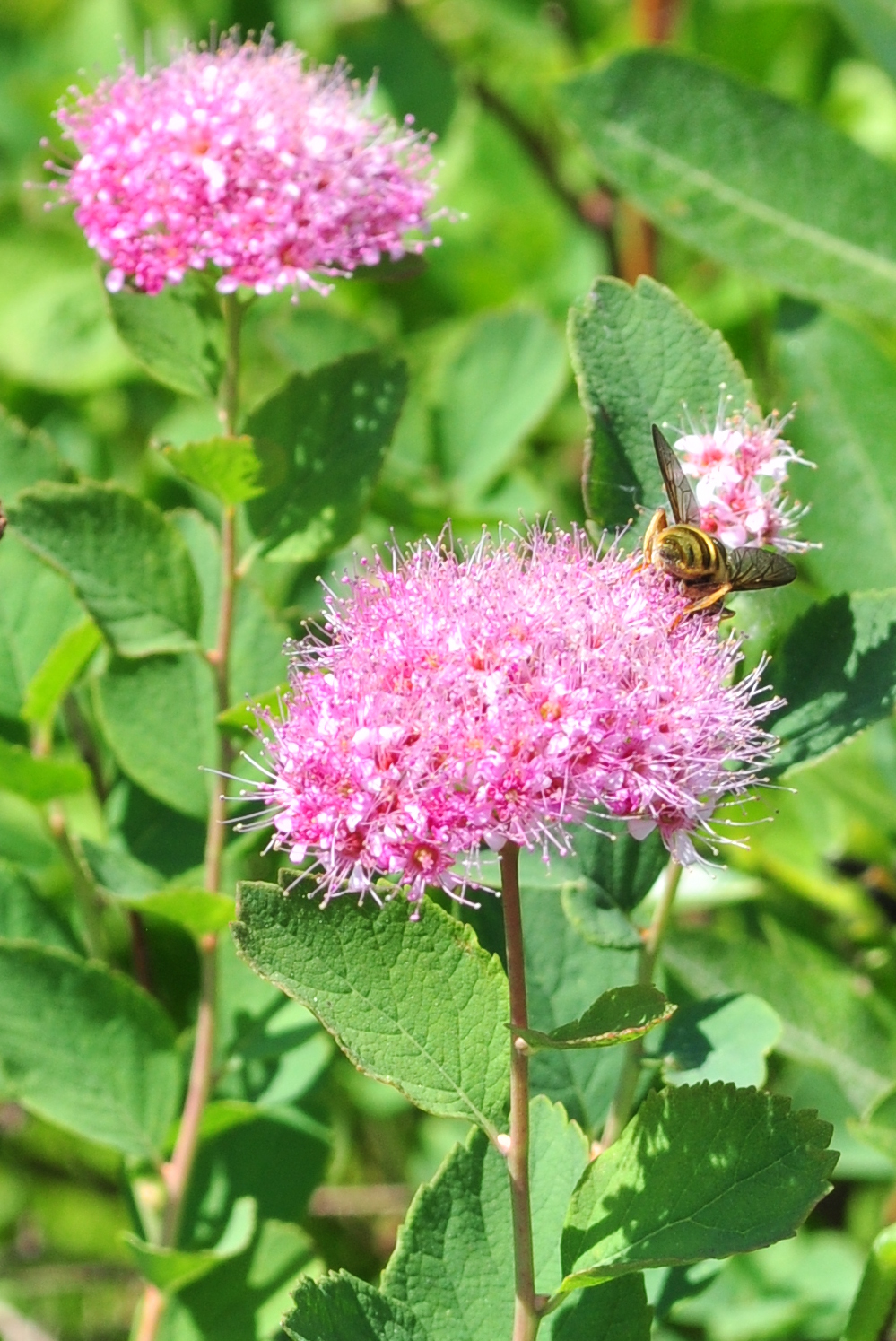
The tiny flowers are crowded into dense, flat-topped to slightly rounded clusters 1 to 2 inches across at the tips of the stems. Each flower has five small rose-pink to deep pink petals and many longer stamens that give the clusters a fuzzy look. They have a light, sweet fragrance. Bloom time is June to August, depending on elevation.
Fruit & Seeds
Each flower produces a cluster of five small, shiny, dry pods (follicles) that split to release tiny seeds in late summer and fall. The brown seed clusters often stay on the shrub into winter.
Look-alikes
Western spirea (Western Spirea, S. douglasii) has pink flowers in long, steeple-shaped spikes and grows mainly at low elevations in wet ground. Shiny-leaf or birchleaf spirea (S. lucida, S. betulifolia) has white flowers in flat clusters. Where mountain spirea and western spirea meet, they hybridize to form plants with rounded to short pyramidal pink clusters. The ornamental Japanese spirea (S. japonica) is an Asian species that escapes from gardens in some areas.
Quick Facts
| Scientific Name | Spiraea splendens |
| Family | Rosaceae (rose family) |
| Plant Type | Deciduous flowering shrub |
| Mature Height | 1–3 ft (rarely 4 ft) |
| Mature Spread | 2–4 ft, slowly suckering |
| Growth Rate | Moderate |
| Sun Exposure | Full sun to partial shade |
| Water Needs | Moderate; likes steady moisture |
| Soil Type | Moist, well-drained loam, gravel or rocky soil |
| Soil pH | About 5.0–7.0 |
| Bloom Time | June–August |
| Flower Color | Rose pink to deep pink |
| Fall Color | Yellow, orange or reddish |
| Fruit | Small dry pods (follicles) in persistent clusters |
| Deer Resistant | Moderately; occasionally browsed |
| USDA Hardiness Zones | 3–8 |
Native Range
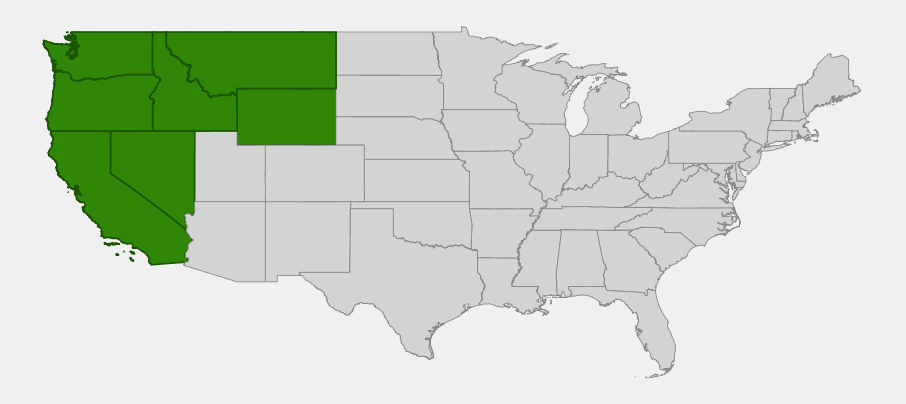
Mountain spirea is native to the mountains of western North America. USDA PLANTS lists it as native in California, Idaho, Montana, Nevada, Oregon, Washington and Wyoming, and in British Columbia and Alberta.
It is common in the Cascade Range and Olympic Mountains of Washington and Oregon, the Klamath Mountains and the Sierra Nevada of California and adjacent Nevada, and the northern Rocky Mountains of Idaho, western Montana and northwestern Wyoming. In the Cascades it grows on both the wet western slopes and the drier eastern side.
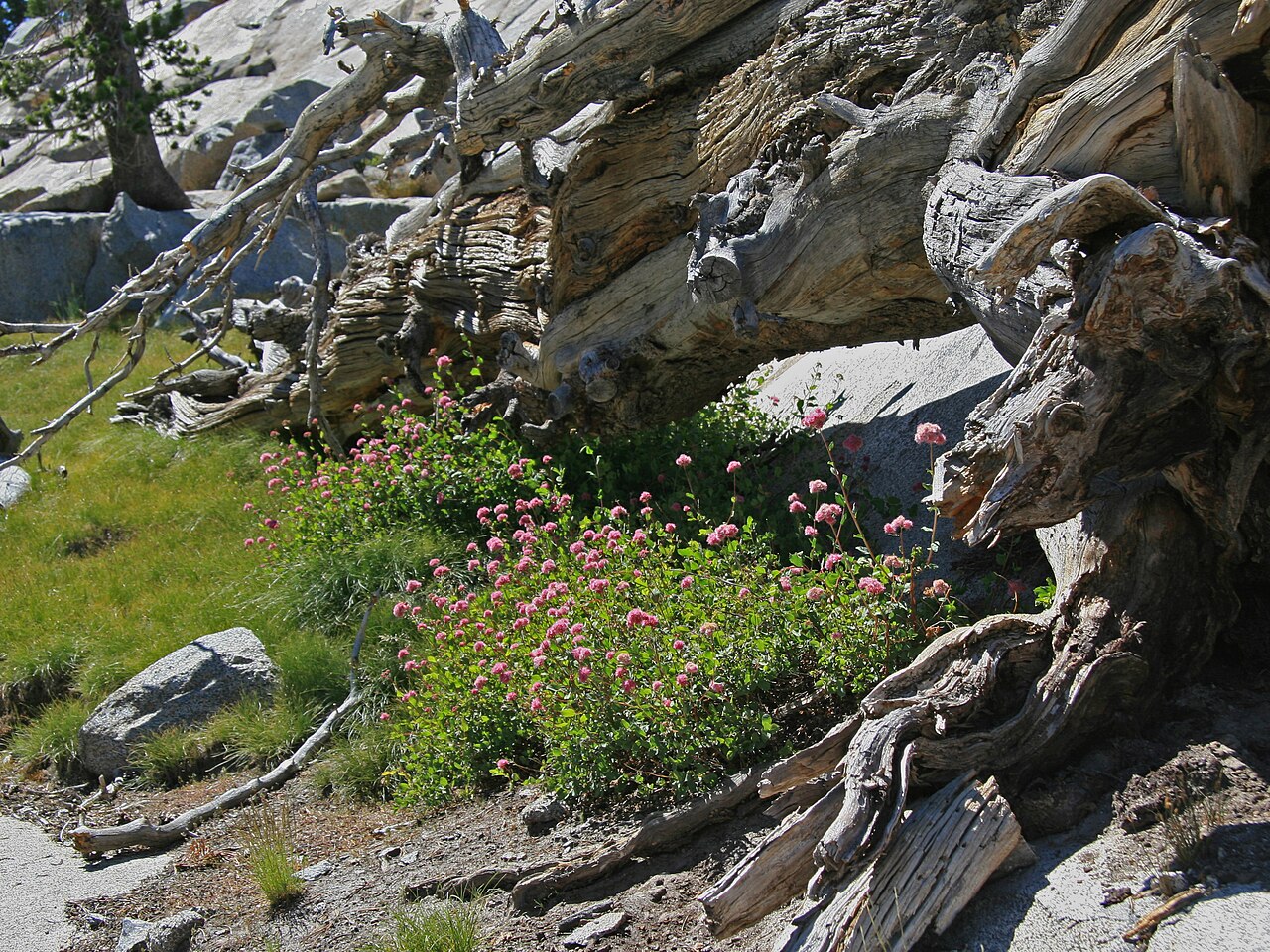
It grows in subalpine meadows, along streams and lake shores, on moist rocky slopes and talus, in avalanche tracks and in openings of mountain forest, usually where soils stay moist through early summer.
📋 Regional plant lists featuring Mountain Spirea: Idaho, Eastern Oregon & Eastern Washington · Montana & Wyoming · Western Oregon & Western Washington · California & Nevada
Growing & Care Guide
Mountain spirea is a tough, compact shrub that is easy to grow in gardens with cool summers or steady moisture. It is offered by native plant nurseries in the Pacific Northwest and the northern Rockies.
Light
Full sun to partial shade. In hot, low-elevation gardens give it afternoon shade; in cool climates full sun gives the most flowers.
Soil & Water
It prefers moist, well-drained, slightly acidic soil rich in organic matter, but adapts to gravel and rocky soil if watered. Keep it evenly moist, especially in summer at low elevations. Established plants tolerate short dry spells.
Planting Tips
Plant in fall or spring, spacing plants 2 to 3 feet apart for a low hedge or massed groundcover. It suits rock gardens, streamside plantings, rain garden edges and the front of shrub borders.
Pruning & Maintenance
Prune in late winter or early spring, since it blooms on new growth. Cut out a few of the oldest stems every few years to keep it vigorous, and shear off spent flower heads if you want a tidier look and some repeat bloom. Remove suckers if it spreads too far.
Propagation
Propagate by softwood or semi-hardwood cuttings in summer, which root easily, or by dividing suckering clumps in early spring. It can also be grown from the tiny seeds sown on the surface of moist soil in fall.
Landscape Uses
- Pollinator gardens: summer-long nectar for bees and butterflies
- Rock gardens: compact, tough and cold-hardy
- Streamside and rain gardens: tolerates moist soils and stabilizes banks
- Mountain and cabin landscapes: native shrub for high elevations
- Low hedges and mass plantings: neat habit and pink summer color
Wildlife & Ecological Value
Mountain spirea blooms in midsummer, when mountain pollinators are most active, and its thickets give cover to small wildlife.
For Pollinators
The Xerces Society rates it as having special value to native bees. Bumblebees, sweat bees and other native bees, many butterflies, beetles and flies visit the flowers for nectar and pollen. It is one of the most heavily visited flowers in many subalpine meadows.
For Birds
Small birds such as sparrows and juncos shelter and sometimes nest in the low thickets, and some eat the small seeds in fall and winter.
For Mammals
Deer, elk and mountain goats browse the twigs and leaves lightly. The dense stems provide cover for small mammals.
Ecosystem Role
Its suckering stems help hold soil along streams, in avalanche paths and on rocky slopes, and it is one of the first shrubs to resprout after fire or disturbance in mountain forests.
Cultural & Historical Uses
The genus name Spiraea comes from the Greek speira, “wreath” or “coil.” The species name splendens means “splendid” or “shining,” likely for its bright flowers and glossy leaves.
For many years this plant was known as Spiraea densiflora, the “dense-flowered” spirea, and many guides and nurseries still use that name. The USDA name is rose meadowsweet.
Other native spireas on this site include Western Spirea, Meadowsweet and Steeplebush.
Frequently Asked Questions
How tall does mountain spirea grow?
Usually 1 to 3 feet tall and 2 to 4 feet wide, spreading slowly by underground stems.
When does mountain spirea bloom?
From June to August, depending on elevation, with fluffy pink flower clusters.
Is mountain spirea good for pollinators?
Yes. It is rated as having special value to native bees and is visited by many butterflies and other insects.
How is it different from western spirea?
Western spirea (Spiraea douglasii) has long, steeple-shaped flower spikes and grows mostly at low elevations. Mountain spirea has flat-topped clusters and grows in the mountains.
How do I prune mountain spirea?
Prune in late winter or early spring, since it flowers on new growth, and remove some of the oldest stems every few years.

Looking for a nursery that carries Mountain Spirea?
Browse our native plant nursery directory: California · Idaho · Montana · Nevada · Oregon · Washington · Wyoming