
Greenspot Nightshade (Solanum douglasii)
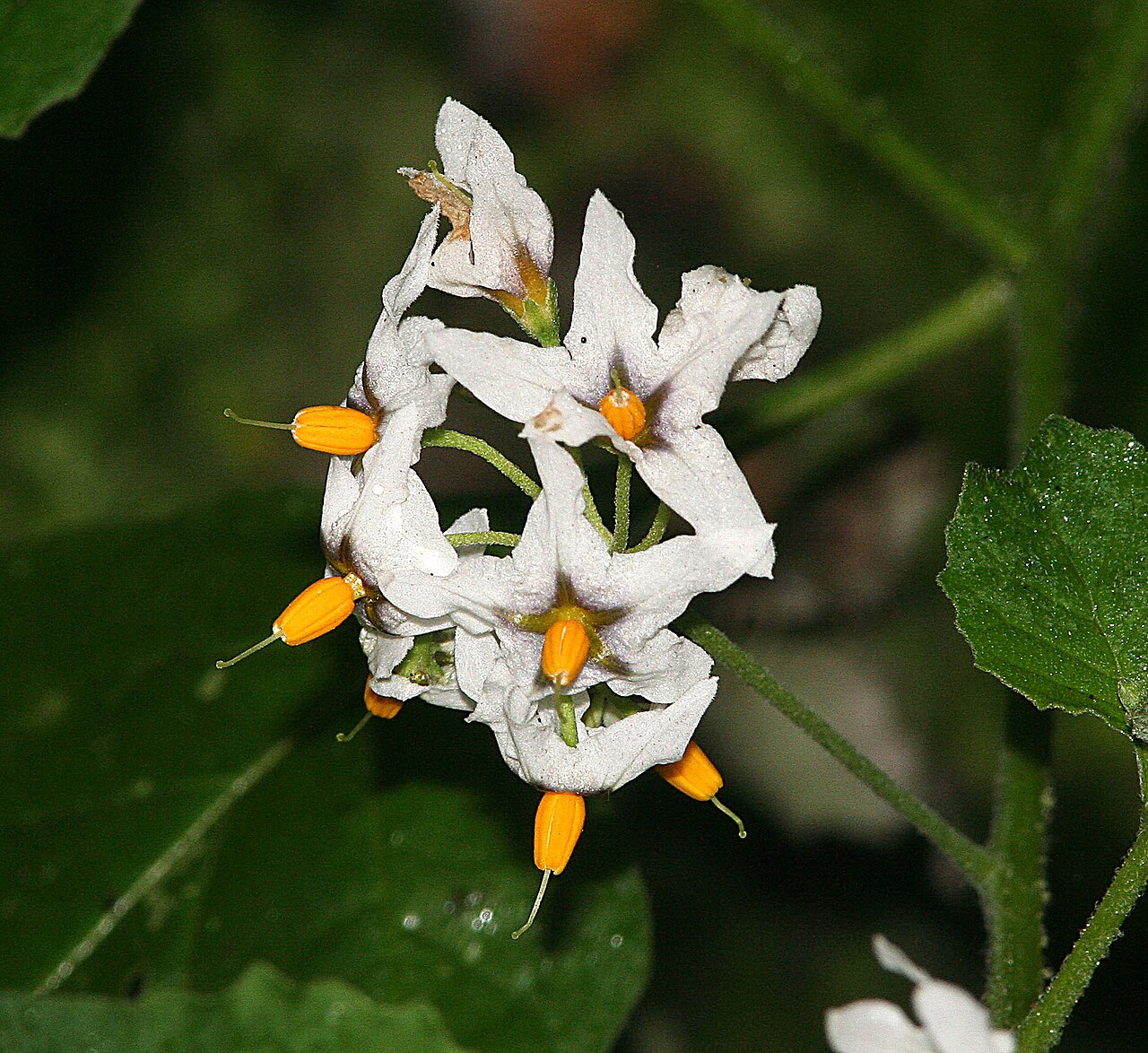
Solanum douglasii, known as Greenspot Nightshade (USDA: greenspot nightshade), is a native perennial herb or subshrub of the nightshade family (Solanaceae), related to tomatoes, potatoes and peppers. It grows in the Southwest from California to Texas and south into northern Mexico. It has been treated as a variety of the black nightshade, under the name Solanum nigrum var. douglasii.
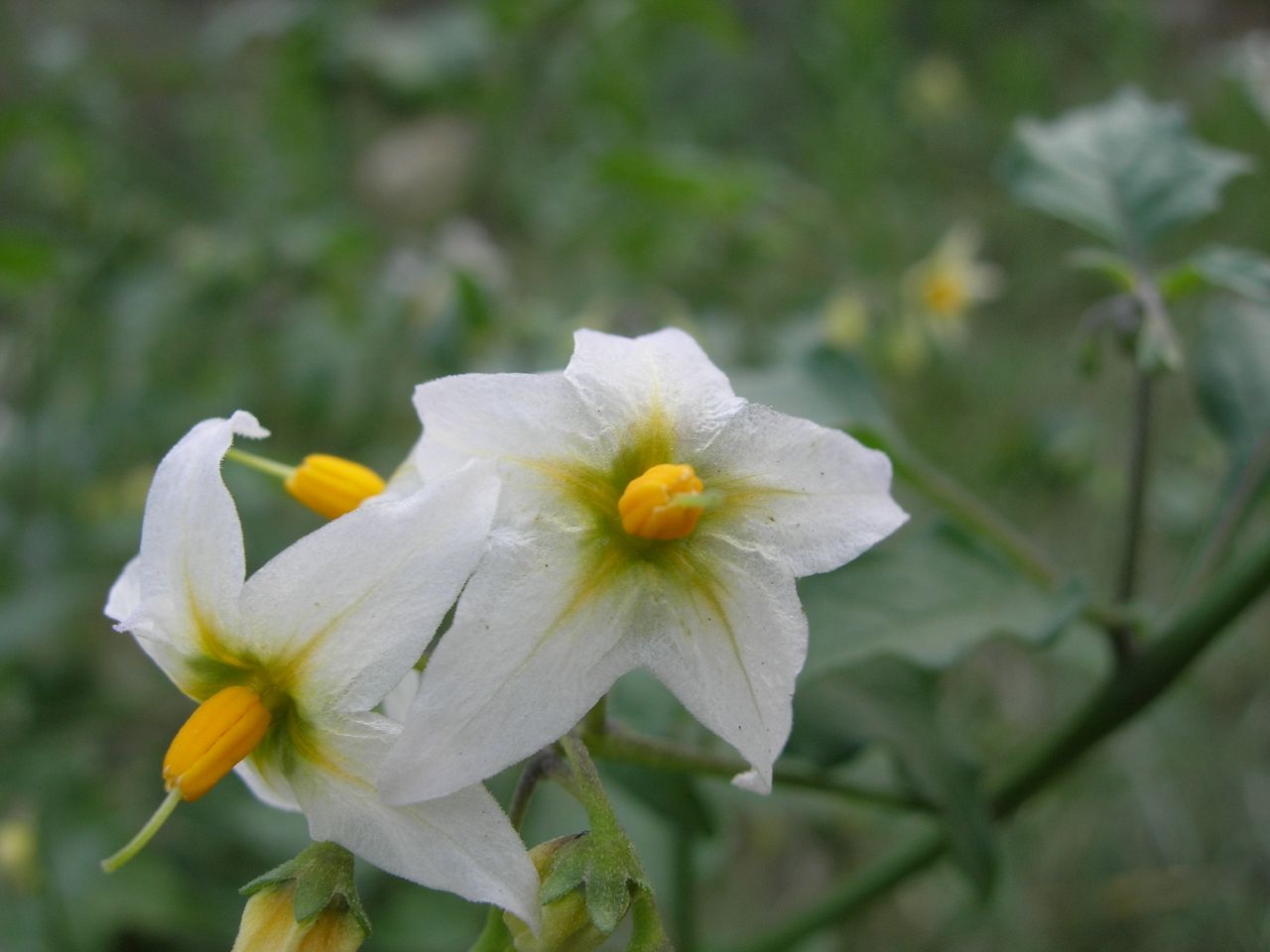
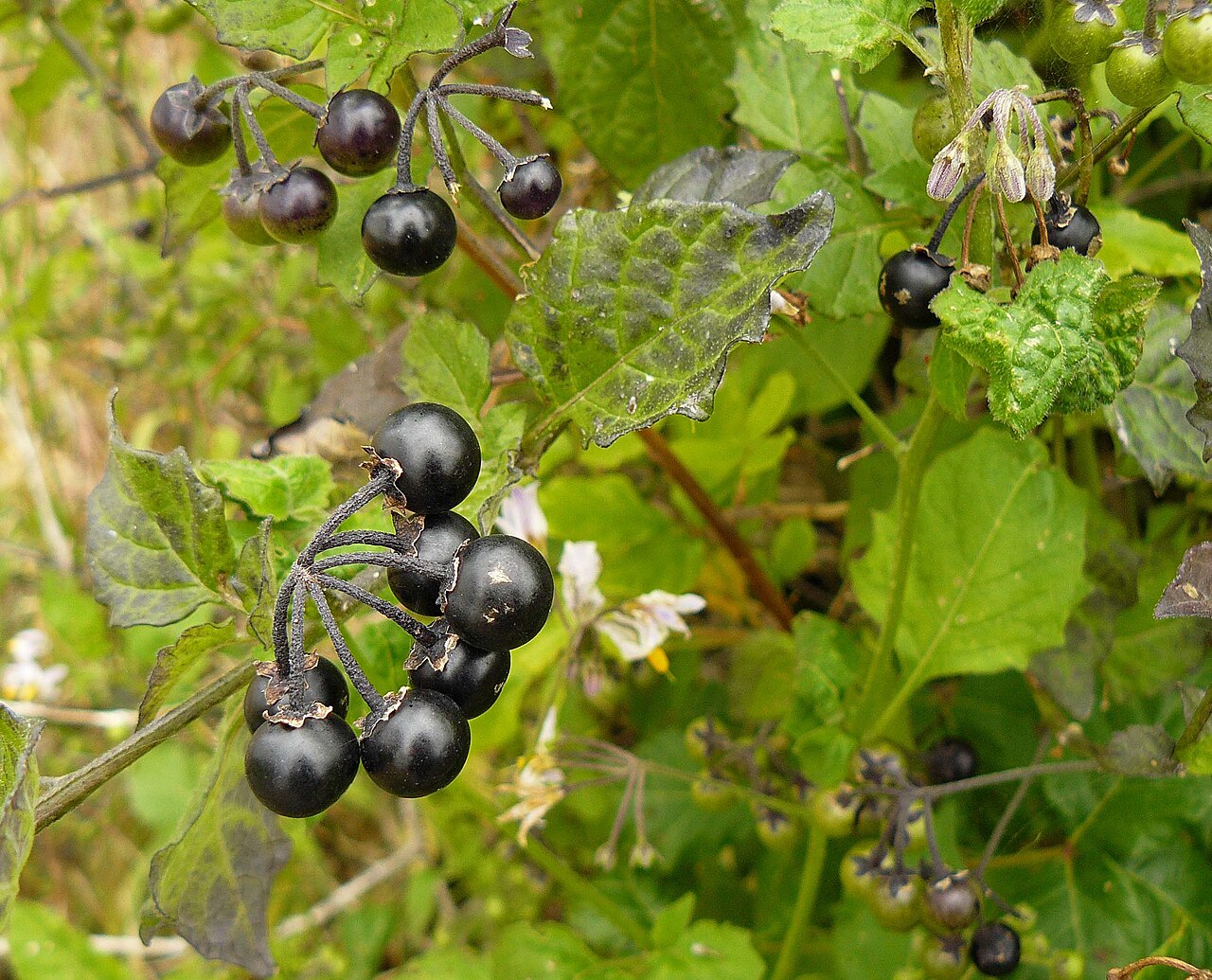
It forms an open, bushy plant usually 2 to 6 feet tall, with soft-hairy stems and oval leaves that may be smooth-edged or coarsely toothed. Through much of the year it bears small clusters of white, star-shaped flowers about 1/2 inch across, each with a cone of bright yellow anthers in the center and, on close inspection, small green spots at the base of the petal lobes. The flowers are followed by round, shiny black berries.
Greenspot nightshade is poisonous. Like other nightshades, its leaves, stems and especially its green, unripe berries contain toxic glycoalkaloids such as solanine, which can sicken people, dogs, cats and livestock. It is still a useful native plant in wild and habitat gardens, where its long bloom feeds bees and its berries feed birds, but keep it away from areas where children and pets play.
Identification
Greenspot nightshade looks much like other black nightshades. The combination of a woody-based, perennial habit, white flowers with green spots, and its range in the Southwest helps identify it.
Growth Form
A short-lived perennial herb or subshrub, usually 2 to 6 feet tall and often as wide, sometimes clambering through shrubs to greater heights. The stems become somewhat woody at the base and are covered with short, white, often curved hairs. Plants can grow quickly after rain and may die back in drought or frost.
Leaves
The leaves are alternate, up to about 3-1/2 inches long, oval to broadly lance-shaped, with smooth, wavy or coarsely toothed edges. They are dull green and slightly hairy, and they have the strong, rank smell typical of nightshades when crushed.
Flowers
Flowers come in small, umbrella-like clusters on short stalks along the stems. Each flower is a five-pointed white star about 1/2 inch across, sometimes tinged with purple, with small yellow-green to green spots at the base of the petal lobes. The yellow anthers form a cone in the center. In mild climates plants can bloom almost any month of the year.
Fruit
The berries are round, about 1/4 to 1/2 inch across, green at first and ripening to shiny black, held in drooping clusters. Each contains many small, flat seeds.
Look-alikes
American black nightshade (Solanum americanum) and eastern black nightshade (S. ptychanthum) are annual or short-lived plants with smaller flowers that lack obvious green spots. European black nightshade (S. nigrum), a weed, has duller fruit and is mostly annual. Western Horsenettle (S. dimidiatum) has purple flowers, prickles and yellow berries. Black nightshades are notoriously difficult to tell apart, so check several features.
Safety: Toxic Plant
All parts of greenspot nightshade should be treated as poisonous, especially the leaves and green, unripe berries, which contain glycoalkaloids such as solanine. Eating them can cause nausea, vomiting, diarrhea, abdominal pain, drowsiness and, in serious cases, heart and nervous-system effects. Dogs, cats, horses, cattle, sheep and goats can also be poisoned. Do not eat any part of the plant, keep it out of reach of small children and pets, and keep livestock away from large stands. If someone eats it, call Poison Control (1-800-222-1222 in the U.S.) or a veterinarian right away.
Quick Facts
| Scientific Name | Solanum douglasii |
| Family | Solanaceae (nightshade family) |
| Plant Type | Perennial herb or subshrub; toxic |
| Mature Height | 2–6 ft |
| Mature Spread | 2–4 ft |
| Growth Rate | Fast |
| Sun Exposure | Part shade to full sun |
| Water Needs | Low to moderate |
| Soil Type | Most well-drained soils: sandy, rocky, loam or clay |
| Soil pH | About 6.0–8.0 |
| Bloom Time | Much of the year in mild climates; mainly spring to fall |
| Flower Color | White (sometimes tinged purple) with green spots and yellow anthers |
| Fall Color | None; may die back in frost |
| Fruit | Round, shiny black berries; poisonous, especially when unripe |
| Deer Resistant | Yes; toxic foliage is rarely browsed |
| USDA Hardiness Zones | 8–11 |
Native Range
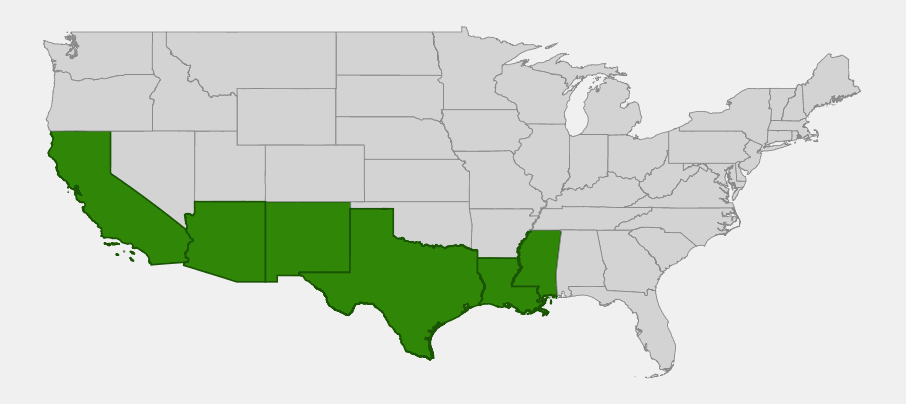
Greenspot nightshade is native to the southwestern United States and the northern half of Mexico. USDA PLANTS lists it as native in the lower 48 states and records it from California, Arizona, New Mexico, Texas, Louisiana and Mississippi. It is by far most common in California, especially in the coastal and foothill regions of central and southern California, and it is frequent in central and southern Arizona and southwestern New Mexico.
In Texas it is mainly a plant of the mountains and canyons of the Trans-Pecos, such as the Big Bend region and the Davis Mountains. The USDA records from Louisiana and Mississippi lie far from the rest of the range and are best treated as outlying records; most black nightshades found along the Gulf Coast are other species, so plants there need careful identification.
It grows in shaded canyons and ravines, along washes and streams, in oak woodland, chaparral and coastal sage scrub, and readily in disturbed places such as trail edges, burned areas, roadsides, and garden margins, usually in partial shade.
📋 Regional plant lists featuring Greenspot Nightshade: Arizona & New Mexico · Alabama, Georgia & Mississippi · Arkansas, Louisiana, Eastern Oklahoma & Eastern Texas · South & West Texas · California & Nevada
Growing & Care Guide
Greenspot nightshade is rarely planted on purpose, but it often appears on its own in shady corners of Southwestern gardens, spread by birds. Where it is safe to keep it, away from children, pets and livestock, it is an easy, long-blooming native for wild and habitat gardens.
Light
It grows best in partial shade, such as under trees, along the north side of buildings or in canyon-like spots, but tolerates full sun near the coast.
Soil & Water
It is not fussy about soil and grows in sandy, rocky, loam or clay soils. It is drought tolerant once established and survives on rainfall in much of its range, though it looks better and blooms longer with occasional summer water. No fertilizer is needed.
Planting Tips
Because of its toxicity, plant or keep it only where children, pets and grazing animals will not eat it, such as the back of a wildlife garden, a shady slope or a woodland edge. Combine it with other native understory plants in an informal planting.
Pruning & Maintenance
Cut it back hard in winter or early spring to keep it compact, and remove dead stems after frost. Wear gloves when handling it, and do not compost large quantities of berries where seedlings would be unwanted. Pull unwanted seedlings while young.
Propagation
It grows readily from seed, and birds spread it widely. Clean seed from ripe berries (wear gloves), dry it, and sow it in spring in warm soil. Stem cuttings also root.
Landscape Uses
- Wildlife gardens: long bloom for bees and berries for birds
- Shady woodland edges: a fast-growing native understory plant
- Habitat restoration: quick cover in disturbed and burned areas
- Pollinator plantings: buzz-pollinated flowers for native bees
- Native plant study: a native relative of tomatoes and potatoes
Wildlife & Ecological Value
Despite its toxicity to people and livestock, greenspot nightshade is a valuable plant for native bees and fruit-eating birds.
For Pollinators
Like other Solanum species, its anthers release pollen through small pores at the tips. Bumble bees, carpenter bees and other native bees collect it by “buzz pollination,” vibrating their flight muscles to shake the pollen out. Its long flowering season provides pollen when few other flowers are blooming.
For Birds
Many birds, including mockingbirds, thrashers, towhees and other fruit-eating birds, eat the ripe black berries and spread the seeds. Birds are much less sensitive to the plant’s toxins than mammals.
For Mammals
The foliage is toxic and rarely browsed by deer or livestock, though poisoning can occur when animals are hungry. Some small mammals eat the ripe fruit.
Ecosystem Role
As a fast-growing, bird-dispersed plant, it quickly colonizes openings, burned areas and disturbed ground in shady canyons and woodland, providing cover and food until slower shrubs return. It is also a host plant for some native insects that specialize on nightshades.
Cultural & Historical Uses
The species is named for David Douglas, the Scottish botanist who collected plants across western North America in the 1820s and 1830s, including in California. It was later treated by some botanists as a variety of the European black nightshade, Solanum nigrum, but it is now generally recognized as a distinct native species.
Native peoples of California used greenspot nightshade in several ways. The juice of the berries was used medicinally, and the Luiseño used it as a dye for tattooing. Such traditional uses relied on specific knowledge and preparation, and they are not a guide for modern use: the plant is poisonous.
Black nightshades as a group have a confusing reputation. Fully ripe berries of some species are eaten as food in parts of the world, while green berries and leaves have caused serious poisonings of people and livestock. Because species are hard to tell apart and toxin levels vary, the safe rule is simple: do not eat any part of greenspot nightshade.
Frequently Asked Questions
Is greenspot nightshade poisonous?
Yes. All parts, especially the leaves and green, unripe berries, contain toxic glycoalkaloids such as solanine. It can poison people, dogs, cats and livestock. Do not eat it, and call Poison Control or a veterinarian if someone does.
Are the ripe black berries edible?
Treat them as poisonous. Although ripe fruit of some black nightshades is eaten in parts of the world, toxin levels vary and the species are hard to tell apart. Do not eat greenspot nightshade berries.
How can I tell it from other black nightshades?
Look for its perennial, somewhat woody base, white flowers about 1/2 inch across with small green spots at the base of the petal lobes, and its range in the Southwest. Other black nightshades are mostly annual with smaller flowers.
Should I remove it from my garden?
If small children, dogs or livestock use the area, yes, pull it while young and wear gloves. In wild areas and the back of habitat gardens it is a useful native plant for bees and birds.
Where does it grow in Texas?
In Texas it is mainly found in the mountains and canyons of the Trans-Pecos, in West Texas, such as the Big Bend area and the Davis Mountains.

Looking for a nursery that carries Greenspot Nightshade?
Browse our native plant nursery directory: Arizona · California · Louisiana & Mississippi · New Mexico · Texas