
White Brodiaea (Triteleia hyacinthina)
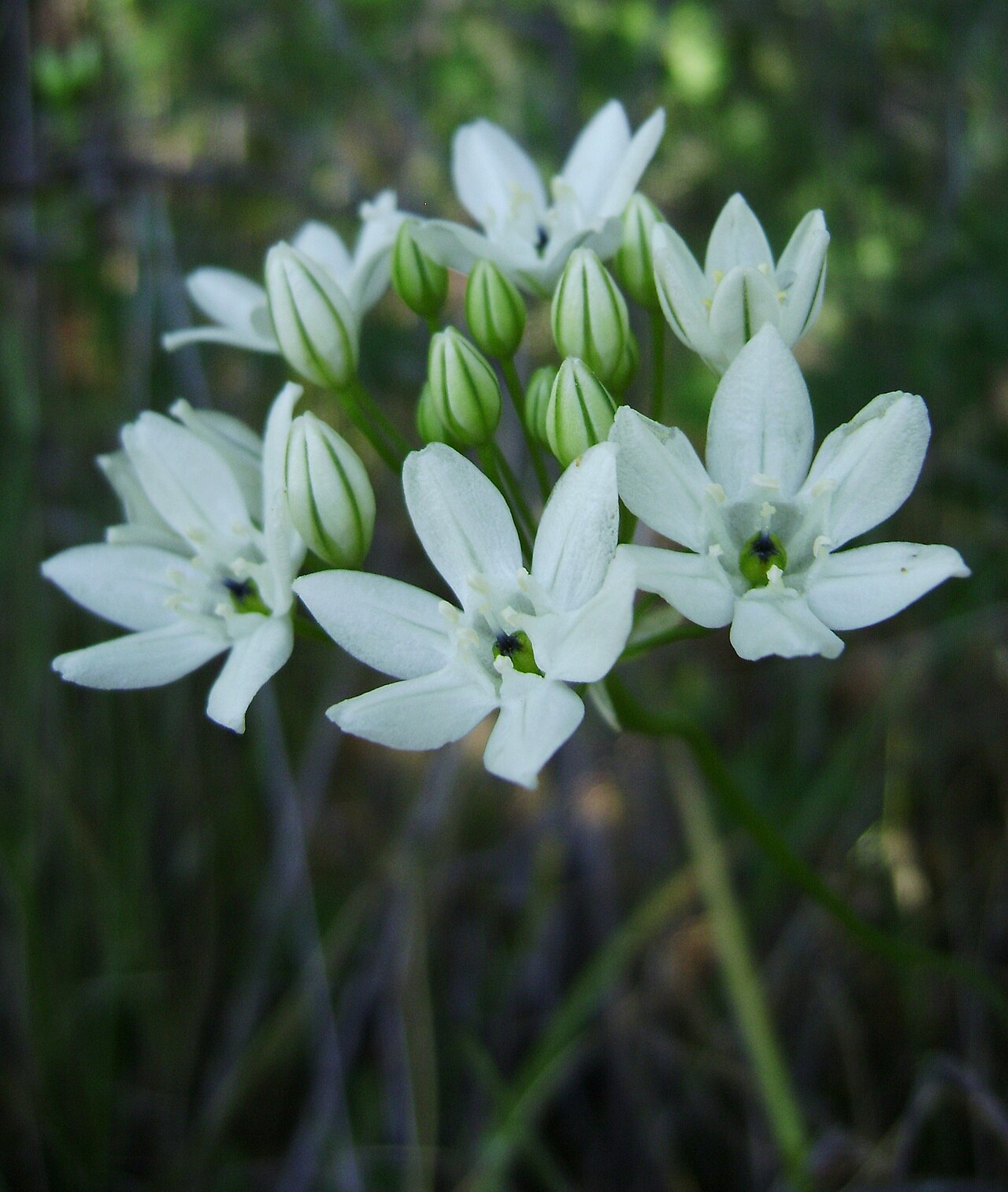
Triteleia hyacinthina, known as White Brodiaea, white triteleia, hyacinth brodiaea or fool’s onion, is a native perennial wildflower that grows from a small corm. In late spring and early summer, it sends up a slender, leafless stem 1 to 2 feet tall topped with a rounded cluster of many small, white, star-shaped flowers. It was long known as Brodiaea hyacinthina, and it belongs to the brodiaea family (Themidaceae), close relatives of the onions and asparagus.
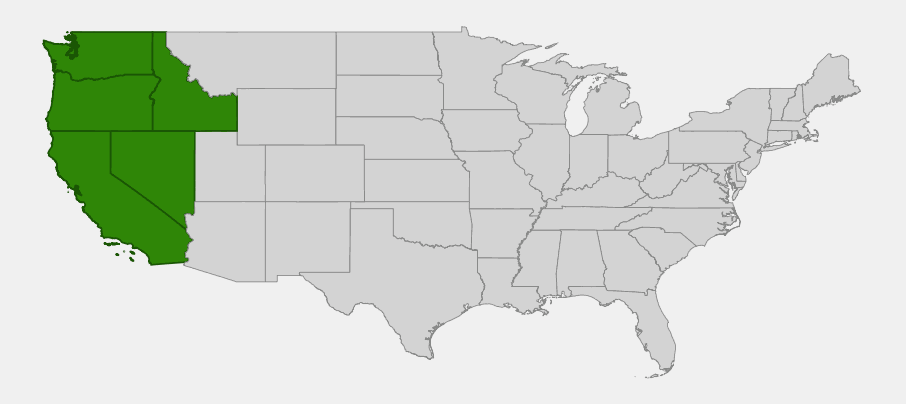
It is native to the Pacific Northwest and northern California, from southern British Columbia south through western Washington and Oregon to the Sierra Nevada and Coast Ranges of California, and east into Idaho and northwestern Nevada. It grows in meadows, prairies, oak savannas and scablands that are wet in spring and dry out in summer, often on both sides of the Cascades.
White brodiaea is an easy, charming native bulb for meadows, rock gardens and dry summer gardens in the West, and its flowers attract many native bees. Buy corms from a native plant nursery or bulb grower, and never dig wild plants. Though it looks onion-like, it has no onion smell, which explains the name “fool’s onion.”
Identification
Look for a dense, round cluster of white, star-shaped flowers with green midveins on a single slender, leafless stem in a spring-wet meadow in late spring or early summer.
Growth Habit
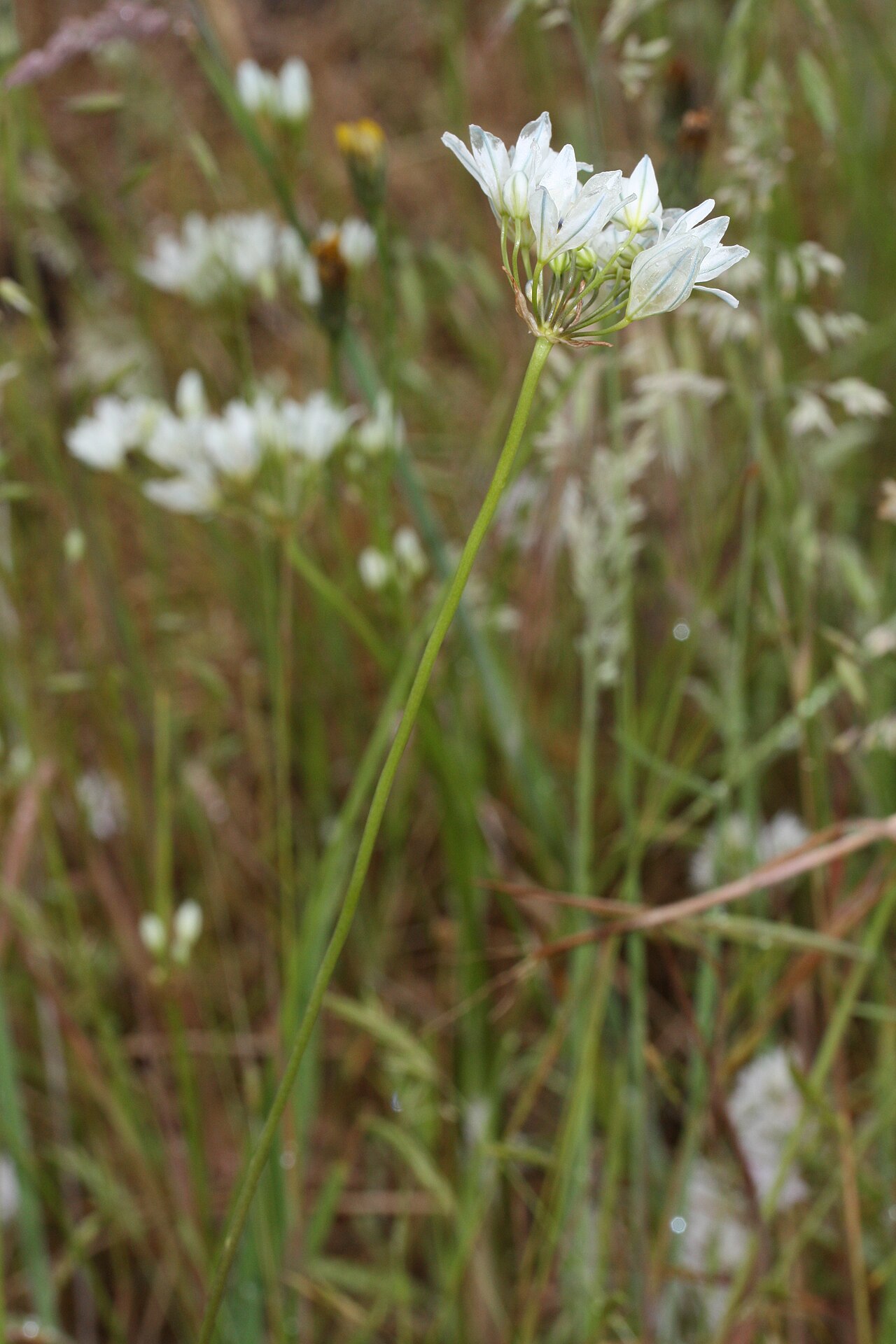
It grows from a small, round corm a few inches below ground. Each corm produces one or two grass-like leaves and a single, smooth, leafless flowering stem (scape) usually 10 to 28 inches tall. The plant goes dormant in summer after flowering and seeding.
Leaves
The one or two leaves are long, narrow and grass-like, 4 to 16 inches long, with a keel on the underside. They appear in winter or spring and often start to wither by the time the plant blooms, so the flowers can look as if they rise directly out of the grass.
Flowers
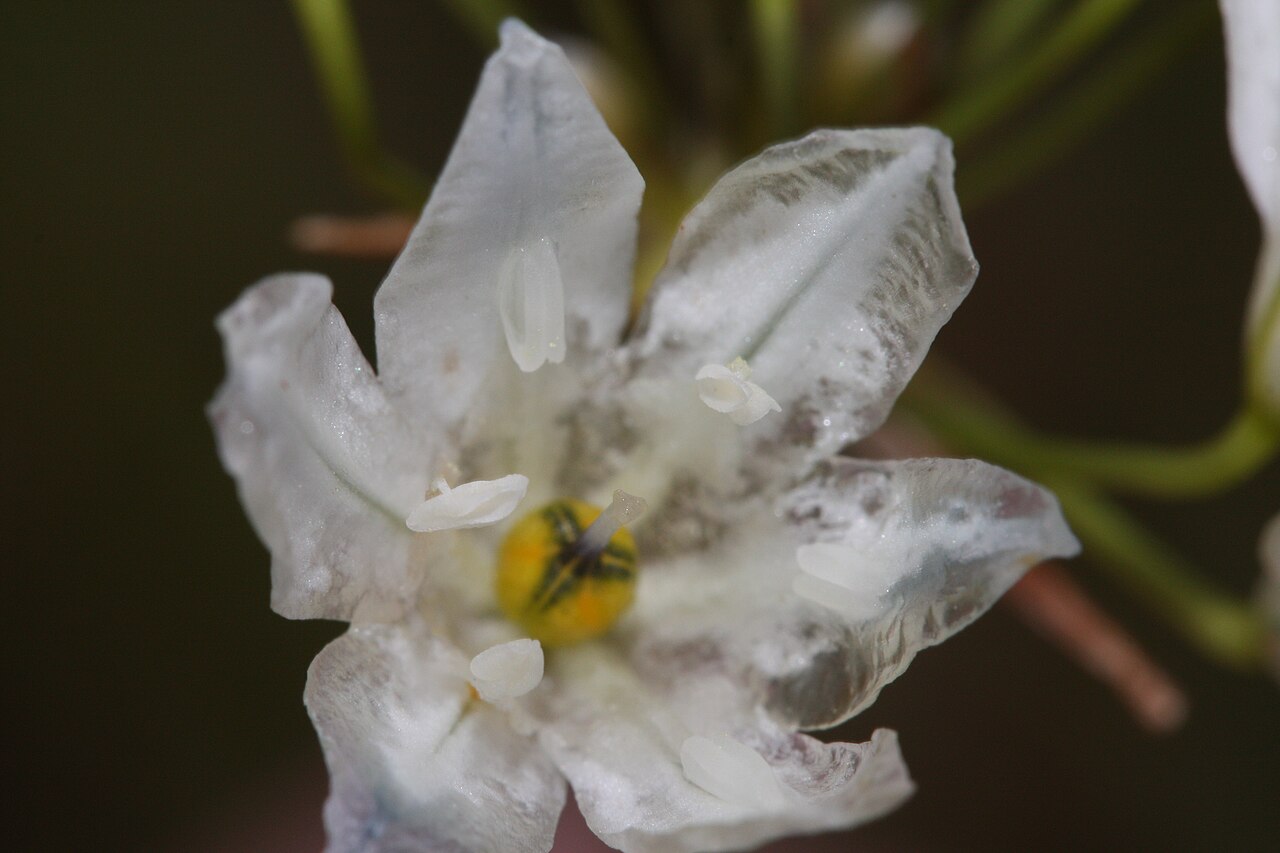
The flowers are borne in a dense, rounded umbel of 10 to 40 or more at the top of the stem, each on a short stalk. Each flower is about 1/2 inch across, with six spreading white tepals (sometimes tinged blue or lavender) that have a green or bluish midvein. The tepals are joined into a short, bowl-shaped tube at the base. The six stamens have flattened, triangular filaments. Flowering is from about April to July, depending on elevation and latitude.
Fruit
The fruit is a small, three-chambered capsule that splits open in summer to release shiny black seeds.
Look-alikes
Wild onions (Allium) have an onion or garlic smell when crushed. Death camas (Toxicoscordion), a highly poisonous plant of the same meadows, has creamy flowers in an elongated cluster, flat, V-shaped leaves that remain green at flowering, and no onion smell; never eat bulbs from the wild. Other brodiaeas, such as Ithuriel’s spear (Triteleia laxa), have blue-violet flowers, while golden star (Triteleia ixioides) has yellow flowers.
Quick Facts
| Scientific Name | Triteleia hyacinthina (syn. Brodiaea hyacinthina) |
| Family | Themidaceae (brodiaea family) |
| Plant Type | Perennial corm (bulb) |
| Mature Height | 10–28 in |
| Mature Spread | 3–6 in |
| Growth Rate | Moderate |
| Sun Exposure | Full sun to light shade |
| Water Needs | Moist in winter and spring; dry in summer |
| Soil Type | Clay, loam or rocky soil that is wet in spring |
| Soil pH | Slightly acidic to neutral (about 5.5–7.5) |
| Bloom Time | Late spring to early summer (April–July) |
| Flower Color | White, sometimes tinged blue or lavender |
| Fall Color | None; summer dormant |
| Fruit | Small three-chambered capsule with black seeds |
| Deer Resistant | Partly; deer and rodents may eat flowers and corms |
| USDA Hardiness Zones | 5–9 |
Native Range
White brodiaea is native to western North America. USDA PLANTS records it from five states: California, Idaho, Nevada, Oregon and Washington, and from British Columbia in Canada.
West of the Cascades it grows in the prairies and oak savannas of the Puget Trough, the Willamette Valley and southwestern Oregon, and on Vancouver Island and the Gulf Islands of British Columbia. East of the Cascades it is found in the Columbia River Gorge, the Columbia Plateau and the channeled scablands of eastern Washington, northeastern Oregon and western Idaho. In California it grows in the North Coast Ranges, the Klamath region, the Cascades, the Sierra Nevada foothills and the northern Central Valley, and it reaches northwestern Nevada.
Its typical habitats are places that are wet or even flooded in winter and spring and become dry in summer: vernally moist meadows and prairies, edges of vernal pools, swales, oak woodlands and savannas, rocky flats and scablands. It grows from near sea level to mid-montane elevations.
📋 Regional plant lists featuring White Brodiaea: Idaho, Eastern Oregon & Eastern Washington · Western Oregon & Western Washington · California & Nevada
Growing & Care Guide
White brodiaea is one of the easiest native bulbs to grow in the West. It needs moisture while it grows in winter and spring, then a dry summer dormancy, just like its native meadows.
Light
Full sun to light shade. It flowers best in sun.
Soil & Water
It tolerates heavy clay soil that is wet in winter and spring, as well as loam and rocky soil. Water in spring if rains are short. After the leaves yellow and the plant goes dormant, keep it dry through summer; summer watering can rot the corms. In regions with summer rain, plant it in well-drained soil or in containers.
Planting Tips
Plant corms in fall, about 3 to 4 inches deep and 3 to 4 inches apart, in groups for the best show. They look best among low grasses and other meadow wildflowers, where the stems can rise through the grass. Mark the spot, since nothing shows above ground in summer.
Pruning & Maintenance
Let the leaves wither naturally after flowering so the corms can store energy. Leave the seed heads to ripen if you want it to spread. Protect corms from gophers with wire baskets if necessary.
Propagation
It increases by small offset corms (cormlets), which can be separated when plants are dormant. It also grows from seed sown in fall; seedlings take about three years to bloom.
Landscape Uses
- Meadow and prairie gardens: white flower clusters that rise above grasses in early summer
- Rock gardens: a low-care bulb for sunny, summer-dry sites
- Rain garden edges: tolerates winter-wet soil if summers are dry
- Pollinator gardens: late-spring nectar for native bees and butterflies
- Cut flowers: long-lasting stems in arrangements
Wildlife & Ecological Value
White brodiaea is part of the diverse wildflower community of western prairies, oak savannas and vernal pools.
For Pollinators
The flowers are visited by many native bees, including bumble bees, mason bees and small solitary bees, as well as butterflies, flies and beetles.
For Birds
Seed-eating birds occasionally eat the small seeds. The meadows where it grows are important nesting habitat for grassland birds.
For Mammals
Gophers, ground squirrels and other rodents dig and eat the corms, and deer sometimes eat the flower stalks.
Ecosystem Role
As a summer-dormant bulb, it uses the moisture of winter and spring and then rests through the dry season, sharing space with grasses and other wildflowers. It is a typical species of native prairies and oak savannas, which are now rare in much of the Pacific Northwest.
Cultural & Historical Uses
The corms of white brodiaea and its relatives were dug and eaten by many Indigenous peoples of the Pacific Northwest and California, who managed meadows with fire and harvesting to keep them productive. Do not eat wild bulbs, because the deadly poisonous death camas grows in the same habitats.
The name Triteleia comes from Greek words meaning “three” and “complete,” referring to the flower parts arranged in threes. The species name hyacinthina means “like a hyacinth,” for its rounded flower clusters.
Brodiaeas were once classified in the lily family and then in the onion family, but botanists now place them in their own family, Themidaceae. Many older books and nursery catalogs still use the name Brodiaea hyacinthina.
Frequently Asked Questions
Is white brodiaea an onion?
No. It looks onion-like and is related to onions, but it has no onion smell, which is why it is sometimes called fool’s onion.
When does white brodiaea bloom?
From about April to July, depending on location and elevation.
Can I grow white brodiaea in clay soil?
Yes. It tolerates clay that is wet in winter and spring, as long as it can dry out in summer.
Where can I get white brodiaea?
Buy corms or seed from a native plant nursery or bulb grower. Never dig plants from the wild.
Is white brodiaea native east of the Cascades?
Yes. It grows on both sides of the Cascades in Washington and Oregon, and east into Idaho.

Looking for a nursery that carries White Brodiaea?
Browse our native plant nursery directory: California · Idaho · Nevada · Oregon · Washington