
California Spikenard (Aralia californica)
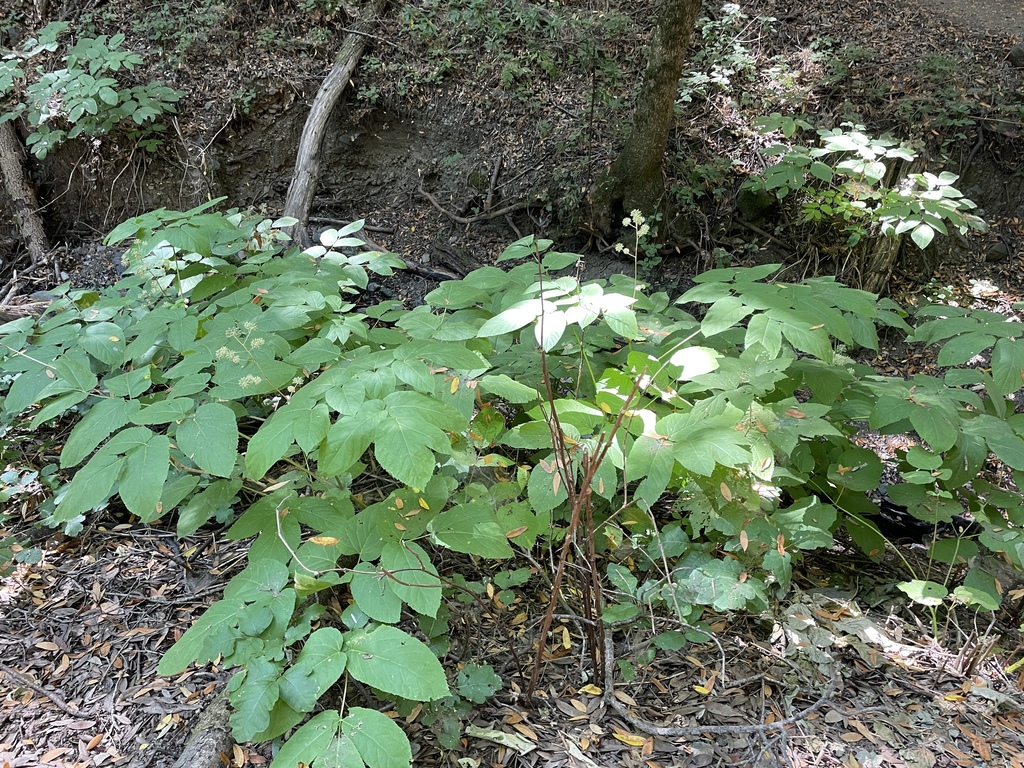
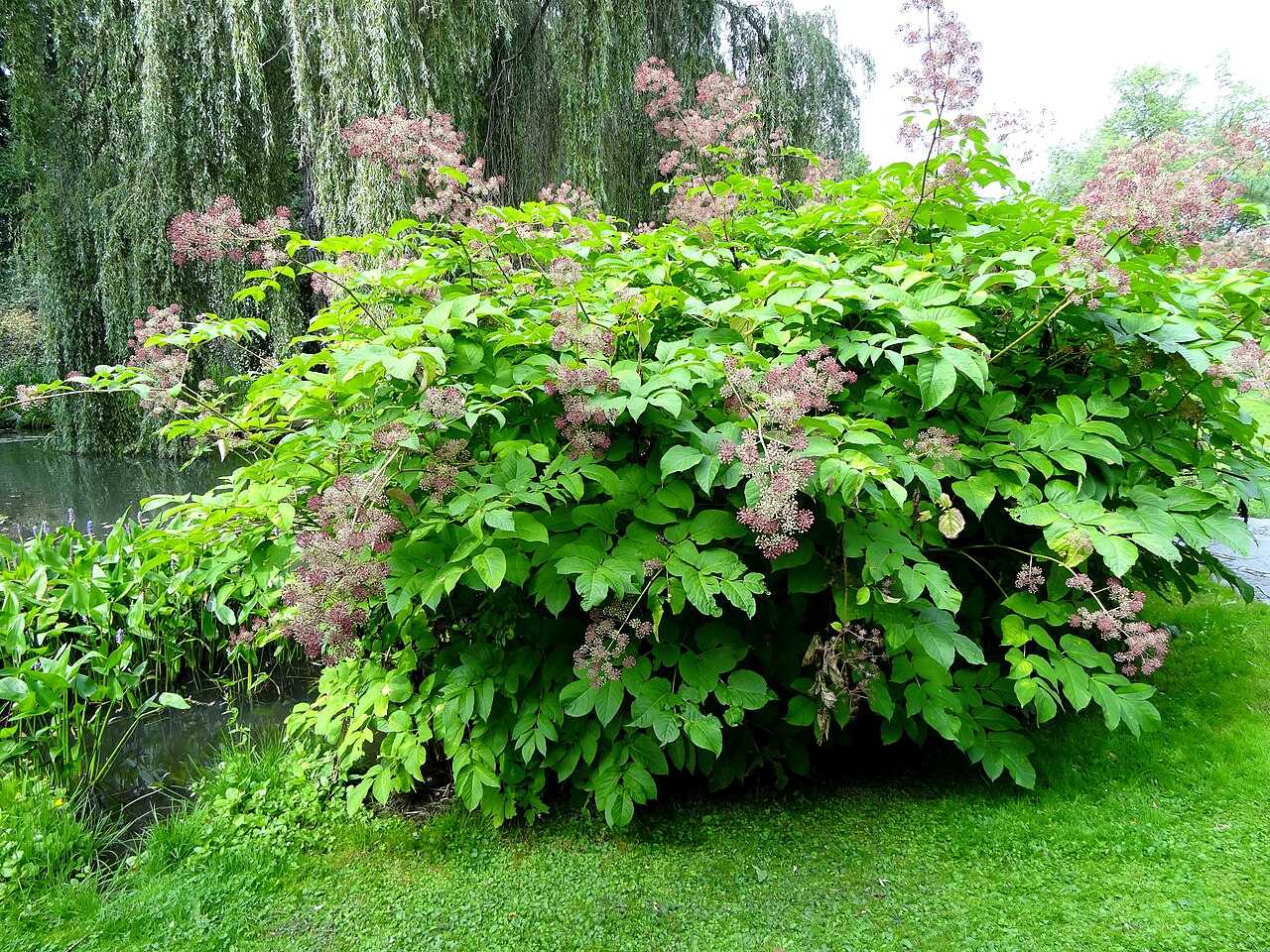
Aralia californica, known as California Spikenard (also elk clover), is the largest herbaceous plant in many West Coast forests. Although it dies back to the ground every winter, each spring it grows into a bold, shrub-like plant 4 to 10 feet tall and wide, with enormous compound leaves that can be 3 feet or more long. It belongs to the ginseng family (Araliaceae) and is a western relative of American spikenard (Aralia racemosa).
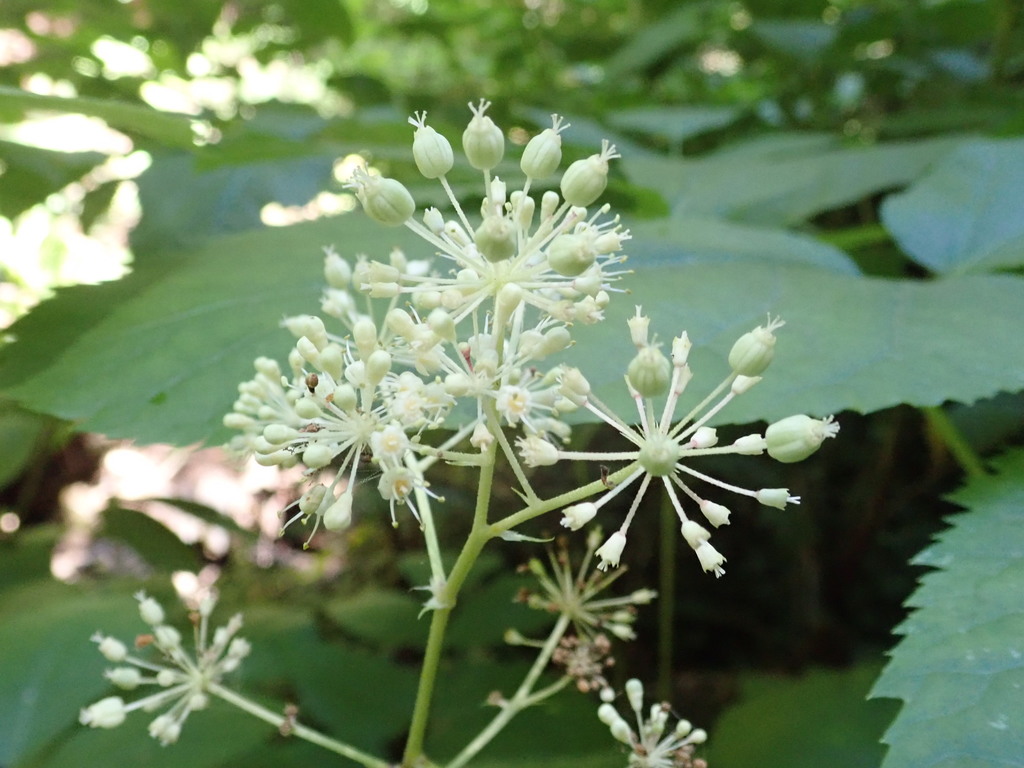
In early to midsummer it produces large, branching sprays of round umbels covered with tiny, creamy white flowers, which attract bees, flies and other pollinators. These are followed in late summer and fall by small berries that ripen dark purple to nearly black, eaten by birds such as thrushes and band-tailed pigeons. In fall the leaves turn yellow before the plant dies back to its thick, aromatic roots.
California spikenard grows in shady, moist places, along streams, at seeps and springs, and in canyons of redwood, mixed evergreen and conifer forests in California and western Oregon. In shade gardens it brings a lush, tropical look to damp spots and supports wildlife throughout the summer.
Identification
California spikenard is easy to recognize by its size and its huge, twice- or thrice-divided leaves with large, toothed leaflets, growing in moist shade near water. In summer, look for its branching sprays of round white flower clusters.
Growth Habit
A herbaceous perennial that forms a large, rounded, shrub-like clump 4 to 10 feet tall and wide, from a thick, fleshy, aromatic root. The stems are thick, green to purplish and not woody. The plant dies to the ground after frost or in late fall and resprouts each spring.
Leaves
The leaves are alternate and very large, often 1 to 3 feet or more long, divided two or three times into many leaflets. Each leaflet is oval to heart-shaped, 3 to 8 inches long, pointed at the tip and finely to coarsely toothed, with a thin, soft texture. The foliage turns yellow in fall.
Flowers
From about June to August, the plant produces large, open, branching clusters (panicles) up to 1 to 2 feet long, made of many round umbels. Each umbel is 1 to 2 inches across and made of 20 or more tiny flowers with five white to greenish petals and protruding stamens. The flower clusters can be held above or among the leaves.
Fruit & Seeds
The fruits are small, round berries about 1/8 to 1/4 inch across, ripening from green to purplish and finally dark purple-black in late summer and fall. Each contains a few small seeds. The fruiting clusters become heavy and droop.
Look-alikes
Spikenard (Aralia racemosa) of the eastern U.S. and the Southwest is similar but usually smaller, 3 to 6 feet tall. Western cow parsnip (Heracleum maximum) also grows in moist places and has large leaves, but they are lobed rather than divided into many separate leaflets, and its flat-topped flower clusters are much larger. Devil’s club (Oplopanax horridus), another relative of northern Oregon and Washington, has very spiny stems and maple-like leaves.
Safety
California spikenard is not known to be poisonous, but it is not a food plant, and the berries are not recommended for eating. The root has a strong, spicy aroma and has been used in traditional medicine; do not use it as a home remedy.
Quick Facts
| Scientific Name | Aralia californica |
| Family | Araliaceae (ginseng family) |
| Plant Type | Large herbaceous perennial; dies back each winter |
| Mature Height | 4–10 ft |
| Mature Spread | 4–8 ft |
| Growth Rate | Fast (in one season) |
| Sun Exposure | Part shade to full shade |
| Water Needs | High; consistently moist soil |
| Soil Type | Rich, moist loam; streambanks and seeps |
| Soil pH | Slightly acidic to neutral (about 5.5–7.0) |
| Bloom Time | June–August |
| Flower Color | Creamy white to greenish white |
| Fall Color | Yellow before dying back |
| Fruit | Small dark purple-black berries, late summer–fall |
| Deer Resistant | No; browsed by deer and elk |
| USDA Hardiness Zones | 7–10 |
Native Range
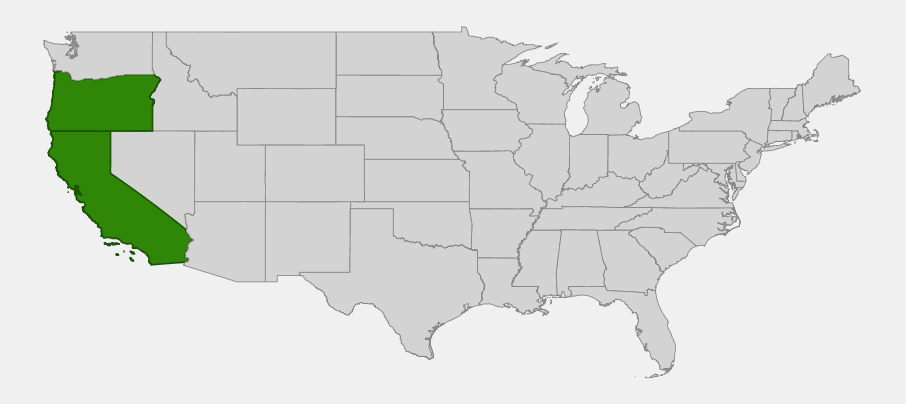
California spikenard is native to California and Oregon. USDA PLANTS lists it as native in both states. It is not native to Washington or Nevada, and the eastern and southwestern American spikenard (Aralia racemosa) replaces it elsewhere.
In California it grows in the North Coast Ranges and Klamath Mountains, the San Francisco Bay Area and Santa Cruz Mountains, the Central Coast, and on the western slope of the Sierra Nevada and the Cascade foothills, with scattered populations in shady canyons farther south. In Oregon it is found in the southwestern part of the state and north along the west side of the Cascades, mainly in moist canyons west of the Cascade crest.
Its habitat is moist, shady streambanks, springs, seeps and wet canyon bottoms in redwood forest, mixed evergreen forest, mixed conifer forest and shady oak woodland. It often grows in the dappled shade of alders, maples and California bay, from near sea level to about 6,000 feet in the mountains.
📋 Regional plant lists featuring California Spikenard: Western Oregon & Western Washington · California & Nevada
Growing & Care Guide
California spikenard is an easy, dramatic plant for moist shade in West Coast gardens. It needs room, water and shelter from hot sun, and it rewards you with a huge, lush clump each summer that disappears in winter.
Light
Plant it in part shade to full shade. Near the coast it can take morning sun if the soil stays moist; inland, give it shade, especially in the afternoon, or the leaves will scorch.
Soil & Water
It needs rich, moist soil that does not dry out in summer, such as a streambank, a pond edge, the low end of a shady slope or a regularly watered shade bed. Add compost or leaf mold to improve garden soil. In California’s dry summers, water deeply and regularly; it is not drought tolerant.
Planting Tips
Plant in fall or early spring. Give each plant at least 5 to 6 feet of space, and remember that it vanishes in winter, so mark the spot or pair it with evergreen ferns. It works well as a bold backdrop in woodland gardens, beside water features and under tall trees.
Pruning & Maintenance
Cut the dead stems to the ground in late fall or winter after they collapse. Mulch with leaves to keep the roots cool and moist. Snails and slugs may chew young spring growth; otherwise it has few problems. No fertilizer is needed in rich soil.
Propagation
Grow it from fresh seed, cleaned from ripe berries and sown in fall outdoors or in pots so it gets a natural cold, moist period; germination can be slow and irregular. Established clumps can be divided in late winter or early spring before growth begins, keeping a bud with each piece of root.
Landscape Uses
- Shade and woodland gardens: a bold, tropical-looking summer plant
- Streambank and pond-edge plantings: for moist, shady banks
- Wildlife gardens: summer flowers for pollinators, fall berries for birds
- Riparian restoration: in shady canyon and creek plantings
- Fern gardens: a large, leafy companion for chain and sword ferns
Wildlife & Ecological Value
California spikenard is a valuable summer and fall food source in moist western forests.
For Pollinators
The many small flowers produce nectar and pollen that attract bees, including bumble bees, plus wasps, flies, beetles and butterflies. Large plants in full flower can be humming with insects on summer days.
For Birds
Birds eat the dark berries in late summer and fall, including thrushes, robins, band-tailed pigeons and other fruit-eaters, which disperse the seeds.
For Mammals
Deer and elk browse the large, tender leaves, which gave the plant the name elk clover. Bears and small mammals may eat the berries.
Ecosystem Role
Its huge leaves shade streambanks and help keep soil moist and cool, and its stems and roots help stabilize creek banks. When it dies back each fall, the leaves add organic matter to the forest floor.
Cultural & Historical Uses
California Native American peoples used California spikenard in many ways. Several groups used the root in traditional medicine for coughs, colds and other ailments, and the plant is recorded in ethnobotanical studies of the Karuk, Pomo and other peoples of northern California. These are historical cultural uses, not recommendations.
The name spikenard was borrowed by English-speaking settlers from an aromatic Old World plant mentioned in the Bible, because the American Aralia roots have a similar spicy fragrance. The name elk clover refers to the plant’s popularity with browsing elk and deer.
The species was described by the American botanist Sereno Watson in 1876. Today it is valued by West Coast gardeners and restoration ecologists for its dramatic summer growth in moist shade.
Frequently Asked Questions
Is California spikenard a shrub?
No. It is a herbaceous perennial that dies back to the ground every winter, but it grows so large each summer, up to 10 feet, that it looks like a shrub.
How much water does it need?
It needs consistently moist soil. In California’s dry summers, plant it near water or water it deeply and regularly.
Can I eat the berries?
They are not considered a food. Birds eat them, but they are not recommended for people.
Does it grow in sun?
Only in cool coastal areas with plenty of water. Elsewhere, give it part to full shade.
Is it related to ginseng?
Yes. It belongs to the ginseng family (Araliaceae), along with American ginseng and devil’s club.

Looking for a nursery that carries California Spikenard?
Browse our native plant nursery directory: California · Oregon