
Texas Baby Blue Eyes (Nemophila phacelioides)
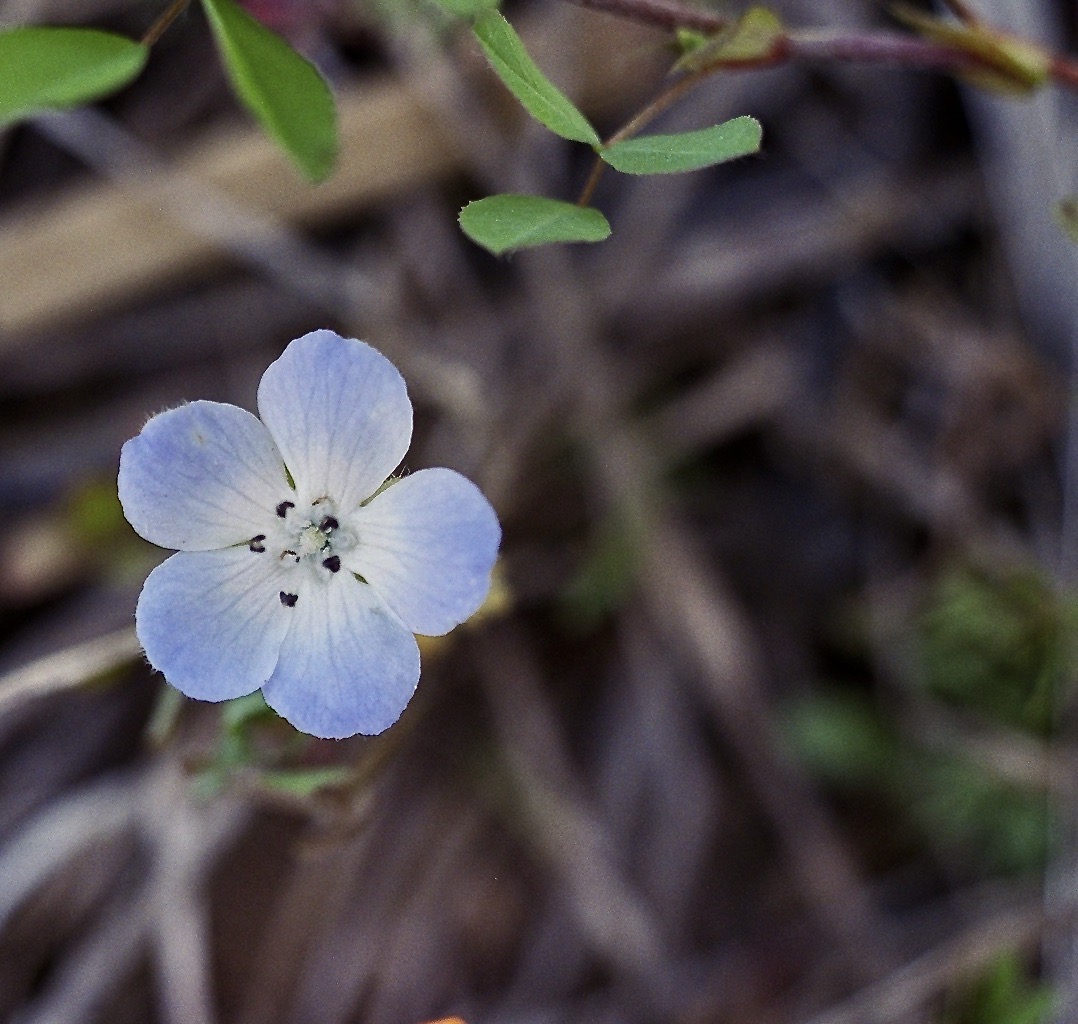
Nemophila phacelioides, known as Texas Baby Blue Eyes (USDA: largeflower baby blue eyes), is a native annual wildflower of Texas, Oklahoma, Arkansas and Louisiana. It is also called large-flower baby blue eyes. It belongs to the waterleaf group, traditionally the family Hydrophyllaceae and now often placed in the borage family (Boraginaceae). In late winter and spring it fills shady woodland edges, creek banks and thickets with bowl-shaped, pale blue to lavender flowers that have a white or frosted center.
Plants are soft, hairy and somewhat sprawling, usually 6 to 12 inches tall, with blue-green leaves divided into many broad lobes. Flowers can be more than an inch across, larger than those of most other baby blue eyes. Like other winter annuals, it germinates in fall, grows through the cool months, blooms from about February to May and sets seed before dying in the heat of early summer.
Texas baby blue eyes is an easy, charming wildflower for shady and partly shady gardens in its native region, where it reseeds itself year after year. It is closely related to the California baby blue eyes (Nemophila menziesii), a popular garden annual, but is native to the south-central United States. Its early flowers feed bees when little else is blooming.
Identification
Look for a low, hairy, spreading annual in shady woods or along creeks in early spring, with deeply lobed, blue-green leaves and large, bowl-shaped, pale blue flowers with a whitish center.
Stems
The stems are weak, branching and covered with stiff, often backward-pointing hairs, which help them cling to neighboring plants. They grow upright at first and then sprawl or lean, usually 6 to 12 inches tall and sometimes up to about 2 feet long.
Leaves
The leaves are alternate (the lower ones sometimes opposite), 1 1/2 to 4 inches long, and divided almost to the midrib into 9 to 11 broad, rounded or toothed lobes. They are soft, hairy and blue-green, giving the plant a ferny look. The seed leaves and young plants appear in fall and winter.
Flowers
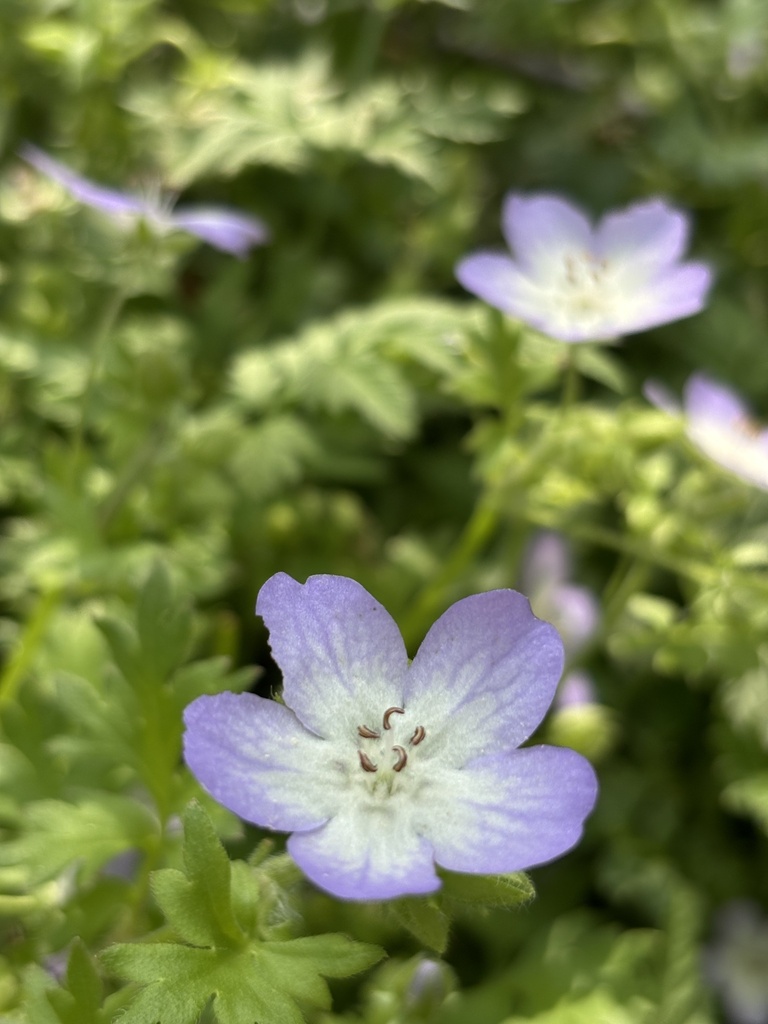
From February to May, flowers appear singly in the leaf axils or in small clusters at the stem tips, on slender stalks. Each is a broad, bowl-shaped corolla about 3/4 to 1 1/2 inches across, with five rounded petals that are pale blue to lavender at the tips and white or frosted toward the center. Small dark anthers and a white center make an “eye.” Between the sepals are small, turned-back appendages, a trait of the genus.
Fruit & Seeds
After flowering, a round, hairy capsule forms inside the enlarged sepals and holds a few rounded, wrinkled seeds. The seeds drop in late spring and rest through summer, germinating with cooler weather and rain in fall.
Look-alikes
California Baby Blue Eyes (N. menziesii) has bright sky-blue flowers with a white center and dark spots, and is native to California and Oregon. Small-flower baby blue eyes (N. aphylla) has tiny white or pale blue flowers less than 1/4 inch across. Phacelias have flowers in coiled clusters rather than singly. The name phacelioides means “like a Phacelia,” for its similar leaves.
Safety
Texas baby blue eyes is not known to be toxic, but it is not a food plant. The stiff hairs on the stems and leaves may irritate sensitive skin.
Quick Facts
| Scientific Name | Nemophila phacelioides |
| Family | Boraginaceae (borage family; formerly Hydrophyllaceae, waterleaf family) |
| Plant Type | Cool-season (winter) annual wildflower |
| Mature Height | 6–12 in (stems sprawl up to 2 ft) |
| Mature Spread | 6–18 in |
| Growth Rate | Fast |
| Sun Exposure | Part shade to light shade |
| Water Needs | Medium; moist in winter and spring, dry in summer while dormant as seed |
| Soil Type | Sandy, loamy, clay loam or calcareous soils; well drained |
| Soil pH | About 6.0–8.0 |
| Bloom Time | February–May |
| Flower Color | Pale blue to lavender with a white center |
| Fall Color | None; plants die by early summer |
| Fruit | Round, hairy capsule with a few wrinkled seeds |
| Deer Resistant | Moderate |
| USDA Hardiness Zones | Annual; grows as a winter annual in zones 7–9 |
Native Range
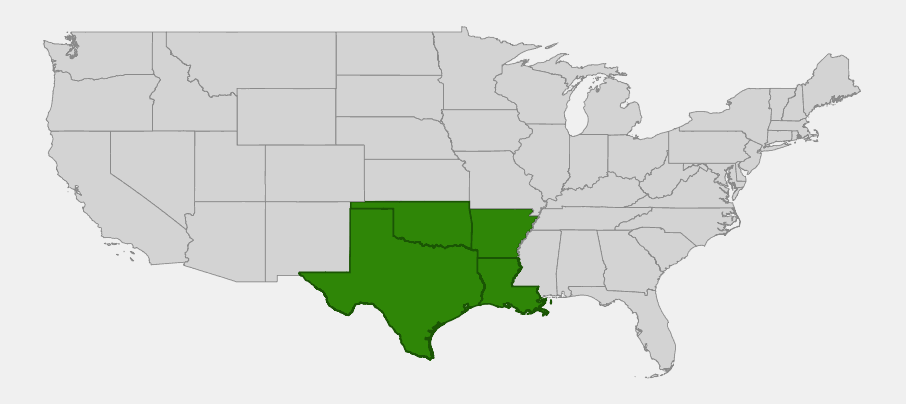
USDA PLANTS lists Texas baby blue eyes as native in the lower 48 states, in Arkansas, Louisiana, Oklahoma and Texas. The Lady Bird Johnson Wildflower Center summarizes its range as Arkansas and Oklahoma to southeastern Texas.
It is most abundant in central and eastern Texas, especially the Edwards Plateau (Hill Country), the Blackland Prairie and Post Oak Savanna regions, and around Austin, San Antonio, Waco and Dallas, reaching south into the San Antonio area and toward the coastal plain. It also grows across much of Arkansas, especially in the Ouachita Mountains, the Arkansas River Valley and southwestern Arkansas, and in southeastern Oklahoma. Louisiana records are very few and are best regarded as outlying records at the eastern edge of the range.
Typical habitats are shady and partly shady places with moist soil in winter and spring: woodland edges and openings, creek and river banks, riparian thickets, shady ravines, limestone slopes under oaks and junipers, and shaded roadsides and parks.
📋 Regional plant lists featuring Texas Baby Blue Eyes: Arkansas, Louisiana, Eastern Oklahoma & Eastern Texas · South & West Texas
Growing & Care Guide
Texas baby blue eyes is easy to grow from seed in Texas, Oklahoma, Arkansas and nearby areas. Seed is sold by native wildflower seed companies in Texas. Because it is an annual, sow it once and let it reseed; it will come back each year where it is happy.
Light
Part shade to light shade is best: under deciduous trees, on the north or east side of buildings, or along woodland edges. It tolerates morning sun but fades quickly in hot afternoon sun.
Soil & Water
It grows in sandy, loamy, clay loam and limestone-based soils, as long as they drain well. Keep the soil moist during fall, winter and spring if rain is scarce. It needs no water in summer, when it survives as seed.
Planting Tips
Sow seed in fall, from about September to November, scattering it on bare soil and pressing it in lightly or covering it very thinly. Seedlings appear with fall rains and grow through winter. Do not mulch heavily where you want it to reseed. It combines well with other shade-tolerant spring wildflowers and under trees with inland sea oats and cedar sage.
Pruning & Maintenance
No pruning is needed. Let the plants set seed and dry out in late spring before removing them, so the seeds can fall. Avoid disturbing the soil heavily in summer and fall where you want new seedlings.
Propagation
Propagate by seed only. Collect ripe capsules in late spring before they shatter, store the seed dry over summer, and sow in fall. Fresh seed sown outdoors in fall germinates best.
Landscape Uses
- Shade gardens: early spring color under trees and on north sides of buildings
- Woodland edges: naturalizes in partly shady, moist spots
- Creek banks and ravines: soft blue drifts in riparian plantings
- Pollinator gardens: early nectar and pollen for bees
- Wildflower meadows in shade: a reseeding companion for spring wildflowers
Wildlife & Ecological Value
Texas baby blue eyes is one of the earliest spring wildflowers in its range, providing food for bees and other insects when few flowers are open.
For Pollinators
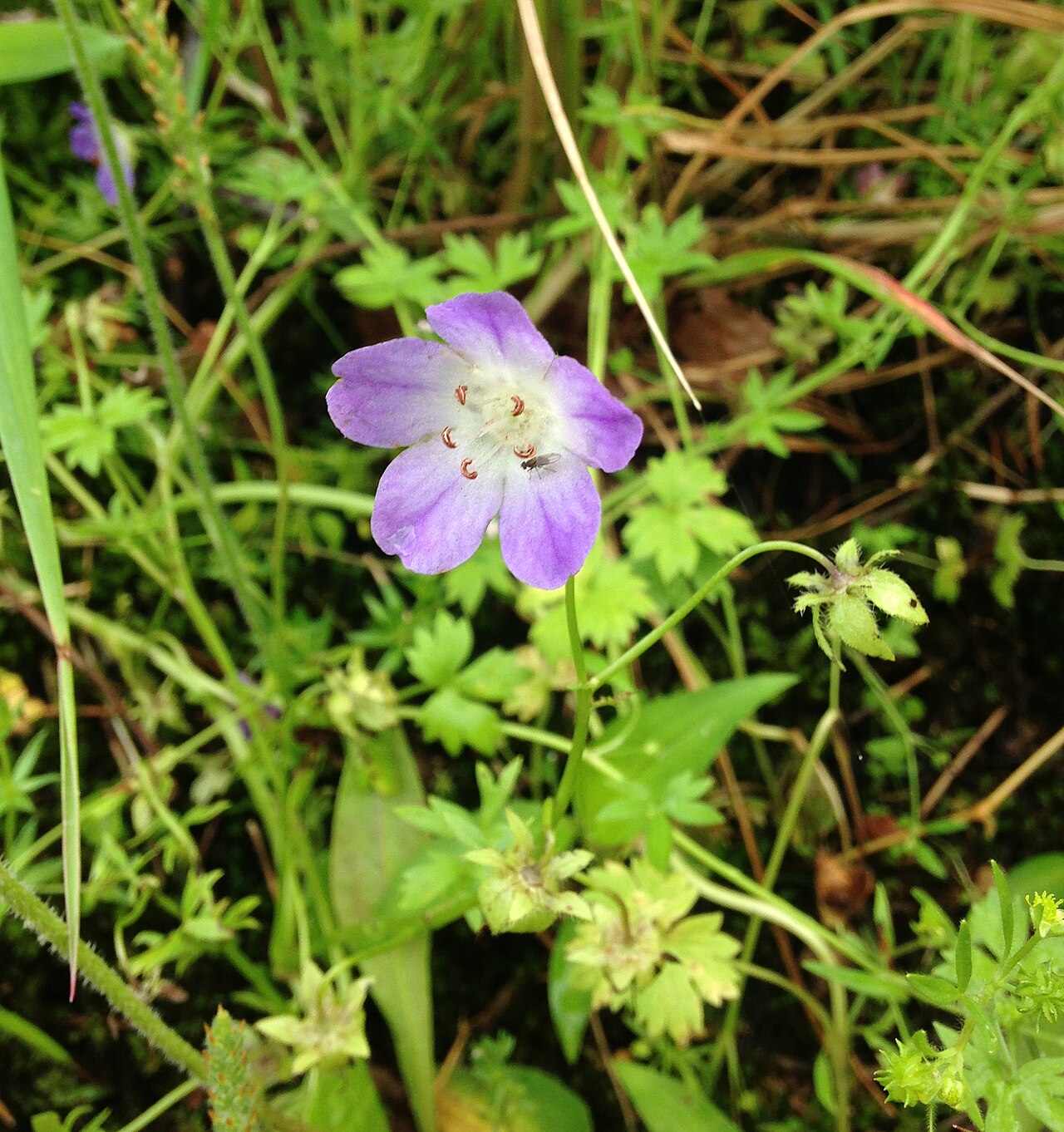
The open, bowl-shaped flowers are easy for many insects to use. They are visited by small native bees, bumble bees, honey bees, flies and early butterflies. The white center and lines guide insects to the nectar.
For Birds
Ground-feeding birds such as sparrows may eat the seeds, and insect-eating birds hunt among the early spring foliage.
For Mammals
Rabbits and deer may graze the soft leaves in winter and early spring.
Ecosystem Role
As a winter annual, it covers bare ground under trees in the cool season, helping to hold soil and adding organic matter when it dies back in summer. It is part of the spring wildflower community of woodland edges and creek bottoms in the south-central states.
Cultural & Historical Uses
The genus name Nemophila comes from Greek words meaning “grove-loving,” referring to the shady woodland habitats of many species. The species name phacelioides means “resembling Phacelia,” a related genus with similar divided leaves.
Baby blue eyes, especially the California species, became popular garden annuals in Europe in the 1800s and are still sold widely. Texas baby blue eyes is less well known outside its native range, but Texas wildflower enthusiasts value it as one of the first signs of spring in the Hill Country and East Texas woods.
The Lady Bird Johnson Wildflower Center in Austin, founded in 1982 to promote native plants, describes it as a showy annual of woodland edges and openings that blooms early and dies by summer, and recommends it for part shade. Its common name “large-flower baby blue eyes” reflects its unusually big flowers for the genus.
Frequently Asked Questions
Is Texas baby blue eyes an annual or a perennial?
It is an annual. It germinates in fall, blooms in late winter and spring and dies by early summer, but it reseeds readily and comes back each year.
When should I plant Texas baby blue eyes seed?
Sow seed in fall, from about September to November, so it can germinate with fall rains and grow through the winter.
Does it grow in shade?
Yes. It prefers part shade or light shade under trees and along woodland edges. It does poorly in hot, full afternoon sun.
How is it different from California baby blue eyes?
Texas baby blue eyes is native to Texas, Oklahoma, Arkansas and Louisiana, with pale blue to lavender flowers and a frosted white center. California baby blue eyes (Nemophila menziesii) is native to California and Oregon and has bright sky-blue flowers.
Where does Texas baby blue eyes grow wild?
It grows in central and eastern Texas, including the Hill Country, and in Oklahoma and Arkansas, mostly in shady woodland edges, creek banks and thickets.
