
California Prickly Phlox (Leptodactylon californicum)
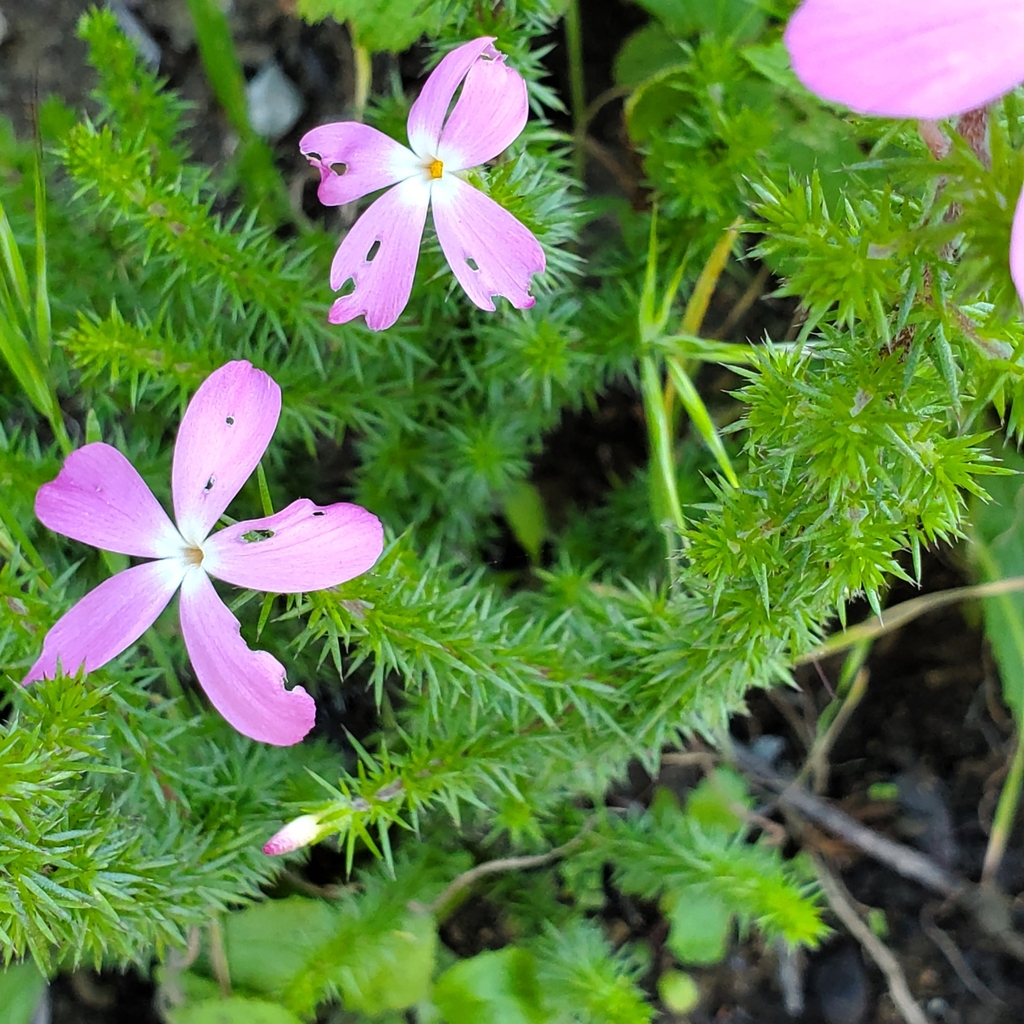
Leptodactylon californicum, known as California Prickly Phlox or simply prickly phlox, is a small, bristly shrub of the dry hills of coastal Southern and central California. It belongs to the phlox family (Polemoniaceae). Many botanists now place it in the genus Linanthus as Linanthus californicus, the name used by the Jepson Manual and by CalFlora; USDA PLANTS still lists it as Leptodactylon californicum.
From late winter into early summer the plant is covered with showy, flat-faced flowers about an inch across, in shades of bright pink, rose or lavender, occasionally white. They open by day above stems packed with short, stiff leaves that are divided into needle-like lobes. When it is not in bloom, it looks like a small, prickly green or gray-green shrublet.
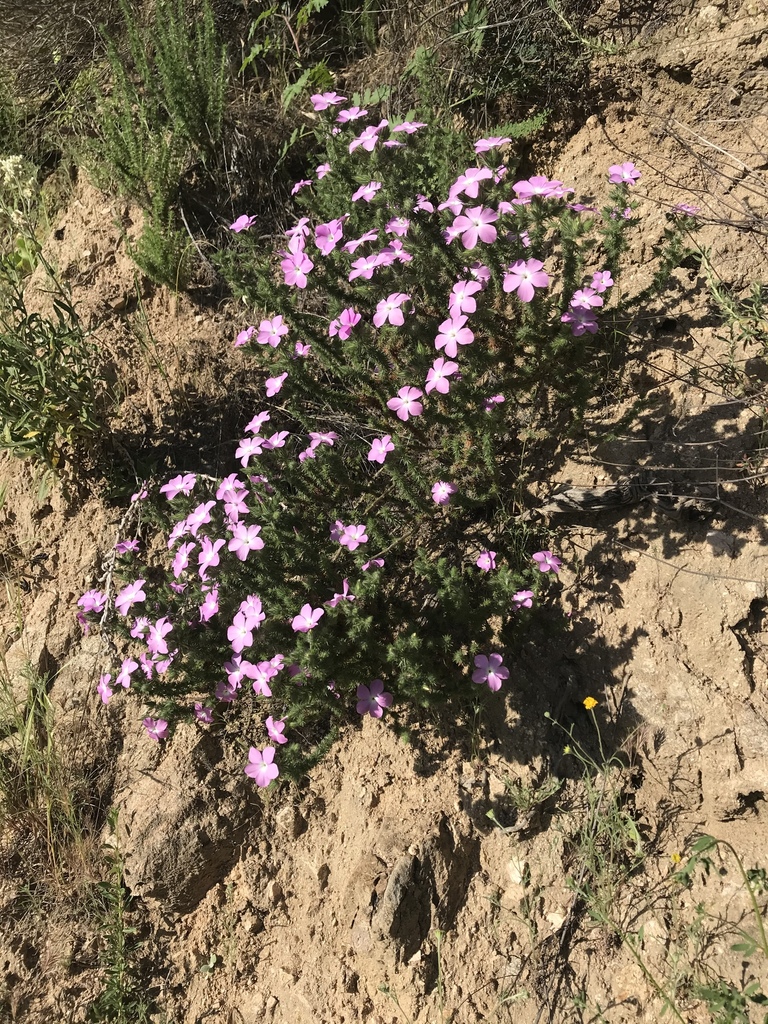
California prickly phlox grows on rocky slopes, sandstone outcrops and road cuts in coastal sage scrub and chaparral, especially in the Transverse Ranges and nearby coastal mountains. It is one of the most striking spring wildflowers of the Santa Monica and San Gabriel foothills, and a fine plant for dry, sunny gardens in its home region.
Identification
Look for a low, bushy, prickly shrub with stems densely covered in needle-like leaf lobes and bright pink, five-lobed pinwheel flowers in spring.
Growth Habit
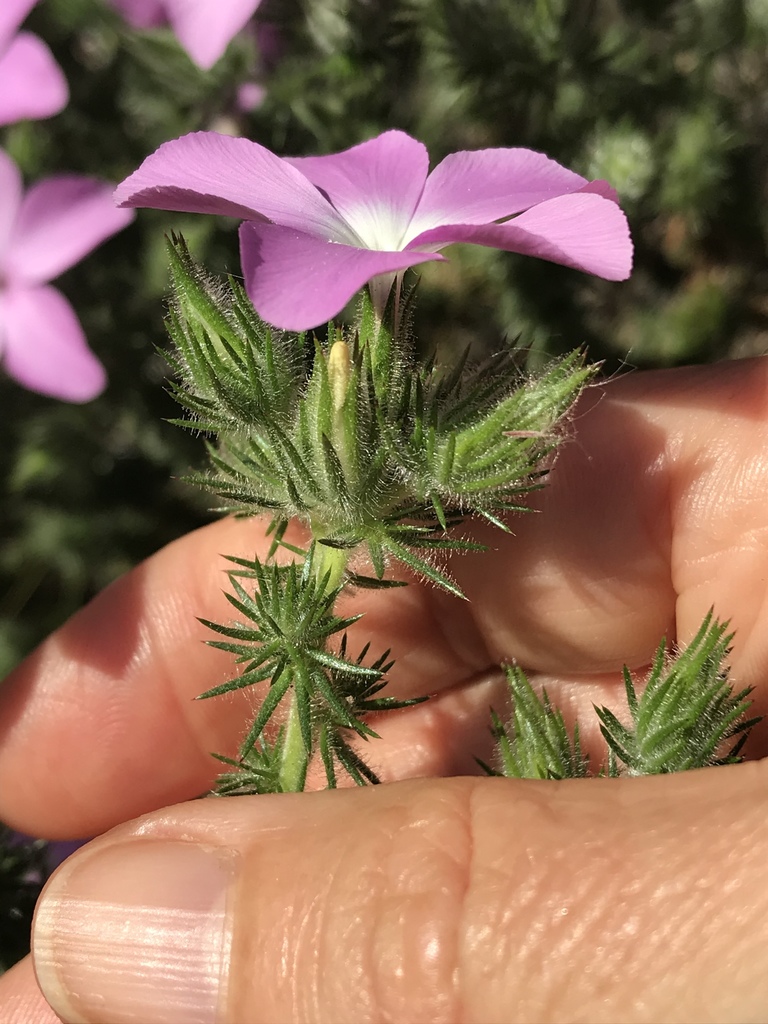
California prickly phlox is an evergreen subshrub or small shrub, usually 1 to 3 feet tall and about as wide, with many stiff, upright to spreading branches from a woody base. The stems are densely leafy and somewhat hairy or glandular, giving the whole plant a soft-looking but sharp-to-the-touch texture.
Leaves
The leaves are the key feature. Each small leaf is palmately divided into about five to nine narrow, stiff, sharp-pointed lobes, so it looks like a tiny cluster of green needles. Leaves crowd the stems, often with short leafy shoots in their axils, and are mostly alternate. They are green to gray-green and may be hairy or slightly sticky.
Flowers
Flowers appear from about January to June, most heavily in early spring. They are borne singly or in small groups near the branch tips. Each flower has a slender tube and five broad, spreading lobes that form a flat, pinwheel-like face about 3/4 to 1 1/4 inches across. Colors range from bright pink and rose to lavender, sometimes white, often with a paler or yellowish throat. Unlike its relative granite prickly phlox, it blooms by day.
Fruit & Seeds
The fruit is a small capsule held in the persistent calyx. It splits into three parts to release a few small seeds in late spring and summer.
Look-alikes
Granite prickly phlox (Linanthus pungens) has similar needle-like leaves but is a smaller, more compact plant of the mountains and Great Basin, with pale white, cream or yellowish flowers that open mainly in the evening. California prickly phlox is larger, grows mainly near the coast and in the coastal mountains, and has showy pink flowers open in daylight. True phloxes (Phlox) have undivided leaves.
Safety Notes
California prickly phlox is not known to be toxic, but the sharp leaf tips can prick bare skin. Wear gloves when handling or pruning it.
Quick Facts
| Scientific Name | Leptodactylon californicum (syn. Linanthus californicus) |
| Family | Polemoniaceae (phlox family) |
| Plant Type | Evergreen subshrub |
| Mature Height | 1–3 ft |
| Mature Spread | 1–3 ft |
| Growth Rate | Moderate |
| Sun Exposure | Full sun |
| Water Needs | Very low; summer-dry once established |
| Soil Type | Rocky, sandy or gravelly; well-drained |
| Soil pH | About 6.0–8.0 |
| Bloom Time | January–June (peak in spring) |
| Flower Color | Bright pink, rose or lavender, occasionally white |
| Fall Color | Evergreen; may go partly dormant in late summer |
| Fruit | Small three-part capsules |
| Deer Resistant | Generally yes; prickly foliage |
| USDA Hardiness Zones | 9–10 |
Native Range
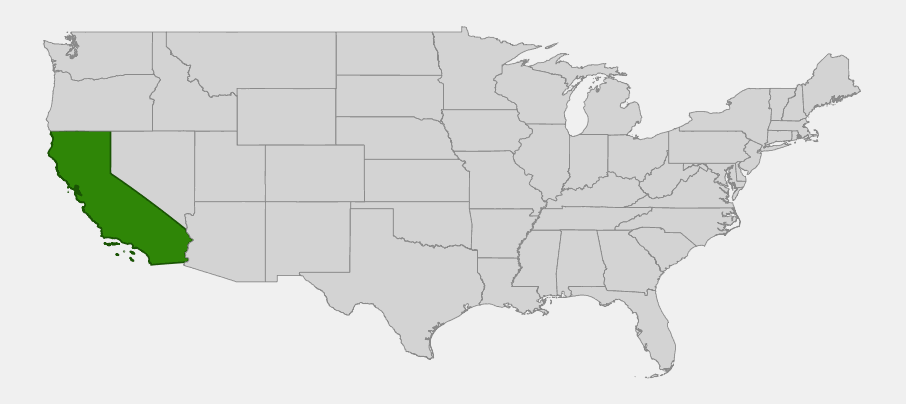
California prickly phlox is endemic to California. USDA PLANTS lists it only in California, and it is found nowhere else in the United States. Its range runs through the coastal and near-coastal mountains from the central coast south into Southern California, with some reports extending into northern Baja California.
It is most common in the Transverse Ranges, including the Santa Monica Mountains, the San Gabriel Mountains foothills and the Santa Ynez Mountains, and occurs in the adjacent coast ranges and hills of Santa Barbara, Ventura, Los Angeles and nearby counties. Several subspecies have been described, differing mainly in hairiness and glandular stems.
It grows on dry, open, rocky or sandy slopes, sandstone outcrops, canyon walls, road cuts and recently burned ground in coastal sage scrub and chaparral, usually in full sun. It is not a rare plant overall, but it is local and uncommon in many areas, so enjoy it in place and never dig wild plants.
📋 Regional plant lists featuring California Prickly Phlox: California & Nevada
Growing & Care Guide
California prickly phlox is occasionally offered by California native plant nurseries and seed suppliers. It is a plant for dry, sunny, fast-draining spots in mild-winter, summer-dry climates, where it rewards little care with a burst of pink in spring.
Light
Give it full sun. In hot inland gardens it tolerates a little afternoon shade, but in too much shade it gets leggy and flowers poorly.
Soil & Water
It needs excellent drainage: rocky, sandy or gravelly soil, a slope or a raised mound. Water new plants every week or two through their first dry season, then taper off. Established plants need little or no summer water near the coast, and occasional deep watering inland. Heavy clay, overwatering and summer irrigation in warm soil quickly cause root rot.
Planting Tips
Plant in late fall or winter so winter rains help it establish. Place it on a dry slope, in a rock garden or along a path edge (not right where people brush past) with sages, buckwheats, monkeyflowers and California sagebrush. Do not add compost or fertilizer.
Pruning & Maintenance
After flowering, lightly shear back the spent stem tips to keep the plant compact; avoid cutting hard into bare wood. Plants may look dull or partly dormant in late summer, which is normal. Expect a lifespan of several years; let a few seeds fall to replace older plants.
Propagation
Sow seed in fall in a gritty, well-drained mix and leave it outdoors through the winter; germination improves after cool, moist conditions. Softwood or semi-ripe cuttings taken after flowering can root in a very fast-draining medium with bottom heat. Buy plants or seed from a reputable native nursery; do not dig plants from the wild.
Landscape Uses
- Dry slopes and rock gardens: a tidy, prickly shrublet covered in pink flowers in spring
- Coastal sage scrub gardens: pairs naturally with sages, buckwheats and California sagebrush
- Pollinator gardens: long-tubed flowers for butterflies, bee flies and long-tongued bees
- Habitat restoration: scrub and chaparral restoration on rocky or sandy ground
- Fire-recovery plantings: a native shrublet that often appears on recently burned slopes
Wildlife & Ecological Value
California prickly phlox is a small plant, but its spring flowers are a useful nectar source on dry hillsides, and its prickly growth shelters small animals.
For Pollinators
The tubular, open-faced flowers are visited by butterflies, bee flies, long-tongued native bees and other insects that can reach nectar at the base of the slender tube. It blooms early in the year, when nectar is welcome to emerging insects.
For Birds
The dense, prickly branches give shelter to small ground-foraging birds of coastal sage scrub, such as wrentits and towhees, and some seed-eating birds glean the small seeds.
For Mammals
Its sharp foliage is seldom browsed. Small mammals and lizards may shelter beneath the plants, and rodents may take fallen seeds.
Ecosystem Role
As a colonizer of rocky ground, road cuts and burned slopes, it helps hold thin soil and adds early cover in disturbed scrub and chaparral. It is part of the diverse shrub and wildflower community that makes coastal sage scrub so rich in pollinators.
Cultural & Historical Uses
The species was described in 1838 by William Hooker and George Arnott from specimens collected in California. The genus name Leptodactylon means “slender finger,” for the narrow leaf lobes, and californicum refers to the state where it grows. In 2000, DNA studies led J. Mark Porter and Leigh Johnson to merge Leptodactylon into Linanthus, so the plant is now often called Linanthus californicus.
Despite its common name it is not a true phlox, but a member of the same family as phloxes, gilias, Jacob’s ladders and linanthus. Older wildflower books sometimes listed it as Gilia californica.
Spring hikers in the Santa Monica Mountains and the foothills above Los Angeles know it as one of the brightest flowers of the coastal sage scrub, often blooming in vivid pink masses on road cuts and canyon walls.
Frequently Asked Questions
Is California prickly phlox the same as Linanthus californicus?
Yes. Leptodactylon californicum and Linanthus californicus are two names for the same plant. USDA PLANTS still uses Leptodactylon, while the Jepson Manual and many California references use Linanthus.
How is it different from granite prickly phlox?
Granite prickly phlox (Linanthus pungens) is a smaller plant of the interior mountains with pale flowers that open in the evening. California prickly phlox grows near the coast and has bright pink flowers that open by day.
When does California prickly phlox bloom?
Mainly from late winter through spring, roughly January to June, with the peak usually in March and April.
Can I grow California prickly phlox in my garden?
Yes, in a sunny, fast-draining spot in a mild, summer-dry climate such as coastal or Southern California. It does poorly in heavy clay, with regular summer watering, or in cold, wet winters.
Where does California prickly phlox grow?
Only in California in the U.S., on dry rocky slopes in coastal sage scrub and chaparral, especially in the Transverse Ranges and nearby coastal mountains.

Looking for a nursery that carries California Prickly Phlox?
Browse our native plant nursery directory: California

