
Clay Mariposa Lily (Calochortus argillosus)
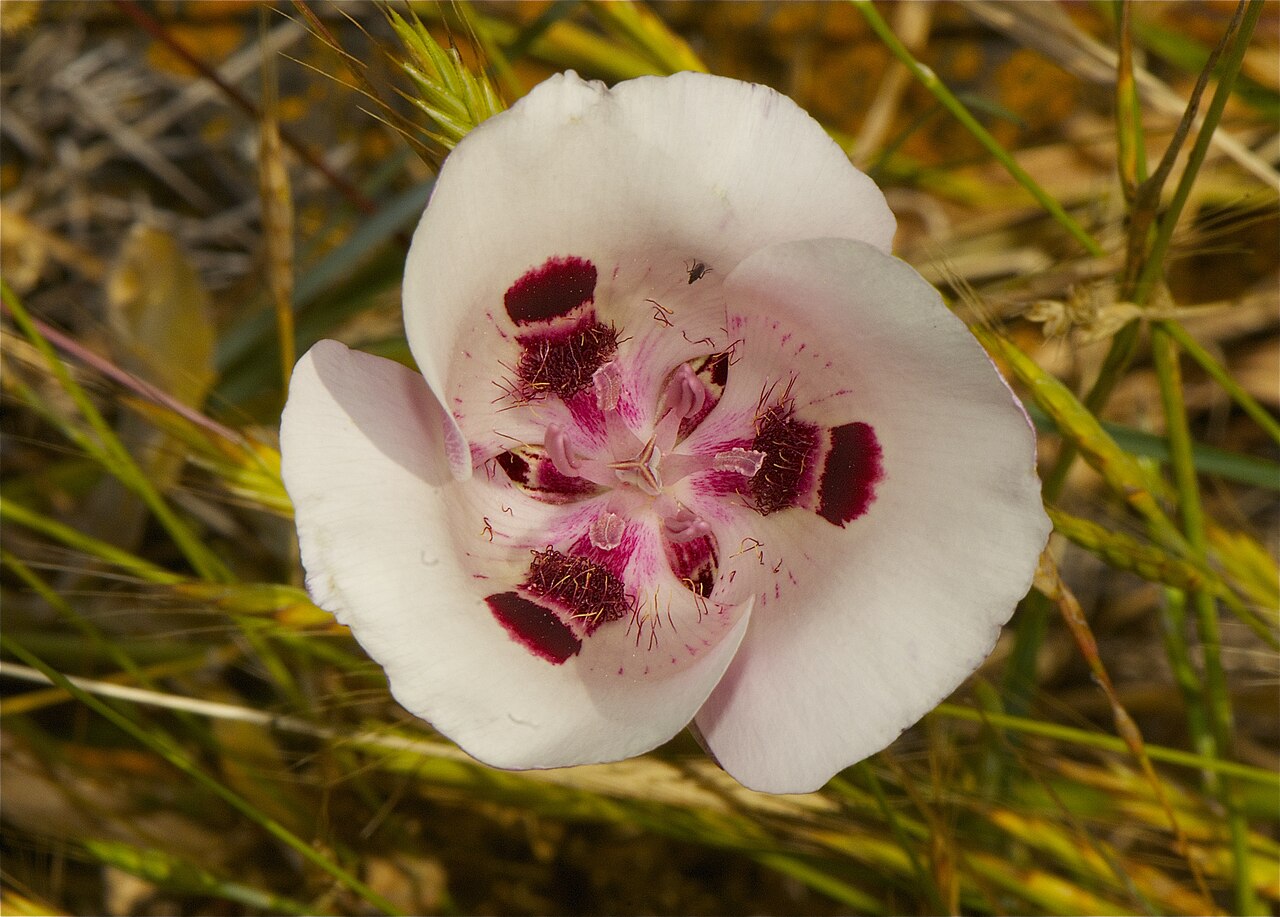
Calochortus argillosus, known as Clay Mariposa Lily, is a spring- and early-summer-blooming bulb endemic to the Coast Ranges of central California. It belongs to the lily family (Liliaceae). As its name says (argillosus means “of clay”), it grows on heavy clay soils in grassland, oak woodland and openings in the foothills.
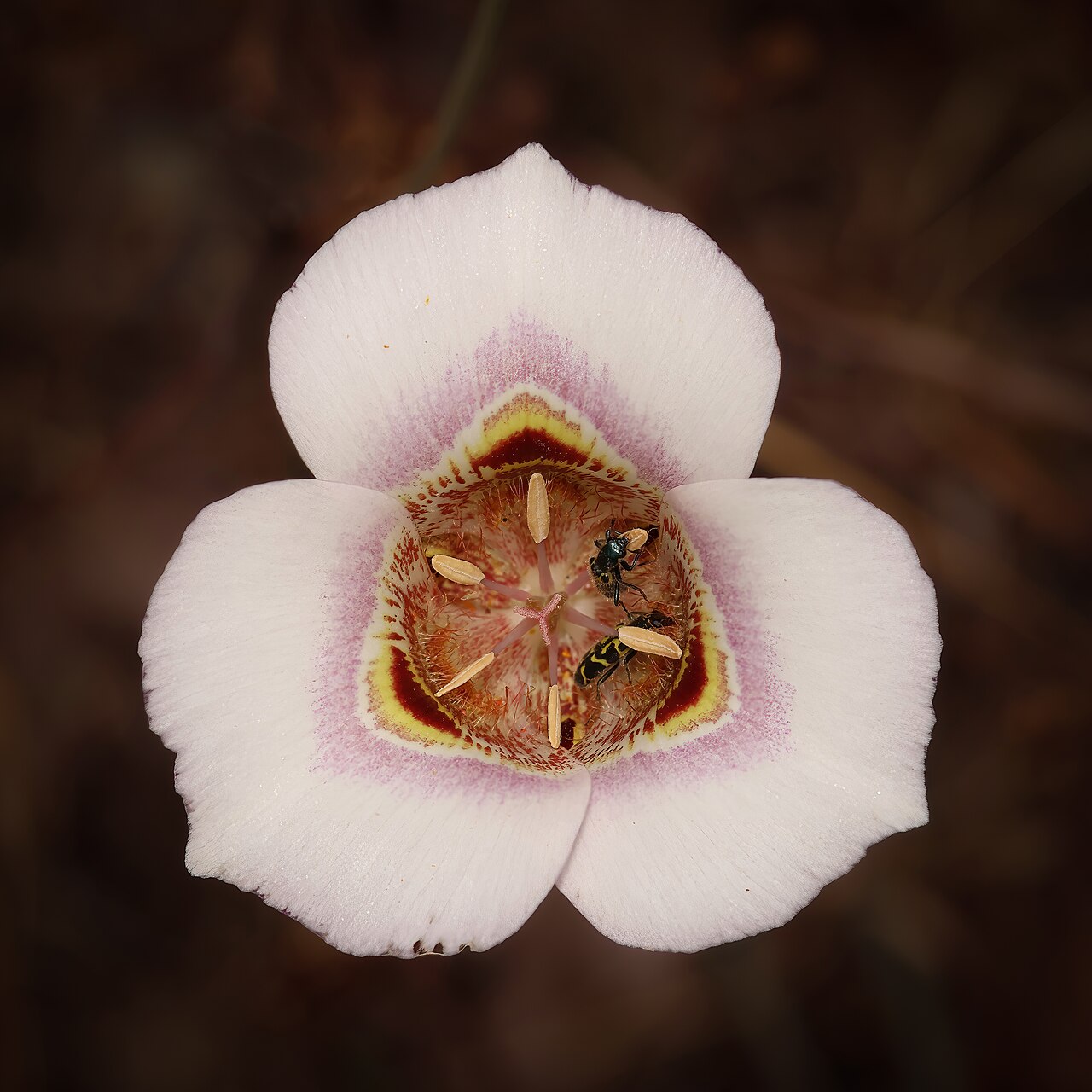
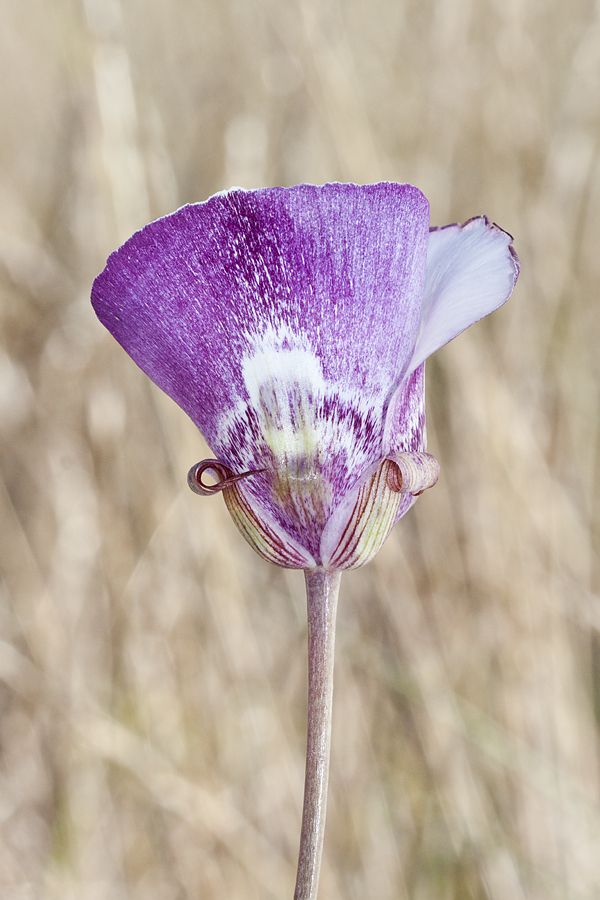
Like other mariposa lilies, it rises from a small bulb with a single narrow leaf that withers by the time it flowers. A slender stem 16 to 24 inches tall holds one to four upright, cup-shaped flowers. The three broad petals are white, pink or lavender, marked inside with a dark red or purple blotch, flecks of yellow and a hairy nectar gland at the base. “Mariposa” is Spanish for butterfly, a nod to the bright, wing-like petals.
Clay mariposa lily is a wild plant of undisturbed grassland and woodland, and it is rarely available in the nursery trade. Enjoy it where it grows, and never dig the bulbs from the wild; buy only nursery-propagated bulbs or seed if you want to try it in a garden.
Identification
Look for a single slender stem in dry grassland in late spring or early summer, topped by one to four upright, cup-shaped white to lavender flowers with a dark blotch and hairy yellow gland on each petal.
Growth Habit
Clay mariposa lily is a perennial herb that grows from a small, onion-like bulb buried several inches deep in clay. It sends up one basal leaf in winter and a mostly unbranched stem about 16 to 24 inches tall in spring. After the seeds ripen the whole plant dies back to the bulb and stays dormant through the dry summer and fall.
Leaves
The single basal leaf is long and narrow, up to about 12 inches long, flat and grass-like. It withers by flowering time, so blooming plants usually look leafless except for a few small, narrow leaves on the stem.
Flowers
Flowers open from about April to July, mainly in May and June. Each plant has one to four upright, bell- to cup-shaped flowers. The three sepals are narrow and the three petals are broad and rounded, up to about 1 1/2 inches long, white to pink or lavender. Inside, each petal usually has a dark red to purple central spot or streaks, often with yellow, and near the base a hairy nectar gland. Colors and markings vary a lot from plant to plant.
Fruit & Seeds
The fruit is a narrow, upright, three-angled capsule up to about 2 1/2 inches long. It dries and splits in summer to release flat, pale seeds.
Look-alikes
Butterfly mariposa lily and superb mariposa lily are close relatives with very similar white to lavender, blotched petals. They are separated from clay mariposa lily mainly by the shape and hairs of the nectar gland and by range and habitat, so a close look and a local flora help. Yellow mariposa lily has bright yellow petals. Clay mariposa lily is the one on heavy clay in the central Coast Ranges.
Safety Notes
Mariposa lilies are not known to be toxic. The bulbs of several species were eaten by Native Californians, but wild bulbs should never be dug, both for the plants’ sake and because they are easily confused with toxic bulbs such as death camas.
Quick Facts
| Scientific Name | Calochortus argillosus |
| Family | Liliaceae (lily family) |
| Plant Type | Perennial bulb (summer-dormant) |
| Mature Height | 16–24 in |
| Mature Spread | 3–6 in |
| Growth Rate | Slow |
| Sun Exposure | Full sun |
| Water Needs | Very low; no summer water |
| Soil Type | Heavy clay, often from volcanic rock |
| Soil pH | About 6.0–7.5 |
| Bloom Time | April–July (mainly May–June) |
| Flower Color | White, pink or lavender with dark red-purple markings |
| Fall Color | None; dormant in summer and fall |
| Fruit | Narrow three-angled capsule |
| Deer Resistant | No; deer and gophers eat mariposa lilies |
| USDA Hardiness Zones | 8–10 |
Native Range
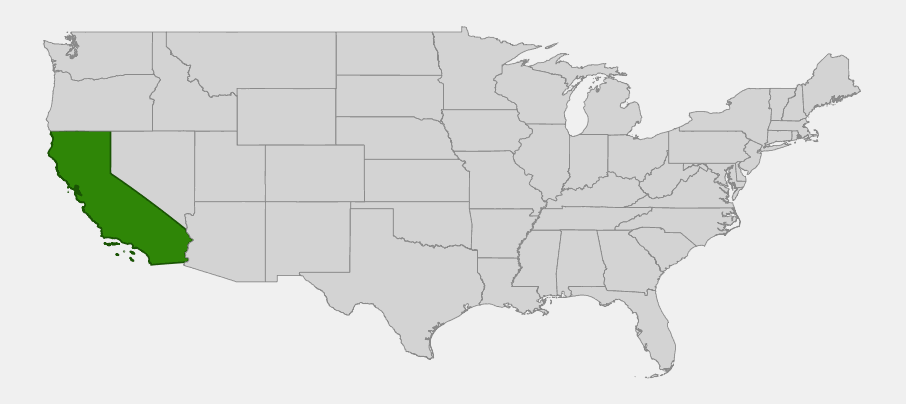
Clay mariposa lily is endemic to California. USDA PLANTS lists it only in California, and it is known from the Coast Ranges of the central part of the state, from the South Bay and Santa Clara County south through the Monterey Bay area to San Luis Obispo County.
It grows in the foothills and lower mountains of the Coast Ranges, both near the coast and in the inner ranges. Calscape describes its habitat as hard clay derived from volcanic rocks in foothill woodland, valley grassland and yellow pine forest.
Look for it in open, sunny grassland, oak savanna and woodland openings where the clay soil cracks in summer. Good populations grow in parks and open spaces around San Luis Obispo and Morro Bay and in the hills of Santa Clara County.
📋 Regional plant lists featuring Clay Mariposa Lily: California & Nevada
Growing & Care Guide
Clay mariposa lily is a plant for experienced bulb growers and for people who already have it on their land. Bulbs are rarely sold. If you grow it, start from nursery-propagated bulbs or seed, never from wild-dug plants.
Light
Give it full sun. In shade the stems flop and the bulbs weaken over time.
Soil & Water
It is adapted to clay that is wet in winter and bone dry in summer. Water only in the rainy season. Once the leaves yellow in late spring, stop watering completely until fall; summer water rots the bulbs. In gardens many growers keep mariposa lilies in deep pots so they can control water and protect them from gophers.
Planting Tips
Plant bulbs in fall, about 3 to 4 inches deep, in an unwatered meadow, bulb bed or among bunchgrasses such as purple needlegrass. A wire basket helps keep gophers away. Grow it with other summer-dry natives, not in irrigated beds.
Pruning & Maintenance
Let the stems ripen and set seed, then cut them down once dry. Do not fertilize. Protect plants from gophers, deer and snails, which all eat mariposa lilies.
Propagation
Sow fresh seed in fall outdoors or in a deep pot left in the open; it sprouts with winter cold and rain. Seedlings take several years to reach flowering size. Some mariposa lilies also form small bulblets. Do not collect seed or bulbs from wild populations without permission.
Landscape Uses
- Native meadows and bunchgrass plantings: late-spring color after most wildflowers fade
- Bulb and rock gardens: for summer-dry gardens with no irrigation
- Containers: deep pots make summer-dry care and gopher protection easier
- Wildflower viewing: a highlight of Central Coast grassland walks in May and June
- Pollinator support: native bees visit the open, nectar-rich cups
Wildlife & Ecological Value
Clay mariposa lily blooms late in the spring season, when much of the surrounding grassland has already turned gold.
For Pollinators
The open, upturned cups are visited mainly by native bees and beetles, which crawl into the flower toward the hairy nectar glands. The dark markings on the petals act as guides that lead visitors to the nectar.
For Birds
Seed-eating birds may take some seeds, but the plant is of minor importance to birds.
For Mammals
Pocket gophers eat the bulbs, and deer and rabbits browse the flowering stems and buds.
Ecosystem Role
As a native bulb of clay grasslands and oak savanna, it is part of a diverse community of wildflowers that persists between bunchgrasses. Healthy populations are a sign of grassland that has not been plowed or heavily disturbed.
Cultural & Historical Uses
The name argillosus comes from the Latin for “clayey,” for its soil preference. California botanist Robert F. Hoover, who worked for many years at Cal Poly San Luis Obispo, first described the plant at a lower rank. Later botanists, including mariposa lily specialist Peggy Fiedler, treated it as a full species, Calochortus argillosus.
The genus name Calochortus means “beautiful grass” in Greek, for the grass-like leaves. Mariposa lilies are among the most admired wildflowers of the West, and California is home to a large share of the species.
Bulbs of several mariposa lilies were roasted or eaten by Native Californians. Today wild populations of clay mariposa lily depend on intact, unplowed grassland and woodland openings.
Frequently Asked Questions
Where does clay mariposa lily grow?
It is endemic to the Coast Ranges of central California, from Santa Clara County south to San Luis Obispo County, on heavy clay in grassland and woodland openings.
When does clay mariposa lily bloom?
From about April to July, mostly in May and June, later than many other spring wildflowers.
Can I dig up mariposa lily bulbs to grow at home?
No. Never dig wild bulbs; they rarely survive and it harms wild populations. Buy nursery-propagated bulbs or seed instead.
How do I keep mariposa lilies alive in a garden?
Plant in full sun with no summer water, protect the bulbs from gophers with wire, and let the plant go fully dormant after flowering.
How is clay mariposa lily different from butterfly mariposa lily?
They look very similar. They are separated mainly by details of the nectar gland and by range; clay mariposa lily grows on clay soils in the central Coast Ranges.

Looking for a nursery that carries Clay Mariposa Lily?
Browse our native plant nursery directory: California

