
Common Eucrypta (Eucrypta chrysanthemifolia)
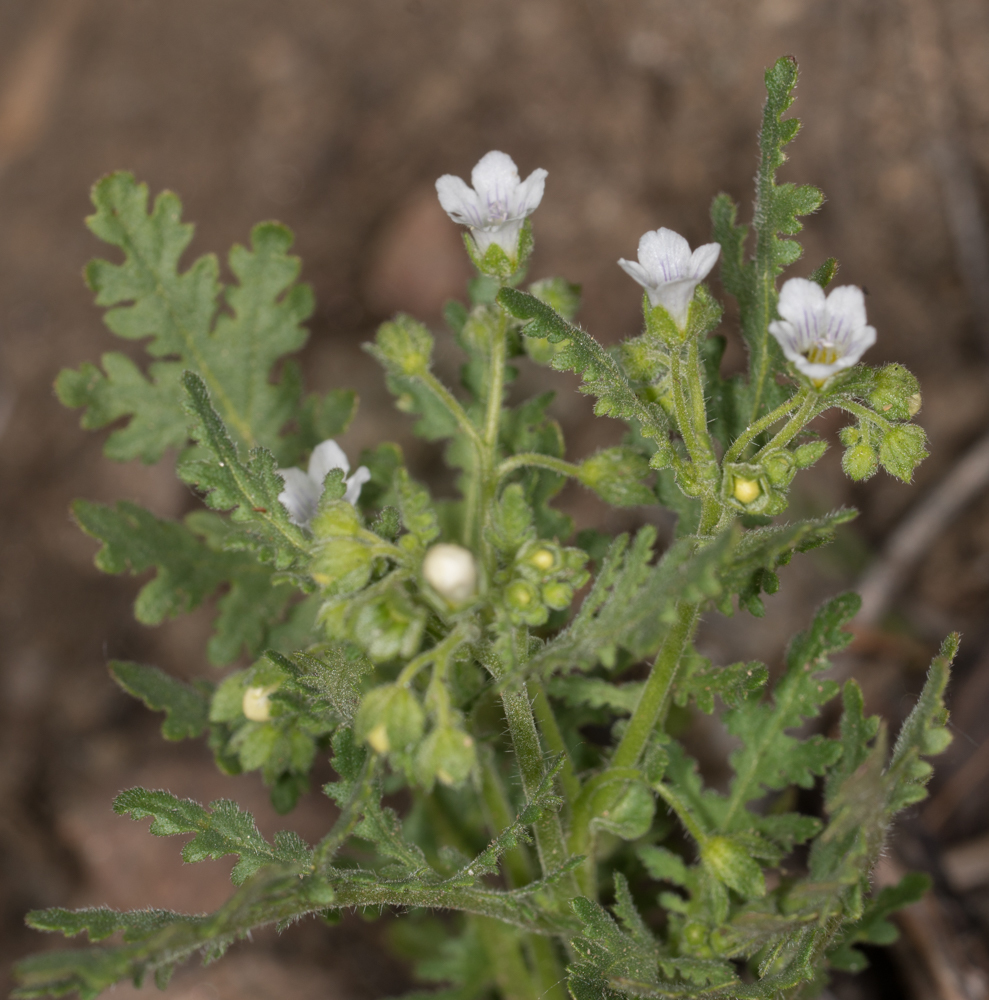
Eucrypta chrysanthemifolia, known as Common Eucrypta or spotted hideseed (the USDA PLANTS name), is a small, sticky, strongly scented annual wildflower of California and the Southwest deserts. It belongs to the waterleaf group, traditionally placed in the waterleaf family (Hydrophyllaceae) and now often included in the borage family (Boraginaceae).
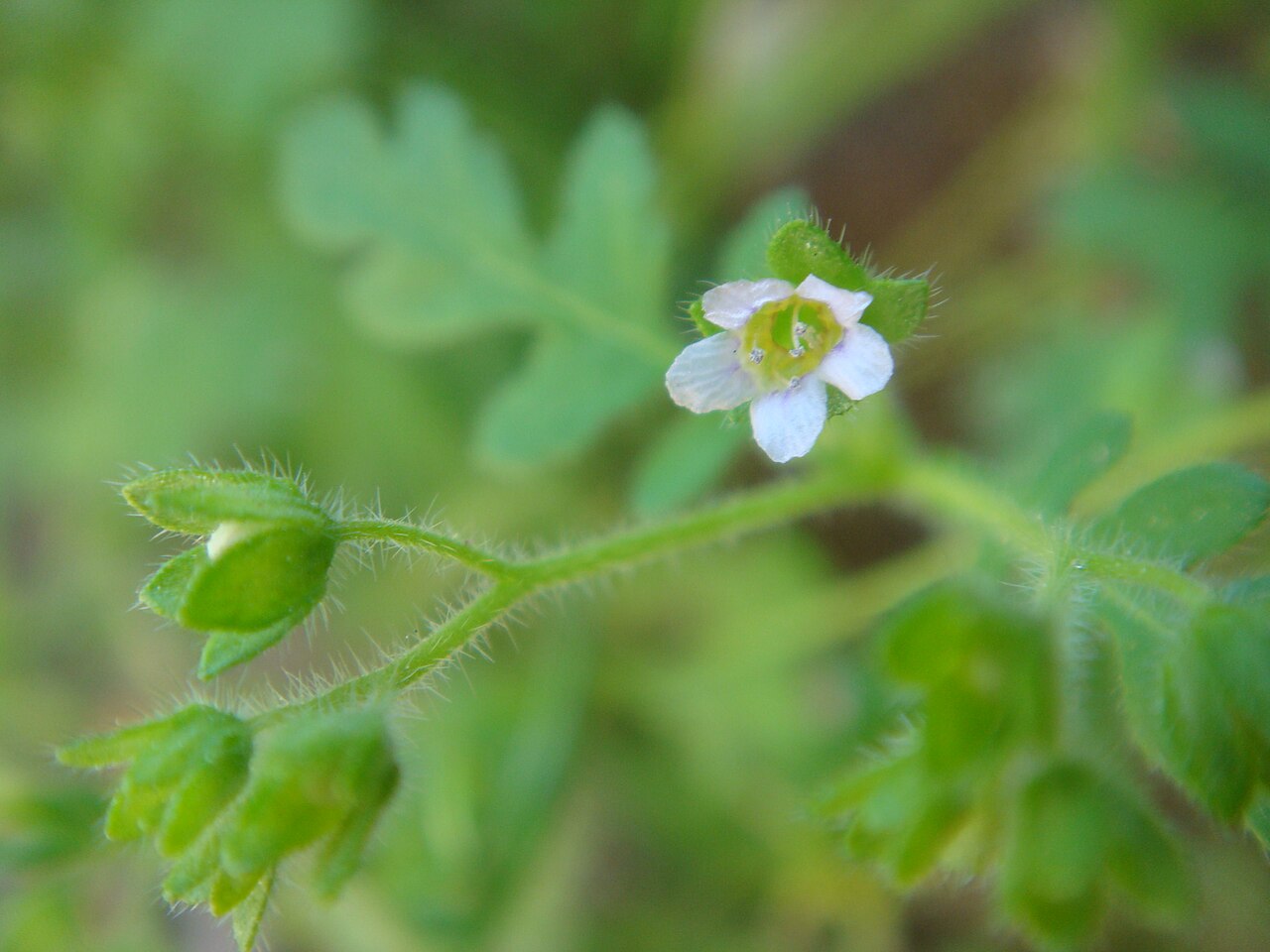
In late winter and spring it forms a loose, leafy plant, usually 4 to 20 inches tall, with bright green, lacy leaves divided into many small lobes, somewhat like chrysanthemum leaves, which is where the species name comes from. Above the leaves hang many tiny white to pale lavender, bell-shaped flowers, often with faint spots or lines inside. The whole plant is glandular and sticky, with a musky smell.
Common eucrypta grows from central and Southern California to southern Nevada, Arizona and Baja California, usually in partial shade under shrubs, beside boulders and in canyons. It is a well-known fire follower, appearing in great numbers on chaparral and sage scrub slopes in the first spring after a wildfire.
Identification
Look in spring in shady spots under shrubs or rocks for a sticky, musky-scented annual with bright green, finely divided leaves and many tiny white bell-shaped flowers.
Growth Habit
Common eucrypta is a winter annual. It germinates with fall or winter rain, grows quickly through spring and dies by early summer. Plants are usually 4 to 20 inches tall, occasionally to about 3 feet, with weak, branching stems that are upright or leaning on nearby plants. Stems and leaves are covered in short glandular hairs that make them sticky and give off a strong, musky odor.
Leaves
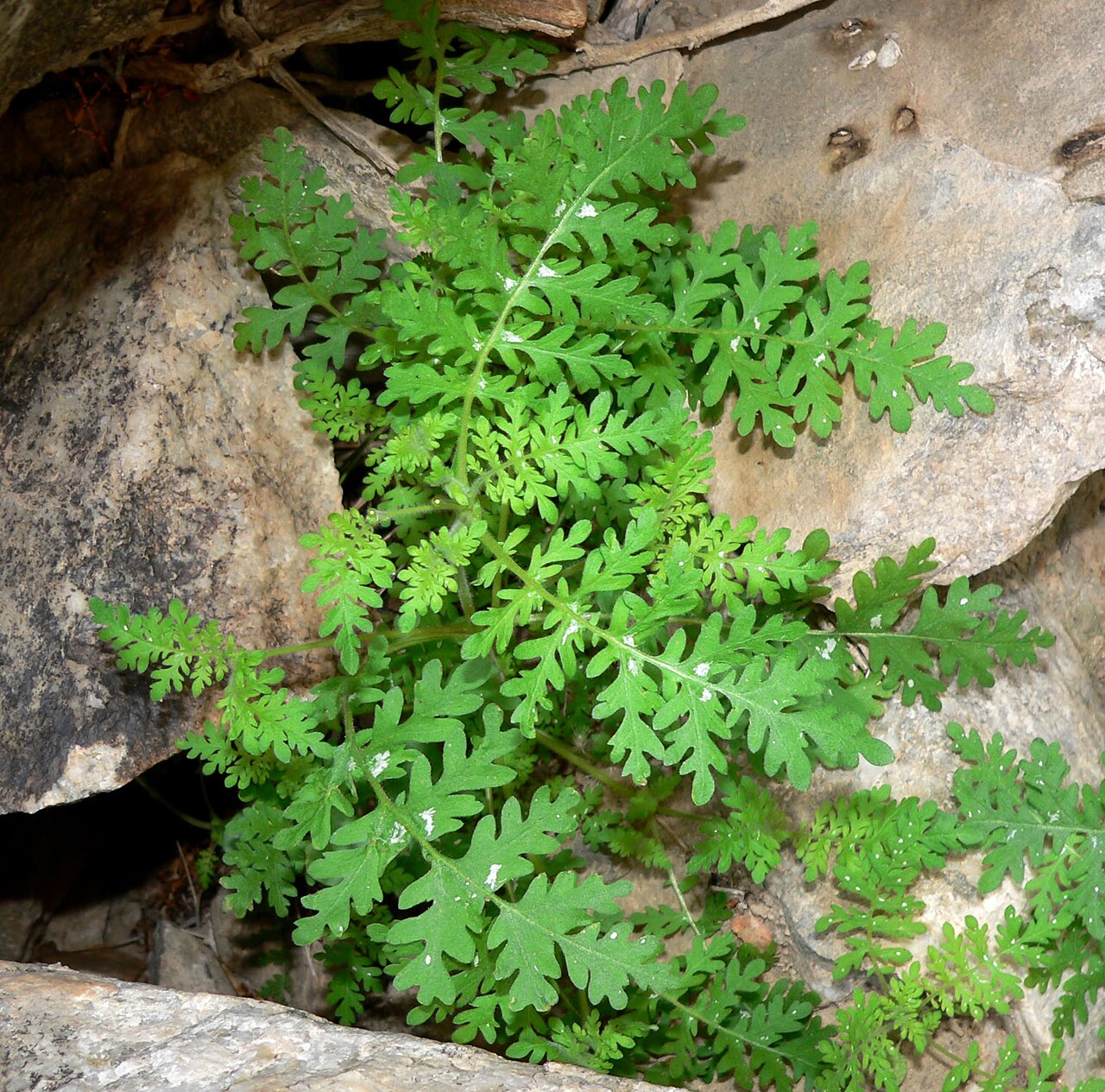
The leaves are the best feature for identification: bright green, oval to oblong in outline and deeply divided once or twice into many small, toothed lobes, giving a lacy, fern-like look. Lower leaves are on stalks; upper leaves are smaller, less divided and often clasp the stem.
Flowers
Flowers appear from about February to June, depending on rainfall and elevation. They are borne in loose, open, branching clusters that become one-sided and nodding as fruits develop. Each flower is small, about 1/8 to 1/4 inch long, bell- to bowl-shaped, with five white to pale lavender lobes and sometimes small spots or lines in the throat, giving rise to the name “spotted hideseed.”
Fruit & Seeds
The fruit is a small, round capsule, about 1/8 inch across, covered with bristly hairs. It holds a few seeds of two kinds; some are partly concealed in the capsule by the folded-in walls, which inspired the genus name Eucrypta, “well hidden.”
Look-alikes
Fiesta flower (Pholistoma auritum) shares the same shady habitats but has larger, lavender-blue, wheel-shaped flowers and clinging, prickly stems. Whispering bells (Emmenanthe penduliflora), another fire follower, has hanging, cream to pale yellow, papery bells and less divided leaves. Small white phacelias have coiled flower clusters and usually less lacy leaves. Small-flowered eucrypta (Eucrypta micrantha) is a smaller desert plant with less divided leaves and tiny flowers.
Safety Notes
Common eucrypta is not known to be toxic, but its sticky glandular hairs can irritate sensitive skin, as with some related phacelias. Wash your hands after handling it.
Quick Facts
| Scientific Name | Eucrypta chrysanthemifolia |
| Family | Boraginaceae (borage family; formerly Hydrophyllaceae) |
| Plant Type | Annual wildflower |
| Mature Height | 4–20 in (occasionally to 3 ft) |
| Mature Spread | 6–18 in |
| Growth Rate | Fast (one season) |
| Sun Exposure | Part shade to full sun |
| Water Needs | Low; winter rain, dry summers |
| Soil Type | Sandy, gravelly or rocky loam; well-drained |
| Soil pH | About 6.0–8.0 |
| Bloom Time | February–June |
| Flower Color | White to pale lavender |
| Fall Color | None; dies back by early summer |
| Fruit | Small, round, bristly capsules |
| Deer Resistant | Generally yes; sticky and strongly scented |
| USDA Hardiness Zones | Annual; grows in mild-winter areas (about zones 8–11) |
Native Range
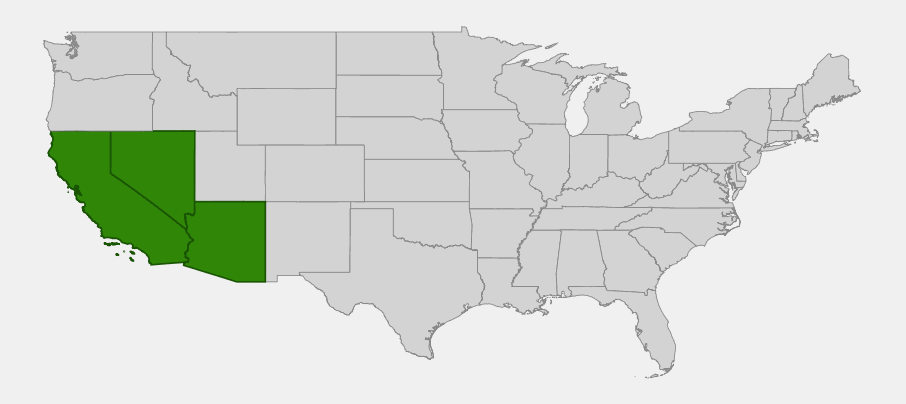
Common eucrypta is native to the southwestern United States and northwestern Mexico. USDA PLANTS lists it as native in Arizona, California and Nevada. In Mexico it ranges into Baja California.
In California it grows in the Coast Ranges, the Transverse and Peninsular Ranges, the foothills of the Sierra Nevada and the deserts, and is most common in Southern California. The desert form, var. bipinnatifida, ranges through the Mojave and Sonoran Deserts into southern Nevada and Arizona, while var. chrysanthemifolia is the common plant of the coastal hills.
It usually grows in partial shade: under shrubs and oaks, at the base of boulders, in rock crevices and canyon bottoms, in coastal sage scrub, chaparral, oak woodland and desert scrub. After wildfires it can become abundant on open, burned slopes, then retreats to sheltered spots as shrubs regrow.
📋 Regional plant lists featuring Common Eucrypta: Arizona & New Mexico · California & Nevada
Growing & Care Guide
Common eucrypta is not sold as plants and seed is rarely offered, but it often appears on its own in native gardens within its range, especially under shrubs. It is a modest, delicate wildflower best enjoyed in natural, shady corners of dry gardens.
Light
It does best in partial shade, such as under the edge of shrubs or beside rocks, and tolerates full sun near the coast or in the first years after fire.
Soil & Water
It grows in sandy, gravelly or rocky, well-drained soil, often with some leaf litter. Winter and spring rain is enough; in a dry winter, occasional watering keeps plants blooming longer. No summer water is needed, as the plant dies back by early summer.
Planting Tips
If you have seed, scatter it in fall on the soil surface under or near shrubs, in rock gardens or in shady pockets of a native garden, and let rain do the rest. Leave volunteers in place; they often appear under native shrubs such as sages, sumacs and oaks.
Pruning & Maintenance
No care is needed. Leave plants until they have dropped their seed in late spring, then pull the dry stems or let them break down as mulch.
Propagation
It reproduces only by seed. Collect small amounts of seed in late spring as the capsules dry, and sow in fall. Like many fire followers, its seeds can lie dormant in the soil for years, and germination may increase after fire or exposure to smoke or charred wood.
Landscape Uses
- Shade under native shrubs: fills bare, shaded ground beneath sages, sumacs and oaks
- Wildflower and habitat gardens: a delicate native annual for informal plantings
- Post-fire recovery: a fire follower that covers burned slopes in the first spring
- Pollinator support: early-season flowers for small native bees and flies
- Nature study: an indicator of healthy seed banks in chaparral and sage scrub
Wildlife & Ecological Value
Common eucrypta is small and short-lived, but its abundance in spring and after fire makes it a useful early food source for insects in California and desert ecosystems.
For Pollinators
The tiny flowers are visited by small native bees, flies and other small insects that gather nectar and pollen. Its early bloom period supports pollinators in late winter and spring.
For Birds
Ground-foraging birds such as sparrows and towhees pick up the small seeds and insects among the plants.
For Mammals
Its sticky, strong-smelling foliage is not favored by browsers. Small rodents may eat the seeds.
Ecosystem Role
As a fire follower, common eucrypta quickly covers burned, bare soil in the first spring after fire, helping reduce erosion and providing food for insects while shrubs resprout. Its long-lived seed bank lets it reappear after each fire.
Cultural & Historical Uses
The species was first described by George Bentham as Phacelia chrysanthemifolia and moved by Edward Lee Greene into the genus Eucrypta. The genus name comes from Greek words meaning “well hidden,” for the partly concealed seeds, and chrysanthemifolia means “with chrysanthemum-like leaves.”
The genus has only two species: common eucrypta and small-flowered eucrypta (Eucrypta micrantha), both annuals of the Southwest.
California botanists and hikers know common eucrypta as one of the reliable fire followers of chaparral and coastal sage scrub, often blooming in masses with whispering bells, phacelias and other annuals in the first spring after a burn.
Frequently Asked Questions
Is common eucrypta the same as spotted hideseed?
Yes. “Spotted hideseed” is the USDA PLANTS common name for Eucrypta chrysanthemifolia; “common eucrypta” and “spotted eucrypta” are also used.
Why is it called hideseed?
The genus name Eucrypta means “well hidden,” because some seeds are partly concealed within the capsule.
Is common eucrypta a fire follower?
Yes. It is often abundant on chaparral and sage scrub slopes in the first spring after a wildfire, then becomes less common as shrubs regrow.
When does common eucrypta bloom?
From about February to June, depending on rainfall and elevation.
Where does common eucrypta grow?
In California, southern Nevada, Arizona and northwestern Mexico, usually in partial shade under shrubs, beside rocks and in canyons.

Looking for a nursery that carries Common Eucrypta?
Browse our native plant nursery directory: Arizona · California · Nevada

