
California Hedge Nettle (Stachys bullata)
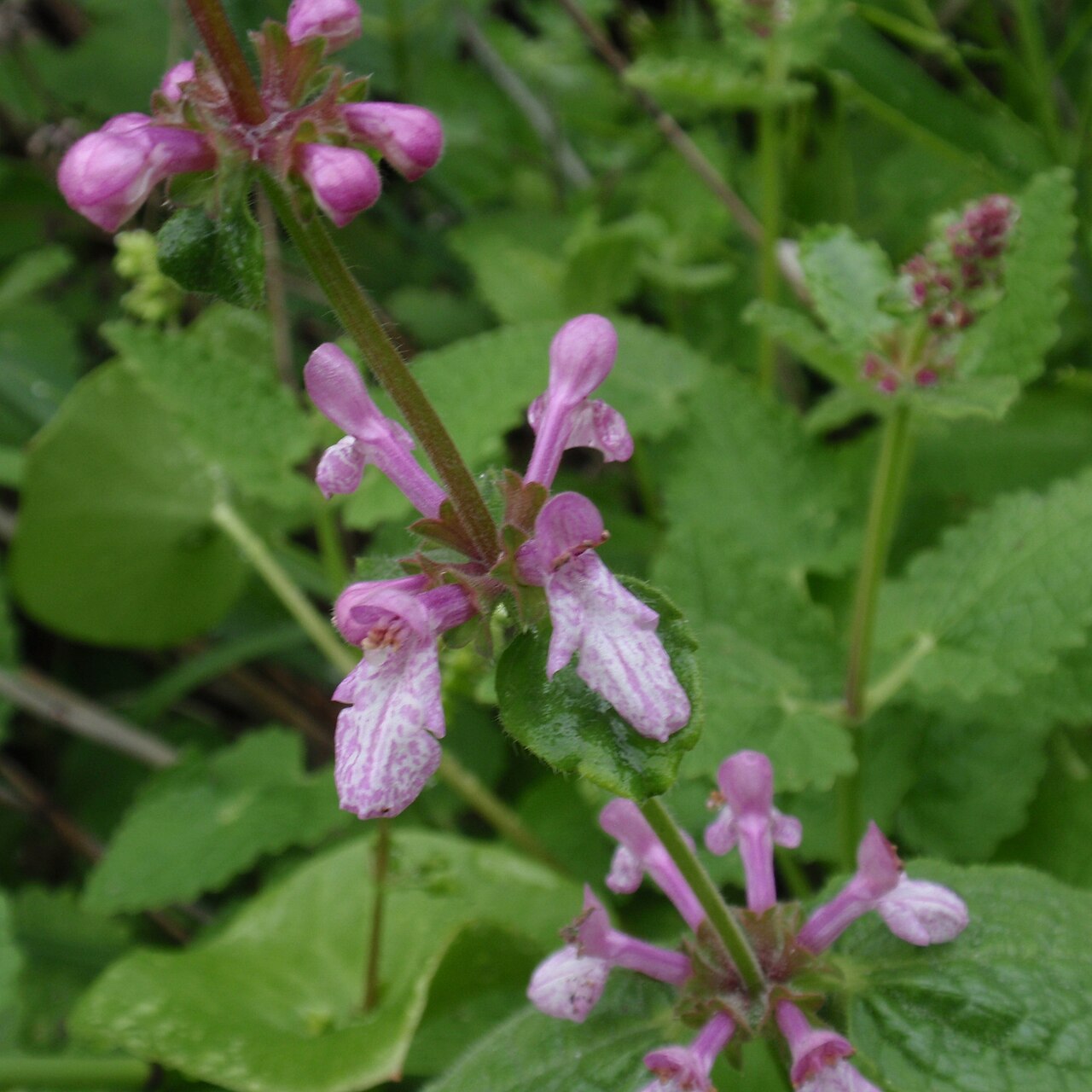
Stachys bullata, known as California Hedge Nettle (USDA: California hedgenettle), is a perennial herb in the mint family (Lamiaceae) that grows only in California. It is a plant of the coast and the coastal mountains, from the San Francisco Bay Area south through the Central Coast and the Transverse Ranges to Southern California and the Channel Islands. Its square stems, opposite pairs of wrinkled, scalloped leaves and spikes of pink to purple, two-lipped flowers make it easy to recognize as a member of the mint family.
The species name bullata means “blistered” or “puckered,” describing the leaf surface, which is deeply creased between the veins. The whole plant is covered in soft and rough hairs, some of them glandular, and the leaves give off a strong, musky scent when brushed. Despite the common name it is not a true nettle and does not sting.
California hedge nettle is an easy, adaptable native for shady or partly shady gardens, and it blooms over a long season, mainly from March to September. Its flowers feed native bees and hummingbirds, and it spreads by rhizomes into a loose groundcover under oaks and shrubs. It is widely sold by California native plant nurseries.
Identification
Look for an upright, hairy mint with square stems, paired, puckered and scalloped leaves, and tiers of pink, two-lipped flowers along the top of the stem.
Growth Habit
A herbaceous perennial with erect or leaning stems about 16 to 32 inches (40 to 80 cm) tall, sometimes taller in moist shade. It spreads by creeping rhizomes and can form loose patches. The stems are four-angled, as in most mints, and covered with stiff and soft hairs, some tipped with glands.
Leaves
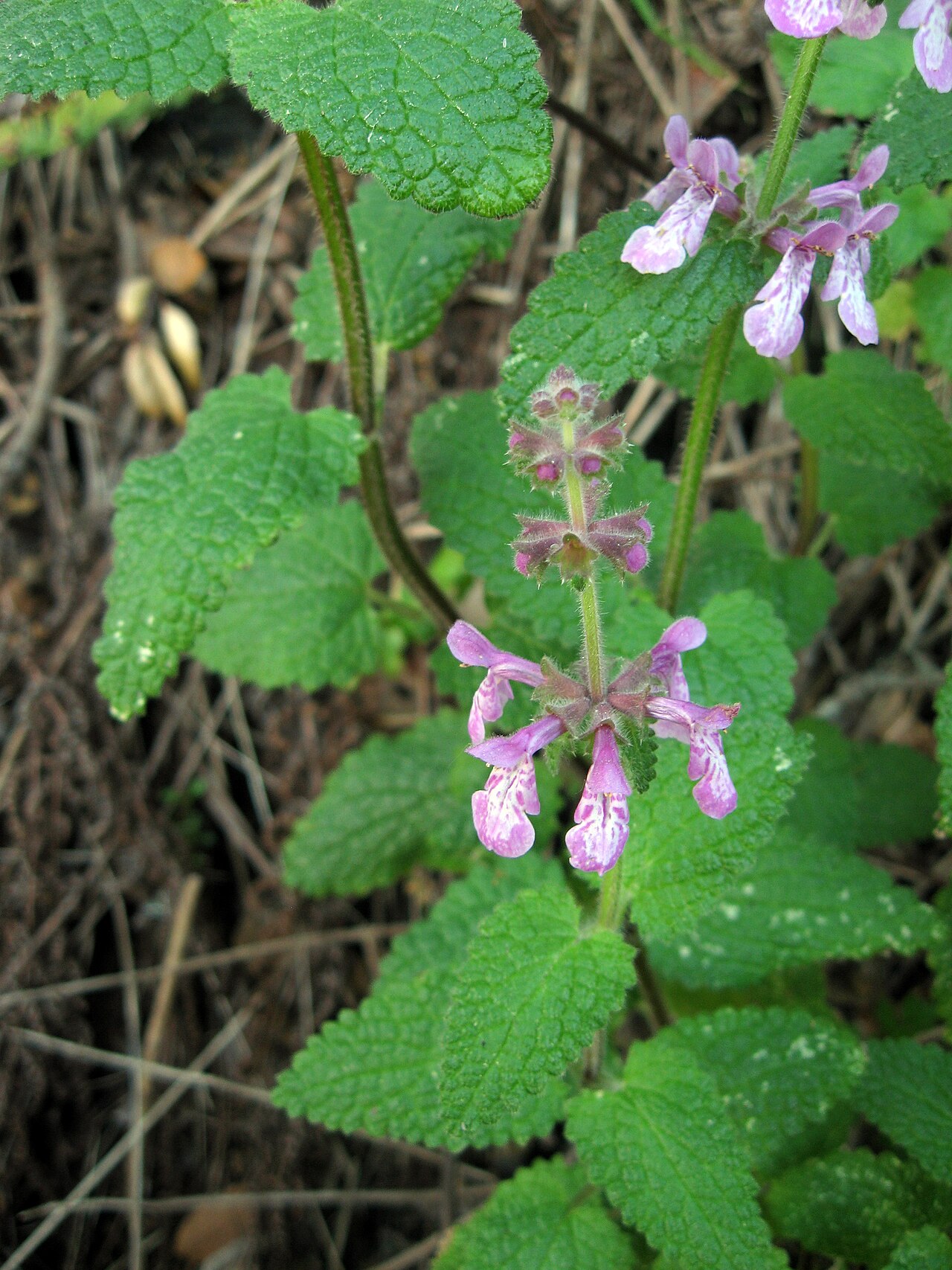
The leaves grow in opposite pairs and are oblong to egg-shaped, about 1 1/4 to 7 inches (3 to 18 cm) long, with a heart-shaped or rounded base and evenly scalloped (crenate) edges. The upper surface is dark green and strongly wrinkled, or bullate, between the sunken veins; both surfaces are hairy and somewhat glandular. Crushed leaves have a strong, musky, not very pleasant smell.
Flowers
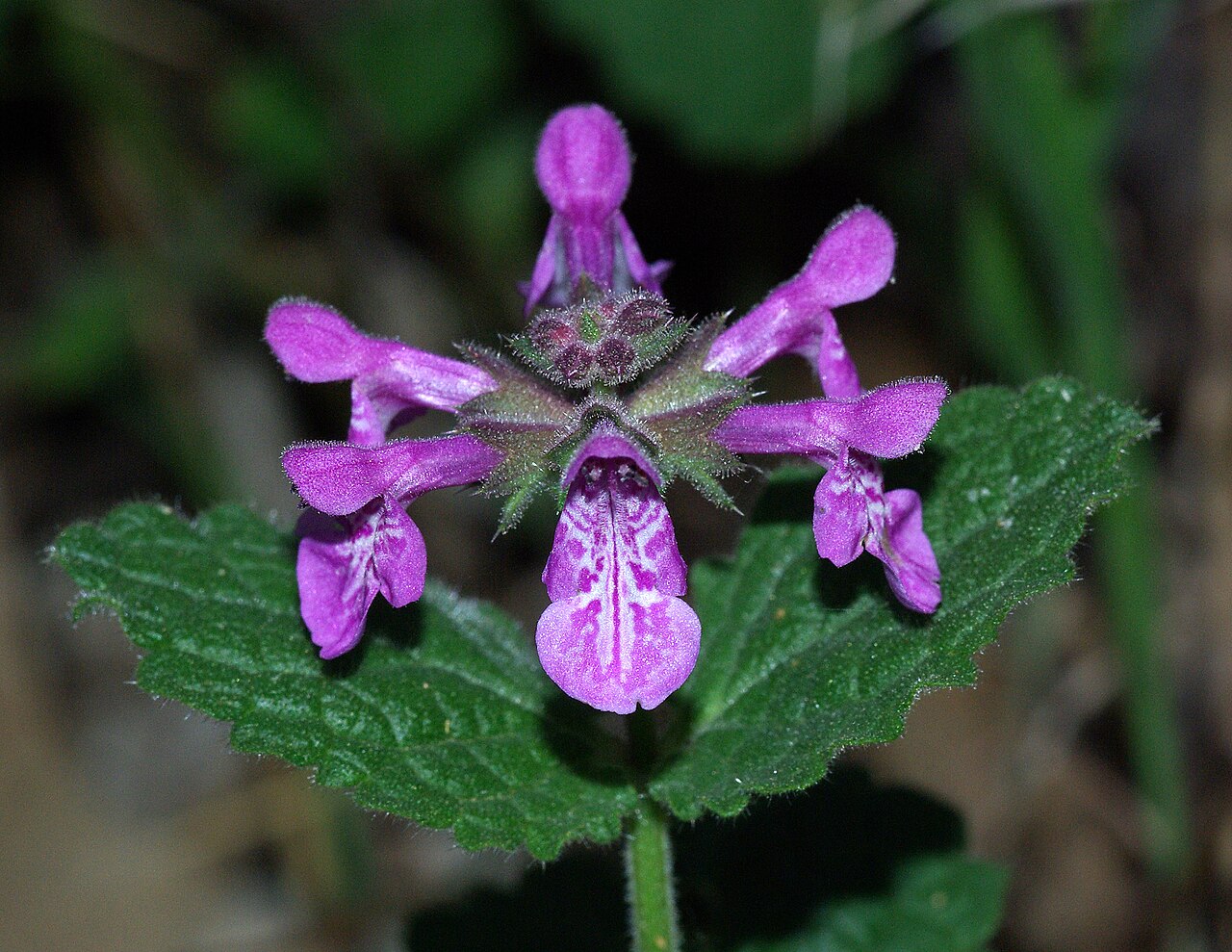
The flowers are held in whorls of about six, spaced out along the upper stem in an interrupted spike. Each flower has a tubular pink to rose-purple corolla up to about 1/2 inch long, with a small hooded upper lip and a larger, three-lobed lower lip marked with paler streaks and spots. The hairy calyx has five sharp teeth. Flowering runs mostly from March to September, with the peak in spring and early summer.
Fruit
Each flower produces four small, smooth nutlets that ripen inside the persistent calyx and drop close to the parent plant.
Look-alikes
Great hedgenettle (Stachys chamissonis) is taller, with larger, deeper pink to magenta flowers, and grows in wetter coastal sites farther north. Rigid hedgenettle (S. rigida) has narrower, less wrinkled leaves and smaller, paler flowers. Pink-flowered salvias and other mints lack the combination of puckered, scalloped leaves and interrupted spikes of small, hooded flowers.
Quick Facts
| Scientific Name | Stachys bullata |
| Family | Lamiaceae (mint family) |
| Plant Type | Rhizomatous herbaceous perennial |
| Mature Height | 1–3 ft |
| Mature Spread | 2–3 ft, spreading by rhizomes |
| Growth Rate | Moderate to fast |
| Sun Exposure | Part shade to full sun near the coast |
| Water Needs | Low to medium; summer-dry tolerant in shade |
| Soil Type | Sandy, loamy or clay soils |
| Soil pH | Slightly acidic to slightly alkaline (about 6.0–8.0) |
| Bloom Time | March–September |
| Flower Color | Pink to rose-purple |
| Fall Color | None; stems die back or stay green in mild areas |
| Fruit | Four small nutlets in the calyx |
| Deer Resistant | Usually; the hairy, aromatic leaves are seldom browsed |
| USDA Hardiness Zones | 8–10 |
Native Range
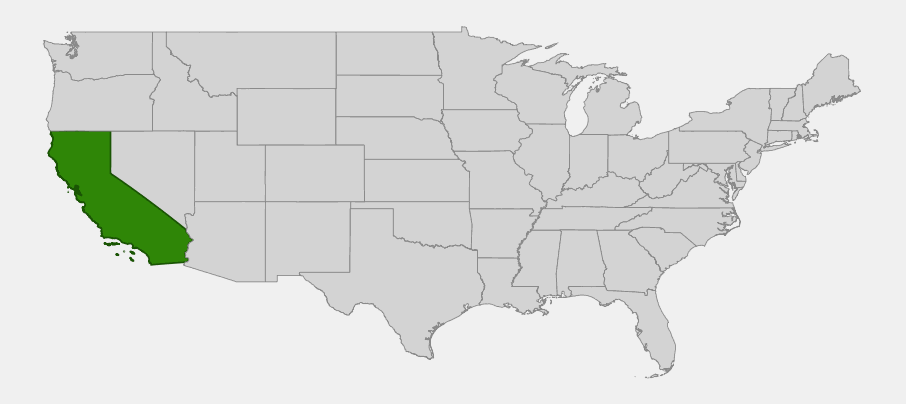
California hedge nettle is endemic to California, and USDA PLANTS lists it as native only in that state. It grows in the outer and inner Coast Ranges from the San Francisco Bay Area south through the Santa Cruz Mountains, the Monterey and San Luis Obispo coast, the Santa Lucia Range and the Transverse Ranges into Southern California, and on the Channel Islands.
It is mostly a plant of low elevations, usually below about 1,600 feet (500 meters), within the reach of coastal fog. It is common on shaded north-facing slopes, in canyons and along the edges of coastal scrub and chaparral, where it benefits from the extra moisture.
Typical habitats include coastal scrub, chaparral openings, oak woodland, moist coastal bluffs and canyon bottoms. It often grows in partial shade under shrubs and trees, and it comes back quickly after disturbance or fire from its spreading rhizomes.
📋 Regional plant lists featuring California Hedge Nettle: California & Nevada
Growing & Care Guide
California hedge nettle is one of the easiest native perennials for coastal and Bay Area gardens. It takes shade, tolerates summer drought once established in cooler areas, and spreads gently into a loose groundcover.
Light
Part shade is ideal, especially inland. Near the coast it takes full sun. In hot inland gardens give it afternoon shade, or it will go dormant early in summer.
Soil & Water
It grows in sandy, loamy or clay soils, as long as they are not waterlogged for long periods. In shade and near the coast it needs little summer water once established; occasional deep watering keeps it greener and blooming longer. In full sun inland, water every week or two in summer.
Planting Tips
Plant from containers in fall or winter so the roots establish with the rains. Space plants about 2 feet apart for a groundcover. It works well under oaks and along shady paths, but its rhizomes can spread into neighboring plants in rich, watered soil, so give it room or edge it.
Pruning & Maintenance
Cut stems back after flowering or in late fall to tidy the plant and encourage fresh growth. Pull wandering shoots where they are not wanted. It has few pest problems.
Propagation
Divide clumps or replant rooted rhizome sections in fall or winter. It also grows from seed sown in fall or from stem cuttings, which root easily.
Landscape Uses
- Shade gardens: a long-blooming perennial under oaks and shrubs
- Pollinator gardens: nectar for bees and hummingbirds from spring to late summer
- Woodland groundcover: spreads by rhizomes to fill shady gaps
- Habitat restoration: coastal scrub, oak woodland and creek-side plantings
- Coastal gardens: thrives in foggy, mild coastal conditions
Wildlife & Ecological Value
California hedge nettle is a valuable nectar plant over a long season in coastal California.
For Pollinators
The tubular, two-lipped flowers are visited by native bees, including bumble bees and other long-tongued bees, which land on the broad lower lip. Hummingbirds also visit the flowers, and butterflies take nectar occasionally.
For Birds
Hummingbirds feed at the flowers. Its low cover gives shelter to ground-foraging birds such as towhees and sparrows in shrubland and woodland edges.
For Mammals
The hairy, strongly scented foliage is seldom browsed by deer. Patches of hedge nettle provide cover for small mammals.
Ecosystem Role
Its creeping rhizomes help bind soil on shady slopes and in canyons, and it resprouts after fire and disturbance. It is part of the herb layer of coastal scrub and oak woodland communities.
Cultural & Historical Uses
The genus name Stachys comes from the Greek for “ear of grain” or “spike,” describing the flower spikes. The species name bullata refers to the blistered, puckered leaf surface. The plant was named by the English botanist George Bentham in the 1830s.
California hedge nettle has a long history of use by California Indian peoples. The Ohlone and other groups used the leaves medicinally, for example as a poultice or wash for sores and wounds. This is cultural history, not a recommendation for home use.
The name “hedge nettle” was borrowed from European Stachys species that grow in hedgerows and have nettle-like leaves. Unlike true nettles (Urtica), hedge nettles have no stinging hairs.
Frequently Asked Questions
Does California hedge nettle sting?
No. It looks a little like a nettle, but it has no stinging hairs. The leaves are just hairy and have a strong smell.
Where does California hedge nettle grow?
Only in California, mostly in the coastal mountains from the San Francisco Bay Area to Southern California and on the Channel Islands, below about 1,600 feet.
Is California hedge nettle invasive in gardens?
It is native and not invasive, but it spreads by rhizomes and can fill an area in moist, rich soil. Give it room or remove extra shoots.
Does it attract hummingbirds?
Yes. Hummingbirds and native bees visit its pink, tubular flowers from spring into summer.
How much water does California hedge nettle need?
In shade or near the coast it needs little summer water once established. In hot, sunny inland gardens it needs regular summer watering to stay green.

Looking for a nursery that carries California Hedge Nettle?
Browse our native plant nursery directory: California

