
Santa Barbara Milkvetch (Astragalus trichopodus)
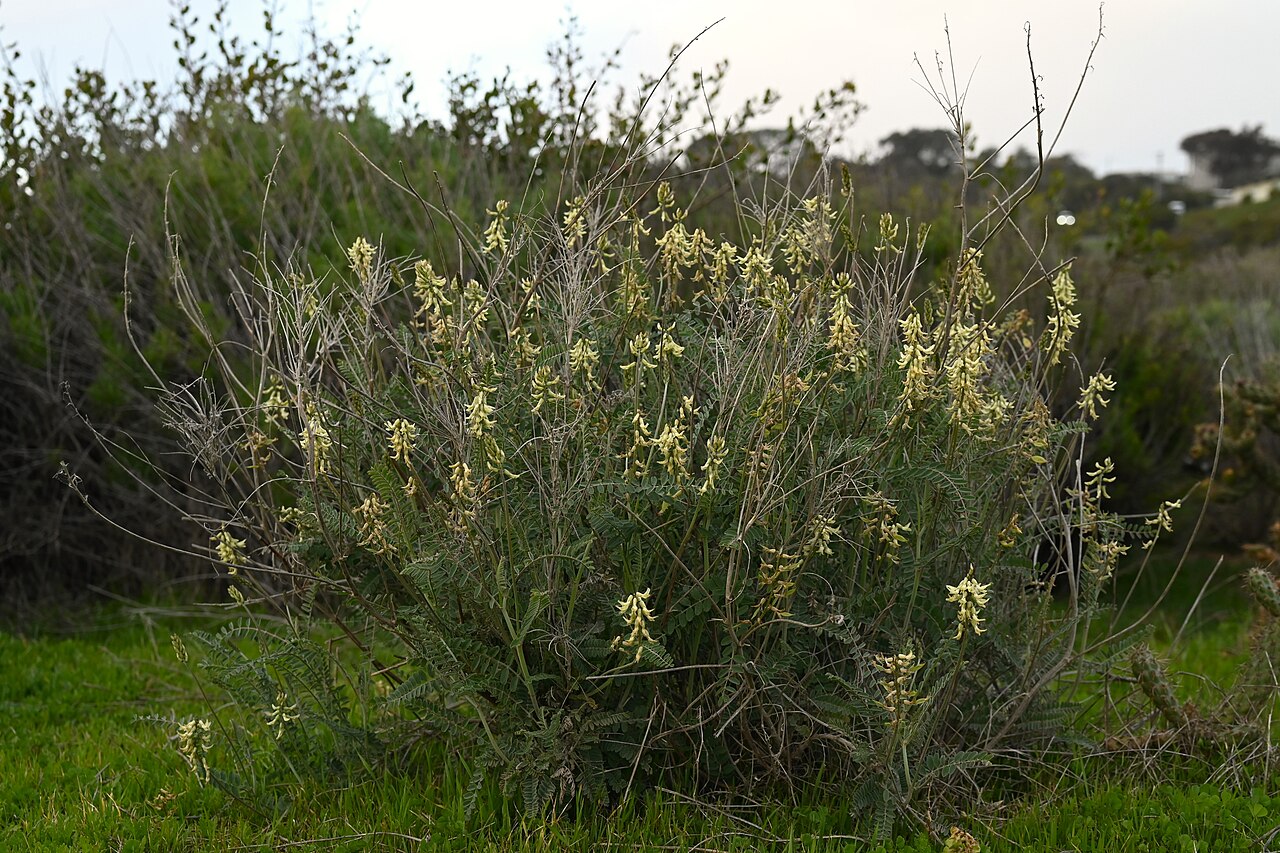
Astragalus trichopodus, the Santa Barbara Milkvetch, also called southern California locoweed, is a robust perennial legume of coastal sage scrub, grassland and open slopes in central and southern California and northern Baja California.
From a deep taproot it sends up many leafy, hairy stems to about 3 feet tall, with long, feather-like leaves and dense spikes of up to 50 cream-colored pea flowers from late winter into early summer. The flowers are followed by clusters of inflated, papery pods that rattle in the wind.
It is an important butterfly host plant: its leaves, flowers and seeds feed the caterpillars of several small blue butterflies, including the endangered Palos Verdes blue. In gardens it suits dry, sunny, wildlife-focused plantings and coastal habitat restoration.
Identification
Look on open, sunny slopes and bluffs near the coast for a bushy, gray-green legume with long, finely divided leaves, spikes of creamy pea flowers and, later, hanging bunches of puffy, papery pods.
Growth Habit
A perennial herb or subshrub with many branching stems from a woody crown and deep taproot, usually 1 to 3 feet tall and often as wide. The stems and leaves are covered with fine hairs, giving the plant a soft gray-green color. It grows actively in the winter and spring rainy season and may die back partly in late summer drought.
Leaves
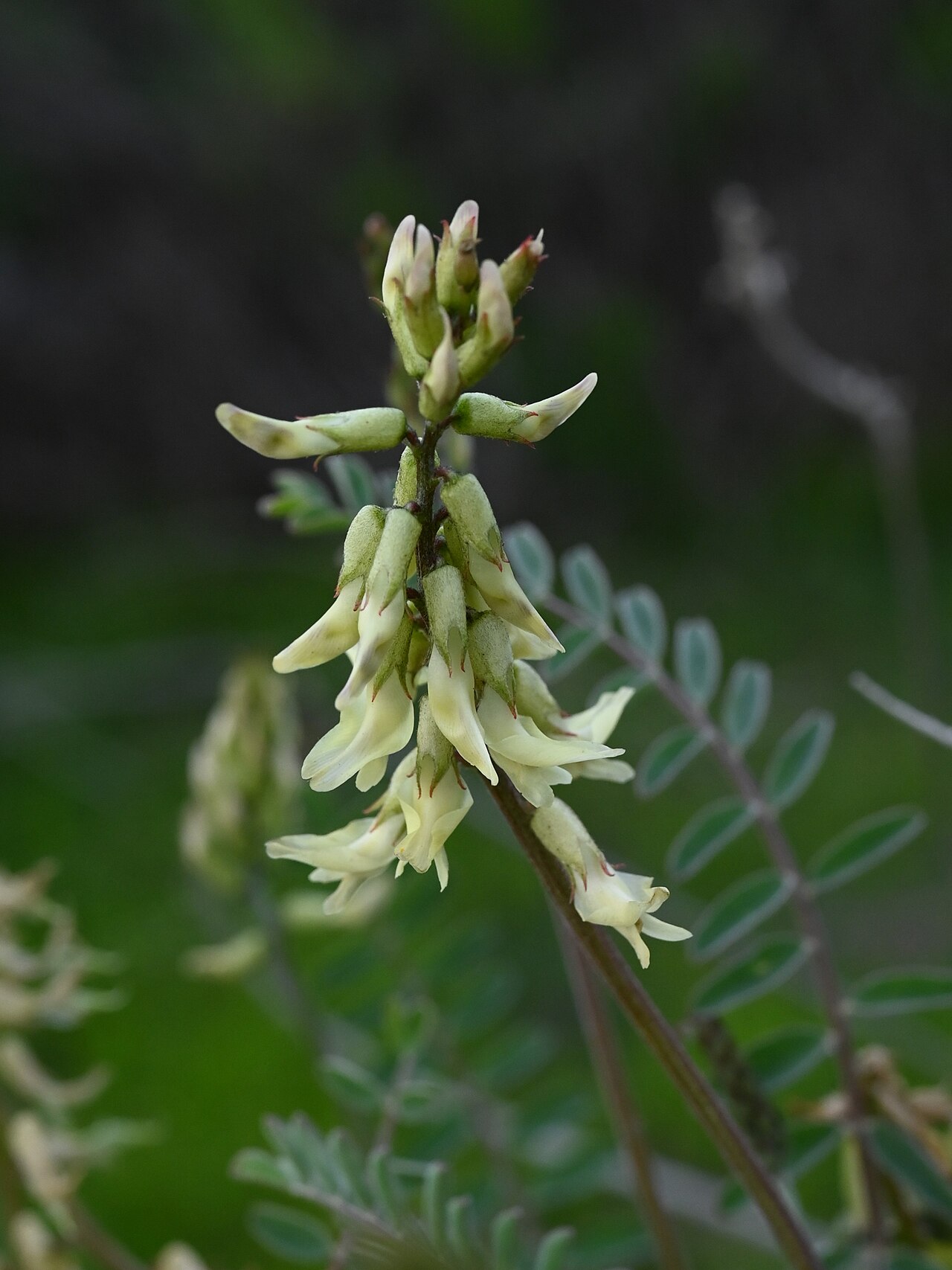
Leaves are alternate and pinnately compound, up to about 8 inches long, with many pairs of widely spaced, narrow, lance-shaped leaflets each up to about 1 inch long. The overall effect is airy and fern-like.
Flowers
Flowers grow in long-stalked, upright racemes of up to about 50. Each is a pea flower about 3/4 to 1 1/4 inches long including its tubular calyx, cream to pale yellowish white, sometimes tinged with lavender, and usually angled downward. Bloom runs mainly from February to June.
Fruit
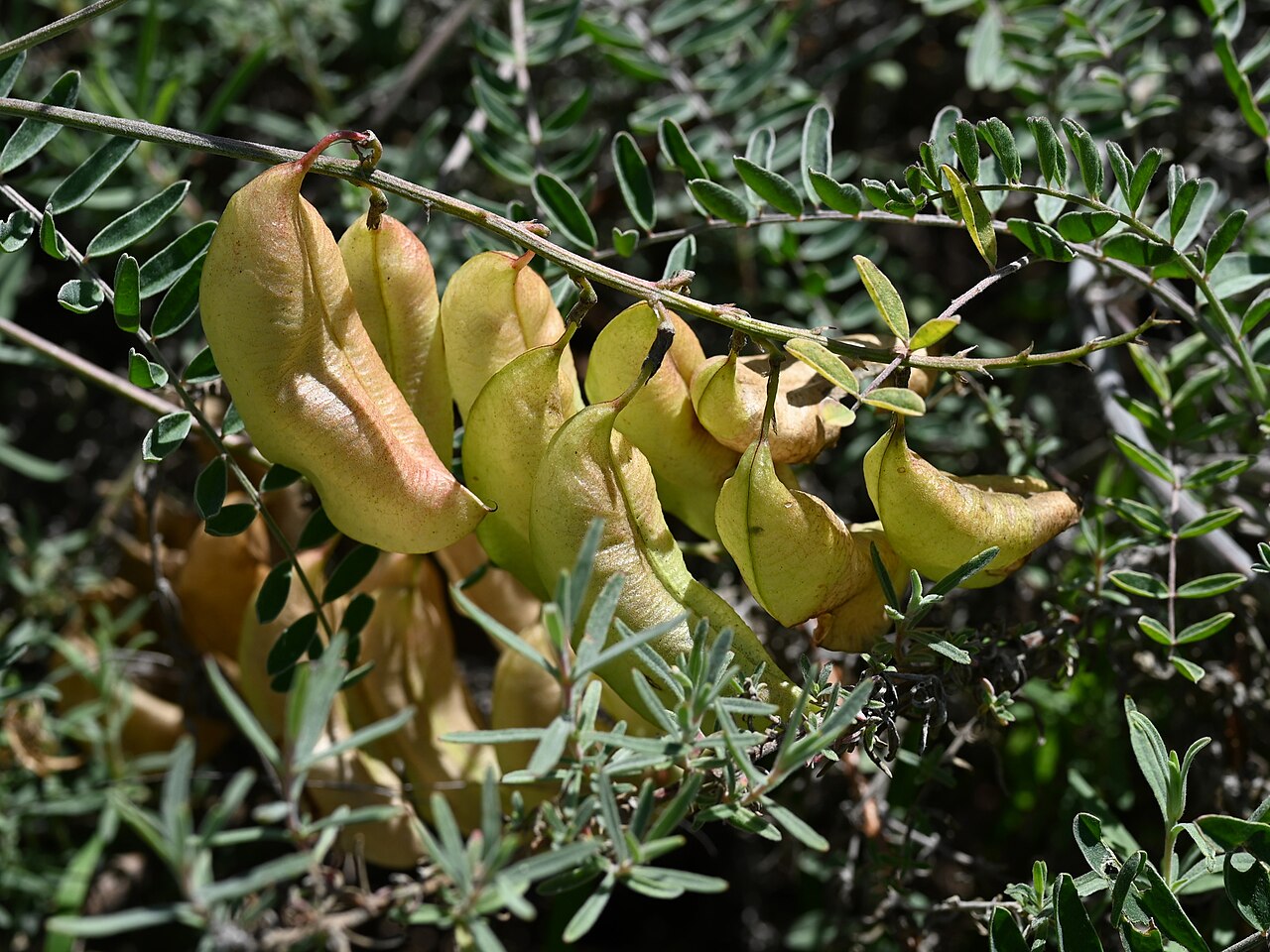
The pod is a flattened, somewhat inflated legume about 1 1/2 to 2 inches long that dries to a thin, papery, tan shell. Pods hang in bunches from the old flower stalks and hold many seeds. They are one of the easiest ways to recognize the plant in summer.
Varieties and look-alikes
Botanists recognize up to three varieties, including var. lonchus (often called southern California locoweed or ocean locoweed) and var. antisellii, which differ mainly in pod shape and range. Other milkvetches, such as freckled milkvetch, are usually smaller and have mottled or differently shaped pods. Native lupines have palmately (fan-like) divided leaves rather than feather-like ones.
Quick Facts
| Scientific Name | Astragalus trichopodus |
| Family | Fabaceae (pea family) |
| Plant Type | Perennial herb to subshrub |
| Mature Height | 1–3 ft |
| Mature Spread | 1–3 ft |
| Growth Rate | Moderate |
| Sun Exposure | Full sun |
| Water Needs | Low; dry summers once established |
| Soil Type | Well-drained sandy, loamy or clay soils |
| Soil pH | Slightly acidic to alkaline (about 6.0–8.0) |
| Bloom Time | Late winter to early summer (February–June) |
| Flower Color | Cream to pale yellowish white |
| Fall Color | None notable |
| Fruit | Inflated, papery pod |
| Deer Resistant | Moderately; may be toxic to grazing animals |
| USDA Hardiness Zones | 8–10 |
Native Range
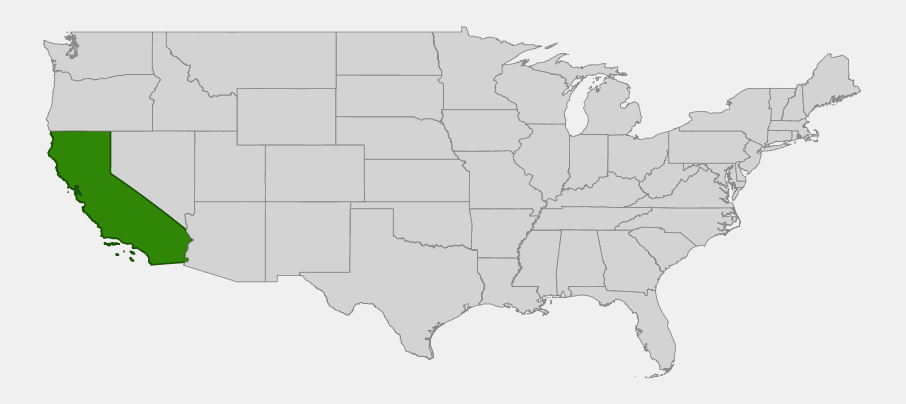
Santa Barbara milkvetch is native to central and southern California and northern Baja California, Mexico. USDA PLANTS records it only in California within the United States.
It ranges from the central coast around Santa Barbara and San Luis Obispo counties south through the coastal plains, foothills and valleys of Ventura, Los Angeles, Orange, Riverside and San Diego counties, and onto some of the Channel Islands. It also reaches inland to the edges of the western Mojave Desert and into the Transverse Ranges.
It grows in coastal sage scrub, coastal bluff scrub, grassland, open chaparral and oak woodland edges, often on sunny slopes and in disturbed openings, from near sea level into the foothills. Much of its coastal habitat has been lost to development, so healthy stands are increasingly found in parks and preserves.
📋 Regional plant lists featuring Santa Barbara Milkvetch: California & Nevada
Growing & Care Guide
Santa Barbara milkvetch is grown mostly by native plant enthusiasts, butterfly gardeners and restoration projects. It is easy in a sunny, dry spot once its deep taproot is established, but it dislikes summer water and root disturbance.
Light
Full sun. In shade it grows lanky and flowers poorly.
Soil & Water
It tolerates sandy, loamy and clay soils as long as they do not stay soggy. Water young plants through their first spring, then let it go dry in summer, as it would in the wild. Regular summer irrigation shortens its life. As a legume it hosts nitrogen-fixing bacteria on its roots and needs no fertilizer.
Planting Tips
Plant small container plants or sow seed in late fall or winter, when rains begin. Its deep taproot makes older plants hard to move, so choose a permanent spot. It mixes well with California sagebrush, buckwheats, sages and native bunchgrasses in a coastal sage scrub planting.
Pruning & Maintenance
Little care is needed. Leave pods on the plant until they release seed, then cut old stems back in late summer or fall if you want a tidier look. Plants are often short-lived, a few years to several years, but reseed in open ground.
Propagation
Grow from seed. The hard seed coat needs scarification (nicking or rubbing with sandpaper) or a brief soak in hot water before sowing. Sow in deep pots or directly in place to protect the taproot. Collect seed only where permitted.
Landscape Uses
- Butterfly gardens: larval host for several small blue butterflies
- Coastal sage scrub gardens: fits dry, sunny native plantings
- Habitat restoration: used in coastal bluff and Palos Verdes blue restoration
- Pollinator gardens: spring nectar for native bees
- Slopes and banks: deep roots in dry, sunny ground
Wildlife & Ecological Value
Santa Barbara milkvetch is far more important to wildlife than its modest flowers suggest, especially for butterflies.
For Pollinators
Bumble bees, other native bees and honey bees visit the flowers for nectar and pollen. Its caterpillar food value is even greater: it is a host plant for Reakirt’s blue, marine blue, arrowhead blue and Queen Alexandra’s sulphur, and var. lonchus is a main host of the endangered Palos Verdes blue butterfly, whose caterpillars feed on its flowers and young seeds.
For Birds
Seed-eating birds pick at fallen seeds, and the caterpillars and other insects on the plant feed insect-eating birds such as wrens and gnatcatchers in coastal sage scrub.
For Mammals
Small mammals eat some seeds and use the dense stems for cover. Like many milkvetches it is considered potentially toxic to livestock, and grazing animals usually avoid it.
Ecosystem Role
As a legume, it adds nitrogen to poor coastal soils through root bacteria, helping other scrub plants. Its role as a butterfly host makes it a key plant in coastal sage scrub restoration, especially on the Palos Verdes Peninsula.
Cultural & Historical Uses
The species name trichopodus means “hairy-footed” or “hair-stalked,” referring to the fine hairs on the plant. The genus name Astragalus is an ancient Greek plant name, and the genus is one of the largest in the world, with thousands of species.
The Palos Verdes blue butterfly was thought to be extinct in the 1980s until a small population was rediscovered in 1994. Planting and protecting its host plants, especially this milkvetch and deerweed, has been central to the recovery effort.
Safety note: Many Astragalus species contain compounds that are toxic to livestock, which is where the name locoweed comes from. Do not eat any part of this plant, and keep grazing animals away from large stands.
Frequently Asked Questions
Is Santa Barbara milkvetch a good butterfly plant?
Yes. It is a caterpillar host for several small blue butterflies and Queen Alexandra’s sulphur, and one variety is a key host of the endangered Palos Verdes blue.
When does Santa Barbara milkvetch bloom?
Mainly from February to June, with spikes of creamy pea flowers followed by puffy, papery pods.
Is Santa Barbara milkvetch poisonous?
Like many milkvetches and locoweeds, it is considered potentially toxic to livestock. It should not be eaten by people or pets.
Does Santa Barbara milkvetch need summer water?
No. Once established it prefers dry summers, and regular summer water can shorten its life.
How do I grow Santa Barbara milkvetch from seed?
Scarify the hard seeds or soak them briefly in hot water, then sow in fall or winter in deep pots or directly where the plants will grow.

Looking for a nursery that carries Santa Barbara Milkvetch?
Browse our native plant nursery directory: California

