
Plummer’s Mariposa Lily (Calochortus plummerae)
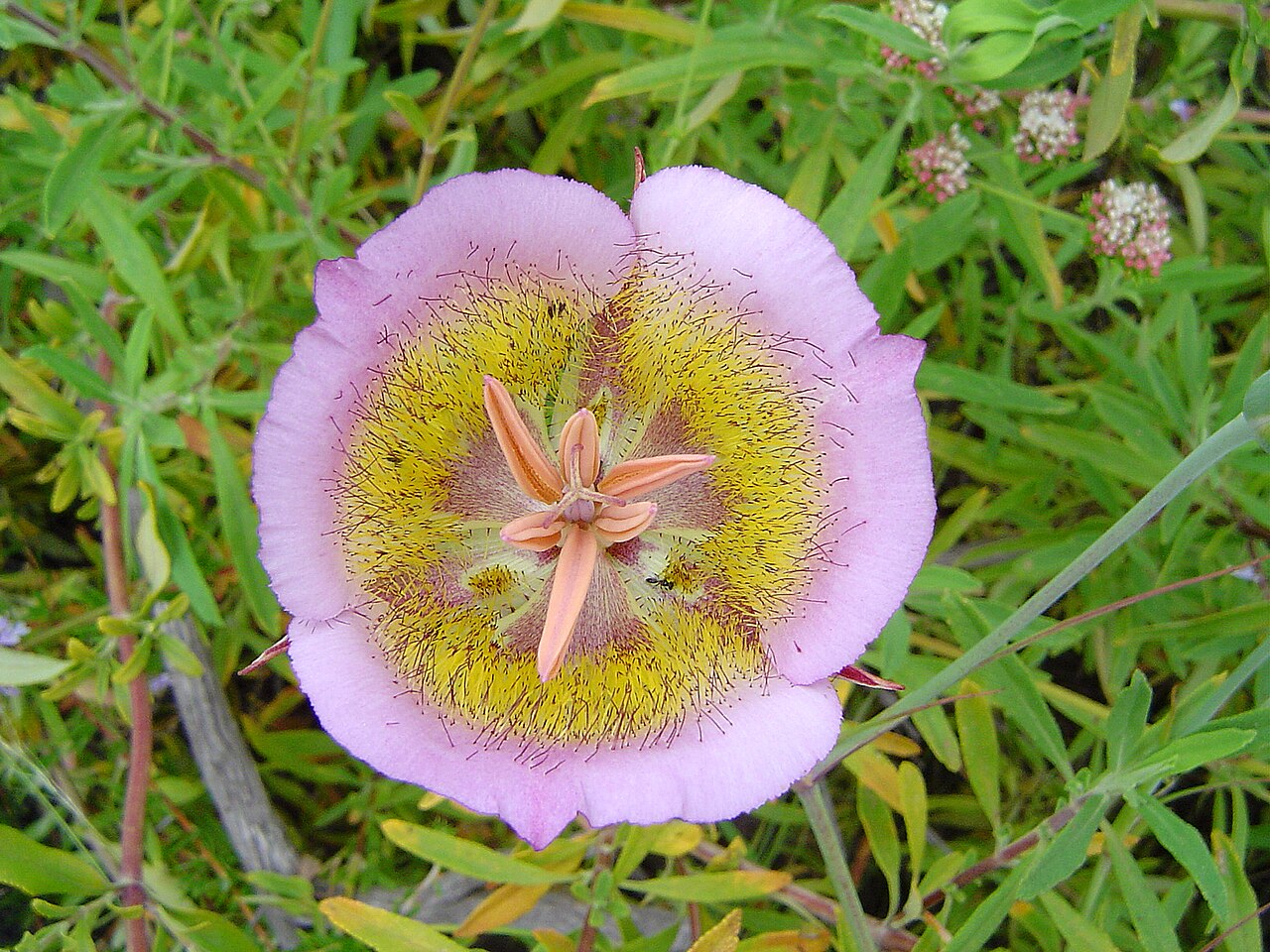
Calochortus plummerae, Plummer’s Mariposa Lily, is a showy bulb lily found only in southern California. It grows on dry, grassy and brushy slopes in the coastal hills and the Transverse and Peninsular Ranges, from the Santa Monica Mountains to the San Gabriel, San Bernardino and Santa Ana Mountains.
In late spring and early summer, after most wildflowers have finished, slender stems up to about 2 feet tall carry one to several cup-shaped flowers about 2 to 3 inches across. The petals are pink to lavender or nearly white, with a broad band of dense, bright yellow hairs across the middle that makes each flower look fuzzy and glowing.
It is one of the most striking wildflowers of southern California chaparral, especially after fire. Because its range is limited and much of its habitat has been developed, it is on the California Native Plant Society’s watch list of plants of limited distribution. Enjoy it in the wild and never dig the bulbs.
Identification
Look on dry, open slopes in chaparral, coastal sage scrub and grassland in late spring and summer for a thin, grass-like stem topped by large pink cup-shaped flowers with a wide, fuzzy yellow band inside.
Growth Habit
A perennial from a small underground bulb. A single, slender, often branched stem 1 to 2 feet tall rises in spring. By the time it flowers, the leaves are usually withered, and after seeding the whole plant dies back to the bulb for the dry season.
Leaves
A single long, narrow, grass-like basal leaf up to about 16 inches, plus a few smaller leaves on the stem. The leaves often curl and dry before or during bloom, so the plant can be easy to miss until it flowers.
Flowers
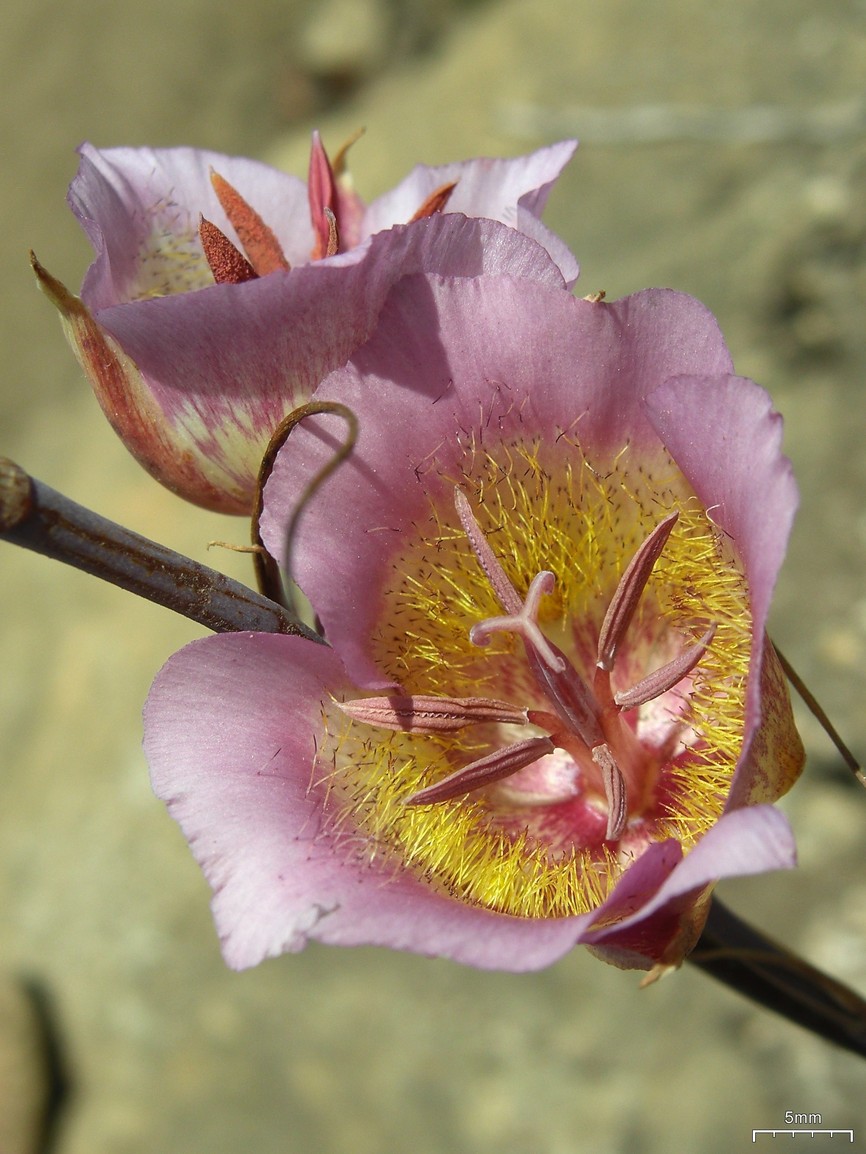
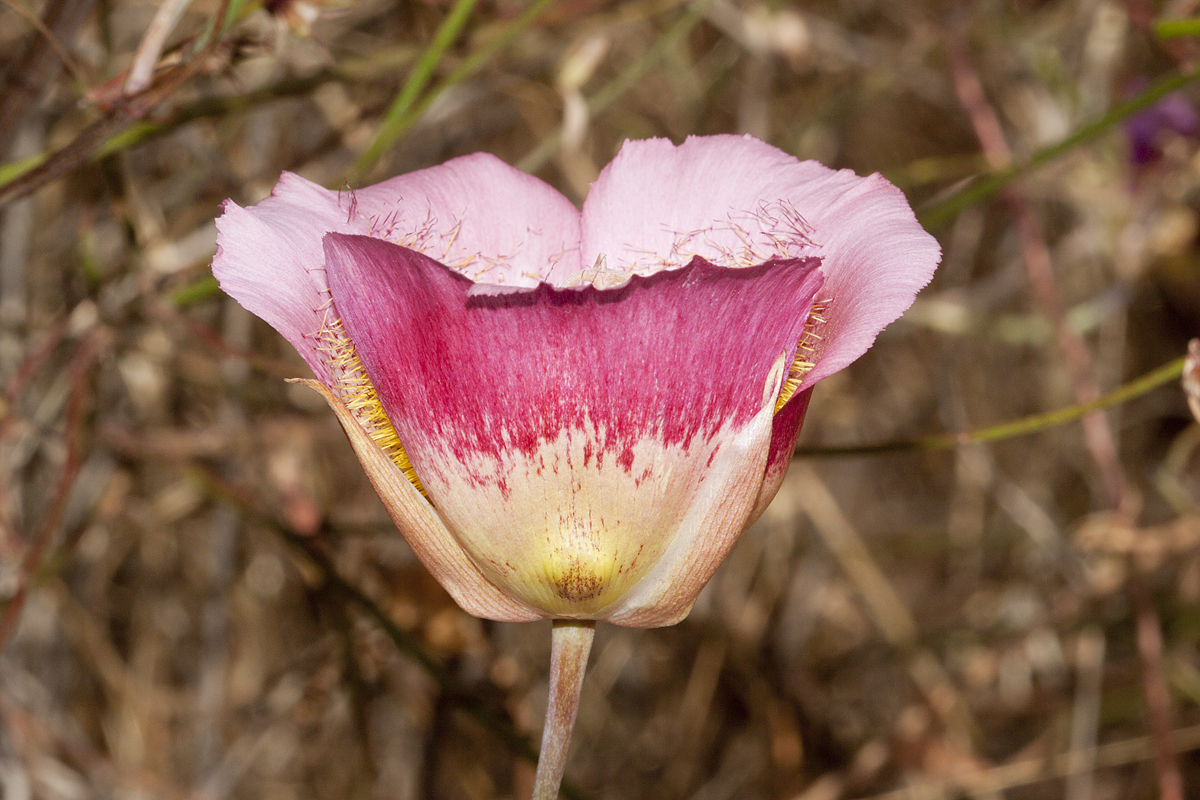
Flowers are upright and open bowl- or cup-shaped, with three broad petals and three narrower, pointed sepals. Petals are about 1 to 1 1/2 inches long, pink, rose-lavender or white, and lined inside with a wide band of long, dense yellow hairs. The anthers are often pink to purplish. Bloom runs mainly from May to July.
Fruit
An upright, narrow, three-angled capsule about 2 to 3 inches long that dries and splits to release flat, pale seeds.
Look-alikes
Splendid mariposa lily (Calochortus splendens) has lavender flowers with fewer, shorter hairs and lacks the broad yellow band. Catalina mariposa lily (C. catalinae) blooms earlier, in late winter and spring, and has a dark spot at the base of each petal. Other relatives on this site include superb mariposa lily and butterfly mariposa lily, which grow farther north and have dark blotches rather than a fuzzy yellow band.
Quick Facts
| Scientific Name | Calochortus plummerae |
| Family | Liliaceae (lily family) |
| Plant Type | Perennial bulb |
| Mature Height | 1–2 ft |
| Mature Spread | 3–6 in |
| Growth Rate | Slow |
| Sun Exposure | Full sun to light shade |
| Water Needs | Low; completely dry in summer dormancy |
| Soil Type | Rocky, sandy or gravelly, well-drained soil |
| Soil pH | Slightly acidic to neutral (about 6.0–7.5) |
| Bloom Time | Late spring to summer (May–July) |
| Flower Color | Pink, lavender or white with a yellow hairy band |
| Fall Color | None; dormant |
| Fruit | Narrow three-angled capsule |
| Deer Resistant | No; deer and rodents eat the plants and bulbs |
| USDA Hardiness Zones | 8–10 |
Native Range
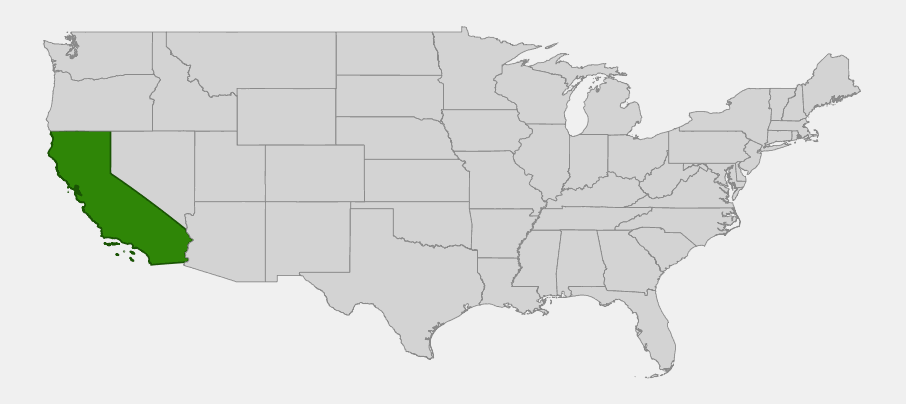
Plummer’s mariposa lily is endemic to southern California. USDA PLANTS records it in California only.
It grows in Ventura, Los Angeles, San Bernardino, Riverside and Orange counties, from the Santa Monica Mountains and Simi Hills east through the San Gabriel and San Bernardino Mountains and south into the Santa Ana Mountains and nearby inland hills.
It grows on dry, open, often rocky or granitic slopes in chaparral, coastal sage scrub, valley grassland, oak woodland and lower montane forest, from low foothills up to roughly 5,500 feet in the San Gabriel Mountains. It flowers in great numbers in the first years after a wildfire opens the brush.
📋 Regional plant lists featuring Plummer’s Mariposa Lily: California & Nevada
Growing & Care Guide
Plummer’s mariposa lily is rarely sold and is a challenge in gardens. It is best enjoyed in the wild. Specialist bulb growers sometimes raise it from seed in containers, where they can control the strict summer drought it needs. Never dig bulbs from the wild.
Light
Full sun to light shade, as on open chaparral slopes.
Soil & Water
It needs very fast-draining, gritty soil. Water only during the cool season, from fall rains through spring bloom, and keep the bulbs completely dry from late summer until fall. Summer water usually rots the bulbs.
Planting Tips
Grow it in deep pots or raised beds of gritty mix, or in a dry, unirrigated part of a native garden. Protect bulbs from gophers with wire baskets. Plants grown from seed take several years to flower.
Pruning & Maintenance
Let the leaves and stems wither naturally so the bulb can store energy. Leave the dry pots or beds alone during summer dormancy.
Propagation
Sow seed in fall in deep pots of gritty mix and leave outdoors for winter rains. Seedlings form small bulbs that are kept dry in summer and grown on for several years. Use only nursery or legally collected seed, never wild-dug bulbs.
Landscape Uses
- Wildflower viewing: a highlight of early summer hikes in southern California mountains
- Post-fire landscapes: blooms in great numbers after fire
- Specialist bulb collections: grown in containers by experienced growers
- Native pollinator support: bees visit the large open flowers
- Habitat conservation: a sign of healthy, undeveloped chaparral and grassland
Wildlife & Ecological Value
Plummer’s mariposa lily is part of the rich spring and summer bloom of southern California’s chaparral and grasslands.
For Pollinators
The open, bowl-shaped flowers are visited by native bees, including bumble bees and small solitary bees, and by beetles that crawl among the hairs for pollen.
For Birds
It has little direct value for birds, though the insects it attracts feed insect-eating birds.
For Mammals
Gophers and other rodents eat the bulbs, and deer browse the stems and flowers. Mariposa lily bulbs were also traditionally eaten by native peoples in California.
Ecosystem Role
Like many bulbs in fire-adapted chaparral, it survives fire underground and flowers abundantly in the open, sunny years after a burn, adding to the post-fire wildflower displays of southern California.
Cultural & Historical Uses
The species honors Sara Plummer Lemmon (1836–1923), a botanist and illustrator who collected plants in California and Arizona with her husband John Gill Lemmon. Edward Lee Greene described the species in 1890.
The genus name Calochortus comes from Greek words meaning “beautiful grass,” for the grass-like leaves. “Mariposa” is Spanish for butterfly, after the colorful, butterfly-like flowers of many species.
The bulbs of many mariposa lilies, including those of southern California, were dug and eaten by Native Californian peoples. Today the plant is protected in many parks and preserves, and it is considered a species of limited distribution in California.
Frequently Asked Questions
Where can I see Plummer’s mariposa lily?
Look on dry, open slopes in the Santa Monica, San Gabriel, San Bernardino and Santa Ana Mountains from May to July, especially in areas that burned in the past few years.
Is Plummer’s mariposa lily rare?
It is endemic to southern California and is on the California Native Plant Society’s watch list of plants of limited distribution, but it can be locally common in good habitat.
How do I recognize Plummer’s mariposa lily?
Look for pink to lavender cup-shaped flowers with a wide band of dense, fuzzy yellow hairs across the middle of the petals.
Can I grow Plummer’s mariposa lily in my garden?
Only with care. It needs gritty, fast-draining soil and complete summer dryness. Grow it from nursery seed in pots, and never dig wild bulbs.
When does it bloom?
Mainly from May to July, later than most southern California wildflowers.

Looking for a nursery that carries Plummer’s Mariposa Lily?
Browse our native plant nursery directory: California

