
Mount Diablo Fairy Lantern (Calochortus pulchellus)
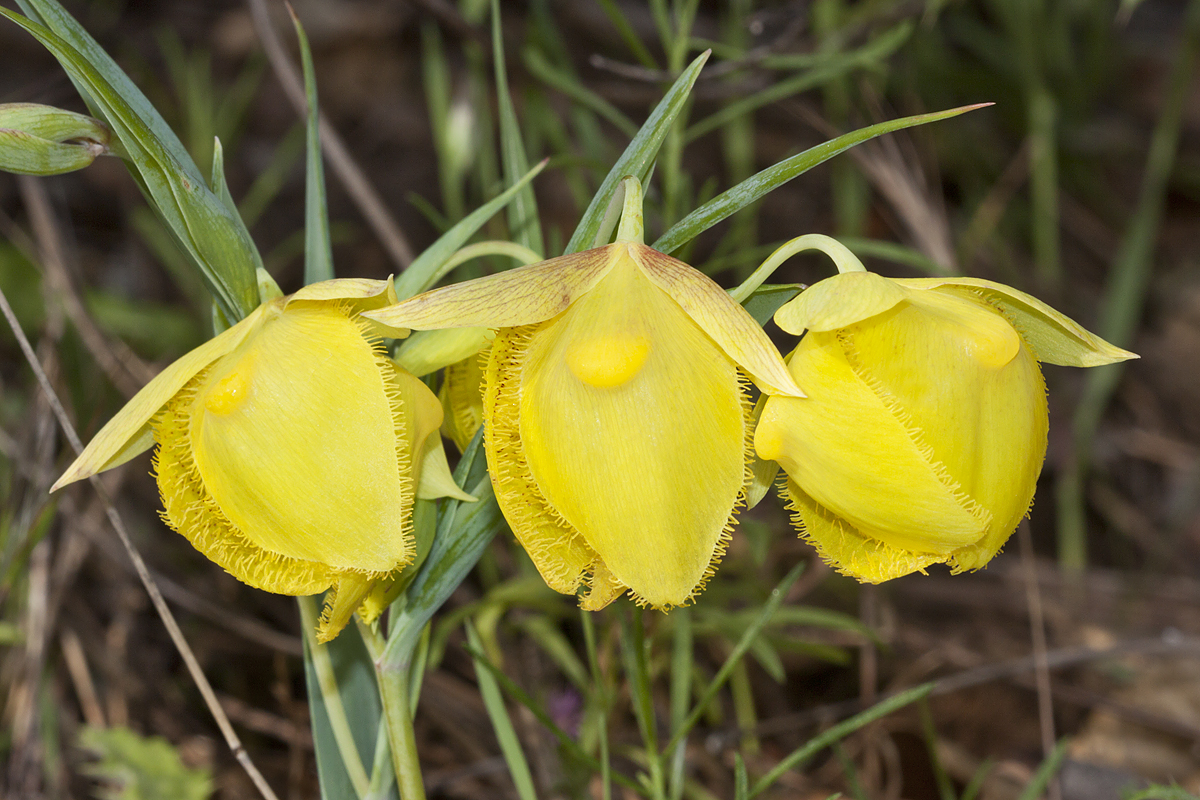
Calochortus pulchellus, known as Mount Diablo Fairy Lantern and also as Mount Diablo globe lily, is a rare wildflower found only in California. Today it is known almost entirely from the slopes of Mount Diablo in Contra Costa County, in the eastern San Francisco Bay Area. It belongs to the lily family (Liliaceae) and grows from a small, deep bulb.
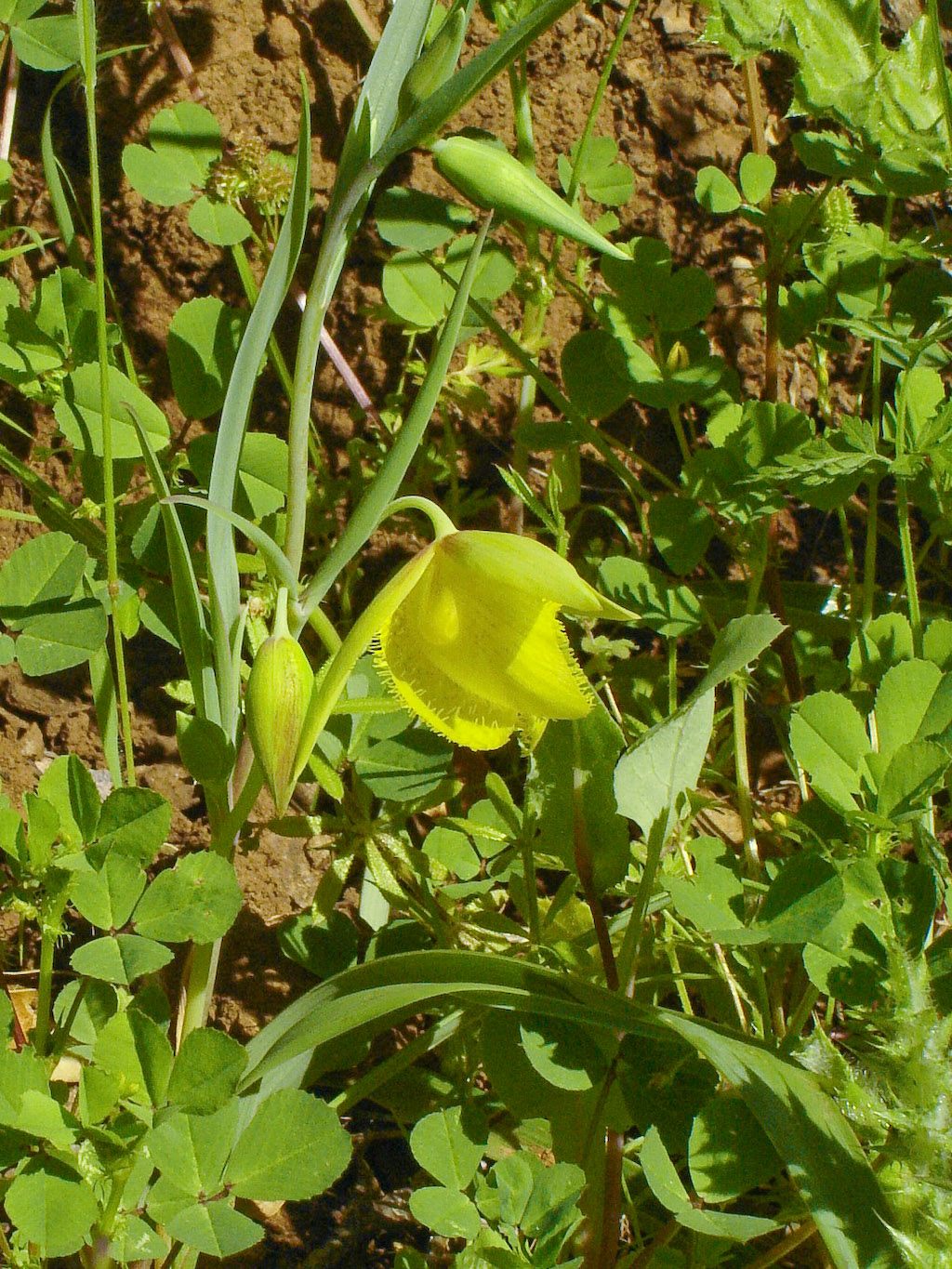
In late spring it bears nodding, globe-shaped, bright yellow flowers that hang like little lanterns from a slender, branched stem about 6 to 12 inches tall. The three petals curve inward until their tips nearly touch, and their edges are fringed with fine yellow hairs. A single long, narrow leaf grows from the base and stays green while the plant flowers.
Mount Diablo fairy lantern is rare: NatureServe ranks it globally imperiled (G2), and it is on the California Native Plant Society’s Inventory of Rare Plants (California Rare Plant Rank 1B.2). Never dig bulbs from the wild, and do not pick the flowers. Gardeners who want to grow it should buy seed or bulbs only from nurseries that propagate them.
Identification
Look for nodding, round, yellow flowers with hairy, fringed petal edges hanging from a thin stem in chaparral or open woodland on Mount Diablo in April to June.
Growth Habit
A slender perennial from a small, deep bulb, with a branched stem usually 6 to 12 inches tall (rarely more). Plants appear in winter, flower in spring and die back to the bulb by early summer, staying dormant through the dry season.
Leaves
One long, narrow, grass-like basal leaf up to about 16 inches long, which remains green at flowering, plus two or three much smaller leaves on the stem. The leaves are smooth and bluish green.
Flowers
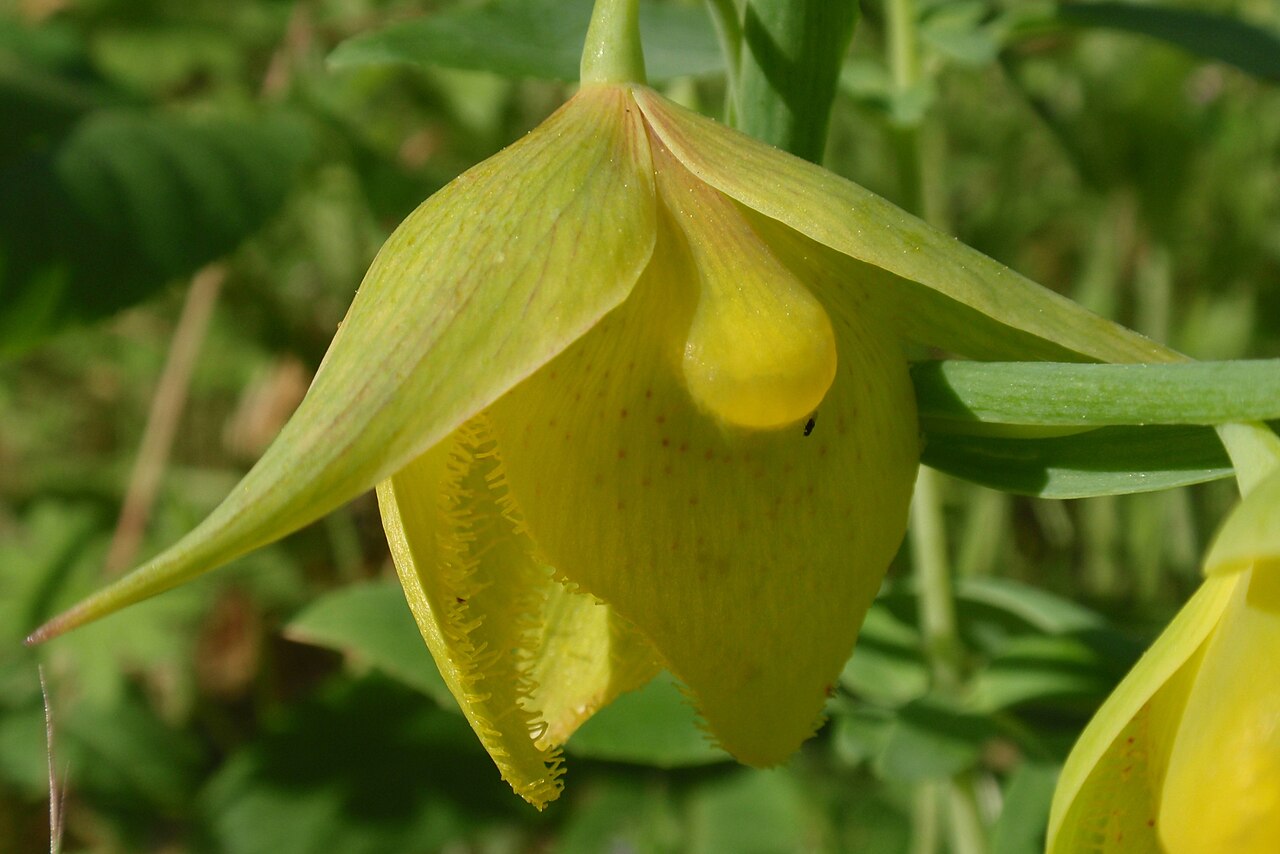
The flowers are nodding and globe-shaped, about 1 inch long, borne singly or in small clusters at the branch tips. The three sepals are pointed and greenish yellow; the three petals are pale to deep yellow, sparsely hairy inside, and fringed along the edges with yellow hairs. The petals curve inward so their tips touch, forming a closed lantern. Each petal has a small nectar gland near its base. Flowering is from about April to June.
Fruit & Seeds
The fruit is a nodding, three-winged capsule about 1 inch long, containing many flat seeds.
Look-alikes
Diogenes’ lantern (Calochortus amabilis), of the North Coast Ranges, is similar but its petals have little or no fringe of hairs on the edges. White fairy lantern (C. albus) has white to pink flowers. Hybrids between Mount Diablo fairy lantern and white fairy lantern occur on Mount Diablo and have pale yellow to cream flowers. Yellow star tulip (C. monophyllus) has upright, open, bowl-shaped flowers.
Quick Facts
| Scientific Name | Calochortus pulchellus |
| Family | Liliaceae (lily family) |
| Plant Type | Bulbous perennial wildflower; summer dormant |
| Mature Height | 6–12 in |
| Mature Spread | 3–6 in |
| Growth Rate | Slow |
| Sun Exposure | Part sun to light shade |
| Water Needs | Low; dry summer dormancy |
| Soil Type | Well-drained rocky or gravelly soils |
| Soil pH | Slightly acidic to neutral (about 6.0–7.5) |
| Bloom Time | April–June |
| Flower Color | Yellow |
| Fall Color | None; dormant |
| Fruit | Nodding, three-winged capsule |
| Deer Resistant | No; bulbs and plants are eaten by deer and rodents |
| USDA Hardiness Zones | 8–10 |
Native Range
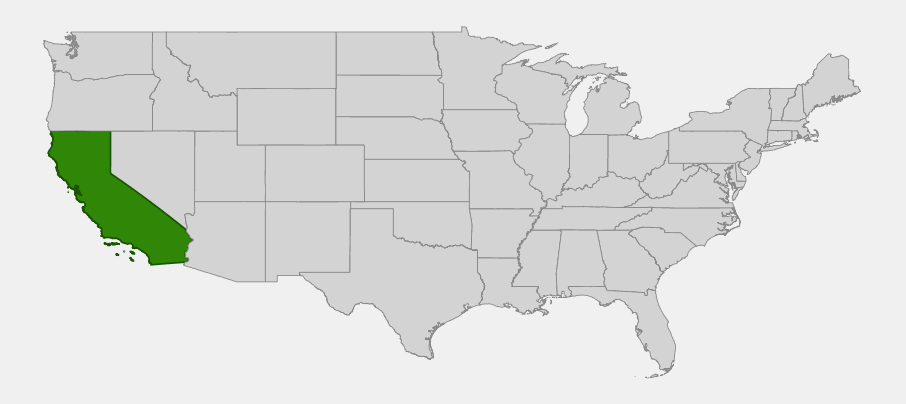
Mount Diablo fairy lantern is endemic to California. USDA PLANTS lists it only from California, and today it is known mainly from Mount Diablo and the surrounding ridges in Contra Costa County, part of the Diablo Range east of San Francisco Bay.
Older herbarium records exist from the North Coast Ranges in Marin, Solano, Napa and Humboldt counties, but these populations are historical, and most current occurrences are on the north and west slopes of Mount Diablo, much of it protected in Mount Diablo State Park.
It grows in chaparral, oak and pine woodland and on wooded slopes and canyon sides, often on rocky soils, generally below about 3,000 feet. Its small range makes it vulnerable to development, changes in fire patterns, invasive grasses and collecting.
📋 Regional plant lists featuring Mount Diablo Fairy Lantern: California & Nevada
Growing & Care Guide
Mount Diablo fairy lantern is a rare plant and is seldom available, but it can be grown from nursery-propagated seed or bulbs by patient gardeners in mild, dry-summer climates. Never dig bulbs from the wild; wild populations are small and protected, and collected bulbs rarely survive.
Light
Part sun or bright, dappled shade, like the edge of oak woodland or chaparral. In hot inland gardens give it afternoon shade.
Soil & Water
Very well-drained, rocky or gravelly soil, or a gritty potting mix in a deep container. Water during the cool season from fall to spring, then stop watering when the leaf yellows in early summer. Summer water rots the bulbs.
Planting Tips
Plant bulbs about 3 to 4 inches deep in fall. In areas with heavy soils or summer irrigation, grow them in deep pots or raised beds and move the pots to a dry spot for the summer. Protect bulbs from gophers with wire baskets.
Pruning & Maintenance
Let the leaf die back naturally after flowering so the bulb can store energy. Keep the area free of vigorous grasses and weeds. No fertilizer is needed, or only a light feeding in a pot.
Propagation
From seed sown in fall in a deep, gritty mix, left outdoors for winter rain and cold. Seedlings grow slowly and usually take three to five years to bloom. Some plants also form small bulblets.
Landscape Uses
- Rock gardens: a jewel-like bulb for dry, rocky pockets in part sun
- Containers: deep pots let you control summer dryness
- Woodland edges: under oaks in dry-summer gardens
- Conservation plantings: nursery-grown plants help keep demand off wild populations
- Wildflower viewing: a highlight of spring hikes on Mount Diablo
Wildlife & Ecological Value
Mount Diablo fairy lantern is a small but distinctive part of the spring wildflower display of Mount Diablo’s chaparral and woodlands.
For Pollinators
The nodding, closed flowers are visited by bees, especially bumble bees and other native bees that crawl inside to reach the nectar glands at the base of the petals and collect pollen.
For Birds
It has little direct value for birds.
For Mammals
Deer graze the leaves and flowers, and pocket gophers and other rodents eat the bulbs, as they do with most Calochortus species.
Ecosystem Role
As a rare local endemic, it is part of the unique flora of Mount Diablo, which has several plants found nowhere else. Like many bulbs of California chaparral and woodland, it may bloom more abundantly in the years after fire opens up the canopy.
Cultural & Historical Uses
The genus name Calochortus comes from the Greek for “beautiful grass,” for the grass-like leaves, and pulchellus means “pretty little.” The species was described by George Bentham in the 1830s.
Several related fairy lanterns were once treated as varieties of Calochortus pulchellus, including Diogenes’ lantern (C. amabilis), which explains why older books describe the species as more widespread.
Mount Diablo fairy lantern is one of the signature wildflowers of Mount Diablo State Park, and spring wildflower walks there often feature it. Because it is rare, conservation groups monitor its populations and ask visitors to stay on trails and never pick the flowers or dig the bulbs.
Frequently Asked Questions
Where does Mount Diablo fairy lantern grow?
Only in California. Today it is known almost entirely from Mount Diablo in Contra Costa County, with older records from a few North Coast Range counties.
Is Mount Diablo fairy lantern rare?
Yes. NatureServe ranks it globally imperiled (G2), and it is listed by the California Native Plant Society as rare (California Rare Plant Rank 1B.2). Never dig or pick it.
When does it bloom?
From about April to June, depending on elevation and weather.
Can I grow Mount Diablo fairy lantern?
Yes, from nursery-propagated seed or bulbs, in very well-drained soil with winter rain and a dry summer. It is slow from seed and needs protection from gophers.
How is it different from Diogenes’ lantern?
Both have nodding, yellow, globe-shaped flowers, but Mount Diablo fairy lantern has petals fringed with hairs along the edges, and the two grow in different parts of California.

Looking for a nursery that carries Mount Diablo Fairy Lantern?
Browse our native plant nursery directory: California

