
Wartleaf Ceanothus (Ceanothus papillosus)
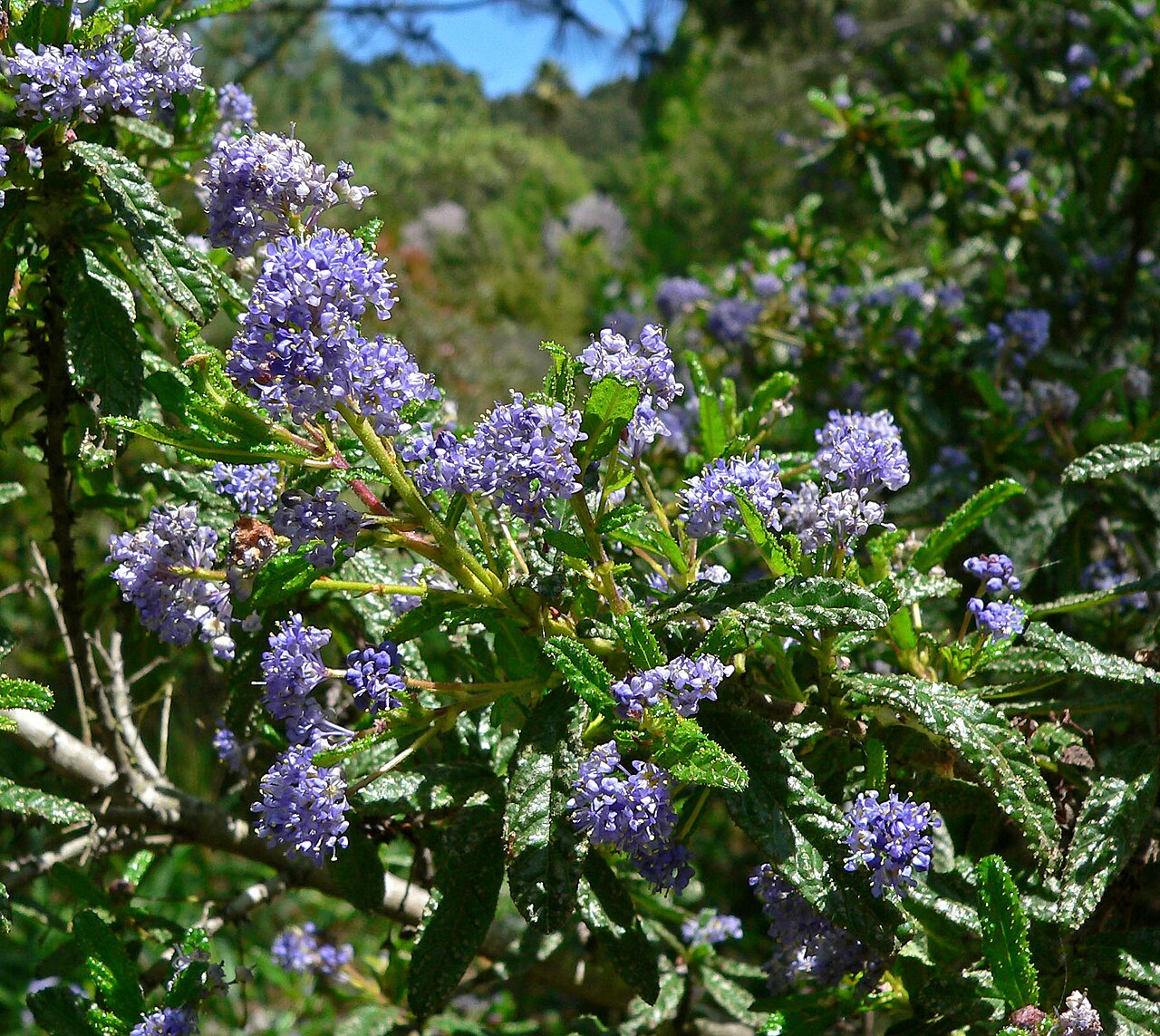
Ceanothus papillosus, known as Wartleaf Ceanothus, is an evergreen shrub of the coastal chaparral of central California. It usually grows 5 to 12 feet tall, with an open, spreading form, and in spring it is covered in clusters of deep blue to violet flowers, among the richest blues of any California lilac. Its name comes from its unusual leaves: narrow, dark green, glossy and sticky, with the upper surface covered in tiny wart-like glands.
Ceanothus, often called California lilacs, are members of the buckthorn family (Rhamnaceae), and California is the center of their diversity. The species name papillosus refers to the papillae, the small bumps on the leaves. Wartleaf ceanothus is one of the parents of popular garden hybrids, and its deep blue flowers and fine-textured foliage make it a striking plant in its own right.
It grows on brushy slopes and ridges in the outer Coast Ranges from the Santa Cruz Mountains south through the Santa Lucia Range to Santa Barbara County, with scattered populations farther south and in northern Baja California. This guide covers how to identify it, where it grows, how to grow it in dry gardens, and its value to pollinators and wildlife.
Identification
Wartleaf ceanothus is one of the easier California lilacs to identify. Look for an open, evergreen shrub with narrow, sticky, dark green leaves whose upper surfaces are covered in tiny bumps, and, in spring, rounded clusters of deep blue flowers.
Growth Habit
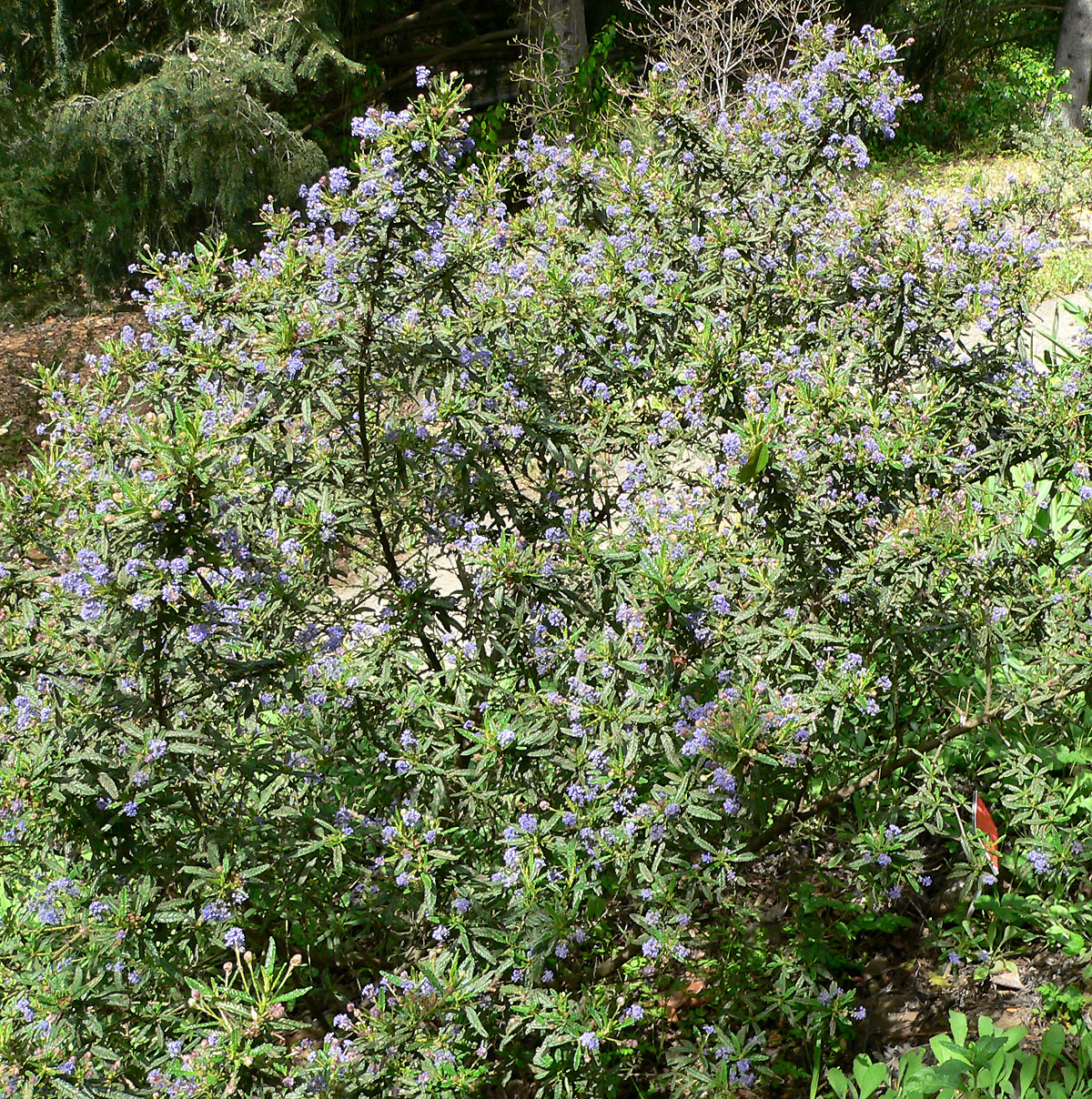
It is an evergreen shrub, usually 5 to 12 feet tall and often as wide, with an open, loosely branched form. The branches are flexible, and young twigs are hairy. Older plants become somewhat tree-like, with several main stems.
Leaves
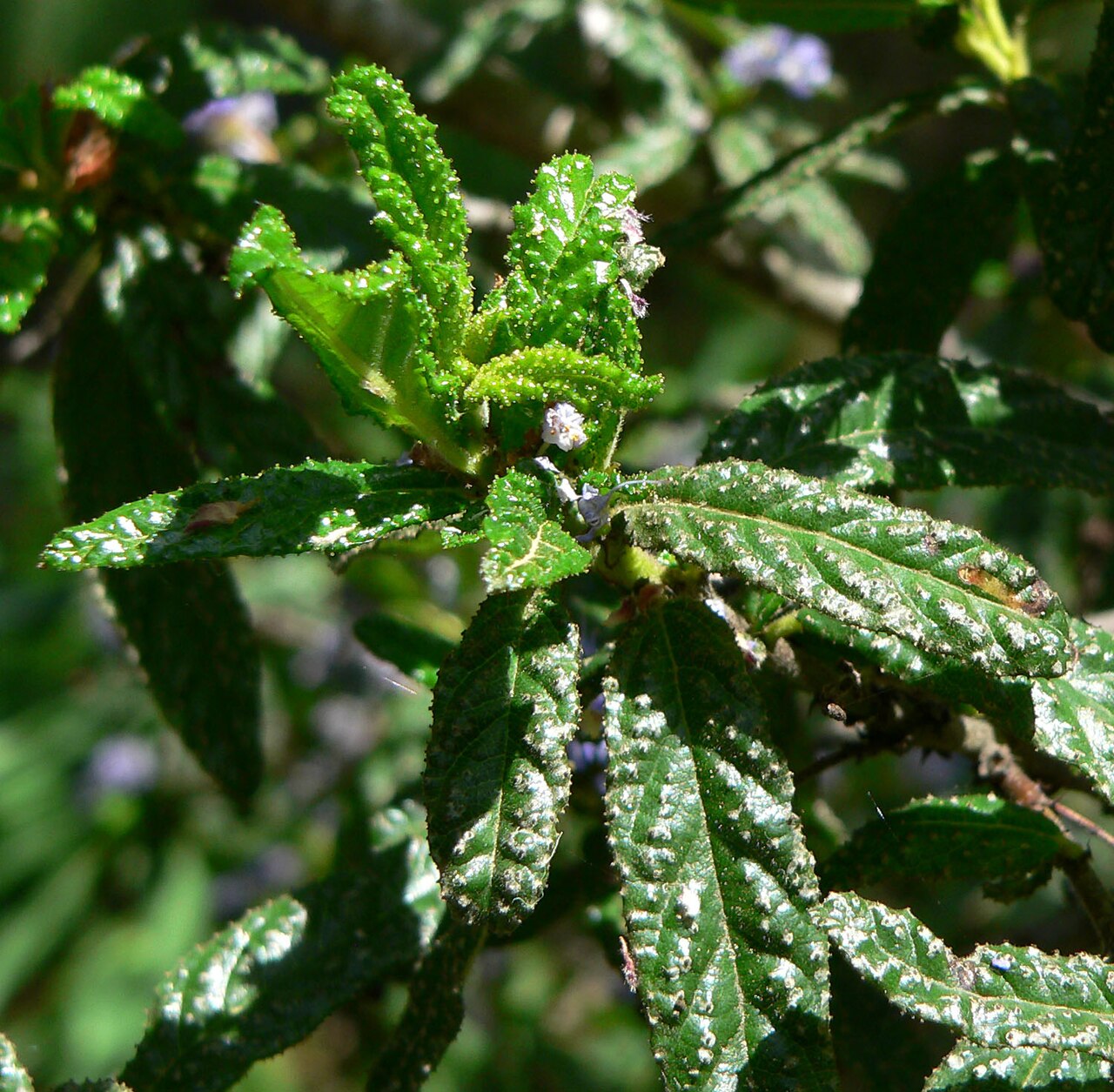
The leaves are alternate, narrowly oblong, about 1/2 to 2 inches long, and dark green and glossy above. The upper surface is covered with small glandular bumps (papillae) that make it feel rough and sticky, and the edges are rolled under. The underside is paler and densely hairy. The foliage has a slightly resinous smell.
Flowers
The tiny, fragrant flowers are deep blue to violet-blue and are carried in dense, rounded to short cylindrical clusters on stalks at the branch tips. It blooms in spring, mostly March to May.
Fruit & Seeds
The flowers are followed by small, three-lobed, sticky capsules that dry and split explosively in summer, flinging the hard seeds away from the shrub.
Varieties
The typical form grows in the outer Coast Ranges. Variety roweanus, sometimes called Mt. Tranquillon ceanothus, is a more compact plant with shorter, narrower leaves, found mostly in Santa Barbara and San Luis Obispo Counties.
Look-alikes
Santa Barbara ceanothus (C. impressus) has small, dark leaves with deeply impressed veins rather than warty bumps. Blueblossom has broader, three-veined leaves without bumps and paler blue flowers. Buckbrush has small, opposite, wedge-shaped leaves and usually white flowers.
Quick Facts
| Scientific Name | Ceanothus papillosus Torr. & A. Gray |
| Family | Rhamnaceae (buckthorn family) |
| Plant Type | Evergreen shrub |
| Mature Height | 5–12 ft (occasionally to 15 ft) |
| Mature Spread | 6–12 ft |
| Growth Rate | Fast |
| Sun Exposure | Full sun to light shade |
| Water Needs | Low; little or no summer water once established |
| Soil Type | Well-drained sandy, rocky or loamy soils |
| Soil pH | About 5.5–7.5 |
| Bloom Time | March–May |
| Flower Color | Deep blue to violet-blue |
| Fall Color | Evergreen |
| Fruit | Small, sticky, three-lobed capsule |
| Deer Resistant | Moderately; sticky foliage is less browsed than many ceanothus |
| USDA Hardiness Zones | 8–10 |
Native Range
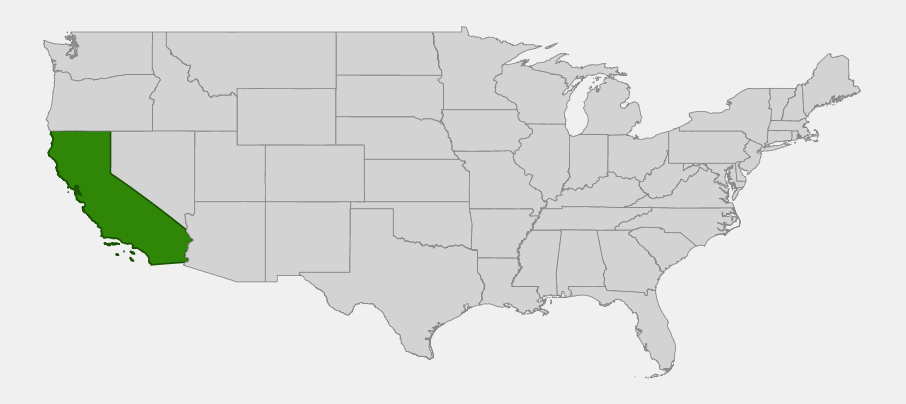
Wartleaf ceanothus is native to California and northern Baja California. USDA PLANTS lists it only in California in the United States, where it is largely confined to the central and southern coastal mountains.
Its main range runs through the outer Coast Ranges from the Santa Cruz Mountains of San Mateo, Santa Clara and Santa Cruz Counties south through Monterey and San Benito Counties and the Santa Lucia Range of San Luis Obispo County to Santa Barbara and Ventura Counties. Farther south it is known from scattered populations in the Santa Ana Mountains of Orange and Riverside Counties, and it reappears in the mountains of northern Baja California.
It grows in chaparral and on the edges of coastal pine and oak woodlands, on slopes and ridges, often within reach of coastal fog, mostly from near sea level to about 5,000 feet.
📋 Regional plant lists featuring Wartleaf Ceanothus: California & Nevada
Growing & Care Guide
Wartleaf ceanothus is a fast-growing, drought-tolerant shrub for mild-winter, summer-dry gardens, especially along the California coast. It is offered by California native plant nurseries, though less often than the popular hybrids that it helped to create. Like most ceanothus, it is relatively short-lived, often 10 to 20 years in gardens.
Light
Plant it in full sun along the coast. Inland, where summers are hot, it appreciates some afternoon shade.
Soil & Water
It needs well-drained soil; sandy, rocky or loamy slopes are ideal. Water regularly during its first dry season, then little or not at all in summer once established, especially in clay soils, where summer water invites root rot. Do not fertilize: ceanothus fix their own nitrogen.
Planting Tips
Plant in fall or winter so the roots establish with winter rains. Give it room to spread, and use it as a screen, an informal hedge or a background shrub. It combines well with manzanitas, coffeeberry, toyon, native sages and other coastal chaparral plants.
Pruning & Maintenance
Prune lightly, if at all, right after flowering; ceanothus do not resprout well from old, bare wood, so avoid heavy cuts. Remove dead branches as needed. It is little troubled by pests in dry conditions but can suffer from branch dieback in wet, poorly drained soils.
Propagation
Grow it from seed, which needs a hot-water soak or brief heat treatment followed by a few weeks of cold-moist stratification. Semi-hardwood cuttings taken in late summer root fairly well with rooting hormone. Collect seed only where permitted.
Landscape Uses
- Dry and coastal gardens: deep blue spring flowers with little or no summer water
- Informal hedges and screens: fast-growing evergreen cover
- Pollinator and habitat gardens: heavily visited by bees and a host plant for butterflies and moths
- Slope plantings: its roots help hold well-drained hillsides
- Chaparral restoration: a native shrub for Central Coast restoration projects
Wildlife & Ecological Value
Like other California lilacs, wartleaf ceanothus is one of the most valuable chaparral shrubs for wildlife, feeding pollinators in spring and providing seeds, foliage and cover through the year.
For Pollinators
The fragrant blue flowers attract honey bees, bumble bees and many native bees, along with flies and butterflies. Ceanothus are also larval host plants for the ceanothus silk moth, the California tortoiseshell, the pale swallowtail and several hairstreaks and duskywings.
For Birds
Quail, towhees, sparrows and other birds eat the seeds, and the dense branches give shelter and nesting sites to chaparral birds such as wrentits and California thrashers. Hummingbirds and warblers glean insects attracted by the flowers.
For Mammals
Deer browse ceanothus, though the sticky foliage of this species is less favored than some. Woodrats, mice and other small mammals eat the seeds and shelter beneath the shrubs.
Ecosystem Role
Ceanothus roots host nitrogen-fixing Frankia bacteria, which enrich the poor, rocky soils of the chaparral. Their hard-coated seeds build up in the soil and germinate in large numbers after fire, making ceanothus an important part of chaparral recovery.
Cultural & Historical Uses
John Torrey and Asa Gray described wartleaf ceanothus in 1838, from early collections made in coastal California. Its distinctive bumpy leaves made it one of the more easily recognized of the many California ceanothus species.
Wartleaf ceanothus has contributed to garden ceanothus. The widely planted cultivar ‘Concha’, known for its deep blue flowers and reliability, is thought to be a hybrid between wartleaf ceanothus and Santa Barbara ceanothus (C. impressus).
Native Californians used ceanothus flowers, which foam when crushed and rubbed in water, as a mild soap. The shrubs were also an important part of the brushlands that were managed with fire to encourage fresh growth and game.
Frequently Asked Questions
Why is it called wartleaf ceanothus?
The upper surface of its narrow leaves is covered with tiny gland-tipped bumps, or papillae, which look and feel like small warts.
Where does wartleaf ceanothus grow?
It grows in coastal chaparral and woodland edges in California, mainly from the Santa Cruz Mountains to Santa Barbara County, with scattered populations farther south and in Baja California.
Is wartleaf ceanothus drought tolerant?
Yes. Once established, it needs little or no summer water, and too much summer water in heavy soil can kill it.
When does wartleaf ceanothus bloom?
It blooms in spring, mostly from March to May, with dense clusters of deep blue flowers.
Is it good for wildlife?
Yes. Its flowers feed bees and butterflies, it hosts the caterpillars of several butterflies and moths, and birds eat its seeds and shelter in its branches.

Looking for a nursery that carries Wartleaf Ceanothus?
Browse our native plant nursery directory: California

