
Branched Foldwing (Dicliptera brachiata)
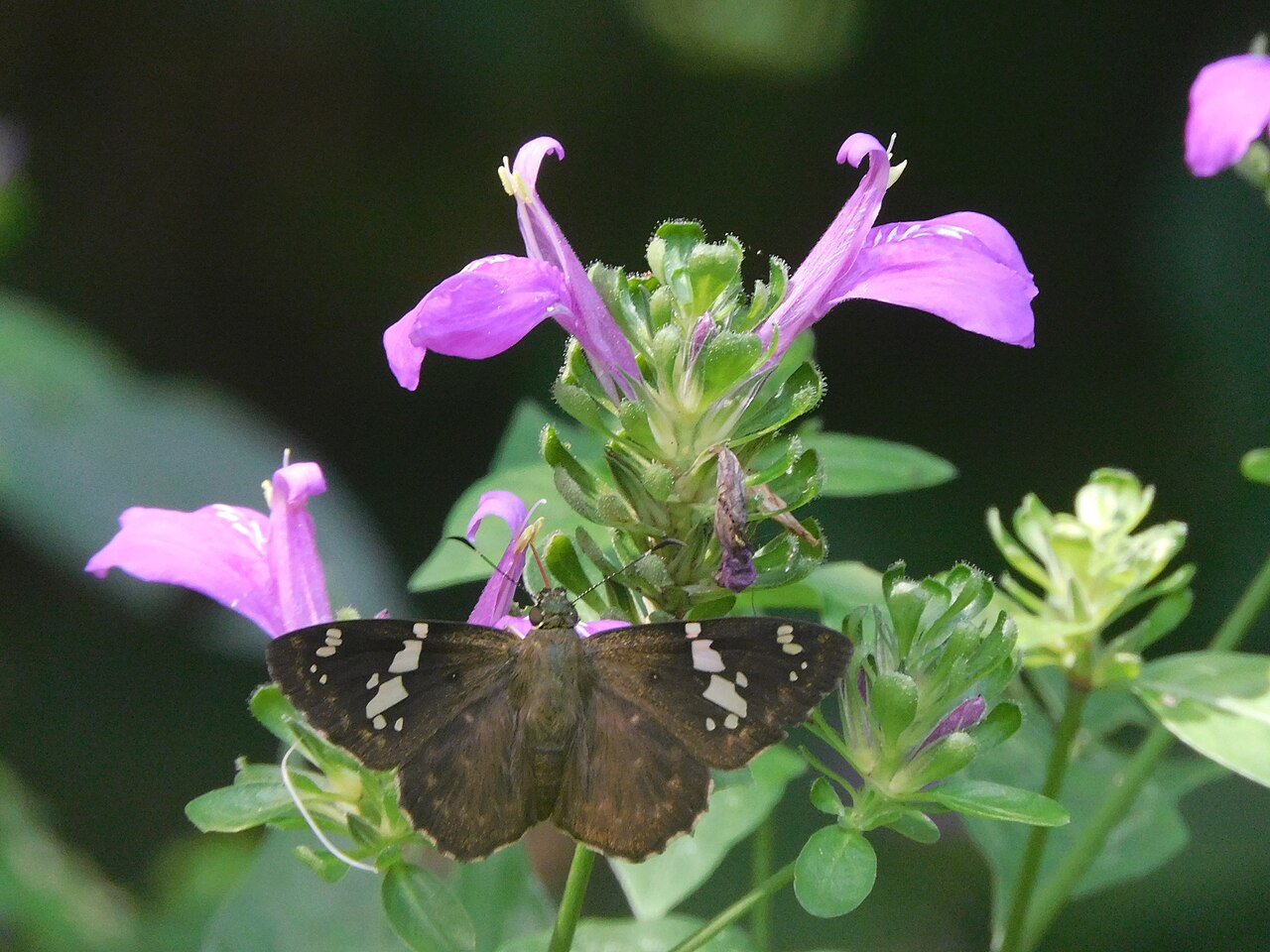
Dicliptera brachiata, known as Branched Foldwing (also false mint), is a shade-loving wildflower of moist woods and bottomlands in the southeastern and south-central United States. It is a loosely branched plant, usually 1 to 3 feet tall, with opposite, oval leaves and small, pink to lavender, two-lipped flowers that appear from midsummer into fall. It belongs to the acanthus family (Acanthaceae), along with wild petunias and water-willows.
At first glance it looks like a mint, with its square-ish stems, paired leaves and lipped flowers, which is why it is often called false mint. It has no minty scent, though, and its flowers sit in small clusters cupped by pairs of leafy bracts, a feature of the foldwings. The common name “foldwing” translates the genus name, which refers to the two-valved, winged seed capsule.
Branched foldwing is an easy, self-sowing plant for shady, moist corners where little else blooms in late summer. Bees and small butterflies visit the flowers, and it is a larval host plant for the Texan crescent butterfly in the southern part of its range.
Identification
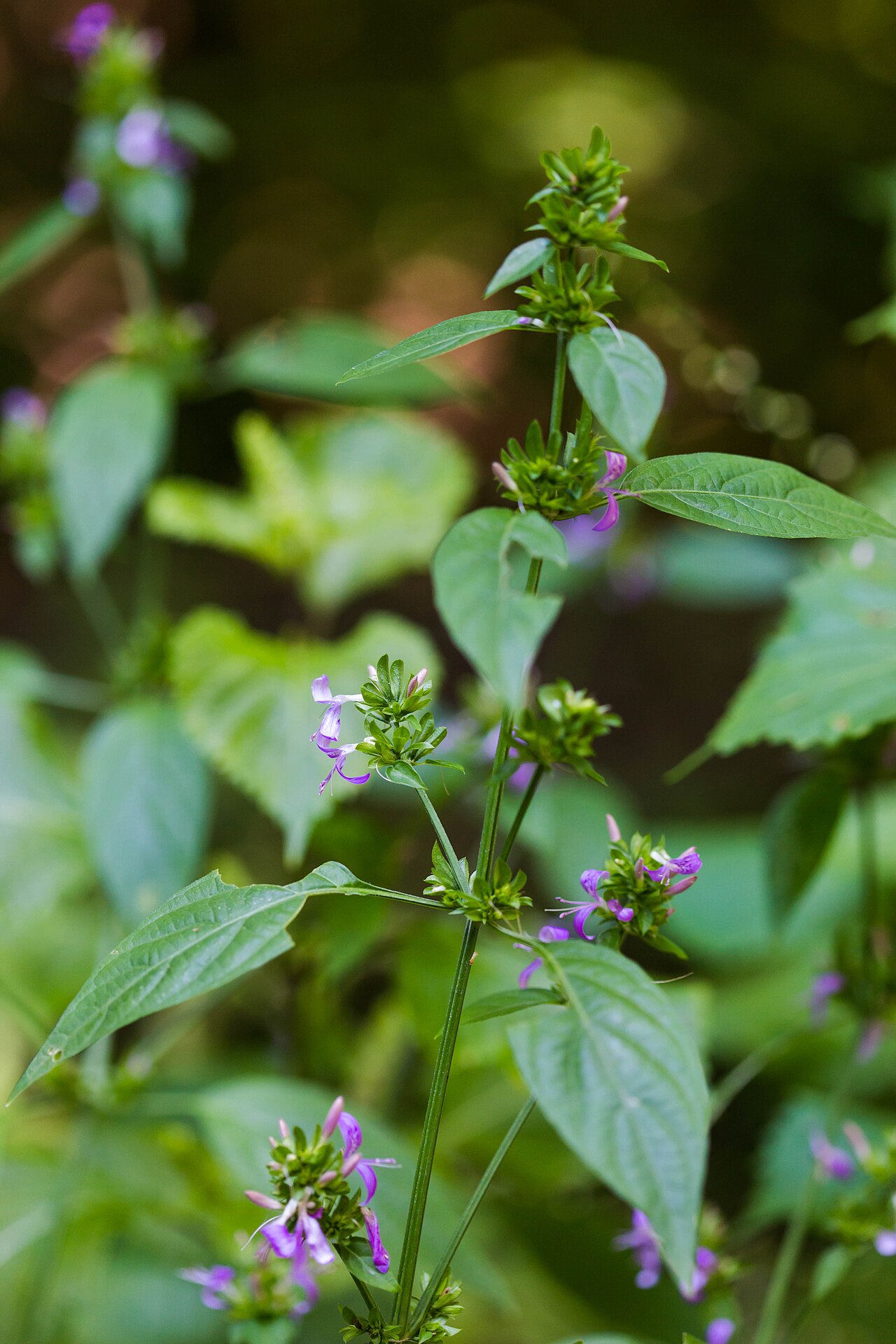
Look for a branching, mint-like plant of shady, moist woods with opposite, oval, pointed leaves and small, pink to lavender, two-lipped flowers held in clusters of leafy bracts in the leaf axils and at the branch tips, from July to October.
Leaves
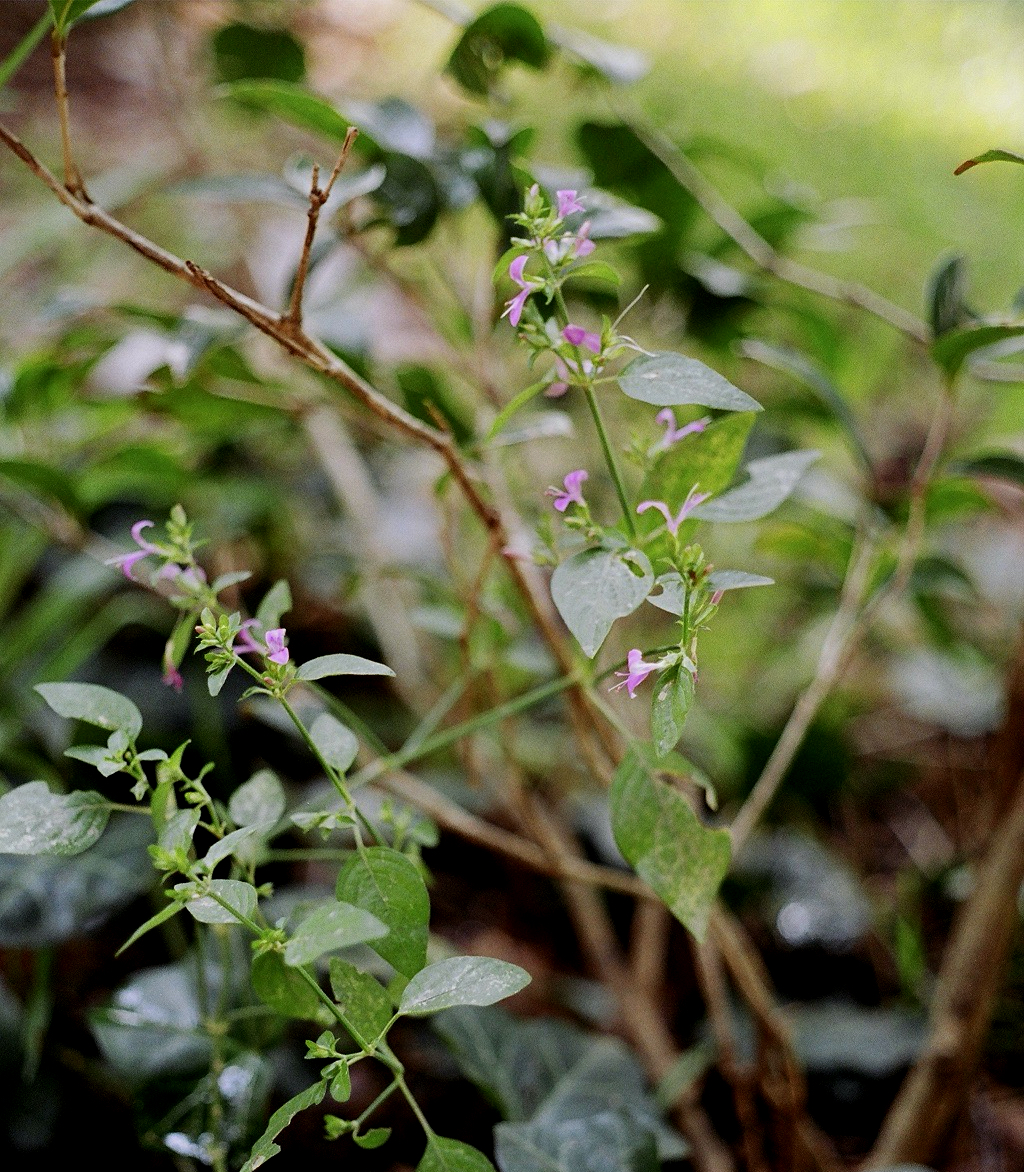
The leaves are opposite, thin and soft, ovate to lance-ovate with pointed tips and smooth or slightly wavy margins, usually about 1½ to 4 inches long, on slender stalks. They are medium green and nearly hairless.
Stems
The stems are upright to leaning, usually 1 to 3 feet tall, with many spreading branches. They are angled or ridged, somewhat swollen at the nodes and smooth to finely hairy.
Flowers
The flowers grow in small clusters in the leaf axils and at the branch tips, each cluster cupped by a pair of unequal, leafy, oval bracts. Each flower is about 1/2 to 3/4 inch long, pink to rose-lavender, with a slender tube and two lips: the upper lip is narrow and erect and the lower lip is broader and often has darker markings. Two stamens protrude from the throat. Bloom runs from about July to October.
Fruit & Seeds
The fruit is a small, flattened capsule that splits into two valves when ripe, throwing out a few small, rounded seeds. Plants often self-sow around the parent.
Look-alikes
American Water-Willow (Justicia americana), a relative, grows in shallow water along streams and has narrow, willow-like leaves and white-and-purple flowers on long stalks. Mints, such as the many wild mints and bee balms, have truly square stems, a strong scent and flowers not wrapped in paired bracts. Smooth Ruellia (Ruellia strepens), another acanthus-family woodland plant, has much larger, lavender, trumpet-shaped flowers.
Quick Facts
| Scientific Name | Dicliptera brachiata |
| Family | Acanthaceae (acanthus family) |
| Plant Type | Annual or short-lived perennial herb |
| Mature Height | 1–3 ft |
| Mature Spread | 1–2 ft |
| Growth Rate | Fast |
| Sun Exposure | Part shade to full shade |
| Water Needs | Medium; moist soil |
| Soil Type | Moist loam, alluvial or clay soils |
| Soil pH | About 5.5–7.5 |
| Bloom Time | July–October |
| Flower Color | Pink to rose-lavender |
| Fall Color | None |
| Fruit | Small two-valved capsule |
| Deer Resistant | Moderate |
| USDA Hardiness Zones | 6–9 |
Native Range
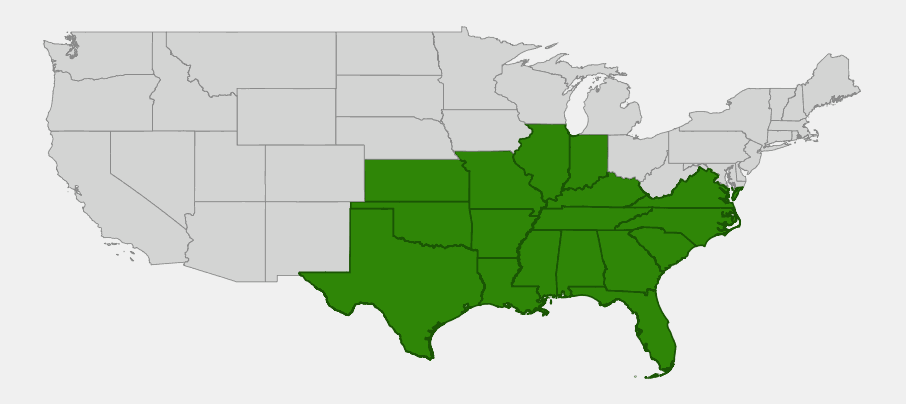
Branched foldwing is native to the southeastern and south-central United States. USDA PLANTS lists it as native from Virginia and North Carolina south to Florida, west across the Gulf states to Texas and Oklahoma, and north through the Mississippi and Ohio valleys to Kansas, Missouri, Illinois, Indiana and Kentucky.
It is most common on the coastal plain and in the river valleys of the lower Mississippi drainage, and it reaches the edge of its range in Virginia, Indiana and Kansas. In Texas it grows from the eastern forests west to the Austin and San Antonio areas, along shaded creeks and in wooded parks and neighborhoods.
Its habitat is moist, shady places: floodplain and bottomland forests, stream banks, wooded ravines, hammocks and the shaded edges of swamps. It often grows in disturbed shade as well, along woodland trails and in shady yards.
📋 Regional plant lists featuring Branched Foldwing: North & South Florida · Alabama, Georgia & Mississippi · North & South Carolina · Maryland, Virginia & West Virginia · Kentucky & Tennessee · Arkansas, Louisiana, Eastern Oklahoma & Eastern Texas · South & West Texas · Illinois, Iowa & Missouri · Ohio & Indiana · Nebraska, Kansas & Eastern Colorado
Growing & Care Guide
Branched foldwing is a low-maintenance filler for shady, moist native gardens. It grows quickly from seed, blooms when most woodland plants are done and reseeds to return year after year.
Light
Part shade to full shade. It blooms best in bright shade, such as under high tree canopy or at a woodland edge with morning sun. In deep shade it grows taller and flowers less.
Soil & Water
Give it moist, loamy or clay soil with some organic matter. It tolerates periodic flooding and heavy soils. Water during long droughts; stressed plants wilt and drop flowers but usually recover after rain.
Planting Tips
Sow seed in fall or spring where you want it, or transplant small seedlings. It works well under trees, along shady paths and in rain gardens or swales in the shade. Combine it with inland sea oats, ferns and other shade plants that tolerate a casual, natural look.
Pruning & Maintenance
Pinch the tips in early summer for a bushier plant. Leave some plants to set seed if you want it to return. Pull extra seedlings in spring if it spreads farther than you want; they come up easily.
Propagation
Grow it from seed, which is easy and often happens on its own. Stem cuttings also root readily in moist soil during summer. Plants that act as perennials in mild winters can be divided in spring.
Landscape Uses
- Shade gardens: late-summer and fall flowers in part to full shade
- Butterfly gardens: larval host for the Texan crescent; nectar for small butterflies
- Rain gardens and swales: tolerates moist and occasionally flooded soil
- Woodland restoration: bottomland and streamside understory plantings
- Naturalized areas: self-sows to form loose colonies
Wildlife & Ecological Value
Branched foldwing supports pollinators and butterflies late in the season in shady habitats.
For Pollinators
Small bees, including sweat bees and small carpenter bees, visit the flowers, as do skippers and other small butterflies. Its long bloom from midsummer into October helps fill the late-season gap in shaded woods.
For Birds
Its small seeds are a minor food for ground-feeding birds, and the insects it supports provide food for warblers, wrens and other insect-eating birds.
For Mammals
Deer browse it lightly at times. Small mammals use its leafy cover in the understory.
Ecosystem Role
Branched foldwing is a larval host plant for the Texan crescent (Anthanassa texana), a small butterfly whose caterpillars feed on plants of the acanthus family. As a fast-growing understory plant, it also covers soil in floodplains and shady disturbed ground.
Cultural & Historical Uses
The genus name Dicliptera comes from Greek words meaning “double-folding” and “wing,” referring to the seed capsule, which splits into two winged valves. The species name brachiata means “with arm-like branches,” describing the plant’s widely spreading, opposite branches. The common name branched foldwing combines both ideas.
Its other common name, false mint, comes from its mint-like look. Plants in the acanthus family are mostly tropical, and branched foldwing is one of only a handful of members that reach the temperate eastern United States, along with water-willows and wild petunias.
On this site, related plants in the acanthus family include American Water-Willow, Smooth Ruellia, Wild Petunia and Hairy Tubetongue.
Frequently Asked Questions
Is branched foldwing a mint?
No. It looks like a mint and is sometimes called false mint, but it belongs to the acanthus family and has no minty scent.
Does branched foldwing grow in shade?
Yes. It grows naturally in shady, moist woods and bottomlands and does well in part to full shade.
When does branched foldwing bloom?
From about July to October, with small pink to lavender flowers.
Is branched foldwing good for butterflies?
Yes. Small butterflies and bees visit the flowers, and it is a caterpillar host plant for the Texan crescent.
Is branched foldwing an annual or a perennial?
It behaves as an annual or short-lived perennial, but it reseeds readily, so it usually returns each year in the same area.

Looking for a nursery that carries Branched Foldwing?
Browse our native plant nursery directory: Alabama & Arkansas · Florida & Georgia · Illinois, Indiana & Kansas · Kentucky, Louisiana, Mississippi & Missouri · North Carolina & Oklahoma · South Carolina, Tennessee, Texas & Virginia

