
Frostweed (Verbesina virginica)
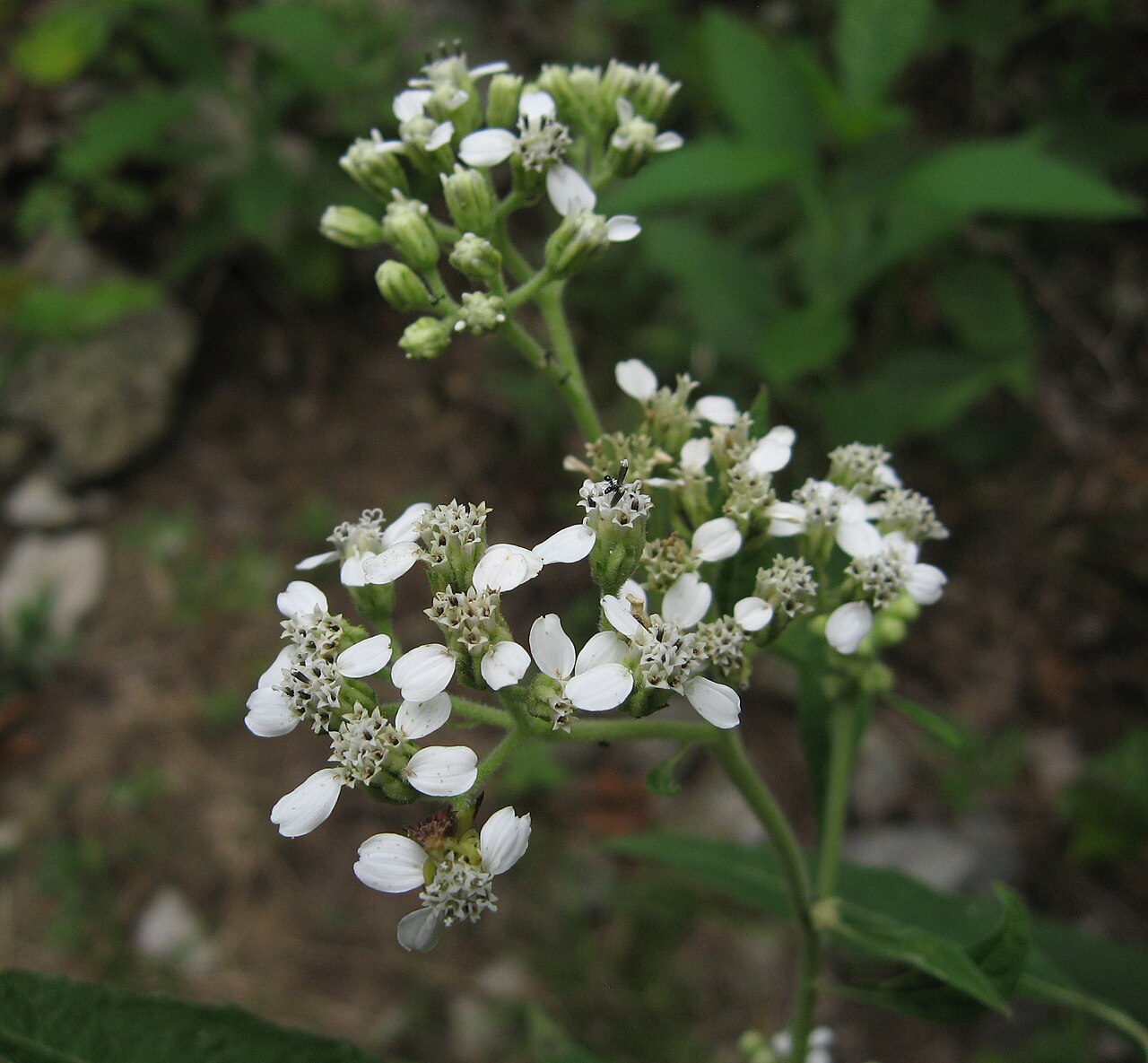
Verbesina virginica, known as Frostweed and listed by USDA PLANTS as white crownbeard, is a tall, late-blooming wildflower of shady woodlands, forest edges and stream valleys in the eastern and central United States. In late summer and fall it carries broad, loose clusters of small white flower heads on stems 3 to 7 feet tall, and it is one of the best fall nectar plants for butterflies, including migrating monarchs.
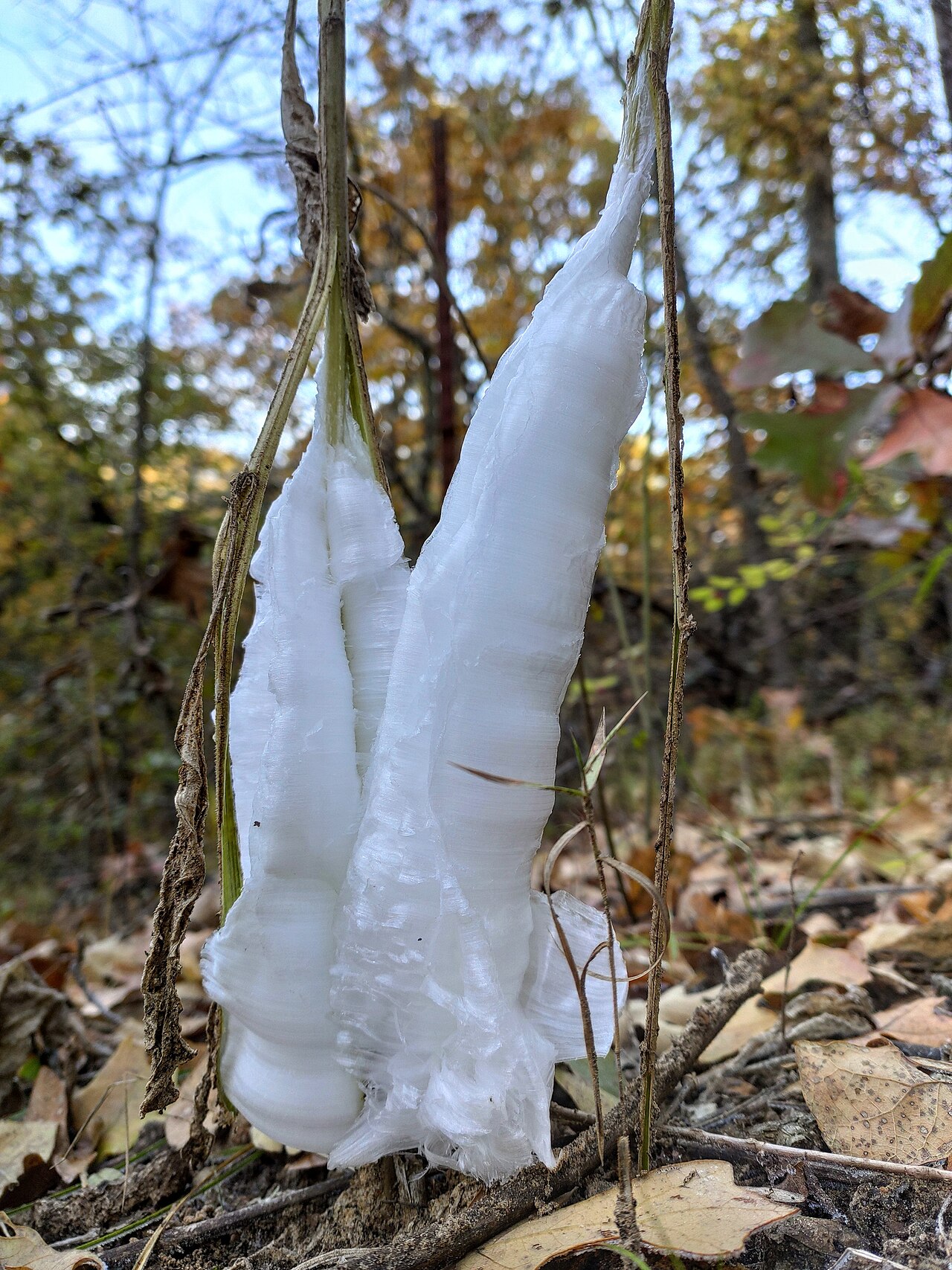
The common name frostweed comes from a remarkable winter show. On the first hard freezes of the season, sap pushed up from the still-active roots seeps out through cracks in the base of the dead stems and freezes into thin, curling ribbons of ice. These “frost flowers” usually appear on cold, calm mornings and melt by midday. Other names include white crownbeard, Indian tobacco and iceweed.
Frostweed is a member of the aster family (Asteraceae) and a close relative of Wingstem (Verbesina alternifolia). It is an easy plant for part shade and naturalizes readily, spreading by seed and short rhizomes, so it is best suited to woodland edges and larger naturalistic gardens rather than tidy borders. This guide covers identification, range, care and its value for wildlife.
Identification
Frostweed is a tall, coarse plant that is easiest to identify in bloom by its white flower clusters, and at any time of year by its winged stems.
Stems
The stems are stout, usually unbranched below the flower clusters, and 3 to 7 feet tall. Thin green wings of leaf tissue run down the stem from the base of each leaf, a key feature shared with wingstem. The stems are slightly hairy and die back to the ground each winter, but the dry stalks often remain standing.
Leaves
Leaves are alternate, large and broad, about 4 to 8 inches long, ovate to lance-shaped with a pointed tip and finely toothed or nearly smooth edges. The upper surface is rough, like sandpaper, and the lower surface is softly hairy. The leaf base narrows into a winged stalk that continues down the stem.
Flowers
Small flower heads, each about ½ to ¾ inch across, are crowded into broad, flat-topped or rounded clusters at the top of the stems. Each head has a few (often 2 to 5) short, white, slightly irregular ray florets and a center of white disc florets, giving the clusters a loose, frothy look. Bloom time is late summer through fall, roughly August to October, and into November in the South.
Fruit & Seeds
The fruits are small, flattened, dark achenes with narrow wings and two short bristles at the tip. They ripen in late fall and are shed over the winter, falling near the parent plant or carried short distances by wind and water.
Quick Facts
| Scientific Name | Verbesina virginica L. |
| Family | Asteraceae (aster family) |
| Plant Type | Herbaceous perennial |
| Mature Height | 3–7 ft |
| Mature Spread | 2–3 ft per stem cluster; spreads to form colonies |
| Growth Rate | Fast |
| Sun Exposure | Part shade to shade; tolerates sun with moisture |
| Water Needs | Medium; moist to moderately dry, well-drained soil |
| Soil Type | Loam, clay, sand or limestone-based soil |
| Soil pH | Slightly acidic to alkaline, about 6.0–8.0 |
| Bloom Time | Late summer–fall (August–October; into November in the South) |
| Flower Color | White |
| Fall Color | None of note; dry stems stand into winter |
| Fruit | Small, flattened, winged achene |
| Deer Resistant | High |
| USDA Hardiness Zones | 5–9 |
Native Range
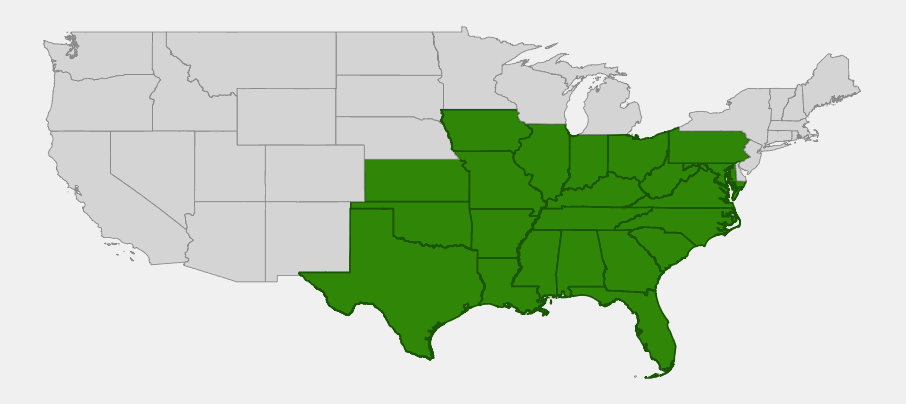
Frostweed is widespread in the eastern and central United States. USDA PLANTS and the Lady Bird Johnson Wildflower Center record it from Texas, Oklahoma and Kansas east to the Atlantic states, and from Iowa, Illinois, Indiana, Ohio and Pennsylvania south to the Gulf Coast and Florida: 22 states plus the District of Columbia. It is especially common in the southern states and central Texas.
In Florida, the Atlas of Florida Plants records it as native. It occurs mainly in north and central Florida, in hardwood forests, hammocks and floodplains, with scattered occurrences farther south. It is often planted in South Florida butterfly gardens.
Typical habitats are moist to fairly dry deciduous and mixed woodlands, forest edges and clearings, stream terraces and bottomlands, limestone glades and shaded roadsides. In Texas it is a familiar plant of shady creek bottoms and canyons on the Edwards Plateau, where it often forms large stands under oaks and elms.
📋 Regional plant lists featuring Frostweed: North & South Florida · Alabama, Georgia & Mississippi · North & South Carolina · Maryland, Virginia & West Virginia · Kentucky & Tennessee · Arkansas, Louisiana, Eastern Oklahoma & Eastern Texas · South & West Texas · Illinois, Iowa & Missouri · Ohio & Indiana · Nebraska, Kansas & Eastern Colorado · New York, Pennsylvania & Northern New Jersey
Growing & Care Guide
Frostweed is easy to grow and widely available from native plant nurseries in Texas and the Southeast, and its seed is sold by native seed companies. It is a good choice for filling a shady woodland edge with late-season flowers.
Light
It does best in part shade, such as under high tree canopy or along the east or north side of a woodland. It tolerates full shade but blooms less, and it can grow in full sun if the soil stays reasonably moist, though the large leaves may wilt in the afternoon heat.
Soil & Water
Frostweed adapts to most soils, including clay and limestone-based soils, and is fairly drought tolerant once established. It grows tallest and lushest in moist, rich soil, such as in a creek bottom or rain garden edge. In dry soil and sun it stays shorter.
Planting Tips
Plant in spring or fall, 2 to 3 feet apart. Use it at the back of a woodland border or in a naturalistic planting, where its height and coarse leaves are an asset. Be aware that it spreads by seed and short rhizomes and can form large colonies over time. That makes it excellent for filling space in a natural area but a poor choice for small, formal beds.
Pruning & Maintenance
Cut the stems back by about a third in late spring or early summer if you want shorter, bushier plants that bloom at a lower height. Leave the dead stems standing through winter to see the ice ribbons and to provide seed and shelter for wildlife, then cut them down in late winter. Remove unwanted seedlings and rhizome shoots each spring to keep it in bounds.
Propagation
Frostweed grows easily from seed sown in fall or from stratified seed sown in spring. Established clumps can be divided in late winter or early spring. Volunteer seedlings are common and can be moved while small.
Landscape Uses
- Butterfly and pollinator gardens: a top fall nectar plant, especially for monarchs
- Woodland edges: tall late-season flowers in part shade
- Naturalized areas: fills space and spreads into colonies
- Winter interest: ice ribbons on freezing mornings
- Habitat restoration: in bottomland, woodland and stream-edge restoration within its native range
Wildlife & Ecological Value
Frostweed is one of the most valuable fall wildflowers for insects in the South, and its seeds and stems support wildlife through the winter.
For Pollinators
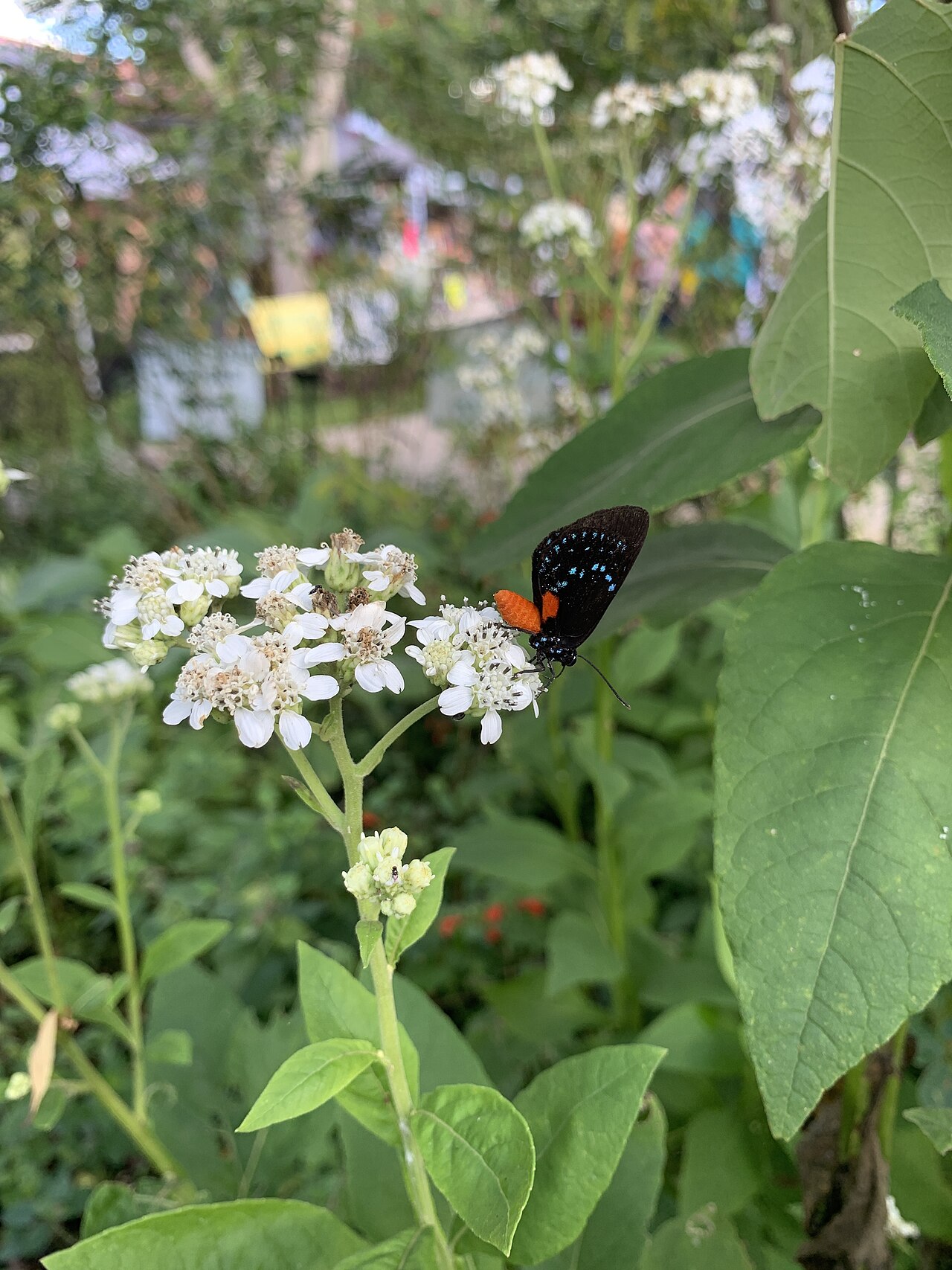
The flowers produce abundant nectar and pollen and attract a wide range of insects: honey bees, bumble bees and many native bees, wasps, flies and butterflies. In Texas and the southern plains it is a key nectar source for monarchs on their fall migration to Mexico. In Florida gardens it attracts many butterflies, including the atala.
For Birds
Small birds such as goldfinches and sparrows eat the seeds in late fall and winter, and the dense stands provide cover. The many insects drawn to the flowers also feed songbirds.
For Mammals
Deer rarely browse frostweed, which is why it often survives in heavily browsed Texas woodlands. Small mammals may shelter in dense stands.
Ecosystem Role
Frostweed is a common part of the herb layer in southern woodlands and bottomlands, and its colonies help stabilize soil along stream terraces. Hollow, dry stems left standing over winter may be used by stem-nesting bees and other insects.
Cultural & Historical Uses
Frostweed was described by Linnaeus in 1753. The species name virginica refers to Virginia, the source of many early American plant collections, though the plant is far more common farther south and west.
The ice formations on frostweed have long been noticed by naturalists. They form because the roots keep pushing water up into the stems after the plant is killed by frost; the water leaks out through cracks and freezes as it is extruded, forming thin, folded ribbons. A few other plants, such as dittany (Cunila origanoides), produce similar ice formations.
The name Indian tobacco suggests that the dried leaves were smoked or used in ceremonies, but detailed historical records are limited. Several other plants share that common name.
Frequently Asked Questions
Why is it called frostweed?
On the first hard freezes, sap forced out of cracks at the base of the stems freezes into thin, curling ribbons of ice. These ice flowers are short-lived and usually melt by midday.
Is frostweed the same as white crownbeard?
Yes. USDA PLANTS lists Verbesina virginica as white crownbeard. Frostweed is the name most often used by gardeners and native plant nurseries.
Does frostweed spread aggressively?
It spreads steadily by seed and short rhizomes and can form large colonies. It is ideal for woodland edges and natural areas but may need thinning each spring in a small garden.
How is frostweed different from wingstem?
Both have winged stems. Wingstem has yellow flowers with drooping rays and blooms earlier, while frostweed has white flowers and blooms in fall.
Is frostweed good for monarchs?
Yes. It is a major fall nectar source for migrating monarchs, especially in Texas, where it blooms during the peak of the fall migration.

Looking for a nursery that carries Frostweed?
Browse our native plant nursery directory: Alabama & Arkansas · Florida & Georgia · Illinois, Indiana, Iowa & Kansas · Kentucky, Louisiana, Maryland, Mississippi & Missouri · North Carolina, Ohio & Oklahoma · Pennsylvania, South Carolina, Tennessee, Texas & Virginia · West Virginia