
White Rosinweed (Silphium albiflorum)
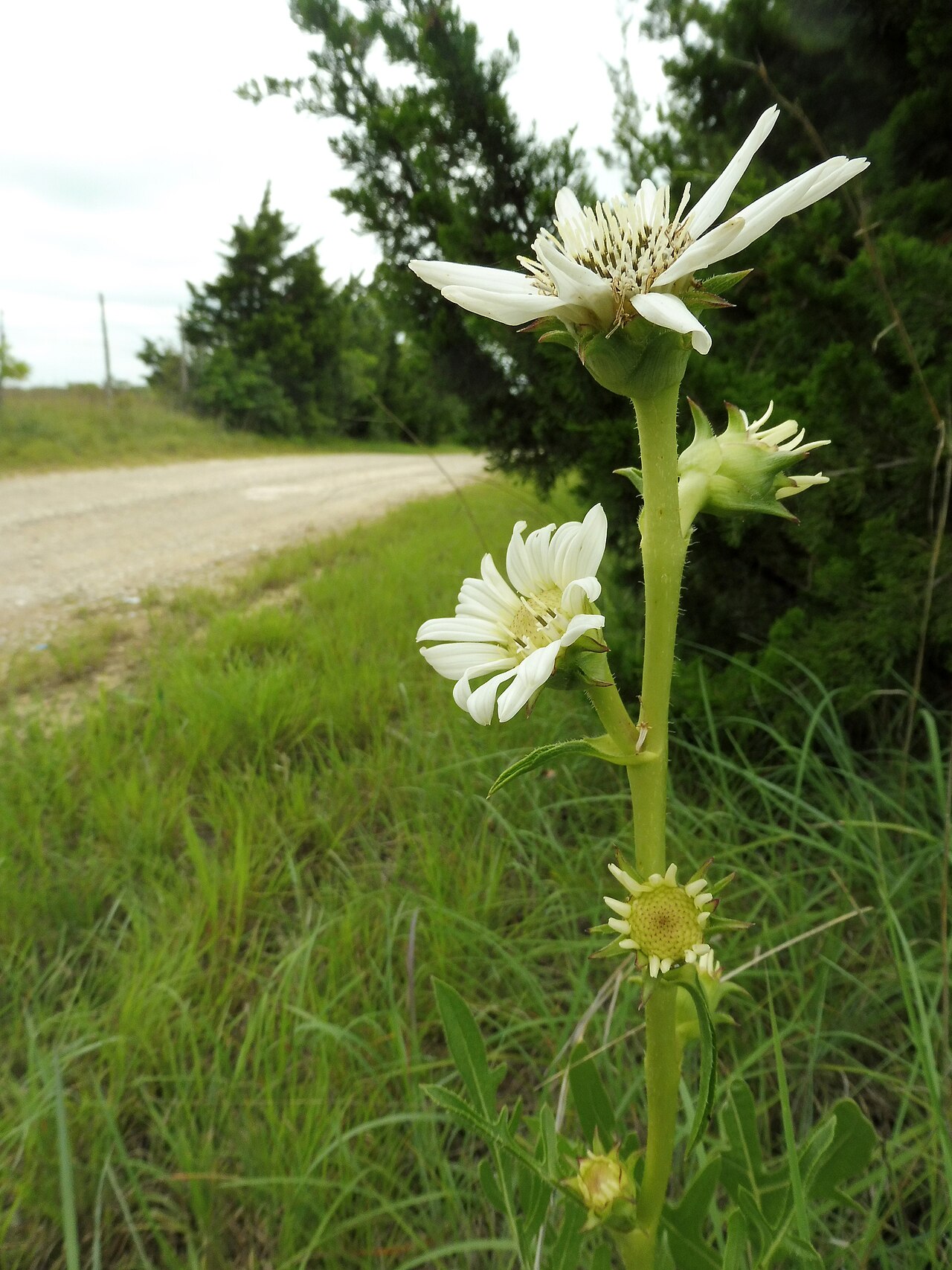
Silphium albiflorum, known as White Rosinweed, is a coarse, long-lived prairie perennial in the aster family (Asteraceae). It is the only rosinweed with white flowers. From a clump of stiff, rough, deeply cut leaves it raises sturdy stems 1 1/2 to 3 feet tall, carrying large, creamy white, daisy-like heads 2 to 3 inches across from late spring into midsummer. It is endemic to Texas.
White rosinweed grows on open, calcareous prairies and rocky limestone slopes in north-central and central Texas, from the Fort Worth Prairie, Cross Timbers and Blackland Prairie around Dallas and Fort Worth south through the Lampasas Cut Plain to the Austin area and the eastern edge of the Edwards Plateau. Botanists regard it as a highly conservative species: it rarely colonizes new ground, recovers slowly from disturbance and is a good indicator of intact native prairie.
It grows very slowly, sending down a massive taproot that can reach as deep as 15 feet, but once established it lives for decades and needs no care. It is a superb plant for a dry, sunny, limestone garden or a Texas prairie restoration. Buy nursery-grown plants or seed, and never dig wild plants: they almost never survive transplanting.
Identification
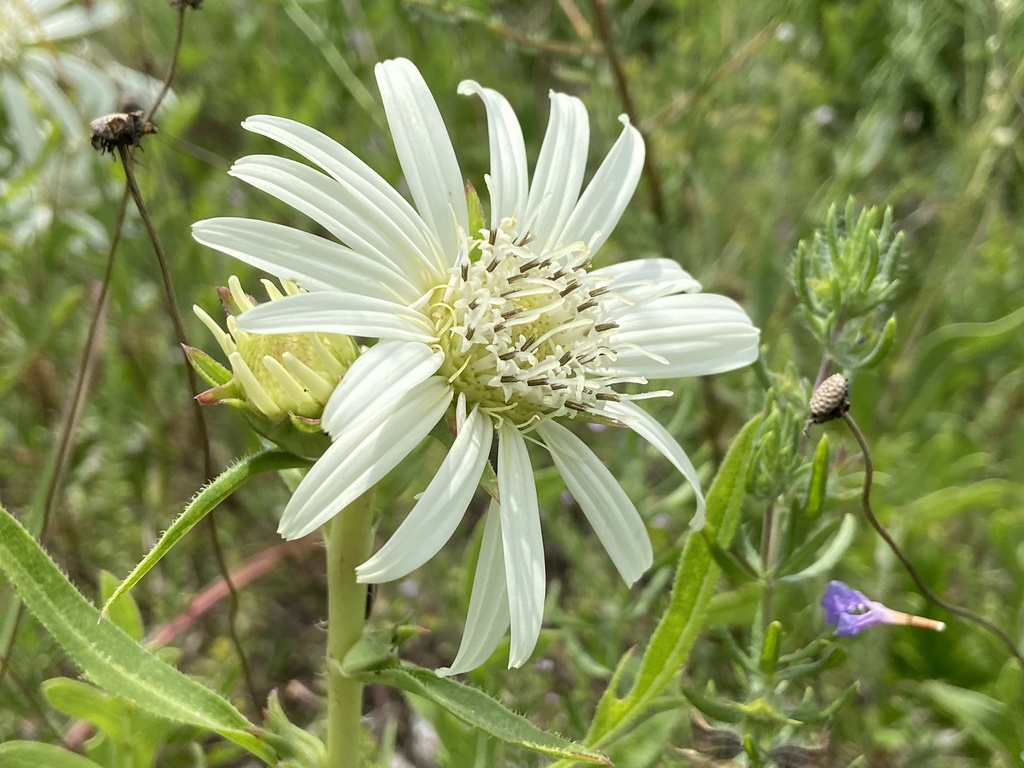
Look for a clump of stiff, sandpapery, deeply lobed leaves and stout stems topped with large white daisies, often with gummy resin on the stems.
Growth Habit
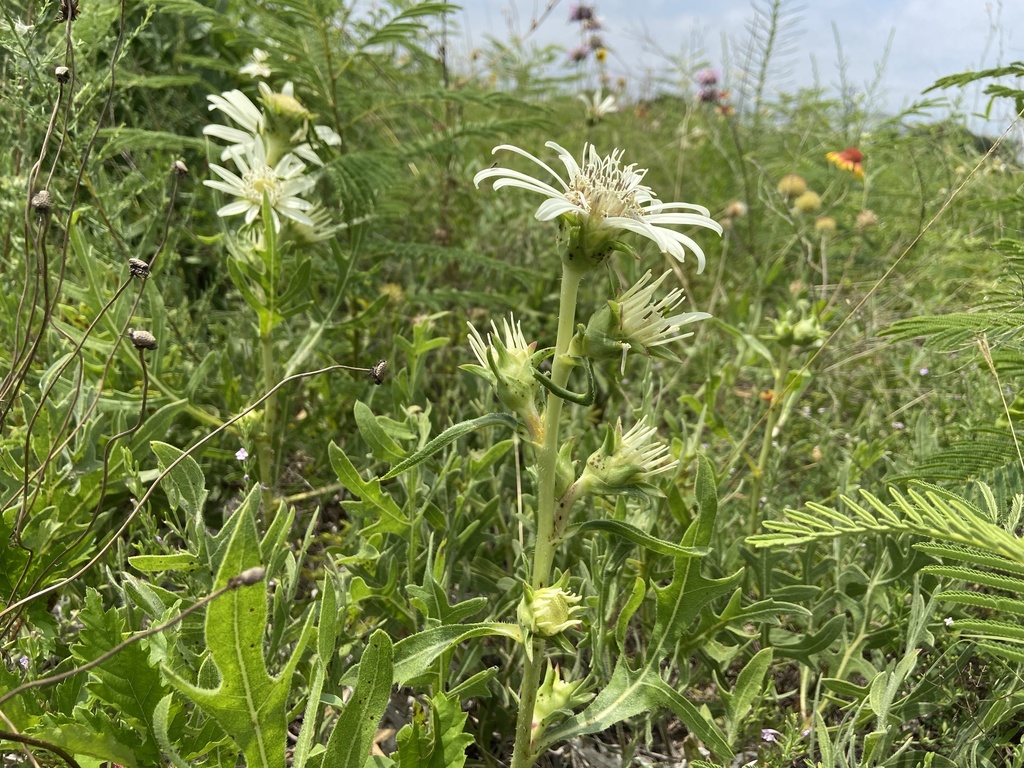
White rosinweed forms a clump from a woody crown and a very deep, thick taproot. In late spring it sends up one to several stout, rough-hairy stems, usually 1 1/2 to 3 feet tall, branching near the top. Like other rosinweeds, the stems may ooze a sticky, fragrant resin where they are damaged.
Leaves
Most leaves are near the base and lower stem. They are alternate, 4 to 12 inches long, stiff and leathery, and deeply cut into narrow, pointed lobes on each side of the midrib, somewhat like a small compass plant leaf. Both surfaces are covered with short, stiff hairs that make them feel like sandpaper. Upper leaves become smaller and less divided.
Flowers
The flower heads are 2 to 3 inches across, with 12 to 20 creamy white ray flowers around a pale greenish-white to cream center of disk flowers. The base of the head is wrapped in several rows of broad, rough, green bracts with spreading tips. As in all Silphium, only the ray flowers produce seed; the disk flowers supply pollen. It blooms mainly from May to July, sometimes again after late-summer rain.
Fruit & Seeds
The seeds are large, flat, winged achenes produced around the edge of the head. The dry, rounded seed heads with their stiff bracts remain on the stems into fall.
Look-alikes
White rosinweed is easy to recognize, because all other Silphium species have yellow flowers. Compass plant (S. laciniatum) has similarly cut leaves but is much taller, with yellow flowers. Starry rosinweed (S. asteriscus), rosinweed (S. integrifolium) and kidneyleaf rosinweed (S. compositum) also have yellow rays. White-flowered daisies such as fleabanes are much smaller, softer plants.
Quick Facts
| Scientific Name | Silphium albiflorum |
| Family | Asteraceae (aster family) |
| Plant Type | Long-lived herbaceous perennial with a deep taproot |
| Mature Height | 1.5–3 ft |
| Mature Spread | 1–2 ft |
| Growth Rate | Slow |
| Sun Exposure | Full sun |
| Water Needs | Low; very drought tolerant once established |
| Soil Type | Dry, rocky, gravelly or clay soils over limestone |
| Soil pH | Alkaline (above 7.2) |
| Bloom Time | May–July |
| Flower Color | Creamy white |
| Fall Color | None notable |
| Fruit | Large, flat, winged achenes |
| Deer Resistant | Fairly; rough, resinous leaves |
| USDA Hardiness Zones | 7–9 |
Native Range
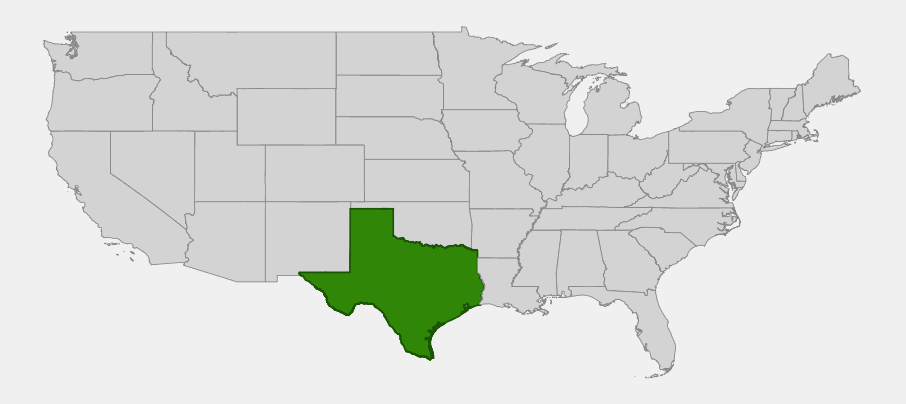
White rosinweed is endemic to Texas. USDA PLANTS lists it only from Texas, and it is not known from any other state or from Mexico. Its range centers on the limestone prairies of north-central Texas and extends south into central Texas.
It is most common in the Fort Worth Prairie (Grand Prairie), the western Blackland Prairie and the Cross Timbers around Dallas, Fort Worth, Midlothian, Decatur and Weatherford. From there it reaches south through Bosque, Coryell and Bell counties and the Lampasas Cut Plain to Burnet and Williamson counties and the Austin area, and west to Coleman and McCulloch counties on the eastern edge of the Edwards Plateau.
It grows in open, dry, calcareous prairies, rocky limestone hillsides and slopes, pastures that have never been plowed, and roadsides through prairie remnants. Because it reproduces slowly and depends on unplowed prairie, it has declined where these remnants have been lost to development, especially in the fast-growing Dallas-Fort Worth area. It is not yet featured on a regional list on this site, because its range lies in north-central Texas rather than South and West Texas or East Texas.
📋 Regional plant lists featuring White Rosinweed: South & West Texas
Growing & Care Guide
White rosinweed is slow to start but nearly indestructible once established. Think of it as a plant you put in once for a lifetime, in a sunny, dry spot where its taproot can go deep undisturbed.
Light
Full sun. It will not flower well in shade and is easily crowded out by taller plants.
Soil & Water
Plant it in well-drained, alkaline soil: rocky limestone, caliche, gravel or heavy blackland clay. Avoid rich, irrigated beds and soggy ground. Water seedlings and young plants through their first summer; after that, it needs no watering even in severe drought.
Planting Tips
Start with small container-grown plants or seed, and choose the final spot carefully, because the taproot makes it nearly impossible to move later. It looks best in a prairie or meadow planting with short and mid grasses such as sideoats grama and little bluestem, or as a specimen in a dry, rocky garden.
Pruning & Maintenance
Very little care is needed. Cut back the old stems in late winter. It tolerates periodic prescribed fire and late-winter mowing in prairie plantings, which help keep competing woody plants out.
Propagation
Grow it from seed sown outdoors in fall or after 60 days of cold, moist stratification. Sow into deep pots to accommodate the taproot. Seedlings grow slowly and often take three or more years to bloom. Do not try to divide or transplant established plants.
Landscape Uses
- Prairie restoration: a conservative indicator species for north-central Texas prairies
- Pollinator gardens: large white flowers for native bees in early summer
- Xeriscapes: deep-rooted and drought-proof once established
- Rock gardens: striking, sculptural foliage on limestone
- Native Texas gardens: a showy endemic for Dallas-Fort Worth and Austin landscapes
Wildlife & Ecological Value
White rosinweed is part of the rich wildflower community of Texas tallgrass and mixed-grass prairies, and it blooms in early summer when many prairie insects are active.
For Pollinators
The large flower heads are visited by many native bees, including bumble bees, leafcutter bees and long-horned bees, as well as beetles and butterflies that collect pollen and nectar.
For Birds
Seed-eating birds, such as finches and sparrows, eat the large, oily seeds in late summer and fall.
For Mammals
The rough, resinous leaves are not a favorite of deer, but cattle and other grazing animals will eat the young shoots, and it declines in heavily grazed pastures.
Ecosystem Role
Its deep taproot reaches moisture far below the surface, letting it stay green in drought and helping build the deep soil structure of prairies. As a long-lived, slow-to-establish species, it is a marker of high-quality, never-plowed prairie in north-central Texas.
Cultural & Historical Uses
The genus name Silphium comes from an ancient Greek name for a resinous plant, and rosinweeds are named for the sticky resin that seeps from their stems. The species name albiflorum means “white-flowered,” which sets it apart from every other member of the genus.
Native Americans and early settlers chewed the hardened resin of some prairie rosinweeds, such as compass plant, as a kind of chewing gum. There is no particular record of this use for white rosinweed.
Because so much of the Blackland Prairie has been plowed or developed, white rosinweed has become a symbol of the remnant prairies that survive in Texas. Native plant societies and prairie conservation groups often use its presence to help identify prairies worth protecting.
Frequently Asked Questions
Is white rosinweed found outside Texas?
No. It is endemic to Texas, mainly in the north-central and central parts of the state.
Why is white rosinweed so slow to grow?
It puts most of its energy into a deep taproot, which may eventually reach as deep as 15 feet. Seedlings often take three or more years to bloom, but established plants live for many decades.
Can I transplant white rosinweed?
No. The deep taproot makes established plants almost impossible to move. Start with small nursery-grown plants or seed, and never dig plants from the wild.
Are there other white-flowered rosinweeds?
No. White rosinweed is the only Silphium species with white ray flowers; all the others are yellow.
When does white rosinweed bloom?
Mainly from May to July, sometimes with a few more flowers after late-summer rains.

Looking for a nursery that carries White Rosinweed?
Browse our native plant nursery directory: Texas

