
Coastal Wild Buckwheat (Eriogonum cinereum)
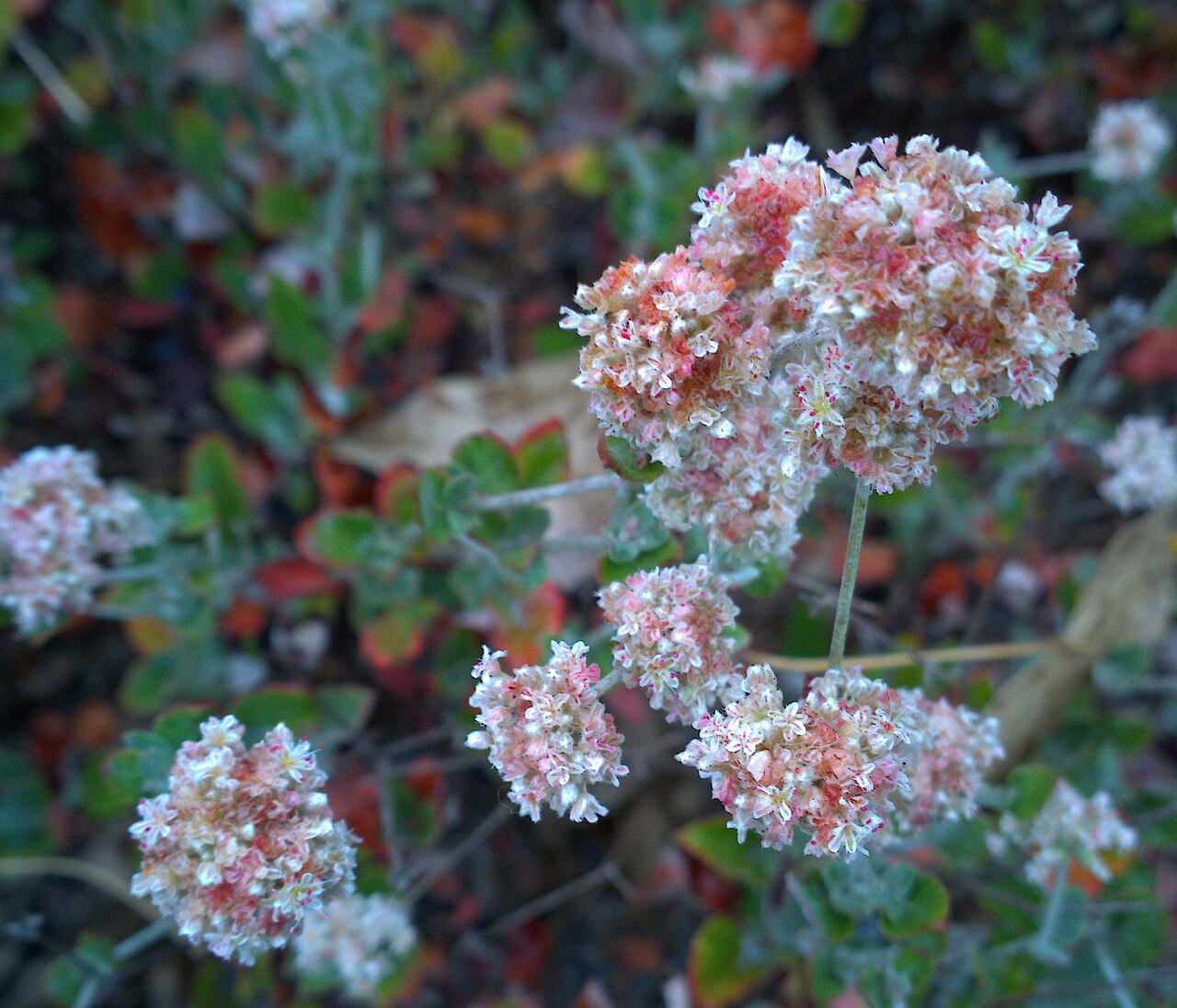
Eriogonum cinereum, known as Coastal Wild Buckwheat, ashyleaf buckwheat or, in USDA PLANTS, coastal buckwheat, is a rounded, gray-leaved shrub of the coastal bluffs and coastal sage scrub of southern California. It grows 2 to 5 feet tall, with soft, woolly, ashy-gray leaves, and from early summer into late fall it bears ball-shaped heads of tiny white to pale pink flowers that slowly age to rose and rust.
It is one of the wild buckwheats (Eriogonum), a large genus of western North American plants in the knotweed family (Polygonaceae) that are not related to the buckwheat grown as a grain, despite the shared name. It should not be confused with coast buckwheat (Eriogonum latifolium), a lower, mounding perennial of the central and northern California coast with broader leaves and larger, denser flower heads.
Coastal wild buckwheat has a small natural range, mainly in Santa Barbara, Ventura and Los Angeles Counties, but it is a tough, drought-tolerant garden plant that blooms in the dry season and feeds a wide range of pollinators. This guide covers how to identify it, where it grows, how to grow it, and its value to wildlife.
Identification
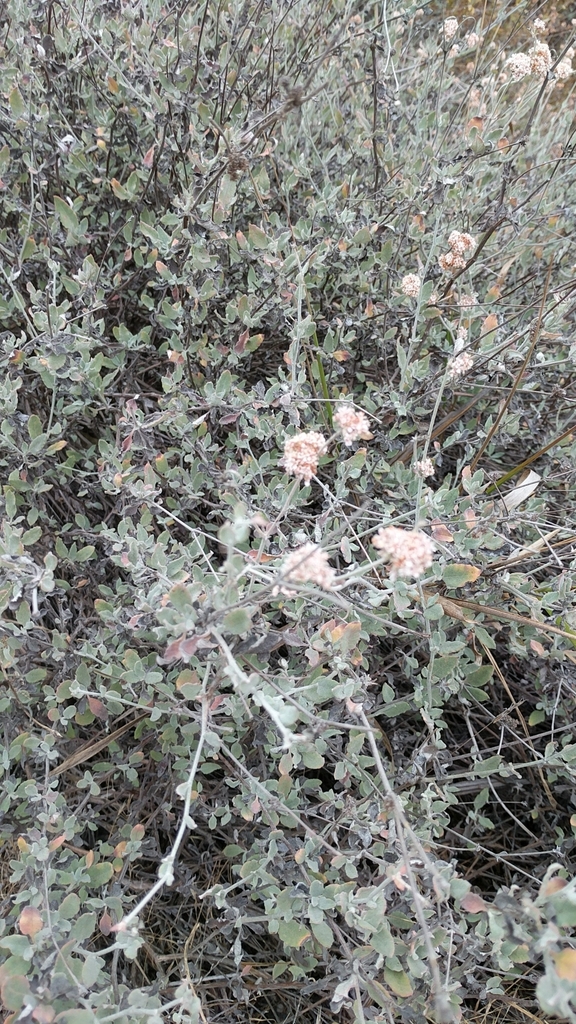
Coastal wild buckwheat is a mid-sized shrub with a distinctly gray look. Look for soft, woolly, oval leaves and long, slender stalks topped by round, pom-pom-like flower heads in summer and fall.
Growth Habit
It is a rounded, loosely branched shrub, usually 2 to 5 feet tall and somewhat wider, woody at the base with leafy, flexible upper branches. On exposed sea bluffs plants are often lower and more compact, while in sheltered spots and gardens they can become open and sprawling.
Leaves
The leaves are oval to round, about 1/2 to 1 1/2 inches long, on short stalks along the branches. Both surfaces are covered with fine, felt-like hairs, the upper side gray-green and the lower side whiter. The species name cinereum means “ash-colored,” describing this gray foliage. Leaves stay on through the year, though plants look thinner during late-summer drought.
Flowers
Flower heads are borne at the ends of slender, branched, leafless stalks held above the foliage. Each head is a dense, rounded cluster about 1/2 to 1 inch across, made up of many tiny flowers. They open white to pale pink, often with darker pink midribs, and age to rose, rust and finally brown. Bloom is mainly from June to December, peaking in late summer.
Fruit & Seeds
Each tiny flower produces a single small, three-sided seed (achene) that stays within the dried flower parts. The rusty-brown seed heads remain on the plant into winter and are scattered gradually by wind and birds.
Look-alikes
California buckwheat (Eriogonum fasciculatum), the most common buckwheat of the same region, has short, narrow, needle-like leaves in bundles and flatter flower clusters. Seacliff wild buckwheat (Eriogonum parvifolium), another sea-bluff species, has small, thick, rolled-edge leaves that are green above. Coast buckwheat (E. latifolium), of the central and northern coast, is a low perennial with broad, wavy leaves and dense heads on stout stalks.
Quick Facts
| Scientific Name | Eriogonum cinereum Benth. |
| Family | Polygonaceae (buckwheat or knotweed family) |
| Plant Type | Evergreen shrub |
| Mature Height | 2–5 ft |
| Mature Spread | 3–6 ft |
| Growth Rate | Fast |
| Sun Exposure | Full sun |
| Water Needs | Low; summer-dry once established |
| Soil Type | Well-drained sandy, rocky or clay soils of bluffs and slopes |
| Soil pH | About 6.0–8.0 |
| Bloom Time | June–December |
| Flower Color | White to pale pink, aging to rose and rust |
| Fall Color | Rust-brown seed heads in fall and winter |
| Fruit | Tiny three-sided achenes in dried flower heads |
| Deer Resistant | Moderately; not a favored browse plant |
| USDA Hardiness Zones | 9–11 |
Native Range
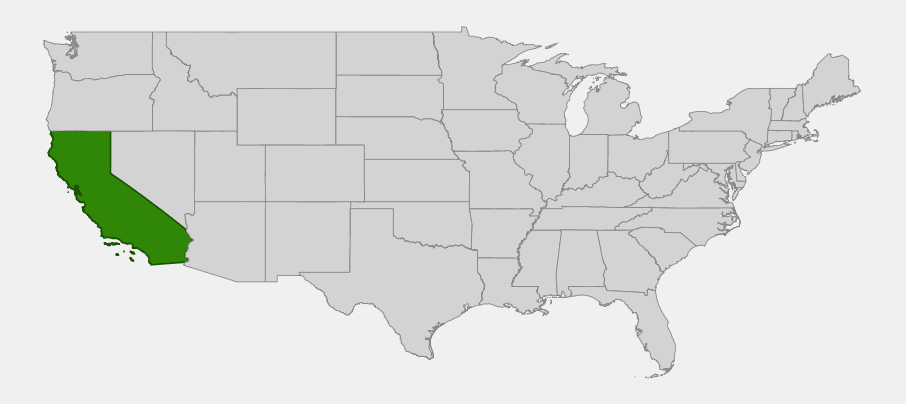
Coastal wild buckwheat is native only to southern California. USDA PLANTS lists it from California alone, and it is not known to grow wild in any other state.
Its natural range is narrow and coastal: from southern Santa Barbara County through Ventura County and the Santa Monica Mountains to the Palos Verdes Peninsula and San Pedro in Los Angeles County. It is most often seen on sea bluffs and coastal canyons near Malibu and Palos Verdes, and it extends a short way inland in the Santa Monica Mountains and the hills near Thousand Oaks.
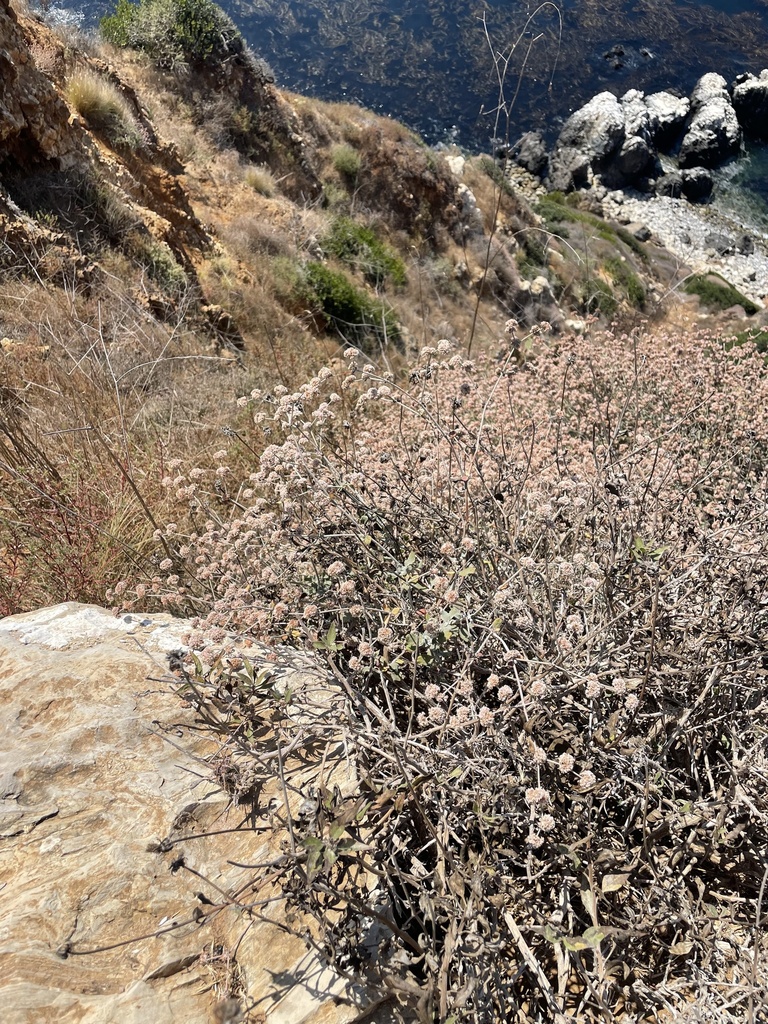
It grows on coastal bluffs, dry slopes and canyon sides in coastal sage scrub, usually within a few miles of the ocean and at low elevations, where summer fog moderates the heat. Much of its habitat has been lost to coastal development, so the remaining natural stands on bluffs and in parks are valuable.
📋 Regional plant lists featuring Coastal Wild Buckwheat: California & Nevada
Growing & Care Guide
Coastal wild buckwheat is one of the easiest wild buckwheats to grow in coastal California gardens and is widely sold by California native plant nurseries. It grows quickly, tolerates poor soil and coastal wind and salt, and fills the late-summer gap when many other plants are dormant.
Light
Give it full sun. In part shade it becomes leggy and blooms less. Near the coast it is happy in full exposure to wind and sun; inland it appreciates some afternoon relief in the hottest areas.
Soil & Water
It grows in sandy, rocky or even clay soils as long as they drain reasonably well. Water regularly during its first summer, then sparingly: once established it needs little or no summer water near the coast, and an occasional deep soak inland. Too much summer water, especially in heavy soil, shortens its life.
Planting Tips
Plant in fall or winter. Allow room for it to spread 3 to 6 feet. It works well on slopes and banks, in coastal sage scrub plantings, along hot walls and in seaside gardens. Combine it with California sagebrush, sages, California encelia and coastal bunchgrasses. Its gray foliage contrasts well with green-leaved shrubs.
Pruning & Maintenance
Leave the rusty seed heads on into winter for their color and for the birds, then shear lightly in late winter to remove old flower stalks and keep the shrub dense. Avoid cutting deep into old, leafless wood. Like many buckwheats, individual plants may be relatively short-lived but they reseed modestly.
Propagation
It grows readily from fresh seed sown in fall or winter, with no special treatment needed in most cases. Semi-hardwood cuttings taken in fall also root fairly easily. Seedlings grow quickly and often bloom in their first or second year.
Landscape Uses
- Coastal and seaside gardens: tolerant of wind, salt spray and sandy soil
- Pollinator gardens: long summer-to-fall bloom for bees, butterflies and other insects
- Slopes and erosion control: a fast-growing shrub for dry banks
- Coastal sage scrub restoration: a characteristic shrub of southern California bluffs
- Low-water landscapes: gray foliage and fall color with little summer water
Wildlife & Ecological Value
Wild buckwheats are among the most valuable native plants for insects in California, and coastal wild buckwheat flowers at a time of year when few other coastal plants do.
For Pollinators
The tiny, open flowers are easy for many insects to use. Native bees of many sizes, honey bees, wasps, flies, beetles and butterflies visit the flower heads from summer into fall. Wild buckwheats as a group are larval host plants for several butterflies, including blues and hairstreaks, whose caterpillars feed on the flowers and seeds.
For Birds
Seed-eating birds such as sparrows and finches feed on the seeds through fall and winter. Insect-eating birds hunt the many insects drawn to the flowers, and the dense shrubs give cover to small birds such as wrentits and towhees.
For Mammals
Small mammals eat the fallen seeds and shelter beneath the shrubs. The gray, woolly foliage is not a favorite of deer, though they may browse it when other food is scarce.
Ecosystem Role
On coastal bluffs and slopes, coastal wild buckwheat helps stabilize soil and is a structural part of coastal sage scrub. Its late bloom extends the nectar season for many insects, supporting the food web for birds, lizards and other animals in the dry months.
Cultural & Historical Uses
The genus name Eriogonum combines the Greek erion, wool, and gonu, knee or joint, referring to the woolly, jointed stems of the first species described. The species name cinereum is Latin for “ash-colored.” The plant was described by the English botanist George Bentham in the nineteenth century.
Wild buckwheats are not related to the grain buckwheat (Fagopyrum esculentum), though both belong to the same family. The genus Eriogonum is one of the largest plant genera in western North America, with many species found in only one region or mountain range, like this one.
Coastal wild buckwheat is a favorite in southern California native gardens and restoration work, valued for its gray foliage, long bloom and the way its flower heads change from white and pink to rust. Its common names vary: USDA calls it coastal buckwheat, while gardeners and many references use ashyleaf buckwheat.
Frequently Asked Questions
Is coastal wild buckwheat the same as coast buckwheat?
No. USDA calls Eriogonum cinereum coastal buckwheat, but the plant often called coast buckwheat or seaside buckwheat is Eriogonum latifolium, a different species of the central and northern California coast. E. cinereum is also called ashyleaf buckwheat.
Where does coastal wild buckwheat grow?
It is native to coastal southern California, mainly Santa Barbara, Ventura and Los Angeles Counties, on sea bluffs, slopes and canyons in coastal sage scrub.
When does it bloom?
Mainly from June to December, with peak bloom in late summer. The flower heads age to rose and rust and stay attractive into winter.
Does coastal wild buckwheat need water?
Water it during its first summer. After that it needs little or no summer water near the coast and only occasional deep watering inland.
Is it related to the buckwheat used for flour?
Only distantly. Both are in the knotweed family, but grain buckwheat is an Asian crop in a different genus, Fagopyrum.

Looking for a nursery that carries Coastal Wild Buckwheat?
Browse our native plant nursery directory: California

