
Streambank Bird’s-Foot Trefoil (Lotus oblongifolius)
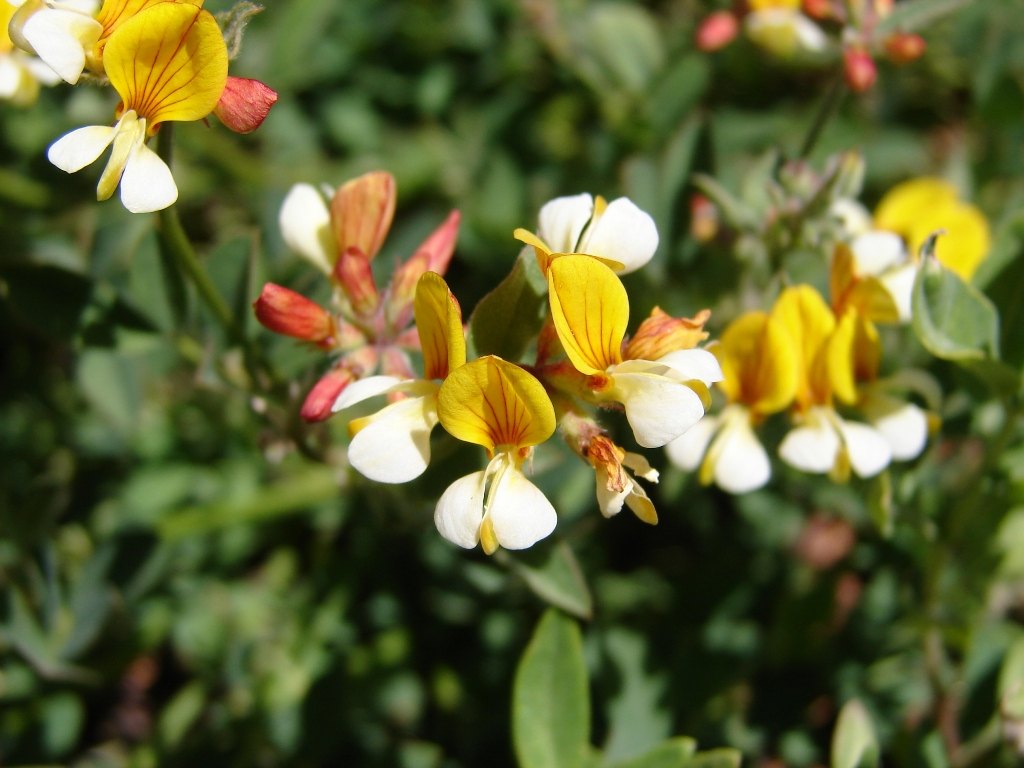
Lotus oblongifolius, known as Streambank Bird’s-Foot Trefoil, streambank lotus or narrowleaf lotus, is a native perennial pea of wet places in the Far West. Through summer its leafy, sprawling stems carry small clusters of two-toned pea flowers, each with a bright yellow banner petal above white wings, along streams, springs, wet meadows and seeps from Oregon to Arizona.
It belongs to the pea family (Fabaceae). Many current floras, including the Jepson Manual, place it in the genus Hosackia, as Hosackia oblongifolia, separating it from the Old World bird’s-foot trefoils. USDA PLANTS keeps it as Lotus oblongifolius, and the typical variety (var. oblongifolius) covered here is the widespread form. It should not be confused with the European bird’s-foot trefoil (Lotus corniculatus), a weedy forage plant that is not native to North America.
Like other legumes, it hosts nitrogen-fixing bacteria in its roots, and it is a useful plant for stabilizing wet banks and feeding bees and butterflies in native meadow and riparian plantings. This guide covers how to identify streambank bird’s-foot trefoil, where it grows, how to grow it, and its value for wildlife.
Identification
Look for streambank bird’s-foot trefoil in summer at the edges of creeks, springs and wet meadows, where its pinnate leaves and two-toned yellow and white pea flowers stand out among grasses and sedges.
Growth Habit
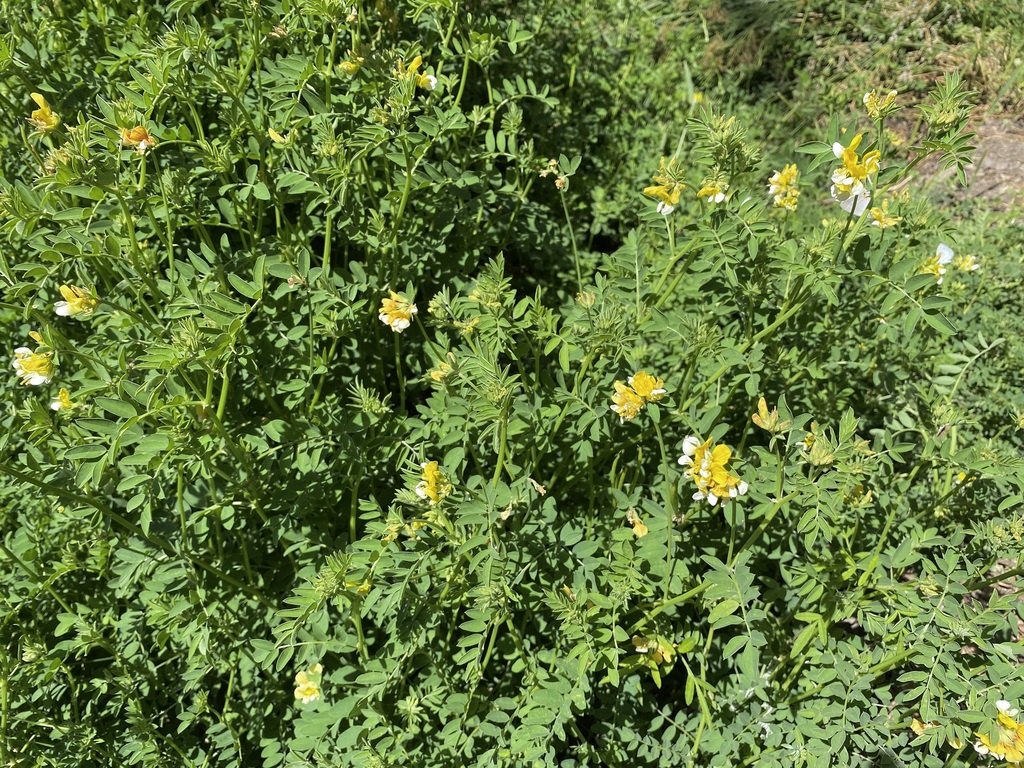
It is a perennial herb that spreads from slender rhizomes, forming loose patches. The stems are erect to sprawling, usually 1 to 2 feet long, and range from nearly hairless to finely hairy.
Leaves
The leaves are pinnately compound, with about 7 to 11 narrow, oblong to lance-shaped leaflets arranged along a central stalk, each about ½ to 1 inch long. Small, papery, gland-like stipules sit at the base of each leaf. The many leaflets distinguish it from three-leaflet trefoils.
Flowers
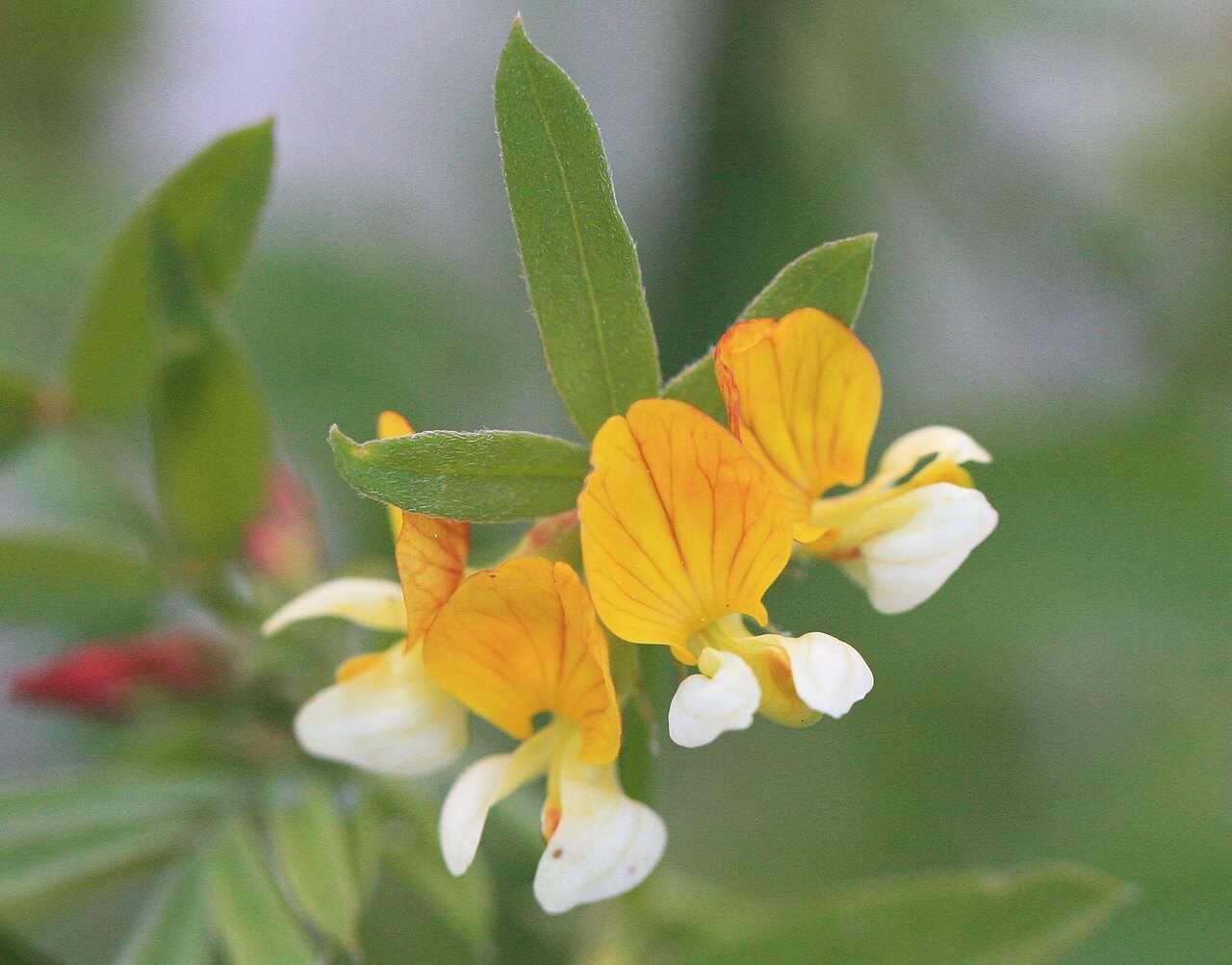
The flowers are borne in small umbels of about 2 to 7 at the end of a long stalk from the leaf axils, usually with a small leafy bract below the cluster. Each pea flower is about ½ inch long, with an upright yellow banner and white to cream wings and keel. Flowers may turn orange or reddish as they age. Bloom runs from about May to September, peaking in early to midsummer.
Fruit & Look-alikes
The fruit is a narrow, straight pod about 1 to 2 inches long that splits to release several seeds. European bird’s-foot trefoil has all-yellow flowers and leaves with only five leaflets (three at the tip and two at the base). Bog bird’s-foot trefoil (Hosackia pinnata), found mostly farther north, has similar flowers, so use a regional flora where the two overlap. The combination of many narrow leaflets and yellow-and-white flowers in wet sites is distinctive.
Quick Facts
| Scientific Name | Lotus oblongifolius (Benth.) Greene var. oblongifolius (syn. Hosackia oblongifolia) |
| Family | Fabaceae (pea family) |
| Plant Type | Rhizomatous herbaceous perennial wildflower |
| Mature Height | 1–2 ft |
| Mature Spread | 1–3 ft (spreading by rhizomes) |
| Growth Rate | Moderate |
| Sun Exposure | Full sun to part shade |
| Water Needs | High; moist to wet soil year-round |
| Soil Type | Moist to wet sandy, gravelly or loamy soils of streambanks and meadows |
| Soil pH | About 5.5–7.5 |
| Bloom Time | May–September |
| Flower Color | Yellow banner with white wings, aging orange to reddish |
| Fall Color | None notable |
| Fruit | Narrow, straight seed pod |
| Deer Resistant | No; legume foliage is browsed by deer and livestock |
| USDA Hardiness Zones | 5–9 |
Native Range
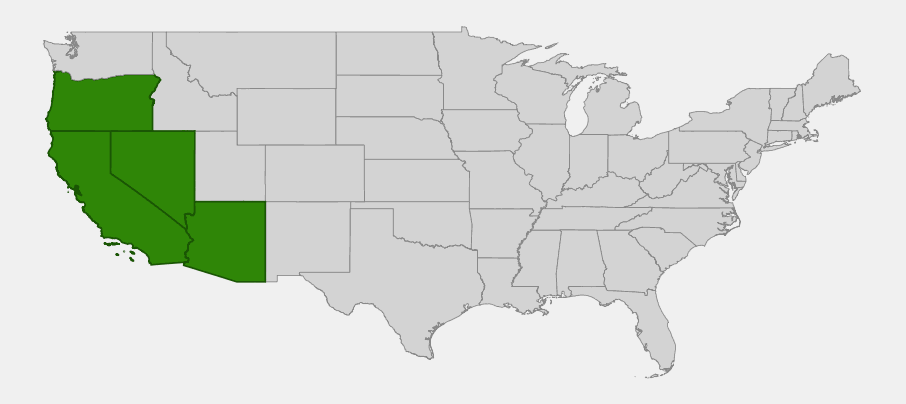
Streambank bird’s-foot trefoil is native to the western United States and northern Baja California. USDA PLANTS lists the typical variety from Arizona, California, Nevada and Oregon. It is most widespread in California, where it occurs in the Sierra Nevada, Cascade Range, Klamath and North Coast Ranges, the Transverse and Peninsular Ranges and other mountains, often at middle elevations.
In Oregon it reaches the southwestern part of the state, in Nevada it grows mainly along the eastern edge of the Sierra Nevada, and in Arizona it occurs in moist canyons of the southeastern mountains, the sky islands near the Mexican border.
Throughout its range it is a plant of permanently moist places: streambanks and gravel bars, springs and seeps, wet meadows, ditches and the margins of ponds and lakes, in sun or the light shade of willows and alders. It is classed as an obligate wetland plant across its range.
📋 Regional plant lists featuring Streambank Bird’s-Foot Trefoil: Arizona & New Mexico · California & Nevada · Western Oregon & Western Washington
Growing & Care Guide
Streambank bird’s-foot trefoil is an easy, adaptable plant for wet spots in western gardens, and it is sometimes offered by native nurseries and restoration seed suppliers. It fills in around ponds, rain gardens and seepy banks, and blooms over a long summer season.
Light
Full sun gives the most flowers, but it also grows well in part shade, as it does under streamside willows and alders. In hot inland gardens it appreciates some afternoon shade.
Soil & Water
It needs soil that stays moist to wet through the growing season. Sandy, gravelly or loamy soils all work, and it tolerates seasonal flooding. It is not suited to dry, summer-dry gardens; if the soil dries out in summer it will go dormant or die back.
Planting Tips
Plant in fall or early spring along a pond edge, swale, rain garden or naturally wet bank. Space plants 1 to 2 feet apart; they will spread by rhizomes to form a loose groundcover between taller wetland plants such as rushes, sedges and monkeyflowers.
Pruning & Maintenance
Cut back old stems in late fall or winter if you want a tidier look. No fertilizer is needed, since it fixes its own nitrogen. Pull out European bird’s-foot trefoil if it appears nearby, as the weedy species can outcompete it.
Propagation
Sow seed in fall or spring after scarifying (lightly nicking or sanding) the hard seed coat and soaking it overnight. Clumps can also be divided in early spring, and rhizome pieces root readily in moist soil.
Landscape Uses
- Rain gardens and swales: a flowering groundcover for spots that stay wet through summer
- Pond and stream edges: helps knit soil along wet banks with its spreading rhizomes
- Pollinator gardens: summer pea flowers for native bees and butterflies
- Wet meadow plantings: mixes well with sedges, rushes and other meadow wildflowers
- Riparian restoration: a native, nitrogen-fixing legume for streambank and meadow projects within its range
Wildlife & Ecological Value
Streambank bird’s-foot trefoil adds nectar, pollen and nitrogen to riparian and wet meadow habitats through the summer.
For Pollinators
Its pea flowers are worked mainly by bumble bees and other sturdy native bees that can push open the keel to reach pollen and nectar. Butterflies also visit, and native lotuses as a group serve as caterpillar food plants for several small butterflies, such as blues.
For Birds
Seed-eating birds may take its seeds, and insects drawn to the flowers and foliage provide food for songbirds in riparian areas. The leafy patches give low cover along streams.
For Mammals
Deer, elk and livestock graze its foliage, which, like that of many legumes, is relatively high in protein. Small mammals may eat the seeds.
Ecosystem Role
As a legume, it forms root nodules with nitrogen-fixing bacteria, enriching the soil of wet meadows and streambanks. Its spreading rhizomes help stabilize banks and gravel bars against erosion.
Cultural & Historical Uses
George Bentham first described this plant in the nineteenth century from specimens collected in California, and Edward Lee Greene later placed it in Lotus. The name oblongifolius refers to its oblong leaflets.
Botanists have long debated how to divide the large, worldwide genus Lotus. DNA studies support separating the native western American species into their own genera, such as Hosackia and Acmispon, so California floras now call this plant Hosackia oblongifolia, while USDA PLANTS still uses Lotus.
Across the West, streambank bird’s-foot trefoil is a familiar summer wildflower along trails that follow creeks and meadows, and it is increasingly used in riparian and meadow restoration as a native alternative to introduced forage legumes.
Frequently Asked Questions
Is streambank bird’s-foot trefoil native?
Yes. It is native to Oregon, California, Nevada and Arizona, plus northern Baja California. It is different from the European bird’s-foot trefoil (Lotus corniculatus), which is an introduced forage plant and weed.
How can I tell it from European bird’s-foot trefoil?
Streambank bird’s-foot trefoil has yellow banners with white wings and leaves with about 7 to 11 narrow leaflets. The European species has all-yellow flowers and leaves with five leaflets.
Does streambank bird’s-foot trefoil need wet soil?
Yes. It grows naturally along streams, springs and wet meadows and needs consistently moist to wet soil. It is a good choice for rain gardens and pond edges, not dry beds.
Is it Lotus or Hosackia?
Both names are used. USDA PLANTS lists it as Lotus oblongifolius, while the Jepson Manual and many recent sources call it Hosackia oblongifolia.
When does streambank bird’s-foot trefoil bloom?
From about May to September, with peak bloom in early to midsummer, depending on elevation.

Looking for a nursery that carries Streambank Bird’s-Foot Trefoil?
Browse our native plant nursery directory: Arizona · California · Nevada · Oregon

