
Silky Beach Pea (Lathyrus littoralis)
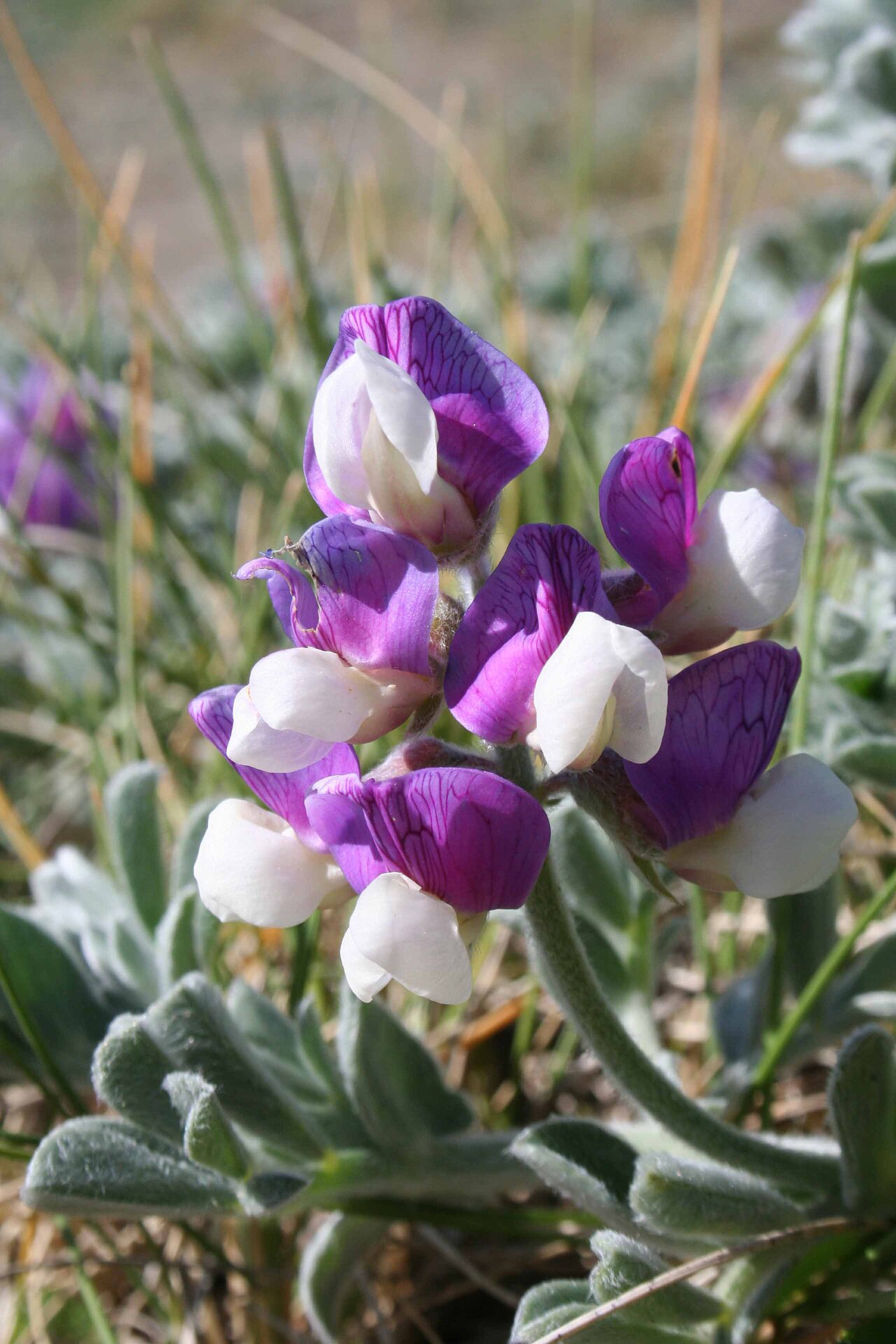
Lathyrus littoralis, known as Silky Beach Pea, is a low, spreading perennial wild pea of Pacific Coast beaches and dunes. Its stems, leaves and pods are covered with soft, silvery-gray hairs, so the plant looks almost woolly. From spring into summer it carries dense clusters of bicolored pea flowers with a pink to purple upper petal and white side petals, a striking combination against the silver foliage.
It is native to the outer coast of western North America, from southern British Columbia through Washington and Oregon to northern and central California. It grows only on sand: foredunes, the backs of beaches and open dune hollows, usually within sight of the ocean. Underground stems run through the sand, so a single plant can form a broad, low patch that helps hold the dunes in place.
Silky beach pea is a fine plant for coastal gardens and dune restoration within its range. Like other wild peas, it is not a food plant: Lathyrus seeds contain compounds that can cause lathyrism, a serious nerve disorder, when eaten in quantity, so do not eat the seeds or pods.
Identification
Look on Pacific Coast beaches and dunes for a low, silvery-hairy pea with small leaflets, short tendrils that do not climb, and dense clusters of pink-purple and white flowers.
Growth Habit
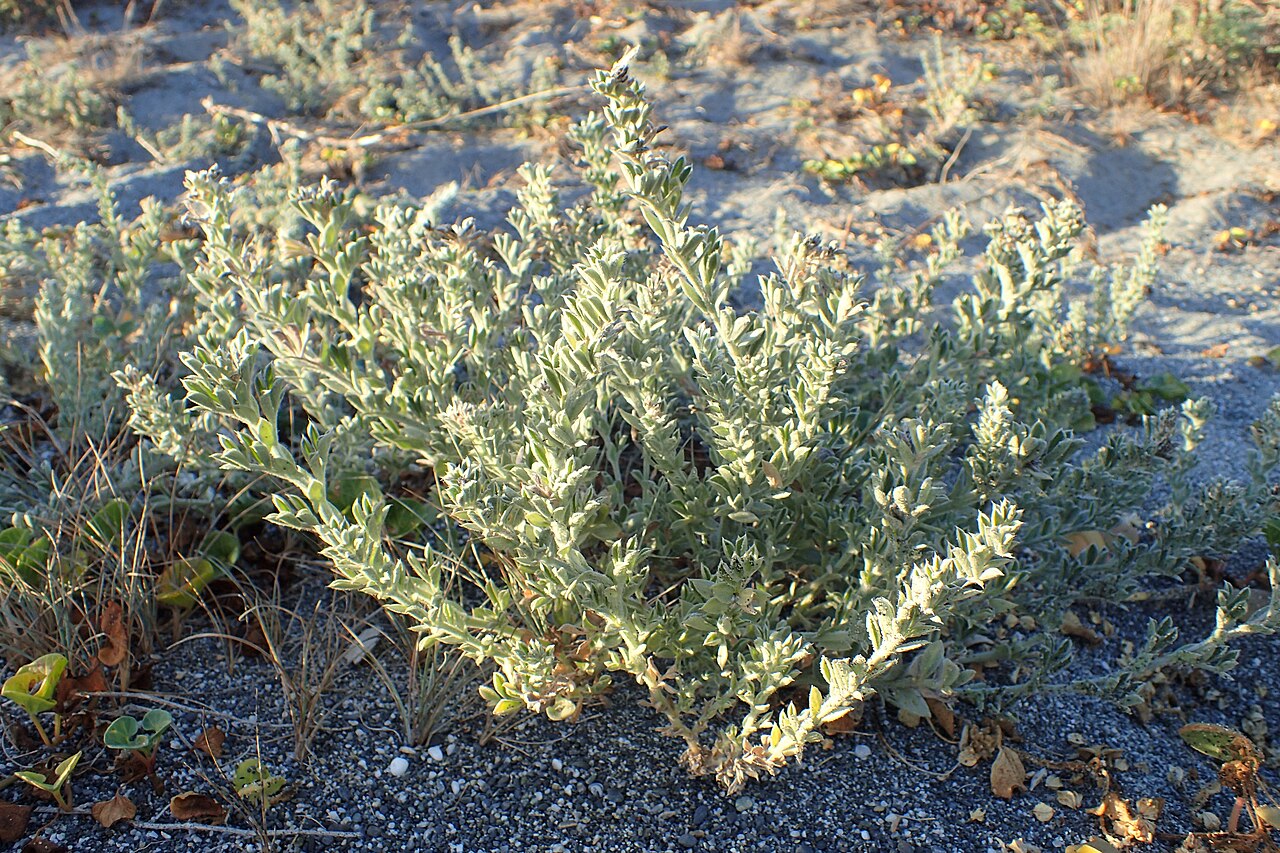
Silky beach pea is a perennial that spreads by long rhizomes buried in the sand. Its stems are usually 4 to 24 inches long, lying on the sand or rising a little, and form low mounds or loose patches. When sand blows over the plant, new shoots grow up through it.
Leaves
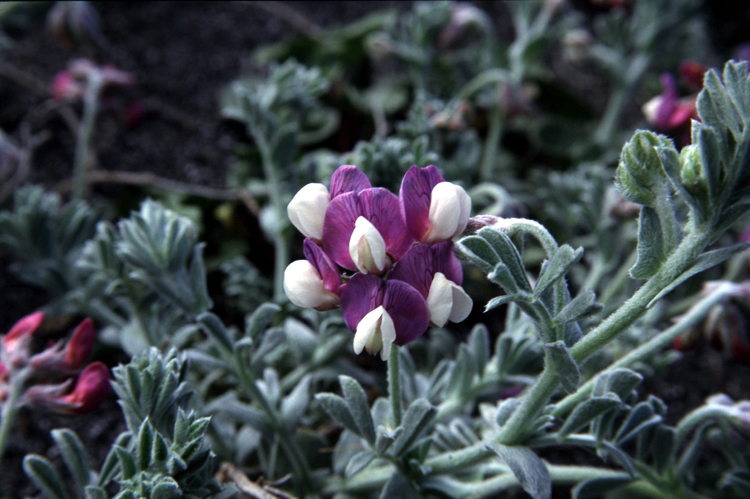
The leaves are pinnately compound, with about 4 to 8 small, oval to oblong leaflets, each about 1/2 to 1 inch long, often folded or slightly scoop-shaped. The leaves and stems are densely covered with long, soft, silky hairs that give the whole plant a gray-green to silver look. The leaf tips end in short bristles or small tendrils that do not climb. Large, leaf-like stipules sit at the base of each leaf.
Flowers
The flowers bloom from about April to July in dense clusters of 2 to 10 on stalks that rise just above the leaves. Each is a typical pea flower about 1/2 to 3/4 inch long, with an upright upper petal (banner) that is rose-pink to purple with darker veins, and white or pale pink side petals (wings) and keel. The two-tone flowers are a good identification feature.
Fruit & Seeds
The pods are short, oval to oblong, flattened and densely hairy, about 1 to 1 1/2 inches long. They split open when ripe to release a few round seeds. Lathyrus seeds should never be eaten in quantity; see the safety note below.
Look-alikes
The beach pea (Lathyrus japonicus), which shares some Pacific Northwest beaches, is a larger, smoother plant with bigger, mostly purple flowers and leaves that end in climbing tendrils. Pacific pea (Lathyrus vestitus) is a climbing vine of woodlands and scrub, not dunes. Lupines on the dunes, such as Chamisso bush lupine, have palmately compound leaves and tall flower spikes.
Quick Facts
| Scientific Name | Lathyrus littoralis |
| Family | Fabaceae (pea family) |
| Plant Type | Low, rhizomatous herbaceous perennial |
| Mature Height | 4–12 in |
| Mature Spread | 1–3 ft; spreads by rhizomes |
| Growth Rate | Moderate |
| Sun Exposure | Full sun |
| Water Needs | Low; drought tolerant in sand |
| Soil Type | Loose, well-drained beach and dune sand |
| Soil pH | Neutral to slightly alkaline (about 6.5–8.0) |
| Bloom Time | April–July |
| Flower Color | Pink to purple banner with white wings |
| Fall Color | None; silvery foliage |
| Fruit | Short, hairy pods (seeds toxic if eaten in quantity) |
| Deer Resistant | Moderately |
| USDA Hardiness Zones | 8–10 |
Native Range
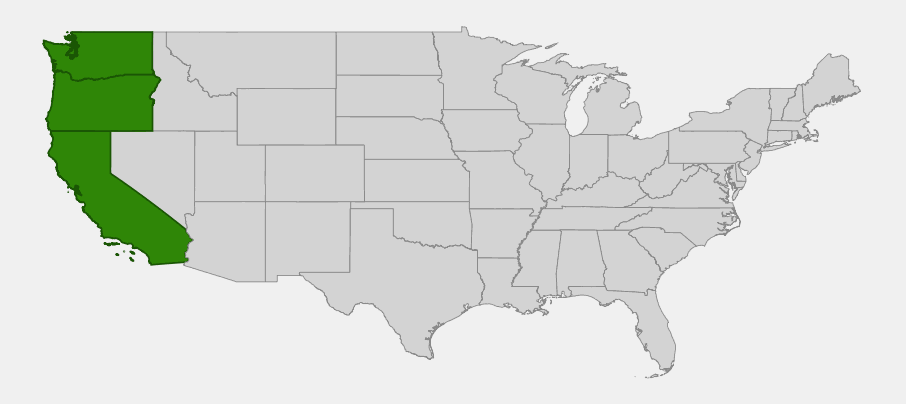
Silky beach pea is native to the Pacific Coast of North America. USDA PLANTS lists it from California, Oregon and Washington, and it also grows in southern British Columbia, where it is at the northern edge of its range. It is a strictly coastal plant and does not grow inland.
In Washington it is found on the outer coast and sandy shores near the coast. It is more widespread on the dunes of the Oregon coast, including the Oregon Dunes, and on the sandy beaches of northern and central California, such as those around Humboldt Bay, Point Reyes and Monterey Bay.
It grows on coastal sand: foredunes, backdunes, sandy beach terraces and open dune hollows, often with dune grasses and other dune wildflowers. It needs open sand with natural sand movement. It has declined where European beachgrass and iceplant have overgrown and stabilized the dunes.
📋 Regional plant lists featuring Silky Beach Pea: Western Oregon & Western Washington · California & Nevada
Growing & Care Guide
Silky beach pea is a specialist of coastal sand, and it does best in gardens that imitate the dunes: full sun, sea air and deep, loose sand. It is occasionally offered by native plant nurseries on the West Coast and is used in dune restoration. Use nursery-grown plants or seed, and do not dig plants from the wild.
Light
Full sun. It does not tolerate shade.
Soil & Water
It needs deep, loose, very well-drained sand or sandy soil. Water new plants until their rhizomes are established; afterward it needs little or no summer water near the coast. It will rot in heavy, wet soil.
Planting Tips
Plant in fall or winter, at the start of the rainy season, in a coastal sand garden, on a sandy slope or in a dune restoration site. Space plants about 1 to 2 feet apart and let them spread. It grows best within the influence of the coastal fog belt and does poorly in hot inland gardens.
Pruning & Maintenance
No pruning is needed. Remove invasive European beachgrass, iceplant and weedy grasses, which crowd it out. Avoid fertilizer; like other legumes, it hosts nitrogen-fixing bacteria in its roots.
Propagation
Grow it from seed. Nick or file the hard seed coat, or soak seeds overnight, and sow in sandy soil in fall or late winter. Rooted sections of rhizome can also be transplanted in the rainy season.
Landscape Uses
- Coastal gardens: silvery groundcover with colorful spring flowers
- Dune restoration: helps stabilize open sand among native dune plants
- Sand and gravel gardens: low, spreading foliage for sunny, sandy sites
- Pollinator gardens: spring and early summer flowers for bees
- Erosion control: rhizomes help hold loose sand
Wildlife & Ecological Value
Silky beach pea is one of the few flowering plants that can live on open foredunes, so its flowers and leaves matter to the small community of dune insects.
For Pollinators
The flowers are pollinated by bumblebees and other large bees, which are strong enough to open the pea flower. Like other wild peas, it may also be a food plant for the caterpillars of some butterflies that feed on legumes, such as blues.
For Birds
Birds that forage on dunes, such as sparrows, may eat seeds from opened pods. The dune habitat it shares is also used by the threatened western snowy plover, which nests on open sand.
For Mammals
Rabbits, deer and other mammals may browse the leaves, but the dense hairs make it less palatable than many plants.
Ecosystem Role
As a legume, silky beach pea hosts nitrogen-fixing bacteria in root nodules, adding nitrogen to the nutrient-poor dune sand. Its rhizomes help trap and hold blowing sand, contributing to the formation of low dunes with other native dune plants.
Cultural & Historical Uses
The genus name Lathyrus is an ancient Greek name for a pea or vetchling. The species name littoralis means “of the shore.” Thomas Nuttall first described it in 1838 as Astrophia littoralis, in a genus of its own. It was moved to Lathyrus a few years later and has also been placed in Orobus.
Safety note: seeds of many Lathyrus species, including the grass pea and other wild peas, contain a toxic amino acid that can cause lathyrism, a crippling nerve disease, if eaten in large amounts over time. Do not eat the seeds or pods of silky beach pea, and teach children not to eat wild pea seeds.
Silky beach pea is one of the native plants that dune restoration projects along the Pacific Coast work to bring back, after the spread of European beachgrass and iceplant replaced much of the open, shifting dune habitat it needs.
Frequently Asked Questions
Are silky beach pea seeds edible?
No. Do not eat them. Lathyrus seeds contain compounds that can cause lathyrism, a serious nerve disorder, when eaten in quantity.
How is silky beach pea different from beach pea?
Silky beach pea is a smaller, silvery-hairy plant with two-toned pink-purple and white flowers and non-climbing tendrils. Beach pea (Lathyrus japonicus) is larger and smoother, with mostly purple flowers and climbing tendrils.
Where does silky beach pea grow?
On beaches and coastal dunes from southern British Columbia through Washington and Oregon to northern and central California.
When does silky beach pea bloom?
From about April to July.
Can I grow silky beach pea in my garden?
Yes, in full sun and deep, loose sand near the coast. It is best for coastal gardens and dune restoration within its native range.

Looking for a nursery that carries Silky Beach Pea?
Browse our native plant nursery directory: California · Oregon · Washington

