
Least Willow (Salix herbacea)
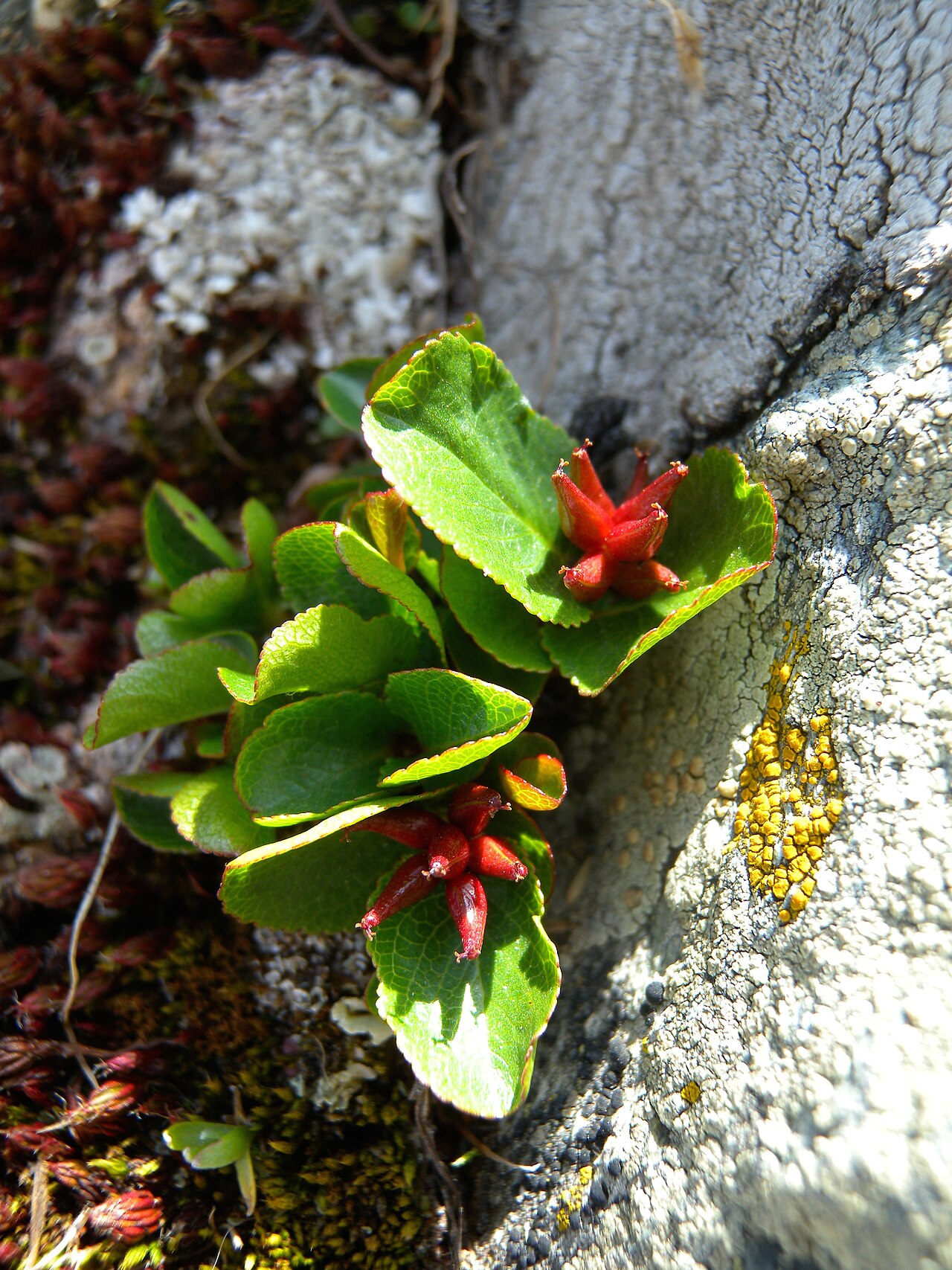
Salix herbacea, the Least Willow, also called dwarf willow or snowbed willow, may be the smallest woody plant in the world. It is a true willow, but its woody stems creep underground or along the surface, and only shoot tips 1 to 2 inches tall appear, each with two or three round, shiny leaves and a tiny catkin. A large patch can look like a mat of small round leaves rather than a shrub.
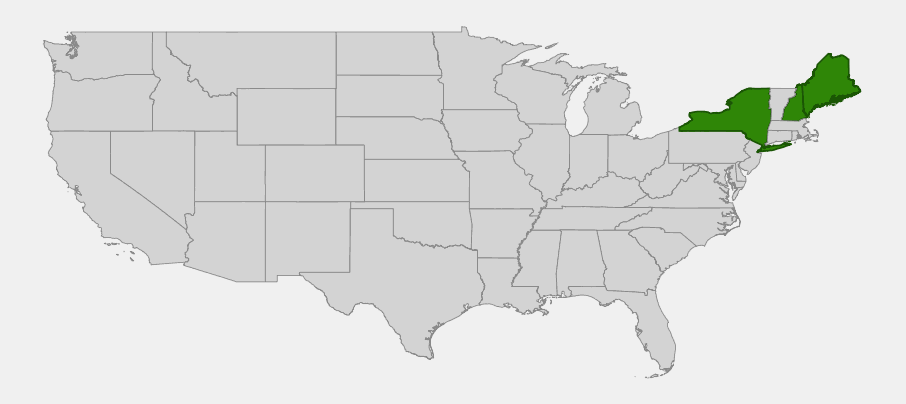
Least willow grows in arctic and alpine places around the North Atlantic, from Greenland, Iceland and arctic Canada to Scandinavia, the Alps and the mountains of Scotland. In the United States it reaches only the highest peaks of the Northeast: the alpine zones of Maine and New Hampshire and two summits in New York’s Adirondacks. In all three states it is critically imperiled and legally listed: Endangered in New York and New Hampshire and Threatened in Maine.
Least willow is a plant to look for and protect, not one to plant. This guide covers how to identify it, the cold snowbed habitat it depends on, its conservation status, and how hikers can help by staying on marked trails above treeline.
Identification
Above treeline, least willow can be confused with other low, creeping alpine plants, including the bearberry willow (Salix uva-ursi), which shares some of the same mountains. Look for the round, glossy, finely toothed leaves and the tiny size.
Stems & Habit
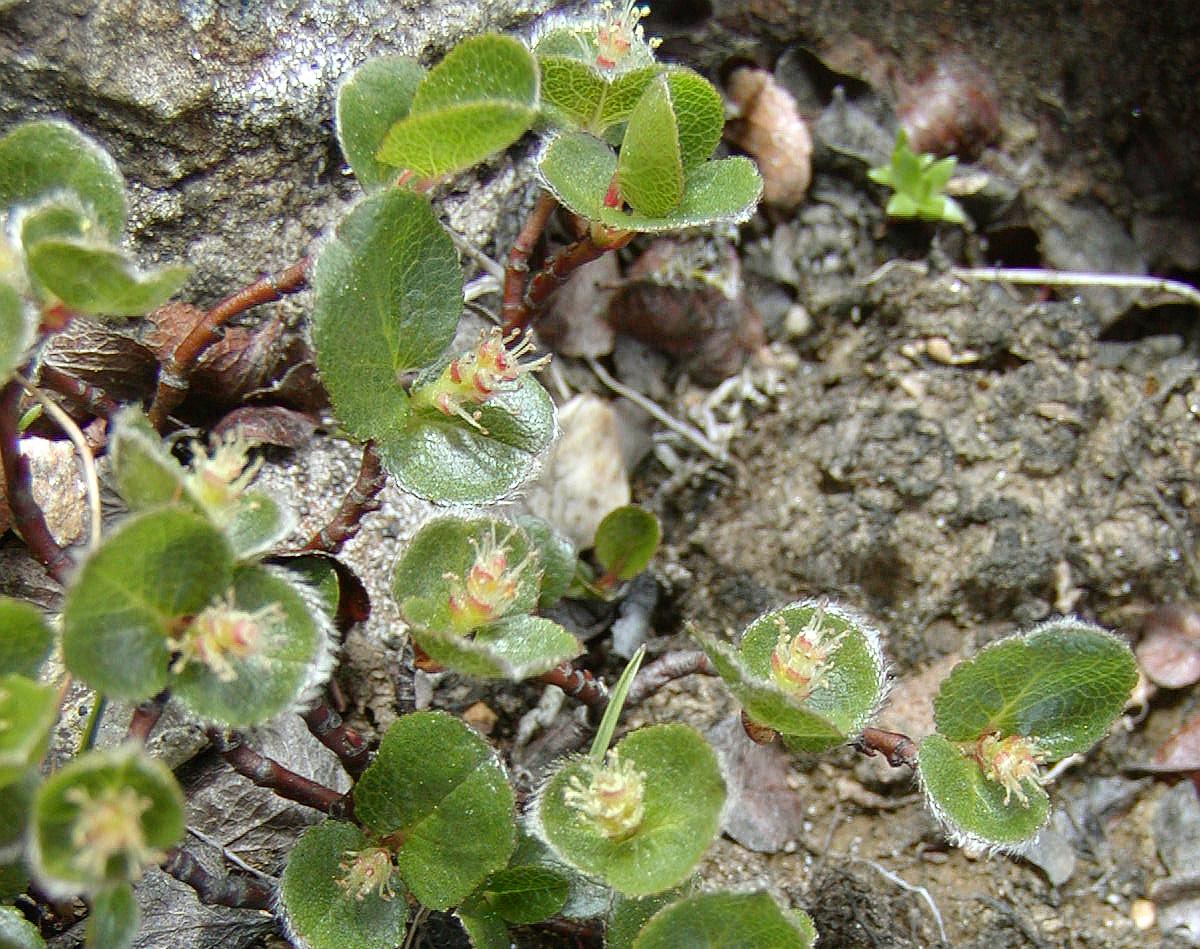
The main stems are woody, slender and mostly hidden in moss, gravel or soil, where they branch and spread for several feet. Only the tips grow above ground, as upright shoots usually ½ to 2 inches tall. This growth form keeps the plant under the protection of snow in winter and out of the drying alpine wind.
Leaves
Each shoot has two or three leaves, rarely four. They are almost round to broadly oval, about ¼ to ¾ inch long, with a rounded or slightly notched tip and fine, regular teeth along the edges. Both sides are green and hairless, and the network of veins stands out on the glossy surface. In bearberry willow the leaves are longer than wide, often pale beneath, and mostly toothless.
Catkins & Flowers
Like all willows, least willow has separate male and female plants. Each shoot ends in a small catkin of just a few flowers, appearing with the leaves in early summer, June through August depending on snowmelt. Male catkins show yellow or reddish anthers. Female catkins develop into a cluster of small capsules that turn bright red as they ripen.
Seeds
The capsules split in mid to late summer and release tiny seeds with silky hairs that drift on the wind. Seedlings are rare in the harsh alpine environment, and most colonies spread mainly by their creeping stems. Some genetic individuals are thought to be very old.
A rare hybrid between least willow and bearberry willow, named Salix × peasei, is known from New Hampshire. It has leaves intermediate in shape between the two parents.
Quick Facts
| Scientific Name | Salix herbacea |
| Family | Salicaceae (willow family) |
| Plant Type | Dwarf, creeping deciduous shrub |
| Mature Height | ½–2 in (shoots); woody stems creep below the surface |
| Mature Spread | Spreads slowly into mats several feet across |
| Growth Rate | Very slow |
| Sun Exposure | Full sun (under snow much of the year) |
| Water Needs | Moderate to high; moist from snowmelt and summer fog |
| Soil Type | Thin, gravelly or peaty soils; moss mats; mostly non-calcareous rock |
| Soil pH | Acidic, roughly 4.5–6.5 |
| Bloom Time | June–August (after snowmelt) |
| Flower Color | Tiny catkins; yellow or reddish anthers; red seed capsules |
| Fall Color | Yellow to reddish brown |
| Fruit | Small capsules in a few-flowered catkin; seeds with silky hairs |
| Deer Resistant | Not applicable; grows above treeline |
| USDA Hardiness Zones | 1–4 (alpine and arctic; not suited to gardens) |
Native Range
Least willow has an amphi-Atlantic arctic-alpine range. In North America it grows across the eastern Canadian Arctic, Labrador, Newfoundland and northern Quebec, west to Nunavut, the Northwest Territories and northern Manitoba, as well as in Greenland. In Europe it grows from Iceland and Scandinavia to the Scottish Highlands, the Alps, the Pyrenees and the Carpathians.
In the United States, USDA PLANTS records it from only three states, and all are southern outliers of its arctic range. In New Hampshire and Maine it is found only on the highest peaks, in alpine ravines and gullies where snow drifts deep and lasts late into spring, often in wet moss at the heads of gullies or at the bases of cliffs. In New York it is restricted to two summits in the Adirondacks. It was thought to be gone from the state until it was found on Mount Marcy in the 1990s, and a second population on Algonquin Peak, believed lost, was rediscovered in 2023.
These alpine populations are relics of the last ice age, when tundra plants grew widely across the Northeast. As the climate warmed, they survived only on the coldest mountaintops. Each U.S. population is small and isolated, and a warming climate that shortens snow cover is a serious long-term threat.
📋 Regional plant lists featuring Least Willow: New Hampshire, Maine & Vermont · New York, Pennsylvania & Northern New Jersey · Delaware, Southern New Jersey & Long Island
Growing & Care Guide
Least willow cannot be grown in ordinary gardens, and in the United States every population is legally protected. Never dig or collect it. It needs months of snow cover, a short, cool growing season and constant moisture, conditions that exist only in the alpine zone. Specialist alpine gardeners in cool climates sometimes grow it from nursery stock of European origin in troughs. The notes below describe its needs for interest and for stewardship.
Light
It grows in full sun when snow-free, but it spends much of the year under snow, which protects it from extreme cold and drying wind.
Soil & Water
It needs thin, gravelly, acidic soil or moss that stays moist from snowmelt, rain and summer fog. Its New England sites are mostly on non-calcareous rock. Drying, as during a late-summer drought, can scorch the leaves.
Planting Tips
Do not plant it in the wild or move it. Alpine-garden growers who try it use stock from specialist nurseries in a gritty, peaty trough mix kept moist and cool, in a climate with cold winters and cool summers. In most of the United States, summer heat kills it.
Pruning & Maintenance
No pruning. On the mountains, the most important care is protection from trampling. Hikers should stay on marked trails and rock surfaces in the alpine zone, as trail signs and summit stewards in northeastern alpine areas ask.
Propagation
In the wild it spreads mostly by its creeping stems. Cuttings root readily, as with most willows. Propagation of the U.S. populations is a job for state natural heritage programs and botanical gardens, if it is needed at all.
Landscape Uses
- Alpine botany: one of the classic snowbed plants of the Northeast’s alpine zone
- Hiking and nature study: a “world’s smallest tree” to look for, from the trail only
- Climate change monitoring: a sensitive indicator of changes in snow cover and alpine habitat
- Conservation education: an example of ice-age relic plants that survive only on mountaintops
- Specialist alpine troughs: grown by a few alpine-plant enthusiasts from European nursery stock
Wildlife & Ecological Value
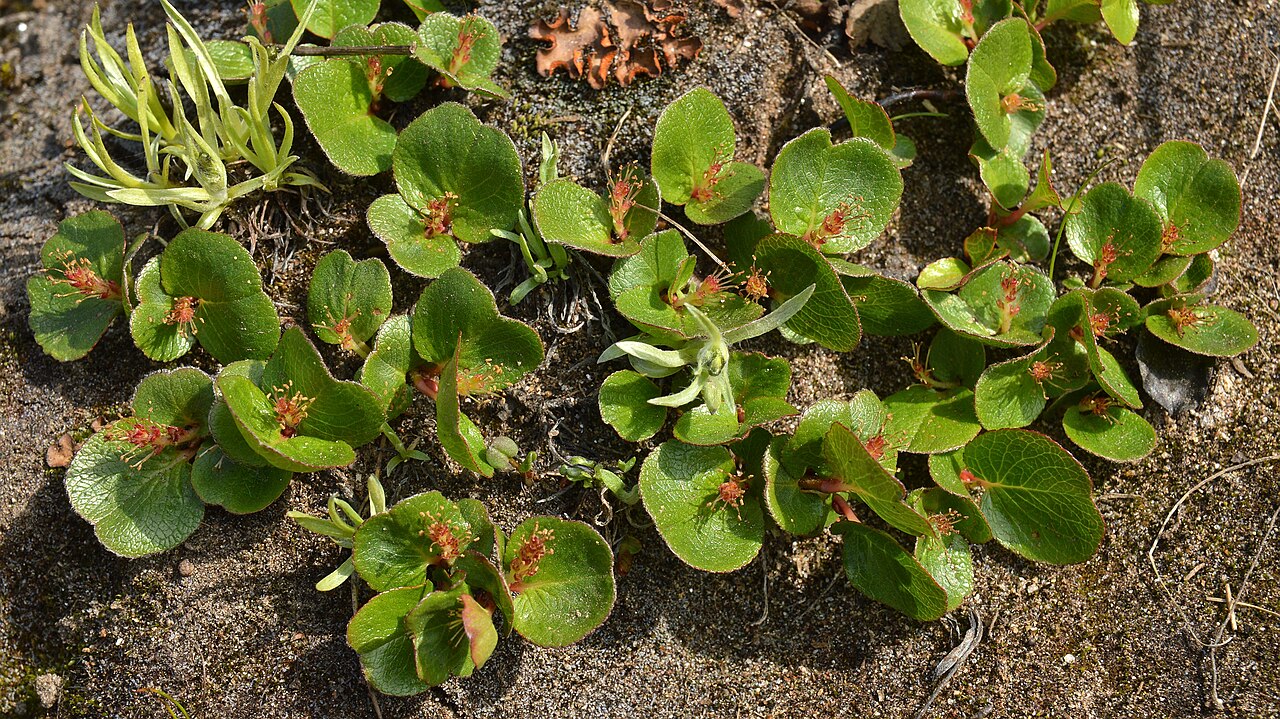
Least willow is tiny, but on tundra and in snowbeds it is often one of the dominant plants. In the Arctic it is important food for animals, and in the Northeast it is part of a fragile alpine community.
For Pollinators
Willow catkins are pollinated by both wind and insects. In the alpine zone, flies, small bees and bumble bees visit least willow catkins for nectar and pollen in the short summer.
For Birds
In the Arctic and in Europe, ptarmigan and other grouse eat the buds, catkins and leaves of dwarf willows, including least willow. In the Northeast, its alpine habitat supports a few breeding songbirds above treeline.
For Mammals
Across the Arctic, caribou, reindeer, hares, lemmings and voles graze dwarf willows, including least willow. The tiny U.S. populations are of little food value to mammals.
Ecosystem Role
Its creeping woody stems help bind thin soil and gravel in snowbeds and on frost-churned ground. In the Northeast, least willow belongs to a small group of arctic-alpine plants that survive on only a few mountaintops. Trampling by hikers and drought are current threats, and shorter winters and less snow cover are long-term threats.
Cultural & Historical Uses
Linnaeus described Salix herbacea in 1753. The species name means “herb-like,” because the shoots look more like a small herbaceous plant than a woody shrub. It is often called the world’s smallest tree or smallest woody plant, a title that is hard to measure but captures how tiny it is.
In Britain and Scandinavia, least willow is well known to mountain walkers and is common on high ground. Its leaves are also common in plant fossil beds from the last ice age, including deposits in Britain, where they show that tundra once covered land that is now forest.
In the United States it is a conservation priority. The New York Natural Heritage Program lists it as Endangered (S1) and notes only two known populations in the Adirondacks. Native Plant Trust’s Go Botany lists it as Endangered in New Hampshire and Threatened in Maine, both ranked S1. Trail maintenance, hiker education and protection of the alpine zone are its main safeguards.
Frequently Asked Questions
Is least willow really the smallest tree in the world?
It is often called the world’s smallest tree or smallest woody plant. Its woody stems creep underground, and the leafy shoots above ground are usually only ½ to 2 inches tall.
Where can I see least willow in the United States?
Only in the alpine zone of the highest mountains in New Hampshire and Maine and on two summits in New York’s Adirondacks. Look from the trail, because the plants are fragile and legally protected.
Is least willow endangered?
It is globally secure but critically imperiled in the United States. It is listed as Endangered in New York and New Hampshire and as Threatened in Maine.
Can I grow least willow in my garden?
Not in most of the United States. It needs long snow cover and cool summers. Never collect it from the wild. A few alpine specialists grow European nursery stock in troughs in cool climates.
How is least willow different from bearberry willow?
Least willow has nearly round, glossy, finely toothed leaves that are green on both sides, usually two or three per shoot. Bearberry willow has longer, oval leaves that are often pale beneath and mostly toothless, and its catkins are larger.

Looking for a nursery that carries Least Willow?
Browse our native plant nursery directory: Maine · New Hampshire & New York

