
Māmaki (Pipturus albidus)
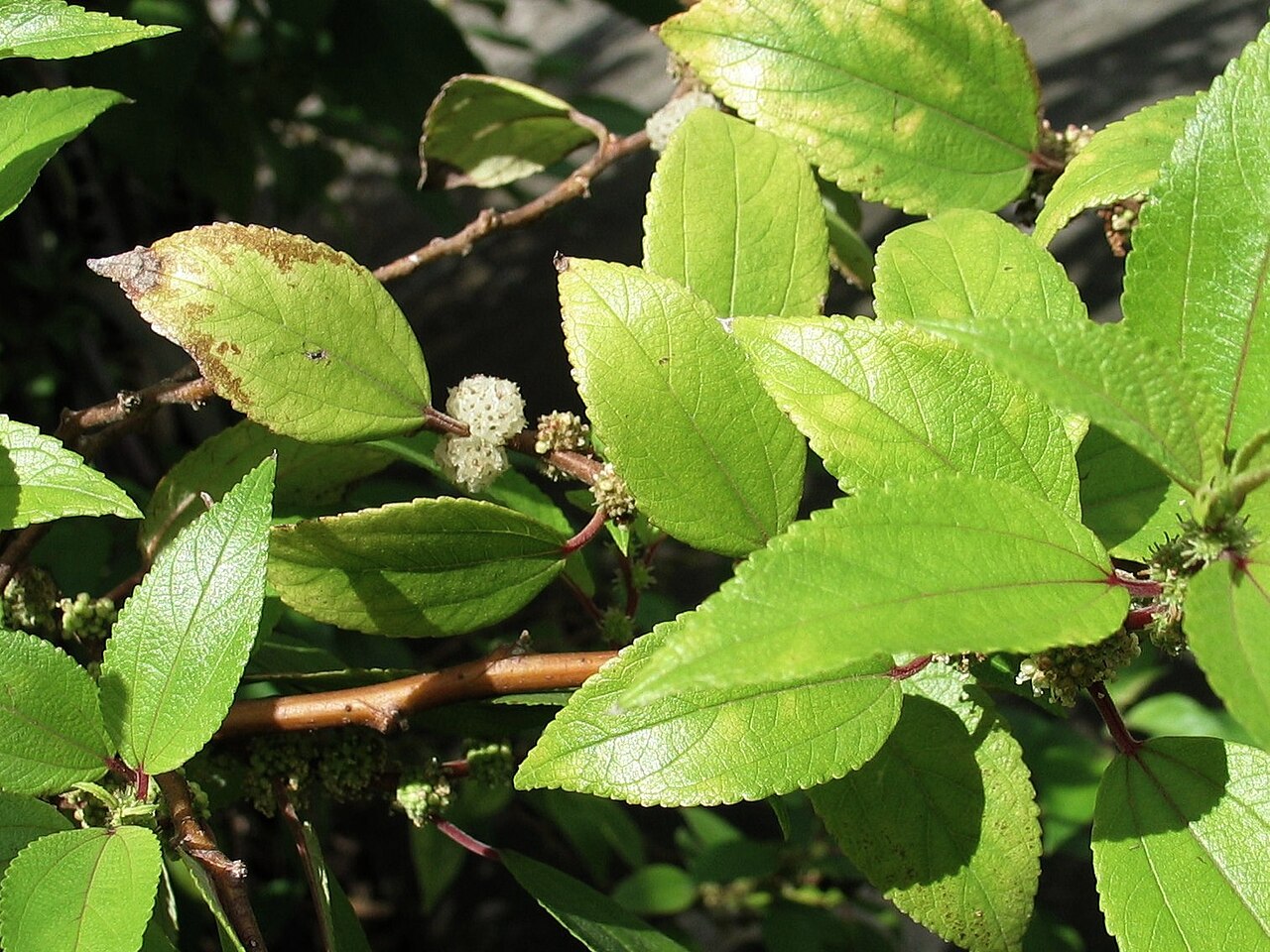
Pipturus albidus, known in Hawaiian as Māmaki (also māmake, and sometimes called Waimea pipturus in English), is a shrub or small tree in the nettle family (Urticaceae) that grows only in the Hawaiian Islands. It usually reaches 6 to 15 feet in gardens and up to about 30 feet in the forest, with broad, toothed, often red-veined leaves, and stems lined with small clusters of flowers that ripen into soft, white, mulberry-like fruits. Unlike many of its nettle relatives, it has no stinging hairs.
Māmaki is best known today for its leaves, which are brewed into māmaki tea, a mild, earthy herbal tea now grown and sold commercially in Hawaiʻi. Native Hawaiians used the plant long before that: the leaves for tea and medicine, the fruit in traditional remedies, and the strong inner bark fibers for kapa (bark cloth) and cordage.
It is also one of the most important native plants for Hawaiian insects. Māmaki is a primary larval food plant of the Kamehameha butterfly (Vanessa tameamea), Hawaiʻi’s official state insect, which is one of only two butterflies native to the islands. This guide covers how to recognize māmaki, where it grows, and how to grow it in a Hawaiian garden or, in cooler places, as a container plant.
Identification
Māmaki is variable from island to island and from dry to wet sites, and botanists once split it into several species. Its alternate, toothed leaves with three main veins from the base, its stingless foliage, and its white, fleshy fruit clusters along the stems are the key features.
Growth Habit & Bark
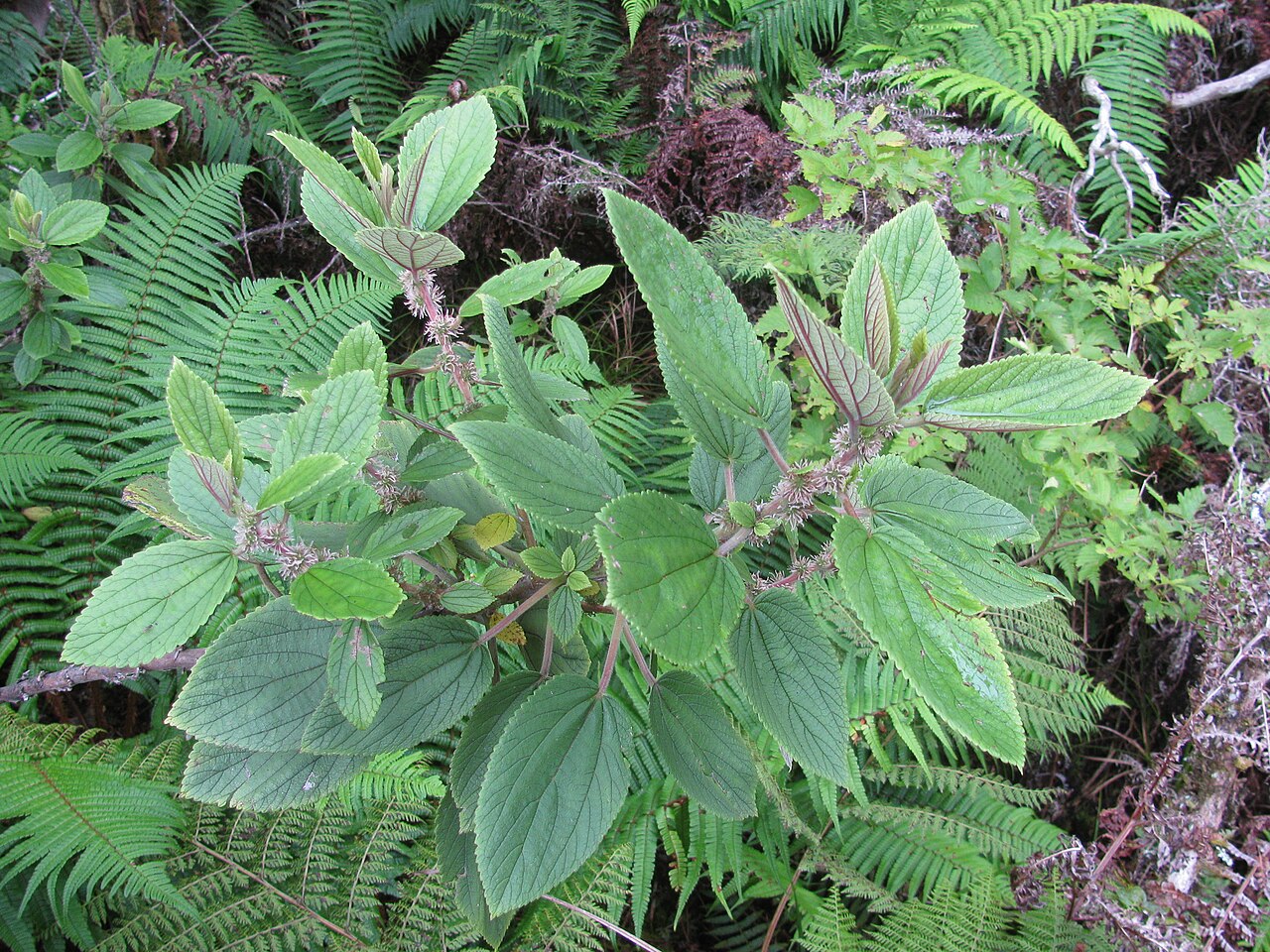
In the forest māmaki is a spreading shrub or small tree up to about 30 feet tall, with a trunk up to about a foot thick, but most plants are 6 to 15 feet. The bark is smooth and brownish, and young stems are green to reddish and finely hairy. It is fast-growing and relatively short-lived, often appearing in light gaps along streams and forest edges.
Leaves
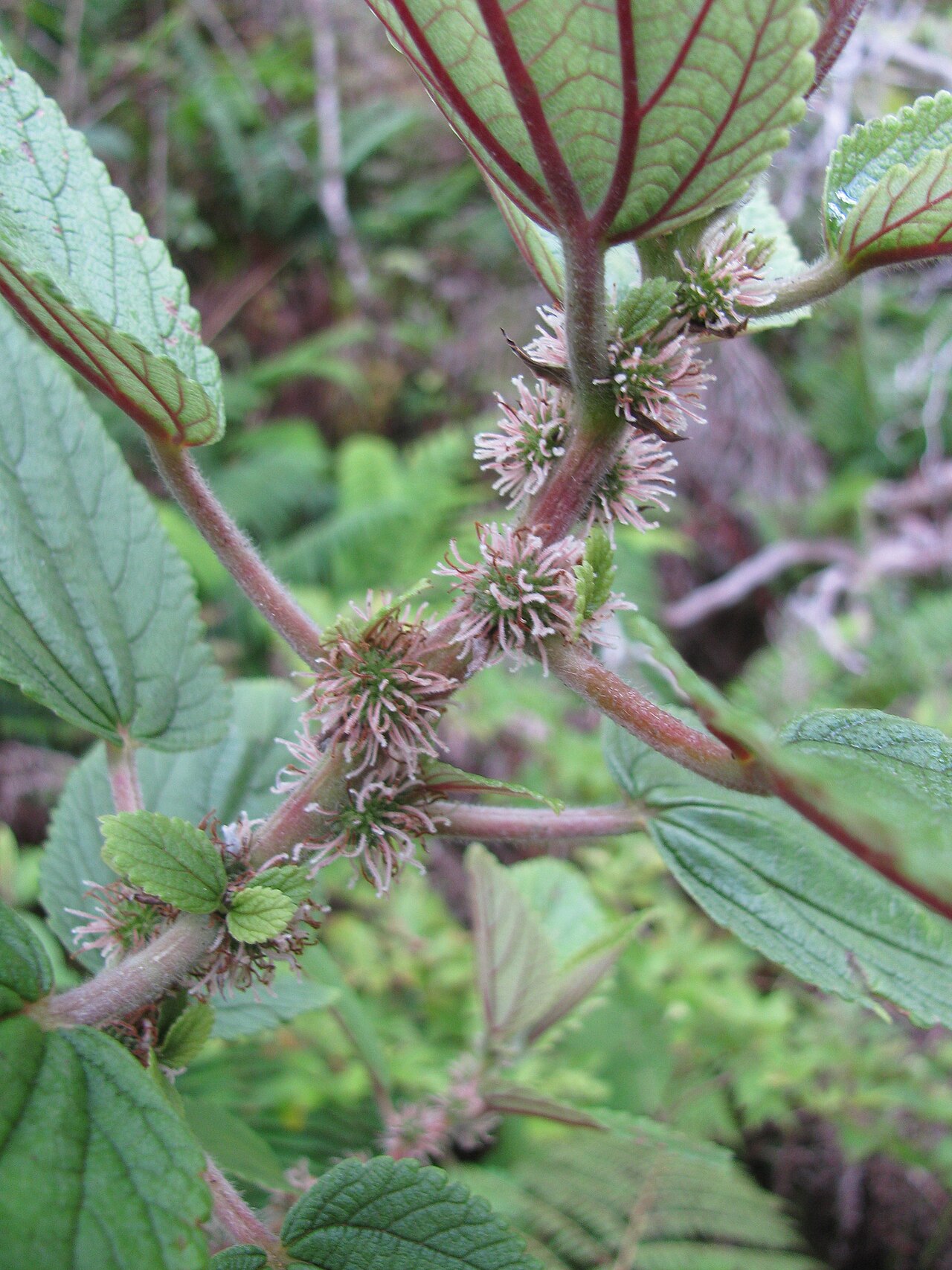
Leaves are alternate, ovate to broadly elliptic, typically 3 to 7 inches long, with toothed (serrate) margins and a pointed tip. Three main veins spread from the base of the blade. The upper surface is light to dark green and somewhat wrinkled, and the underside ranges from green to white and felty (the “albidus,” or whitish, of the name). The leaf stalks, midribs and veins are often pink to red, especially on new growth.
Flowers
The flowers are tiny, greenish and petal-less, packed into small round clusters (glomerules) along the stems in the leaf axils. Plants are generally either male or female. Male clusters shed pollen in the wind, while female clusters have many fine, thread-like stigmas that give them a fuzzy look. Flowering can happen through much of the year.
Fruit & Seeds
On female plants the flower clusters swell into soft, white, fleshy fruits about ¼ to ½ inch across that look like small white mulberries. Each is made up of many tiny seeds (achenes) embedded in juicy, translucent tissue. The fruits are edible and mildly sweet, and they are eaten and spread by birds.
Quick Facts
| Scientific Name | Pipturus albidus (Hook. & Arn.) A. Gray |
| Family | Urticaceae (nettle family) |
| Plant Type | Evergreen shrub or small tree (no stinging hairs) |
| Mature Height | 6–15 ft in gardens; to about 30 ft in forests |
| Mature Spread | 5–12 ft |
| Growth Rate | Fast |
| Sun Exposure | Part shade to full sun (with steady moisture) |
| Water Needs | Moderate to high; keep soil evenly moist |
| Soil Type | Rich, well-drained volcanic or loamy soil with organic matter |
| Soil pH | About 5.5–7.0 |
| Bloom Time | Much of the year |
| Flower Color | Greenish to whitish (inconspicuous) |
| Fall Color | None; evergreen |
| Fruit | White, fleshy, mulberry-like clusters (edible) |
| Deer Resistant | No; browsed by deer, goats and pigs in the wild |
| USDA Hardiness Zones | 10–12 outdoors; container plant elsewhere |
Native Range
Māmaki is endemic to Hawaiʻi, meaning it grows naturally nowhere else in the world. USDA PLANTS lists it as native to Hawaii, and it occurs on all the main islands except Niʻihau and Kahoʻolawe: Kauaʻi, Oʻahu, Molokaʻi, Lānaʻi, Maui and Hawaiʻi Island.
It grows from roughly 200 to 6,000 feet in elevation in coastal mesic forest, mixed mesic forest and wet forest, and it is most common in gulches, along streams, on moist slopes and at forest edges and clearings where light reaches the understory. It often colonizes openings after landslides, storms or tree falls, and in wetter areas it grows beneath ʻōhiʻa and koa.
Although māmaki is still widespread, it has declined in many lowland areas where native forest has been cleared or invaded by weeds, and wild plants are heavily browsed by feral pigs, goats and deer. Today it is widely planted in native gardens, restoration projects and small tea farms across the islands.
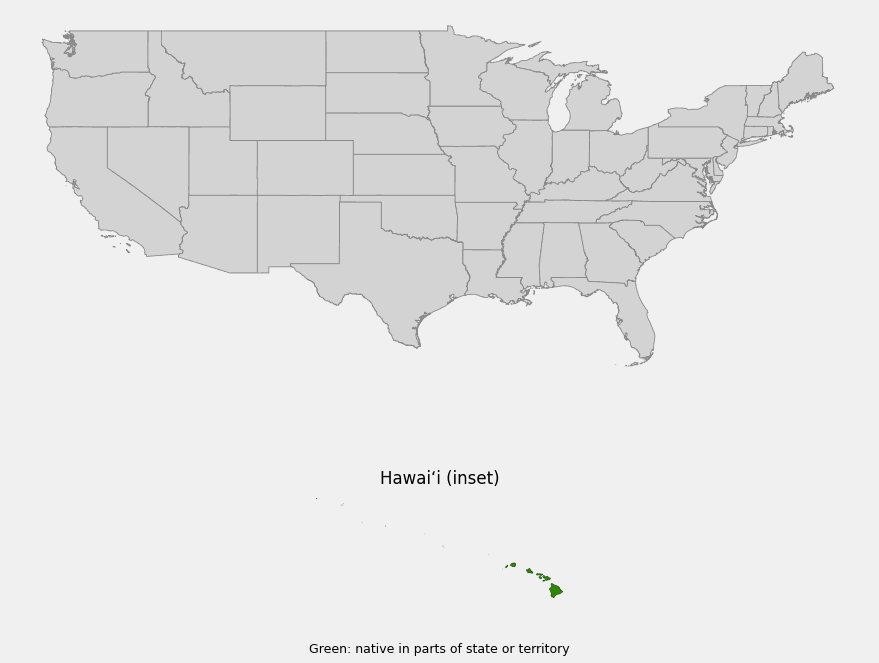
📋 Regional plant lists featuring Māmaki: Hawaii
Growing & Care Guide
Māmaki is one of the easiest Hawaiian native plants to grow. It is fast, forgiving and productive, as long as it has steady moisture and protection from hot, dry wind. In Hawaiʻi and other frost-free places (zones 10 to 12) it grows outdoors year-round. Elsewhere it can be kept in a large container in a bright, humid spot and moved indoors when temperatures fall below about 50°F.
Light
In nature it grows in forest gaps and edges, so light shade to morning sun with afternoon shade suits it best in hot, dry lowland gardens. In cool, cloudy, wet upland gardens it does well in full sun. Leaves scorch and curl in hot sun combined with dry soil or wind. Indoors, give it the brightest indirect light available or a grow light.
Soil & Water
Plant in rich, well-drained soil with plenty of compost; volcanic cinder or loamy garden soils both work. Keep the soil evenly moist, watering two or three times a week in dry weather. A layer of mulch helps keep roots cool and moist. Avoid waterlogged soil, which can cause root rot. In containers use a rich potting mix with added cinder or perlite, and never let the pot dry out completely.
Planting Tips
Plant in a sheltered spot out of strong trade winds, ideally on the leeward side of a building or among other shrubs. Space plants about 5 to 8 feet apart. If you want fruit, plant both male and female plants, since most plants carry only one kind of flower. Buy nursery-grown plants from Hawaiian native plant nurseries, and choose stock from your own island where possible to protect local genetic diversity.
Pruning & Maintenance
Māmaki responds well to pruning. Regular harvesting of leaves and tip pruning keep it bushy and at a convenient height for picking, and many growers keep tea plants at 4 to 6 feet. Prune out old, leggy stems every year or two, since plants can be short-lived and regrow well from cut stems. Watch for scale, mealybugs, whiteflies and mites, especially on stressed plants; a strong spray of water or insecticidal soap usually controls them. Avoid systemic pesticides on plants used for tea or as butterfly host plants.
Propagation
Māmaki grows readily from fresh seed. Squash ripe white fruits, spread the pulp and seeds on the surface of a moist, fine seedling mix, and keep it warm and humid; seeds germinate in a few weeks. Semi-hardwood cuttings also root, especially with rooting hormone and misting, and are useful for keeping a known female or male plant. Seedlings grow quickly and can be planted out within a few months.
Landscape Uses
- Native Hawaiian gardens: a fast-growing understory shrub for shady, moist yards
- Tea gardens: fresh or dried leaves for homemade māmaki tea
- Butterfly gardens: the main larval host of the Kamehameha butterfly
- Forest restoration: an early, quick-growing native for gaps and stream banks
- Containers: large pots on lanai or in greenhouses outside Hawaiʻi
Wildlife & Ecological Value
Māmaki supports a remarkable share of Hawaiʻi’s native insect life and feeds the birds that eat those insects and fruits.
For Pollinators
Māmaki itself is wind-pollinated, but its real importance is as a host plant. It is the main larval food plant of the Kamehameha butterfly (Vanessa tameamea), the state insect. The caterpillars hide in folded leaves and eat the foliage, and the adult butterflies lay eggs on the new growth. The native koa butterfly (Blackburn’s blue) has also been recorded on it, and many native moths and other insects feed on the plant.
For Birds
Native and non-native birds eat the soft white fruits and spread the seeds, which helps māmaki colonize forest gaps. Native forest birds, such as ʻamakihi, forage for the insects that live on its leaves and stems.
For Mammals
Hawaiʻi has only two native land mammals, the Hawaiian hoary bat and the Hawaiian monk seal, and neither eats māmaki. Introduced pigs, goats and deer browse it heavily, and fencing out these animals allows māmaki to recover quickly in restoration areas.
Ecosystem Role
As a fast-growing native shrub, māmaki quickly fills openings in mesic and wet forests after disturbance, holding soil on steep slopes and along streams and providing shade for slower-growing native plants. Its insect fauna and fruits make it a small hub of native food webs.
Cultural & Historical Uses
Māmaki was described by the British botanists William Jackson Hooker and George Arnott Walker-Arnott as Boehmeria albida and later moved to Pipturus by the American botanist Asa Gray. In Hawaiian tradition the plant was valuable for its fiber. The inner bark was beaten into kapa (bark cloth), and the fibers were also twisted into cordage.
The leaves were steeped in hot water, sometimes heated with hot stones, to make a tonic tea for general weakness, and the fruit was used in traditional remedies, including for children. Today māmaki tea is grown on small farms across the islands and sold dried or as tea bags. Laboratory research has found antioxidants such as catechins, chlorogenic acid and rutin in the leaves, but claims about specific health benefits have not been proven in people.
Safety note: māmaki is traditionally used and generally regarded as safe as a tea, but as with any herbal product, drink it in moderation, buy from reputable sources or harvest from known, unsprayed plants, and talk to a health professional before using it if you are pregnant, nursing or taking medication. Never harvest from wild plants in protected areas.
Frequently Asked Questions
What is māmaki tea?
It is an herbal tea made from the fresh or dried leaves of Pipturus albidus, a shrub found only in Hawaiʻi. It has a mild, earthy flavor similar to green tea and naturally contains no caffeine.
Is māmaki native to Hawaiʻi?
Yes. Māmaki is endemic to the Hawaiian Islands, which means it grows naturally nowhere else. It is found in moist and wet forests on all the main islands except Niʻihau and Kahoʻolawe.
Does māmaki sting like other nettles?
No. Although it is in the nettle family, māmaki has no stinging hairs. Its leaves are safe to touch and harvest.
Can I grow māmaki outside Hawaiʻi?
Yes, in frost-free climates outdoors or in a large container in a bright, humid spot elsewhere. Protect it from temperatures below about 50°F, keep the soil moist, and give it bright, indirect light indoors.
Why are caterpillars eating my māmaki?
They may be Kamehameha butterfly caterpillars, the larvae of Hawaiʻi’s state insect. If possible, leave them alone, since the plant regrows quickly and the butterfly depends on māmaki.

Looking for a nursery that carries Māmaki?
Browse our native plant nursery directory: Hawaii

