
Fishbone Fern (Nephrolepis cordifolia)
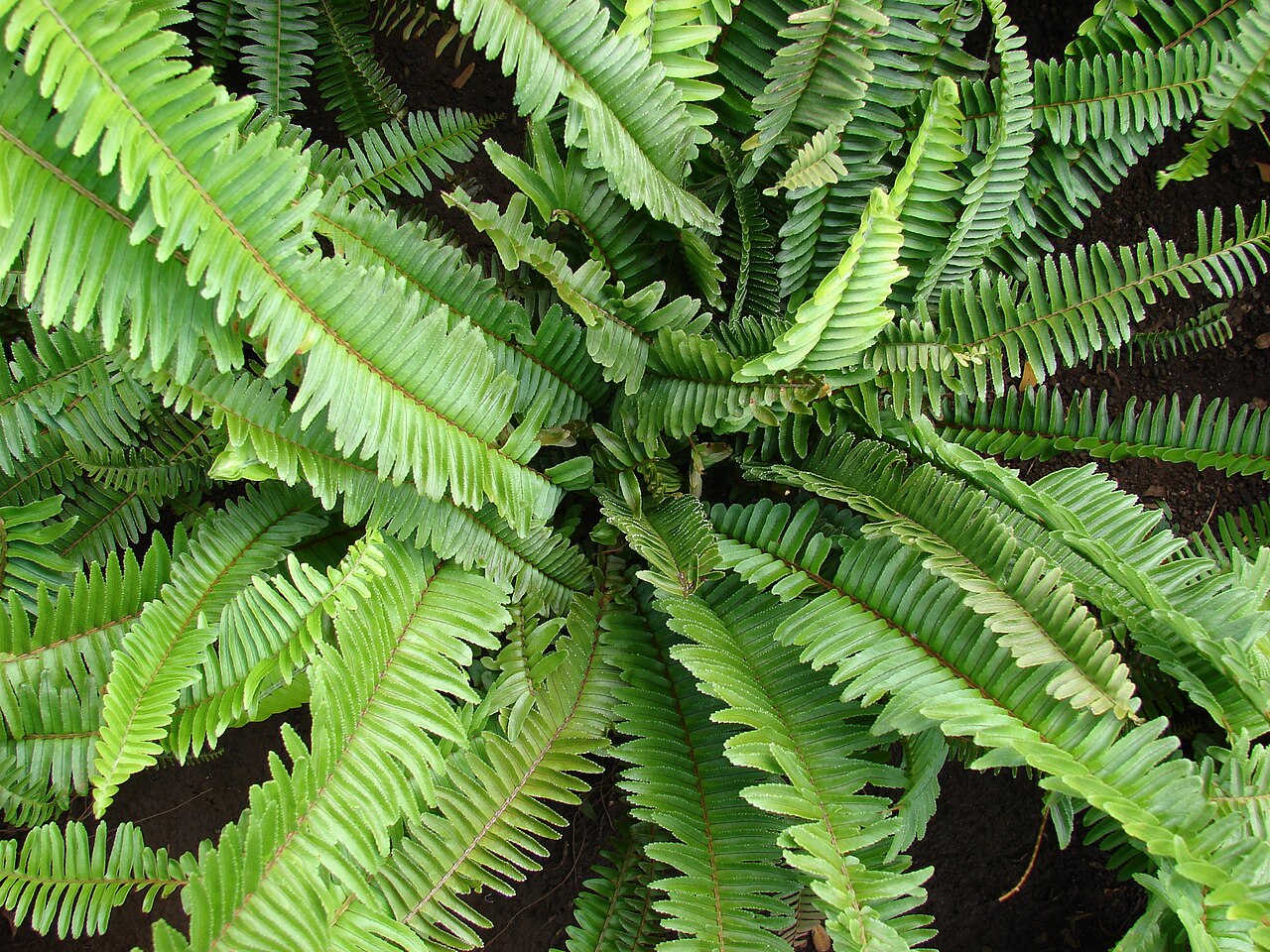
Nephrolepis cordifolia, the Fishbone Fern, is a tough, clump-forming sword fern with narrow, upright fronds whose small, closely set leaflets look like the bones of a fish. It is also called tuberous sword fern, erect sword fern and tuber ladder fern, after the round, water-storing tubers on its roots. In Hawaii, where USDA PLANTS lists it as native, it is known as kupukupu, one of several Hawaiian names for the native sword ferns.
This fern has a split reputation. In Hawaii it is a native plant of lava flows, rocky slopes and open forest, and it is a durable, drought-tolerant fern for Hawaiian gardens. Elsewhere it has escaped from cultivation and become a serious invader. In Florida it is listed by the Florida Invasive Species Council as a Category I invasive and is treated as non-native by the Atlas of Florida Plants. It is also a notable weed in parts of Australia, New Zealand, South Africa and other warm regions.
It is sold widely as a houseplant and patio fern, often under the cultivar name ‘Duffii’ (lemon button fern, a small form with round leaflets) or as a “Boston fern.” This guide covers how to identify it, its native range in Hawaii, how to grow it responsibly, and why gardeners in Florida and other frost-free areas outside Hawaii should keep it in pots or choose a native alternative such as Boston fern (N. exaltata).
Identification
Several sword ferns (Nephrolepis) look alike, and they are often mixed up in the nursery trade. Fishbone fern is best identified by its tubers, its narrow, stiffly upright fronds, and its small, crowded pinnae with a lobe at the base that overlaps the frond axis.
Growth Habit & Tubers
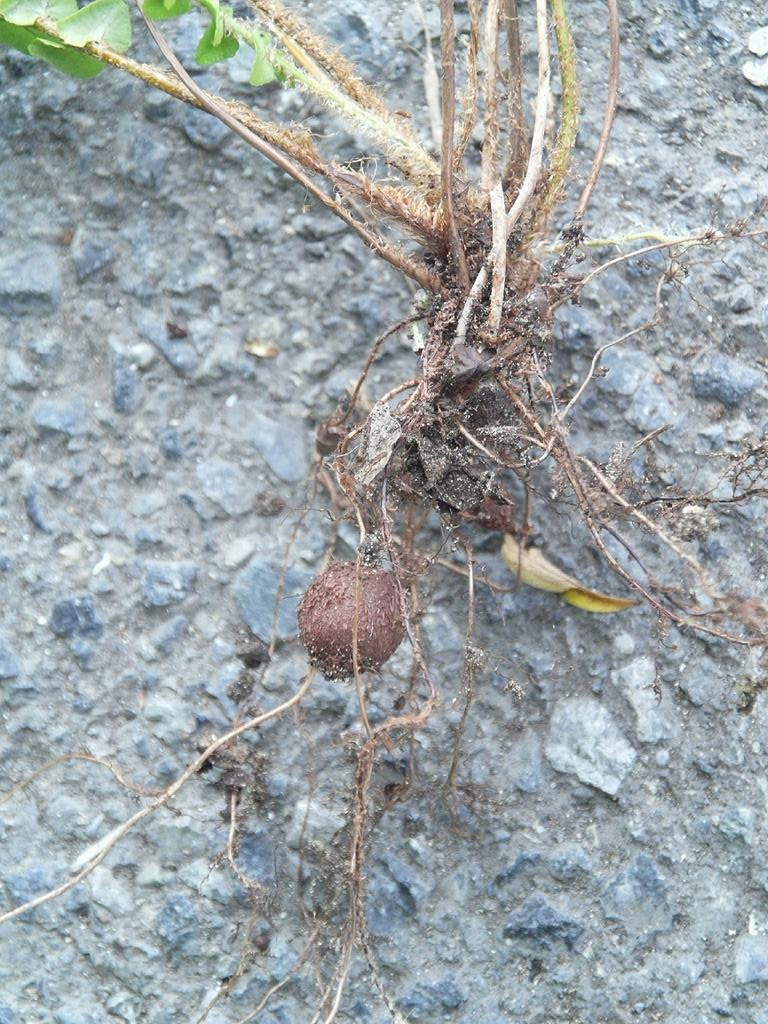
Fishbone fern forms dense clumps of upright fronds, usually 1 to 3 feet tall. It spreads by thin, wiry, hairy runners (stolons) that creep through soil and leaf litter and send up new plants. Round, scaly, brown tubers, about ½ to 1 inch across, form along the roots and runners. These tubers store water and nutrients and are the single best identification feature: no other common sword fern has them. They are also why the plant is so hard to eradicate where it is invasive.
Fronds
The fronds are narrow, 1 to 2½ feet long and usually only 1½ to 2½ inches wide, stiff and erect or slightly arching. Each is once-divided into 40 to 100 or more small, oblong pinnae on each side, closely spaced and often overlapping. The pinnae are about ½ to 1¼ inches long, blunt or rounded at the tip, with finely toothed or nearly smooth edges. At the base of each pinna, an ear-like lobe on the upper side overlaps the stalk. The stalk and axis are covered in pale, hair-like scales.
Sori
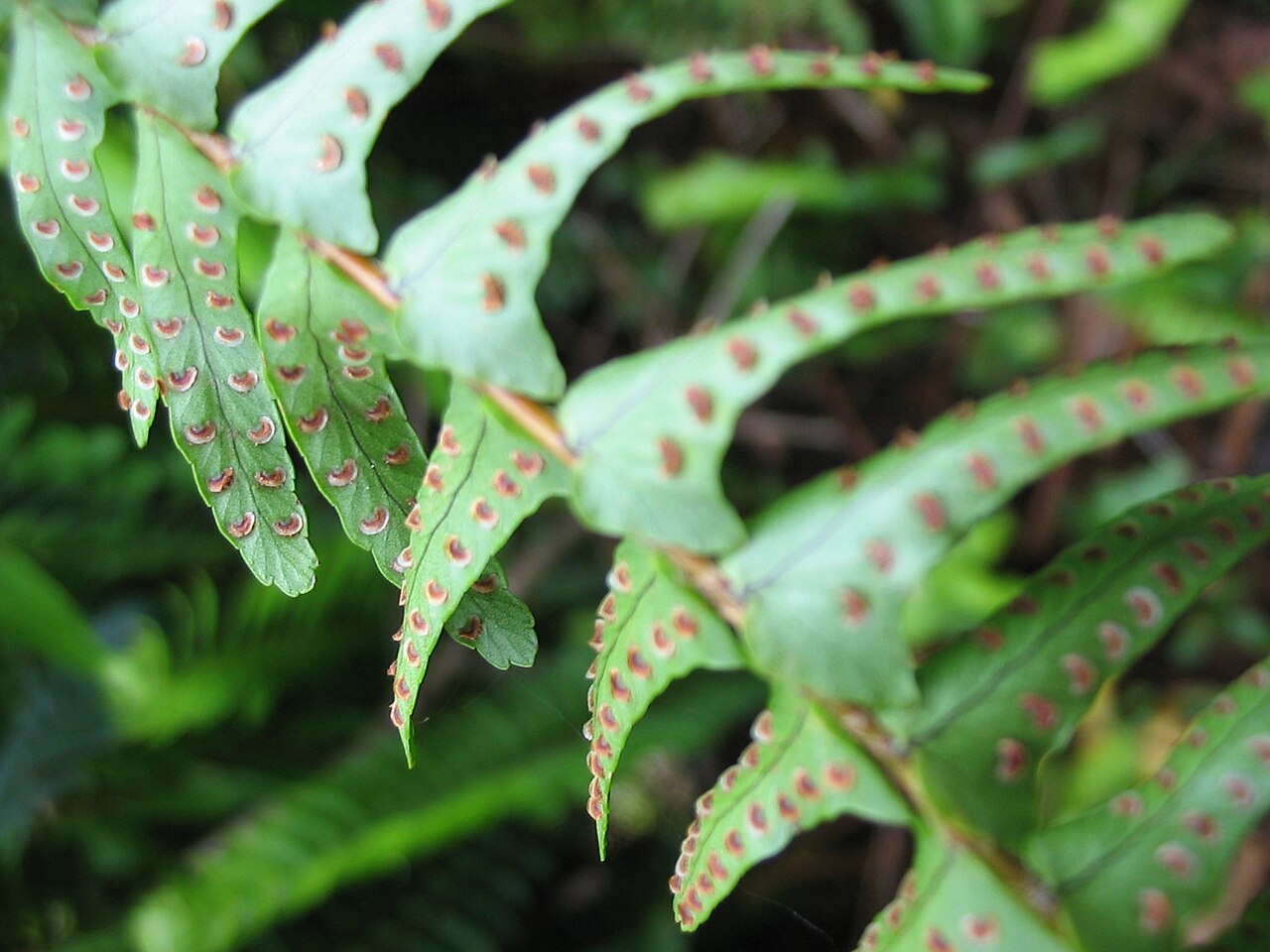
The spore-bearing sori are round, arranged in a single row near the margin on the underside of the pinnae, each covered by a kidney-shaped or horseshoe-shaped flap (indusium). Fertile and sterile fronds look the same.
Similar Species
The native Boston fern (N. exaltata) has wider, longer, more arching fronds, no tubers, and pinnae that lack the overlapping basal lobe. The native giant sword fern (N. biserrata) is much larger, with pinnae several inches long. The Asian sword fern (N. brownii), another invasive in Hawaii and Florida, has wider, more widely spaced pinnae, sori set back from the edge, and no tubers.
Quick Facts
| Scientific Name | Nephrolepis cordifolia (L.) C. Presl |
| Family | Nephrolepidaceae (sword fern family; formerly in Davalliaceae or Lomariopsidaceae) |
| Plant Type | Evergreen terrestrial or epiphytic fern with tubers and runners |
| Mature Height | 1–3 ft |
| Mature Spread | 2–3 ft per clump; spreads indefinitely by runners |
| Growth Rate | Moderate to fast |
| Sun Exposure | Part shade to full sun (tolerates more sun than most ferns) |
| Water Needs | Low to moderate; tubers make it drought tolerant |
| Soil Type | Any well-drained soil; lava rock, rock crevices, sand, loam |
| Soil pH | About 5.0–7.5 |
| Bloom Time | None; reproduces by spores (sori year-round) |
| Flower Color | None (fern) |
| Fall Color | None; evergreen |
| Fruit | None; spores in round sori near pinna margins |
| Deer Resistant | Yes |
| USDA Hardiness Zones | 9–12 outdoors (fronds damaged by frost; tubers may resprout); houseplant everywhere |
Native Range
Within the United States, USDA PLANTS lists Nephrolepis cordifolia as native only in Hawaii. Worldwide, it is widely distributed in the tropics and subtropics, especially in Asia and the Pacific, and its exact native range is debated because it has been planted and naturalized so widely. In Hawaii it is regarded as indigenous: it arrived naturally, by wind-blown spores, long before people.
In Hawaii, kupukupu grows on the main islands, from near the coast to high elevations. It is especially at home on young lava flows, where it is one of the first plants to colonize cracks in the rock, and on open rocky slopes, dry to mesic forest and shrubland, road cuts, and as an epiphyte on tree trunks and tree fern trunks in wetter forest.
USDA lists the species as introduced in Alabama, Florida, Georgia, Puerto Rico, the U.S. Virgin Islands and Pacific island territories. In Florida it has spread widely from gardens into hammocks, swamps and pinelands, where its dense mats crowd out native ground-layer plants; it is a Florida Invasive Species Council Category I species. Because of this, the range map shows Hawaii only, and we recommend against planting it outdoors outside Hawaii in frost-free areas.
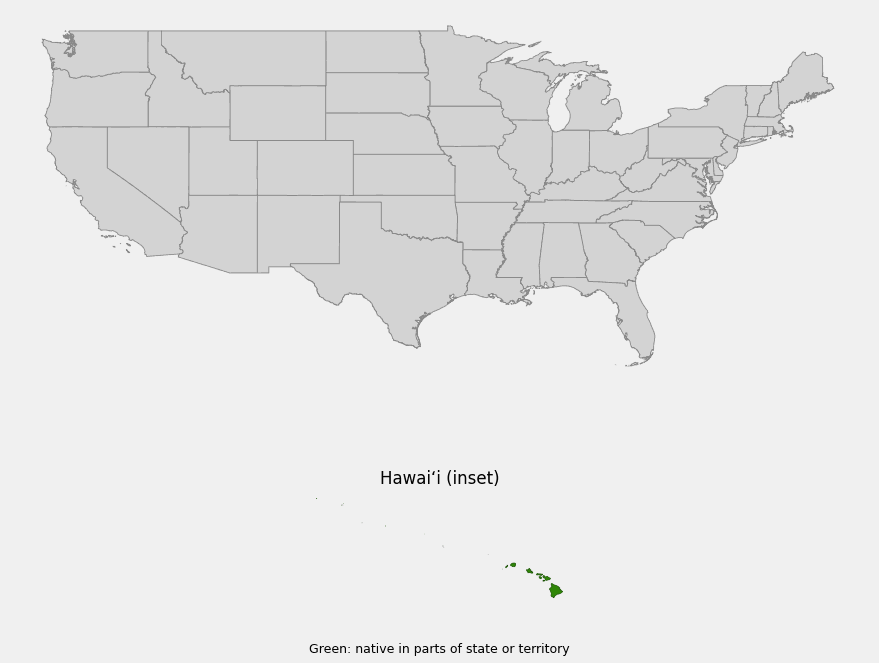
📋 Regional plant lists featuring Fishbone Fern: Hawaii
Growing & Care Guide
Fishbone fern is one of the easiest ferns to grow: it tolerates sun, drought, poor soil and neglect far better than most ferns. In Hawaii it is a good native choice for rock gardens, lava walls and dry, partly shaded spots. Everywhere else, the same toughness means it must be grown with care so it cannot escape.
Light
Outdoors in Hawaii, grow it in part shade or bright, dappled light; it tolerates full sun if it gets some water, although fronds may yellow in hot, dry sun. Indoors, give it bright, indirect light near an east or west window. In low light it becomes sparse.
Soil & Water
Plant in any well-drained soil or potting mix. It does well in crevices of lava rock and stone walls. Water regularly while plants establish, then only during long dry spells; the tubers carry it through drought. Potted plants should be watered when the top inch of mix is dry. Indoors it handles average humidity better than Boston fern. Feed lightly a few times in the growing season.
Planting Tips
In Hawaii, plant it along walls, among rocks, under trees or in containers. Buy plants from native plant nurseries that propagate Hawaiian stock. Outside Hawaii, grow it only in containers, set the pots on a hard surface (not soil), and do not plant it in the ground in frost-free areas, especially Florida, where it is invasive. When repotting, bag and trash the leftover tubers and runners.
Pruning & Maintenance
Cut out old, brown fronds at the base. Divide crowded clumps every few years. In pots, trim runners that grow over the edge. Never compost or dump tubers, runners or old plants outside Hawaii: a single tuber can start a new colony. Where it has escaped, remove plants by digging out every tuber, which often takes several rounds.
Propagation
It is easily propagated by division, by separating rooted runners, or by planting tubers. Spores germinate readily on moist sterile soil. In Hawaii, these methods make it easy to share plants from local stock.
Landscape Uses
- Hawaiian native gardens: lava rock gardens, stone walls, dry shade and native fern collections
- Erosion control in Hawaii: its runners and tubers bind soil on slopes and banks
- Hanging baskets and pots: a tough, drought-tolerant fern for patios and porches when contained
- Houseplant: ‘Duffii’ (lemon button fern) and other compact forms indoors
- Cultural plantings in Hawaii: one of the ferns associated with hula and lei
Wildlife & Ecological Value
On Hawaii’s lava flows, kupukupu is one of the pioneers that start the slow conversion of bare rock into forest. Its roots and fallen fronds trap dust and organic matter in cracks, building the first soil.
For Pollinators
As a fern it produces no flowers or nectar and has no direct value for pollinators.
For Birds
Its dense clumps give cover to ground-foraging birds and the insects they eat.
For Mammals
Hawaii has few native land mammals; the fern has no particular food value for mammals.
Ecosystem Role
In Hawaii it is an early colonizer of young lava, rock outcrops and disturbed ground, where it stabilizes soil and creates sheltered spots for seeds of other native plants. Where it has been introduced, the same traits make it a problem: in Florida and parts of Australia, New Zealand and southern Africa it forms dense, long-lived carpets in forests and wetlands that crowd out native groundcovers and are hard to remove because of the tubers.
Cultural & Historical Uses
In Hawaiian, kupukupu (also ʻokupukupu) comes from kupu, to sprout or grow. The fern is associated with hula: it is among the plants traditionally associated with the kuahu, the hula altar honoring Laka, and it is used in lei, its name expressing growth and the flourishing of knowledge. The same names are also applied to the native Hawaiian form of Boston fern.
Linnaeus described the species in 1753 as Polypodium cordifolium, and the Czech botanist Carl Bořivoj Presl moved it to Nephrolepis in 1836. The name Nephrolepis comes from Greek words meaning “kidney scale,” for the kidney-shaped indusia over the sori.
Fishbone fern became a popular landscape and houseplant in the 20th century because it was so easy to grow, and nurseries often sold it mislabeled as Boston fern. Its escape in Florida, Australia and elsewhere is now a standard example of how a garden plant can become an invader, and why the right plant in one place can be the wrong plant in another.
Frequently Asked Questions
Is fishbone fern invasive?
Outside its native range, often yes. It is a Florida Invasive Species Council Category I species and is invasive in parts of Australia, New Zealand and South Africa. In Hawaii it is native. Outside Hawaii, grow it only in pots and never plant or discard it in natural areas.
Is Nephrolepis cordifolia native to the United States?
Yes, in Hawaii, according to USDA PLANTS, where it is called kupukupu. It is introduced in Florida, Georgia, Alabama, Puerto Rico and the U.S. Virgin Islands, and the Atlas of Florida Plants treats it as non-native in Florida.
How do I tell fishbone fern from Boston fern?
Look at the roots: fishbone fern has round, scaly tubers, and Boston fern does not. Fishbone fern fronds are also narrower, stiffer and more upright, with smaller, crowded pinnae that have an ear-like lobe overlapping the stalk.
Is fishbone fern toxic to pets?
Sword ferns, including fishbone fern and Boston fern, are generally considered non-toxic to cats and dogs. Chewing large amounts may still cause mild stomach upset, so it is best to keep any houseplant out of reach of pets that like to chew.
How do I get rid of fishbone fern?
Dig out the whole clump, including every tuber and runner, and bag it for the trash rather than composting it. Check the area every few months and remove resprouts. In large infestations in Florida, land managers combine digging with targeted herbicide treatment; follow local extension guidance.

Looking for a nursery that carries Fishbone Fern?
Browse our native plant nursery directory: Hawaii

