
Giant Sword Fern (Nephrolepis biserrata)
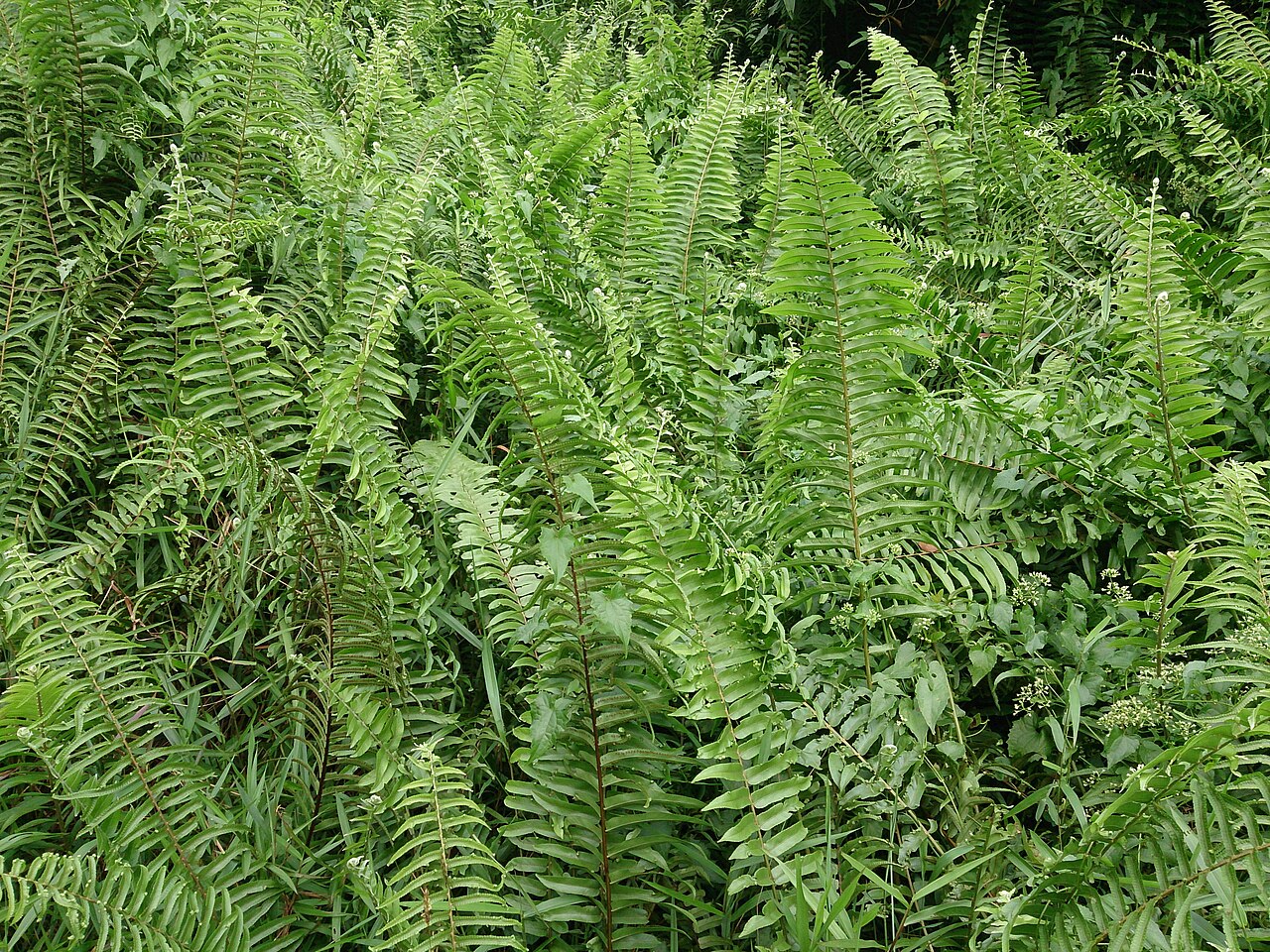
Nephrolepis biserrata, the Giant Sword Fern (USDA PLANTS: giant swordfern), is the largest of the sword ferns. Its arching, once-divided fronds commonly reach 3 to 7 feet long and can grow even longer in rich, wet tropical forests. It is a fern of the family Nephrolepidaceae (placed in Lomariopsidaceae or Davalliaceae in some older treatments), and an old synonym is Aspidium biserratum. In the United States it is native only to south Florida, where it grows in moist hammocks, swamp forests and wet, shady woods, and it is also native in Puerto Rico and the U.S. Virgin Islands.
Giant sword fern is listed as Threatened by the state of Florida in the FDACS Regulated Plant Index. Its Florida populations are limited to a small part of the state, and many of its forested wetland habitats have been drained or cleared. Gardeners who want it should buy nursery-propagated plants and never dig ferns or collect spores from the wild.
Outside the U.S. it is widespread in the tropics, from Mexico and the West Indies to South America, Africa and tropical Asia. USDA PLANTS records it as introduced, not native, in Hawaii. A robust cultivated form is sold in the nursery trade as ‘Macho’ fern. This guide covers how to tell giant sword fern from the native Boston fern and from invasive sword ferns, where it grows, and how to grow it in south Florida gardens.
Identification
Florida has several sword ferns (Nephrolepis), and some are invasive non-natives, so careful identification matters. Giant sword fern is identified by its large size, its long, relatively wide pinnae with finely double-toothed edges, and the soft hairs along the frond axis and on the underside of the pinnae.
Growth Habit & Rhizome
Fronds rise in large, arching clumps from a short, upright rhizome, which also sends out thin, wiry runners (stolons) that root and produce new plants nearby. Unlike the invasive tuberous sword fern (N. cordifolia), it does not form round underground tubers on its runners. The stalks (stipes) are grayish brown and covered with scattered pale scales, especially near the base.
Fronds
The fronds are once-pinnate (divided into many separate leaflets along a central axis), typically 3 to 7 feet long and up to a foot wide, but occasionally much longer in the wild. Each pinna is long and narrow, roughly 3 to 6 inches long and about half an inch to an inch wide, with a pointed tip and a slightly lopsided base. The margins are finely toothed, often with a double row of tiny teeth, which is the meaning of biserrata (“doubly saw-toothed”). The frond axis (rachis) and the lower surface of the pinnae are usually softly hairy. Fronds are bright to yellowish green and somewhat papery, not leathery.
Spores & Sori
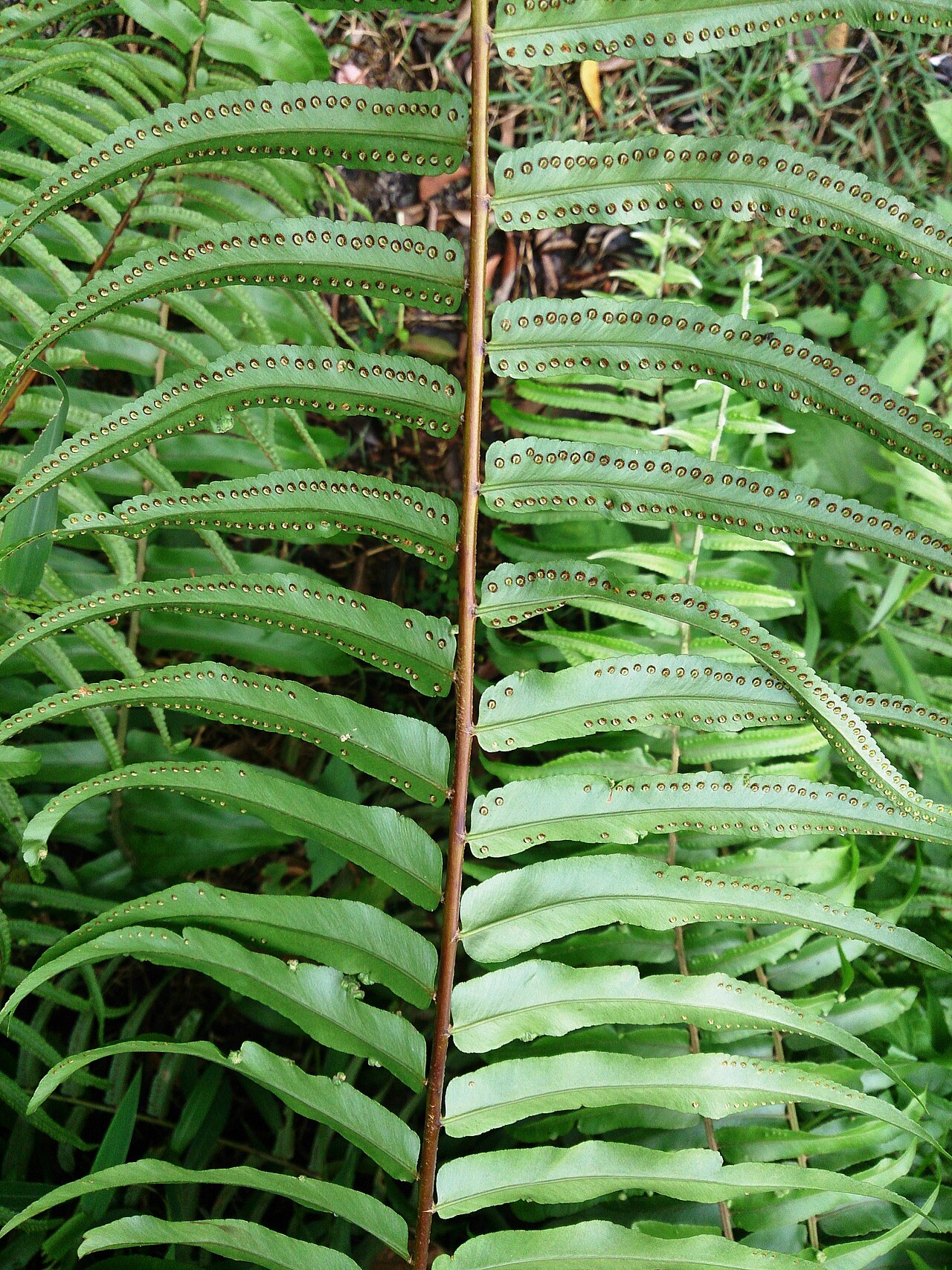
Like all ferns, it has no flowers or seeds. Spores are produced in round sori arranged in a single row near each margin of the pinnae, each covered at first by a round to kidney-shaped membrane (indusium). Spores ripen year-round in south Florida, and mature sori turn brown.
Similar Species
Boston fern (N. exaltata) is native in Florida too, but its fronds are smaller, usually 2 to 4 feet long, with shorter pinnae that are mostly smooth underneath. The invasive tuberous sword fern (N. cordifolia) and Asian sword fern (N. brownii) are smaller, more upright ferns that form dense colonies in Florida, and tuberous sword fern has small round tubers on its runners. Both are listed as invasive by the Florida Invasive Species Council and should not be planted.
Quick Facts
| Scientific Name | Nephrolepis biserrata (Sw.) Schott (syn. Aspidium biserratum) |
| Family | Nephrolepidaceae (sword fern family) |
| Plant Type | Evergreen terrestrial or epiphytic fern |
| Mature Height | 3–7 ft (fronds arching; occasionally longer) |
| Mature Spread | 3–6 ft; spreads slowly by runners |
| Growth Rate | Moderate to fast in warm, moist conditions |
| Sun Exposure | Partial to full shade |
| Water Needs | Moderate to high; evenly moist soil |
| Soil Type | Organic, humus-rich loam, muck or leaf litter over limestone |
| Soil pH | About 5.5–7.5 |
| Bloom Time | Does not flower; produces spores year-round |
| Flower Color | None (fern) |
| Fall Color | None; evergreen |
| Fruit | None; round sori near the pinna margins |
| Deer Resistant | Yes; ferns are rarely browsed |
| USDA Hardiness Zones | 10–11 |
Native Range
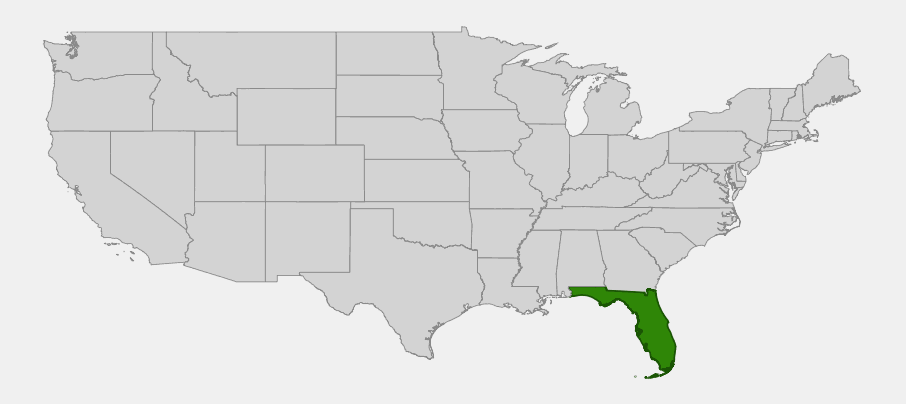
In the continental United States, giant sword fern is native only to Florida. USDA PLANTS lists it as native in the lower 48 states, Puerto Rico and the U.S. Virgin Islands, and introduced in Hawaii. USDA’s state map also shows a Louisiana record, but Florida floras and the Atlas of Florida Plants treat it as a south Florida plant. Its Florida populations are concentrated in the southern peninsula, especially Miami-Dade County, with scattered occurrences in nearby counties.
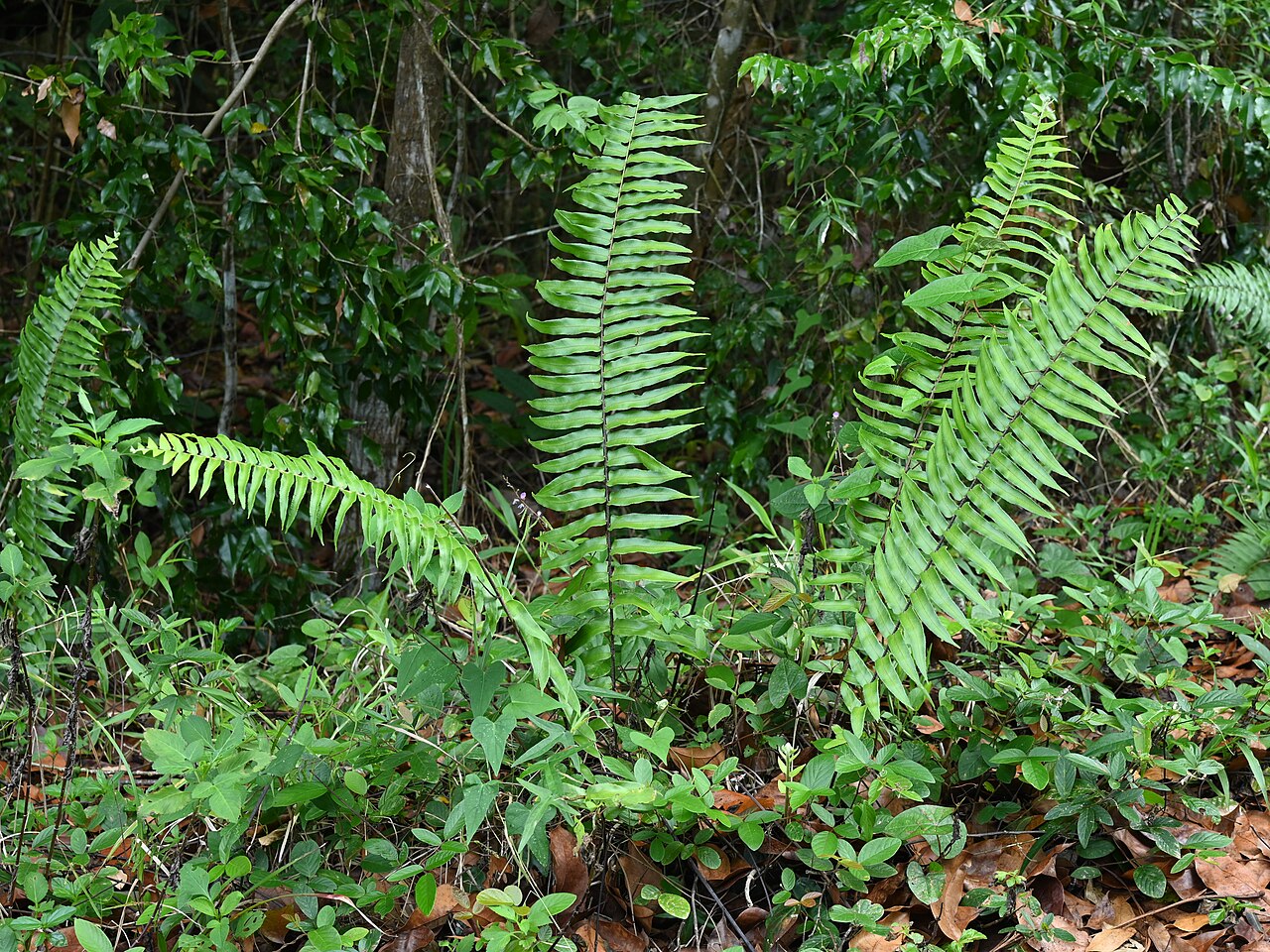
In Florida it grows in moist to wet shady places: tropical hardwood hammocks, the edges of cypress and pond apple swamps, strand swamps, wet forests and shady limestone sinks. It sometimes grows on logs or the bases of trees, but it is primarily a ground fern. Beyond Florida it occurs across the American tropics, from Mexico and the West Indies to Brazil, and also in tropical Africa, Asia and the Pacific islands.
Giant sword fern is listed as Threatened by the state of Florida (FDACS Regulated Plant Index). Much of its south Florida habitat has been drained or cleared, and its remaining wild populations face competition from invasive ferns and other plants. Leave wild plants in place, and plant only nursery-propagated stock.
📋 Regional plant lists featuring Giant Sword Fern: North & South Florida
Growing & Care Guide
Giant sword fern is a dramatic, fast-growing fern for shady, moist gardens in south Florida. Because it is listed as Threatened by the state of Florida, buy only nursery-propagated plants from reputable nurseries, and never dig plants from wild hammocks or swamps. Make sure the plant is correctly labeled, since several non-native sword ferns are sold or spread in Florida.
Light
Grow it in partial to full shade, such as under a tree canopy or on the north or east side of a building. It tolerates some morning sun if kept moist, but strong afternoon sun scorches and yellows the fronds.
Soil & Water
It prefers rich, organic, evenly moist soil and does well in mucky ground near ponds or in low areas of a shade garden. Add leaf litter or compost to sandy soils and keep a layer of mulch over the roots. Water regularly in dry weather. It tolerates brief flooding but declines in prolonged drought.
Planting Tips
Plant at the same depth it grew in the container, spacing plants 3 to 5 feet apart. Give it room: mature clumps are large and arching. It is frost-tender, so it is best in zones 10 and 11; in colder areas it can be grown in a large container and brought indoors or protected in winter.
Pruning & Maintenance
Remove old, brown or damaged fronds at the base to keep the plant tidy. Light feeding with a balanced, slow-release fertilizer in spring can improve color in poor soils, but it is not required. Pull or redirect runners if the plant spreads beyond where you want it.
Propagation
The easiest method is division: separate young plants that form on the runners, or divide a clump, during warm, wet weather. Ferns can also be grown from spores sown on sterile, moist medium, but this is slow and is best left to nurseries.
Landscape Uses
- Shade gardens: a bold, tropical-looking groundcover under trees
- Wet woodland and swamp-edge plantings: for moist, mucky soils in south Florida
- Native alternatives: a native replacement for non-native and invasive sword ferns in landscapes
- Large containers: a dramatic patio or porch fern in warm climates
- Habitat restoration: in hammock and swamp forest restorations within its range, using propagated stock
Wildlife & Ecological Value
Ferns do not produce flowers, fruit or nectar, but large native ferns such as giant sword fern still play important roles in the forest understory.
For Pollinators
As a fern, it has no flowers and does not support pollinators directly. Its dense fronds provide shelter for insects, spiders and other small invertebrates.
For Birds
Ground-feeding birds and small wrens forage among the fronds for insects, and the dense clumps provide cover in the understory.
For Mammals
Small mammals, lizards and amphibians use the moist, shady cover under the fronds. Deer and other mammals rarely eat ferns.
Ecosystem Role
Giant sword fern helps cover and stabilize soil in hammocks and swamp edges, and its fallen fronds contribute to the organic litter layer. In Florida, healthy native fern layers in hammocks help limit space for invasive ferns.
Cultural & Historical Uses
The Swedish botanist Olof Swartz described the species in the early 1800s as Aspidium biserratum, and the Austrian botanist Heinrich Wilhelm Schott moved it to Nephrolepis in 1834. The genus name comes from Greek words meaning “kidney scale,” referring to the kidney-shaped covering (indusium) over the spore clusters.
Giant sword fern has been widely cultivated in the tropics. A robust form sold in the nursery trade as ‘Macho’ fern is grown for its large, arching fronds, and it is often seen in hanging baskets and shade gardens in warm regions. In the Democratic Republic of the Congo, young fronds are reportedly cooked and eaten as a vegetable.
In Florida, native plant enthusiasts value it as a striking native fern for shade gardens and as an alternative to the invasive tuberous and Asian sword ferns. Its state Threatened listing makes careful sourcing important.
Frequently Asked Questions
Is giant sword fern the same as macho fern?
Ferns sold as ‘Macho’ fern are a large cultivated form of Nephrolepis biserrata. Check plant labels carefully, and buy from nurseries that can confirm the plant’s identity.
How is it different from Boston fern?
Giant sword fern is much larger, with fronds 3 to 7 feet long, wider pinnae with finely double-toothed edges, and hairs along the frond axis and the undersides of the pinnae. Boston fern (N. exaltata) has smaller, mostly smooth fronds.
Is giant sword fern endangered?
It is listed as Threatened by the state of Florida in the FDACS Regulated Plant Index. Buy only nursery-propagated plants, and never collect wild plants.
Can it grow outdoors in north Florida?
It is frost-tender and best in zones 10 and 11. In colder areas, grow it in a container and protect it during freezes.
Is giant sword fern invasive?
No. It is native to south Florida. The invasive sword ferns in Florida are tuberous sword fern (N. cordifolia) and Asian sword fern (N. brownii).

Looking for a nursery that carries Giant Sword Fern?
Browse our native plant nursery directory: Florida