
Coastal Plain Tickseed (Coreopsis gladiata)
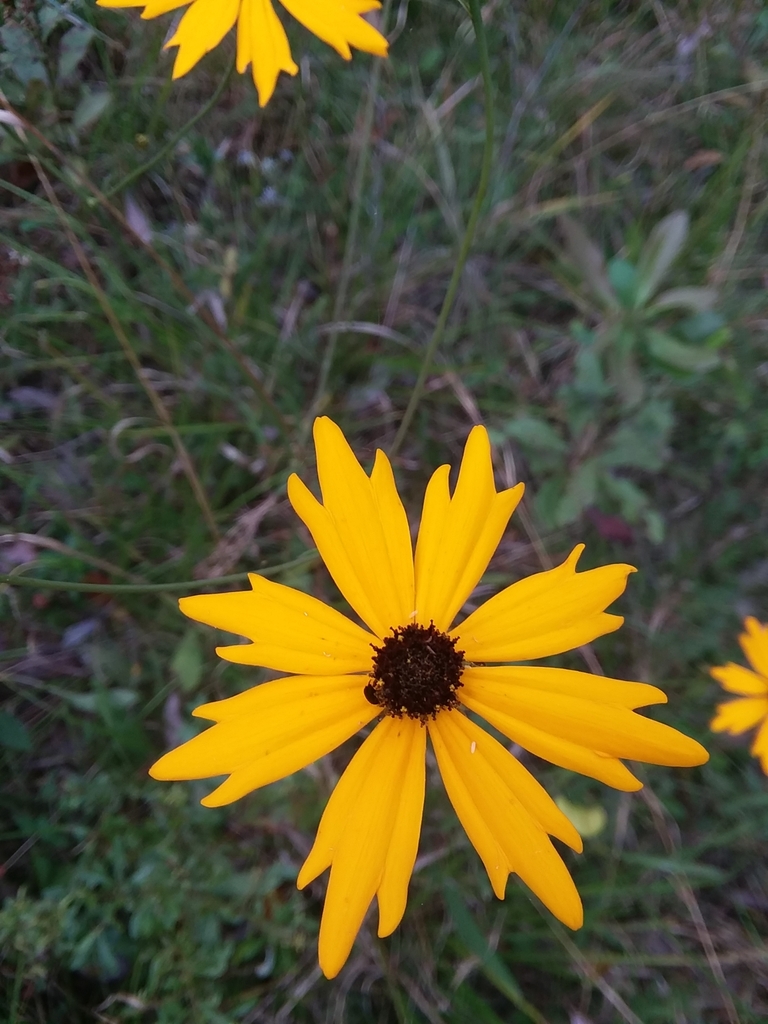
Coreopsis gladiata, known as Coastal Plain Tickseed, is a late-blooming perennial wildflower of wet pine savannas, flatwoods and bogs on the southeastern Coastal Plain. From late summer into fall it sends up slender, branching stems 2 to 4 feet tall topped with golden-yellow daisies, each with toothed rays and a dark red-brown to maroon center. It belongs to the aster family (Asteraceae), and like other members of the genus it is one of the wildflowers that make up Florida’s official state wildflower, the coreopsis.
Most of the leaves are in a basal rosette. They are lance-shaped to narrowly elliptic and smooth-edged, and the leaves become much smaller and bract-like toward the top of the flowering stems. USDA PLANTS lists several synonyms, including Coreopsis angustifolia (as used by Aiton, not Linnaeus), C. helianthoides and C. longifolia, and botanists have long debated how this species relates to the very similar Florida tickseed.
Coastal plain tickseed is native to Florida according to the Atlas of Florida Plants, and USDA PLANTS records it from North Carolina to Florida and west to Louisiana. For gardeners with moist, sunny, acidic soil it is an easy, long-blooming plant for rain gardens, pond edges and wet meadow plantings. This guide covers identification, range, care and its value for pollinators.
Identification
Coastal plain tickseed is a typical yellow coreopsis with a dark center. Its wet habitat, late bloom season, basal rosette of undivided leaves and tall, sparsely leafy flowering stems help separate it from other species.
Stems & Habit
Plants form a basal rosette of leaves from a short rootstock and send up one to several flowering stems, usually 2 to 4 feet tall. The stems are smooth and branch in the upper part. Plants can spread slowly by producing new rosettes around the edge of the clump. The Lady Bird Johnson Wildflower Center describes it as a short-lived perennial.
Leaves
The basal leaves are lance-shaped to narrowly elliptic or spoon-shaped, smooth and untoothed, and several inches long, tapering to a long stalk. They are somewhat thick and leathery. Leaves on the flowering stems are fewer and smaller, becoming narrow and bract-like near the top.
Flowers
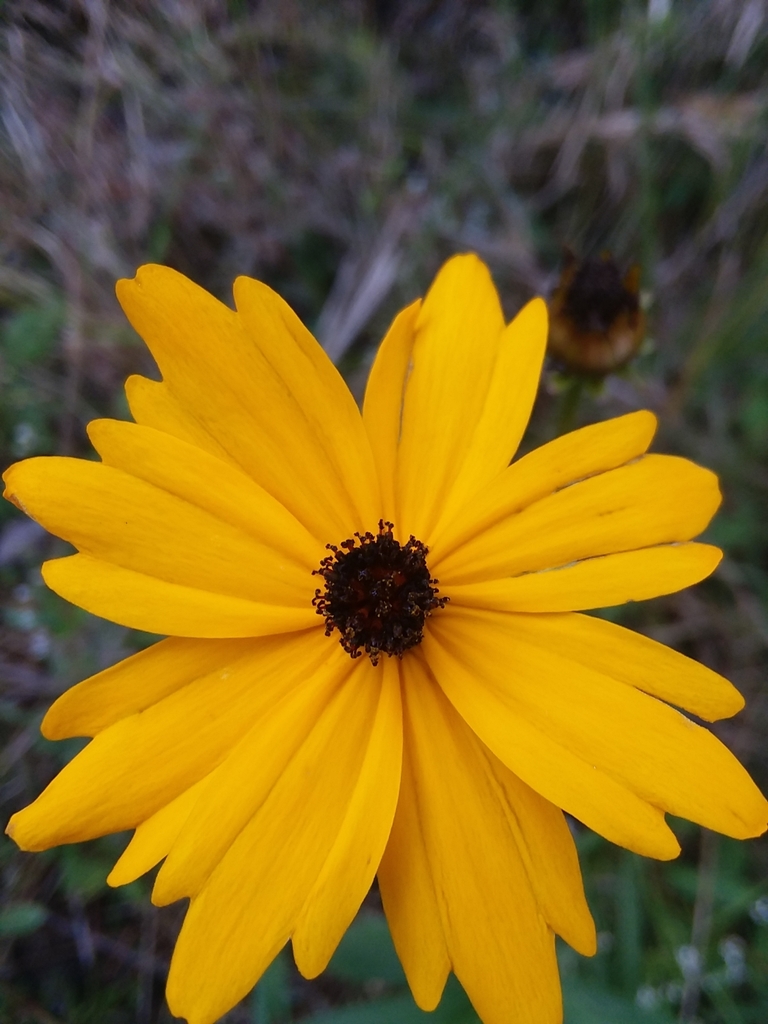
The flower heads are about 1½ to 2½ inches across. Each has about eight golden-yellow rays with three to several teeth at the tip, around a disk of tubular florets that is dark red-brown, maroon or purplish. Bloom is mainly in September and October, and in Florida it often continues into November.
Fruit & Seeds
Like other tickseeds, it produces small, flat, dark seeds (cypselae) with narrow wings or bristles, said to resemble ticks, which gives the genus its common name. They ripen a few weeks after flowering and fall near the parent plant.
Similar Species
Florida Tickseed (C. floridana) is very similar and sometimes included in C. gladiata; it is largely confined to the Florida peninsula and differs in leaf shape and fine details of the seeds. Georgia Tickseed (C. nudata) has pink rays and blooms in spring. Texas Tickseed (C. linifolia) is similar but has leaves dotted with tiny dark glands.
Quick Facts
| Scientific Name | Coreopsis gladiata Walter (syn. C. angustifolia Aiton, C. helianthoides, C. longifolia) |
| Family | Asteraceae (aster family) |
| Plant Type | Herbaceous perennial wildflower, often short-lived |
| Mature Height | 2–4 ft in flower |
| Mature Spread | 1–2 ft |
| Growth Rate | Fast |
| Sun Exposure | Full sun |
| Water Needs | High; moist to wet soil |
| Soil Type | Moist to wet, acidic sand or peaty sand |
| Soil pH | Acidic, about 4.5–6.5 |
| Bloom Time | Late summer to fall (mainly September–October) |
| Flower Color | Golden-yellow rays with a dark red-brown to maroon disk |
| Fall Color | None notable; basal rosettes stay green in mild winters |
| Fruit | Small, flat, winged cypsela (achene) |
| Deer Resistant | Moderately |
| USDA Hardiness Zones | 7–10 |
Native Range
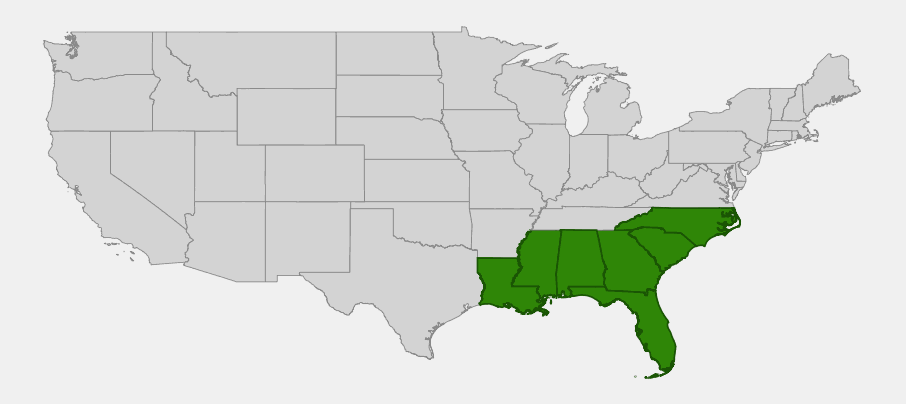
Coastal plain tickseed is, as its name says, a plant of the southeastern Coastal Plain. USDA PLANTS and the Lady Bird Johnson Wildflower Center record it from North Carolina, South Carolina, Georgia, Florida, Alabama, Mississippi and Louisiana. The Wildflower Center describes its native range as the Coastal Plain from North Carolina to Texas.
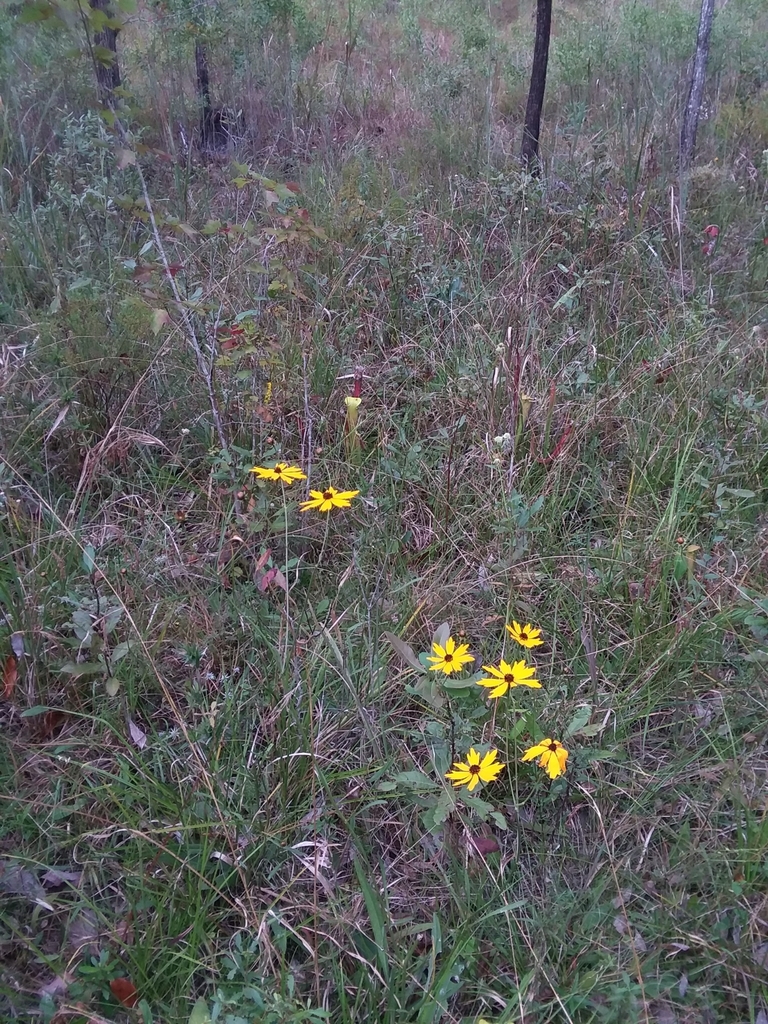
The Atlas of Florida Plants lists it as native. In Florida it is mainly a plant of the Panhandle and northern part of the state, where it grows in wet pine savannas and flatwoods, seepage slopes, pitcher plant bogs, the edges of ponds and cypress domes, and wet roadside ditches. In the peninsula it is largely replaced by the closely related Florida tickseed.
Its habitats depend on frequent fire. Fire removes shrubs and thatch, letting light reach the low rosettes, and many savanna wildflowers bloom most heavily in the year after a burn. Drainage, conversion to pine plantations and fire suppression have reduced these wetlands across the Coastal Plain, but coastal plain tickseed still persists in wet roadsides and power line corridors that are mowed regularly.
📋 Regional plant lists featuring Coastal Plain Tickseed: North & South Florida · Alabama, Georgia & Mississippi · North & South Carolina · Arkansas, Louisiana, Eastern Oklahoma & Eastern Texas
Growing & Care Guide
Coastal plain tickseed is one of the easiest wetland wildflowers to grow if its soil stays moist. It is available from some native nurseries in the Southeast and is easy to start from seed. Use nursery-grown plants or seed from cultivated sources rather than digging wild plants.
Light
Full sun. In shade it produces few flowers and the stems lean toward the light.
Soil & Water
It needs moist to wet, acidic, sandy or peaty soil. It thrives in rain gardens, along pond and ditch edges, and in low spots that stay damp. It tolerates short periods of standing water and seasonal dry spells but not long drought in dry soil. It does not need fertilizer; rich soil leads to tall, floppy stems.
Planting Tips
Plant in fall or early spring, 12 to 18 inches apart. Grow it with grasses, sedges and other wetland wildflowers such as meadow beauties, blazing stars and pitcher plants, which help hold up the slender stems and match its natural setting. It also works well in a large container kept constantly moist.
Pruning & Maintenance
Cut down flowering stems after seeds ripen, or leave them through winter for birds. Because individual plants can be short-lived, allow some seedlings to grow, or divide clumps every few years. A late-winter mowing keeps competing plants in check in meadow plantings.
Propagation
According to the Lady Bird Johnson Wildflower Center, seed can be sown outdoors in late fall or the following spring without cold treatment, and seedlings grow rapidly. Clumps can be increased by separating the outer rosettes in fall.
Landscape Uses
- Rain gardens and wet spots: thrives where water collects and soil stays moist
- Pond and ditch edges: a long-blooming yellow accent along wet margins
- Pine savanna and wet meadow restoration: in fire-managed wet pinelands within its native range
- Pollinator gardens: late-season nectar and pollen for bees and butterflies
- Bog gardens: a taller companion for pitcher plants and other bog plants
Wildlife & Ecological Value
Coastal plain tickseed brings a burst of yellow to wet savannas in fall, when it is one of the main nectar sources for many insects.
For Pollinators
The flower heads attract a wide range of pollinators, including bumblebees, sweat bees, leafcutter bees and other native bees, along with butterflies, skippers, flower flies and beetles. Its fall bloom overlaps with the migration of monarchs and other butterflies through the Southeast.
For Birds
Goldfinches, sparrows and other small seed-eating birds eat coreopsis seeds, especially when seed heads are left standing into winter.
For Mammals
Deer and rabbits sometimes graze the leaves and flowers, but the plant is of minor importance to mammals.
Ecosystem Role
It is part of the species-rich herb layer of wet pine savannas and flatwoods, among the most diverse plant communities in North America. Its basal rosettes survive fire, and it often blooms heavily in the season after a burn.
Cultural & Historical Uses
Thomas Walter described Coreopsis gladiata in his Flora Caroliniana (1788), one of the first floras of the southeastern United States, based on plants from South Carolina. The species name gladiata means “sword-like”, probably referring to the shape of the leaves. The genus name Coreopsis comes from Greek words meaning “bug-like”, a reference to the seeds.
In 1991 the Florida Legislature designated the coreopsis as the official state wildflower, honoring the many species of the genus that grow in Florida, including coastal plain tickseed. Coreopsis plantings along highways have since become a familiar sight in the state.
Today coastal plain tickseed is valued in restoration of wet pine savannas and in native gardens with moist soil. Its late bloom season makes it a good choice for extending the season of color and pollinator food into fall.
Frequently Asked Questions
How is coastal plain tickseed different from Florida tickseed?
The two are very similar, and some botanists combine them. Florida tickseed is mostly confined to the Florida peninsula, while coastal plain tickseed ranges from North Carolina to Louisiana and north Florida. They differ in leaf shape and small details of the seeds.
Does coastal plain tickseed need wet soil?
Yes, it grows best in moist to wet, acidic soil. It is ideal for rain gardens, pond edges and low spots, and struggles in dry sand.
When does coastal plain tickseed bloom?
Mainly in September and October. In Florida it may continue into November.
Is it the Florida state wildflower?
The Florida state wildflower is the coreopsis, which covers all species of the genus native to Florida, including coastal plain tickseed.
How do I propagate coastal plain tickseed?
Sow seed outdoors in late fall or spring without cold treatment, or separate outer rosettes from established clumps in fall.

Looking for a nursery that carries Coastal Plain Tickseed?
Browse our native plant nursery directory: Alabama · Florida & Georgia · Louisiana & Mississippi · North Carolina · South Carolina