
Trailing Jade (Peperomia rotundifolia)
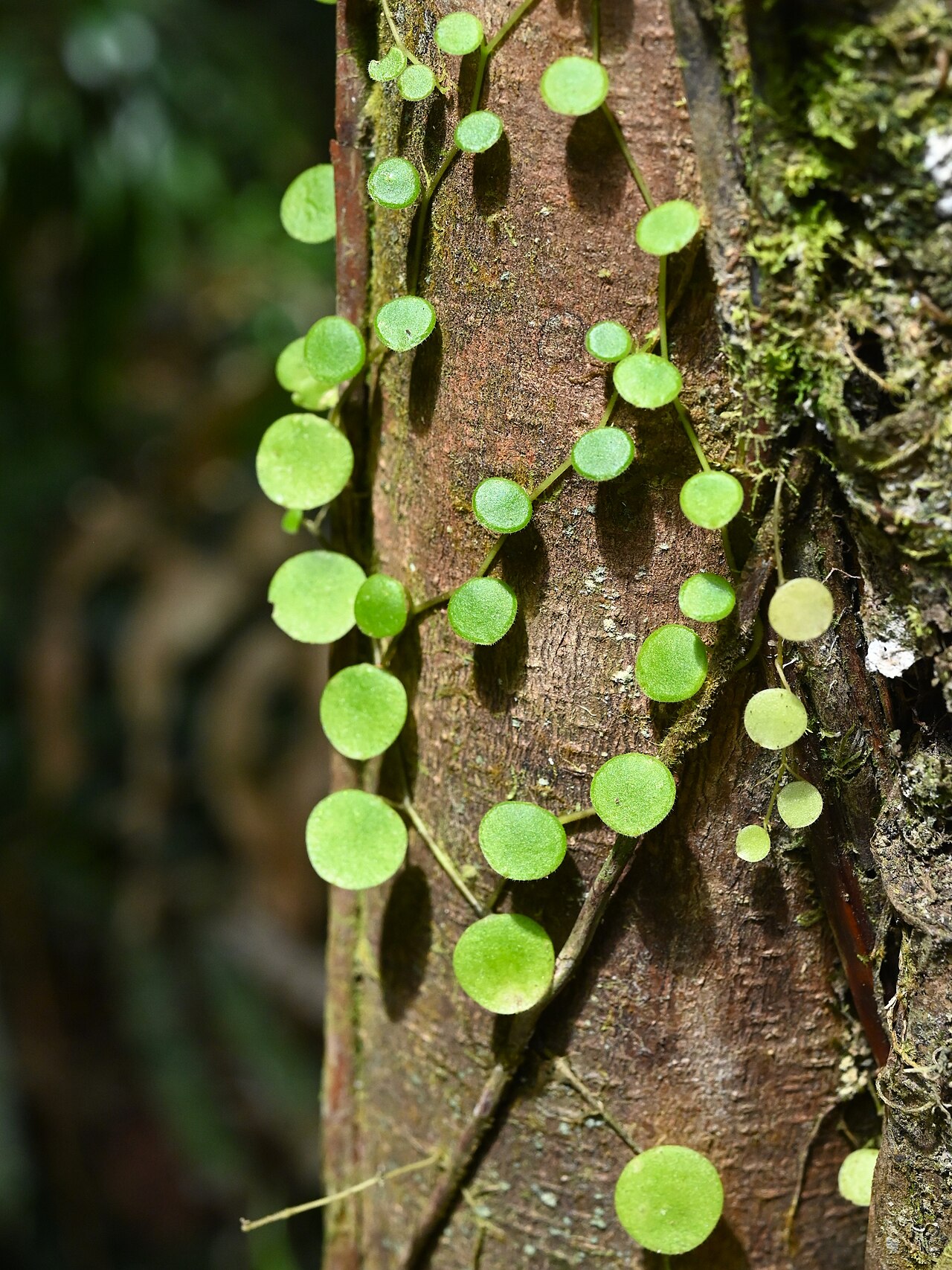
Peperomia rotundifolia, sold as Trailing Jade or round-leaf peperomia and also called creeping buttons or jade necklace, is a small, creeping member of the pepper family (Piperaceae) with thick, coin-shaped leaves on thread-thin stems. In the wild it is an epiphyte: it creeps over mossy tree trunks, logs and rocks in humid forests. In homes it has become a favorite trailing houseplant for small pots, shelves and terrariums. USDA PLANTS calls it yerba linda, one of its Spanish names in Puerto Rico.
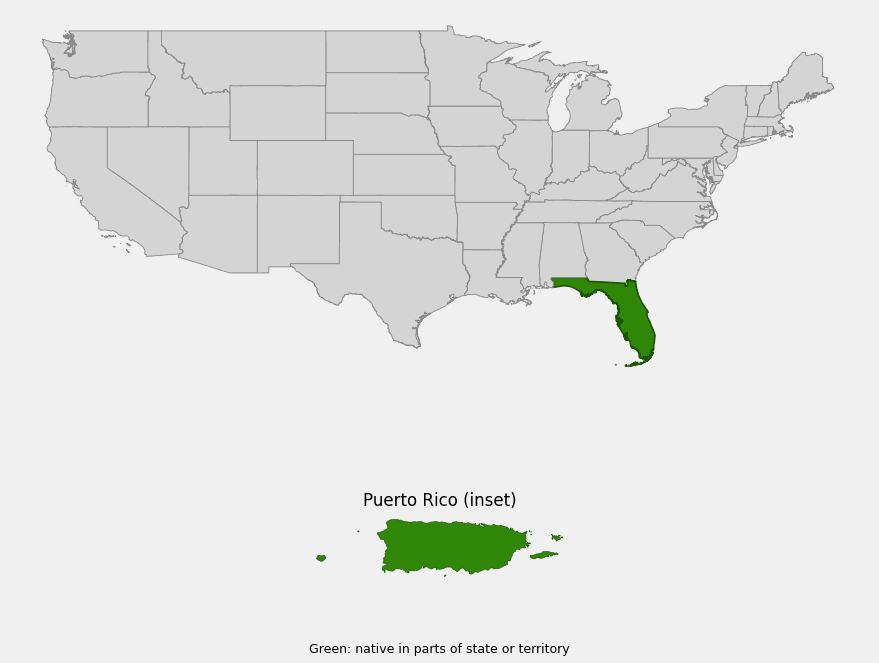
Within the United States it is native to Puerto Rico and to southern Florida, where it is extremely rare. The Atlas of Florida Plants lists it as native and state-listed as Endangered, so wild Florida plants are protected and must never be collected. Its wider range covers the American tropics, from the Caribbean and Central America to South America.
This guide covers how to tell it apart from other small peperomias, where it grows wild, and how to grow it indoors or outdoors in zones 10–13. The good news for pet owners: peperomias are generally considered non-toxic to cats and dogs.
Identification
Small peperomias are notoriously confusing, and plants sold as “trailing jade,” “jade necklace” or “creeping buttons” are not always correctly labeled. True P. rotundifolia has very small, almost perfectly round leaves on slender creeping stems that root as they go. Its Florida relatives, Florida peperomia (P. obtusifolia) and the annual pepper elder (P. pellucida), are much larger, upright plants.
Stems & Growth Habit
Trailing jade is a low, creeping or trailing perennial herb. Its stems are slender, often reddish, smooth or finely hairy, and root at the nodes wherever they touch moss, bark or soil. In the wild it forms loose mats on trunks, logs and rocks; in hanging pots the stems trail 1 to 2 feet. The plant rarely stands more than 2 to 4 inches tall.
Leaves
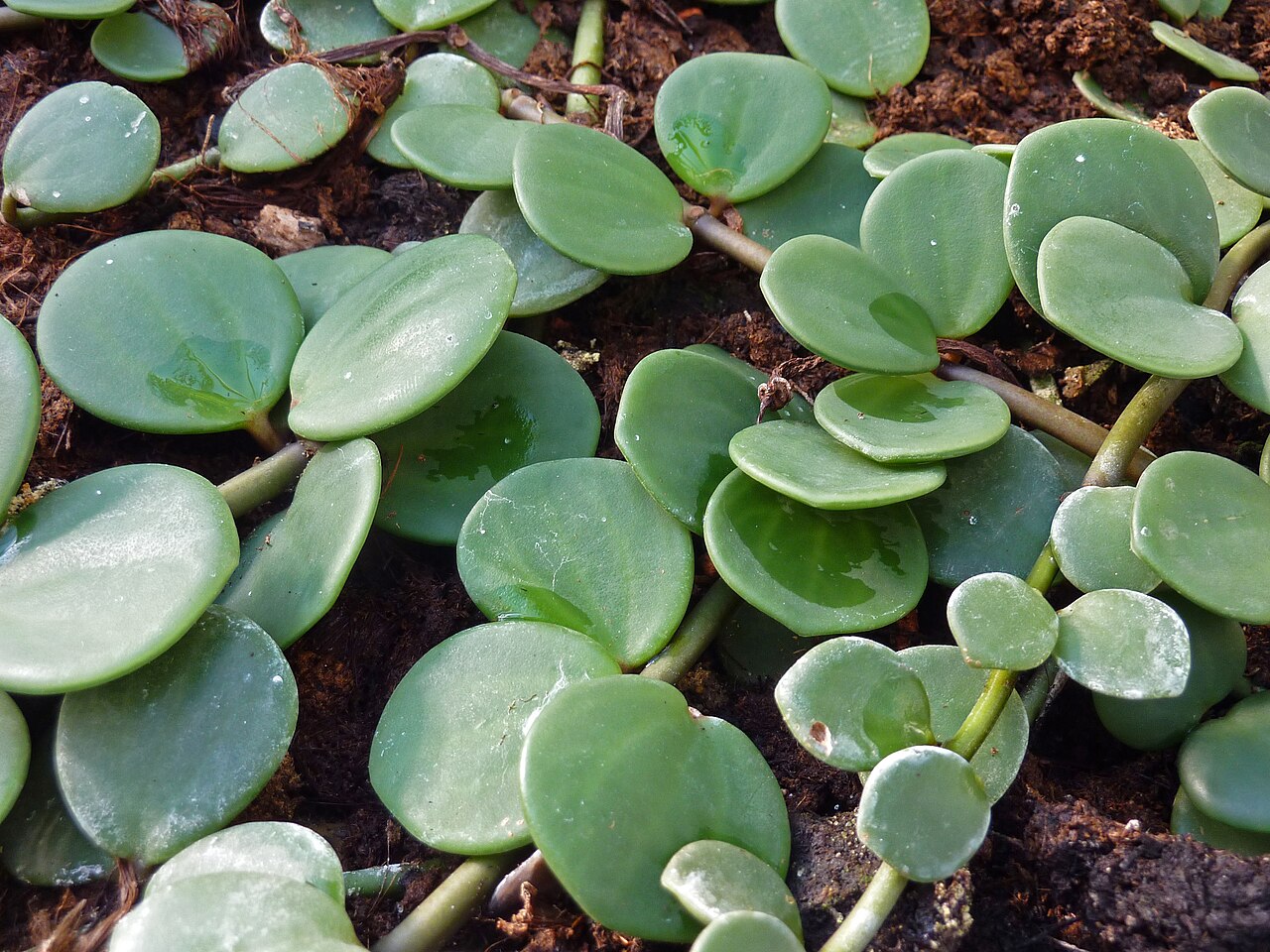
The leaves alternate along the stem and are nearly round, usually ¼ to ¾ inch across, thick, fleshy and slightly cupped. They are bright to medium green, sometimes with faint, pale veins, and smooth or finely hairy depending on the variety. The succulent leaves store water, which helps the plant survive dry spells on tree bark.
Flowers
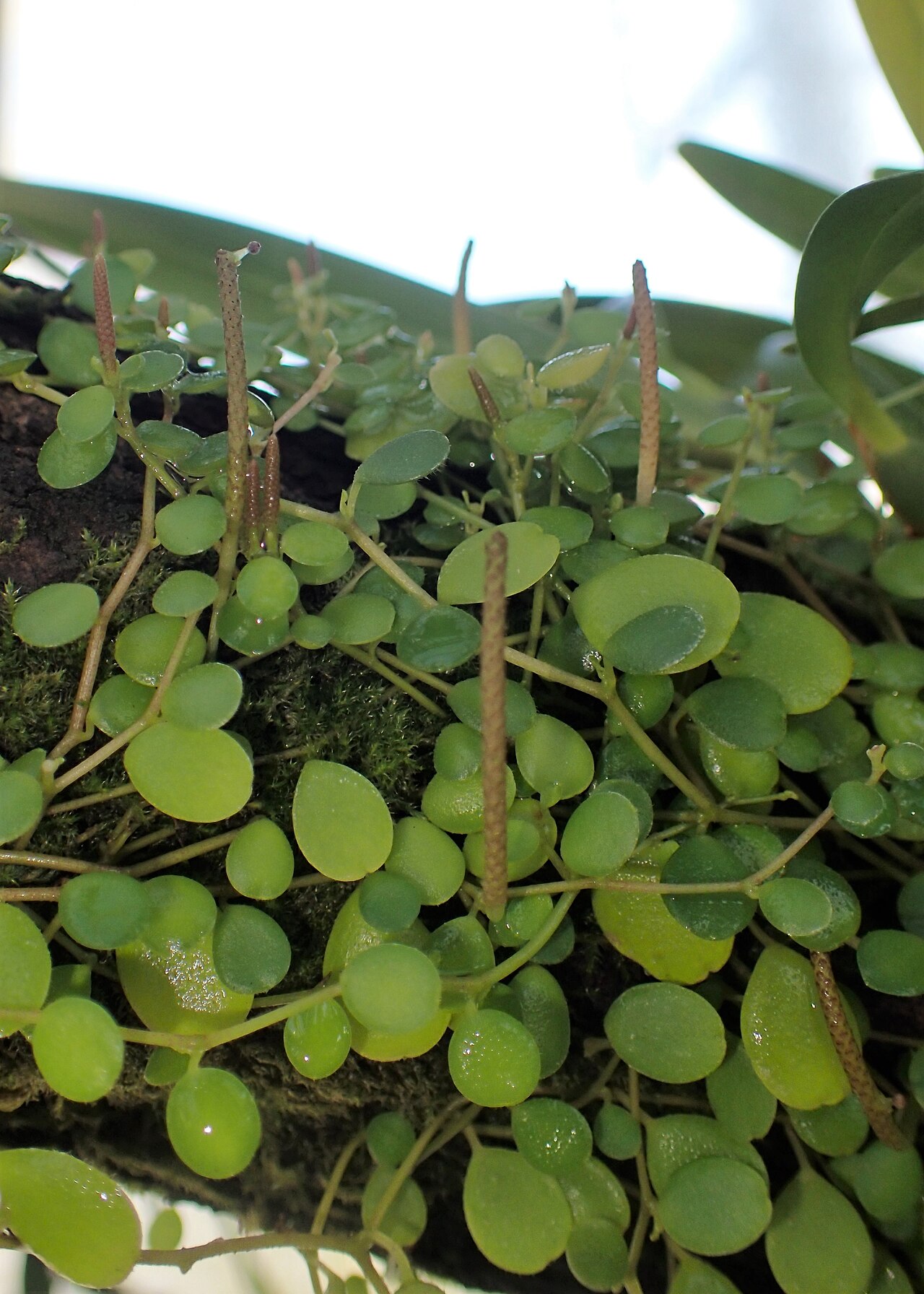
Like other peperomias, it bears tiny, petal-less flowers packed into thin, upright spikes about ½ to 2 inches long, at the stem tips or opposite the leaves. The spikes are green to tan, and easy to overlook. In the wild it can flower at almost any time of year; indoor plants bloom occasionally.
Fruit
The minute fruits are tiny, sticky, berry-like drupes embedded along the spike. Their stickiness helps them cling to animals and bark, carrying the seeds to new perches. Cultivated plants are propagated from cuttings.
Quick Facts
| Scientific Name | Peperomia rotundifolia (L.) Kunth |
| Family | Piperaceae (pepper family) |
| Plant Type | Creeping epiphytic or terrestrial perennial herb; trailing houseplant |
| Mature Height | 2–4 in |
| Mature Spread | Stems trail or creep 1–2 ft |
| Growth Rate | Moderate |
| Sun Exposure | Part shade to shade (bright, indirect light indoors) |
| Water Needs | Low to moderate; let the mix dry slightly between waterings |
| Soil Type | Mossy bark, logs and rocks in the wild; airy, fast-draining mix in pots |
| Soil pH | About 5.5–7.0 |
| Bloom Time | Sporadic, much of the year in the tropics |
| Flower Color | Greenish to tan (tiny flowers on thin spikes) |
| Fall Color | None; evergreen |
| Fruit | Tiny sticky drupes along the spike |
| Deer Resistant | Not usually an issue; grows on trunks and in containers |
| USDA Hardiness Zones | 10–13 outdoors (frost-tender); houseplant everywhere |
Native Range
USDA PLANTS lists Peperomia rotundifolia as native in Puerto Rico and in Florida, its only state on the U.S. mainland. Its wider native range covers the Caribbean islands, Mexico and Central America, and tropical South America. In Puerto Rico it is a widespread epiphyte of moist and wet forests, creeping over mossy tree trunks, logs, boulders and stream banks.
In Florida it is known from only a few moist, shady forests in the southern part of the state. The Atlas of Florida Plants lists it as native and state-listed as Endangered, and the Lady Bird Johnson Wildflower Center notes the same. Like other rare epiphytes in South Florida, it depends on deep shade, high humidity and intact canopy, and it is vulnerable to drought, hurricane damage and collecting.
Because trailing jade is so common in the houseplant trade, any plant you buy will be from cultivated stock. Never remove plants from the wild in Florida or Puerto Rico, and do not discard houseplant cuttings in natural areas.
📋 Regional plant lists featuring Trailing Jade: North & South Florida · Puerto Rico
Growing & Care Guide
Trailing jade is an easy, compact houseplant if you think of it as what it is in the wild: a small epiphyte that grows in airy moss on bark, in humid shade, with roots that never sit in water. Most problems come from overwatering or too little light.
Light
Give it bright, indirect light, such as an east window or a spot a few feet back from a south or west window. It also does well under grow lights. Too little light produces long, bare stems; harsh direct sun can scorch or yellow the leaves. Outdoors in zones 10–13, grow it in shade on a tree trunk, a mossy rock or in a hanging pot under a porch roof.
Soil & Water
Use a very airy, fast-draining mix: for example, equal parts potting mix, orchid bark and perlite, or a mix with some sphagnum moss. Shallow pots with drainage holes suit its shallow roots. Water when the top half of the mix is dry; the succulent leaves hold water, and soggy soil quickly rots the stems. Water less in winter. It appreciates moderate to high humidity, which makes it an excellent terrarium plant. Feed with diluted fertilizer a few times during the growing season.
Planting Tips
For a full, trailing pot, plant several rooted cuttings together. It also grows well mounted on cork or a branch with a pad of moss, like a small orchid, if kept misted. Keep it above about 55°F (13°C). In Florida and Puerto Rico, buy nursery-grown plants, never wild-collected ones.
Pruning & Maintenance
Trim long stems to keep the plant bushy, and use the trimmings as cuttings. Remove any yellow or mushy leaves, which usually signal overwatering. Repot only when the plant has clearly outgrown its pot; it prefers to be a little snug. Watch for mealybugs at the stem joints.
Propagation
Root stem cuttings with two or three nodes in moist, airy mix or sphagnum moss, or in water. Laying a stem on the surface of a moist pot works too, because it roots at the nodes. Single leaves with a bit of stalk can root as well, but more slowly.
Landscape Uses
- Houseplant: small hanging pots, shelves and windowsills
- Terrariums: its small size and love of humidity suit open and closed terrariums
- Mounted epiphyte: on cork, branches or tree-fern slabs with moss
- Shade gardens in zones 10–13: on shady tree trunks, rocks and moist walls in Puerto Rico and South Florida
- Pet-friendly plantings: peperomias are generally considered non-toxic to cats and dogs
Wildlife & Ecological Value
In tropical forests, trailing jade is part of the community of mosses, ferns, bromeliads and other small epiphytes that cover tree trunks. These “hanging gardens” hold water and organic matter high in the canopy.
For Pollinators
Peperomia flowers are tiny and lack petals and nectar. They are thought to be pollinated by small insects and, possibly, by wind, and many peperomias also set seed on their own.
For Birds
Birds and other small animals may carry the sticky fruits on their feathers or feet, which helps disperse the plant from trunk to trunk.
For Mammals
It has little direct food value for mammals.
Ecosystem Role
Together with mosses and ferns, trailing jade forms living mats on bark that trap moisture, dust and leaf litter. These mats create microhabitats for tiny invertebrates, tree frogs and other small animals, and contribute to nutrient cycling in the forest canopy.
Cultural & Historical Uses
Linnaeus described the plant as Piper rotundifolium, placing it with the black pepper genus, and Karl Sigismund Kunth later moved it to Peperomia. The genus name means “resembling pepper,” and the species name means “round-leaved.” Some botanists separate several varieties, and plants in the trade are often sold under varied names.
Peperomias as a group became popular houseplants in the mid-20th century, and the small trailing species, including trailing jade, enjoyed a revival with the recent interest in terrariums and compact houseplants for apartments.
For Florida, trailing jade is a reminder that the state’s rarest plants include tiny tropical epiphytes that most people never notice. Protecting the shady hardwood hammocks and swamps where they survive protects these plants along with the whole community of orchids, ferns and bromeliads that share them.
Frequently Asked Questions
Is trailing jade peperomia toxic to cats and dogs?
Peperomias, including Peperomia rotundifolia, are generally considered non-toxic to cats and dogs, and the ASPCA lists several peperomias as non-toxic. Eating a lot of any houseplant can still cause mild stomach upset, so keep plants out of reach of pets that chew.
Is Peperomia rotundifolia native to the United States?
Yes. USDA PLANTS lists it as native in Florida and Puerto Rico. In Florida it is very rare and state-listed as Endangered, so wild plants must not be collected.
Why are my trailing jade leaves turning yellow or mushy?
Usually because of overwatering or poor drainage. Let the mix dry partly between waterings, use a chunky, fast-draining mix and a pot with drainage holes, and remove any rotten stems. Healthy cuttings can be rerooted to start over.
Is trailing jade the same as string of turtles?
No. String of turtles is Peperomia prostrata, a related trailing species with smaller, patterned leaves. Trailing jade has plain green, round leaves. Both are grown in similar conditions.
How do I make trailing jade fuller?
Give it more light, pinch the stem tips regularly, and plant rooted cuttings back into the same pot. Stems that stretch toward the light become sparse, so rotate the pot occasionally.

Looking for a nursery that carries Trailing Jade?
Browse our native plant nursery directory: Florida

