
Cedar Bay Cherry (Eugenia reinwardtiana)
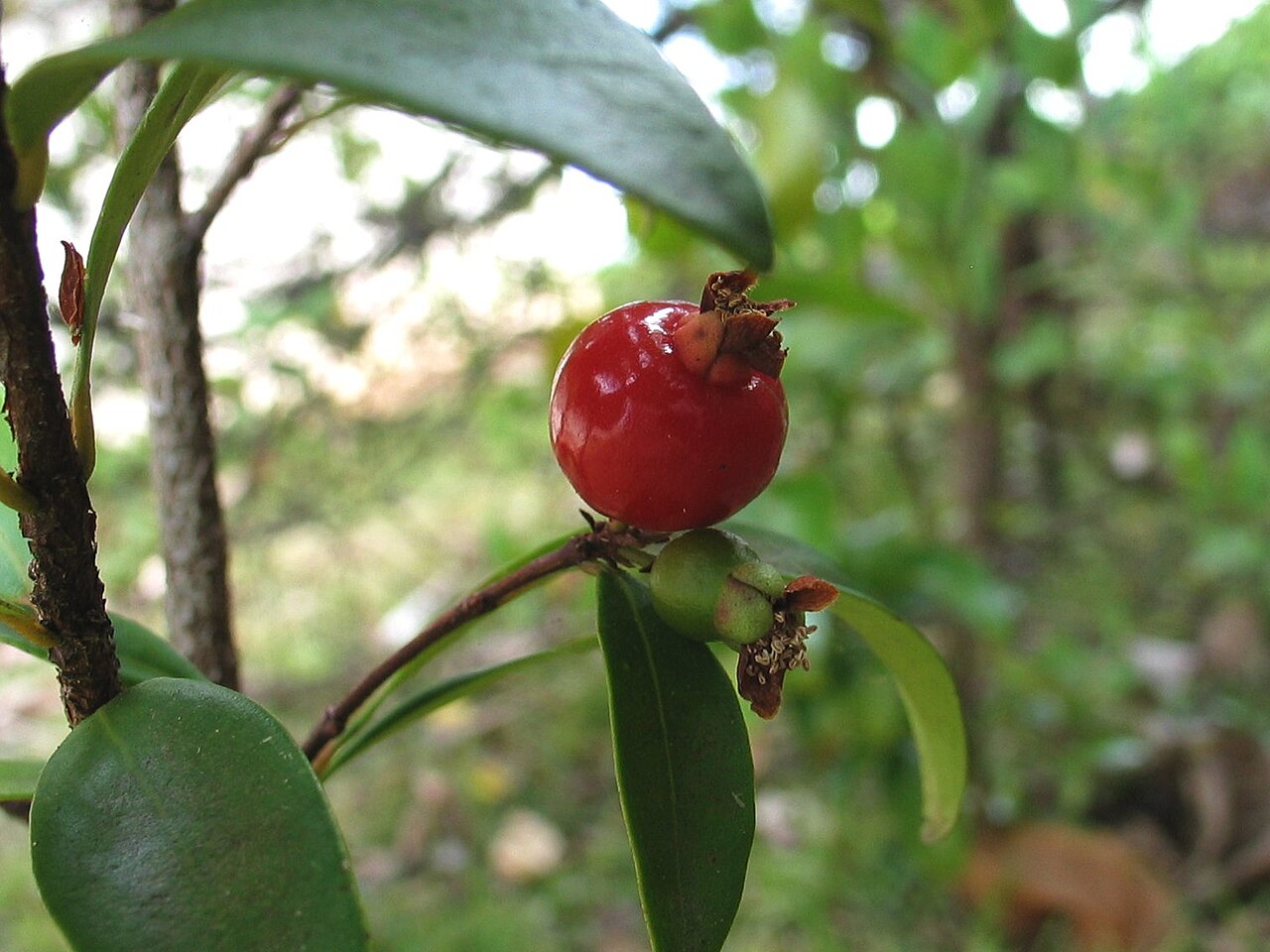
Eugenia reinwardtiana, known as Cedar Bay Cherry, beach cherry or, in Hawaii, nīoi, is an evergreen shrub or small tree in the myrtle family (Myrtaceae). It has glossy, leathery leaves, puffy white flowers and small, round fruits that ripen from green to bright orange-red and are sweet and good to eat. In Guam it is called aʻabang. USDA PLANTS also lists the name mountain stopper.
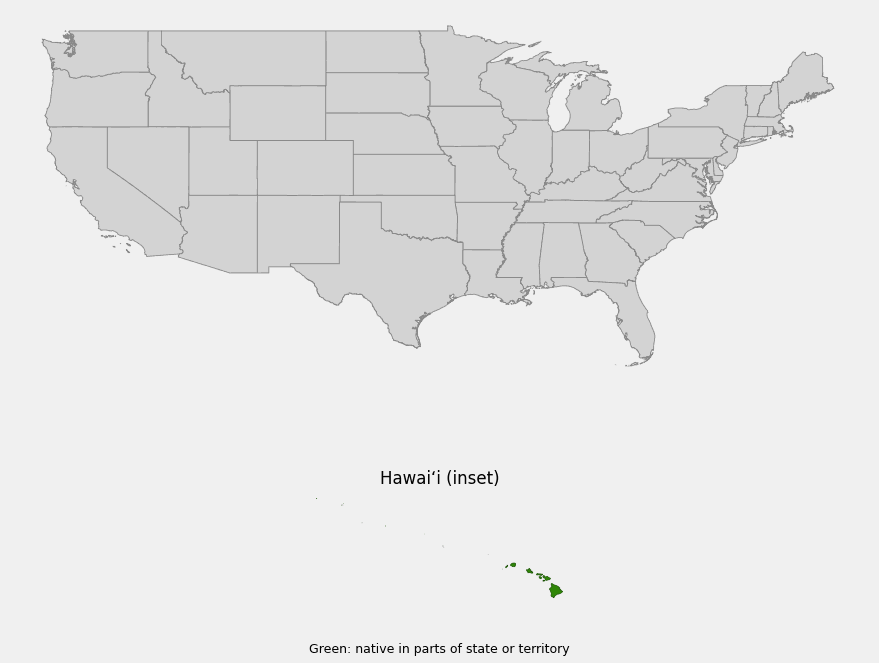
It is indigenous to Hawaii, meaning it arrived on its own and also grows naturally elsewhere: its wider range stretches across tropical Pacific islands, including Guam and Palau, to Indonesia and northeastern Australia. In Hawaii it is an uncommon plant of dry to mesic forests, mostly on Kauaʻi and Oʻahu. The name Cedar Bay cherry comes from Cedar Bay in Queensland, where the fruit is common and well known.
It is grown by rare-fruit enthusiasts in Hawaii, South Florida and other warm regions. This guide covers how to identify it, where it grows wild in Hawaii, how to grow it outdoors in zones 10–12 or in a large container, and its value to wildlife.
Identification
Hawaii has several Eugenia and related Syzygium species, native and introduced. Nīoi is separated from the federally endangered Oʻahu endemic Eugenia koolauensis, also called nīoi, by its smooth, hairless young growth and leaves (E. koolauensis has rusty-hairy twigs and leaf undersides), and from introduced Surinam cherry (Eugenia uniflora) by its smooth, round fruit, which lacks Surinam cherry’s deep ribs.
Bark & Growth Habit
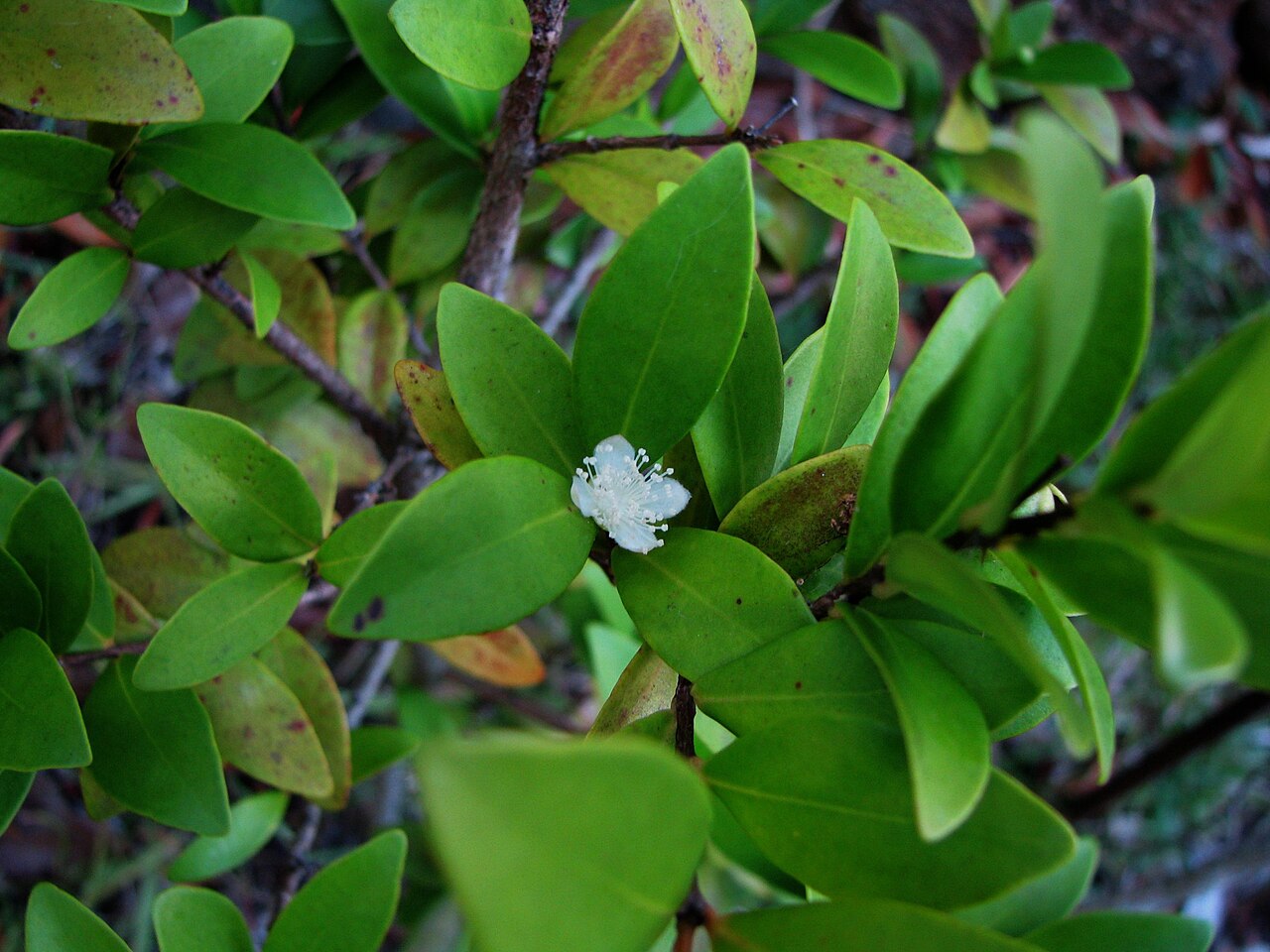
A dense, much-branched evergreen shrub or small tree, usually 6 to 15 feet tall, occasionally taller in sheltered forest. The bark is gray-brown and smooth to finely flaking. The wood is hard and heavy.
Leaves
Leaves are opposite, simple and smooth-edged, elliptic to obovate, usually 1 to 3 inches long, glossy dark green above and paler below, and leathery. They are dotted with tiny oil glands and smell faintly spicy when crushed. New growth is often bronze to reddish.
Flowers
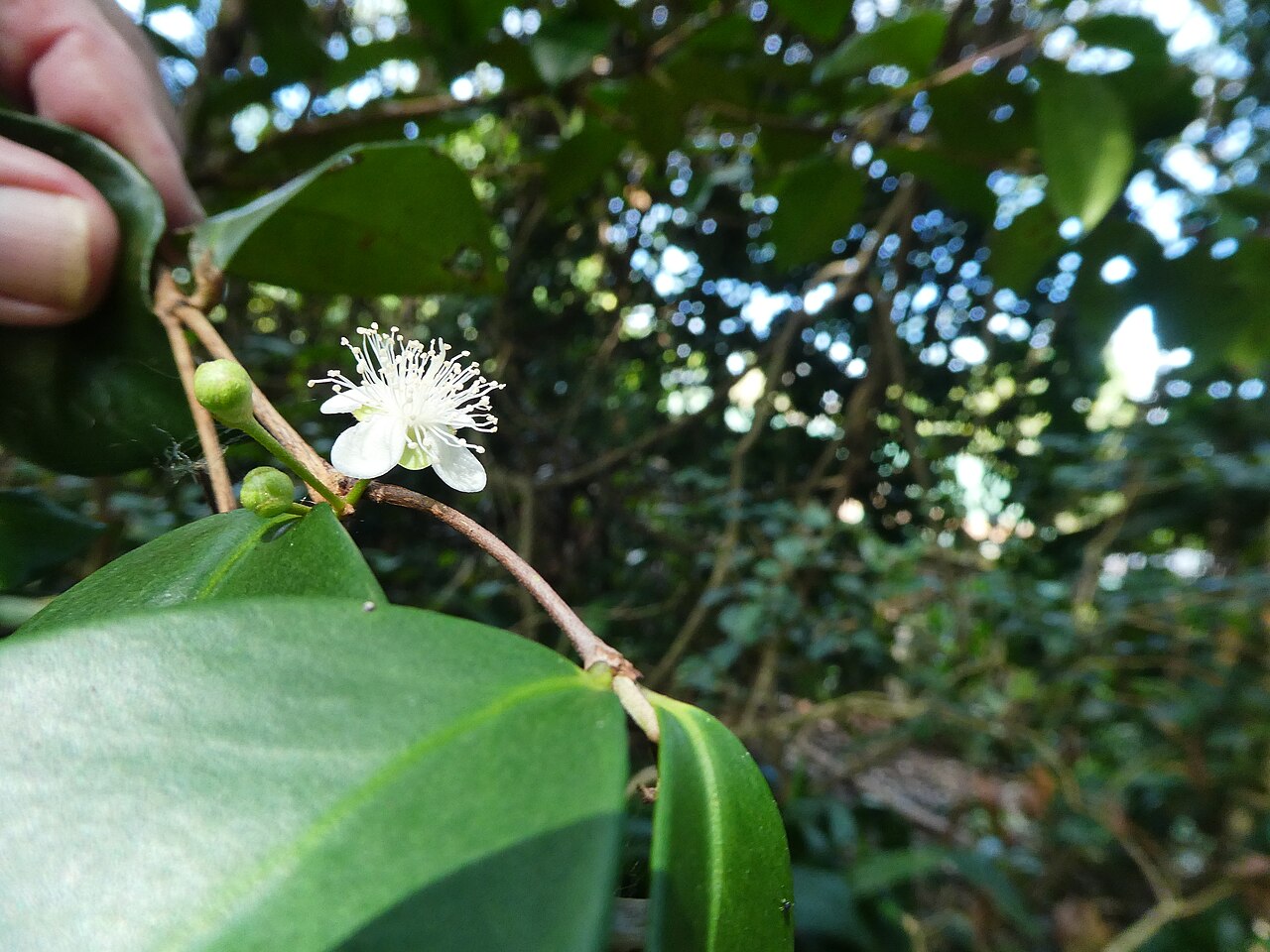
The flowers are small, white and fragrant, about ½ inch across, borne singly or in small clusters in the leaf axils. Four small petals are almost hidden by a puff of numerous white stamens. Bloom timing varies, often with flushes after rain.
Fruit
The fruit is a round, smooth berry about ½ to ¾ inch across, crowned by the remains of the calyx. It ripens from green to bright orange-red or red, with soft, juicy, sweet flesh around one or two large seeds. The fruit is edible fresh or in jams and drinks.
Quick Facts
| Scientific Name | Eugenia reinwardtiana (Blume) DC. |
| Family | Myrtaceae (myrtle family) |
| Plant Type | Evergreen shrub or small tree; edible-fruited |
| Mature Height | 6–15 ft |
| Mature Spread | 4–10 ft |
| Growth Rate | Slow to moderate |
| Sun Exposure | Full sun to part shade |
| Water Needs | Low to moderate; drought tolerant once established |
| Soil Type | Well-drained loam, sand, rocky or volcanic soil |
| Soil pH | About 5.5–7.5 |
| Bloom Time | Irregular, often in flushes through the warm season |
| Flower Color | White |
| Fall Color | None; evergreen |
| Fruit | Round, orange-red, sweet, edible berry |
| Deer Resistant | Moderate; young plants are browsed by deer and goats where present |
| USDA Hardiness Zones | 10b–12; frost-tender |
Native Range
USDA PLANTS lists Eugenia reinwardtiana as native in Hawaii and in the Pacific Basin, including Guam and Palau. Beyond U.S. territory it ranges through Micronesia and Melanesia to Indonesia and the coast and rainforest edges of northeastern Queensland, Australia.
In Hawaii it grows in dry to mesic forest on ridges, slopes and in valleys, usually at low to middle elevations. Herbarium collections come mostly from the southern Koʻolau Mountains of Oʻahu, such as the ridges and valleys above Honolulu, and from Kauaʻi, including Kalalau Valley, with a few records from Maui. It typically grows with other native dry-forest trees, but many of its sites are now invaded by strawberry guava, Christmas berry and other introduced plants.
Like other members of the myrtle family in Hawaii, it is susceptible to myrtle rust (Austropuccinia psidii, called ʻōhiʻa rust in Hawaii), an introduced fungus that attacks young leaves and shoots. Because it is uncommon in the wild, buy nursery-grown plants rather than collecting seed or plants from native forests.
📋 Regional plant lists featuring Cedar Bay Cherry: Hawaii
Growing & Care Guide
Cedar Bay cherry is a tidy, slow-growing evergreen that suits small gardens, hedges and large containers in frost-free climates, and it rewards you with sweet fruit. In Hawaii, planting nīoi helps keep an uncommon native tree in cultivation. Look for it at native plant nurseries in Hawaii or rare-fruit nurseries elsewhere.
Light
It fruits best in full sun but grows well in part shade, as it does in the forest understory. In very hot, dry locations, light afternoon shade keeps the foliage glossy.
Soil & Water
It needs well-drained soil and grows in sand, loam, rocky ground and volcanic soils. Water regularly the first year; once established it tolerates dry periods, though regular watering during flowering and fruiting gives better crops. It tolerates some salt wind, as its name beach cherry suggests.
Planting Tips
Plant in zones 10b–12. Young plants are damaged by frost. Space hedge plants 3 to 4 feet apart and specimen plants 8 to 10 feet apart. In cooler areas, grow it in a large container and keep it above about 40°F (4°C) in winter, in a bright greenhouse or sunroom.
Pruning & Maintenance
It naturally forms a dense, compact shape and takes clipping well, so it can be kept as a hedge or small tree. Mulch to keep roots cool. Inspect new growth for myrtle rust, which shows as yellow powdery spots; remove and bag infected shoots, and do not move infected plants. Feed lightly with a balanced fertilizer during the growing season.
Propagation
Grow it from fresh seed, cleaned from ripe fruit and sown promptly, because the seeds lose viability quickly. Germination takes several weeks. Seedlings grow slowly and may take several years to fruit. Cuttings and air-layering are possible but slower to root.
Landscape Uses
- Edible landscaping: sweet orange-red fruit for fresh eating, jams and drinks
- Hedges and screens: dense, clippable evergreen for frost-free gardens
- Native Hawaiian gardens: an indigenous dry-forest shrub for mixed native plantings
- Containers: large pots on patios, or in greenhouses in cooler climates
- Coastal gardens: tolerates some salt wind and sandy soil
Wildlife & Ecological Value
In native forests, nīoi provides fruit, nectar and cover in the shrub and small-tree layer, along with other native trees of Hawaii’s dry and mesic forests.
For Pollinators
The fragrant white flowers, with their many stamens, offer pollen and nectar to native and introduced bees, flies and other insects.
For Birds
Fruit-eating birds take the ripe berries and spread the seeds. In Hawaii today these are mostly introduced birds; native fruit-eating birds that once did this work are now rare or gone from lowland forests.
For Mammals
Fruit that falls is eaten by introduced mammals such as rats and pigs, which also eat the seeds and limit natural regeneration.
Ecosystem Role
As a slow-growing, long-lived native shrub, it helps form the dense understory of Hawaii’s remaining dry and mesic forests. Restoring these forests with native species like nīoi helps them resist invasion by strawberry guava and other introduced plants.
Cultural & Historical Uses
The species was first described from Indonesia by the botanist Carl Ludwig Blume, and later moved to Eugenia by Augustin Pyramus de Candolle. The name honors Caspar Georg Carl Reinwardt, a German-Dutch botanist who founded the Bogor Botanical Gardens in Java.
In Hawaii, the hard, heavy wood of nīoi is reported to have been used by early Hawaiians to make tools such as kapa (tapa) beaters, and the fruit was eaten. In Guam and the Mariana Islands it is known as aʻabang.
In Australia, the fruit became well known in the 1970s around Cedar Bay in far north Queensland, now a national park, which gave the plant its most popular English name. It is now grown by home gardeners and rare-fruit collectors across the tropics.
Frequently Asked Questions
Is Cedar Bay cherry native to the United States?
Yes. USDA PLANTS lists it as native in Hawaii, where it is called nīoi, and in the Pacific territories of Guam and Palau. It also grows naturally in Indonesia and northeastern Australia.
Is Cedar Bay cherry fruit edible?
Yes. The ripe orange-red fruits are sweet and juicy and are eaten fresh or used in jams, jellies and drinks. Each fruit has one or two large seeds, which are not eaten. As with any wild fruit, be sure of your identification first.
How is it different from Surinam cherry?
Surinam cherry (Eugenia uniflora) is an introduced South American shrub with deeply ribbed, pumpkin-shaped fruits and a resinous taste. Cedar Bay cherry has smooth, round fruits and a milder, sweet flavor. Surinam cherry is invasive in Hawaii and Florida; Cedar Bay cherry is a native in Hawaii.
Can I grow Cedar Bay cherry outside the tropics?
Only in frost-free areas such as Hawaii, South Florida and coastal Southern California, or in a large container brought indoors in winter. It is damaged by frost.
How long until Cedar Bay cherry fruits?
Seedlings grow slowly and usually take several years to bear fruit. Plants in full sun with regular water during flowering fruit soonest.

Looking for a nursery that carries Cedar Bay Cherry?
Browse our native plant nursery directory: Hawaii

