
Spreading Gooseberry (Ribes divaricatum)
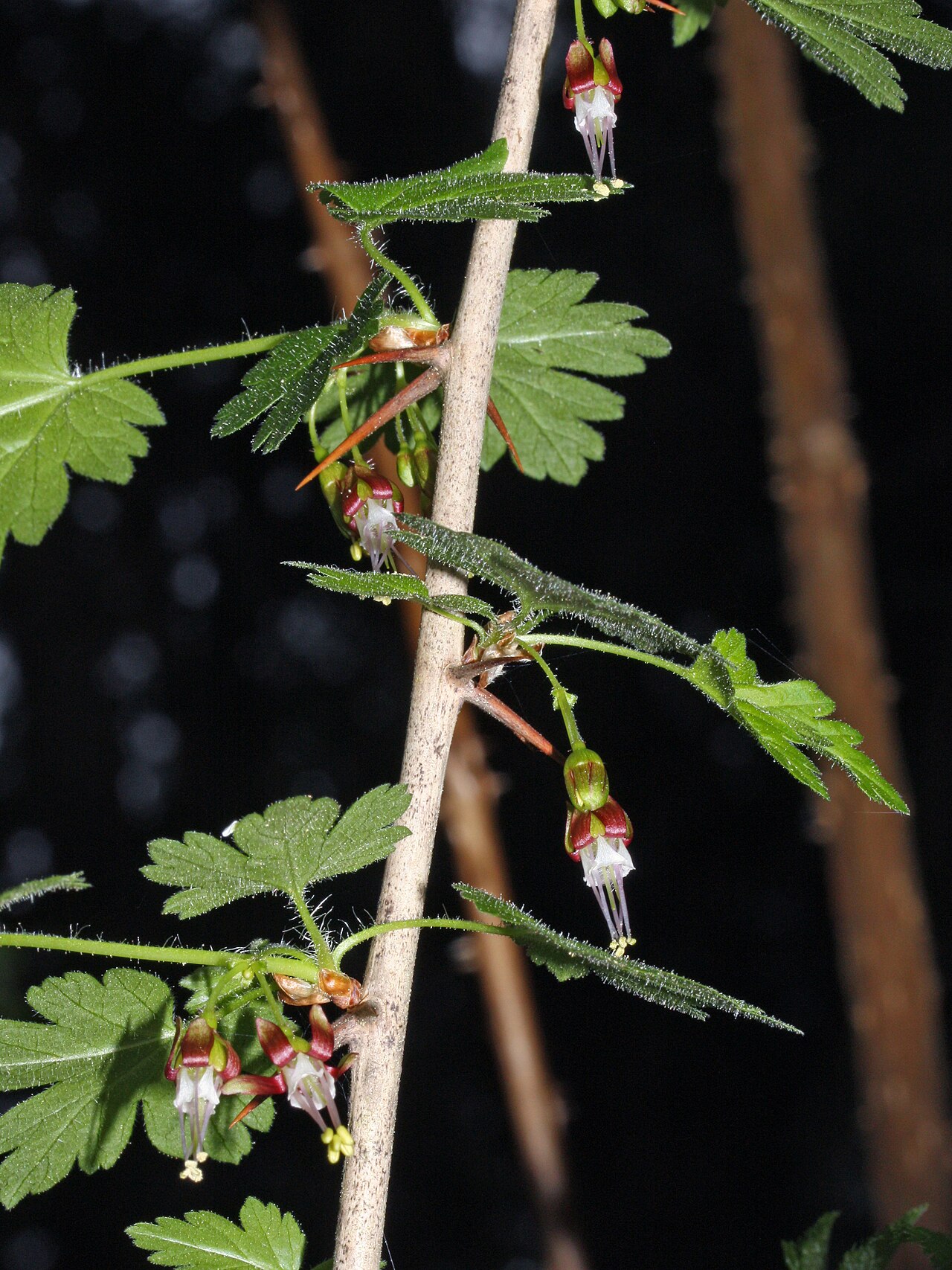
Ribes divaricatum, known as Spreading Gooseberry, coast black gooseberry, straggly gooseberry or wild gooseberry, is a native shrub of the Pacific Coast from British Columbia to California. It forms a loose, arching tangle of spiny branches, usually 3 to 8 feet tall, with small maple-like leaves. In early spring it hangs dozens of small, nodding flowers with swept-back purplish sepals and long stamens, and by summer these become smooth, shiny, purple-black berries that are among the best-tasting wild gooseberries in the West.
Spreading gooseberry grows in moist woods, thickets, streambanks, forest edges and coastal bluffs, mostly west of the Cascades and Sierra Nevada. It is one of the earliest native shrubs to flower in Pacific Northwest gardens, and its flowers are a reliable early nectar source for hummingbirds and native bees. Its fruit feeds birds and mammals, and its thorny branches make good nesting cover.
For gardeners, it is a tough, adaptable native for hedgerows, wildlife gardens and woodland edges, with the bonus of edible fruit. In Britain it is grown as the Worcesterberry, and it is a parent of several hybrid gooseberries. This guide covers identification, range, growing tips and its value to wildlife.
Identification
The West has many native currants and gooseberries. Spreading gooseberry is one of the most widespread at low elevations along the coast, and its combination of long arching branches, node spines, small dangling flowers and smooth black berries sets it apart.
Growth Habit & Stems
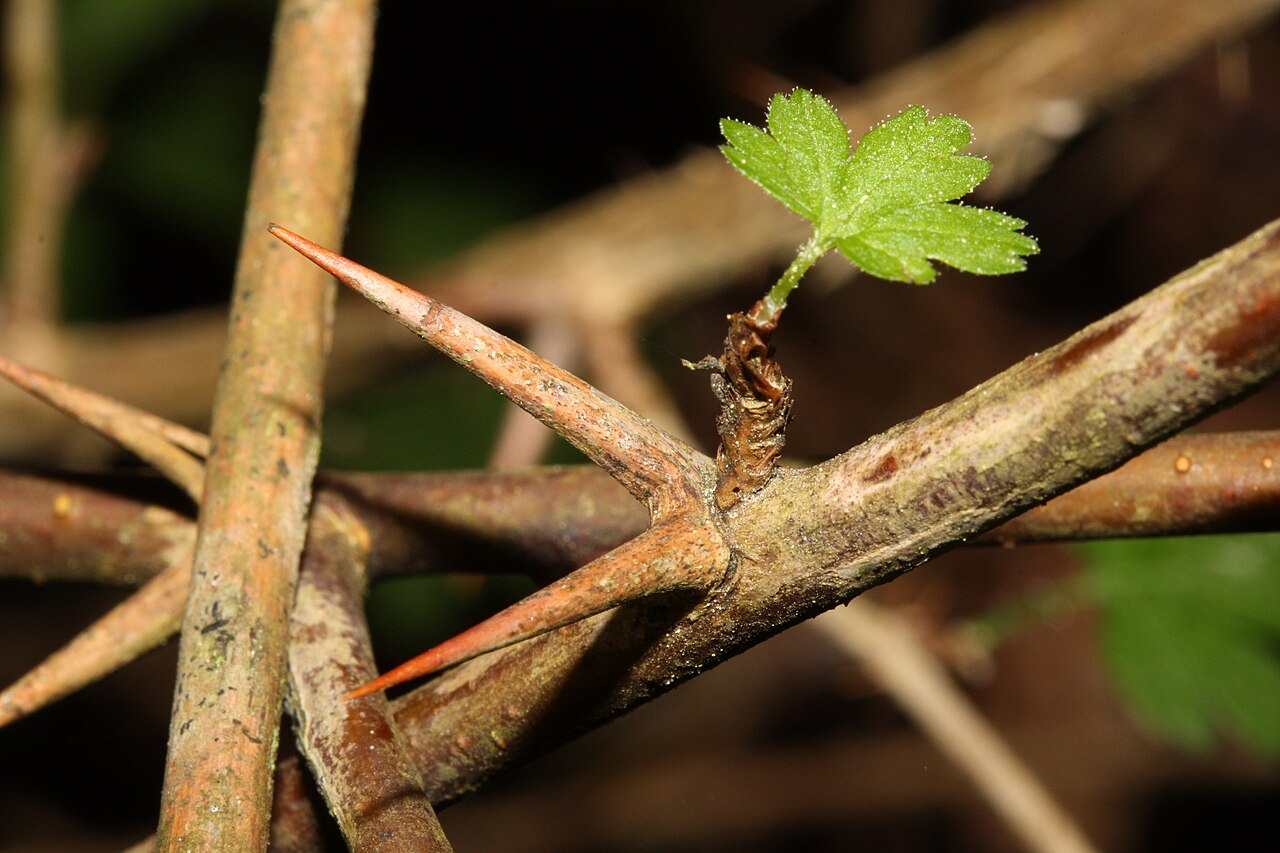
Spreading gooseberry is a deciduous shrub usually 3 to 8 feet tall, occasionally to about 10 feet, with long, arching or sprawling branches that can root where they touch the ground. The stems have gray to reddish-brown bark. At each node there are usually one to three stout spines up to about an inch long; the stems between nodes are smooth or have only a few bristles. “Divaricatum” refers to the widely spreading branches.
Leaves
The leaves are alternate or clustered on short spur shoots, about 1 to 2½ inches wide, roughly round in outline, with three to five rounded, toothed lobes like a small maple leaf. They are bright green, smooth or slightly hairy, and among the first leaves to appear in spring. Fall color is modest, mostly yellow.
Flowers
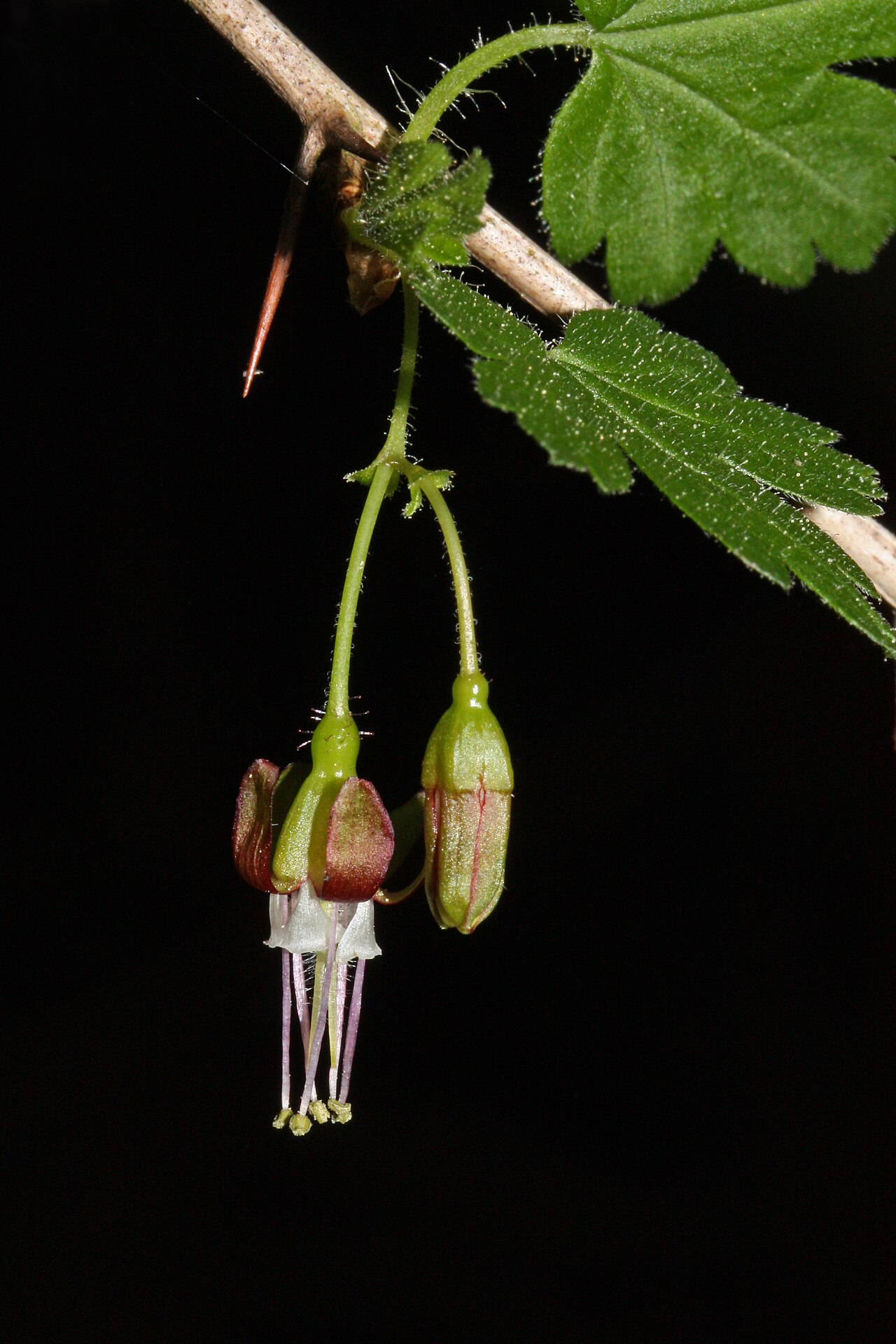
Flowers appear from about February to May, depending on latitude and elevation, often just as the leaves expand. They hang in small clusters of two to four on short stalks. Each flower has five reflexed sepals, greenish to purplish red, five small white or pinkish petals, and long stamens that protrude well beyond the petals. The result is a little dangling flower that looks like a shuttlecock or a tiny fuchsia.
Fruit
The berries are round, about a third to half an inch across, smooth and without prickles, and ripen from green to dark purple or black in early to midsummer. They are juicy and sweet-tart, with small seeds. Most other western gooseberries have bristly or glandular fruit, so a smooth black gooseberry within its range is a strong clue to this species.
Quick Facts
| Scientific Name | Ribes divaricatum Douglas |
| Family | Grossulariaceae (currant and gooseberry family) |
| Plant Type | Deciduous spiny shrub |
| Mature Height | 3–8 ft (occasionally to 10 ft) |
| Mature Spread | 4–8 ft; arching branches can layer |
| Growth Rate | Moderate to fast |
| Sun Exposure | Full sun to part shade; tolerates shade |
| Water Needs | Medium; prefers moist soil but tolerates summer dryness once established |
| Soil Type | Loam, clay loam or sandy soils; adaptable |
| Soil pH | About 5.5–7.5 |
| Bloom Time | February–May |
| Flower Color | Purplish to greenish sepals with white petals |
| Fall Color | Yellow, modest |
| Fruit | Smooth purple-black berry; edible; ripens June–August |
| Deer Resistant | Moderate; spines discourage browsing |
| USDA Hardiness Zones | 6–9 |
Native Range
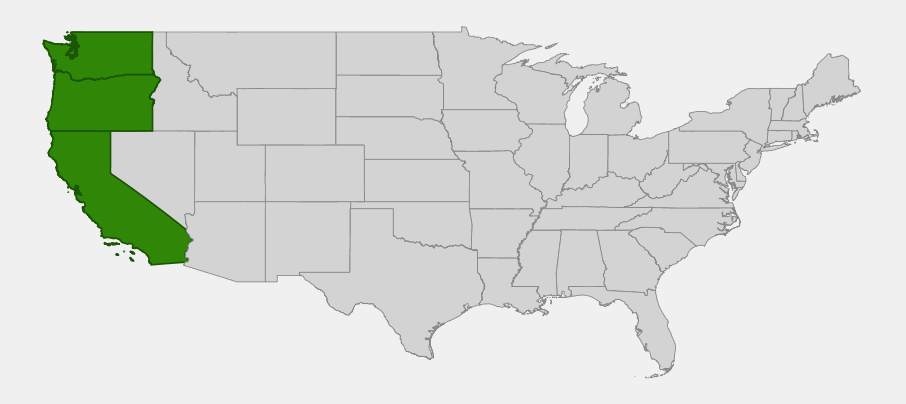
Spreading gooseberry is native to the Pacific Coast of North America. USDA PLANTS records it from Washington, Oregon and California, and from British Columbia in Canada, where it grows in the southwest of the province including Vancouver Island. In Washington and Oregon it is found mainly west of the Cascades, from the Puget Sound lowlands through the Willamette Valley and along the coast, with populations reaching into the Columbia River Gorge.
In California it grows in the Coast Ranges and coastal lowlands, mostly from the North Coast and the San Francisco Bay Area southward along the coast, in moist canyons, streamside thickets, oak woodlands and coastal scrub. Several varieties have been named; the northern California coastal form is often called var. pubiflorum, and a rare southern California form, var. parishii, is of conservation concern.
Through most of its range spreading gooseberry is a low-elevation plant, from sea level up to about 3,000 feet. It favors moist, fertile soils along streams and forest edges but also grows in drier oak woodlands, on coastal bluffs and in thickets where it gets summer moisture from fog or groundwater.
📋 Regional plant lists featuring Spreading Gooseberry: Western Oregon & Western Washington · California & Nevada · Idaho, Eastern Oregon & Eastern Washington
Growing & Care Guide
Spreading gooseberry is easy to grow within its native range and is available from Pacific Northwest and California native plant nurseries. It establishes quickly, tolerates a wide range of soils and light, and needs little care beyond occasional pruning. Its spines make it a poor choice next to paths and play areas, but an excellent hedgerow and wildlife shrub.
Light
It grows in full sun to fairly deep shade. Plants in sun flower and fruit more heavily and stay more compact, while plants in shade become looser and more open. In hot inland gardens, give it afternoon shade.
Soil & Water
Spreading gooseberry adapts to most soils, from sandy loam to clay, as long as they are not waterlogged for long periods. It prefers moist soil, and it does best with occasional deep summer watering in dry-summer climates, especially in California. Once established, plants in western Oregon and Washington usually survive summer dryness without irrigation, though they may drop some leaves early.
Planting Tips
Plant in fall or early spring so roots establish during the wet season. Space plants 4 to 6 feet apart for a hedgerow. Mulch with leaves or wood chips to keep roots cool and moist. Wear gloves when planting and pruning; the spines are sharp.
Pruning & Maintenance
Prune in late winter, removing dead or crossing branches and a few of the oldest stems at the base to encourage vigorous new growth. Fruit is borne on one- to three-year-old wood. Branch tips that touch the ground may root; dig and replant these or remove them if the shrub is spreading too far. Ribes species are alternate hosts of white pine blister rust, so check local guidance if you grow five-needle pines nearby.
Propagation
Hardwood cuttings taken in late fall or winter root readily, as do layered branches. Seed needs a cold, moist stratification of about three months; collect ripe berries in summer, clean the seed and sow it outdoors in fall or stratify it in the refrigerator.
Landscape Uses
- Wildlife hedgerows: spiny, arching branches give birds safe nesting and shelter
- Hummingbird gardens: one of the first native shrubs in flower when hummingbirds return in late winter and spring
- Edible landscaping: sweet-tart black gooseberries for fresh eating, jam and pies
- Woodland edges and streambanks: fills in thickets and helps hold soil on slopes and banks
- Barrier plantings: a natural, wildlife-friendly deterrent along fences and property lines
Wildlife & Ecological Value
Spreading gooseberry is a small shrub with a big role in western lowland habitats, providing early nectar, summer fruit and year-round cover.
For Pollinators
The early, dangling flowers are visited by hummingbirds, including Anna’s and rufous hummingbirds, and by bumblebee queens and other native bees emerging in late winter and early spring. Flowering often coincides with the arrival of migrating rufous hummingbirds in the Pacific Northwest. Gooseberries and currants are also larval host plants for several butterflies and moths, including some anglewing butterflies.
For Birds
The berries are eaten by thrushes, robins, cedar waxwings, towhees, grosbeaks and many other birds. The dense, spiny branches provide nesting sites and escape cover for sparrows, wrens and other small birds.
For Mammals
Bears, raccoons, foxes, chipmunks and other mammals eat the fruit. The spines discourage heavy browsing, but deer sometimes nibble young growth.
Ecosystem Role
Spreading gooseberry is a common understory and edge shrub in Pacific lowland forests, oak woodlands and riparian thickets. Its fruit is spread by birds and mammals, and its arching, layering branches help stabilize soil along streambanks and slopes.
Cultural & Historical Uses
Indigenous peoples of the Pacific Northwest and California gathered wild gooseberries, including spreading gooseberry, eating the ripe berries fresh or drying them for later use. The species was named by David Douglas, the Scottish botanist who explored the Pacific Northwest for the Horticultural Society of London in the 1820s and introduced many western plants to European gardens.
In Britain and Europe, plants of this species have long been grown under the name Worcesterberry, valued for their hardiness and resistance to American gooseberry mildew. Spreading gooseberry has also been crossed with the European gooseberry to produce hybrid cultivars, such as the dark-fruited ‘Black Velvet’.
During the 20th century, wild Ribes were widely removed in parts of the United States in an attempt to control white pine blister rust, an introduced disease that alternates between Ribes and five-needle pines. Those eradication programs have ended, and spreading gooseberry is now valued again as a native fruiting shrub for wildlife and gardens.
Frequently Asked Questions
Are spreading gooseberry berries edible?
Yes. The ripe, purple-black berries are edible and sweet-tart, and they are good fresh or in jams, pies and sauces. Pick them when fully dark and slightly soft. As with any wild fruit, be sure of your identification before eating.
How do I tell spreading gooseberry from other gooseberries?
Look for long, arching branches with one to three stout spines at each node, small dangling flowers with long protruding stamens, and smooth (not bristly) black berries. Most other western gooseberries have prickly or glandular fruit.
Does spreading gooseberry attract hummingbirds?
Yes. Its early spring flowers are visited by Anna’s and rufous hummingbirds, and it often blooms just as rufous hummingbirds return to the Pacific Northwest.
Is spreading gooseberry the same as Worcesterberry?
Worcesterberry, grown in Britain, is generally considered to be Ribes divaricatum. It was once thought to be a hybrid between a gooseberry and a blackcurrant, but it is now usually treated as this species.
Will spreading gooseberry grow in shade?
Yes. It tolerates part shade and even fairly deep shade, although it flowers and fruits best with several hours of sun. In shade it becomes taller and more open.

Looking for a nursery that carries Spreading Gooseberry?
Browse our native plant nursery directory: California · Oregon · Washington

