
Birdlime Tree (Pisonia umbellifera)
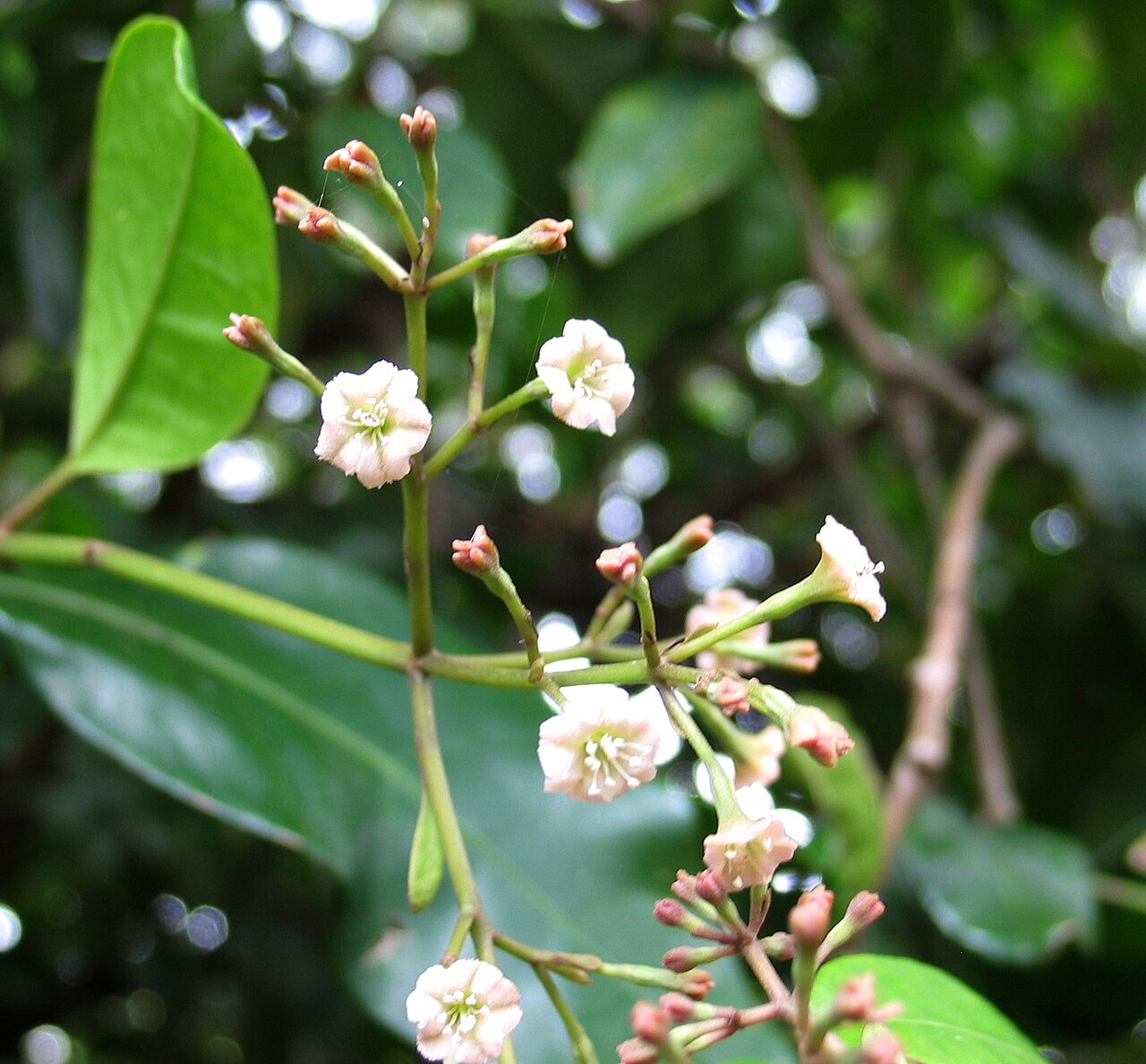
Pisonia umbellifera, known as Birdlime Tree, umbrella catchbird tree or, in Hawaiian, pāpala kēpau, is a small evergreen tree with large, glossy leaves and a remarkable fruit. Its slender, ribbed fruits ooze a glue so sticky that they cling to anything that brushes against them, and small birds that land among them can become hopelessly stuck. The Hawaiian name refers to this glue: kēpau means sticky gum or resin.
In the United States, birdlime tree is native only to Hawaiʻi, where it is indigenous (native, but also found elsewhere) and grows in mesic and wet forests on the main islands. Its wider native range stretches from tropical Asia and the islands of the Indian Ocean through Malesia and eastern Australia to the islands of the Pacific. USDA also lists it for Guam and Palau, which this site does not cover.
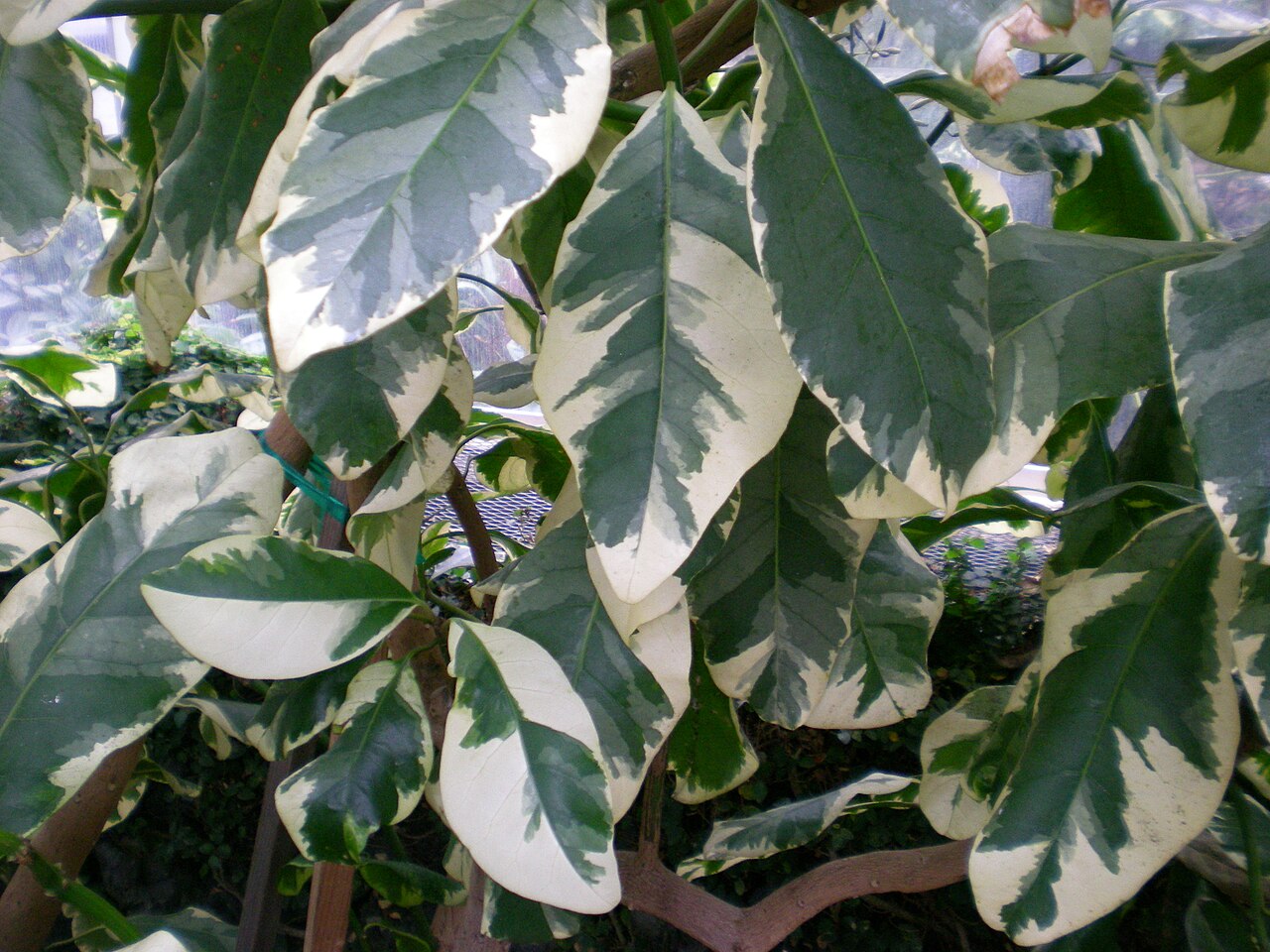
Gardeners know it best as the variegated birdcatcher tree, a cream-and-green form grown outdoors in frost-free climates and indoors as a houseplant. This page covers how to identify the tree, why its fruits trap birds, its native range, how to grow it outdoors in zones 10 to 12 or as a houseplant, and its place in Hawaiian culture. Newer classifications call it Ceodes umbellifera.
Identification
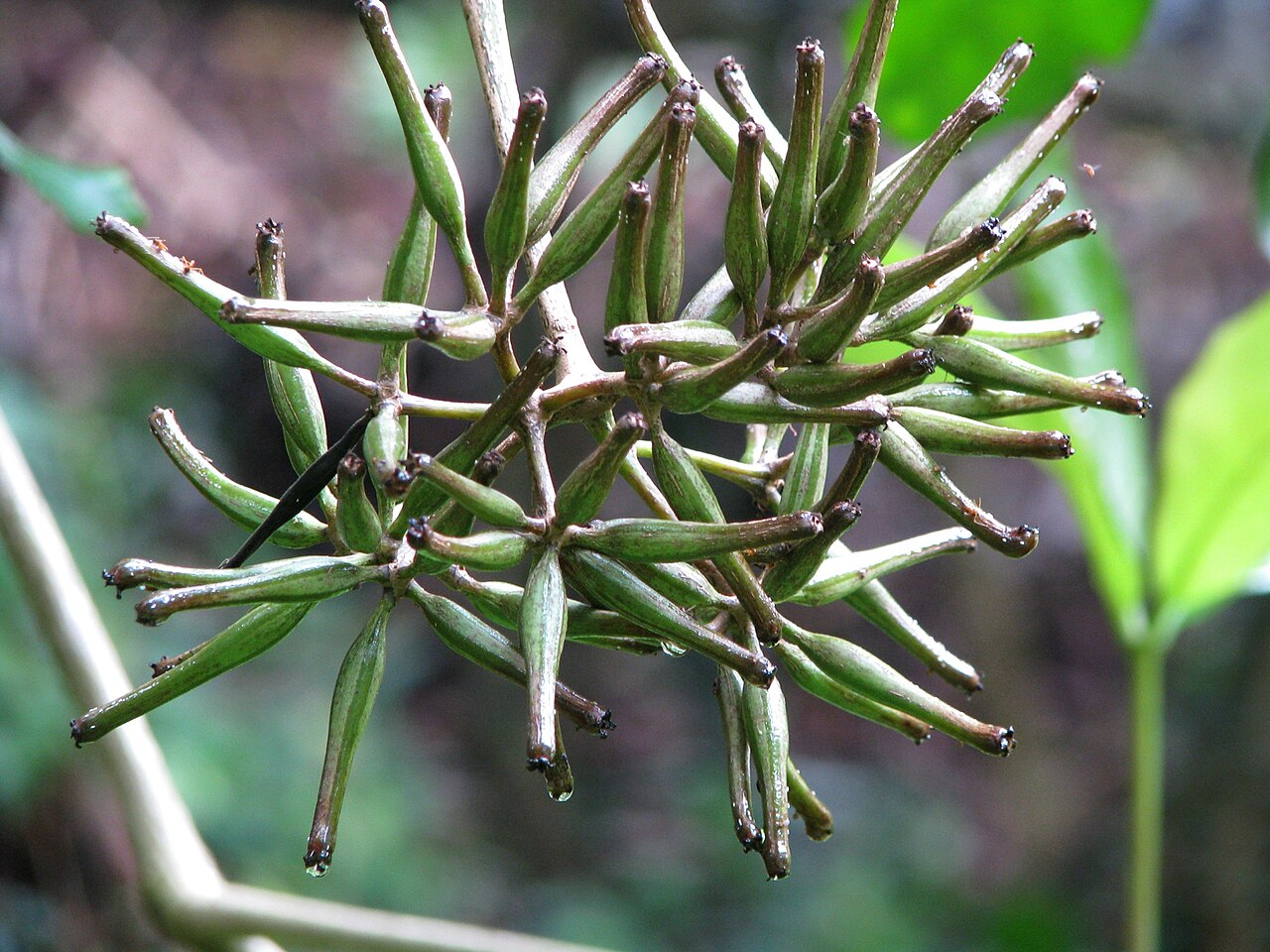
Birdlime tree is easy to recognize when it is fruiting, thanks to its radiating clusters of long, sticky fruits. Out of fruit, look for its large, thin, glossy leaves on stout twigs.
Size & Form
It is usually a shrub or small tree 12 to 40 feet tall, with a rounded, spreading crown and smooth, pale bark. The wood is soft and brittle. In cultivation, especially in containers, it is usually kept much smaller.
Leaves
The leaves are opposite or crowded in whorl-like groups near the branch tips, elliptic to oval, about 2 1/2 to 8 inches long and 1 1/2 to 4 inches wide, on thick stalks. They are hairless, glossy and medium green, thin and somewhat papery, with 8 to 10 faint side veins on each side.
Flowers
Small, funnel- or bell-shaped flowers, pinkish to greenish-white or pale yellow, are borne in loose, umbrella-like clusters at the ends of long stalks; the species name umbellifera means “bearing umbels.” Each flower is only about a quarter inch long, with several stamens protruding.
Sticky Fruits
The fruits are slender and club-shaped, about 1 to 1 1/2 inches long, with five lengthwise ribs. They are green at first, ripening to dark brown or purplish, and are held in radiating, umbrella-like clusters. Each rib carries rows of glands that secrete a thick, clear, extremely sticky glue. Technically each fruit is an anthocarp, a single seed enclosed in the hardened base of the flower.
Similar Species
Hawaiʻi has other native Pisonia. Pāpala Kēpau (Ceodes brunoniana) (Pisonia brunoniana), which shares the Hawaiian name, has thicker leaves and also has sticky fruits; botanists separate the two using flower and fruit details. Pisonia sandwicensis (ʻaulu), a rare endemic, and the introduced Pisonia grandis of atolls have broader leaves. In houseplants, the variegated birdlime tree is unmistakable for its large, cream-marbled leaves.
Quick Facts
| Scientific Name | Pisonia umbellifera (J.R. Forst. & G. Forst.) Seem. (syn. Ceodes umbellifera) |
| Family | Nyctaginaceae (four o’clock family) |
| Plant Type | Evergreen shrub or small tree |
| Mature Height | 12–40 ft in the wild; 3–8 ft as a container plant |
| Mature Spread | 10–20 ft |
| Growth Rate | Moderate to fast |
| Sun Exposure | Part shade to full sun; bright indirect light indoors |
| Water Needs | Medium; evenly moist, well-drained soil |
| Soil Type | Rich, well-drained loam or volcanic soil; peat-free potting mix in containers |
| Soil pH | About 5.5–7.0 |
| Bloom Time | Mainly spring–summer in Hawaiʻi |
| Flower Color | Pinkish to greenish-white or pale yellow |
| Fall Color | None; evergreen |
| Fruit | Slender, five-ribbed, very sticky anthocarp, 1–1.5 in long |
| Deer Resistant | Unknown |
| USDA Hardiness Zones | 10–12 (houseplant elsewhere) |
Native Range
USDA PLANTS lists birdlime tree as native in Hawaiʻi, where it is an indigenous species found on Kauaʻi, Oʻahu, Molokaʻi, Lānaʻi, Maui and Hawaiʻi Island. It grows in mesic to wet forests and in shady gulches and valleys, mostly at low to middle elevations. It is not common anywhere in the islands, occurring as scattered trees among native forest species.
Its native range outside the United States is very large. It occurs in Madagascar and other Indian Ocean islands, the Andaman Islands, Southeast Asia, southern China and Taiwan, Malesia, eastern Australia (Queensland and New South Wales) and across many Pacific islands. USDA also lists Guam and Palau, U.S.-affiliated islands that this site does not cover. Sea currents and, especially, birds carrying the sticky fruits on their feathers have spread it among islands.
This bird-assisted dispersal explains how a tree with heavy, sticky fruits reached isolated islands such as Hawaiʻi. Seabirds, which roost and nest in coastal and island forests, are thought to be its main long-distance carriers.
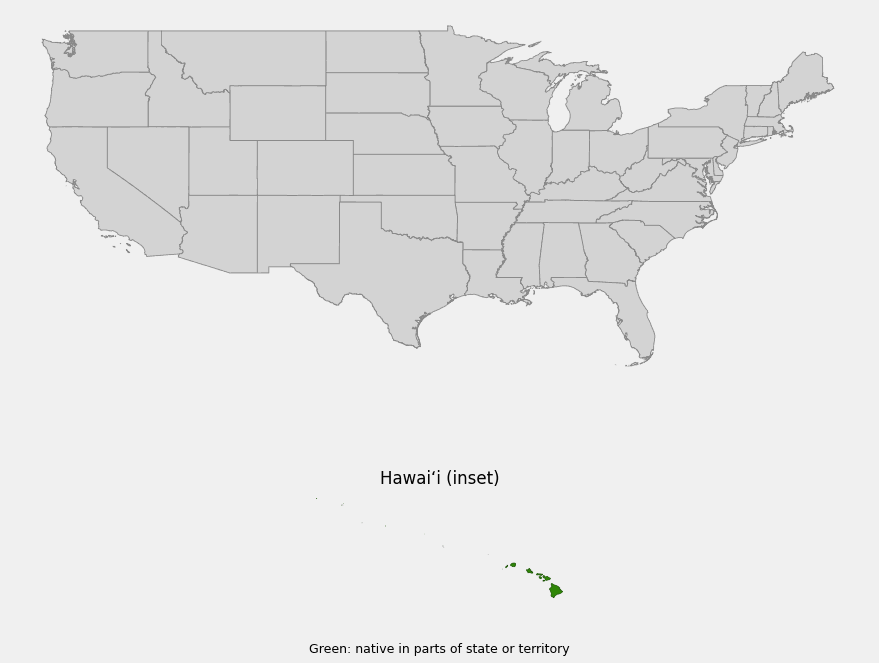
📋 Regional plant lists featuring Birdlime Tree: Hawaii
Growing & Care Guide
Birdlime tree is grown outdoors in frost-free climates and very widely as a houseplant, mostly in its variegated form. Native plant nurseries in Hawaiʻi sometimes offer the green wild form for landscapes. It is easy to grow, but think about its sticky fruits before planting it outdoors near places where birds feed or nest.
Light
Outdoors in zones 10 to 12, grow it in part shade or filtered sun; in Hawaiʻi it also takes full sun once established if watered. Indoors, give it bright, indirect light; the variegated form needs good light to keep its cream markings but scorches in hot, direct afternoon sun.
Soil & Water
Plant it in rich, well-drained soil and keep it evenly moist, watering when the top inch of soil starts to dry. It does not tolerate drought well or soggy, waterlogged soil. In containers use a well-drained potting mix in a pot with drainage holes, and reduce watering in winter.
Planting Tips
Outdoors, plant it as a small specimen tree or large shrub in a sheltered spot out of strong wind, which tears the large leaves. It is not frost-tolerant: protect it from temperatures below about 35°F (2°C). In cooler zones grow it in a pot, outdoors in summer and indoors in winter, away from cold drafts. Indoors, keep it at normal room temperatures with moderate to high humidity.
Pruning & Maintenance
Prune to shape it and keep it compact; it responds well to cutting back. Outdoors, cut off flower and fruit clusters before the fruits ripen if birds visit the garden, to prevent them from becoming trapped. Indoor plants rarely flower, so this is seldom a concern. Wear gloves when handling ripe fruits, and keep them away from pets’ fur.
Propagation
Propagate it by stem cuttings in warm conditions, which root readily, or by air layering. The variegated form must be propagated by cuttings to keep its variegation. Seeds germinate when sown fresh, but seedlings of the variegated form revert to green.
Landscape Uses
- Houseplant: the variegated birdcatcher tree is a large-leaved, easy indoor plant for bright rooms
- Tropical landscapes: a small evergreen specimen tree or screen in zones 10 to 12
- Hawaiian native gardens: a culturally significant indigenous tree for shady, moist sites
- Patio containers: grows well in large pots outdoors in summer and indoors in winter
- Forest restoration: an indigenous understory tree for mesic forest plantings in Hawaiʻi
Wildlife & Ecological Value
Birdlime tree has an unusual and controversial relationship with birds. Its sticky fruits are designed to hitch rides on animals, but they can also be deadly.
For Pollinators
The small, fragrant flowers attract insects such as small bees, flies and moths, which feed on nectar and pollen.
For Birds
Seabirds and other birds that brush against ripe fruit clusters carry the sticky fruits away on their feathers, which is how the tree spreads between islands. But the glue is so strong that small birds, and sometimes larger ones, can become covered in fruits and unable to fly, and they may die. On Cabbage Tree Island in Australia, entanglement in the fruits of this species was identified as a major cause of death for the threatened Gould’s petrel, and managers removed many trees to protect the colony. Some researchers suggest that birds killed under the trees may add nutrients to the soil for seedlings, but this has not been proven.
For Mammals
In Hawaiʻi, the leaves and soft bark have been used as feed for pigs. Mammals can also carry fruits stuck to their fur.
Ecosystem Role
As an indigenous understory tree, birdlime tree adds diversity to Hawaiʻi’s mesic and wet forests, and its long-distance dispersal on birds makes it one of the trees that colonized remote Pacific islands naturally.
Cultural & Historical Uses
In old Hawaiʻi, the sticky sap of pāpala kēpau was one of the materials used by bird catchers (kia manu), who smeared it on branches or poles to catch small forest birds. Their feathers were used in the famous feather cloaks (ʻahu ʻula), capes and helmets of Hawaiian chiefs. The glue was also mixed with soil or clay to mend cracked wooden bowls, and the leaves were used in traditional medicine.
The species was first described by Johann Reinhold Forster and his son Georg Forster, naturalists on Captain James Cook’s second voyage, as Ceodes umbellifera in 1776. It was later moved to Pisonia, and recent studies have returned it to Ceodes, so both names are in use.
Safety note: the plant is not known to be seriously poisonous, but its sap and fruits are extremely sticky and difficult to remove from skin, clothing and pets’ fur. The leaves contain saponins, so don’t let pets or children chew on the plant. Outdoors, remove fruit clusters before they ripen where pet birds, chickens or wild birds could become trapped.
Frequently Asked Questions
Why is it called the birdlime tree?
“Birdlime” is an old word for any sticky substance used to trap birds. The ribbed fruits of this tree are coated with a strong glue that can trap small birds, and in Hawaiʻi the glue was used by bird catchers to collect feathers for featherwork.
Does the birdlime tree really kill birds?
Yes, sometimes. The sticky fruits help the tree spread by clinging to birds’ feathers, but birds that collect too many fruits can be unable to fly and may die. It has been a significant problem for a threatened petrel colony in Australia. In gardens, remove fruit clusters before they ripen.
Is the birdlime tree native to Hawaii?
Yes. It is indigenous to Hawaiʻi, meaning it arrived naturally and also grows in other parts of the tropics. Its Hawaiian name is pāpala kēpau. It also grows wild from Madagascar and tropical Asia to Australia and the Pacific islands.
Can I grow birdlime tree outdoors?
Outdoors it needs a frost-free climate, about USDA zones 10 to 12, such as Hawaiʻi, South Florida and coastal Southern California. Grow it in part shade and rich, moist, well-drained soil. Elsewhere grow it in a container and bring it indoors before frost.
How do I care for a variegated birdcatcher tree houseplant?
Give it bright, indirect light, water when the top inch of soil starts to dry, and keep it warm and away from cold drafts. Prune to control its size. Indoor plants rarely flower or fruit, so the sticky fruits are seldom a problem indoors.

Looking for a nursery that carries Birdlime Tree?
Browse our native plant nursery directory: Hawaii

