
Alpine Pussytoes (Antennaria alpina)
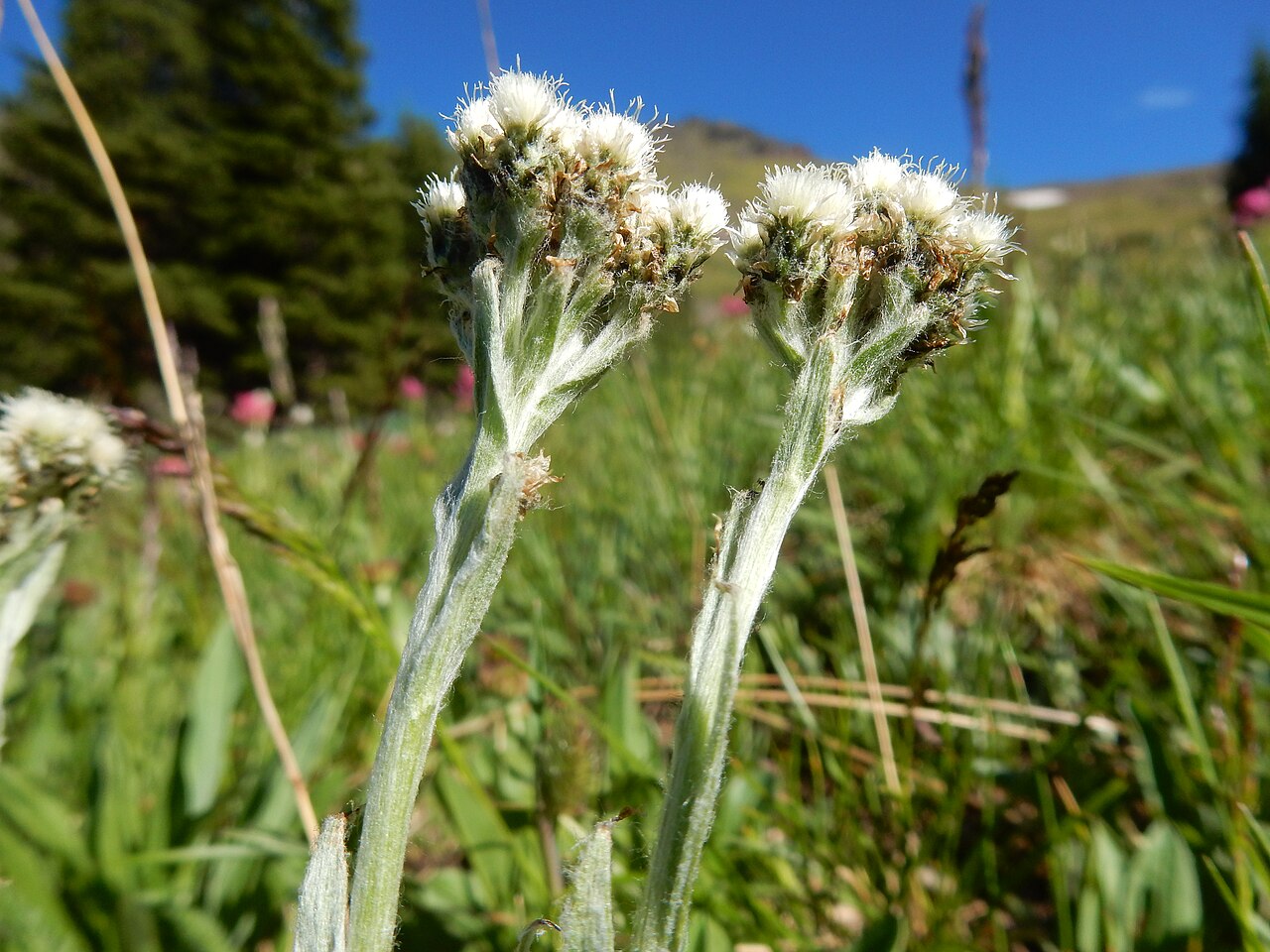
Antennaria alpina, known as Alpine Pussytoes, alpine catsfoot or alpine everlasting, is a small, mat-forming perennial of the aster family (Asteraceae) that grows in the Arctic and in high mountains around the Northern Hemisphere. In the United States it is native to Alaska and to a few high-mountain sites in Montana, where it forms low rosettes of gray, woolly leaves and sends up short stems topped with soft, fuzzy flower heads that look like a cat’s paw.
Like other pussytoes, it spreads slowly by short runners (stolons) into small mats. It is unusual in its reproduction: almost all North American plants are female, and they set seed without pollination, a process called apomixis. Each seedling is a genetic copy of its parent, which helps the species colonize harsh, sparsely vegetated tundra where pollinators are few.
Alpine pussytoes is a plant of rocky tundra, gravelly slopes and moist alpine meadows rather than gardens, but it can be grown in cold-climate rock gardens and troughs. This guide covers how to identify it, where it grows, and how to grow it if you live where it is native.
Identification
Alpine pussytoes is one of several small, gray-leaved pussytoes in the northern mountains. Look for a low mat of small, spoon-shaped basal leaves and short stems with a few flower heads that have dark, brownish to blackish bracts.
Growth Habit
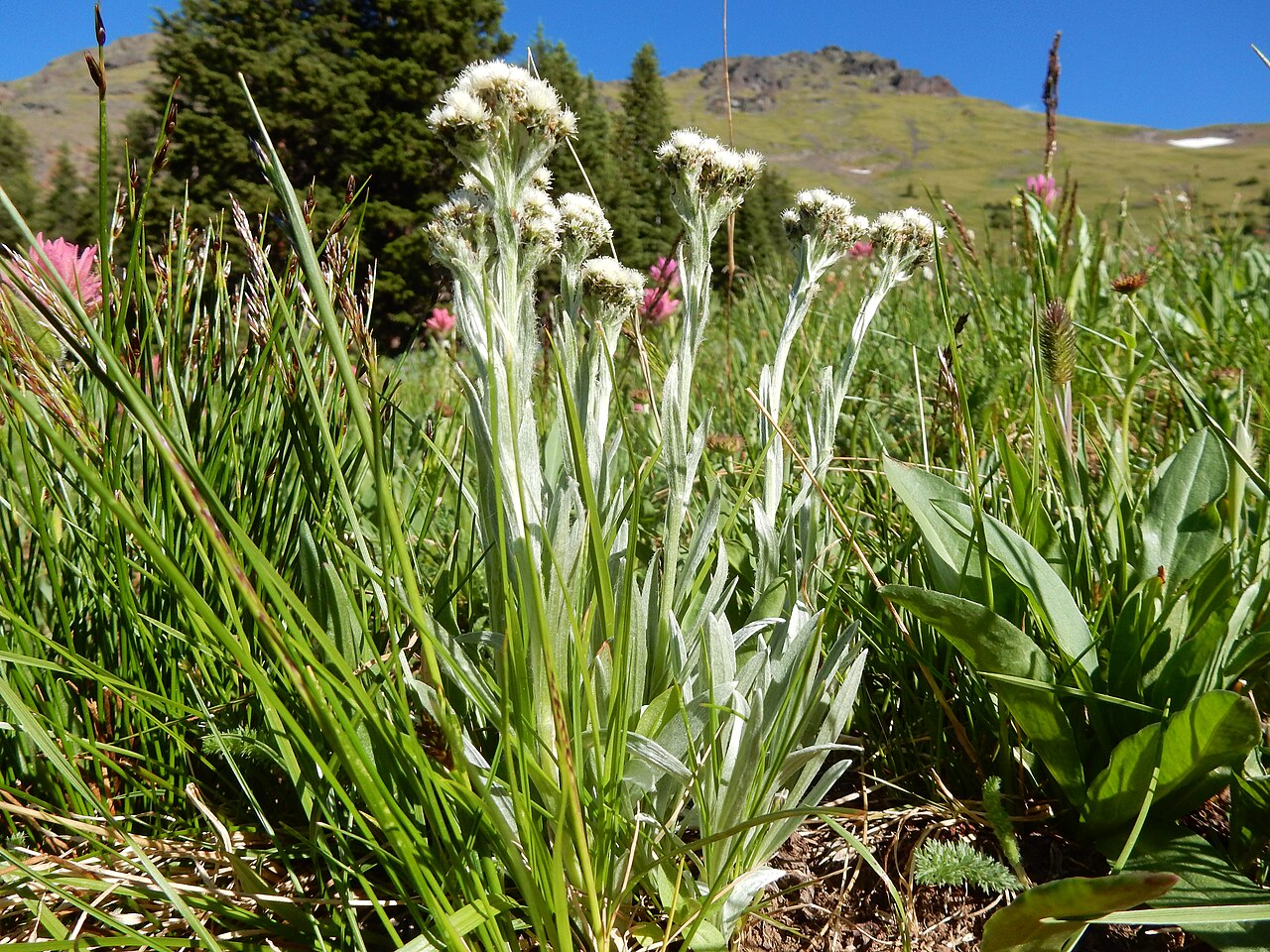
A low, cushion-like perennial that forms small mats from a branching root crown and short stolons about ½ to 3 inches long. The flowering stems are usually 1 to 6 inches tall, occasionally a little taller.
Leaves
The basal leaves are spoon-shaped to narrowly oblong, about ¼ to 1 inch long, with a single main vein. The upper surface ranges from green and nearly hairless to gray with hairs, while the underside is densely white-woolly. The few stem leaves are smaller and narrow, almost grass-like.
Flowers & Fruit
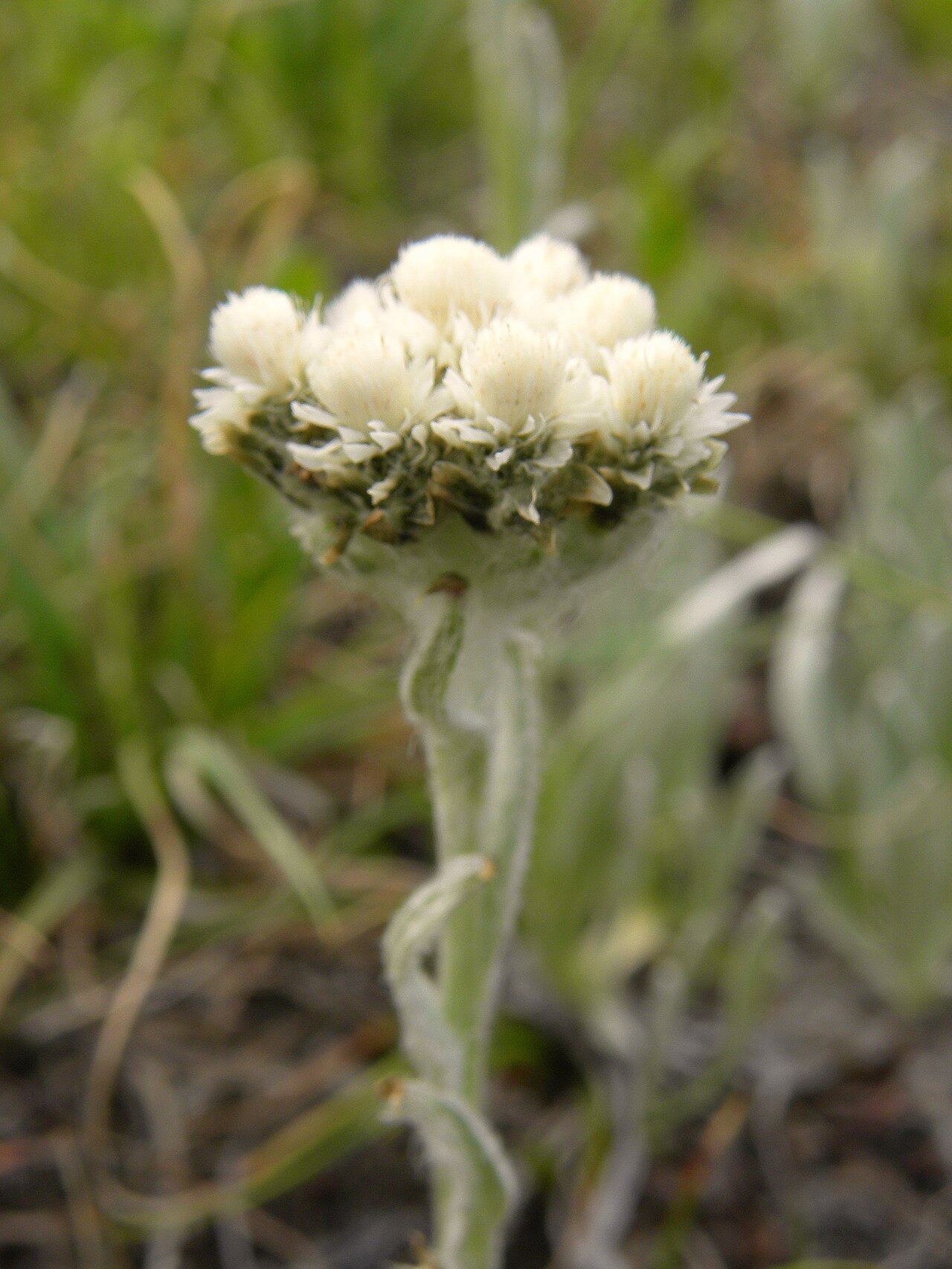
Each stem ends in a tight cluster of two to seven flower heads. The heads have no petals; they are made of many small, white, thread-like disk florets surrounded by papery bracts (phyllaries) that are dark brown to blackish-green, often with paler tips. Bloom is in mid to late summer, mainly July and August. The fruits are tiny achenes carried by white bristles (pappus) on the wind.
Look-alikes
Rocky Mountain pussytoes (Antennaria media) is very similar and has been treated as a variety of alpine pussytoes; it is more widespread in the western mountains and usually has slightly larger, more matted colonies. Rosy Pussytoes (A. rosea) has pink or white bracts rather than dark ones, and Stoloniferous Pussytoes (A. dioica) has longer runners. Pussytoes are notoriously difficult to tell apart, and a hand lens and a regional key are often needed.
Quick Facts
| Scientific Name | Antennaria alpina (syn. Gnaphalium alpinum) |
| Family | Asteraceae (aster family) |
| Plant Type | Mat-forming herbaceous perennial |
| Mature Height | 1–6 in (flowering stems) |
| Mature Spread | 4–12 in (slowly spreading mats) |
| Growth Rate | Slow |
| Sun Exposure | Full sun |
| Water Needs | Medium; moist but well-drained |
| Soil Type | Gravelly, rocky or sandy soil with sharp drainage |
| Soil pH | Slightly acidic to neutral |
| Bloom Time | July–August |
| Flower Color | White florets with dark brown to blackish bracts |
| Fall Color | Not notable; gray-woolly leaves persist |
| Fruit | Tiny achenes with white, fluffy bristles |
| Deer Resistant | Generally not browsed |
| USDA Hardiness Zones | About 1–5 |
Native Range
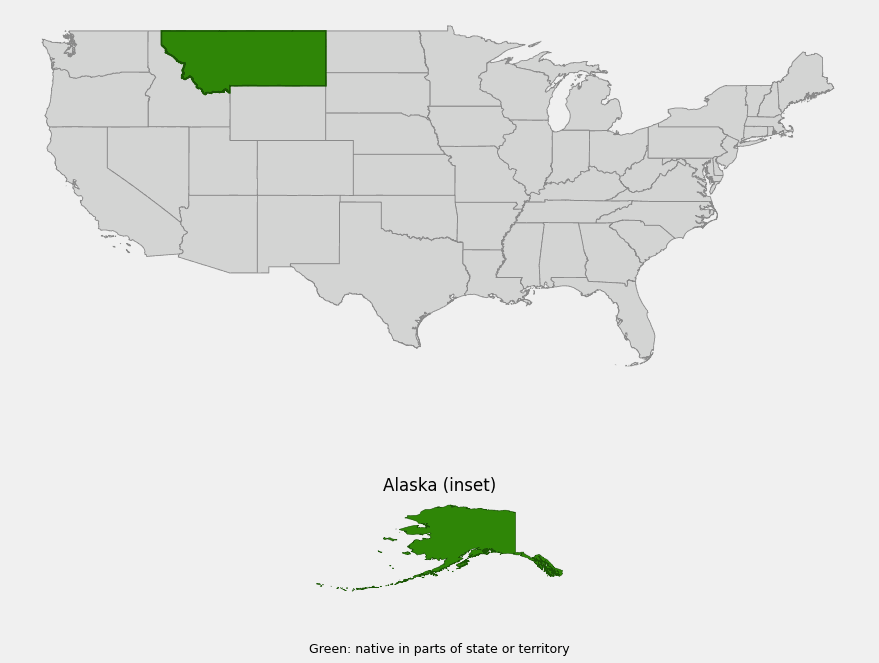
Alpine pussytoes is circumboreal. In North America it grows across Alaska and northern Canada, including Yukon, the Northwest Territories, Nunavut, British Columbia, Alberta, Ontario, Quebec, Newfoundland and Labrador, and it is common in Greenland. It also grows in Scandinavia and the far north of Russia.
South of Canada it is rare. The USDA PLANTS database records it in the Lower 48 only from Montana, where it is known from a handful of scattered high-mountain counties, and some floras also report it from the mountains of Wyoming. In Alaska it is widespread on tundra, from the coast to the mountains.
It grows on rocky and gravelly tundra, scree, ridges, river gravels and moist alpine meadows. In the Arctic it occurs at low elevations, while in Montana it is restricted to alpine and upper subalpine sites, roughly 8,000 feet and above.
📋 Regional plant lists featuring Alpine Pussytoes: Alaska · Montana & Wyoming
Growing & Care Guide
Alpine pussytoes is a true alpine and is rarely sold, although seed and plants of other pussytoes are widely available. In cold climates it can be grown in a rock garden, crevice garden or trough that copies its gravelly, sunny, cool habitat.
Light
Full sun. In the wild it grows in open tundra and alpine meadows with no shade, and it becomes weak and short-lived in shade.
Soil & Water
Give it a gritty, very well-drained mix, such as loam with plenty of gravel or crushed rock. It likes steady moisture during the growing season but will rot in soggy soil or in hot, humid summers. A gravel mulch around the crown keeps it dry while the roots stay cool.
Planting Tips
Plant in spring in a raised rock garden, crevice garden or trough. It is suited to Alaska, northern Canada and high-elevation gardens in the Rockies; in warm, low-elevation gardens it usually fails. Place it where taller plants will not shade or smother the small mats.
Pruning & Maintenance
Little care is needed. Remove spent flowering stems if you like, and keep fallen leaves and fast-growing neighbors off the mats.
Propagation
Because it sets seed without pollination, seed grows true to the parent. Sow fresh seed on the surface of a gritty mix in fall or after a few weeks of cold, moist stratification. Rooted pieces of the mat can also be separated in spring. Collect only small amounts of seed where permitted, and never dig plants from the wild.
Landscape Uses
- Rock and crevice gardens: in cold, high-elevation and northern gardens
- Alpine troughs: with other small cushion plants
- Tundra and alpine restoration: on gravelly, disturbed sites within its range
- Native plant study: an example of an apomictic, mostly female plant
Wildlife & Ecological Value
On tundra and alpine slopes, alpine pussytoes is one of many small plants that hold thin soils in place and feed the animals of the far north.
For Pollinators
Because it sets seed without pollination, it does not depend on insects, but flies and small bees still visit the flower heads for nectar and pollen in the short alpine summer. Pussytoes are also host plants for American lady butterfly caterpillars, which feed on several Antennaria species.
For Birds
Its small seeds and leaves add to the diet of ground-feeding tundra birds such as ptarmigan and rosy-finches, which take seeds and greens from many small alpine plants.
For Mammals
Small herbivores of the tundra and alpine zone, such as pikas, voles and ground squirrels, graze on low plants like pussytoes; caribou and mountain goats may take it incidentally while grazing.
Ecosystem Role
Its mats help stabilize gravel and thin soils on exposed slopes and ridges. Apomixis lets a single seed start a new colony, so it can colonize bare ground left by frost heaving, retreating snowbanks and glaciers.
Cultural & Historical Uses
The genus name Antennaria comes from the Latin word for the antenna of an insect, because the bristles on the male florets of some species look like insect antennae. The common name pussytoes describes the soft, rounded flower clusters, which resemble the pads of a cat’s paw.
Carl Linnaeus described the plant in 1753 as Gnaphalium alpinum, and Joseph Gaertner moved it to his new genus Antennaria in 1791. Because the plant reproduces asexually, many slightly different forms have been named over the years, and the species has dozens of synonyms.
Pussytoes are classic examples of apomixis in botany. In alpine pussytoes, male plants are rare or absent in most North American populations, and the species persists through countless female clones spread across the Arctic.
Frequently Asked Questions
Where does alpine pussytoes grow in the United States?
It is widespread in Alaska, but in the Lower 48 the USDA records it only from Montana, where it grows in a few scattered high-mountain sites. Some floras also report it from Wyoming.
How can it make seed without pollen?
It is apomictic: female plants produce seeds asexually, without fertilization. Each seed grows into a genetic copy of its mother, which is why North American populations are almost entirely female.
How is it different from Rocky Mountain pussytoes?
The two are very similar and were once combined. Rocky Mountain pussytoes (Antennaria media) is more widespread in the western mountains; alpine pussytoes is mainly Arctic and reaches the Lower 48 only in Montana. A regional key and hand lens help tell them apart.
Can I grow alpine pussytoes in my garden?
Only in cold climates. It needs full sun, gritty, very well-drained soil, steady moisture and cool summers, so it suits rock gardens and troughs in Alaska, Canada and high elevations of the Rockies.
Is it a good plant for butterflies?
Pussytoes are host plants for the American lady butterfly, and their flowers are visited by small bees and flies. In the alpine zone it is one of many small plants that support insects during the short summer.


