
Kolomona (Senna gaudichaudii)
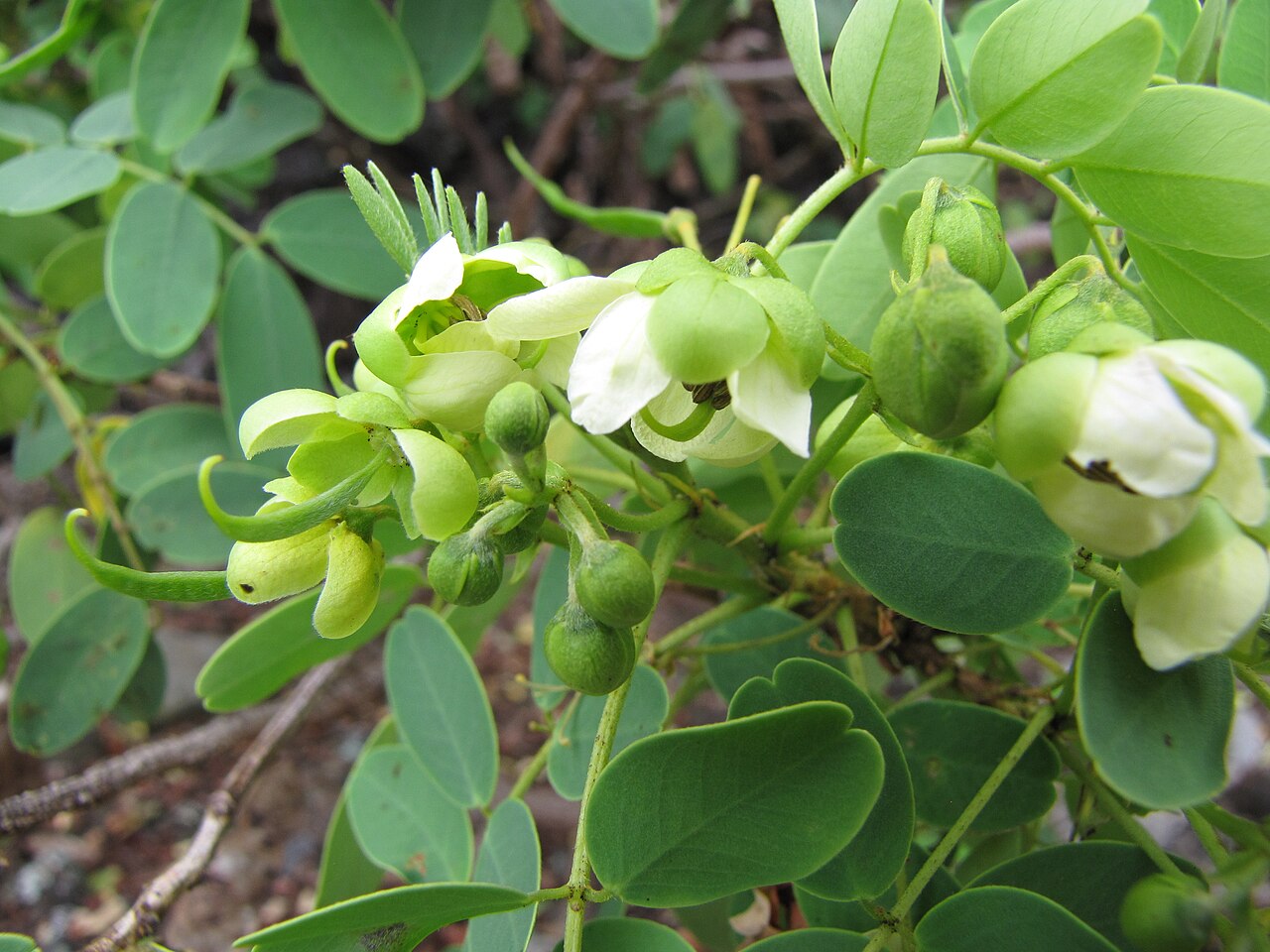
Senna gaudichaudii, known in Hawaiian as kolomona (also kalamona, uhiuhi, heuhiuhi or keuhiuhi) and in English as Gaudichaud’s senna, is a native shrub of the pea family (Fabaceae). It is a bushy, sometimes sprawling shrub, usually 3 to 10 feet tall, with pinnate leaves of rounded, blue-green leaflets and clusters of pale yellow, cup-shaped flowers followed by long, flat seed pods.
Kolomona is indigenous to Hawaiʻi rather than endemic: it is native here and also elsewhere in the Pacific and tropical Asia-Pacific, including Fiji, New Caledonia, Vanuatu, the Society Islands, eastern Indonesia and Queensland, Australia. In Hawaiʻi it grows on every main island except Niʻihau and Kahoʻolawe, from near sea level to about 3,000 feet, mostly in dry, rocky leeward shrubland and dry forest. It is not federally listed under the Endangered Species Act.
It is one of the easiest native shrubs to grow in sunny, dry Hawaiian gardens: fast, drought-tolerant and almost always in flower. This guide covers how to identify it, where it grows, how to grow it, and how it fits into native landscapes. As with all Hawaiian natives, buy nursery-grown plants from Hawaiʻi native plant nurseries rather than collecting from the wild.
Identification
Kolomona looks like a small, soft-wooded senna: an open shrub with feathery compound leaves, pale yellow flower clusters near the branch tips, and flat bean-like pods hanging below.
Growth Habit
An evergreen shrub or small tree, usually 3 to 10 feet tall and about as wide. In exposed coastal or lava sites it may be low and spreading, and in sheltered spots it can scramble up into neighboring shrubs. New growth is sometimes covered in soft golden hairs.
Leaves
Leaves are alternate and pinnately compound, about 2 to 4 inches long, with usually three to five (occasionally more) pairs of oblong to egg-shaped leaflets ¾ to 2 inches long. The leaflets are dull green to blue-green and rounded at the tip. Small stalked glands sit on the leaf stalk between the lowest pairs of leaflets, a useful identification feature in sennas.
Flowers
Flowers come in loose clusters of four to ten from the upper leaf axils, on long stalks. Each flower is about 1 inch across, with five slightly unequal, cupped petals that are pale yellow to creamy yellow, and ten fertile stamens with long anthers. In Hawaiʻi plants can bloom in any month.
Fruit & Look-alikes
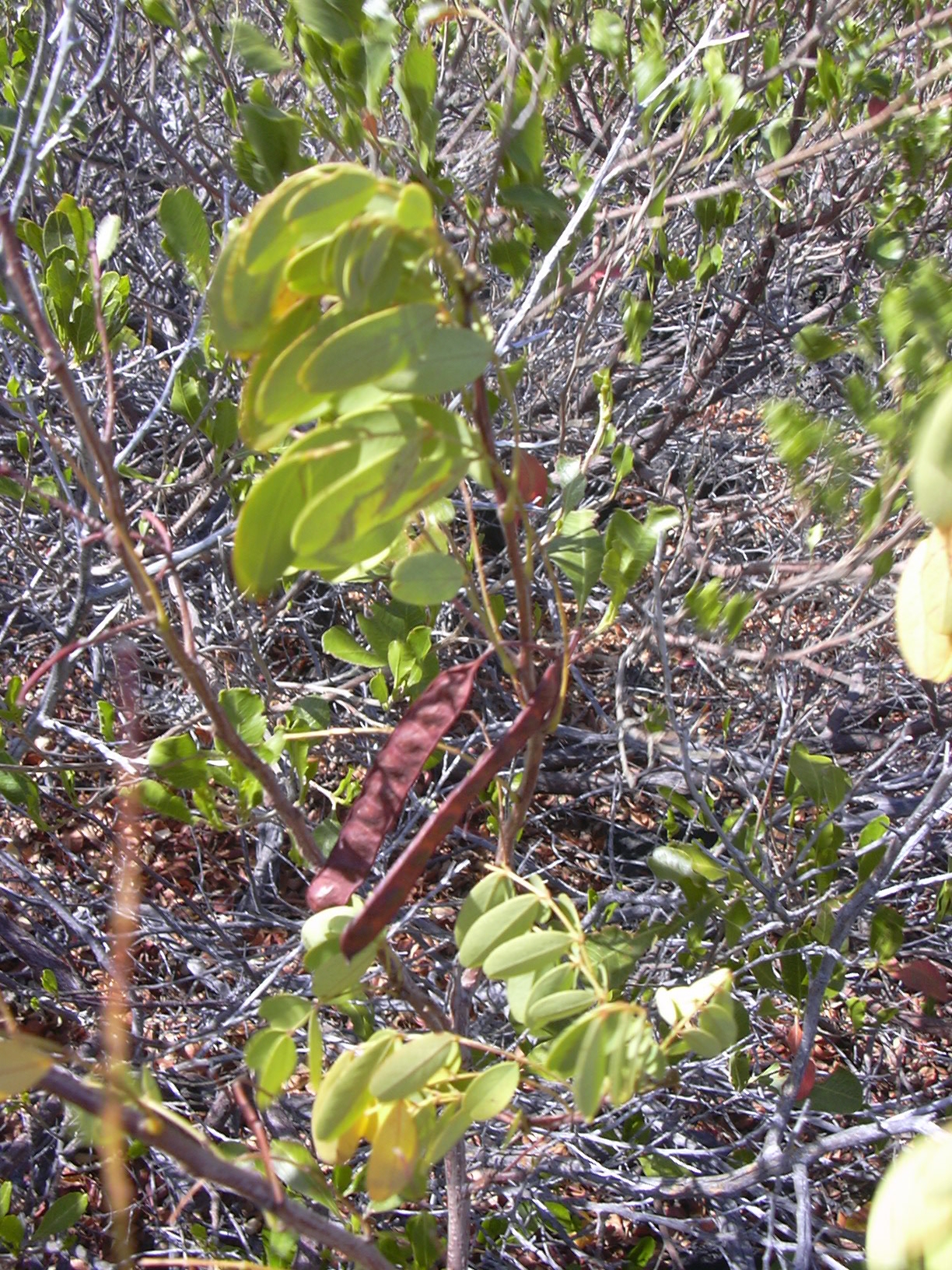
The fruit is a flat, slightly curved pod about 4 to 6 inches long and less than ½ inch wide, green at first and drying to brown, with a row of flat seeds. The introduced Senna surattensis (kolomona is sometimes applied to it too), now naturalized in parts of Hawaiʻi, has brighter yellow flowers and more pairs of leaflets per leaf. Other introduced sennas, such as S. septemtrionalis, have pointed leaflets and are weedy in pastures.
Quick Facts
| Scientific Name | Senna gaudichaudii (Hook. & Arn.) H.S. Irwin & Barneby |
| Family | Fabaceae (pea family) |
| Plant Type | Evergreen shrub; indigenous to Hawaiʻi and the Pacific |
| Mature Height | 3–10 ft |
| Mature Spread | 3–8 ft |
| Growth Rate | Fast |
| Sun Exposure | Full sun to light shade |
| Water Needs | Low; drought tolerant once established |
| Soil Type | Rocky, cinder, sandy or other well-drained soils |
| Soil pH | Slightly acidic to alkaline |
| Bloom Time | Year-round |
| Flower Color | Pale yellow to cream |
| Fall Color | None; evergreen blue-green foliage |
| Fruit | Flat brown pod 4–6 in long |
| Deer Resistant | No; browsed by goats and axis deer |
| USDA Hardiness Zones | 10–12 (outdoors in Hawaiʻi) |
Native Range
In the United States, kolomona grows only in Hawaiʻi, and USDA PLANTS lists it as native there. It is indigenous, meaning it arrived naturally and also grows wild outside Hawaiʻi: in Fiji, Vanuatu, New Caledonia, the Society Islands, Tubuai and Pitcairn Island, in Java, the Lesser Sunda Islands and the Maluku Islands, and in coastal eastern Queensland, Australia.
Within Hawaiʻi it has been recorded on every main island except Niʻihau and Kahoʻolawe. It favors dry, sheltered spots on rocky slopes, old lava flows, gulches and coastal shrubland, from near sea level to about 3,000 feet, and it also comes up on disturbed ground. It is a typical shrub of the leeward lowland dry forest and shrubland zone.
Although it is not federally listed and is still fairly widespread, much of its dry lowland habitat has been lost to development, grazing, invasive grasses and fire. Planting it in gardens and restoration projects helps keep this part of the native dry-land flora in the landscape.
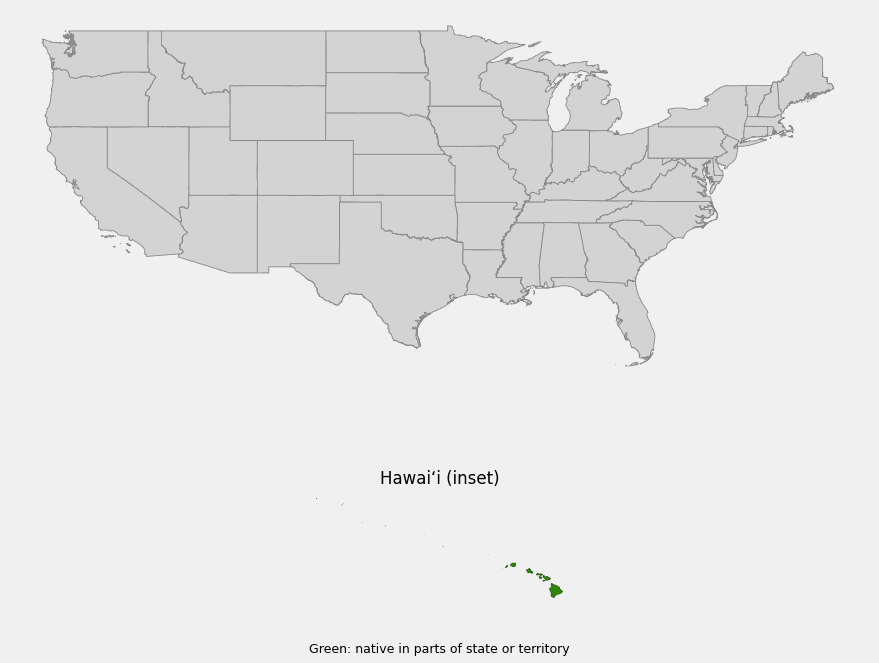
📋 Regional plant lists featuring Kolomona: Hawaii
Growing & Care Guide
Kolomona is one of the most forgiving native shrubs for hot, dry Hawaiian gardens. It grows outdoors only in frost-free climates (about USDA zones 10–12) and does best from the coast up to the lower uplands. Buy plants from Hawaiʻi native plant nurseries, and don’t collect plants or seed from wild populations. Hawaiʻi also restricts bringing plants in from other states because of pest and disease risks, so source kolomona locally from island growers.
Light
Full sun gives the most compact plants and the heaviest flowering. It tolerates light shade, but becomes open and leggy in heavy shade.
Soil & Water
Any well-drained soil, including rocky, cinder and sandy soils; avoid heavy, waterlogged ground. Water regularly for the first few months. Once established it is very drought tolerant and needs only occasional deep watering in long dry spells; too much water makes it soft and floppy.
Planting Tips
Use it as an informal hedge, a quick-growing screen, a background shrub in a dry native garden, or a filler in restoration plantings with wiliwili, ʻaʻaliʻi and ʻilima. Give it room to spread. It tolerates some wind and coastal conditions but grows best with a little shelter from direct salt spray.
Pruning & Maintenance
Prune after a flush of flowering to keep it dense; it responds well to cutting back and can be shaped as a hedge. Plants can be short-lived and woody with age, so occasional hard pruning or replacement keeps a planting fresh. Watch for scale, mealybugs and aphids, and for chewing caterpillars on new growth; most plants recover without treatment.
Propagation
Grows readily from seed. The seeds have a hard coat; nick them or soak them briefly in hot water, then soak overnight before sowing. Seedlings grow quickly and can flower within their first year. Collect seed only from your own nursery-grown plants.
Landscape Uses
- Dry native gardens: a fast, tough flowering shrub for leeward, low-rainfall landscapes
- Informal hedges and screens: takes pruning well and fills in quickly
- Restoration plantings: a pioneer shrub for dry forest and coastal shrubland projects
- Pollinator plantings: near-constant pale yellow flowers attract bees
Wildlife & Ecological Value
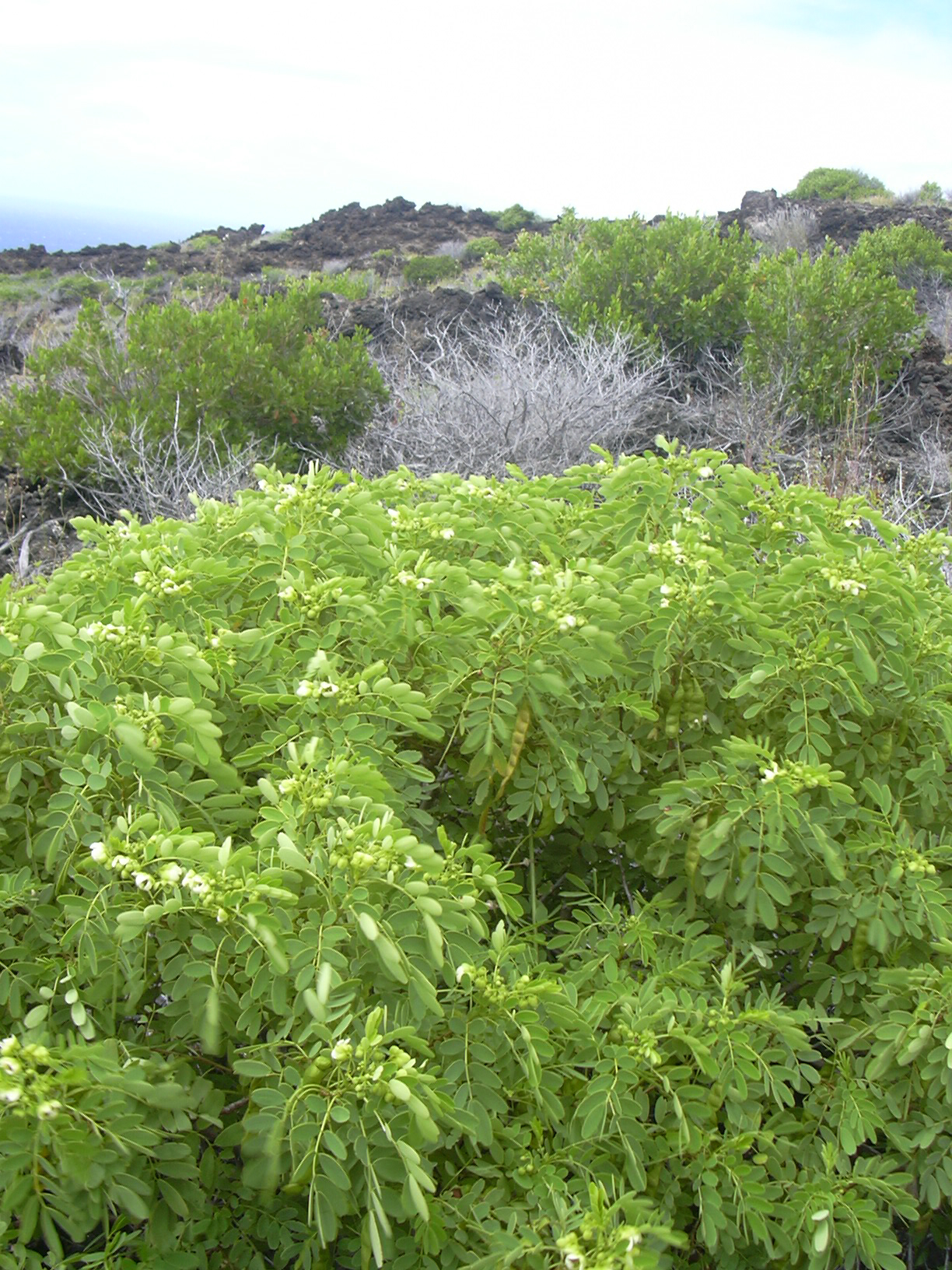
Kolomona is a common, fast-growing member of the dry lowland shrub community and one of the first natives to fill gaps on rocky ground.
For Pollinators
Like other sennas, its flowers offer pollen rather than much nectar, released from pores at the tips of the anthers when bees vibrate them. Bees visit the flowers in gardens and in the wild.
For Birds
Its dense, twiggy growth gives cover and perches for small birds in dry landscapes where trees are scarce. Insects that feed on the plant also provide food for birds.
For Mammals
Hawaiʻi’s only native land mammal, the Hawaiian hoary bat (ʻōpeʻapeʻa), forages for insects over shrubland. Introduced goats and axis deer browse kolomona, and grazing has reduced it in some areas.
Ecosystem Role
It is a pioneer shrub that grows quickly on rocky and disturbed sites, giving shade and shelter to slower natives. Unlike many legumes, sennas don’t form nitrogen-fixing root nodules, but kolomona still adds leaf litter and structure to thin dry-land soils.
Cultural & Historical Uses
The species was first described in 1832 by William Jackson Hooker and George Arnott Walker Arnott as Cassia gaudichaudii, in their account of the botany of Captain Beechey’s voyage. In 1982 Howard Irwin and Rupert Barneby moved it to the genus Senna, and older books still use the Cassia name. The epithet honors Charles Gaudichaud-Beaupré, the French botanist who collected in Hawaiʻi in 1819 on the voyage of the Uranie.
It has many Hawaiian names, including kolomona, kalamona, uhiuhi, heuhiuhi and keuhiuhi. The name uhiuhi is also used for an unrelated endangered tree, uhiuhi (Mezoneuron kavaiense), so the scientific name is the clearest way to be sure which plant is meant. In Australia the same species is called blunt-leaved senna or climbing senna.
Safety note: many sennas contain anthraquinone compounds with a strong laxative effect, and the seeds and pods of most species are considered unsafe to eat. Don’t eat any part of kolomona, and keep pods away from children and pets.
Frequently Asked Questions
Is kolomona endemic to Hawaii?
No. It is indigenous: native to Hawaiʻi and also to other Pacific islands, eastern Indonesia and Queensland, Australia. In Hawaiʻi it grows on every main island except Niʻihau and Kahoʻolawe.
Is kolomona endangered?
No. It is not federally listed and is still fairly widespread in dry lowland habitats, although much of that habitat has been lost.
How big does kolomona get?
Usually 3 to 10 feet tall and a little narrower, depending on sun, water and pruning. It can be kept smaller as a clipped hedge.
Does it need much water?
No. Water regularly until it is established, then only occasionally in long dry spells. It does best in well-drained, rocky or sandy soil.
Can I grow it outside Hawaii?
Only in frost-free climates, about USDA zones 10–12. Hawaiʻi restricts bringing plants in from other states, so gardeners in Hawaiʻi should buy it from local native plant nurseries.

Looking for a nursery that carries Kolomona?
Browse our native plant nursery directory: Hawaii

