
Pecos Sunflower (Helianthus paradoxus)
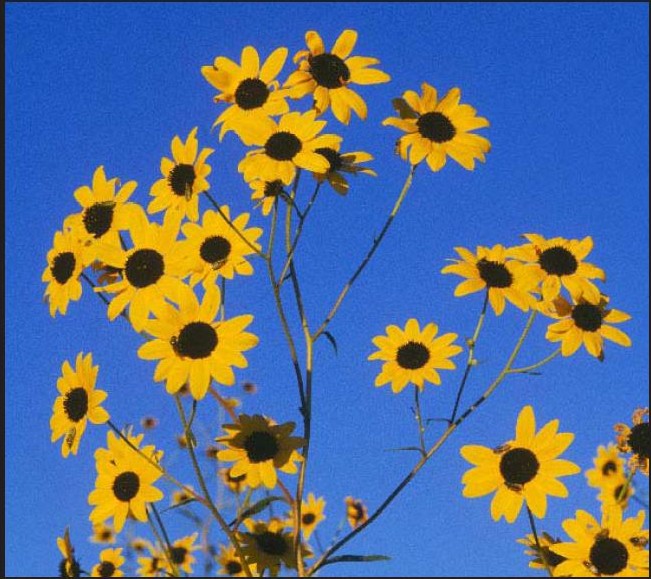
Helianthus paradoxus, the Pecos Sunflower, also called the paradox or puzzle sunflower, is a tall annual sunflower that grows only in spring-fed desert wetlands of New Mexico and West Texas. In September and October it raises branched stems 3 to 9 feet tall, covered with flower heads 2 to 3 inches across, with bright yellow rays around dark reddish-brown centers.
It is listed as Threatened under the U.S. Endangered Species Act (since 1999). It survives at only a few dozen sites in a handful of areas, all of which depend on groundwater: springs, seeps and the salty, permanently wet meadows called ciénegas. Many of those springs have dried up as groundwater was pumped for farms and towns. Never collect plants or seeds from the wild; if you want to grow it, buy only seed or plants that a nursery has propagated legally.
Pecos sunflower is also famous among biologists. It arose naturally from a cross between the common sunflower and the prairie sunflower, and it became a separate species that tolerates salty soils neither parent can. This guide covers its identification, range, conservation and the science behind its name.
Identification
Pecos sunflower looks much like a tall common sunflower, but it grows in salty desert wetlands and blooms late, in fall.
Leaves & Growth Habit
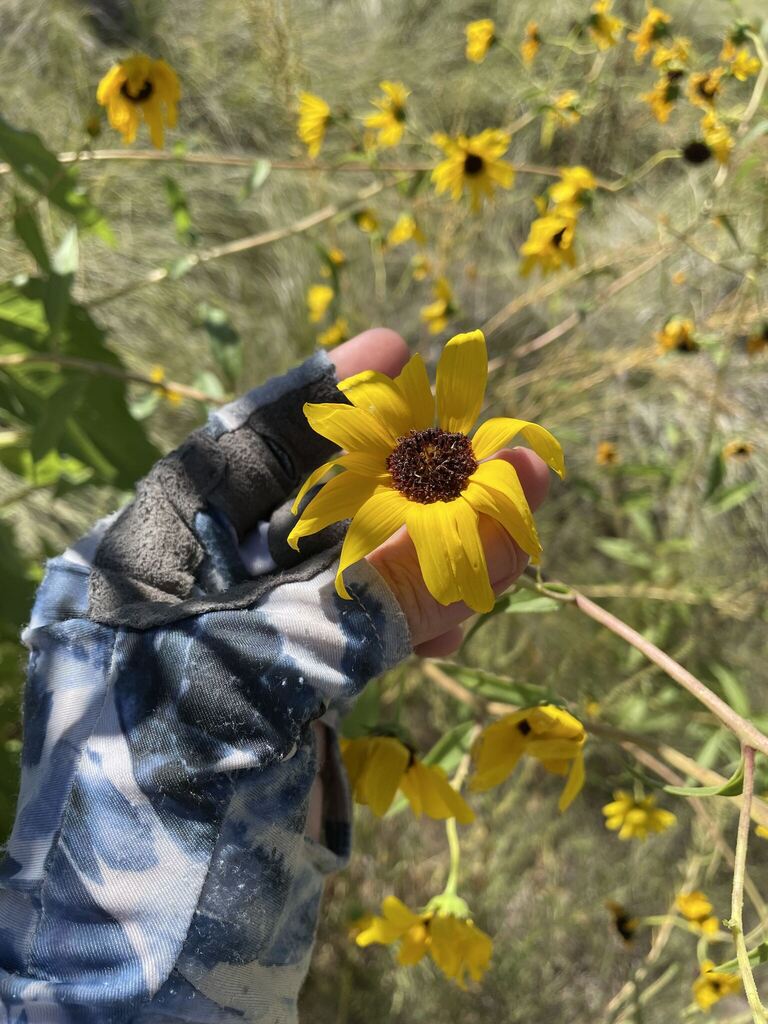
A tall, upright annual, usually 3 to 9 feet tall, with a single main stem branching in the upper part. The leaves are lance-shaped, up to about 7 inches long and 3 inches wide, with three prominent veins from the base. They are opposite on the lower stem and alternate higher up. Leaves and stems are fairly smooth, with a few short, stiff hairs, and the leaves are somewhat thick, an adaptation to salty soil.
Flowers
Each plant bears several to many flower heads 2 to 3 inches across, on long stalks. A head has 12 to 20 or more bright yellow rays around a dark, purplish-brown to reddish-brown disk. It blooms from September into October, later than most sunflowers: New Mexico populations peak in mid-September and Texas populations in late October.
Fruit & Seeds
The fruits are small, dark achenes (cypselae). The seeds are dormant when shed and need a cold, moist winter before they germinate. Seedlings do best in spring when the water table is high and rain has washed salt from the soil surface.
Look-alikes
Common Sunflower has broader, heart-shaped to oval leaves with rougher hairs, and usually grows on dry, disturbed ground. Prairie Sunflower is shorter, with narrower leaves, and grows in sandy soils. Both parents bloom earlier, mostly in summer. Where common sunflowers grow near Pecos sunflower populations, they can hybridize with it, which is one of the threats to the species.
Quick Facts
| Scientific Name | Helianthus paradoxus Heiser |
| Family | Asteraceae (aster family) |
| Plant Type | Annual wildflower; federally Threatened |
| Mature Height | 3–9 ft |
| Mature Spread | 1–3 ft |
| Growth Rate | Fast (completes its life cycle in one season) |
| Sun Exposure | Full sun |
| Water Needs | High; permanently moist to saturated soil |
| Soil Type | Saline and alkaline, wet clay or silt in springs, seeps and ciénegas |
| Soil pH | Alkaline |
| Bloom Time | September–October |
| Flower Color | Yellow rays with a dark reddish-brown center |
| Fall Color | Not significant; dies after setting seed |
| Fruit | Small dark achenes |
| Deer Resistant | Not documented |
| USDA Hardiness Zones | Annual; grows in about zones 6–8 within its range |
Native Range
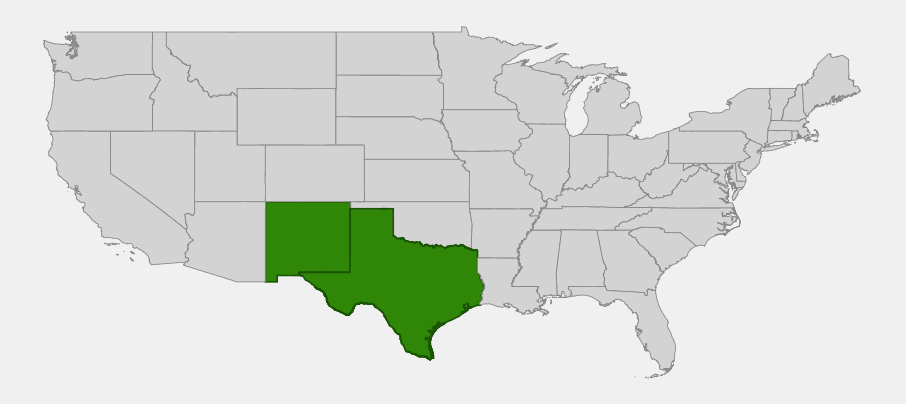
Pecos sunflower is native only to New Mexico and West Texas. Its known populations fall into a few areas: near Grants and along the Rio San Jose on the Laguna Pueblo lands in west-central New Mexico; around Santa Rosa on the Pecos River; in the Pecos River valley between Roswell and Dexter, including Bitter Lake National Wildlife Refuge; and in Pecos and Reeves counties in West Texas, including spring wetlands along Diamond Y Draw near Fort Stockton. NatureServe counts about 25 occurrences in all and ranks it as globally imperiled (G2).
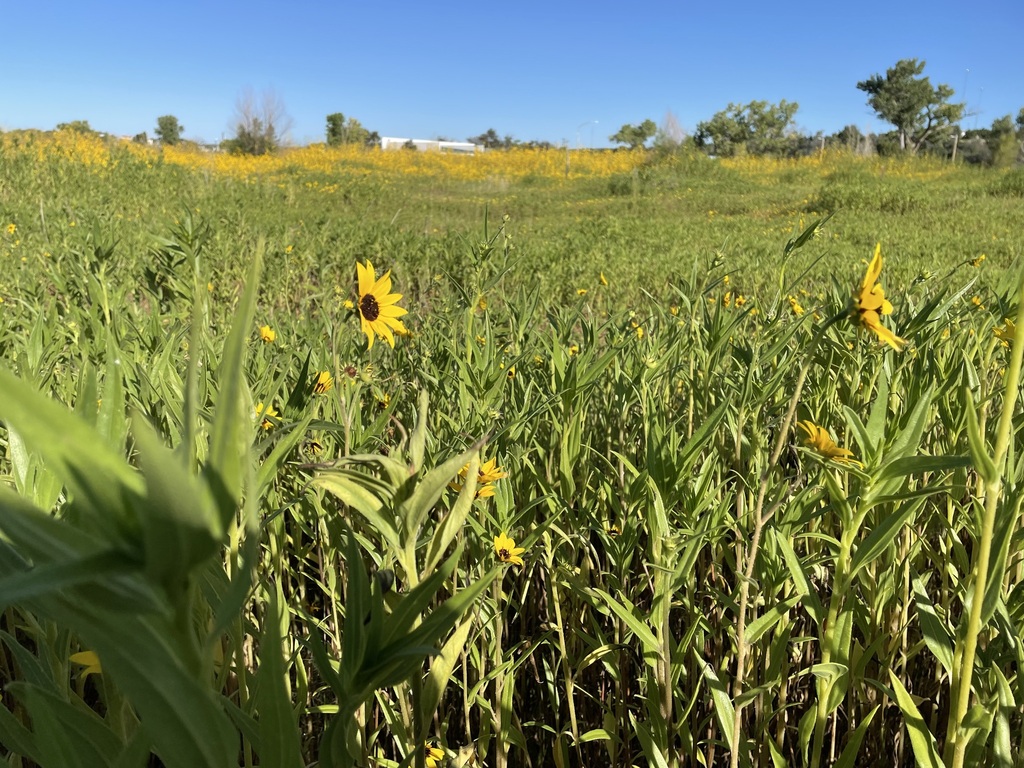
It is the only sunflower in the Southwest that requires permanent wetlands. It grows in ciénegas (spring-fed desert marshes), seeps, the edges of salty lakes, ponds and streams, and wet meadows, always in alkaline, salty soils that stay saturated through the growing season, at elevations from roughly 3,000 to 6,500 feet. Common companions include saltgrass, alkali sacaton, bulrushes, rushes and spikerushes.
Its biggest threat is the loss of the groundwater that feeds its wetlands. Many springs in the Pecos River region of Texas have gone dry because of pumping. Other threats include invasive saltcedar and other non-native plants, hybridization with the common sunflower, overgrazing, feral hogs, and road and pipeline work. Where land managers have removed saltcedar and used prescribed fire, as at ciénegas near Santa Rosa, populations have increased greatly.
📋 Regional plant lists featuring Pecos Sunflower: South & West Texas
Can You Grow It?
Pecos sunflower can be grown from seed, and it is sometimes used in wetland restoration and in botanic garden plantings within its range. Because it is federally Threatened, never collect plants or seeds from the wild. It is illegal to remove it from federal land, and its wild populations are small. Buy only seed or plants from a nursery or seed source that propagates it legally, and plant it only within its native region and habitat.
Light
Full sun. In the wild it grows in open marshes and wet meadows with no tree cover, and it competes poorly with taller vegetation such as saltcedar.
Soil & Water
It needs soil that is wet all season, ideally alkaline or slightly salty clay or silt. A pond edge, rain garden or the margin of a constructed wetland in the arid Southwest can work. It does not need salty soil to grow, but it is well adapted to it, which helps it avoid competition.
Planting Tips
Sow seed outdoors in late fall or winter so it receives a natural cold, moist period, or cold-stratify it for several weeks before sowing in early spring. Keep the soil moist until seedlings are established. Do not plant it near common sunflowers, which can hybridize with it.
Pruning & Maintenance
No pruning is needed. Leave plants standing after bloom so the seeds can ripen and fall; they will reseed in suitable wet soil. Remove competing weeds, especially invasive saltcedar and tall grasses, from around young plants.
Propagation
It is grown only from seed. Collect seed only from your own cultivated plants, never from wild populations, and store it dry and cool before cold stratification.
Landscape Uses
- Wetland restoration: reintroduction and habitat projects at springs and ciénegas within its range
- Pollinator plantings: late-season nectar and pollen for native bees in the arid Southwest
- Botanic gardens and education: a living example of how new species form by hybridization
- Wildflower viewing: Bitter Lake National Wildlife Refuge and the Santa Rosa area in September
Wildlife & Ecological Value
Pecos sunflower blooms when most desert wildflowers are done, giving pollinators and seed-eaters an important late-season resource.
For Pollinators
Its large yellow heads attract many native bees, including sunflower specialist bees, as well as butterflies, flies and beetles. Blooming in fall, it is a valuable food source when few other wetland plants are flowering.
For Birds
Finches, sparrows and other seed-eating birds eat the seeds in late fall and winter. Its dense stands provide cover for birds in the wetlands where it grows.
For Mammals
Livestock and wildlife sometimes graze the plants; heavy grazing before seed set reduces the next year’s population. Feral hogs damage its habitat by rooting and wallowing.
Ecosystem Role
It is a characteristic plant of desert ciénegas, rare wetlands that also support endangered fish, snails and other species. Protecting its springs protects these whole communities.
Cultural & Historical Uses
Charles Heiser, a leading expert on sunflowers, described Helianthus paradoxus in 1958. He named it “paradoxus” because it was puzzling: it seemed to combine features of the common sunflower and the prairie sunflower. Later genetic studies, especially by Loren Rieseberg and colleagues, confirmed that it arose from hybridization between these two species, roughly 75,000 to 200,000 years ago.
Pecos sunflower became a textbook example of hybrid speciation, in which two species cross and their offspring become a new, separate species without doubling their chromosomes. Its new combination of genes allowed it to tolerate salty wetlands where neither parent can grow, and researchers continue to study it to understand how plants adapt to salt.
The U.S. Fish and Wildlife Service listed it as Threatened in 1999 and published a recovery plan in 2005. Conservation work by federal and state agencies, tribes, private landowners and groups such as The Nature Conservancy has focused on protecting springs, removing saltcedar and managing grazing and fire at the remaining sites.
Frequently Asked Questions
Is Pecos sunflower endangered?
It is listed as Threatened under the U.S. Endangered Species Act. It grows at only about 25 sites in New Mexico and West Texas and depends on springs and wetlands that are disappearing.
Why is it called the paradox sunflower?
Botanist Charles Heiser named it paradoxus in 1958 because it combined features of the common and prairie sunflowers. Genetic studies later showed that it is a natural hybrid species descended from those two sunflowers.
Where can I see Pecos sunflower?
In September and early October at spring-fed wetlands in New Mexico, such as Bitter Lake National Wildlife Refuge near Roswell and wetlands around Santa Rosa, and at a few protected spring sites in West Texas.
Can I grow Pecos sunflower?
Yes, from legally propagated nursery seed, in full sun and constantly wet soil within its native region. Never collect plants or seed from the wild, and keep it away from common sunflowers to prevent hybridization.
How is it different from the common sunflower?
It grows in salty wetlands rather than dry ground, blooms later (September and October), and has narrower, lance-shaped leaves with fewer hairs.

Looking for a nursery that carries Pecos Sunflower?
Browse our native plant nursery directory: New Mexico · Texas

