
ʻUhaloa (Waltheria indica)
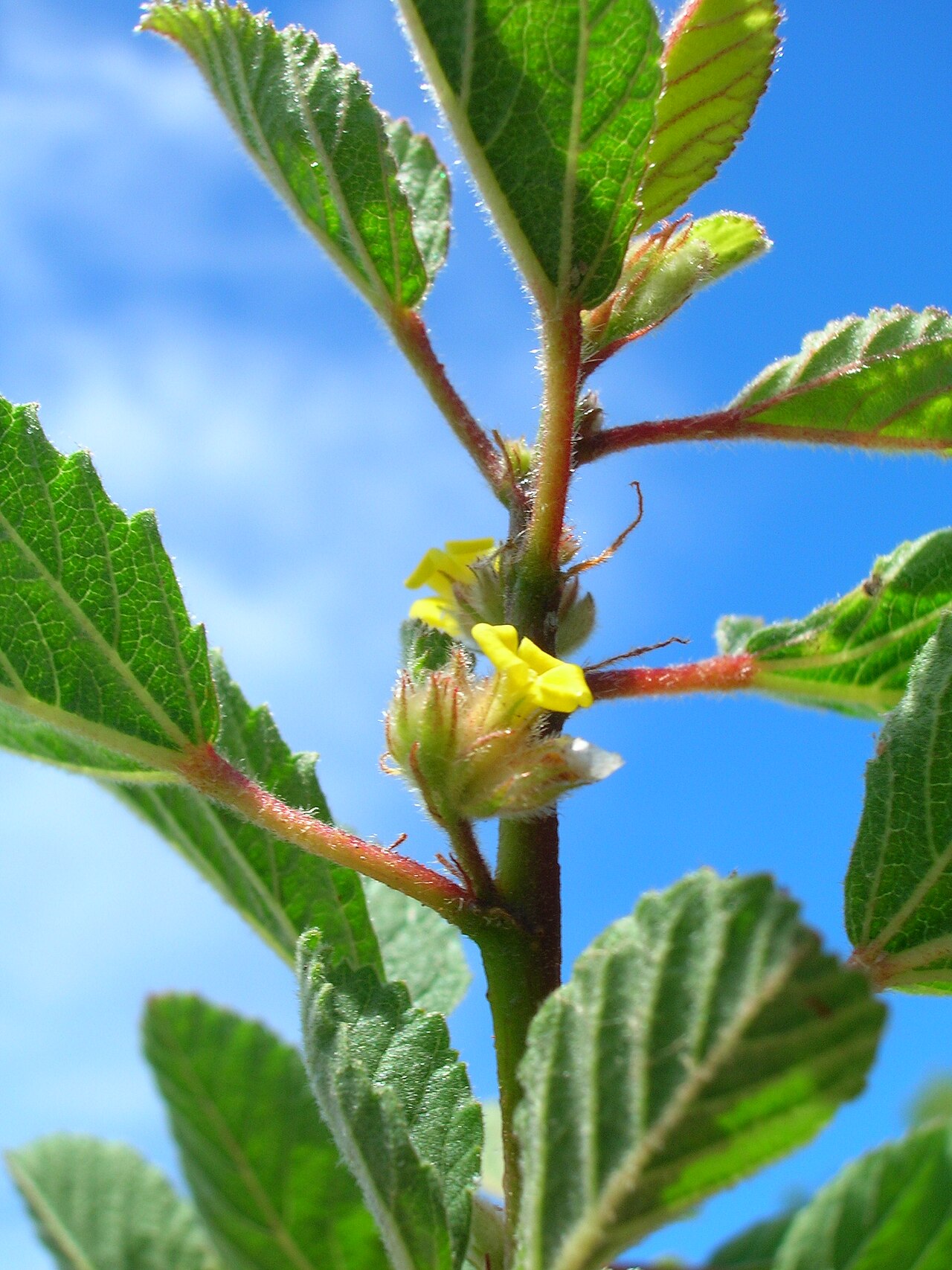
Waltheria indica, known in Hawaiʻi as ʻUhaloa and on the U.S. mainland as sleepy morning, is a tough, velvety, gray-green subshrub of the mallow family (Malvaceae) with dense clusters of small, bright yellow flowers. It is one of the most widespread native plants in the Hawaiian Islands, growing from beaches and lava flows to dry pastures and roadsides, and it blooms almost all year.
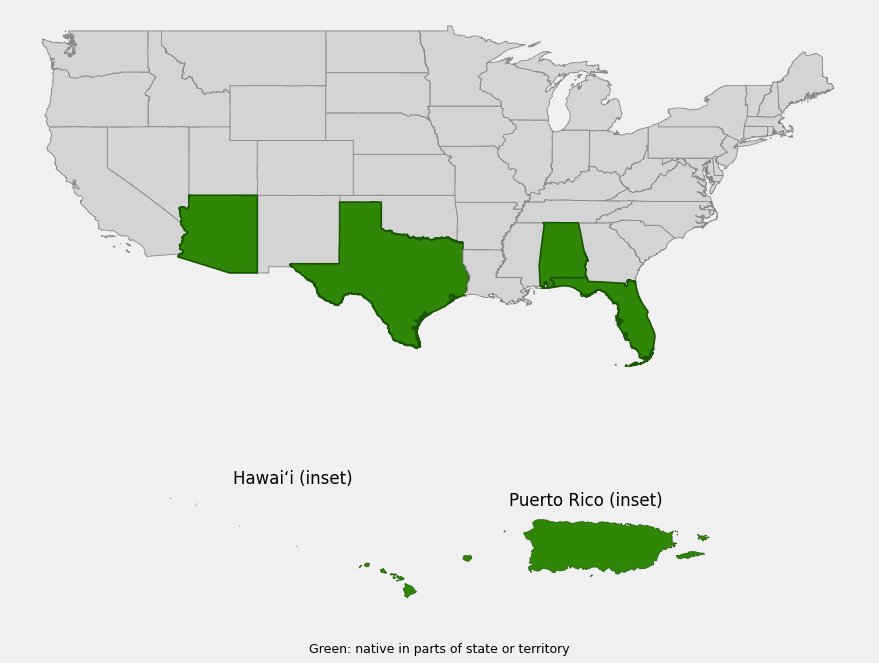
ʻUhaloa is indigenous to Hawaiʻi rather than endemic: it is native across the tropics and subtropics worldwide and probably originated in the American tropics. USDA PLANTS lists it as native in Hawaiʻi, Puerto Rico and the U.S. Virgin Islands, and in the southern mainland states of Florida, Texas and Arizona, with an outlying record in Alabama. Other names include basora prieta in Puerto Rico and hierba de soldado in Mexico.
In Hawaiʻi it is best known as a traditional medicinal plant, used especially for sore throats. In gardens it is a carefree, drought-tolerant groundcover or low shrub for hot, dry, sunny places. This guide covers how to identify ʻuhaloa, where it grows, how to grow it, and its value to pollinators and Hawaiian culture.
Identification
ʻUhaloa is easiest to recognize by its soft, gray-green, pleated leaves and the tight yellow flower clusters that sit right against the stem in the leaf axils.
Growth Habit
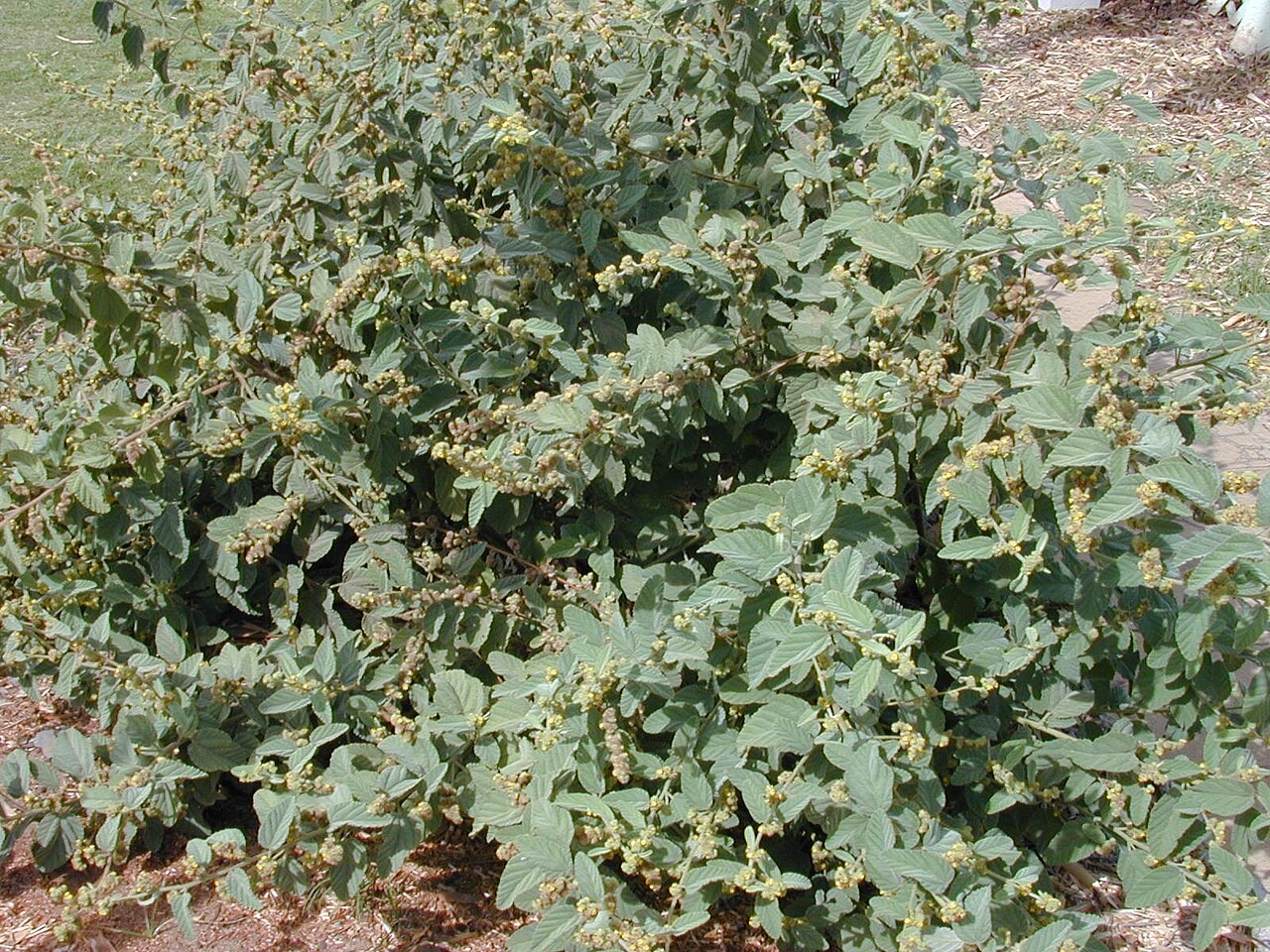
A short-lived, woody-based perennial or subshrub, usually 1 to 3 feet tall, occasionally reaching about 6 feet. It can be upright, mounding or sprawling; on windy coasts and lava it often hugs the ground. The stems are covered in dense, star-shaped (stellate) hairs that give the whole plant a soft, grayish look.
Leaves
Leaves are alternate, oval to oblong, about 1 to 3 inches long, with toothed edges and prominent, parallel veins that make them look pleated. Both surfaces are velvety with gray hairs. Plants in very dry, sunny places have smaller, grayer leaves than plants in shade or richer soil.
Flowers
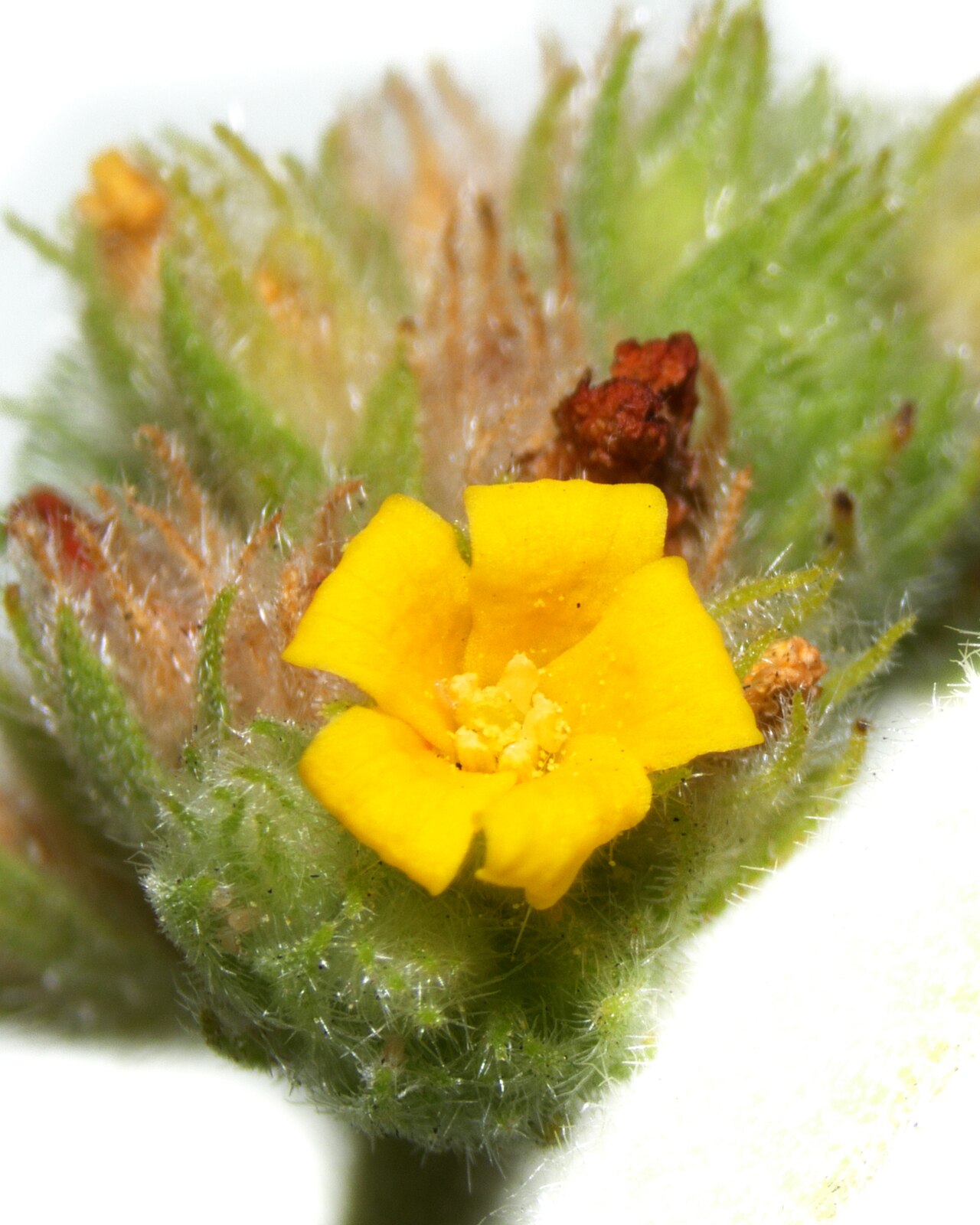
Small yellow flowers, about ¼ inch across, are packed into dense, hairy clusters in the leaf axils and at the branch tips. Each flower has five petals that age from bright yellow to orange or rusty brown. The flowers come in two forms, one with long styles and short stamens and one the reverse, an arrangement (heterostyly) that favors cross-pollination. Plants flower nearly year-round in Hawaiʻi.
Fruit & Look-alikes
The fruit is a tiny, hairy capsule hidden in the persistent calyx, holding a single small seed. ʻUhaloa can be confused with ʻIlima (Sida fallax), another native mallow, but ʻilima has single, larger, long-stalked yellow-orange flowers rather than tight clusters. Weedy Sida species also have single flowers, and Melochia species have pink or white flowers.
Quick Facts
| Scientific Name | Waltheria indica L.; synonym Waltheria americana L. |
| Family | Malvaceae (mallow family; formerly Sterculiaceae) |
| Plant Type | Short-lived perennial subshrub; indigenous to Hawaiʻi |
| Mature Height | 1–3 ft (up to 6 ft) |
| Mature Spread | 1–4 ft |
| Growth Rate | Fast |
| Sun Exposure | Full sun |
| Water Needs | Low; very drought tolerant once established |
| Soil Type | Sandy, rocky, cinder or lava soils; any well-drained soil |
| Soil pH | Slightly acidic to alkaline |
| Bloom Time | Nearly year-round |
| Flower Color | Bright yellow, aging orange to rusty brown |
| Fall Color | None; evergreen, gray-green |
| Fruit | Tiny one-seeded capsule |
| Deer Resistant | Moderate; the hairy leaves are not a preferred browse |
| USDA Hardiness Zones | 9–13 |
Native Range
ʻUhaloa is indigenous to Hawaiʻi and grows on all the main islands, as well as on several of the Northwestern Hawaiian Islands. It is most common in dry, open, sunny places from the coast into the lower mountain slopes: coastal strand and dunes, rocky shorelines, young lava fields, dry shrubland and grassland, open dry forest, and disturbed ground such as roadsides and pastures. Hawaiian botanists treat it as native because it was already widespread when Europeans arrived, though some suggest it could have been an early Polynesian introduction.
Beyond Hawaiʻi, it grows throughout the world’s tropics and subtropics. In Puerto Rico it occurs in dry to moderately moist lowland areas, pastures and roadsides, from sea level to about 1,300 feet, in places that receive roughly 30 to 70 inches of rain a year. On the mainland, USDA PLANTS lists it as native in Florida, where it grows in pine rocklands, coastal uplands and dry disturbed sites; in South Texas, on sandy and caliche soils in brush and grassland; and in southern Arizona, on rocky slopes and in canyons and desert grassland.
USDA also records it in Alabama. That outlying record is far north of the plant’s usual range, and gardeners outside the frost-free South should treat ʻuhaloa as a tropical plant.
📋 Regional plant lists featuring ʻUhaloa: Hawaii · North & South Florida · South & West Texas · Arizona & New Mexico · Alabama, Georgia & Mississippi · Puerto Rico
Growing & Care Guide
ʻUhaloa is one of the easiest Hawaiian native plants to grow, and it often appears on its own in sunny, dry yards. Native plant nurseries in Hawaiʻi sell it, and it is easy to start from seed. It is not rare or protected, but as with any native plant, collect seed only with permission and leave wild stands intact. Mainland gardeners can find it through Florida and Texas native plant nurseries. Hawaiʻi restricts bringing plants and soil in from other states, so gardeners in Hawaiʻi should buy local island stock.
Light
Full sun. In shade it becomes leggy, flowers less and is short-lived.
Soil & Water
Any well-drained soil, including sand, cinder, rocky lava and poor, compacted ground. It is very drought tolerant once established and needs little or no supplemental water in dry leeward areas. Avoid rich, heavily watered beds and soggy soil, which make it floppy and prone to root rot.
Planting Tips
Use it as a low, informal groundcover, along dry banks and walls, in coastal gardens, or as filler between larger dry-land natives. Space plants about 2 to 3 feet apart. Outdoors it is suited to frost-free climates (zones 10 to 13, and the warmest parts of zone 9, where it may die back in a frost and regrow).
Pruning & Maintenance
ʻUhaloa is short-lived, often lasting only a few years, but it reseeds readily. Cut back old, woody plants by about half to renew them, or let seedlings replace them. In tidy gardens, pull unwanted seedlings while small. Mealybugs and scale insects sometimes attack it.
Propagation
Grows easily from seed. Seeds germinate better if lightly scarified or soaked in hot water before sowing. It can also be grown from semi-hardwood cuttings. Seedlings grow quickly and often bloom within a few months.
Landscape Uses
- Dry, sunny native gardens: a carefree groundcover or low shrub for hot, leeward sites
- Coastal and lava landscapes: tolerates wind, salt spray, poor soil and drought
- Erosion control: covers bare, disturbed ground quickly
- Pollinator gardens: nearly year-round yellow flowers for bees
- Restoration plantings: an early colonizer of dry, degraded sites
Wildlife & Ecological Value
ʻUhaloa is an important pioneer plant in dry, open habitats, where few other plants bloom as long.
For Pollinators
Its small yellow flowers are visited mainly by bees, including native Hawaiian yellow-faced bees (Hylaeus) and introduced honey bees, along with butterflies, flies and wasps. On the mainland, native bees work the flowers through most of the year.
For Birds
The tiny seeds are eaten by seed-eating birds, and the low, dense shrubs give ground-feeding birds cover in otherwise open, dry places.
For Mammals
Hawaiʻi’s only native land mammal is the Hawaiian hoary bat, which hunts insects over open country. On the mainland, small mammals eat the seeds, and the hairy foliage is only lightly browsed.
Ecosystem Role
As a fast-growing colonizer of bare lava, sand and disturbed soil, ʻuhaloa helps hold soil and gives other native plants a foothold. It is a characteristic plant of dry coastal and lowland communities across the Hawaiian Islands.
Cultural & Historical Uses
ʻUhaloa is one of the best-known Hawaiian medicinal plants. The bitter root and inner root bark were traditionally chewed, or prepared as a tea, to soothe sore throats, coughs and congestion, and other parts of the plant were used in remedies for aches and other complaints. Other Hawaiian names include ʻalaʻalapūloa, hiʻaloa and kanakaloa.
It is also used medicinally across its range, from Africa and India to the Caribbean and Latin America. Scientists have found a number of alkaloids and other active compounds in the plant. Don’t use ʻuhaloa as a remedy without guidance from a qualified practitioner; its safety as a home medicine has not been well studied, and it should be avoided in pregnancy and by children.
Carl Linnaeus named the species in 1753. The genus honors the German botanist Augustin Friedrich Walther. The mainland name “sleepy morning” is widely used in Texas and Florida.
Frequently Asked Questions
Is ʻuhaloa native to Hawaiʻi?
Yes. It is indigenous: native to Hawaiʻi and also to tropical and subtropical regions around the world. It grows on all the main Hawaiian Islands, mostly in dry, open, sunny places.
What is ʻuhaloa used for?
It is a traditional Hawaiian medicinal plant, best known for soothing sore throats. Its bitter root bark was chewed or made into a tea. Consult a qualified practitioner before using it medicinally.
Is ʻuhaloa a weed?
It is native, but it spreads readily by seed and is often seen in yards, pastures and roadsides. In a garden it is easy to manage by pulling unwanted seedlings.
How do I grow ʻuhaloa?
Plant it in full sun in well-drained, even poor or rocky, soil and water it only until it is established. It grows fast, blooms nearly all year and reseeds itself. It is frost tender.
Does ʻuhaloa grow on the U.S. mainland?
Yes. It is native in Florida, South Texas and southern Arizona, where it is called sleepy morning, and USDA also records it in Alabama.

Looking for a nursery that carries ʻUhaloa?
Browse our native plant nursery directory: Alabama & Arizona · Florida & Hawaii · Texas

