
Huehue (Nephroia orbiculata)
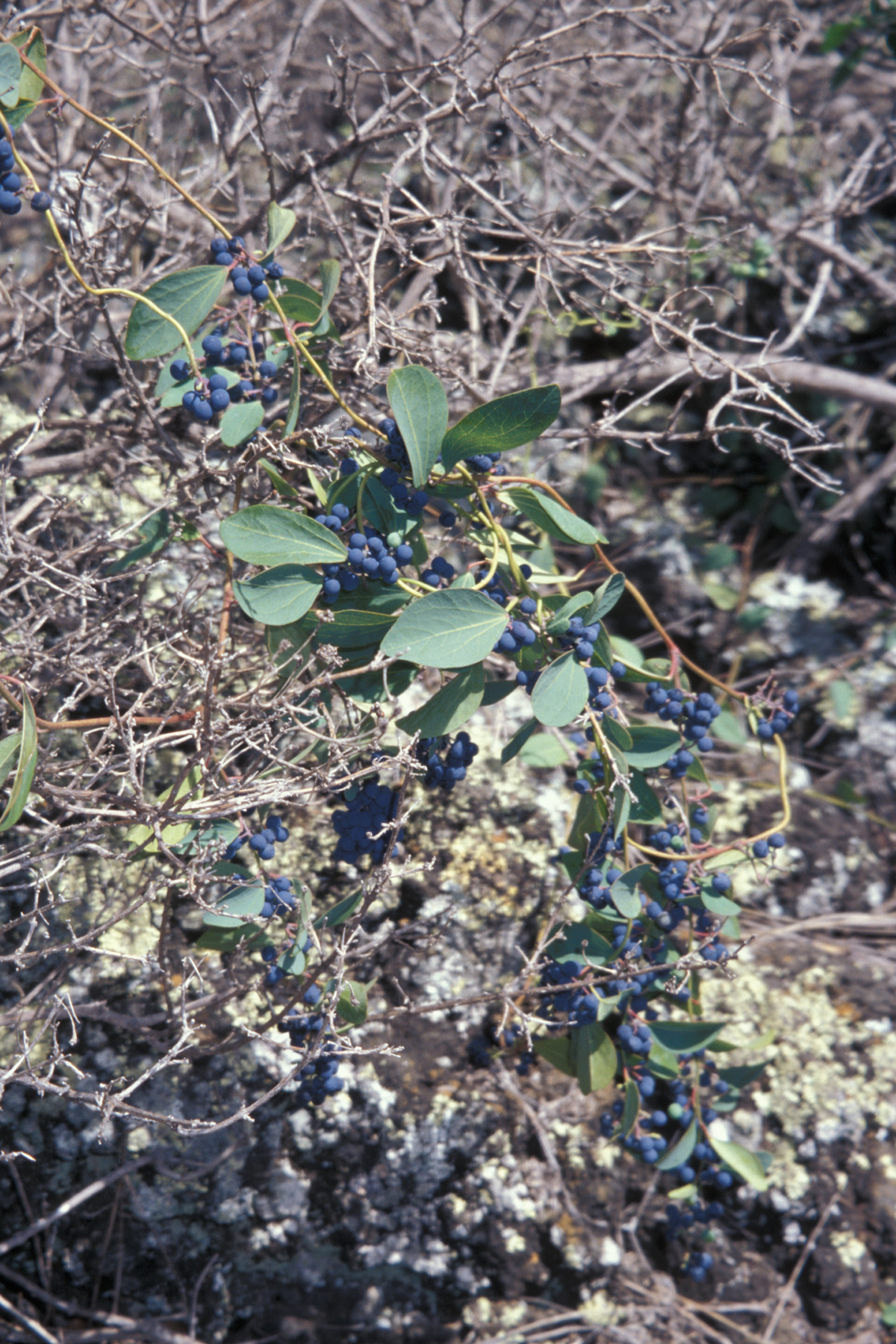
Huehue (Nephroia orbiculata), also called hue, hueʻie and ʻinalua in Hawaiian and queen coralbead in English, is a slender, twining woody vine of dry and mesic lowlands in the Hawaiian Islands. It scrambles over lava rock, rocky slopes and shrubs, with small blue-green leaves, tiny cream-colored flowers and clusters of dark blue, grape-like fruits. It is the only member of the moonseed family (Menispermaceae) native to Hawaiʻi.
USDA PLANTS lists this plant under its older name, Cocculus orbiculatus, and it is also widely known in older books as Cocculus trilobus. Recent studies moved it to the genus Nephroia, the name now used by iNaturalist and Plants of the World Online. Huehue is indigenous to Hawaiʻi rather than endemic: the same species grows wild across much of eastern and southern Asia, from India and the Himalaya to China, Korea and Japan and south into Southeast Asia. Its closest relative on the U.S. mainland is the Carolina Snailseed.
Huehue is a tough, drought-tolerant vine for dry native gardens, rock walls and fences in Hawaiʻi, and early Hawaiians used its stems as cordage. Its roots are reported to be poisonous, so it is a plant to admire and grow rather than eat. This guide covers how to recognize huehue, where it grows, how to grow it, and its place in Hawaiian culture and ecology.
Identification
Huehue is easy to overlook when it is not in fruit, because its stems are thin and its leaves are small and variable. Look for a wiry vine with dull blue-green leaves twining through dry shrubland or sprawling over lava.
Stems & Growth Habit
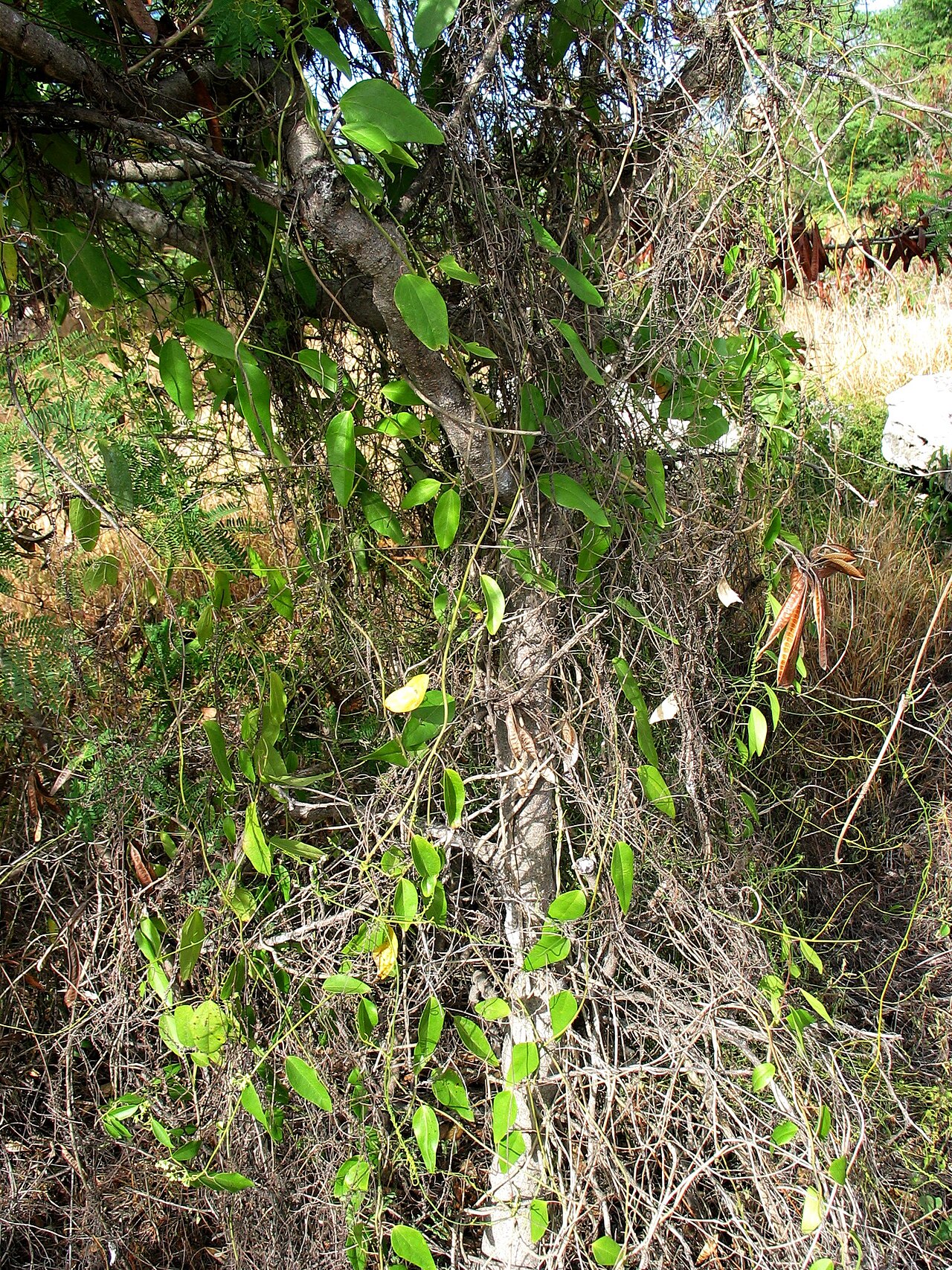
Huehue is a perennial woody vine that twines around other plants or sprawls over rocks and the ground. The stems are slender and wiry, usually a few feet to about 10 feet long, green and finely hairy when young and becoming brownish and woody with age. In open, windy sites it may form a low tangle less than 2 feet high.
Leaves
The leaves are alternate and very variable in shape, from narrowly oval to almost round, sometimes with three shallow lobes. They are usually 1 to 5 inches long, dull light green to bluish green and somewhat glaucous, with three main veins rising from the base. Leaf shape can change on the same plant, which is why the species has been described under many names.
Flowers
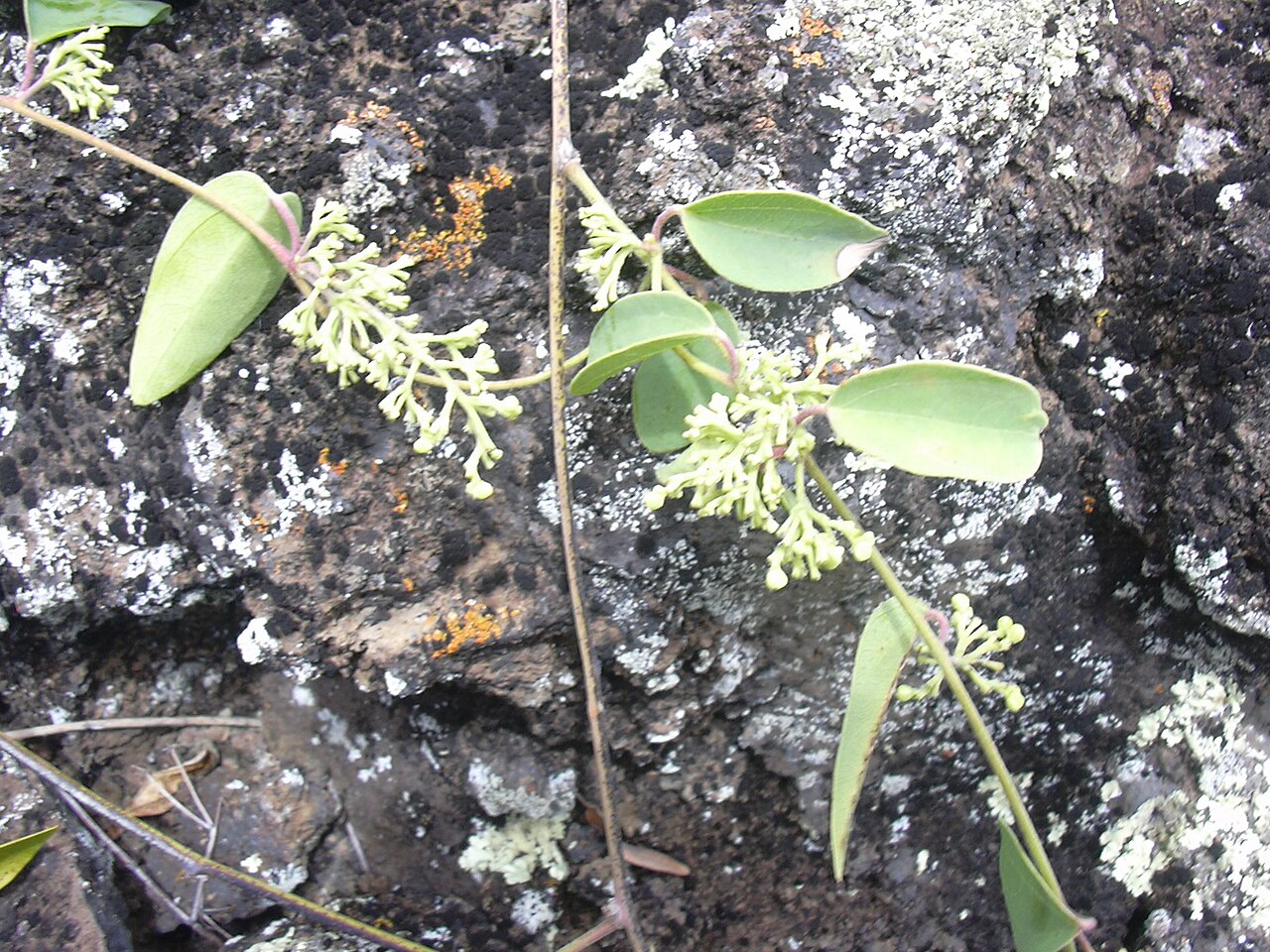
The flowers are tiny, about 1/8 inch across, cream to pale yellow, and grow in small clusters or short branched sprays in the leaf axils. Plants are dioecious: male and female flowers grow on separate plants, so only female plants bear fruit. Flowering is sporadic through the year.
Fruit & Seeds
The fruit is a small, round drupe about 1/4 inch across that ripens from green to dark blue or blue-black, often with a whitish bloom, like a tiny grape. Inside is a single flattened, ridged seed coiled like a snail shell, a feature shared by other Cocculus relatives and the source of the name snailseed.
Similar Species
Huehue is the only native Hawaiian moonseed. Native Canavalia and Vigna vines have compound leaves and pea-like flowers, and introduced morning glories have showy funnel-shaped flowers. Young huehue leaves can resemble those of small native shrubs, but the twining stems and three-veined leaves give it away.
Quick Facts
| Scientific Name | Nephroia orbiculata; syn. Cocculus orbiculatus (L.) DC. (USDA) |
| Family | Menispermaceae (moonseed family) |
| Plant Type | Twining woody vine; indigenous to Hawaiʻi |
| Mature Height | Low and sprawling to about 2 ft, or climbing to about 10 ft on supports |
| Mature Spread | 3–10 ft |
| Growth Rate | Moderate |
| Sun Exposure | Full sun to part shade |
| Water Needs | Low; drought tolerant once established |
| Soil Type | Well-drained rocky, cinder, lava or coralline soils |
| Soil pH | About 6.0–8.0 |
| Bloom Time | Sporadic year-round |
| Flower Color | Cream to pale yellow (tiny, not showy) |
| Fall Color | None; evergreen in Hawaiʻi |
| Fruit | Small dark blue to blue-black drupes on female plants; not edible |
| Deer Resistant | Unknown; browsed by goats where present |
| USDA Hardiness Zones | 10–12 (Hawaiian plants) |
Native Range
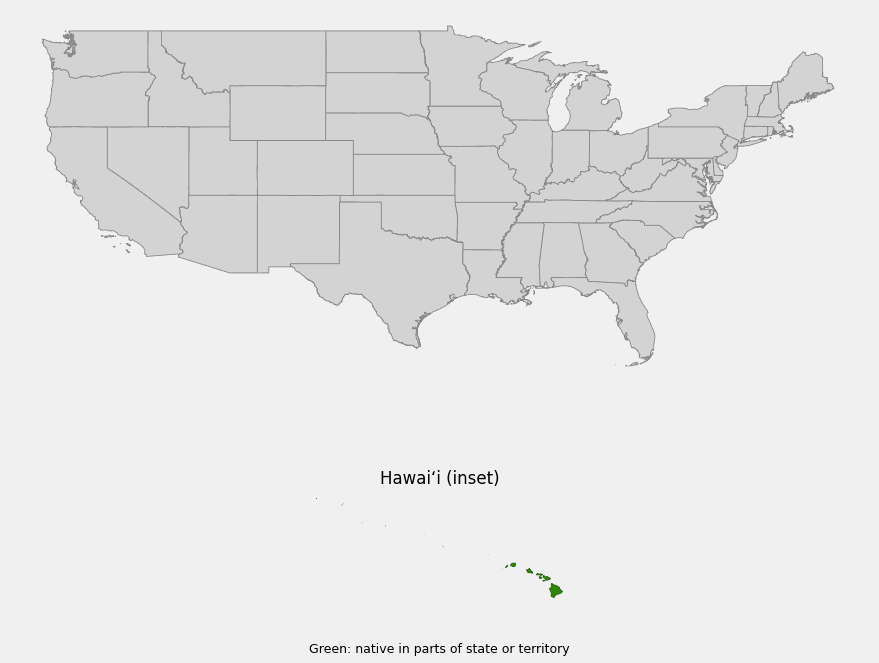
In the United States, huehue grows only in Hawaiʻi, which is the only state USDA PLANTS lists for it. It is found on Niʻihau, Kauaʻi, Oʻahu, Molokaʻi, Lānaʻi, Maui and Hawaiʻi Island. Most populations are in dry to mesic areas from near sea level to about 2,000 feet, though it reaches higher on the slopes of Haleakalā on Maui.
Typical habitats include open dry shrubland and grassland, raised coralline (limestone) plains, talus slopes, rocky cliffs, rough ʻaʻā lava and cracks in smooth pāhoehoe lava, and dry to mesic forest. It often climbs through native shrubs such as ʻAʻaliʻi, Naio and ʻŪlei.
Outside Hawaiʻi, the species is widespread in eastern and southern Asia, from India and the Himalaya to China, Korea, Japan and Southeast Asia, which is why it is classed as indigenous rather than endemic. It is not federally listed. In Hawaiʻi it remains fairly widespread, though much of its dry lowland habitat has been lost to development, fire and invasive grasses.
📋 Regional plant lists featuring Huehue: Hawaii
Growing & Care Guide
Huehue is a low-maintenance vine for dry, sunny native gardens in Hawaiʻi, especially at low elevations. It is grown mainly by native plant enthusiasts and restoration projects, so buy it from a Hawaiʻi native plant nursery. Hawaiʻi also restricts bringing plants in from other states, so use locally grown stock rather than Asian nursery material.
Light
Plant huehue in full sun to partial sun. It flowers and fruits best with plenty of light, and in heavy shade the stems become thin and sparse.
Soil & Water
Huehue needs well-drained soil and does well in cinder, rocky soils, lava and coral sand. Water regularly until it is established, then only during long dry spells. It tolerates drought, heat and wind, and too much water in heavy soils is more likely to harm it than too little.
Planting Tips
Give it a fence, trellis, rock wall or a sturdy native shrub to twine on, or let it sprawl over boulders as a loose ground cover. Since only female plants fruit, plant several to make sure you have both sexes if you want the blue berries. A light feeding with a balanced fertilizer every 6 to 8 months is enough.
Pruning & Maintenance
Trim stems that wander beyond their support and remove dead wood occasionally. Huehue can be bothered by ants, scale insects, mealybugs and aphids. Control ants, which farm the sap-feeding pests, and rinse or treat heavy infestations.
Propagation
Grow huehue from fresh seed cleaned of its fleshy pulp; germination can be slow and uneven. Semi-hardwood stem cuttings can also be rooted. Collect seed only from garden plants or with permission, never from protected areas.
Landscape Uses
- Dry native gardens: a drought-tolerant vine for hot, sunny lowland gardens
- Fences and trellises: twines up supports without needing tying
- Rock gardens: sprawls attractively over lava rock and walls
- Restoration plantings: part of the native vine layer in dry forest and shrubland
- Cultural plantings: a traditional cordage plant
Wildlife & Ecological Value
Huehue is a modest but useful part of Hawaiʻi’s dry lowland plant communities, adding a vine layer and fruit to shrublands that have lost much of their native diversity.
For Pollinators
The tiny flowers are visited by small insects, including flies, small bees and wasps, which carry pollen from male to female plants.
For Birds
Birds eat the small blue fruits and disperse the seeds, which helps explain how this vine reached Hawaiʻi and spread across the islands.
For Mammals
Hawaiʻi’s only native land mammal, the Hawaiian hoary bat, forages for insects over dry and mesic forests where huehue grows. Introduced goats and other browsers eat the vine.
Ecosystem Role
As a twining vine, huehue adds structure to dry shrublands and helps cover bare rock and lava. Its fruits feed birds, and its tangled stems shelter insects and spiders.
Cultural & Historical Uses
Early Hawaiians used the tough, flexible stems of huehue as cordage, especially to lash together parts of pili grass houses. The plant has several Hawaiian names, including hue, huehue, hueʻie and ʻinalua.
The roots are reported to contain a poisonous substance, and plants in the moonseed family are known for their bitter alkaloids. Do not eat any part of huehue, including the fruit, and keep children and pets from chewing it.
The genus name Cocculus, under which the plant was long known, comes from the Greek kokkos, berry, after the fruit, and the epithet orbiculata refers to the rounded leaves. The plant’s wide range across Asia and the Pacific reflects its bird-dispersed fruits, which allowed it to reach remote islands like Hawaiʻi on its own.
Frequently Asked Questions
Is huehue native to Hawaiʻi?
Yes. Huehue is indigenous to Hawaiʻi: it arrived naturally and grows wild on all the main islands, but the same species is also native across much of eastern and southern Asia.
Is huehue poisonous?
Treat it as poisonous. The roots are reported to contain a poisonous substance, and moonseed relatives contain bitter alkaloids. Do not eat the fruit or any other part of the plant.
Why doesn’t my huehue have berries?
Huehue is dioecious, meaning male and female flowers grow on separate plants. Only female plants produce fruit, and they need a male plant nearby for pollination.
What is the scientific name of huehue?
It is now usually called Nephroia orbiculata, the name used by iNaturalist and Plants of the World Online. USDA PLANTS and many Hawaiian references still call it Cocculus orbiculatus, and older books use Cocculus trilobus.
Is huehue easy to grow?
Yes, in dry, sunny lowland gardens in Hawaiʻi. Give it well-drained soil and something to climb, water it until established, and it needs little care afterward.

Looking for a nursery that carries Huehue?
Browse our native plant nursery directory: Hawaii

