
Pilo (Coprosma ochracea)
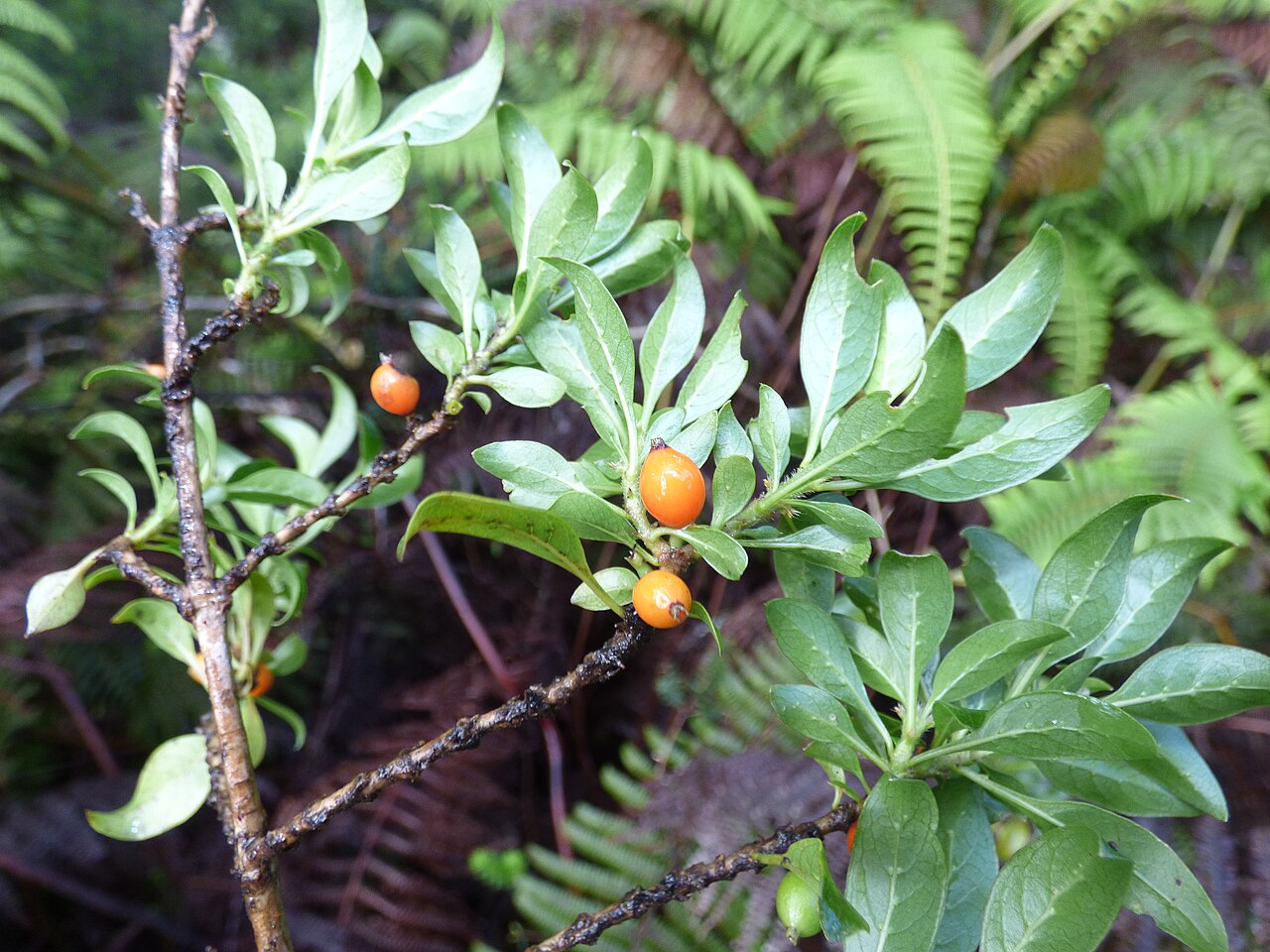
Coprosma ochracea, known in Hawaiian as pilo and in English as the Maui mirrorplant, is an evergreen shrub or small tree of the coffee family (Rubiaceae) found only in the Hawaiian Islands. It grows from about 6 to 20 feet tall, with glossy, paired leaves and clusters of small, bright orange fruits that stand out against the dark green foliage of the rainforest understory.
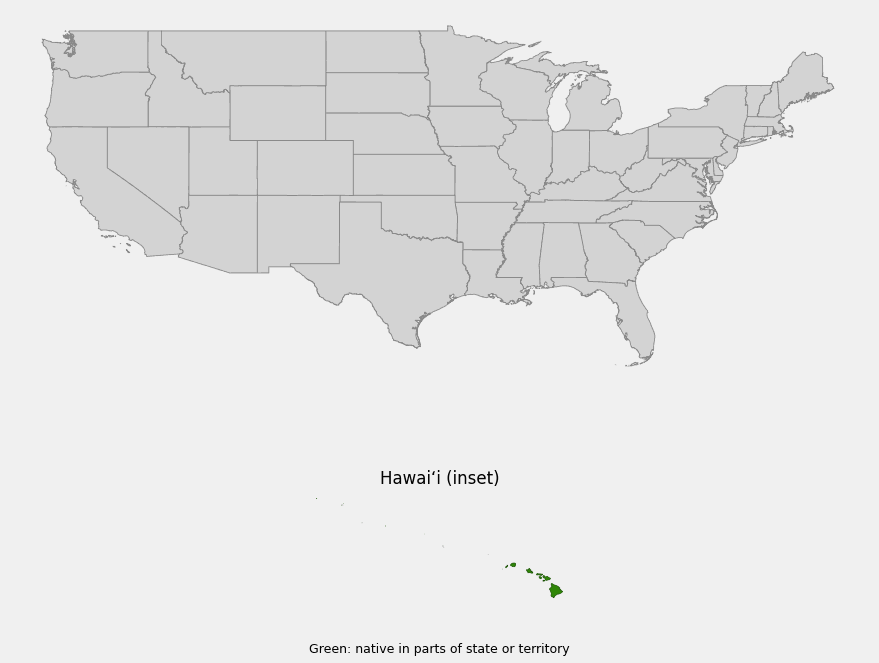
Pilo is endemic to Hawaiʻi. It grows in mesic and wet forests and around bog margins on Oʻahu (on Mount Kaʻala in the Waiʻanae Range), eastern Molokaʻi, Lānaʻi, Maui and Hawaiʻi Island. It is one of the more commonly seen pilo species: visitors to Hawaiʻi Volcanoes National Park and the upland forests of Maui often pass it along trails without noticing it until it fruits.
Pilo is not federally listed, though the IUCN Red List assesses it as Vulnerable. It is seldom sold, but native plant growers and restoration projects propagate it from seed. If you want to grow it, buy only nursery-propagated plants from a Hawaiʻi native plant nursery, and never collect plants or cuttings from the wild. This guide covers how to identify pilo, where it grows, how to grow it in upland Hawaiian gardens, and its role in the native forest.
Identification
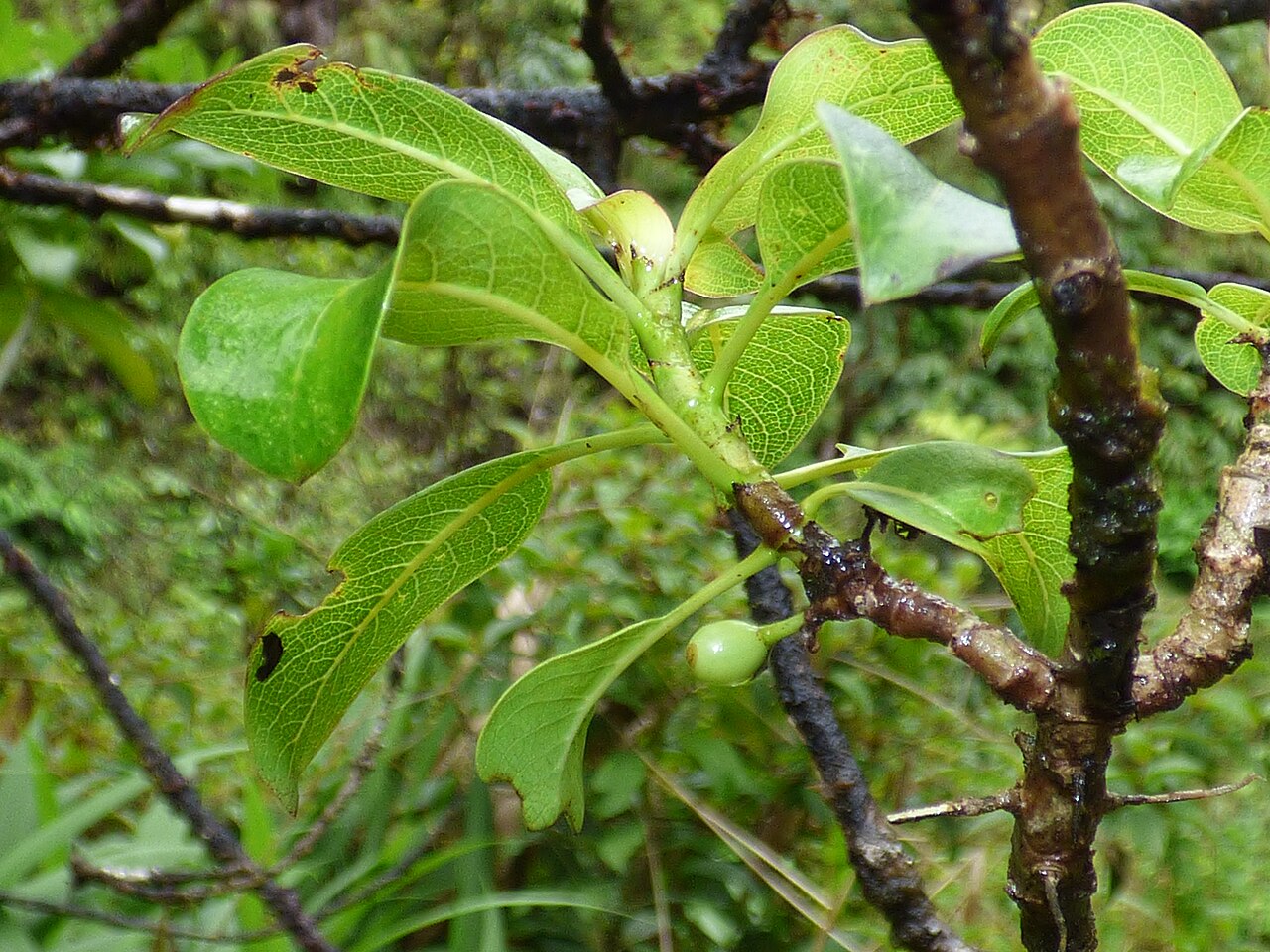
Pilo looks like a tidy, glossy-leaved shrub with leaves set in opposite pairs. The surest field marks are the paired leaves joined at each node by a small stipule, a trait of the coffee family, and the orange, berry-like fruits.
Growth Habit
An upright, branching evergreen shrub or small tree, usually 6 to 20 feet tall. Young twigs are often finely hairy; older stems have gray to brown bark. In open, windswept sites plants stay low and shrubby, while in sheltered forest they become slender small trees.
Leaves
Leaves are opposite, simple, elliptic to oblong, about 2 to 4 inches long, with smooth edges and a short stalk. The upper surface is glossy green with slightly sunken veins, and the underside is paler. A small, triangular stipule spans the stem between each pair of leaf stalks. The shiny leaves explain the English name “mirrorplant,” which is used for many species of Coprosma.
Flowers
Like most Coprosma, pilo is dioecious: male and female flowers grow on separate plants. The flowers are small, greenish to yellowish white and easy to overlook, borne in small clusters in the leaf axils. Male flowers have long, dangling stamens and female flowers long, feathery stigmas, both adaptations for wind pollination. Plants can flower at almost any time of year.
Fruit & Look-alikes
Female plants produce fleshy, egg-shaped drupes about ¼ to ⅜ inch long that ripen bright orange, each with two small seeds. Several other pilo species grow in Hawaiʻi and are hard to tell apart; they differ in leaf size and hairiness, the number of flowers per cluster, and fruit color. Kōpiko, another native coffee-family tree, also has paired, glossy leaves, but its leaves are larger and its fruits are borne in branched clusters at the branch tips.
Quick Facts
| Scientific Name | Coprosma ochracea W.R.B. Oliv. |
| Family | Rubiaceae (coffee family) |
| Plant Type | Evergreen shrub or small tree; Hawaiian endemic |
| Mature Height | 6–20 ft |
| Mature Spread | 4–10 ft |
| Growth Rate | Slow to moderate |
| Sun Exposure | Partial shade to full sun |
| Water Needs | Moderate to high; steady moisture |
| Soil Type | Moist, well-drained, organic or volcanic soils |
| Soil pH | Acidic to slightly acidic |
| Bloom Time | Year-round |
| Flower Color | Greenish to yellowish white (inconspicuous) |
| Fall Color | None; evergreen |
| Fruit | Bright orange drupe, ¼–⅜ in long (female plants) |
| Deer Resistant | No; browsed by deer, goats and pigs |
| USDA Hardiness Zones | 10–12 (outdoors in Hawaiʻi; best in cool uplands) |
Native Range
Pilo is endemic to the Hawaiian Islands and grows nowhere else in the wild. USDA PLANTS lists it as native only in Hawaiʻi. The Smithsonian’s Flora of the Hawaiian Islands records it from Oʻahu (Mount Kaʻala in the Waiʻanae Mountains), eastern Molokaʻi, Lānaʻi, Maui and Hawaiʻi Island.
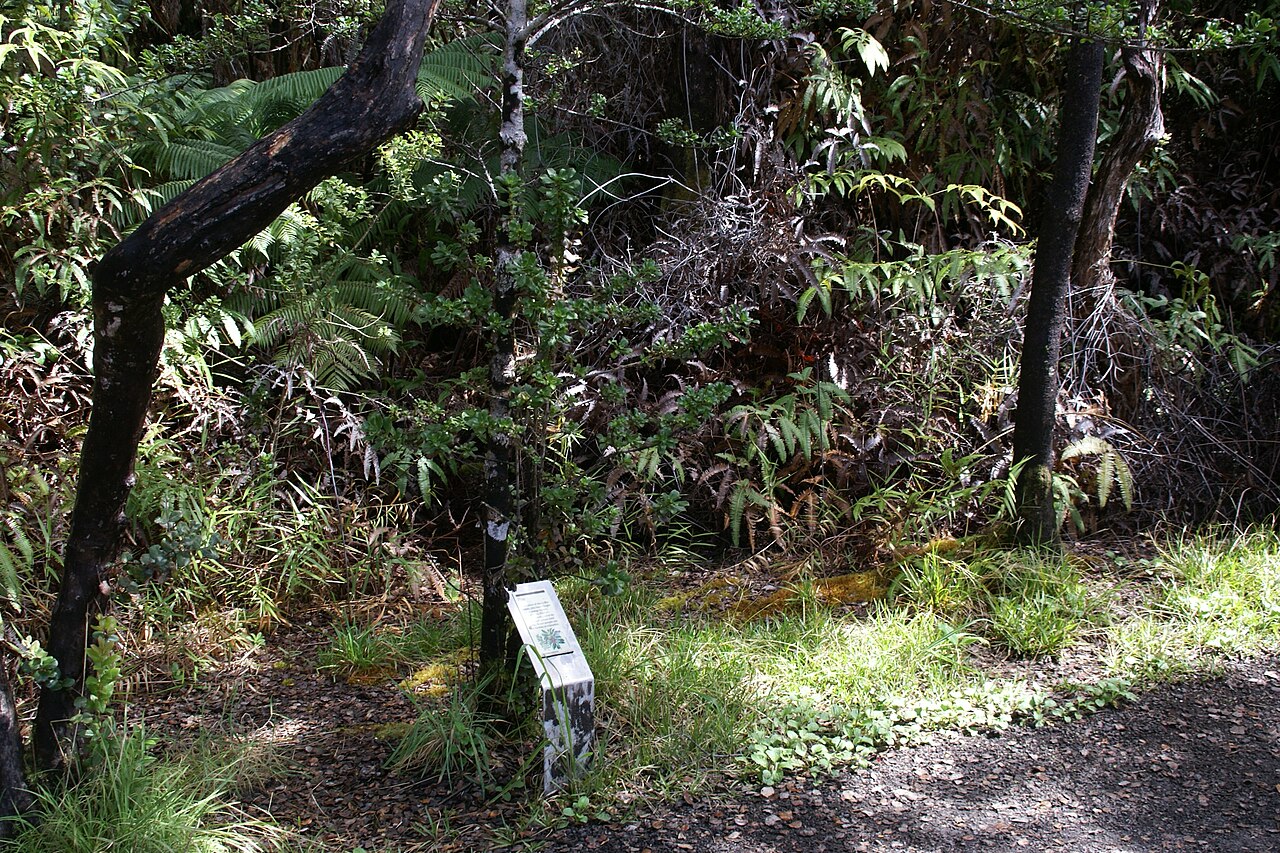
It is a plant of mesic and wet forests, usually in the understory of ʻōhiʻa lehua and koa forest with tree ferns, and it also grows around the edges of open bogs. On Hawaiʻi Island it is common in the rainforests around Kīlauea and in the wet lowlands of Puna; on Maui it grows on the slopes of Haleakalā, in places such as Kīpahulu, Polipoli and the Kula forests.
Like most native forest plants, pilo has lost ground to land clearing, feral pigs, goats and deer, and invasive plants such as strawberry guava and kāhili ginger. It is still widespread enough that the Smithsonian treats it as apparently secure, and it has no federal listing, but it is part of forests that need ongoing protection.
📋 Regional plant lists featuring Pilo: Hawaii
Growing & Care Guide
Pilo is a forest plant of cool, moist uplands, and it is grown mainly by native plant enthusiasts and restoration projects rather than sold as a landscape shrub. It does best in Hawaiʻi’s upland, rainy districts, roughly USDA zones 10–12, and struggles in hot, dry lowland gardens. Buy only nursery-propagated plants from a Hawaiʻi native plant nursery, and never collect plants, seeds or cuttings from the wild. Hawaiʻi also restricts bringing plants in from other states, so local Hawaiian growers are the right source.
Light
Partial shade to full sun. In the wild it grows both in the forest understory and in openings; in a garden, morning sun and afternoon shade suit it well. In full sun it needs steady moisture.
Soil & Water
Moist, well-drained, slightly acidic soil rich in organic matter, such as volcanic soils with leaf litter or a mix with cinder and compost. Keep it evenly moist; it does not tolerate long dry spells. Avoid standing water around the roots.
Planting Tips
Plant it in a sheltered, humid spot, such as beneath taller trees or among ferns in an upland garden. To get the orange fruits you need at least one female plant and a male nearby, since the sexes are on separate plants; nursery plants are often unsexed seedlings, so plant several. Mulch with leaf litter to keep the roots cool.
Pruning & Maintenance
Little pruning is needed. Trim lightly to remove dead wood or to shape a bushy shrub. Keep weeds and invasive grasses away from the base, and protect young plants from slugs and from browsing by deer or goats where they occur.
Propagation
Grown from seed cleaned from ripe orange fruits and sown fresh; germination is slow and can take several months. Cuttings can also be rooted, though with mixed success. Home gardeners should propagate only from their own nursery-bought plants.
Landscape Uses
- Upland Hawaiian native gardens: a glossy, evergreen shrub for cool, rainy districts
- Forest restoration: a common understory component in ʻōhiʻa and koa forest outplantings
- Bird gardens: the orange fruits attract fruit-eating birds
- Shade and fern gardens: pairs well with hāpuʻu tree ferns and other wet-forest natives
Wildlife & Ecological Value
Pilo is a small but important part of Hawaiʻi’s native forest understory, mostly because of its fruit.
For Pollinators
The flowers are wind-pollinated and offer little to insects, but the shrub supports native insects that feed on its leaves and stems.
For Birds
The bright orange fruits are eaten by birds, which disperse the seeds. The ʻōmaʻo, the Hawaiian thrush of Hawaiʻi Island, is one of the native birds known to eat them, and introduced birds such as the Japanese white-eye also feed on them.
For Mammals
Hawaiʻi’s only native land mammal, the Hawaiian hoary bat, forages over the forests where pilo grows. Feral pigs, goats and deer damage pilo and its habitat.
Ecosystem Role
As a fruiting understory shrub, pilo helps feed native birds, and in turn depends on them to spread its seeds through the forest. It is one of the many shrubs that fill the space beneath ʻōhiʻa and koa.
Cultural & Historical Uses
Pilo is the Hawaiian name for the native species of Coprosma. The genus name comes from Greek words referring to a foul smell, after the odor of some species’ crushed leaves, and the species name ochracea means “ochre-colored.” The species was described by the New Zealand botanist W. R. B. Oliver in his 1935 study of the genus.
Coprosma is a Pacific genus with its center of diversity in New Zealand, and its Hawaiian species are thought to descend from seeds carried to the islands by birds. In Hawaiʻi it diversified into more than a dozen endemic species, from the creeping kūkaenēnē of the high volcanoes to forest trees like this one.
Pilo is also part of the traditional Hawaiian pharmacopeia; its fruits are reported to have been used as a laxative. Its value today lies mainly in the native forest itself, where its orange fruits feed birds through much of the year.
Frequently Asked Questions
Is pilo endangered?
No. Coprosma ochracea is not federally listed and the Smithsonian Flora of the Hawaiian Islands rates it apparently secure, though the IUCN Red List assesses it as Vulnerable.
Where does pilo grow?
Only in Hawaiʻi: in mesic and wet forests and bog margins on Oʻahu, Molokaʻi, Lānaʻi, Maui and Hawaiʻi Island.
Why does my pilo have no fruit?
Pilo has male and female flowers on separate plants. Only female plants produce fruit, and they need a male plant nearby.
Can I grow pilo in a lowland garden?
It is difficult. Pilo is a plant of cool, rainy forests and does best in upland districts with steady moisture and some shade. In hot, dry lowland gardens it usually declines.
Are pilo fruits edible?
They are not a food plant. The fruits are eaten by birds, and old accounts record them being used as a laxative, so don’t eat them.

Looking for a nursery that carries Pilo?
Browse our native plant nursery directory: Hawaii

